Ireland keeps its history above ground. Tower houses stand in cattle pasture, medieval friaries sit roofless at the edges of market towns, and a few families still live in castles their ancestors built four hundred years ago. It is not a country of grand distances. What it offers instead is density: in one day's drive we could pass a Norman castle, a Georgian estate and a dairy farm, and most of them are still in use.
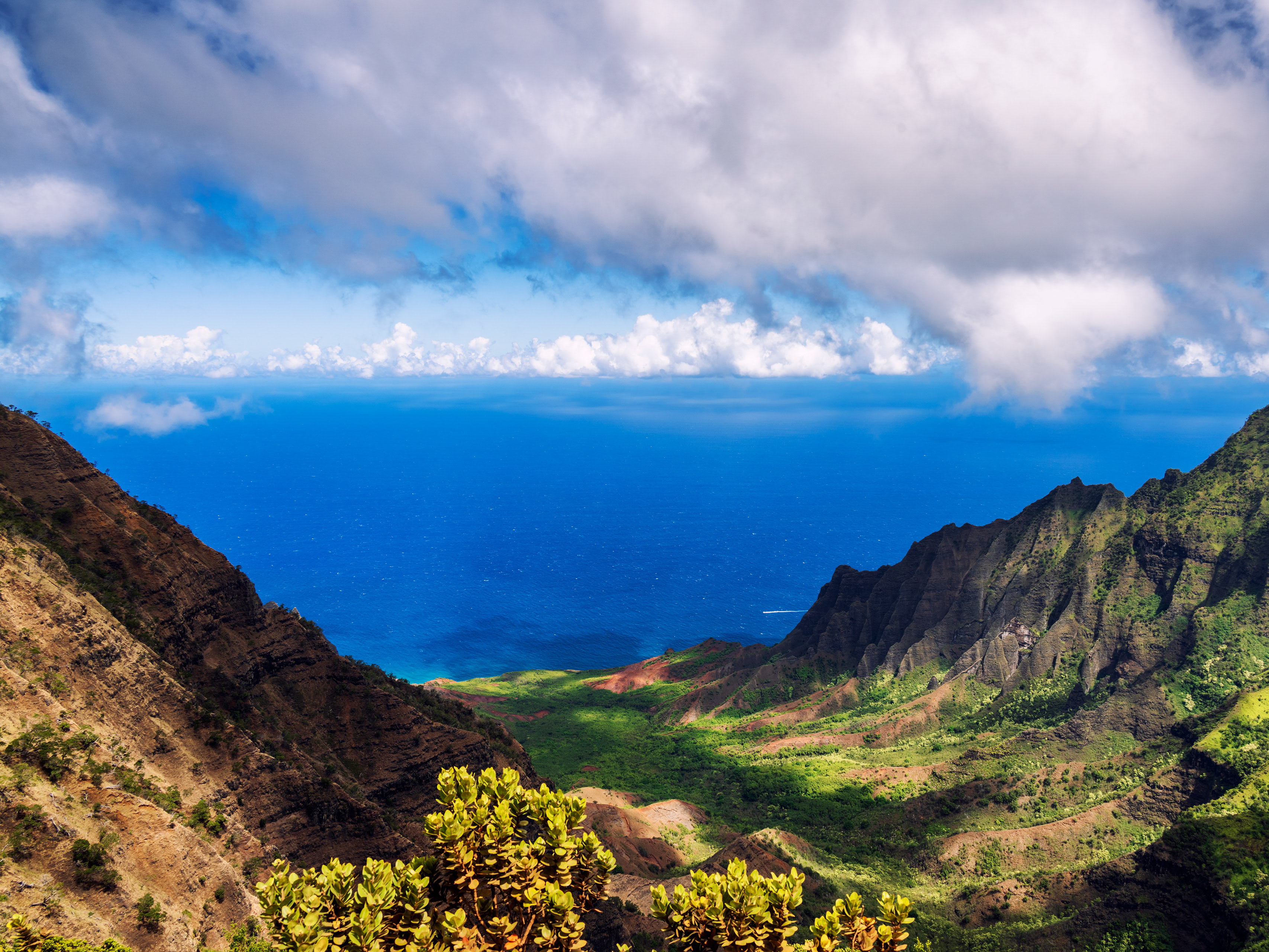
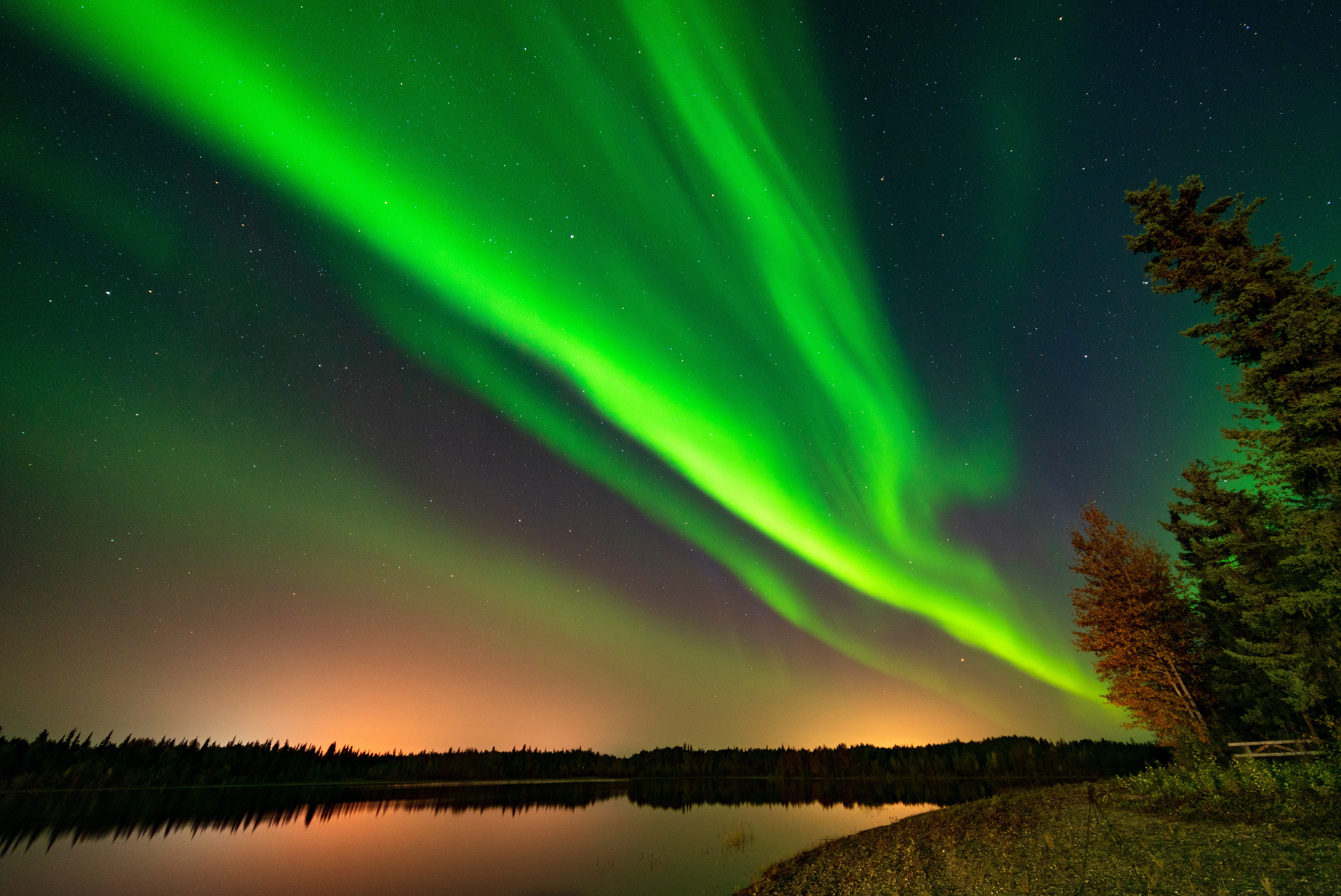
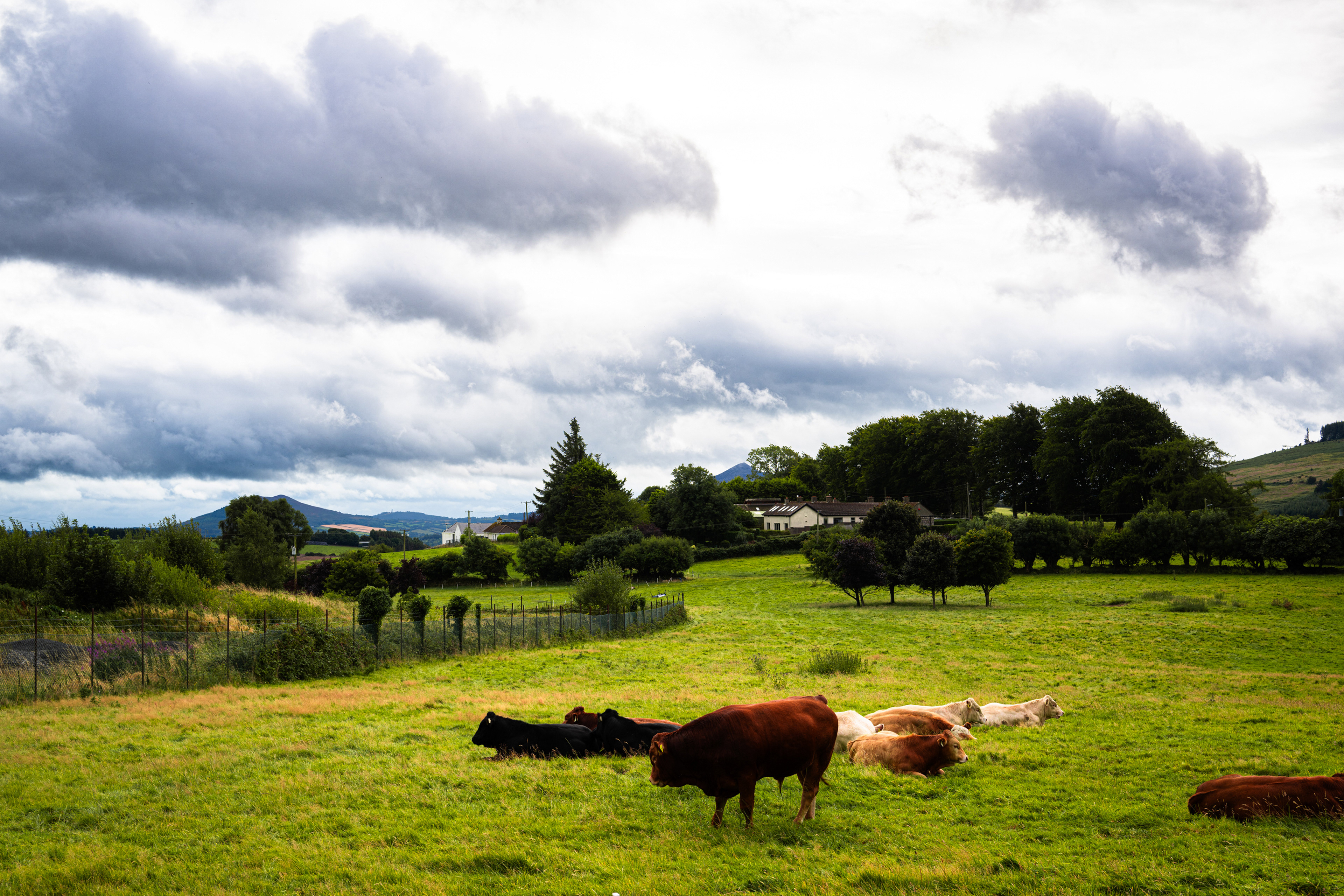
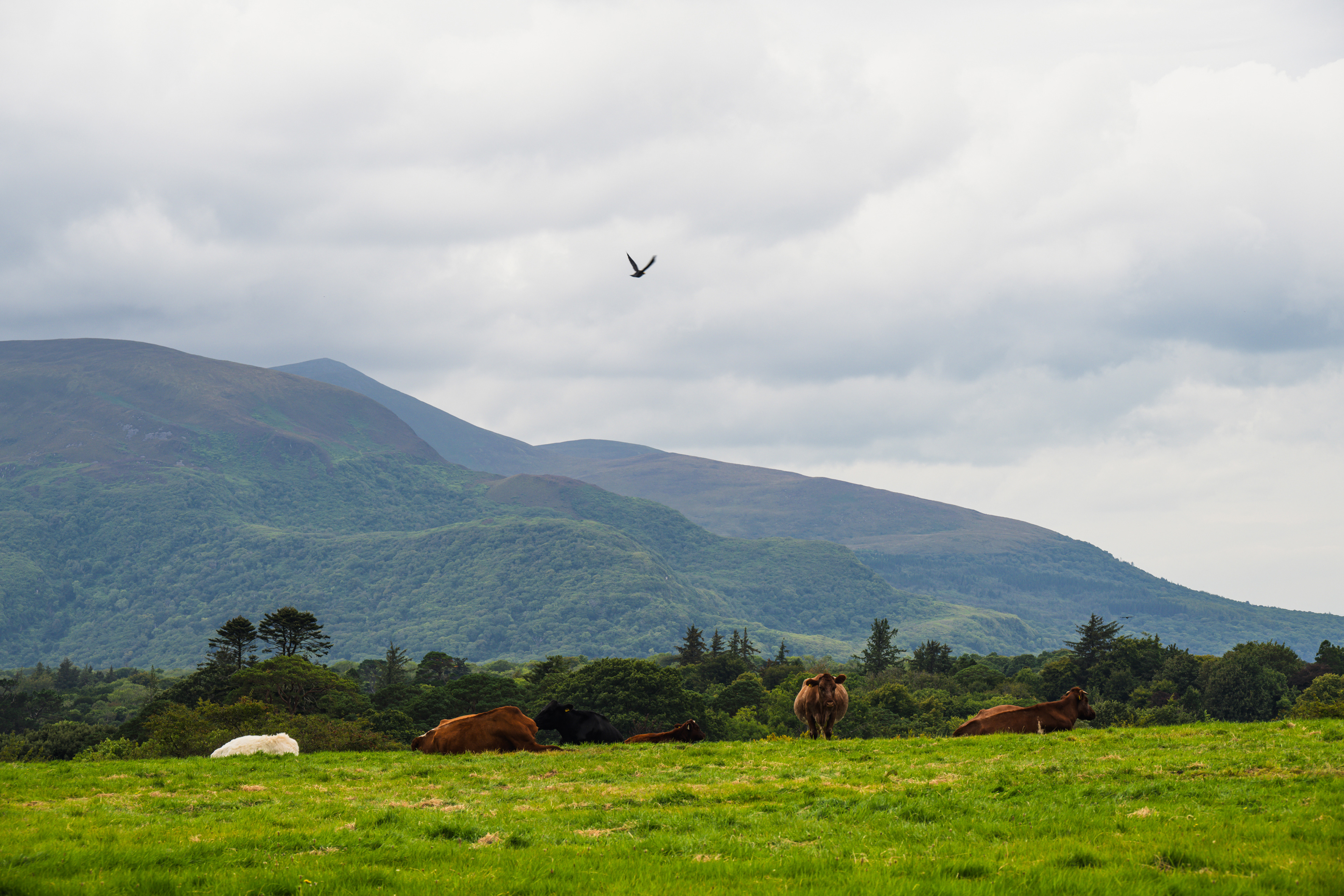
Between the old buildings is the countryside that gave the island its nickname. The Belfast doctor and poet William Drennan called Ireland the "Emerald Isle" in a poem of 1795, and the green in question is grass, not trees. Grassland covers about three-fifths of the country. Forest covers only about a tenth, one of the lowest shares in the European Union, where the average is closer to two-fifths. Most of Ireland's native woodland was cleared centuries ago and has only partly been replanted. The grass has the Atlantic to thank: the warm North Atlantic Drift keeps winters mild, rain arrives in every season, and the result is small green fields divided by hedgerows and stone walls, most of them grazed by cattle or sheep. That mix of gentle landscape and old stone is what drew us. We wanted a trip that would not ask too much of a small child and would still give us something to look at from every window.
Every year we take a trip at the end of summer. In 2024 that trip also marked ten years of marriage, the first round-number anniversary we have celebrated as a family of three. Our daughter was about a year and a half old, and we planned around her. Dinner reservations were for five or six in the evening, and one day in the middle of the itinerary had nothing on it at all. Our planning notes listed five highlights, and they read like a description of the trip we wanted: the Book of Kells, afternoon tea, restaurants, nights in castles, and nights on working farms. We had ten nights in Ireland and this is the whole trip in one article.
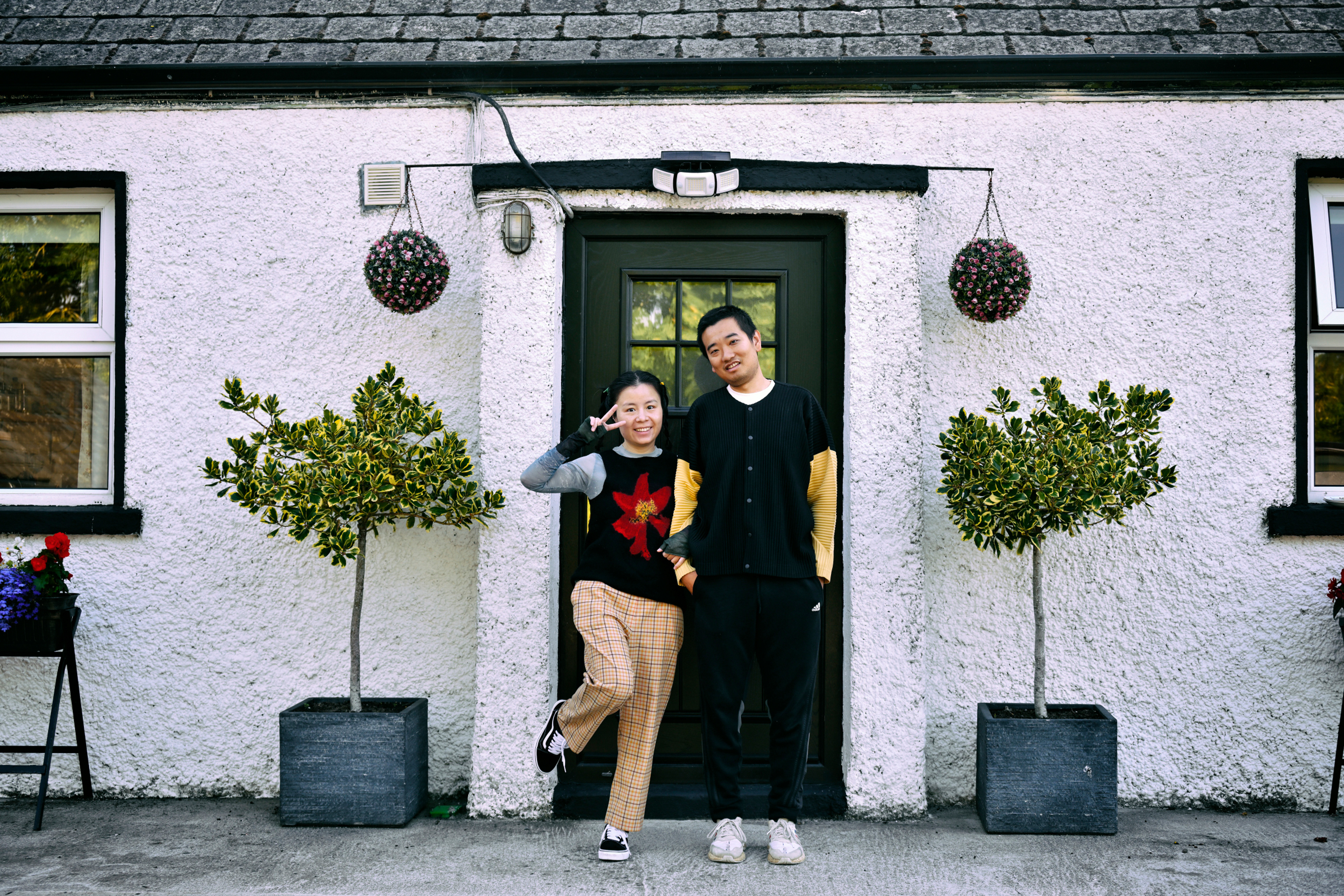
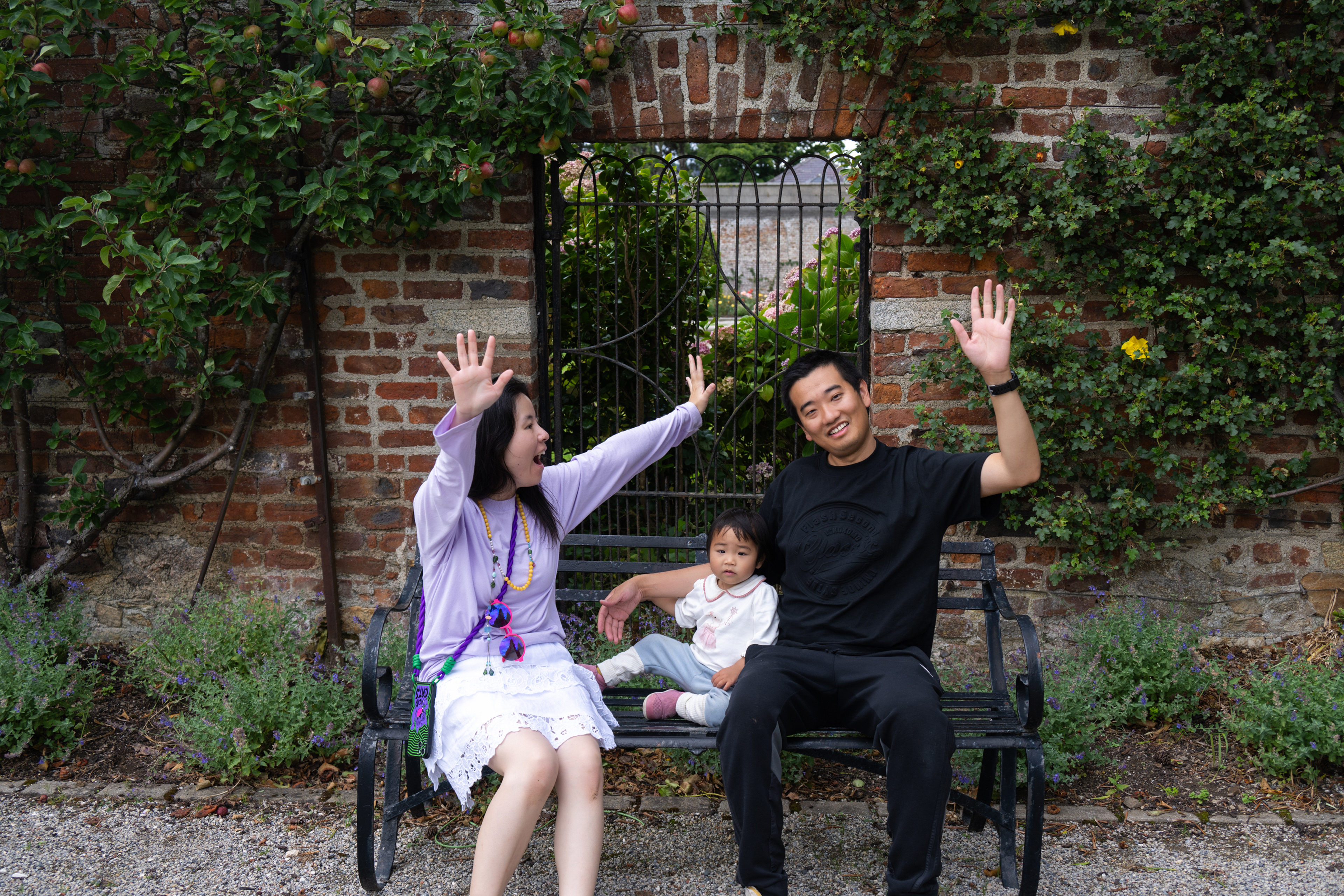
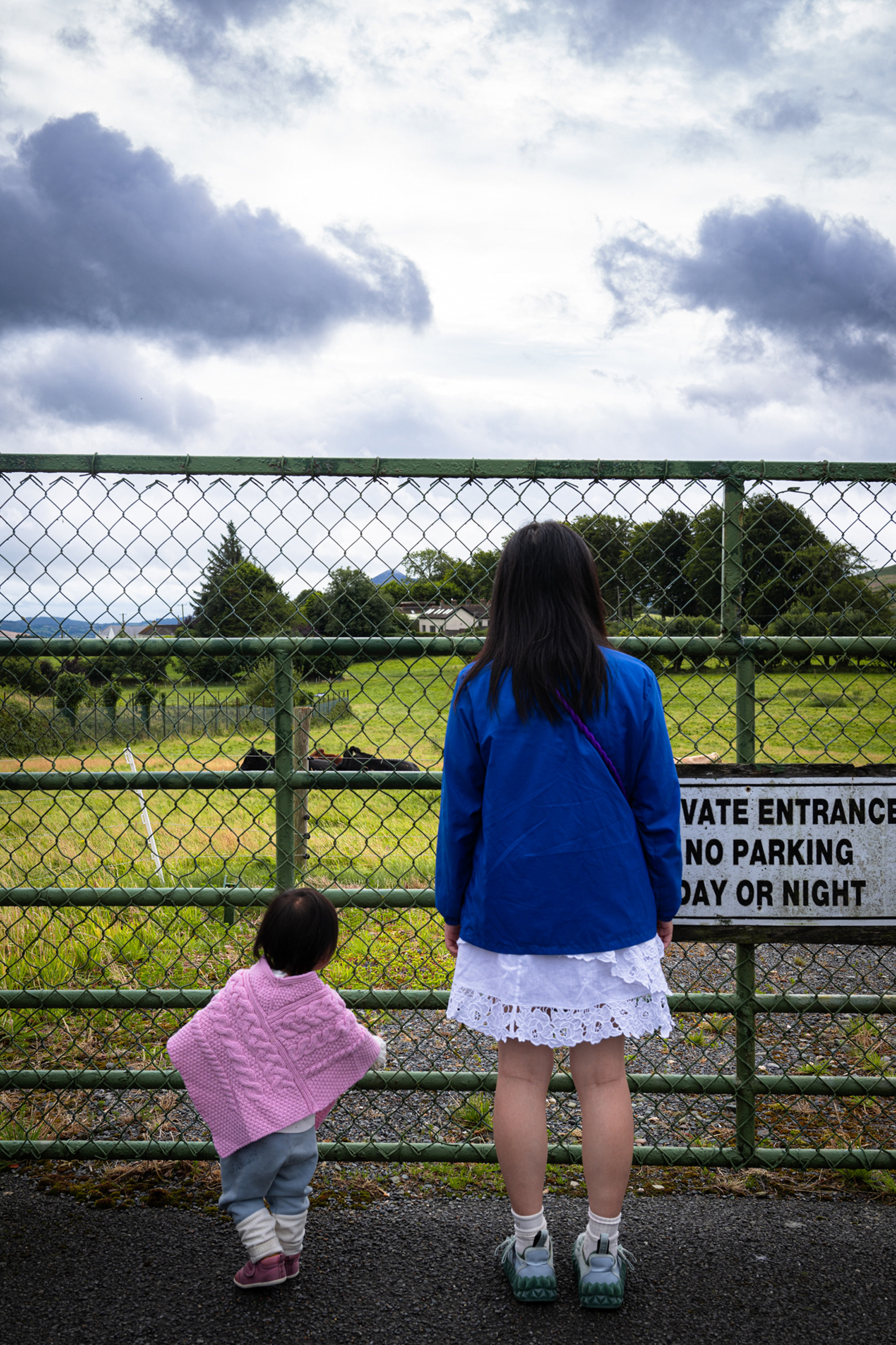
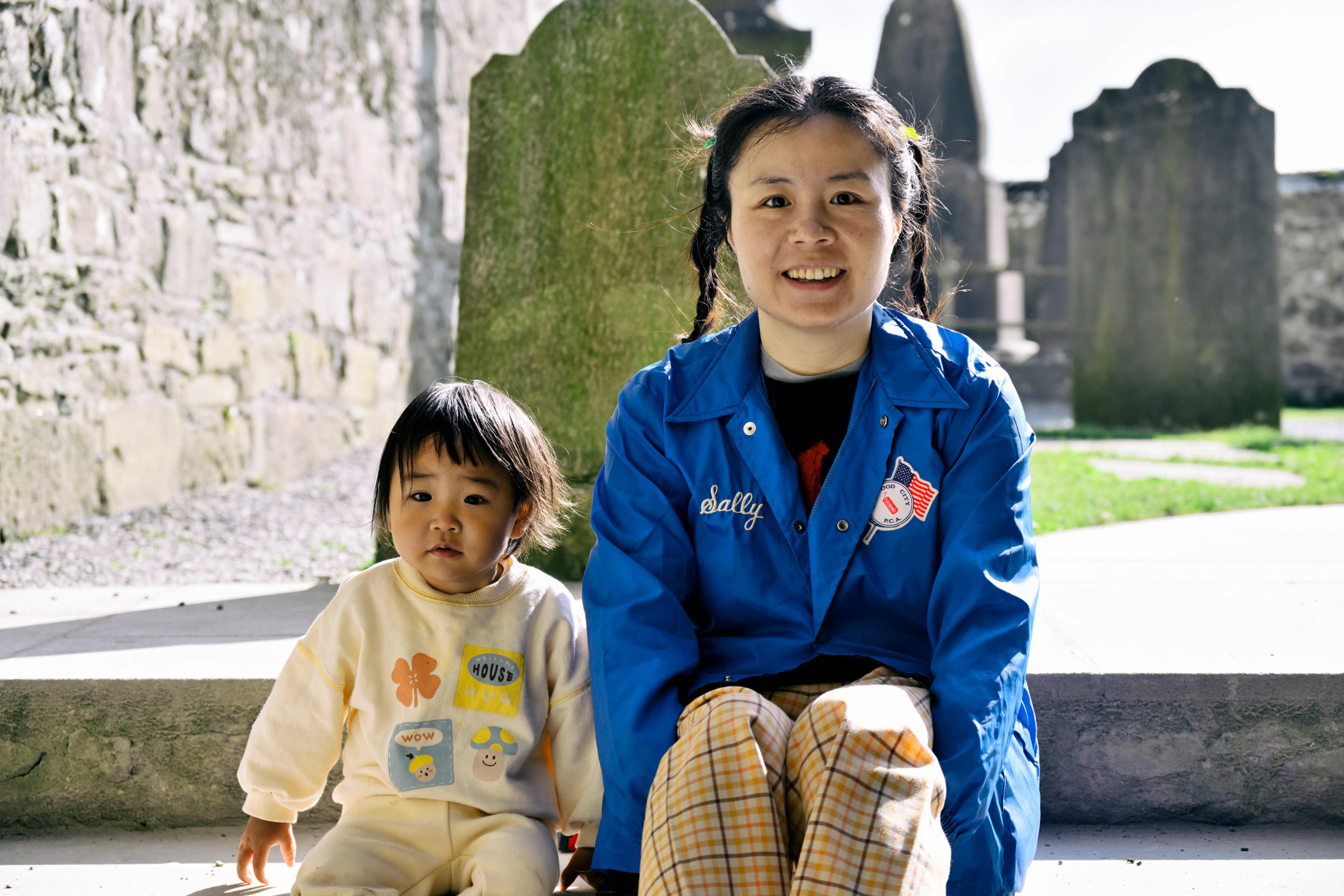



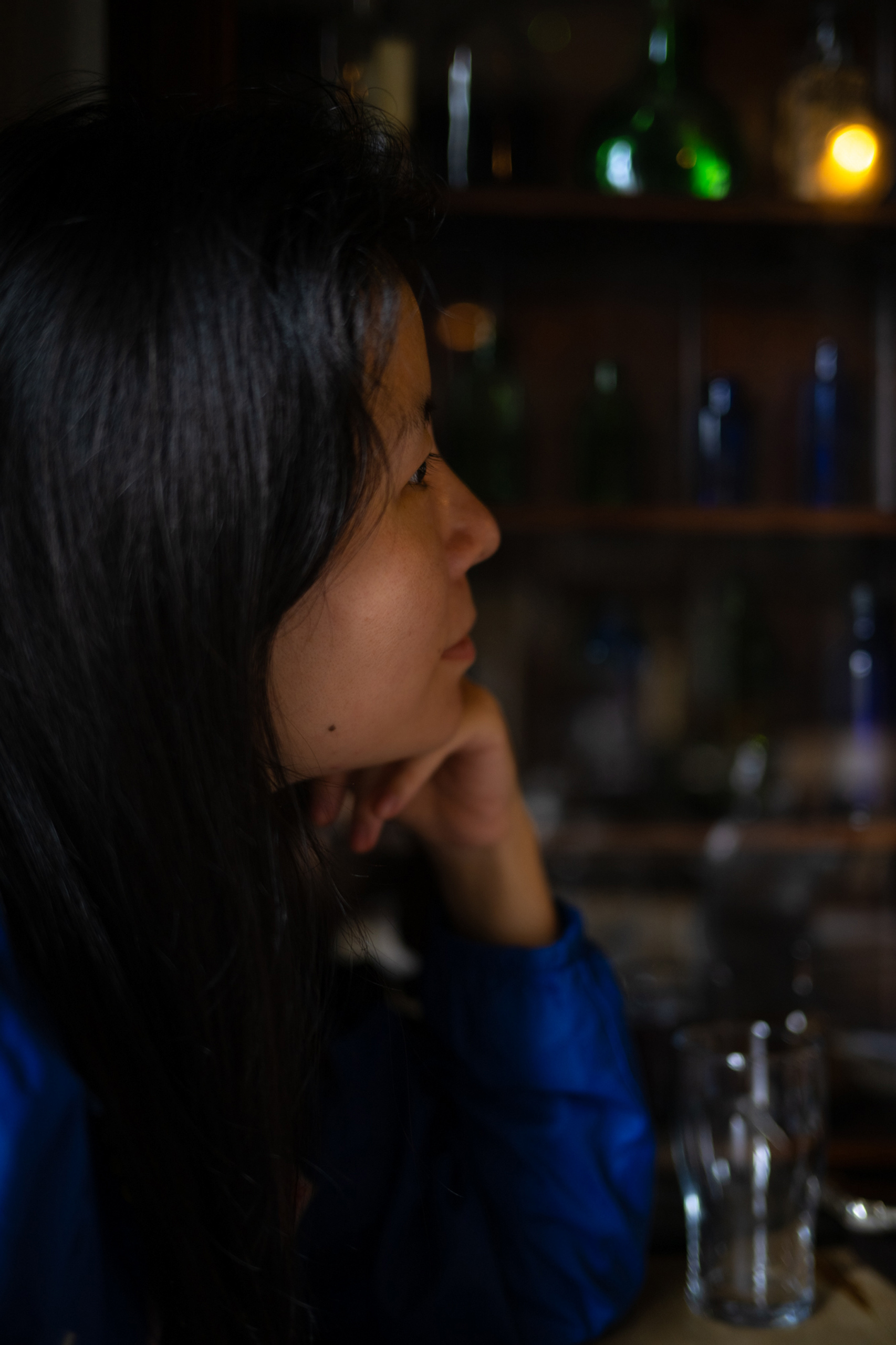

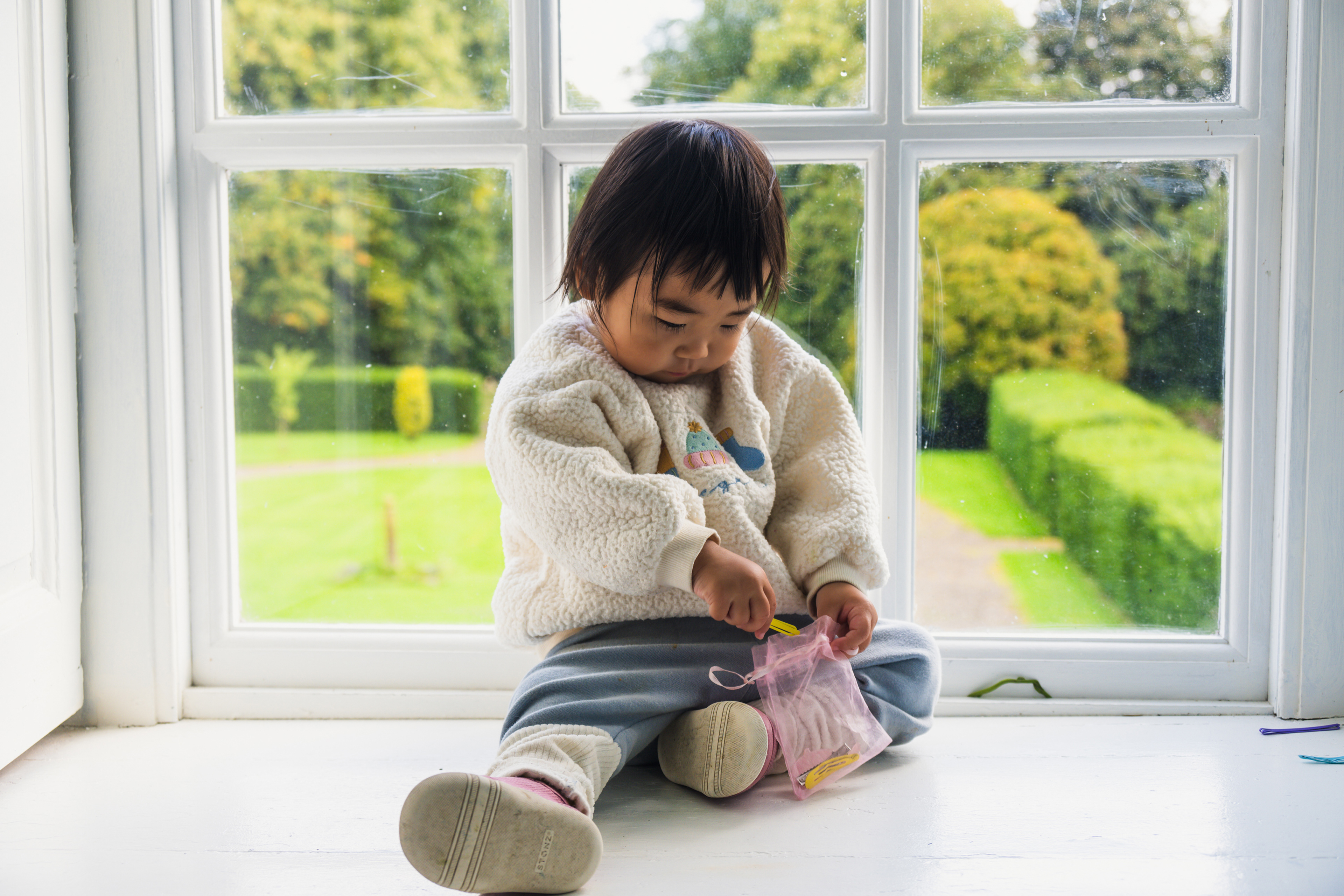
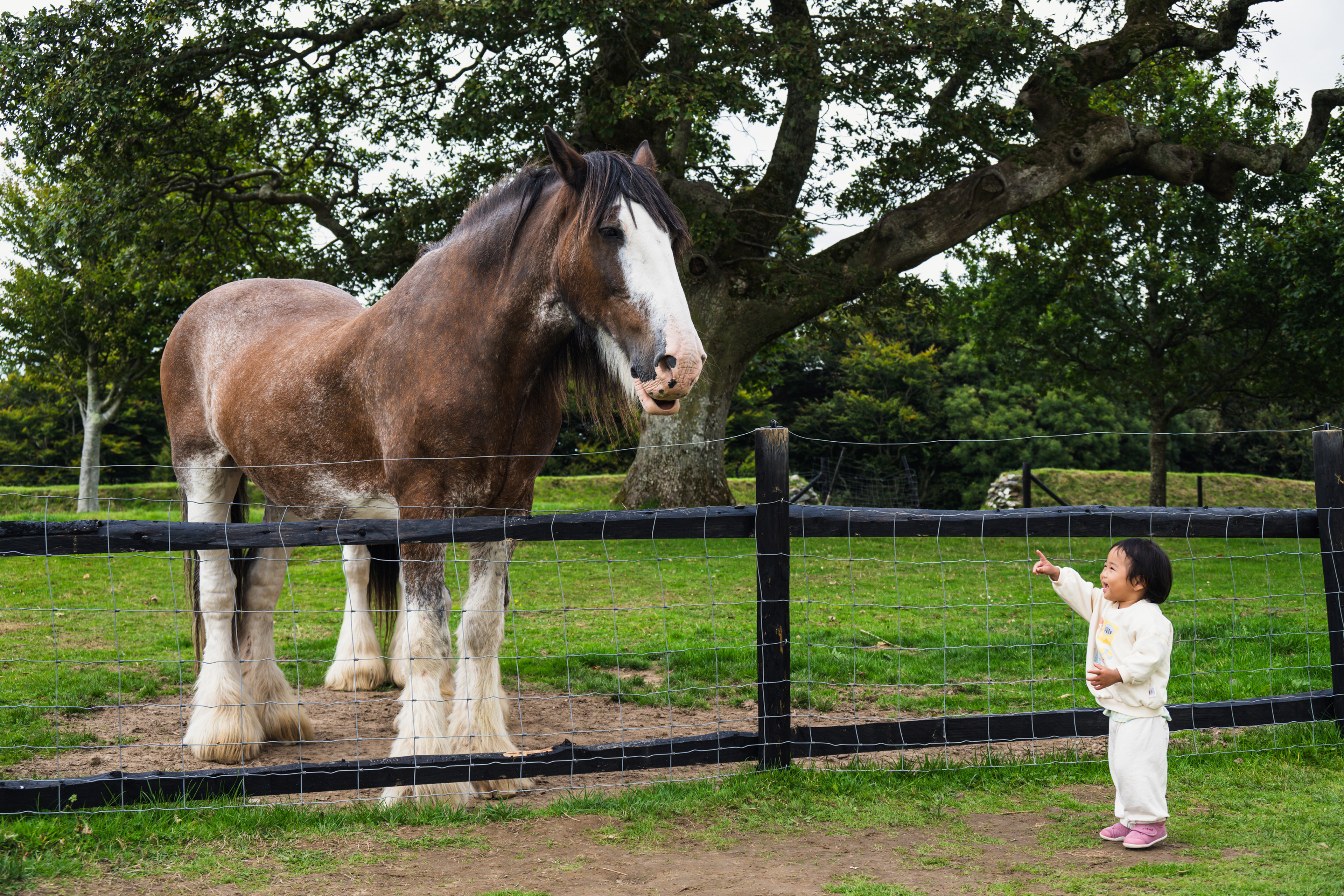
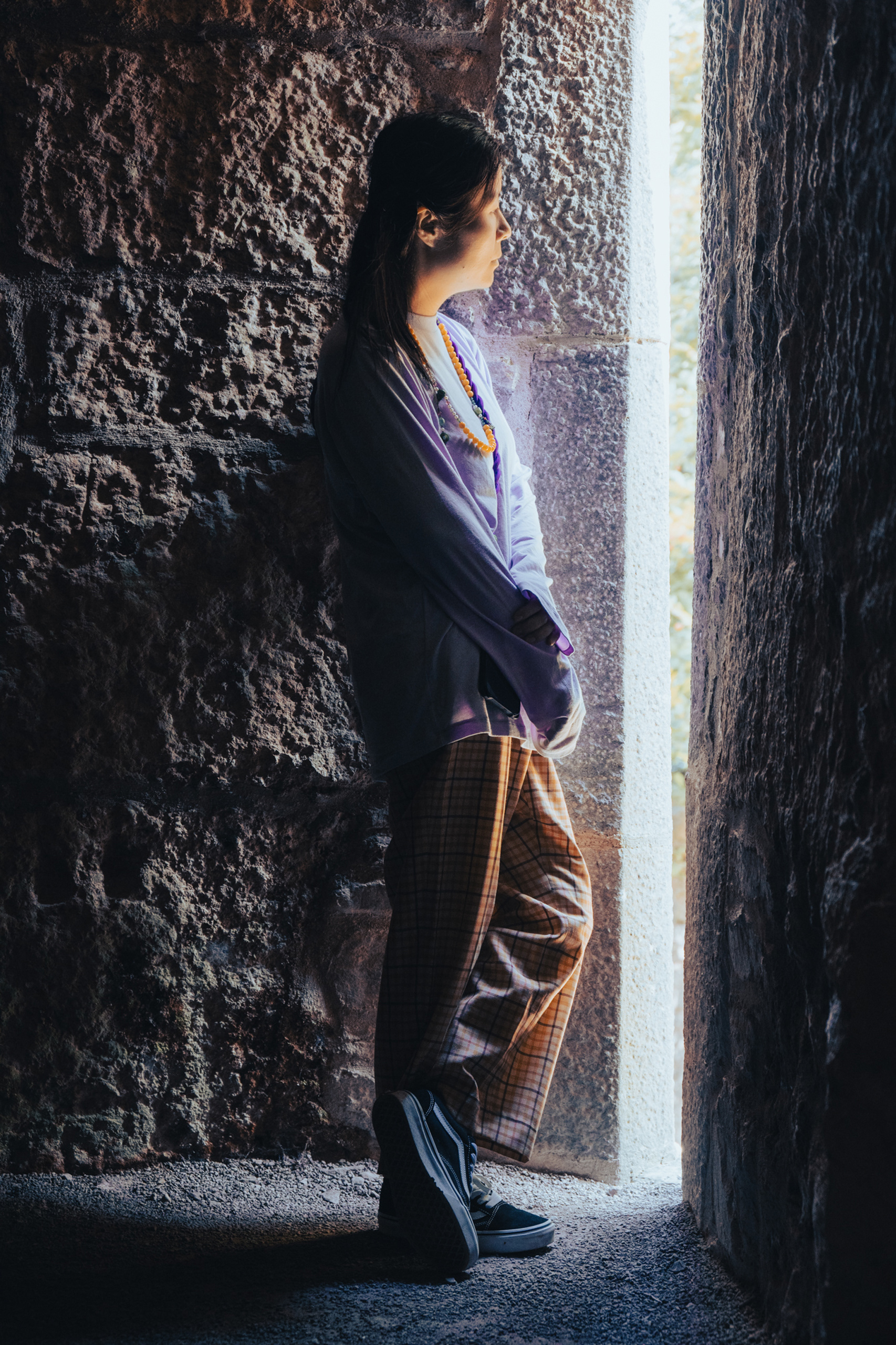

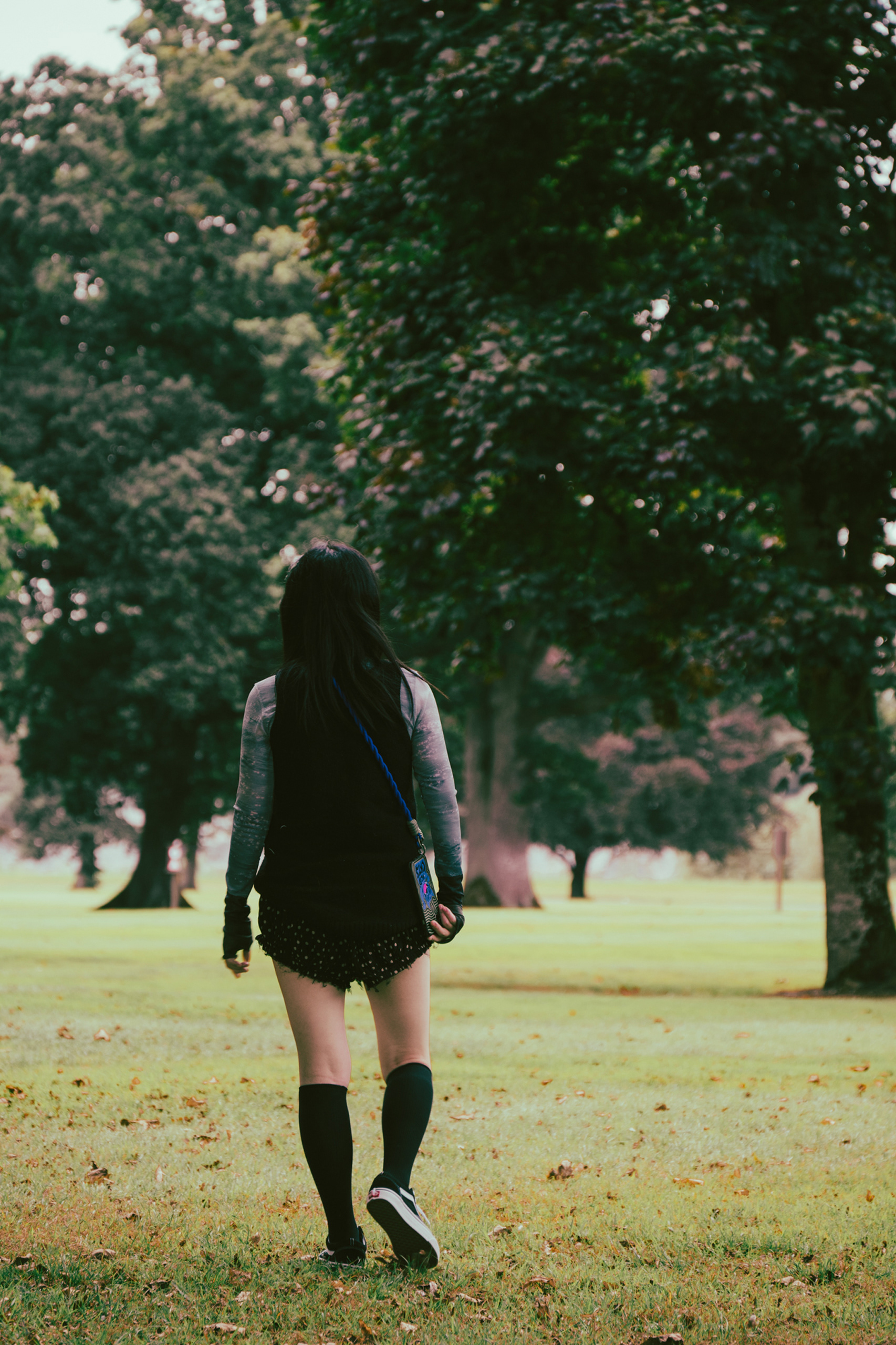
Dublin
Our flight landed in Dublin, and our first stop was an airport ATM for euros. The itinerary gave the rest of that day two jobs, rest and buy baby supplies, and we did not try to add a third. For the first two nights we stayed at the Hyatt Centric in the Liberties, one of the oldest parts of the city. The neighborhood is named for the medieval "liberties," districts that lay outside the city's jurisdiction. The supplies came from a Tesco Express, where we learned the first piece of local vocabulary the trip required: diapers in Ireland are called nappies.
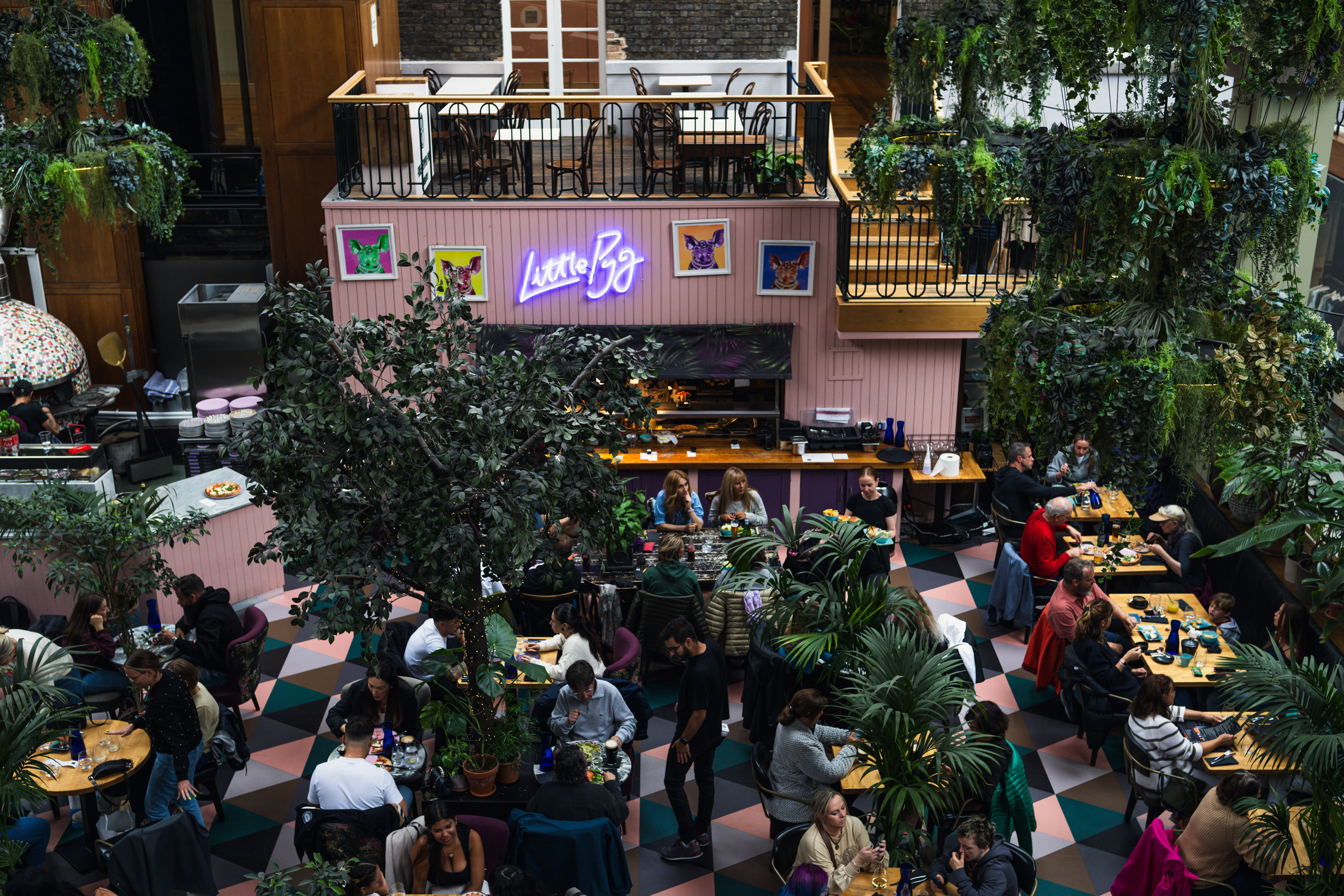
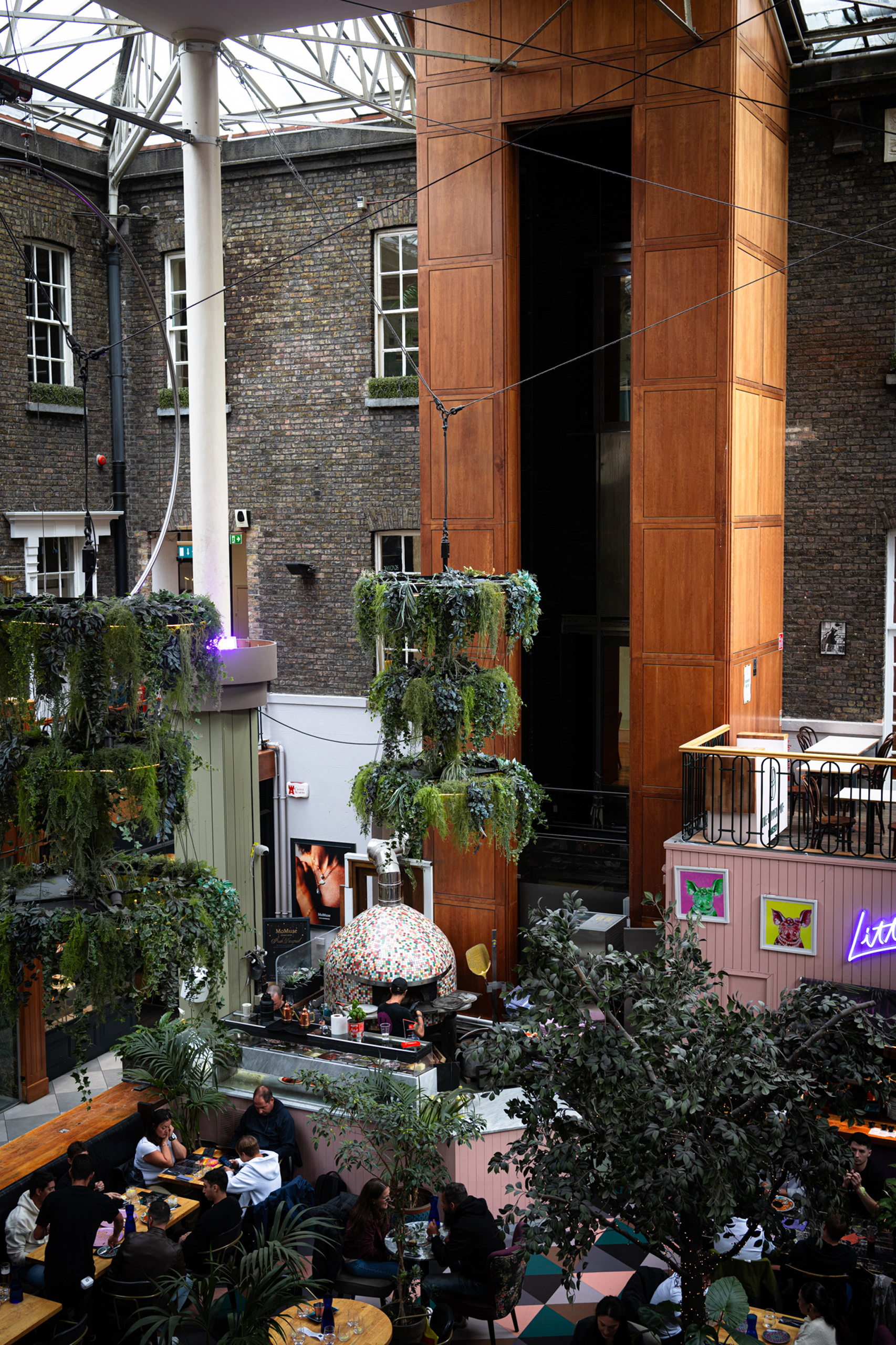
The next day we did a city walk. We passed St Stephen's Green, walked Grafton Street, and went into the Powerscourt Townhouse Centre on South William Street. That building looks like a country house dropped into a city block, which is close to what it is. It was built between 1771 and 1774 as the Dublin residence of Richard Wingfield, the third Viscount Powerscourt, and its front is faced with granite from his estate in County Wicklow. Since 1981 it has been a shopping center built around a glazed courtyard. The following night we would sleep on that same estate, which gave the building some advance interest.
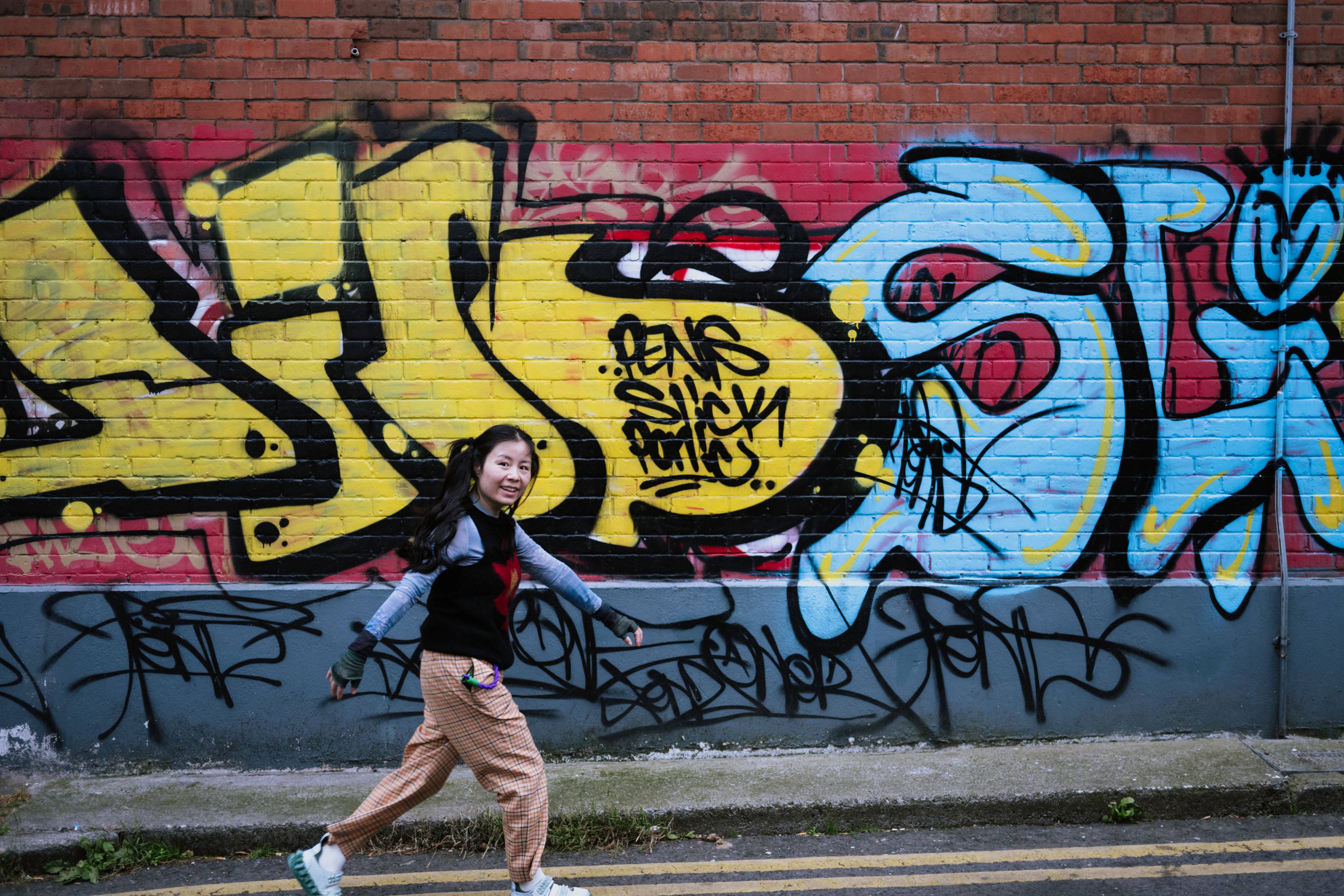
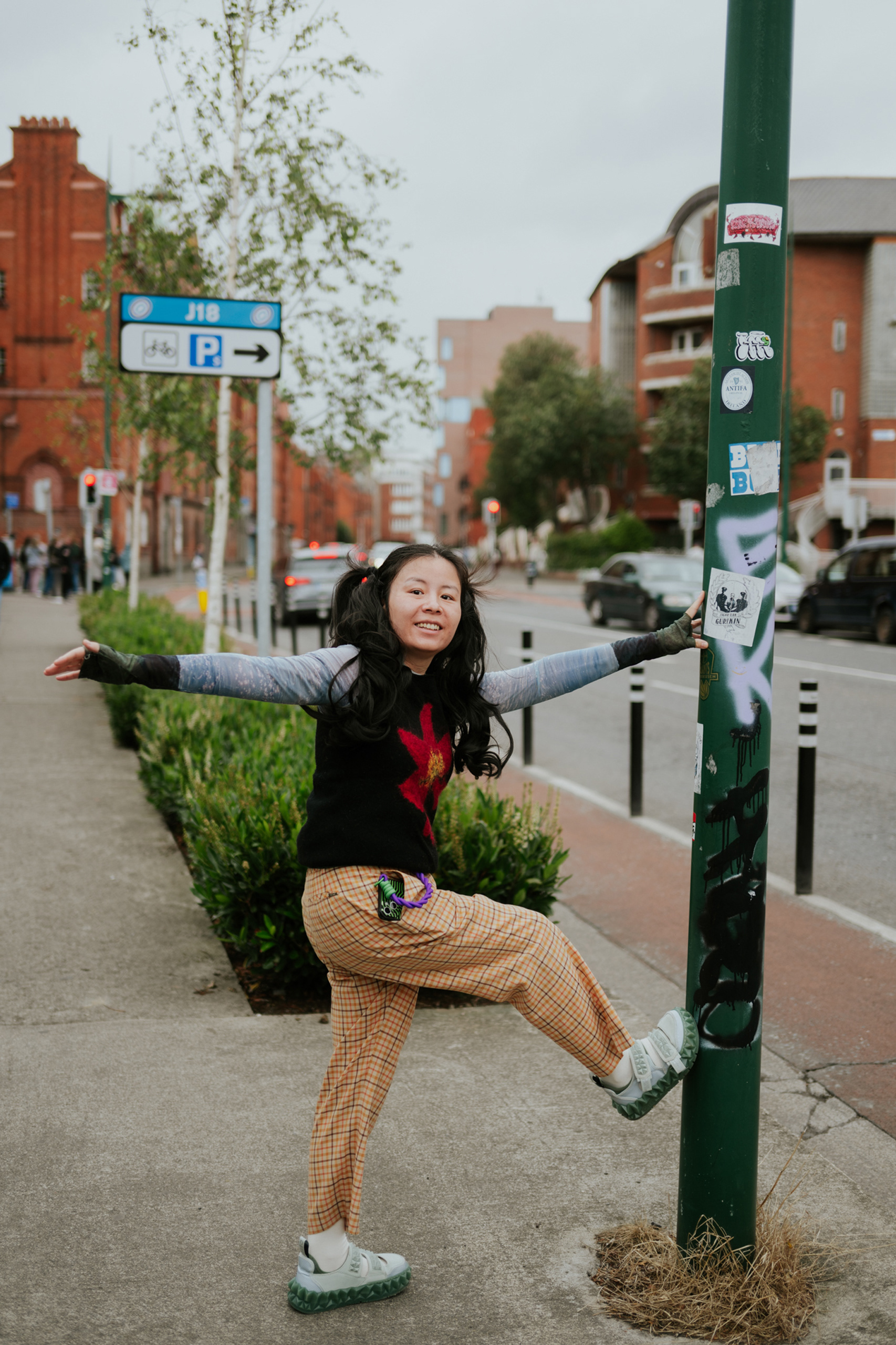
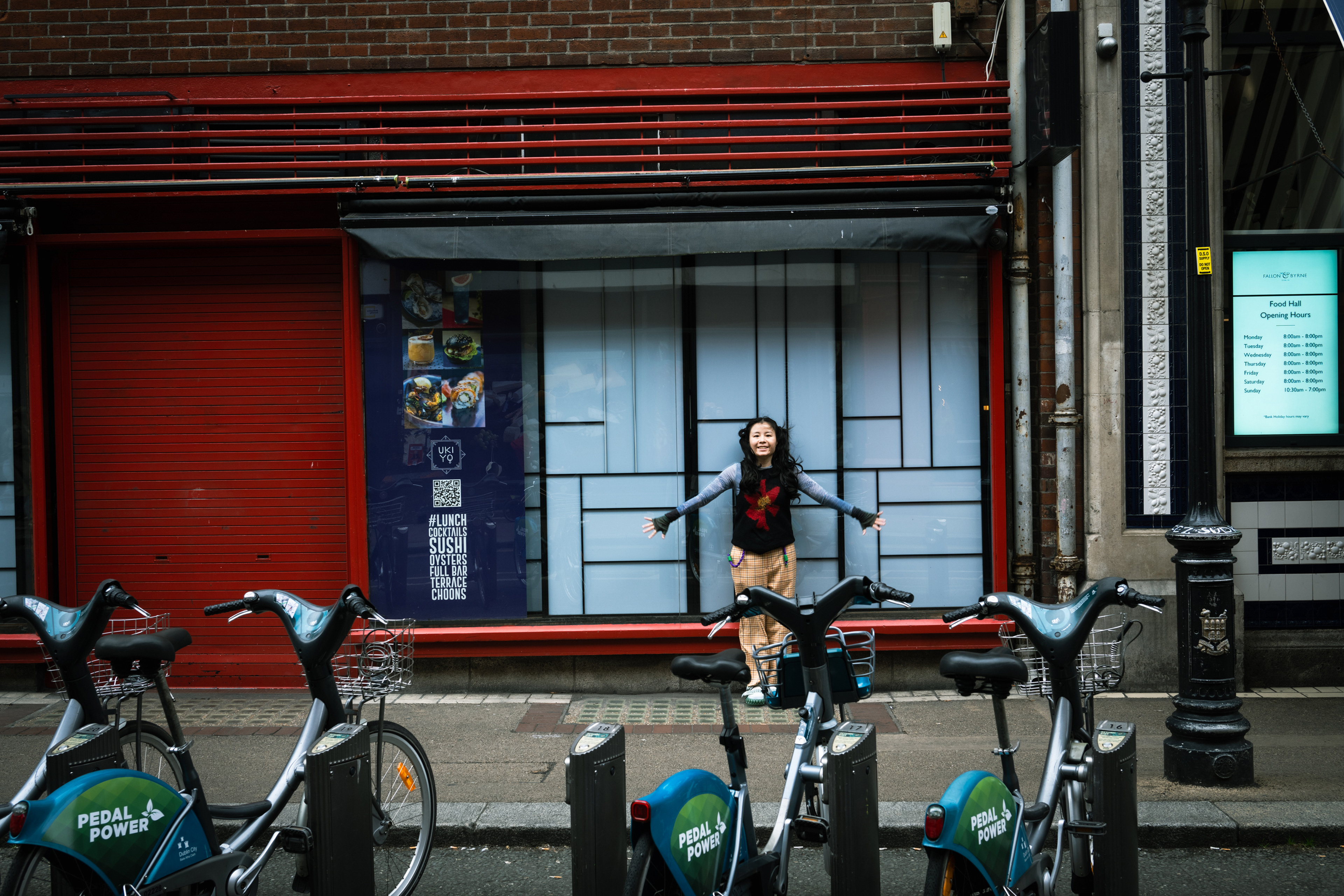
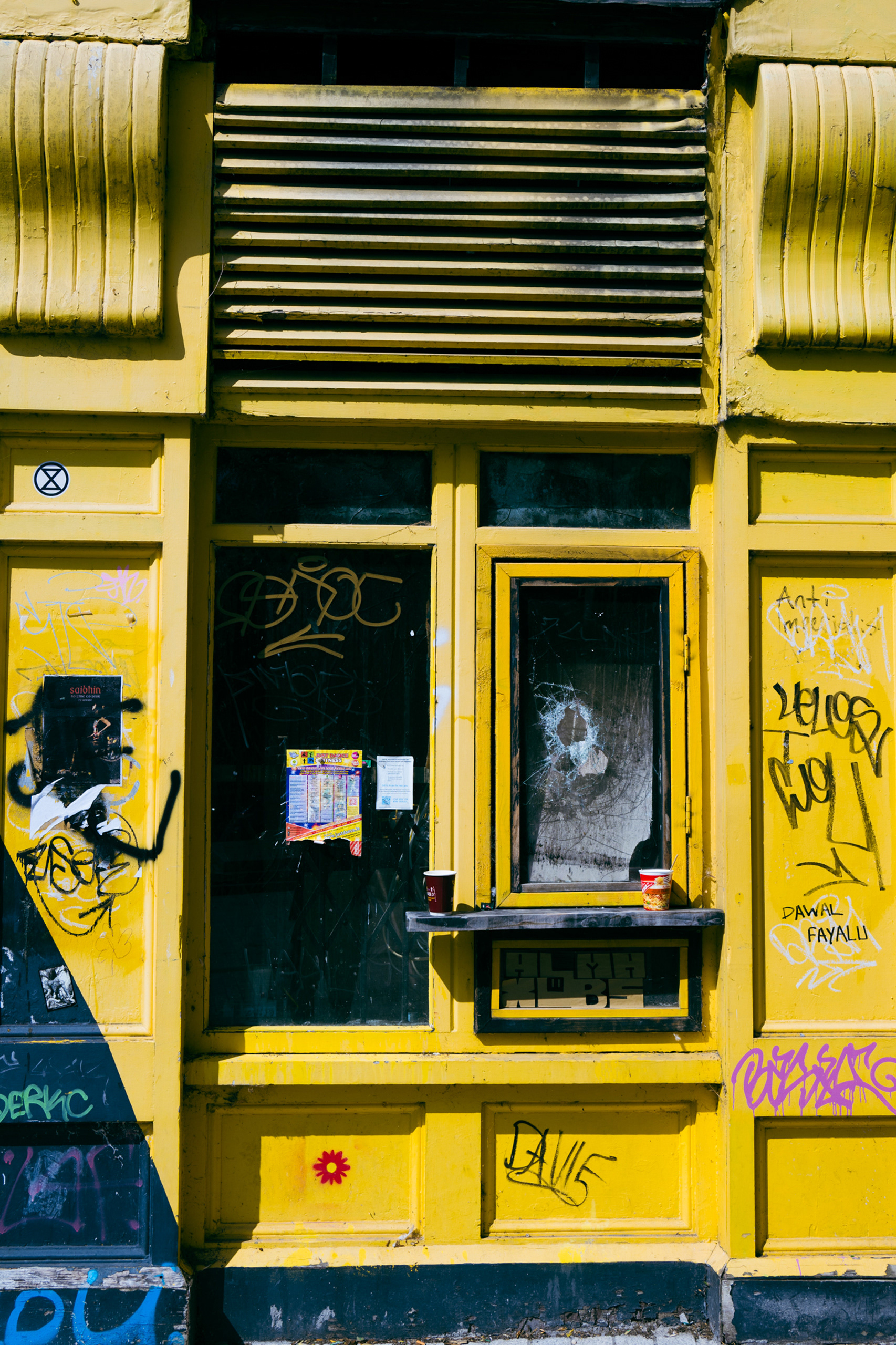
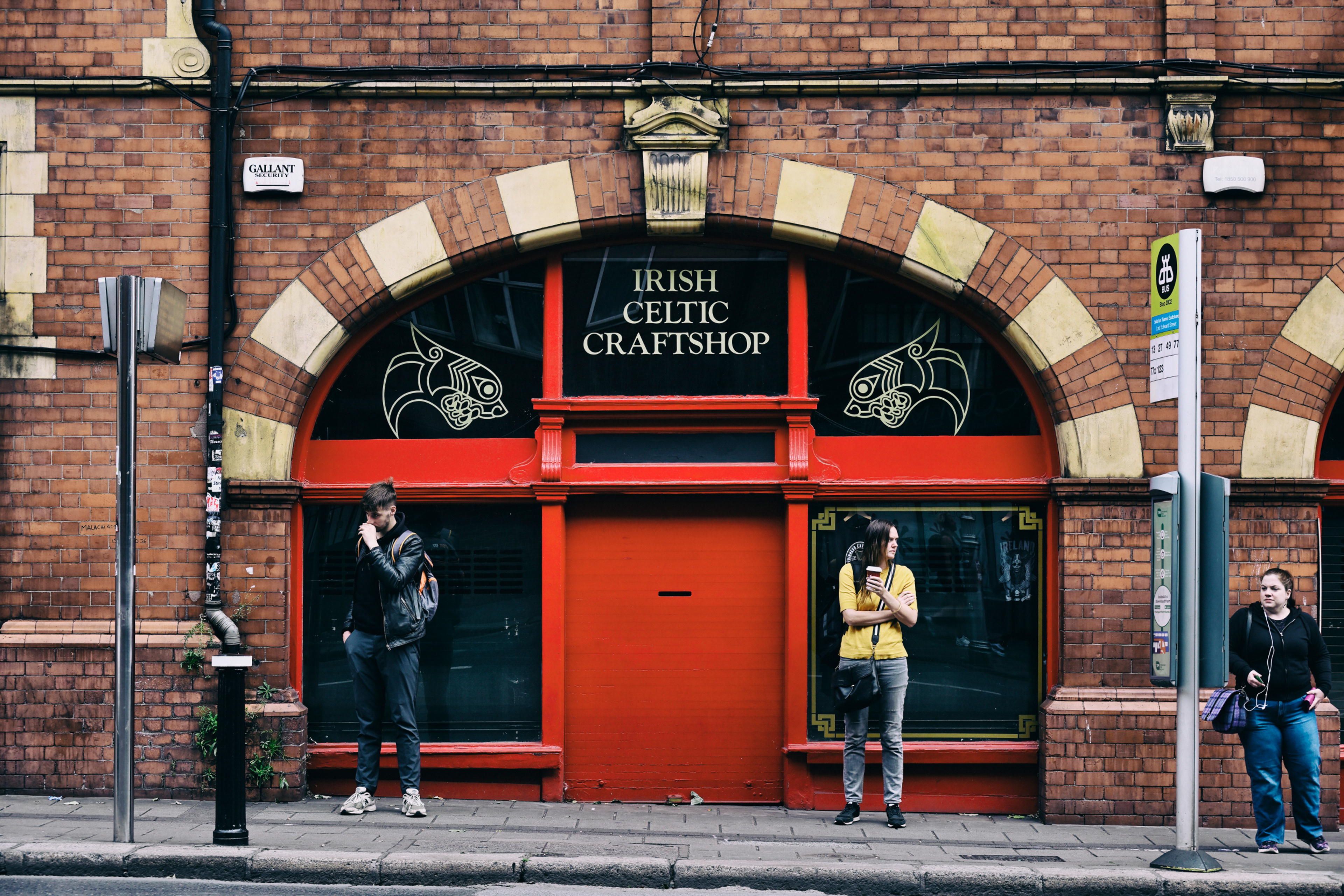
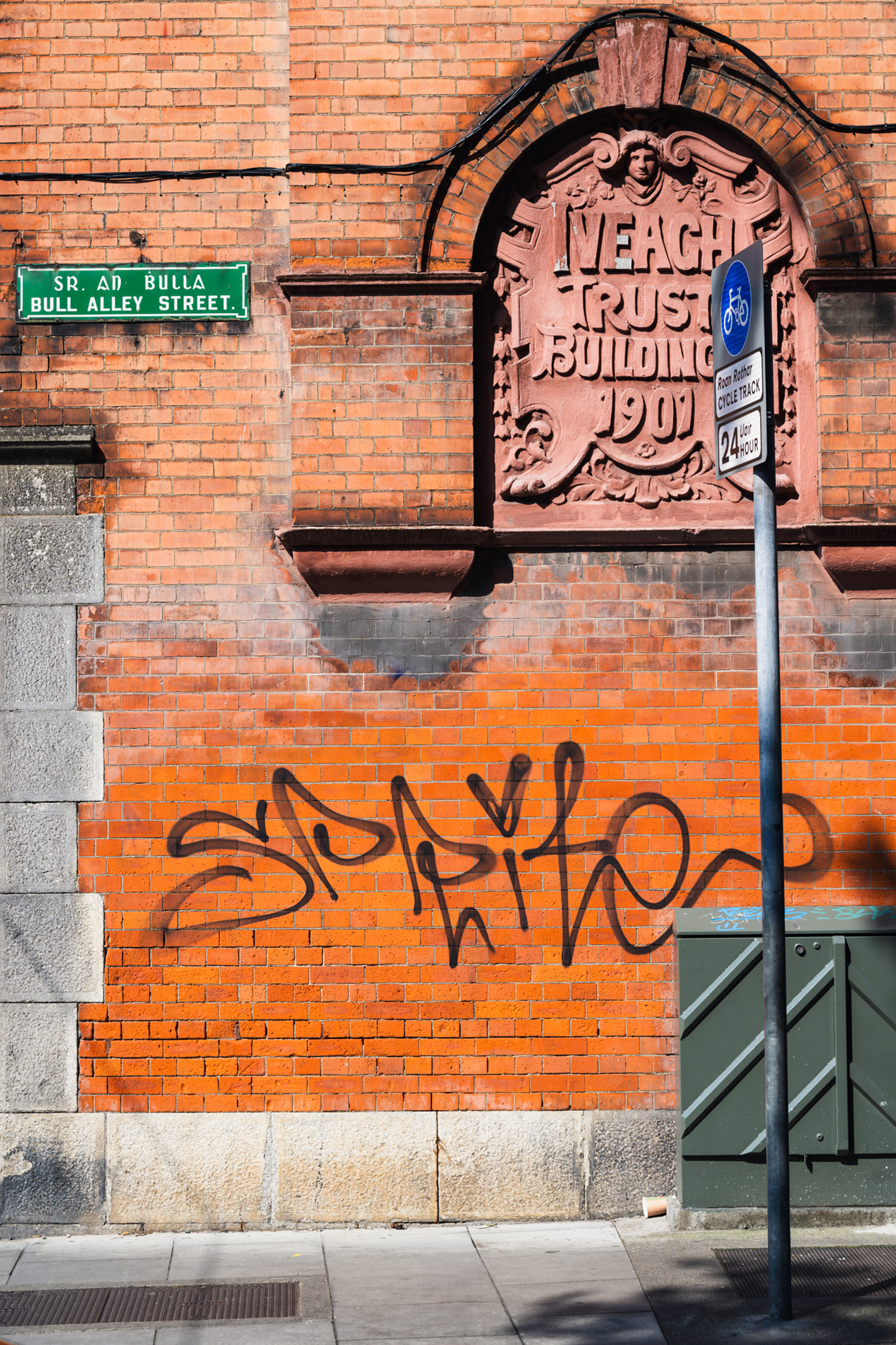
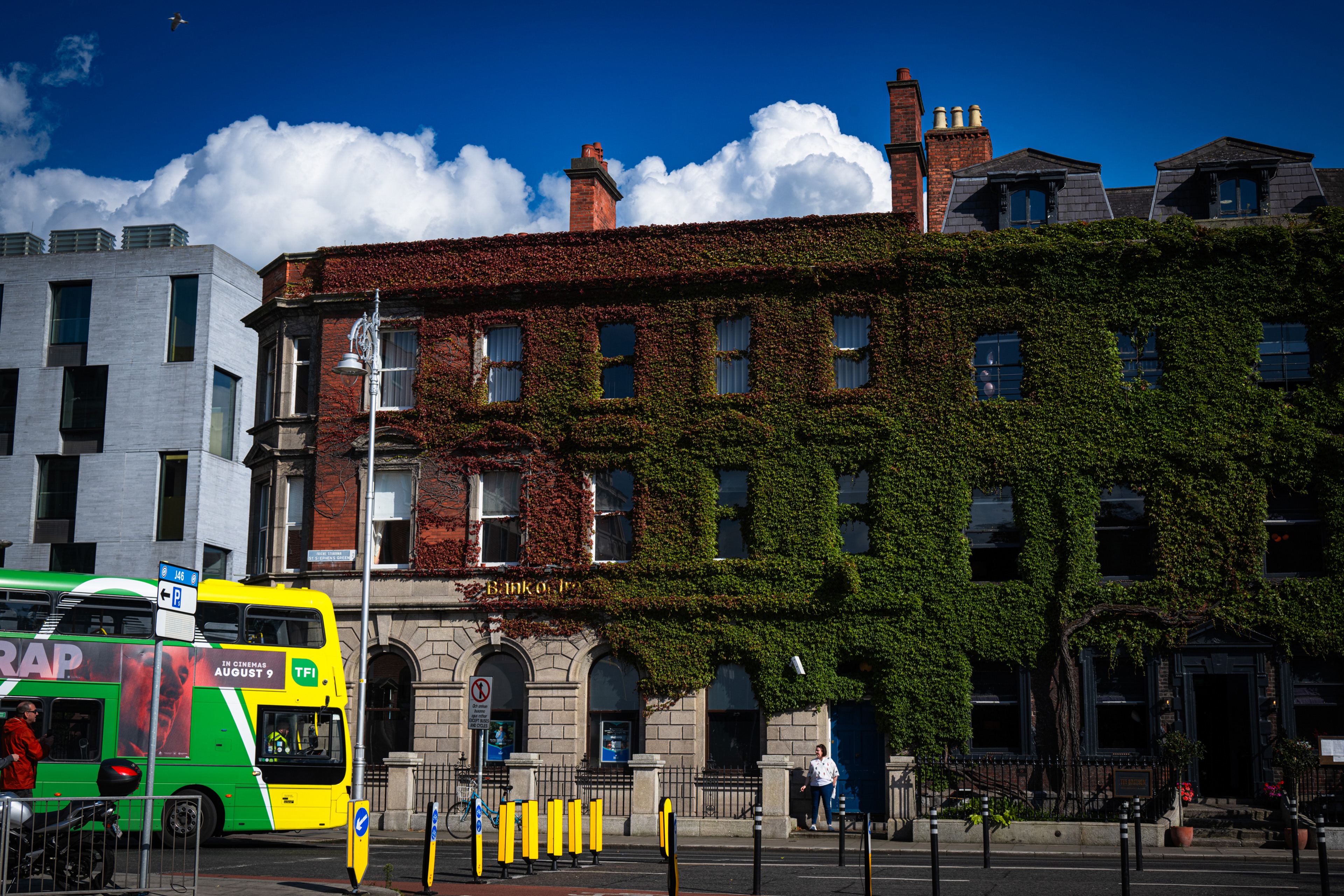
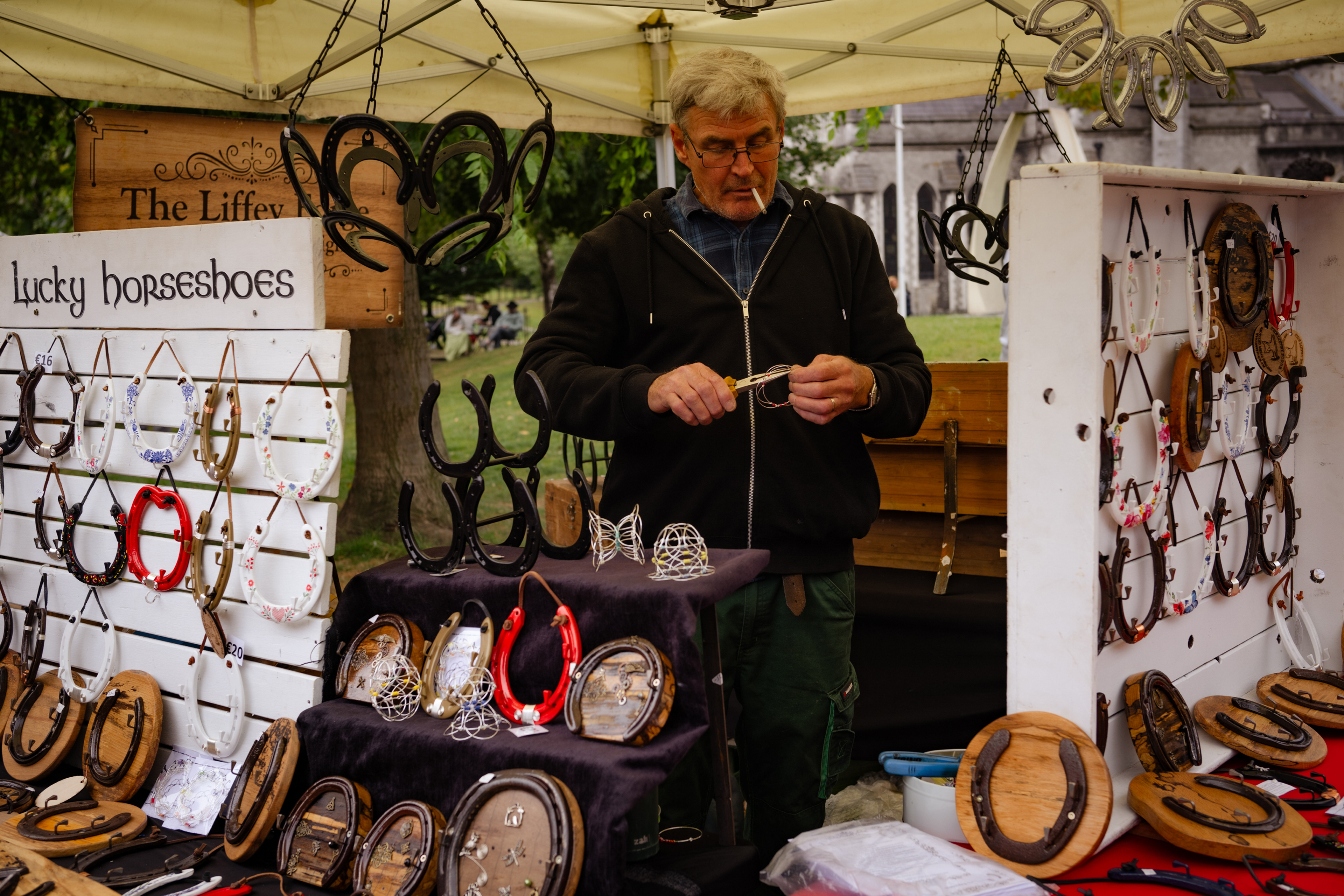
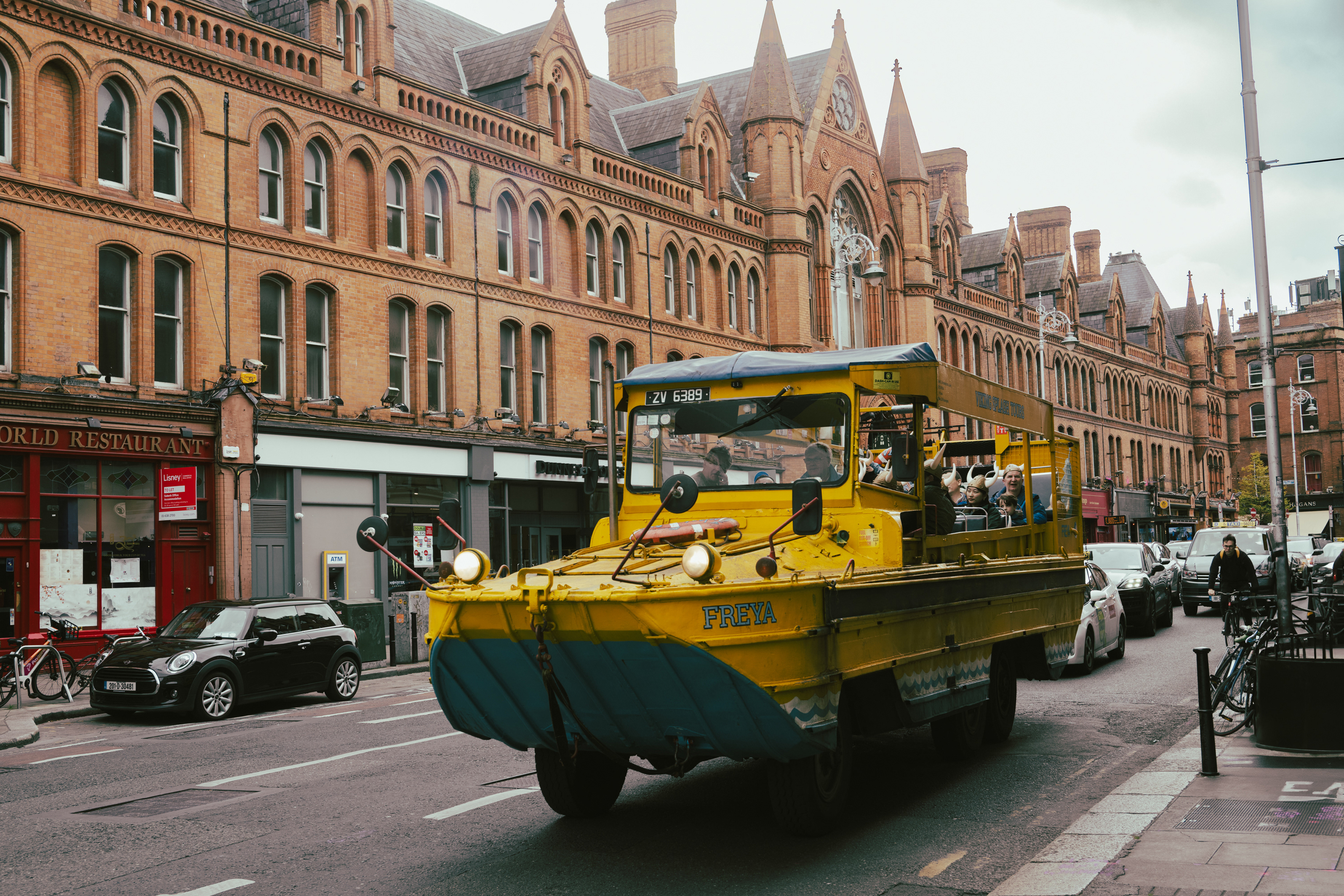
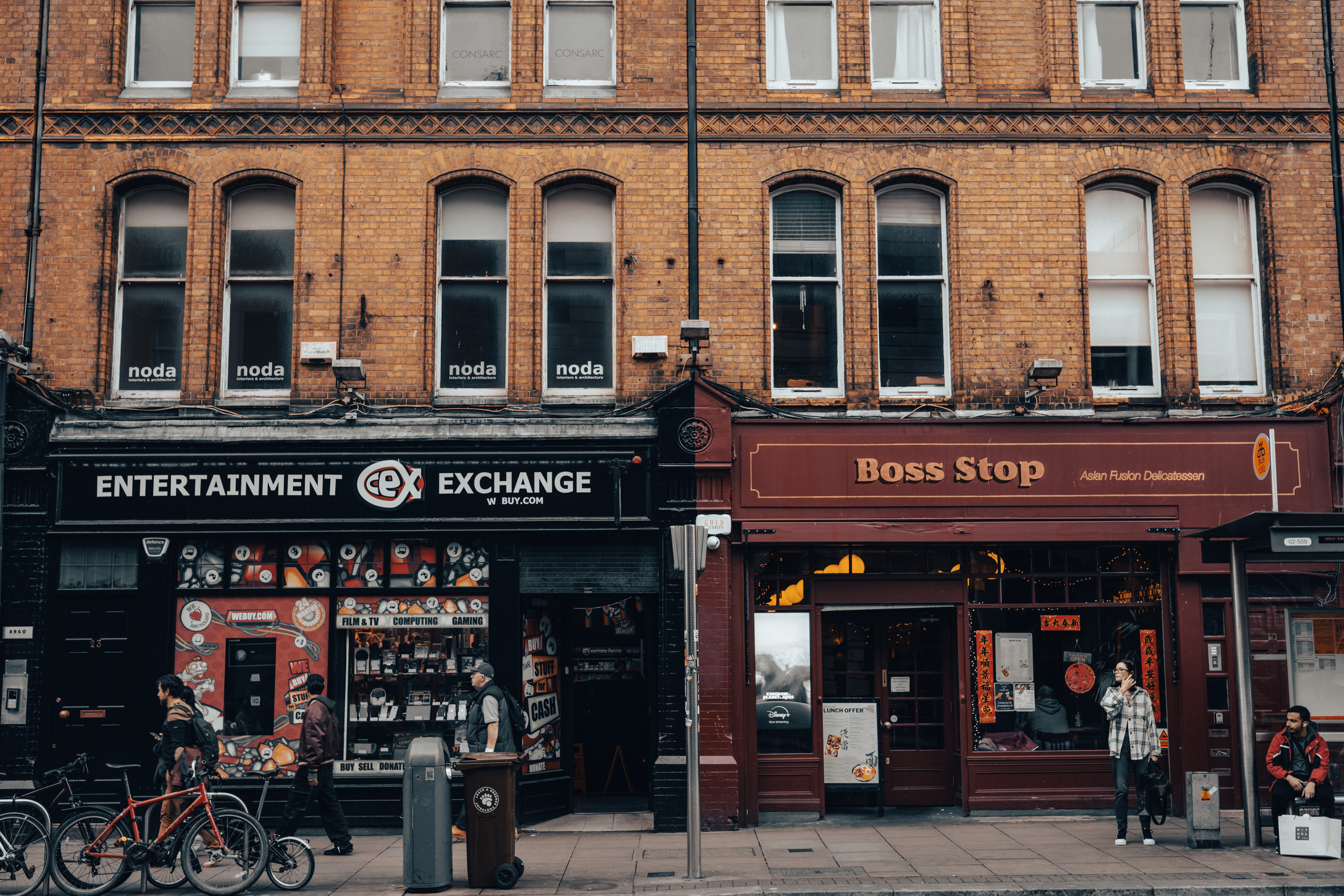
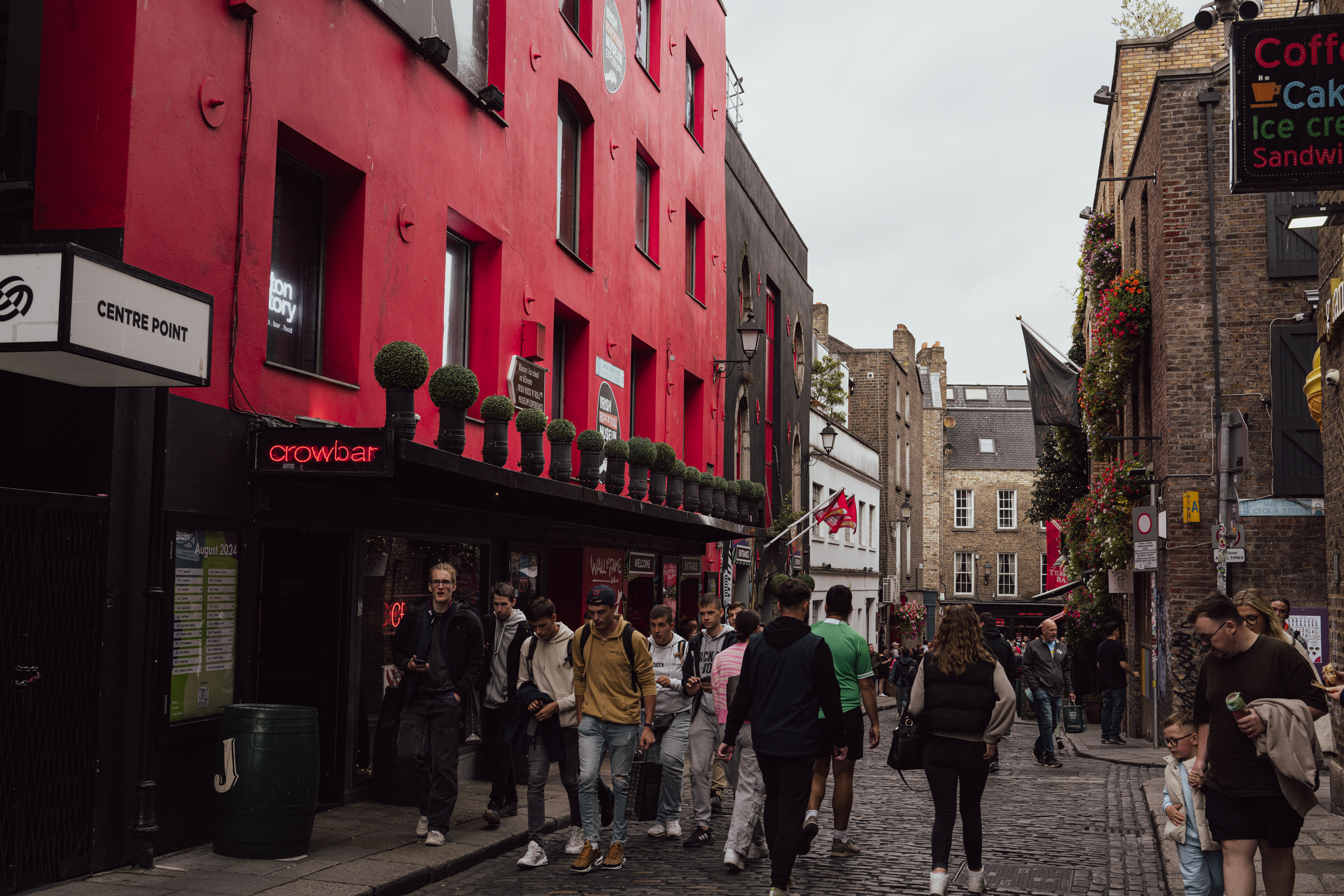
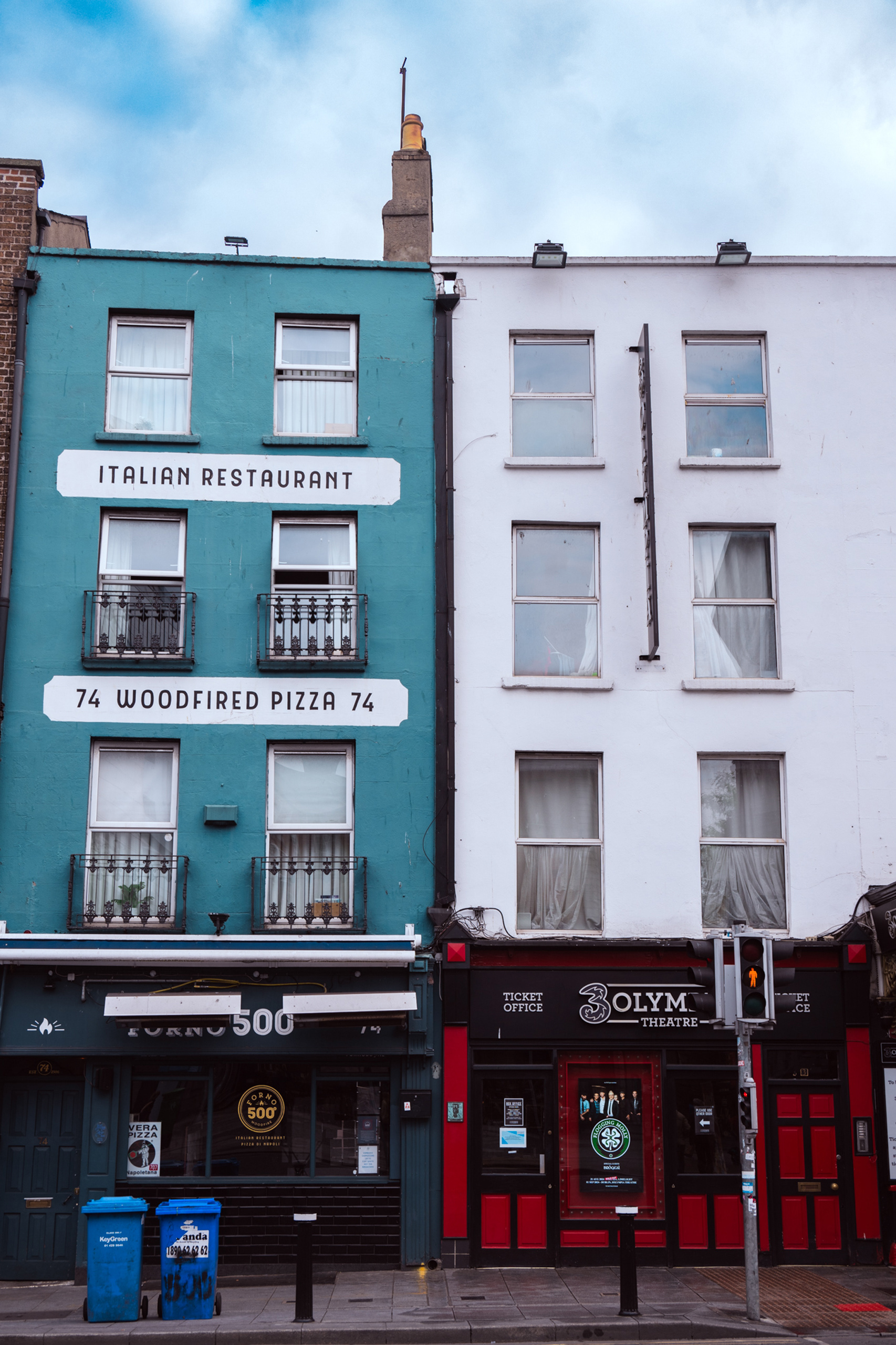
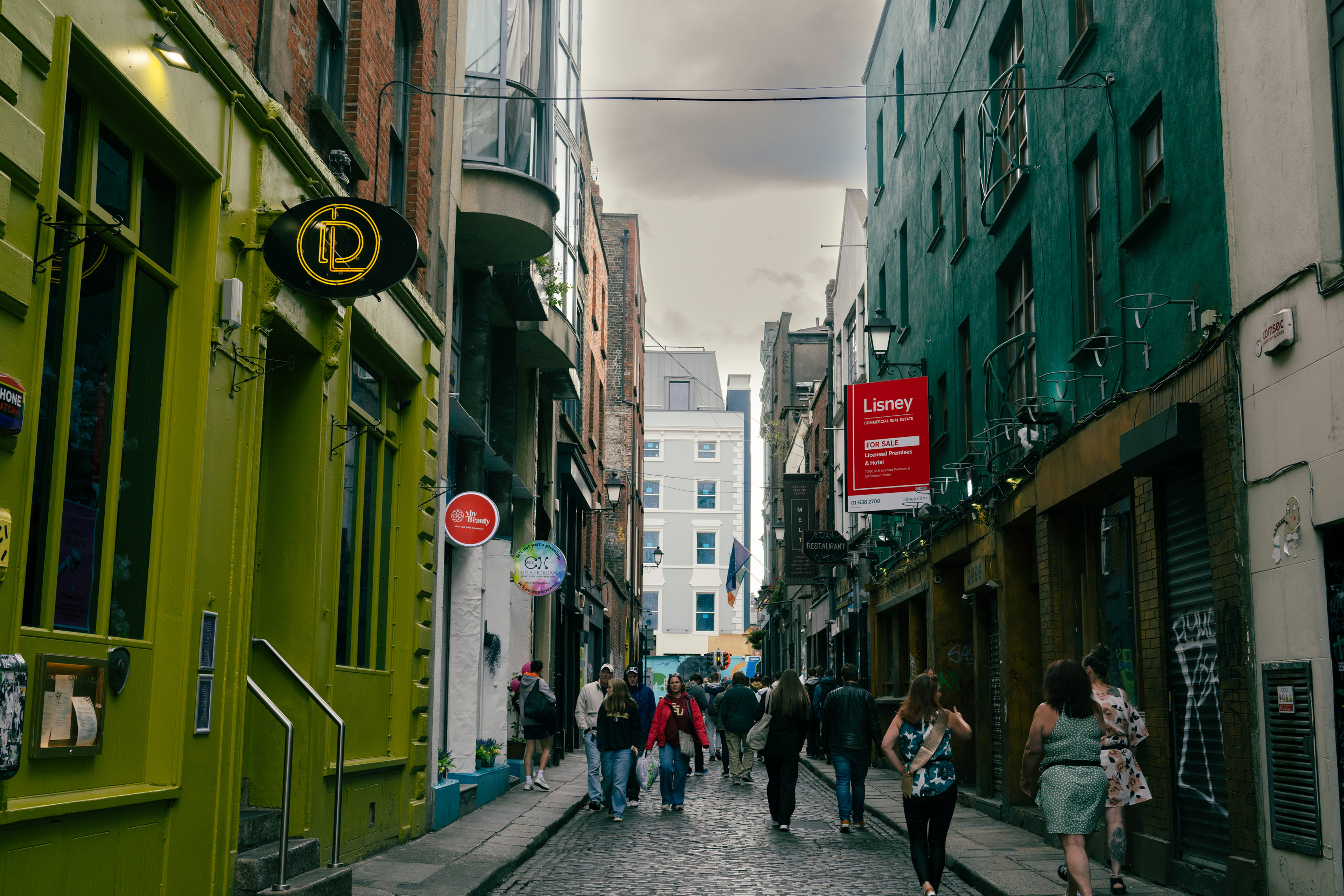
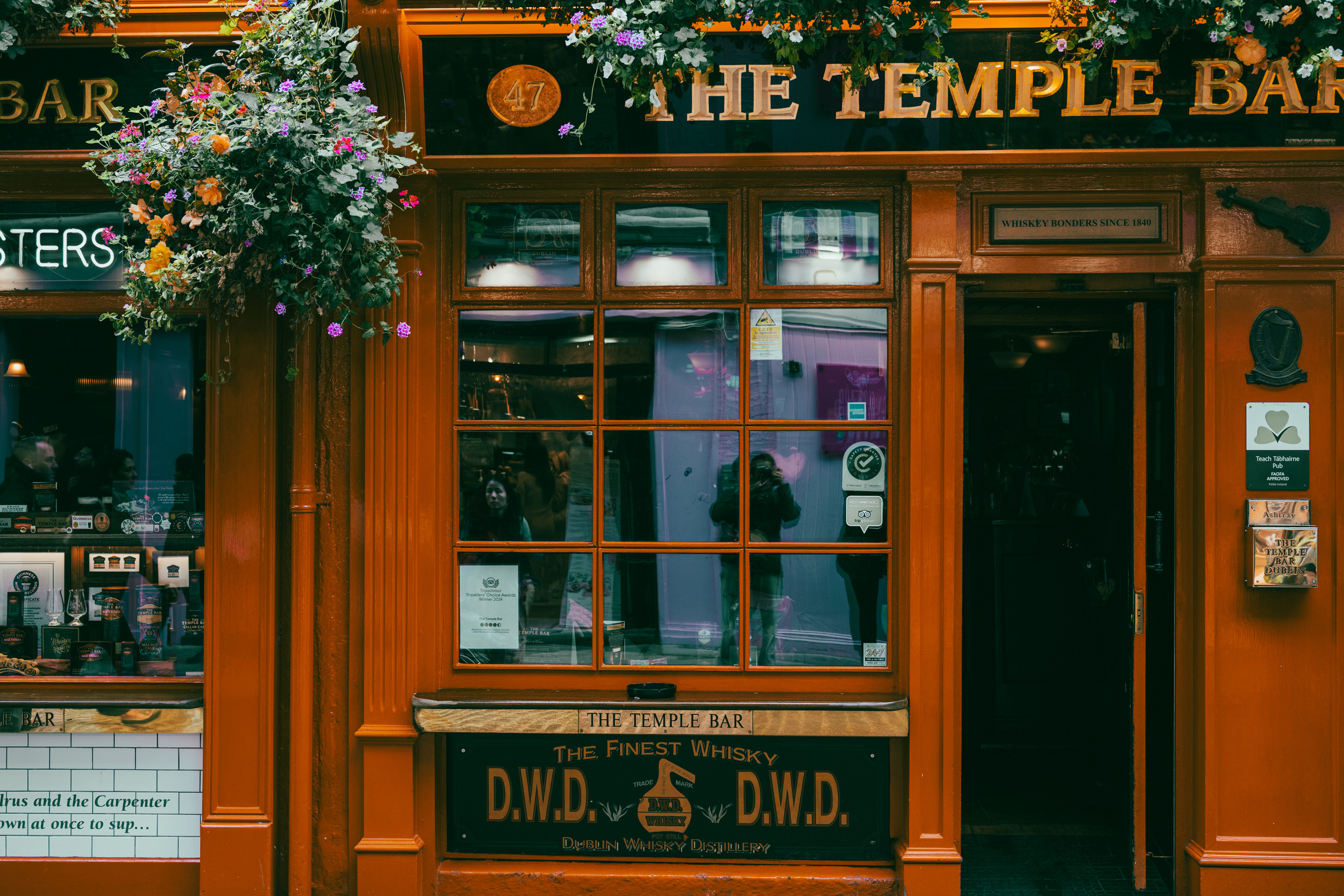
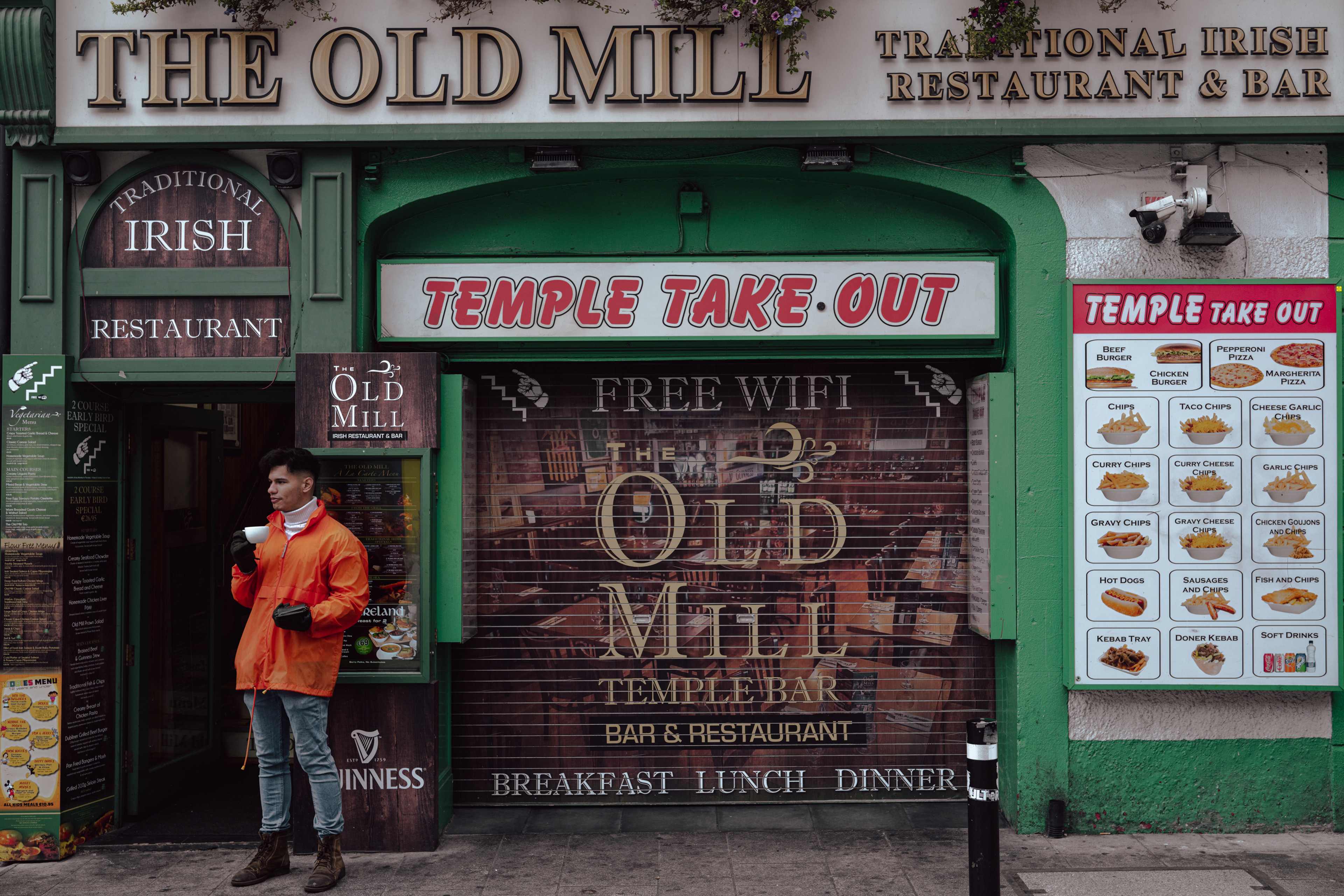
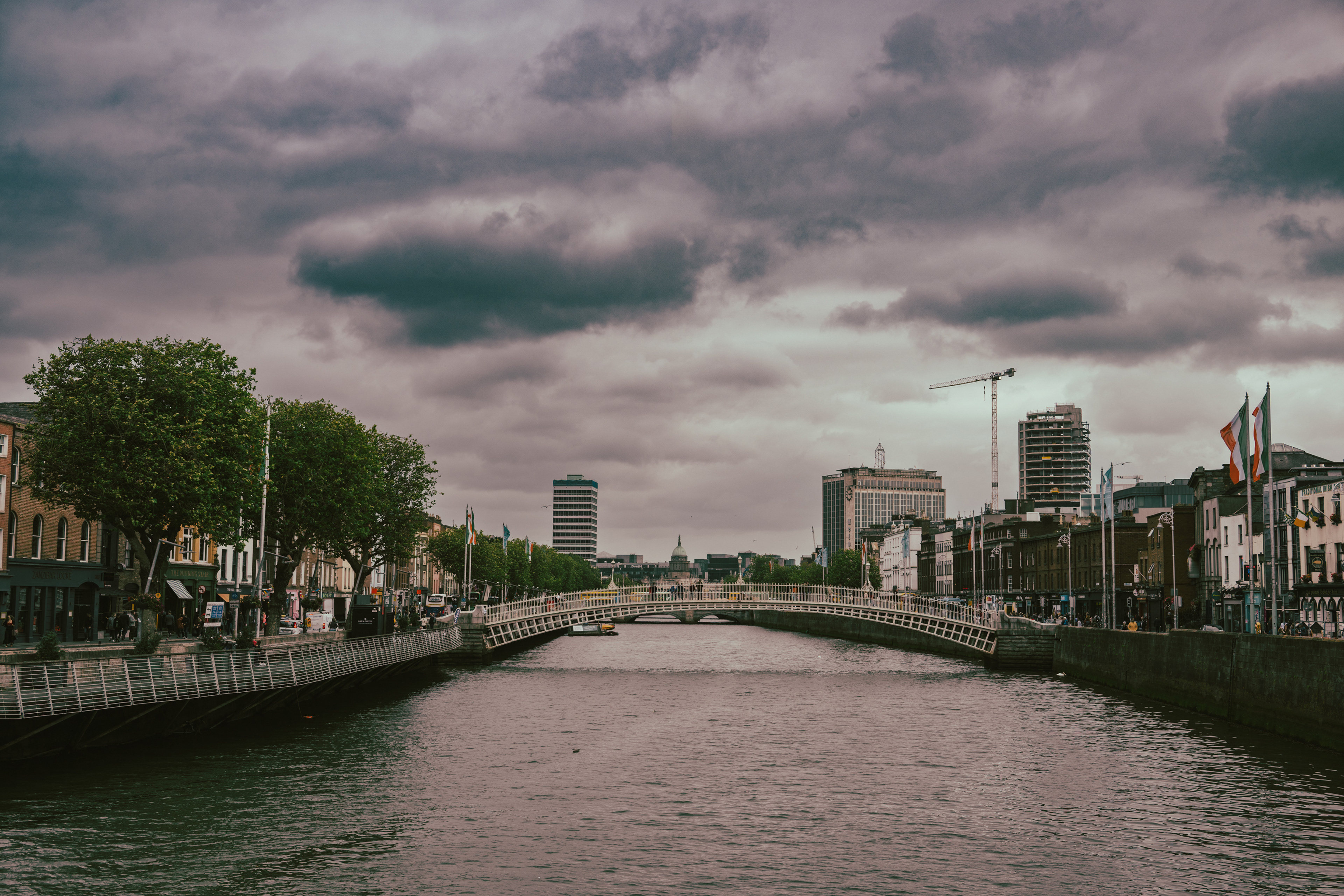
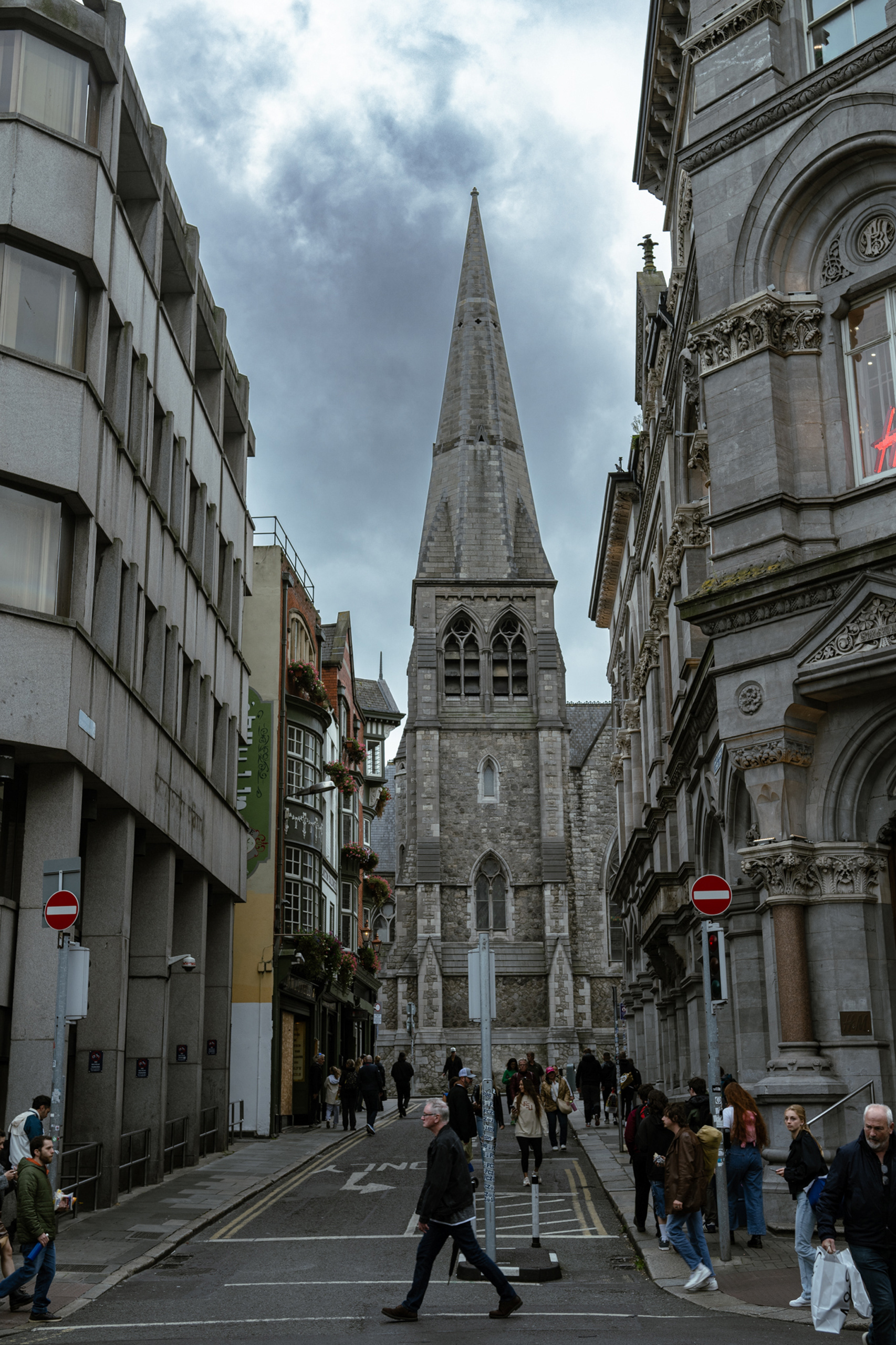
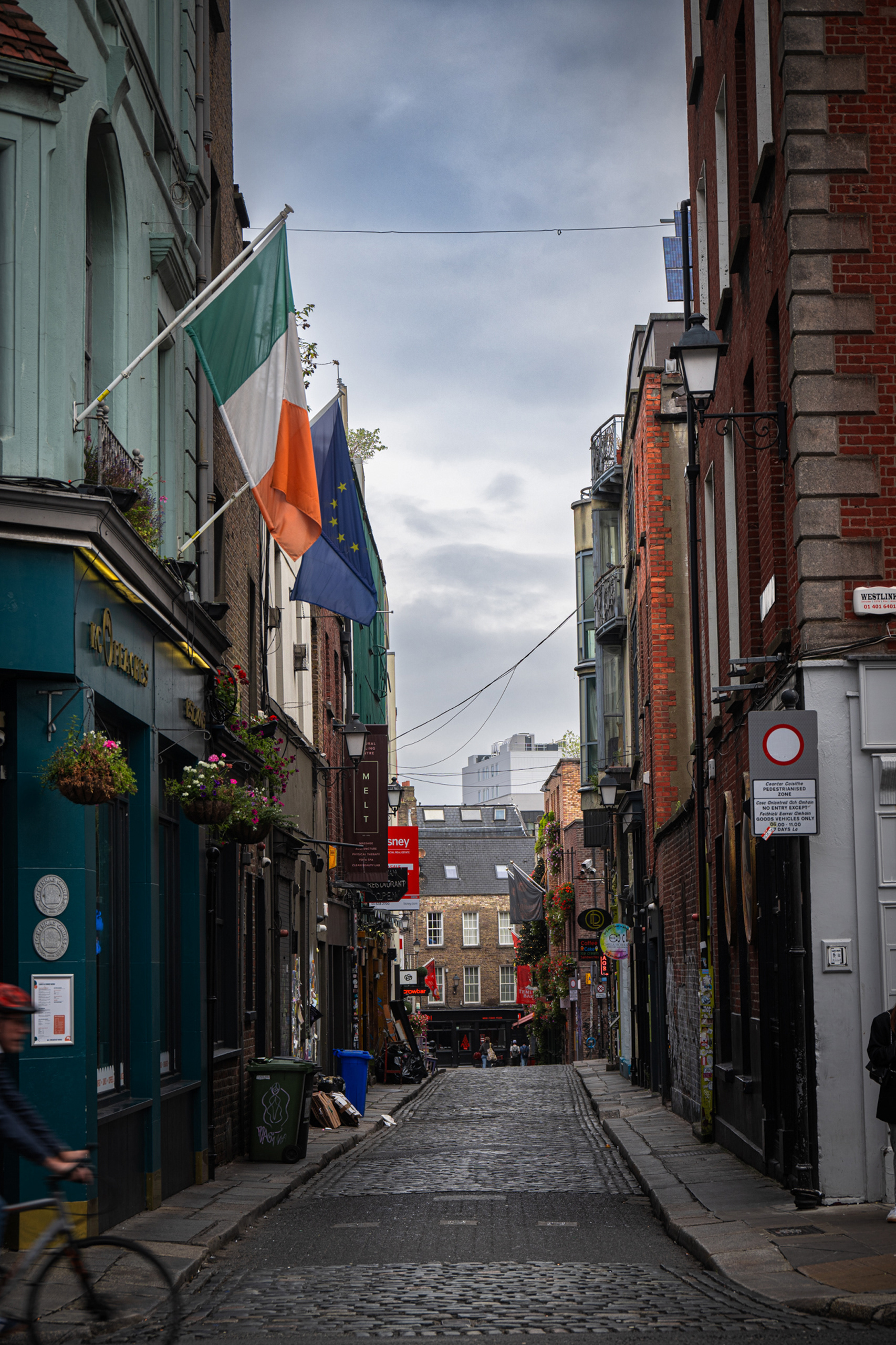
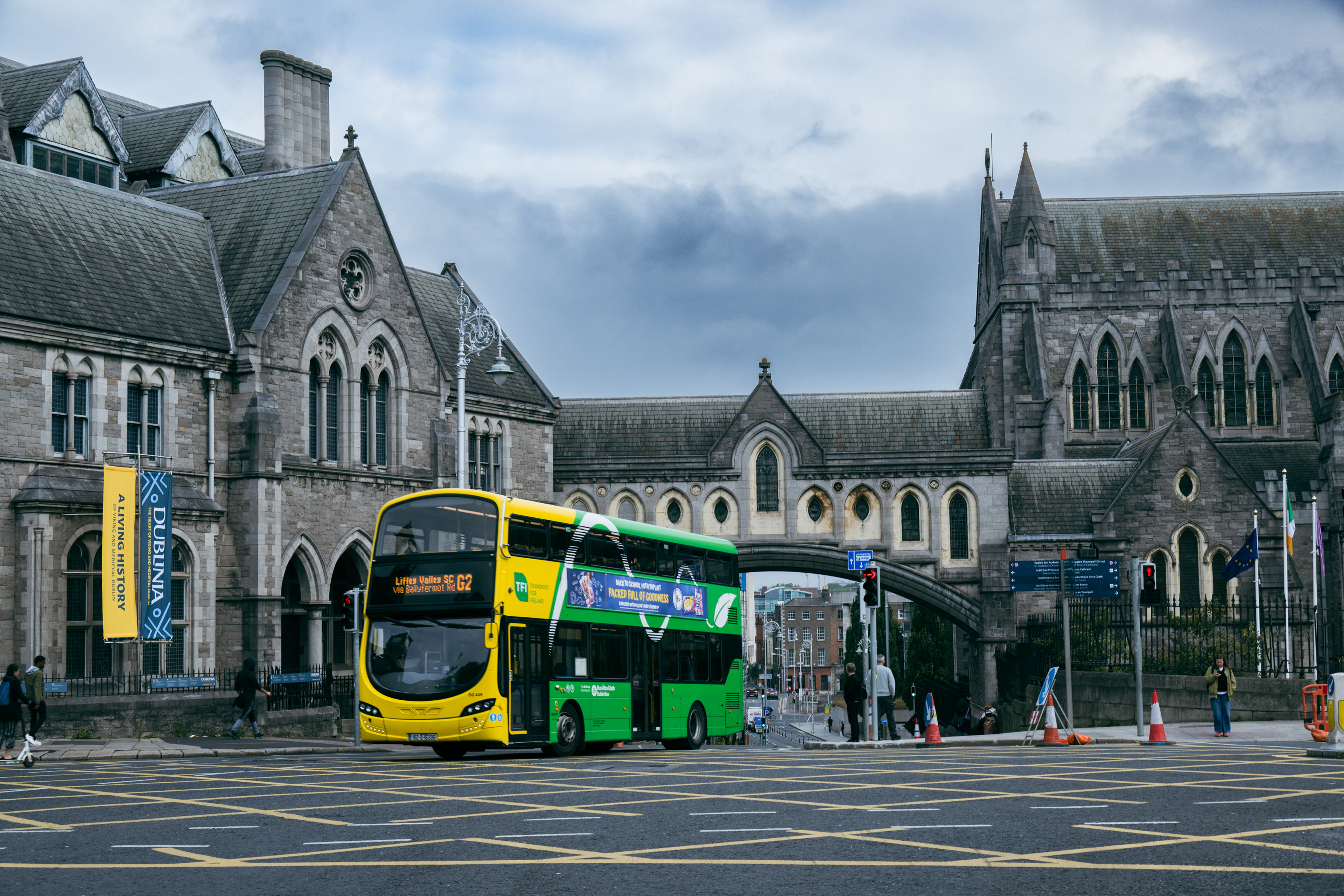
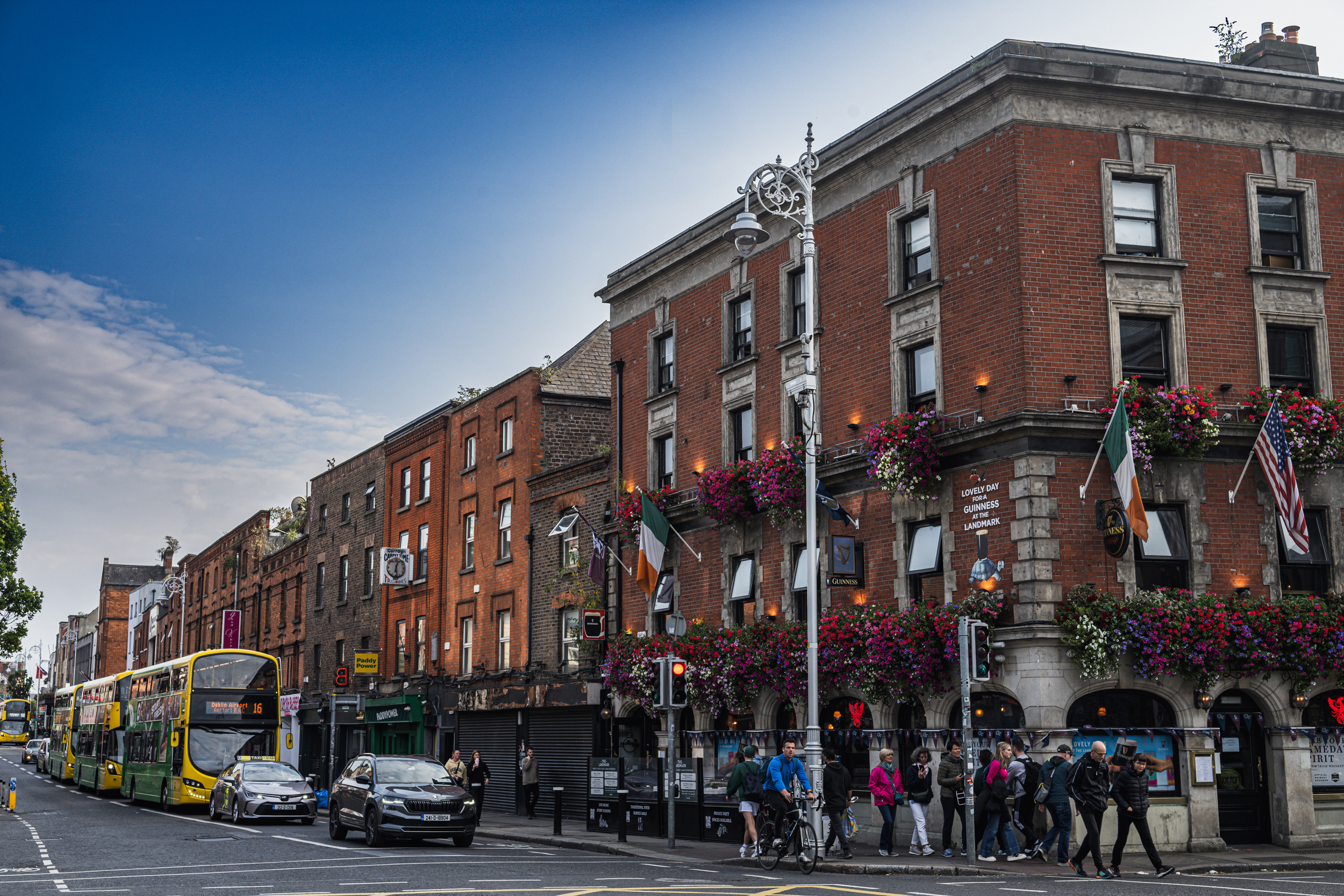
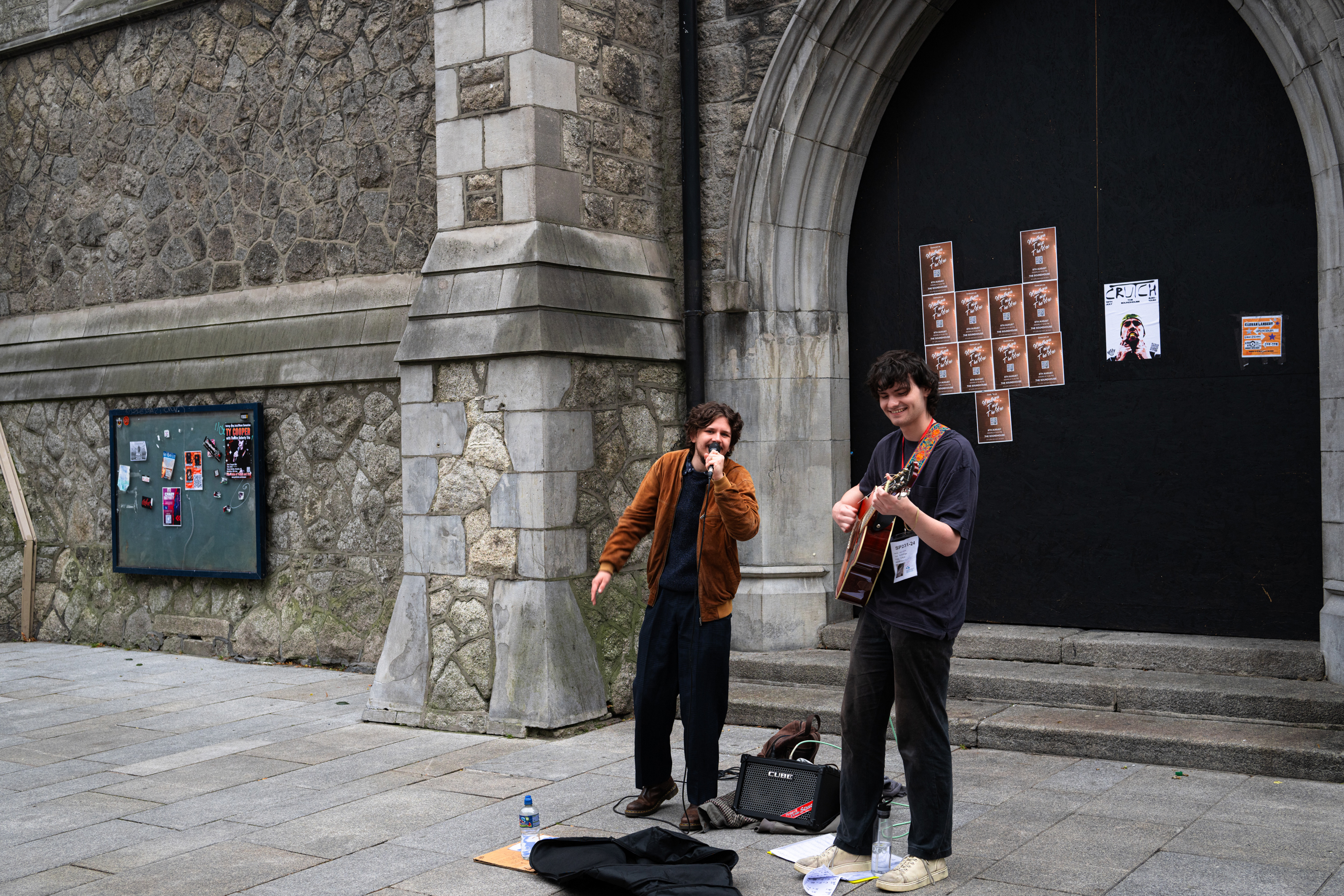
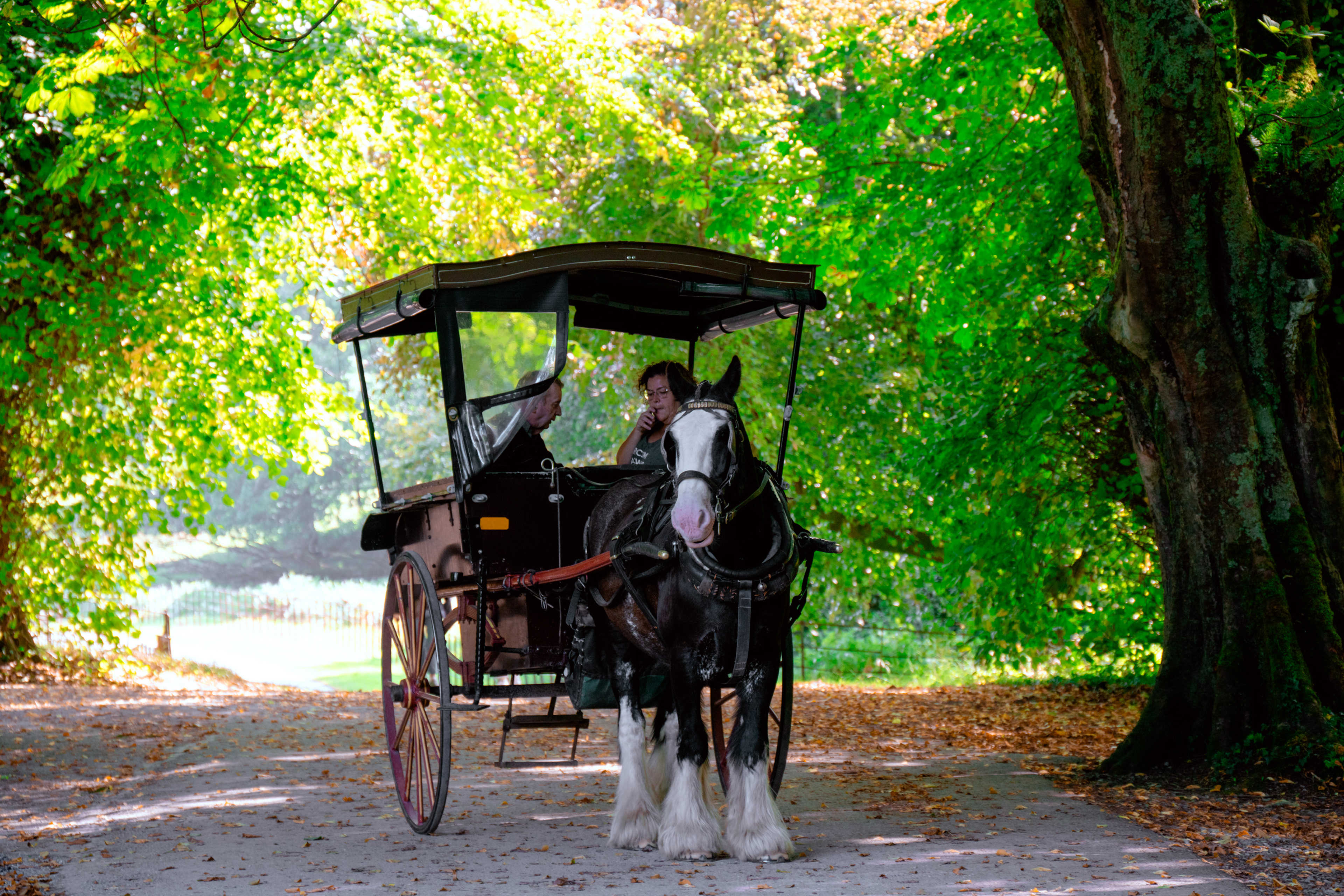
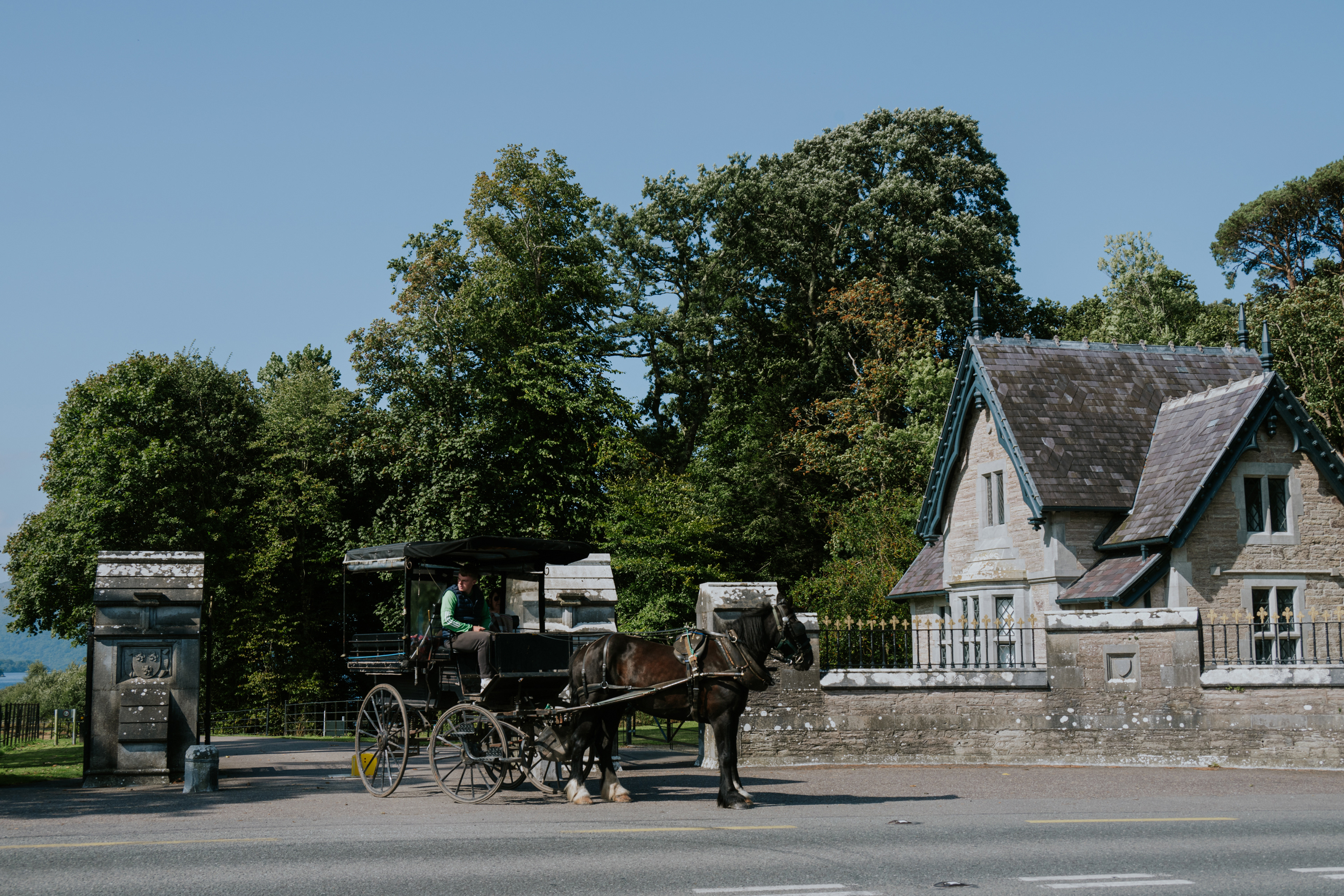
Between the named stops, the camera kept catching smaller scenes: a horse-drawn carriage, walls of graffiti, a building wrapped in ivy, a line of people waiting for a bus. We photographed St Patrick's Cathedral, the Winding Stair bookshop on the quay above the River Liffey, the gates of Trinity College, and the open-top sightseeing buses that loop the center. Dublin is compact enough that the walking was the sightseeing.
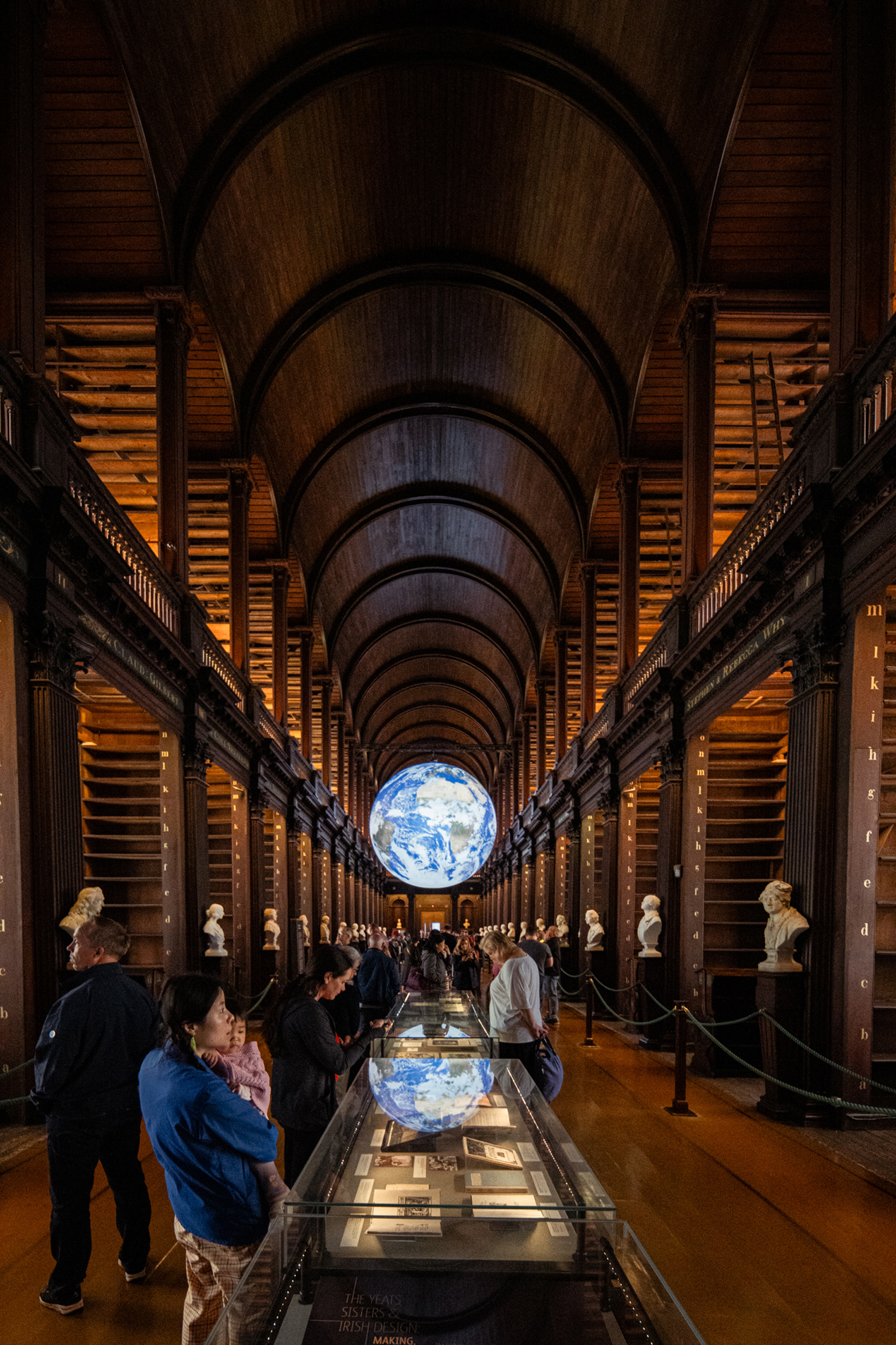
Before leaving the city, we went to Trinity College for the Book of Kells. The manuscript contains the four Gospels in Latin. It was written and painted around the year 800, probably begun by monks on the Scottish island of Iona, and it sits in a climate-controlled case in the Old Library with only a few pages open at a time. That summer the library itself was in the middle of a renovation. Most of the books had been removed from the Long Room for a conservation project, so the barrel-vaulted hall we walked through was lined largely with empty shelves. An illuminated sculpture of the Earth hung where visitors usually look up at books. It was an unusual year to see it.
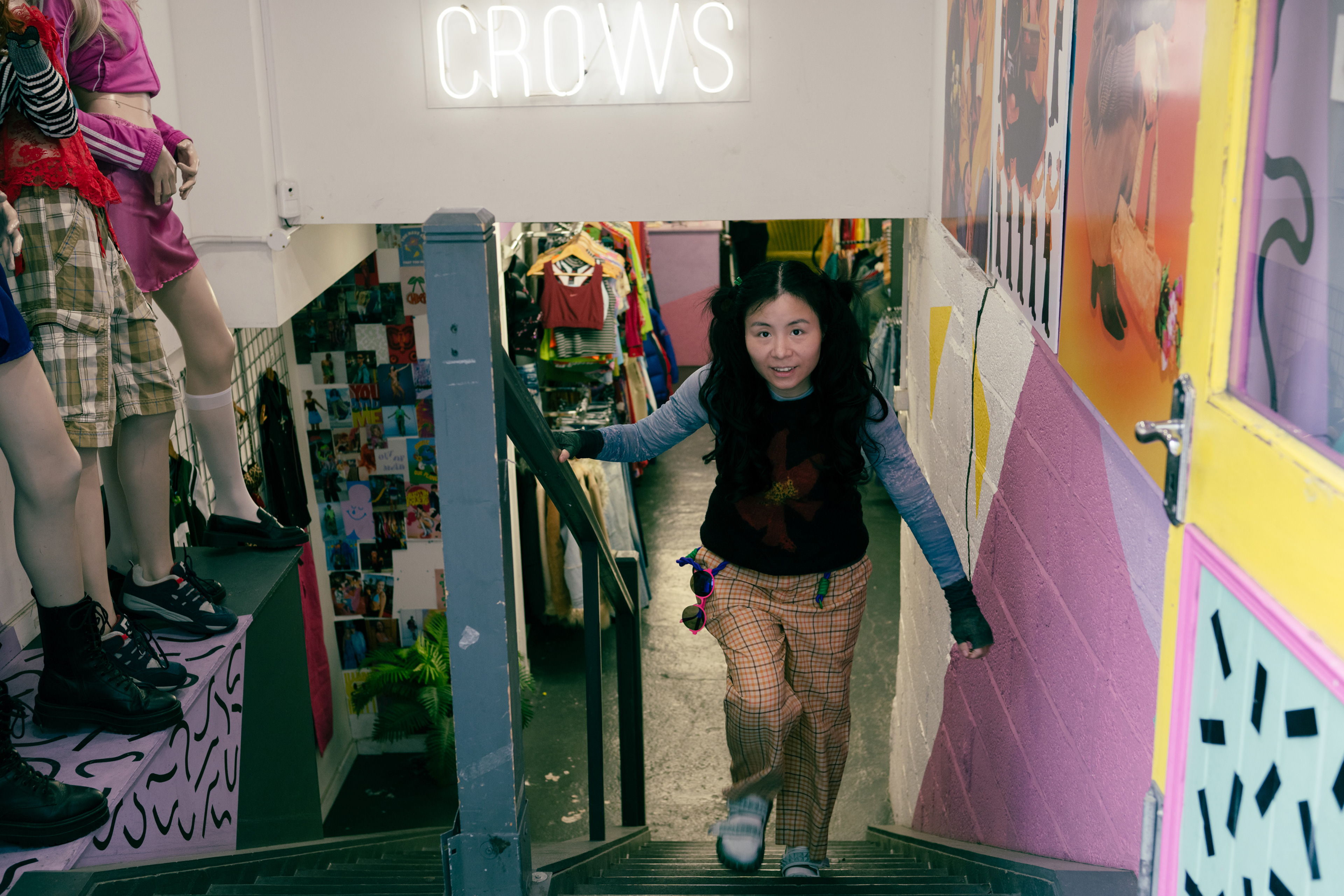
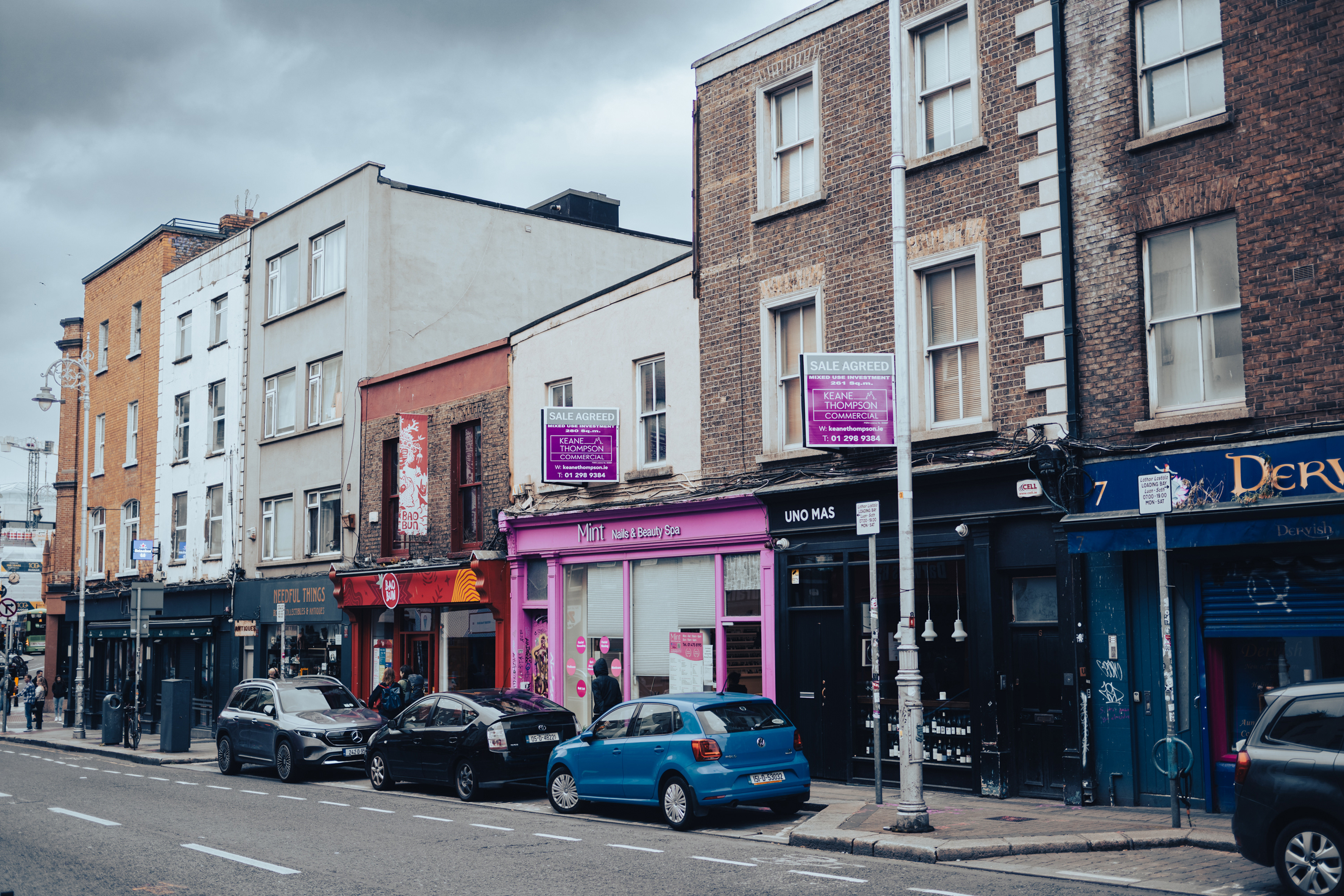
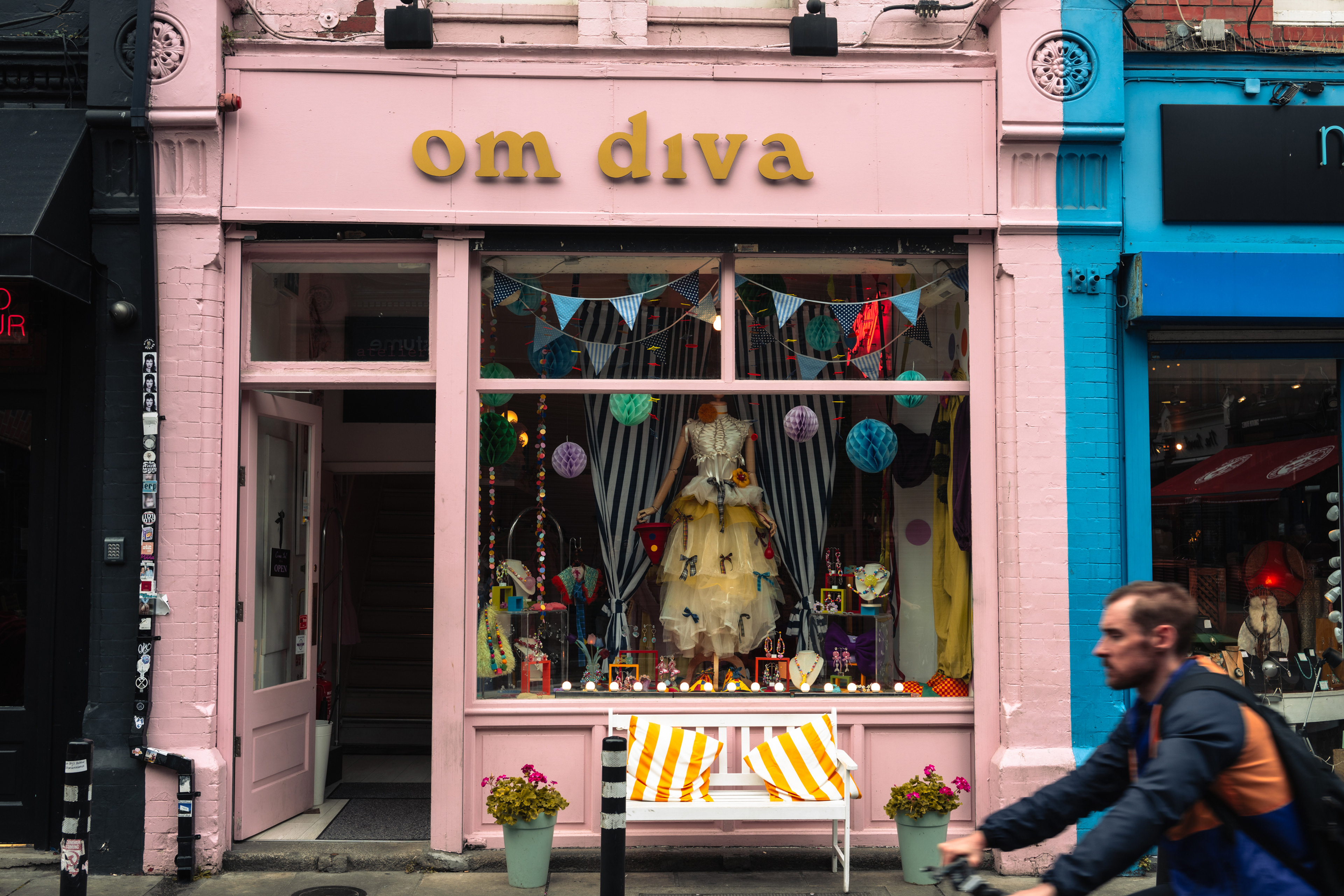
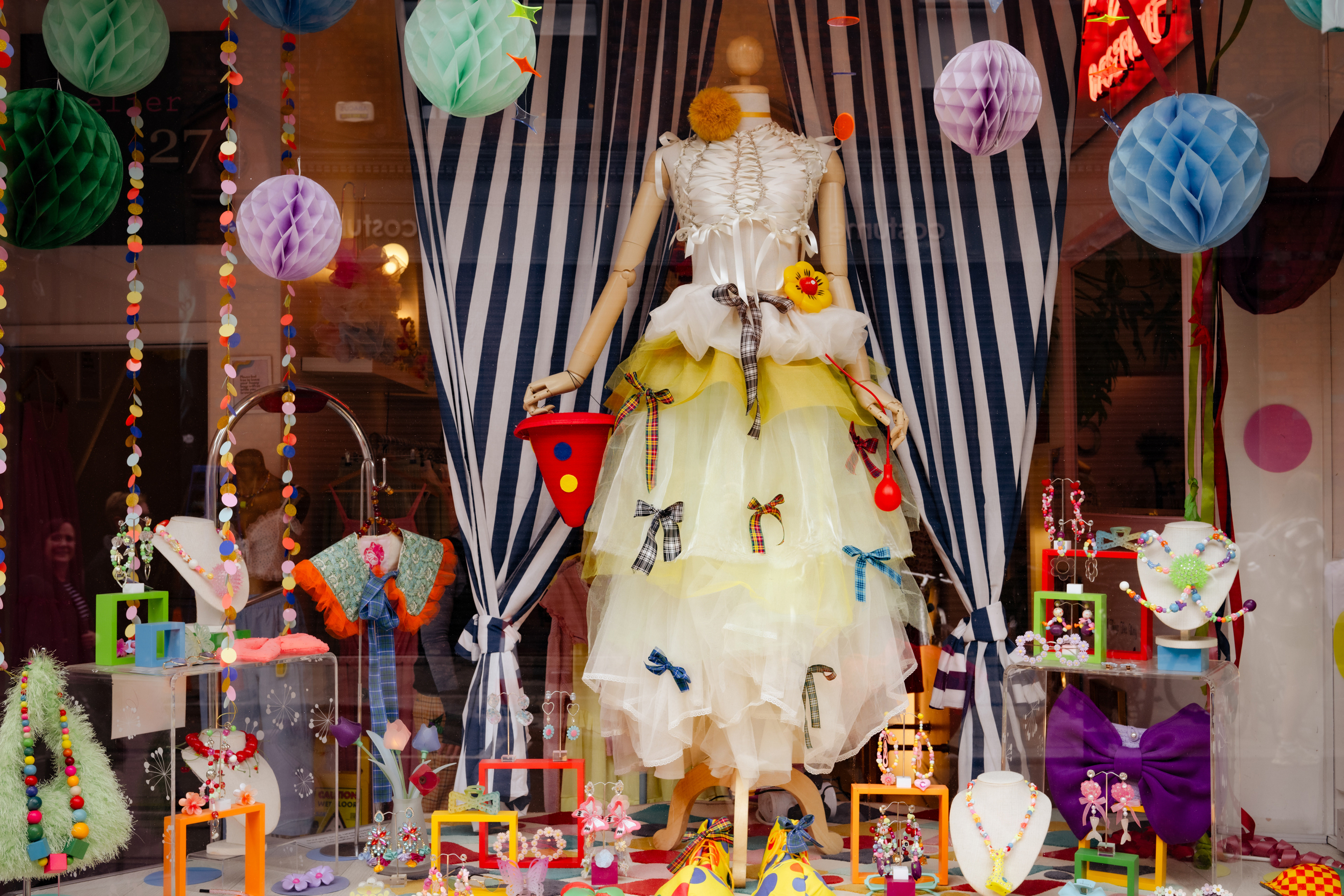
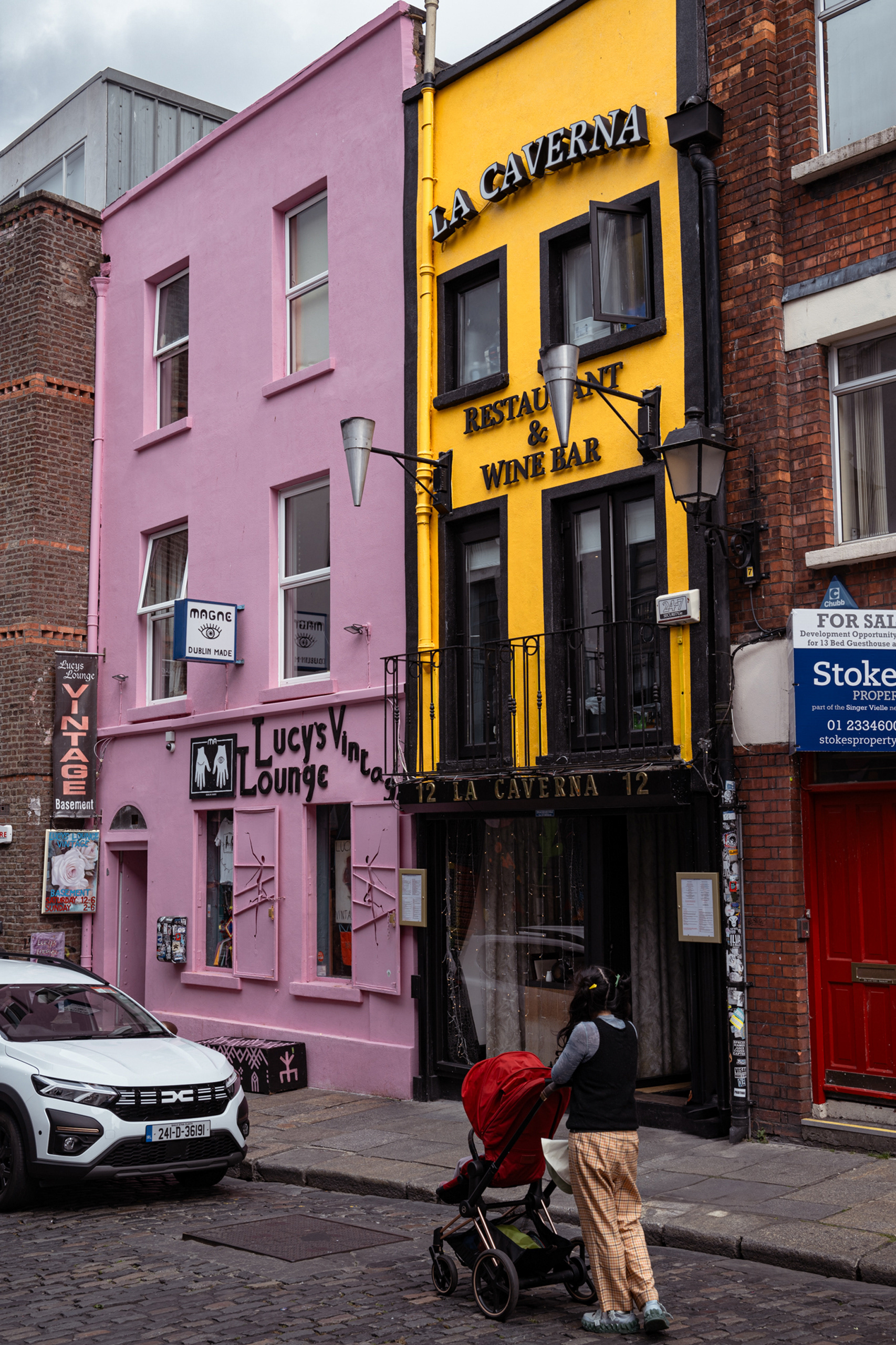
We came back to Dublin at the end of the loop for a last night at the Conrad, close to St Stephen's Green, and gave the afternoon to vintage shops. Our notes listed six: Nine Crows, Vintage Factory, Tola Vintage, Lucy's Lounge, Flip and Om Diva. The next morning we flew home.











Keeping Left
I have driven on the right my whole life. Ireland drives on the left, one of three countries in the European Union that do, along with Malta and Cyprus, and its signs give distances and speed limits in kilometers. None of this was a surprise. But I wanted the switch to be over as fast as possible once we had the rental car, which we collected on the outskirts of Dublin, so in the nights before we picked it up, I practiced in bed. Lying in the dark, I drove imaginary routes. I pulled out of junctions looking right first, took roundabouts clockwise, and kept the car in the left lane with my own shoulder beside the center line.
Once I was behind the wheel, it was much less difficult than the rehearsals had assumed. The car does a great deal of the reminding. With the steering wheel on the right, the driver sits next to the center line, and drifting toward the wrong side of the road feels wrong from the seat, before any conscious thought arrives. Turning, merging and roundabouts all followed from that one fact about where I was sitting.
The part that stayed interesting all trip was not the side of the road but its width. Many of the routes to our castles and farms left the main roads for narrow country lanes. Driving those on the left for the first time is the part of the trip we still describe as a thrill. The rehearsals in bed were probably more than the problem needed. Still, the first time I sat on the right side of a moving car, very little about it was new.
Powerscourt and Glencullen
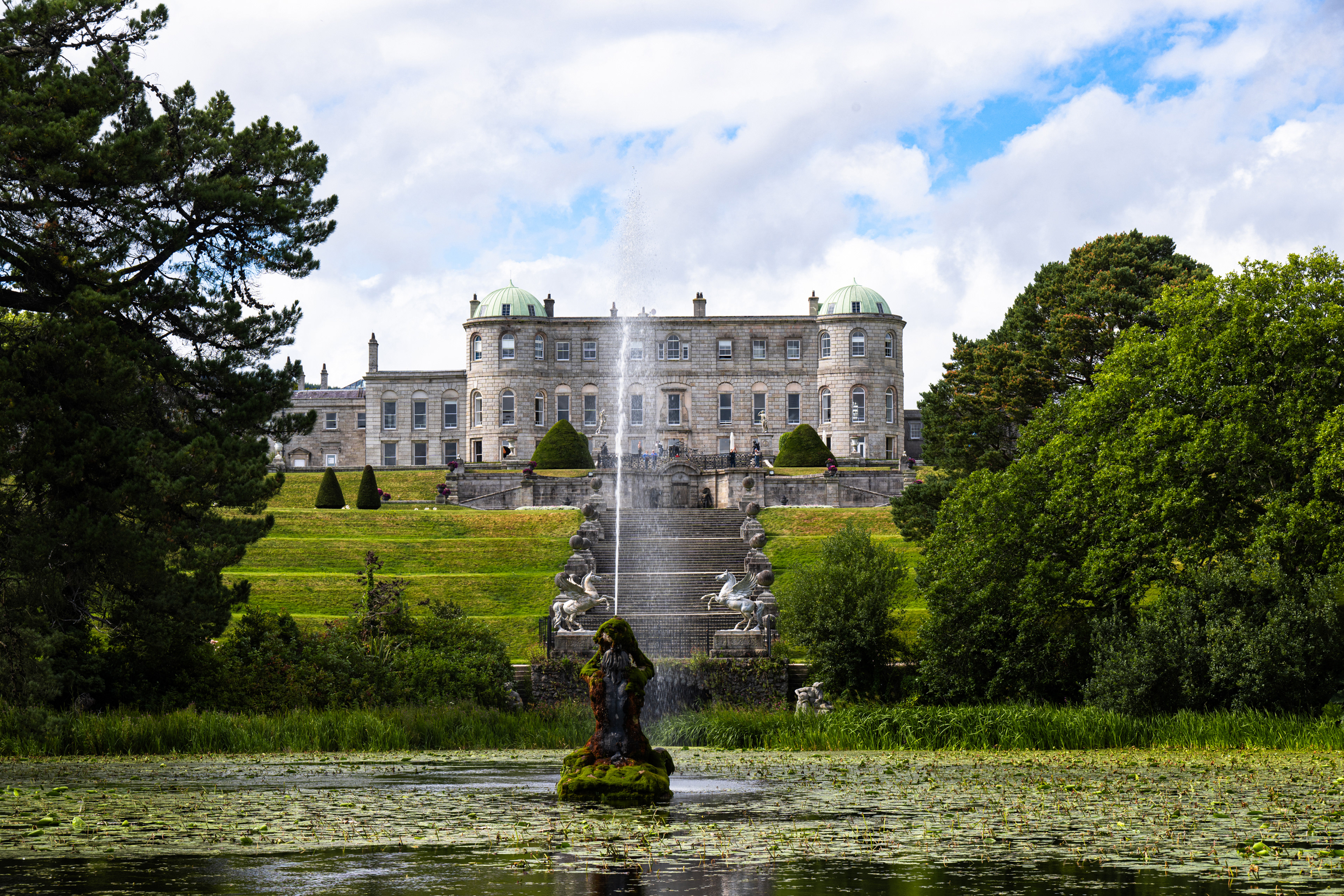
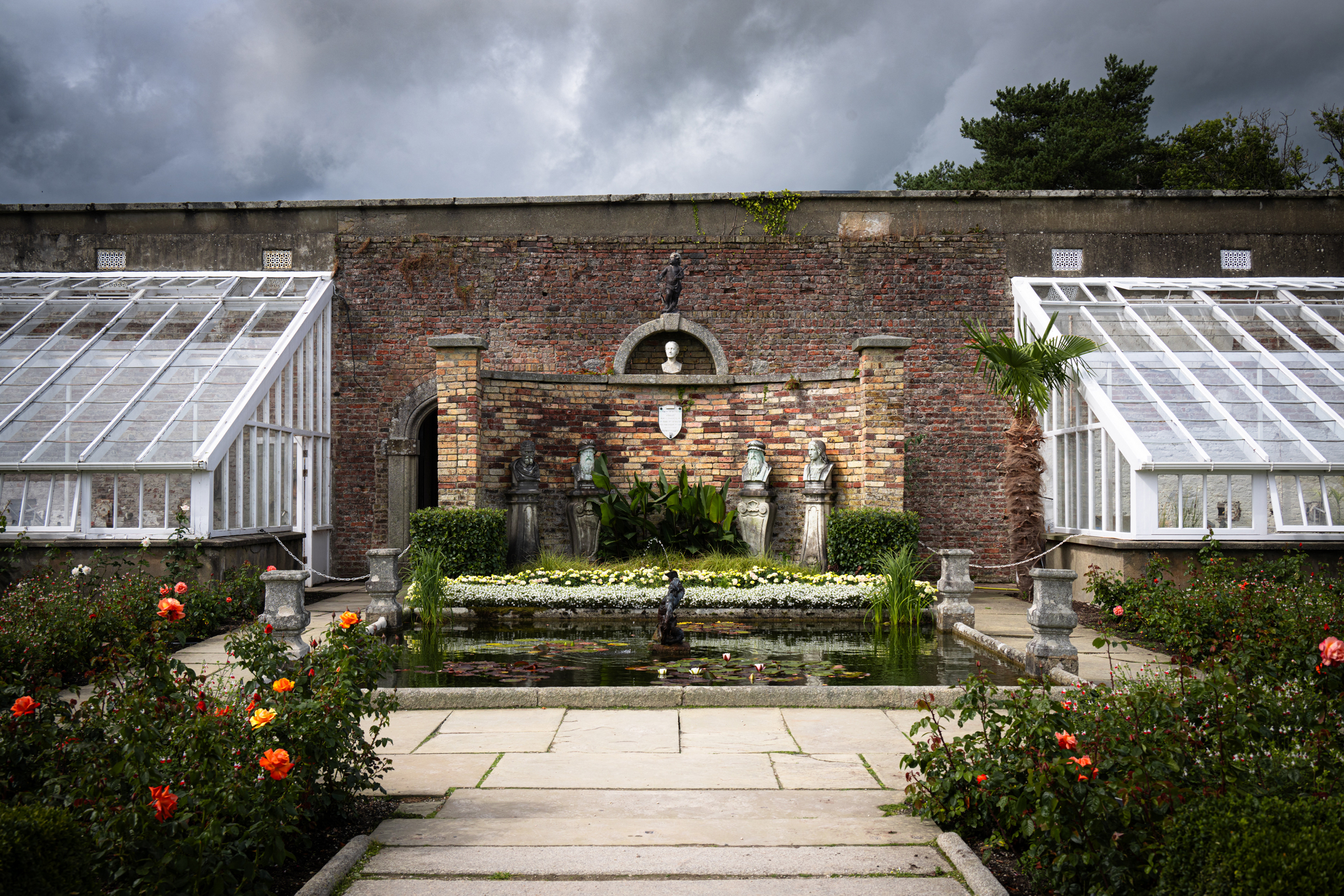
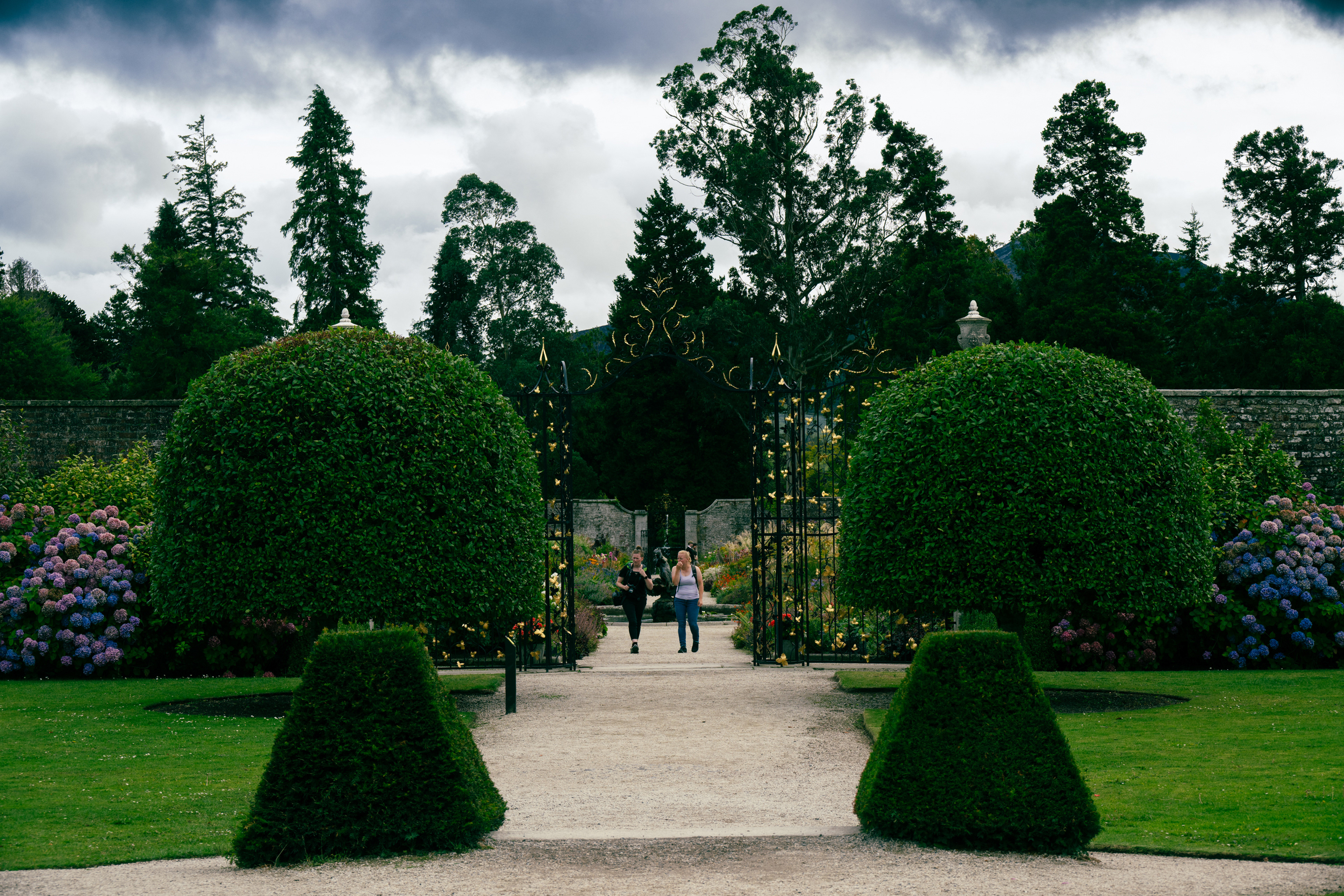
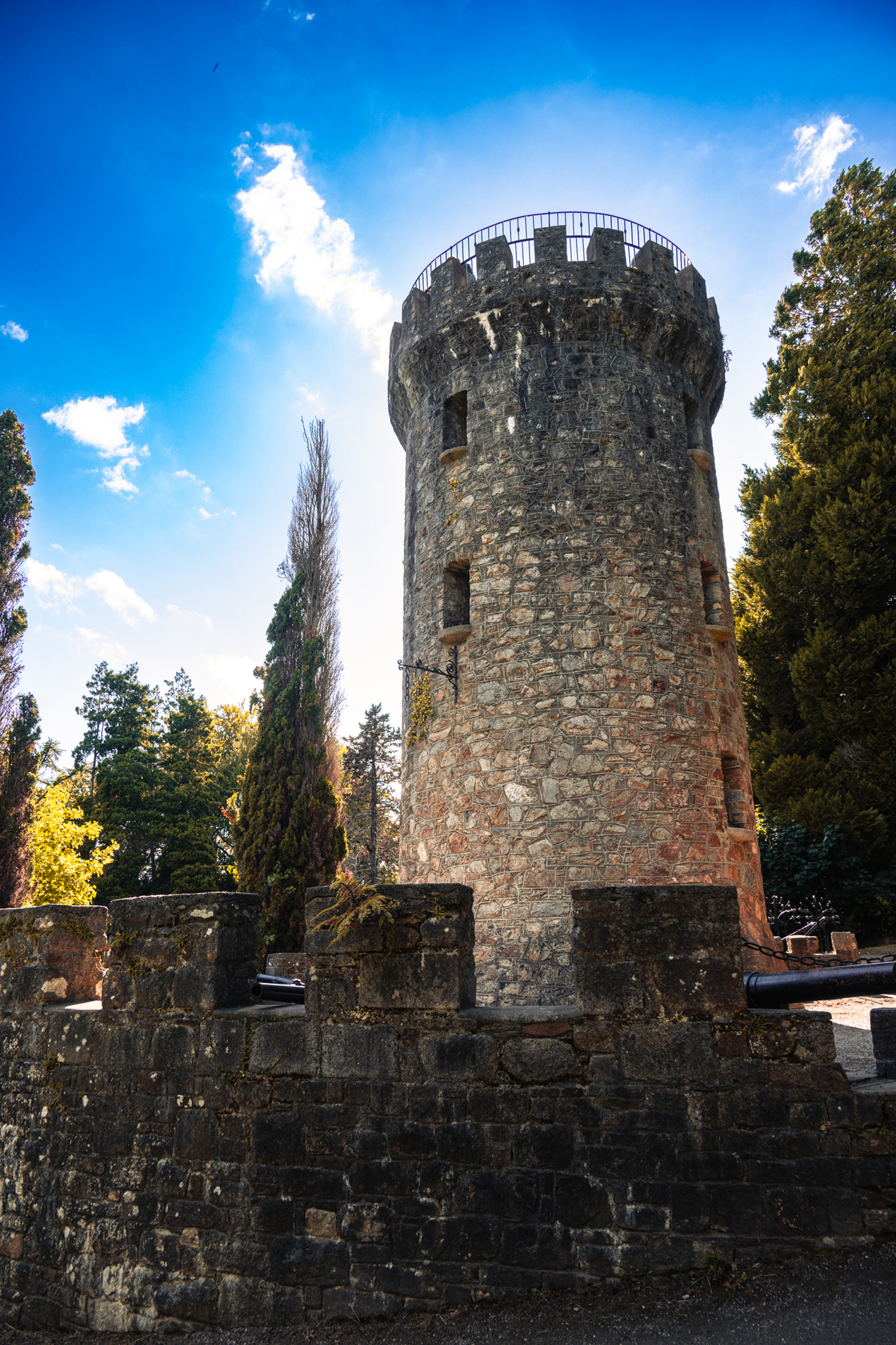
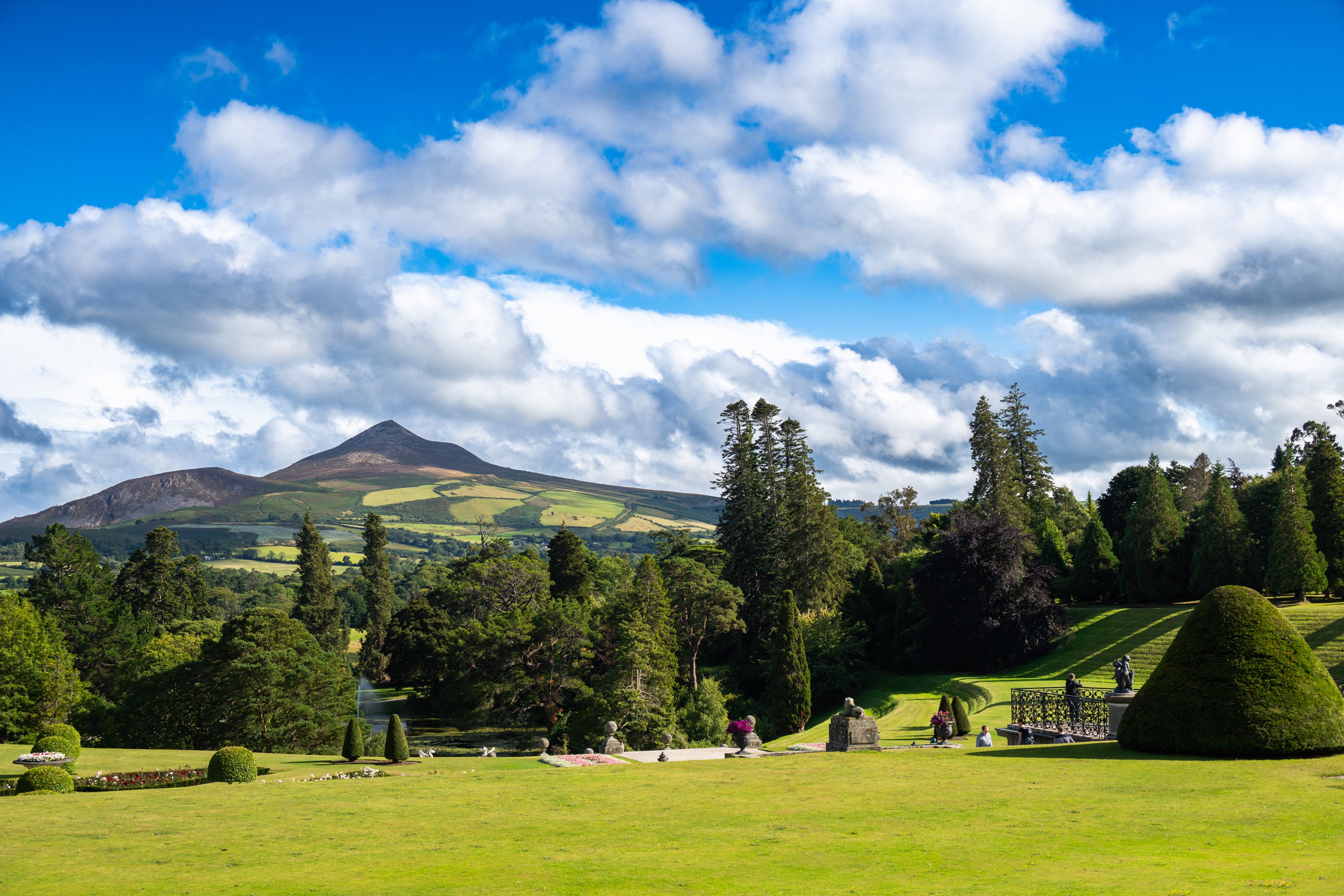
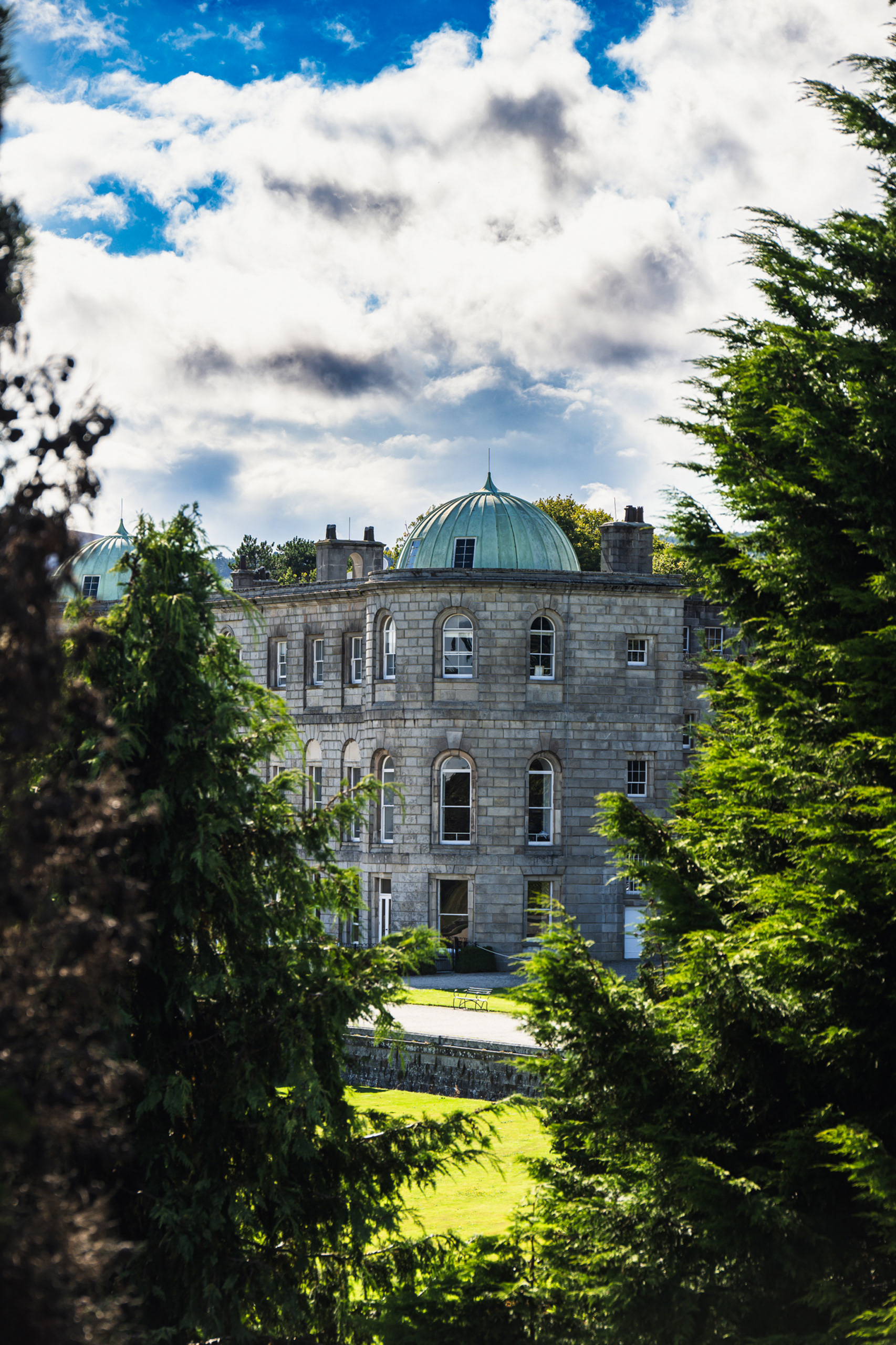
After we picked up our rental car, we drove south to Enniskerry, where the city gives way to the Wicklow Mountains, and to Powerscourt Estate. The land came to the Wingfield family in 1603. These were the same Wingfields whose townhouse we had walked through the day before. In the 1730s the architect Richard Cassels built a Palladian mansion around the core of their older castle. The gardens were laid out in the eighteenth century and remade in the nineteenth. They fall in terraces from the house to the Triton Lake, with the cone of the Sugarloaf Mountain beyond, a view that has appeared in a great many tourism brochures. Elsewhere on the grounds are a Japanese garden, laid out on reclaimed bog in 1908, and a cemetery with headstones for the family's animals.
The house has had a harder life than the gardens. In 1961 the Wingfields sold the estate to the Slazenger family, of the sporting-goods company. By 1974 the Slazengers had restored the house and were about to open it to the public. In the early hours of November 4 that year, a fire broke out on the top floor, and by morning the main block was a roofless shell. It stayed that way for more than twenty years before it was rebuilt and reopened in 1996, though not to its former state. A few months before the fire, Stanley Kubrick had filmed parts of Barry Lyndon inside, so the lost rooms survive on film. That detail gained a second meaning the next night, when we slept in another of the film's locations.
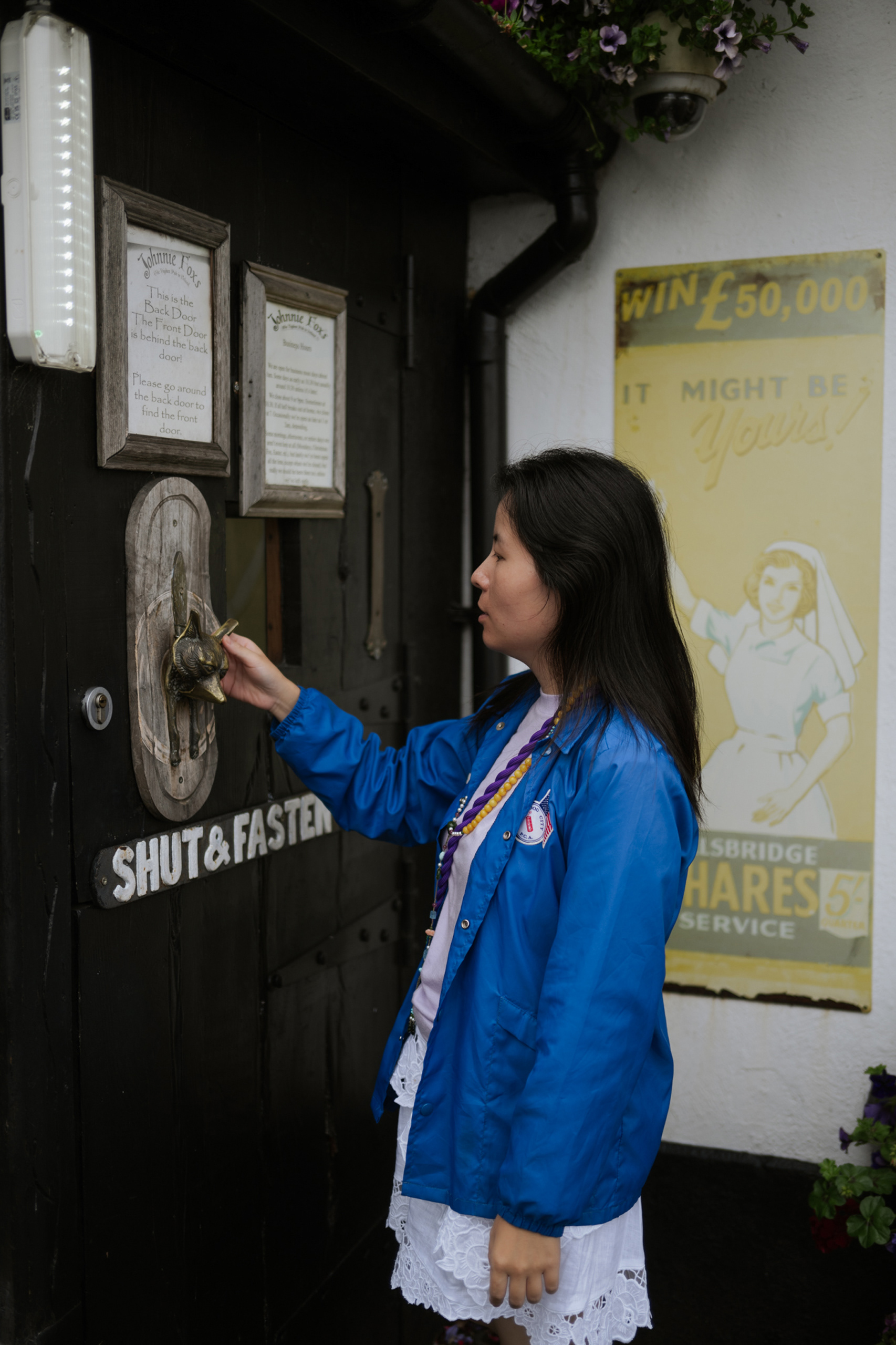
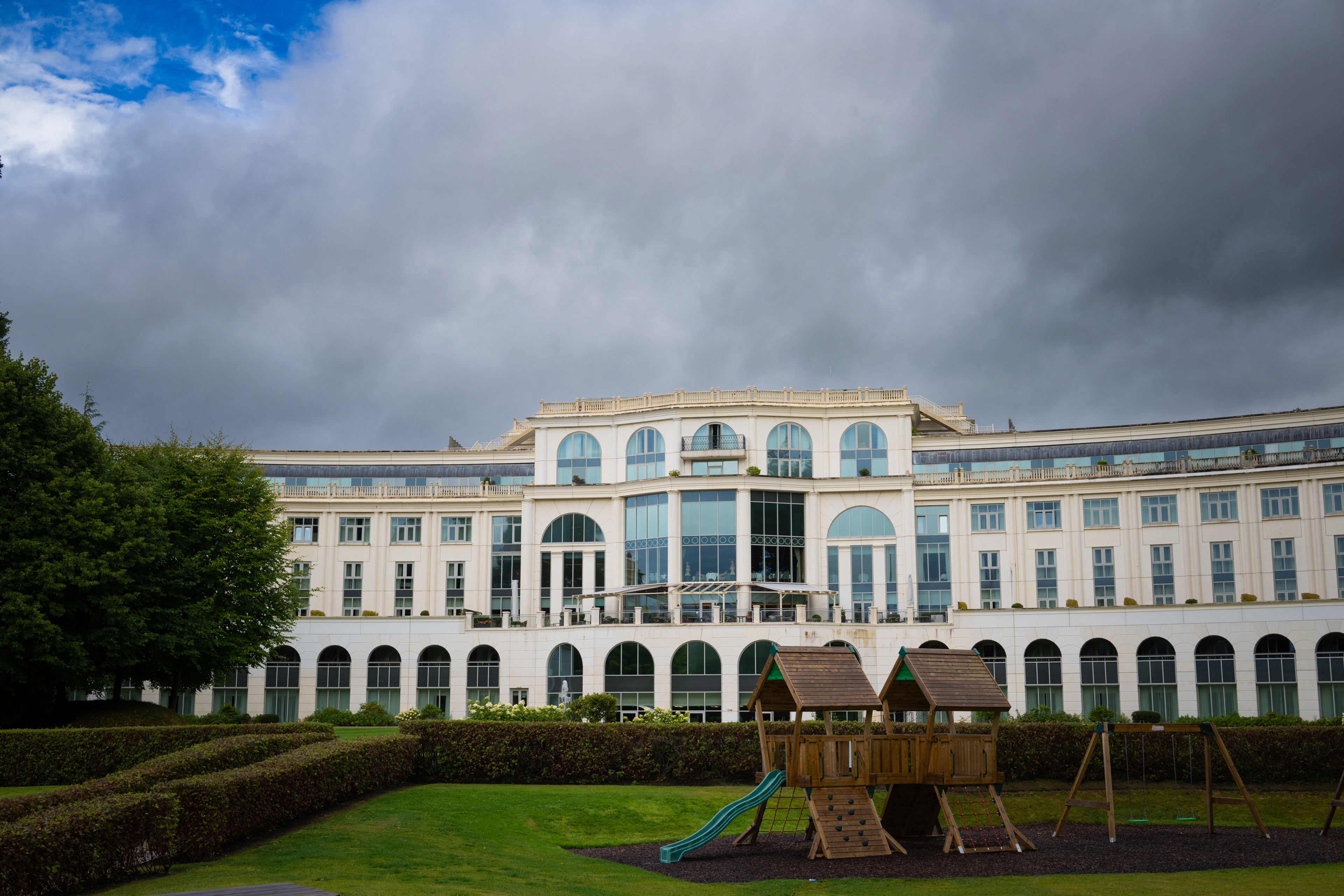
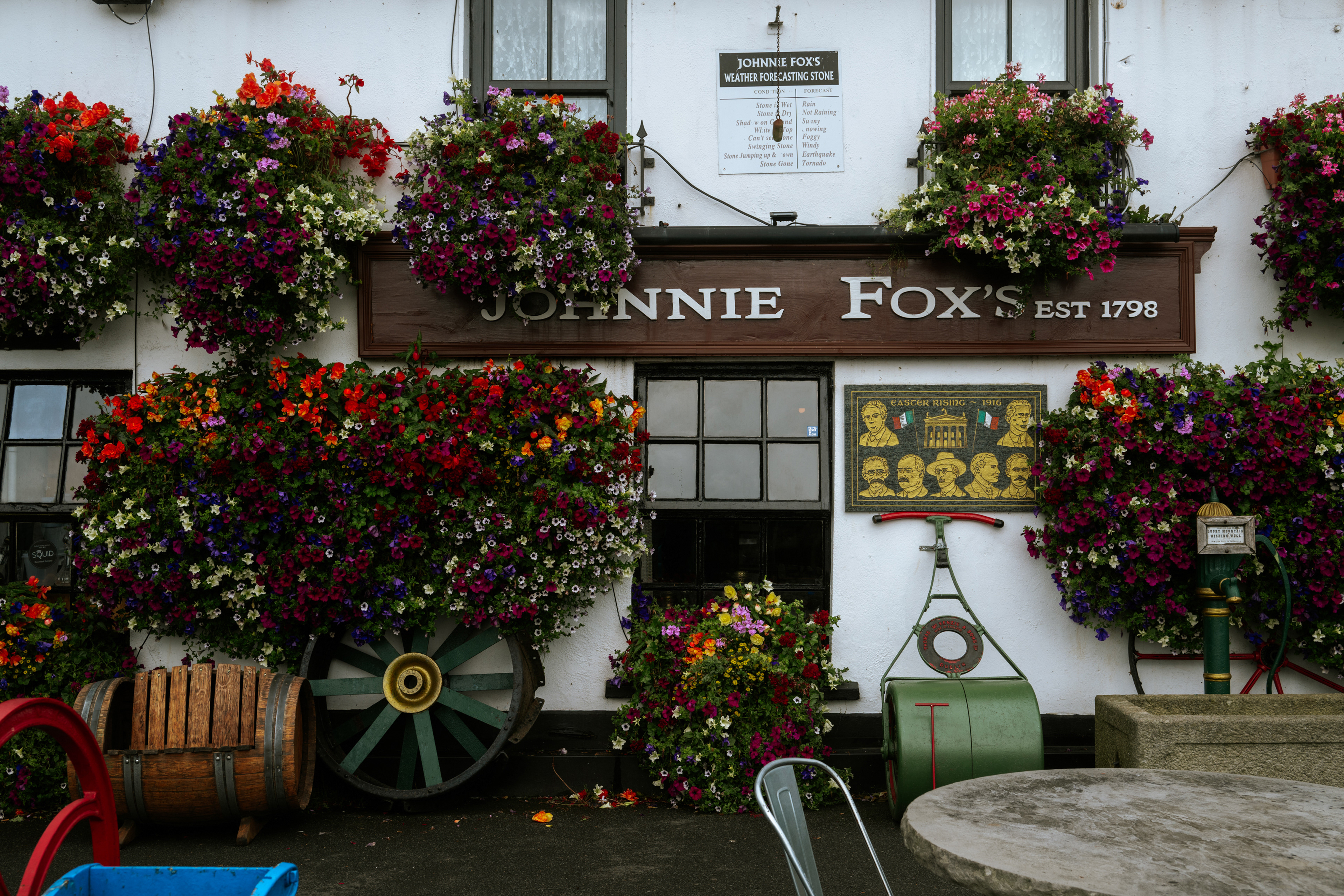
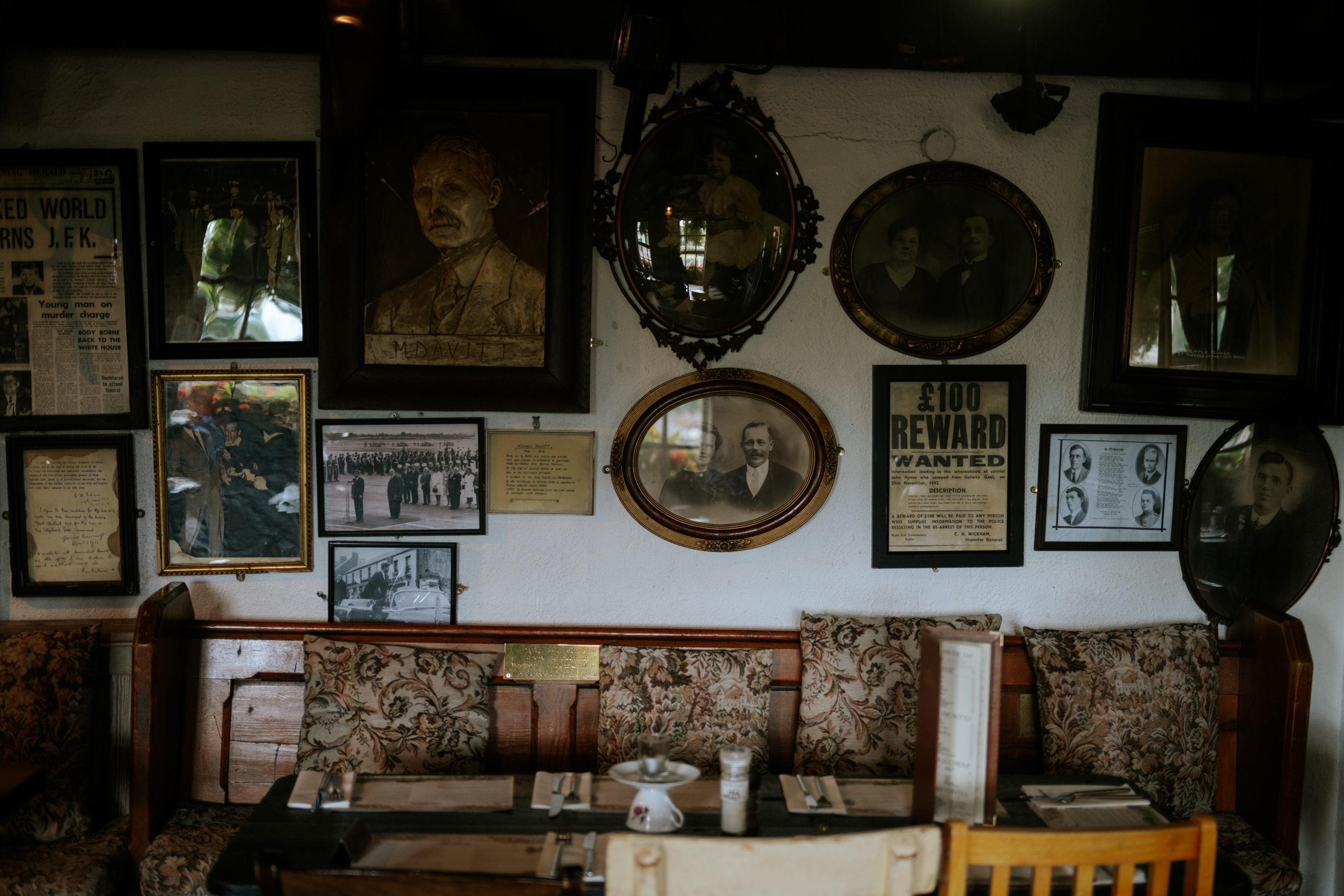
We stayed on the estate at the Powerscourt Hotel, part of Marriott's Autograph Collection. A short drive away, up in the Dublin Mountains at Glencullen, is Johnnie Fox's, a pub founded in 1798 that bills itself as the highest pub in Ireland. Inside, the walls are covered in antiques: old crockery, signs, photographs and bric-a-brac, much of it donated over the years. We photographed it inside and out and ate there. When we later listed every place we ate in Ireland, it went among the top.





A Night at Huntington Castle
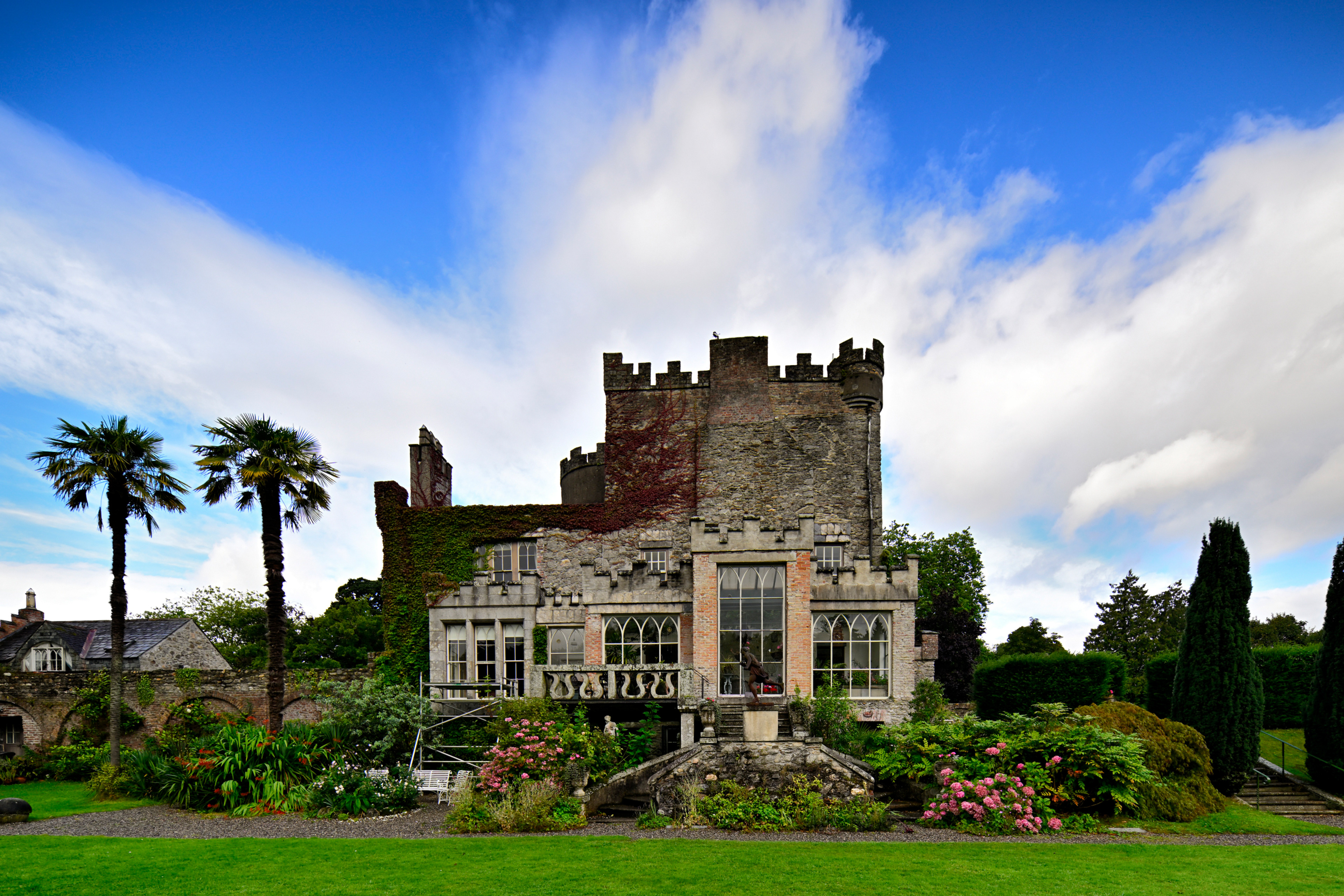
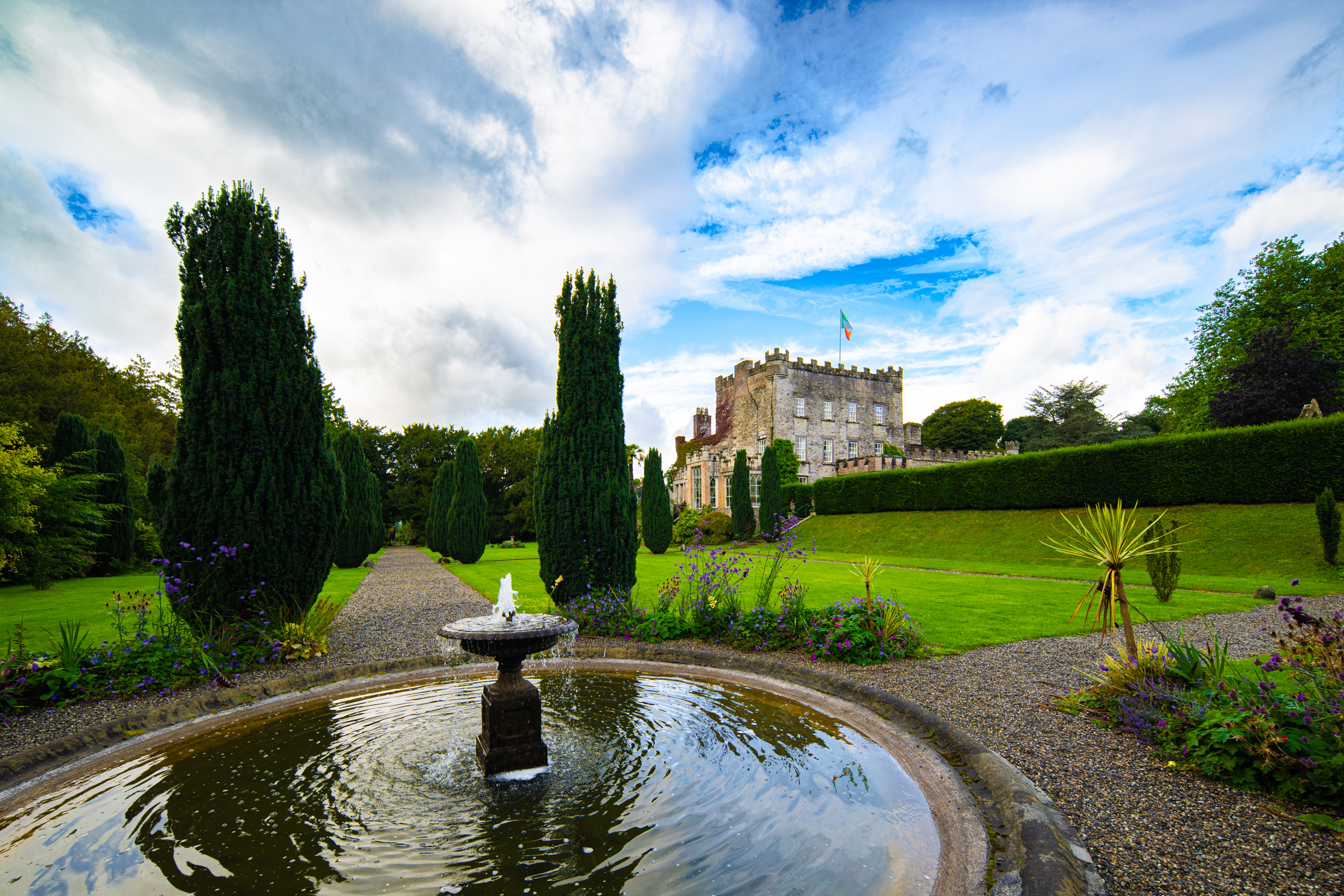
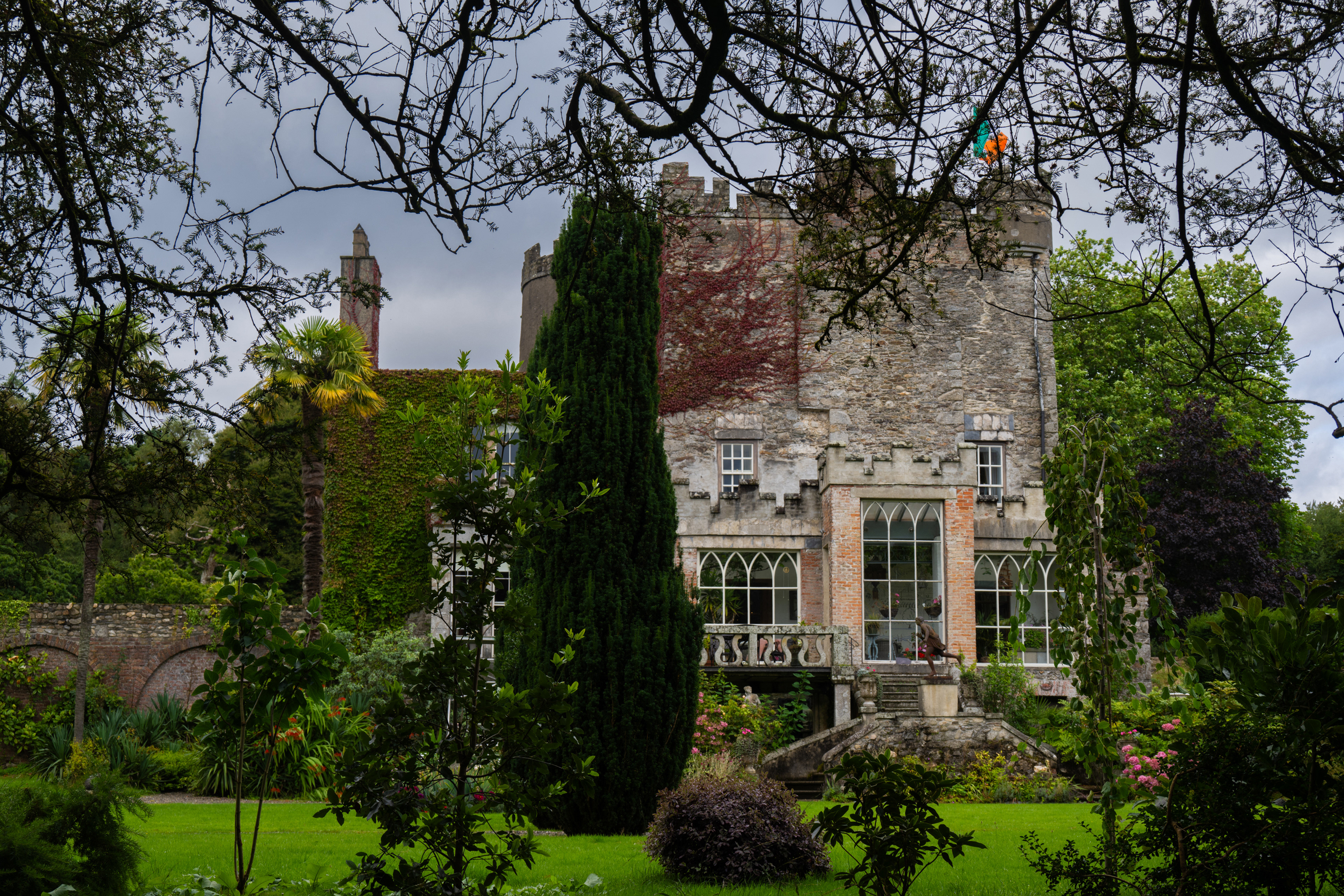
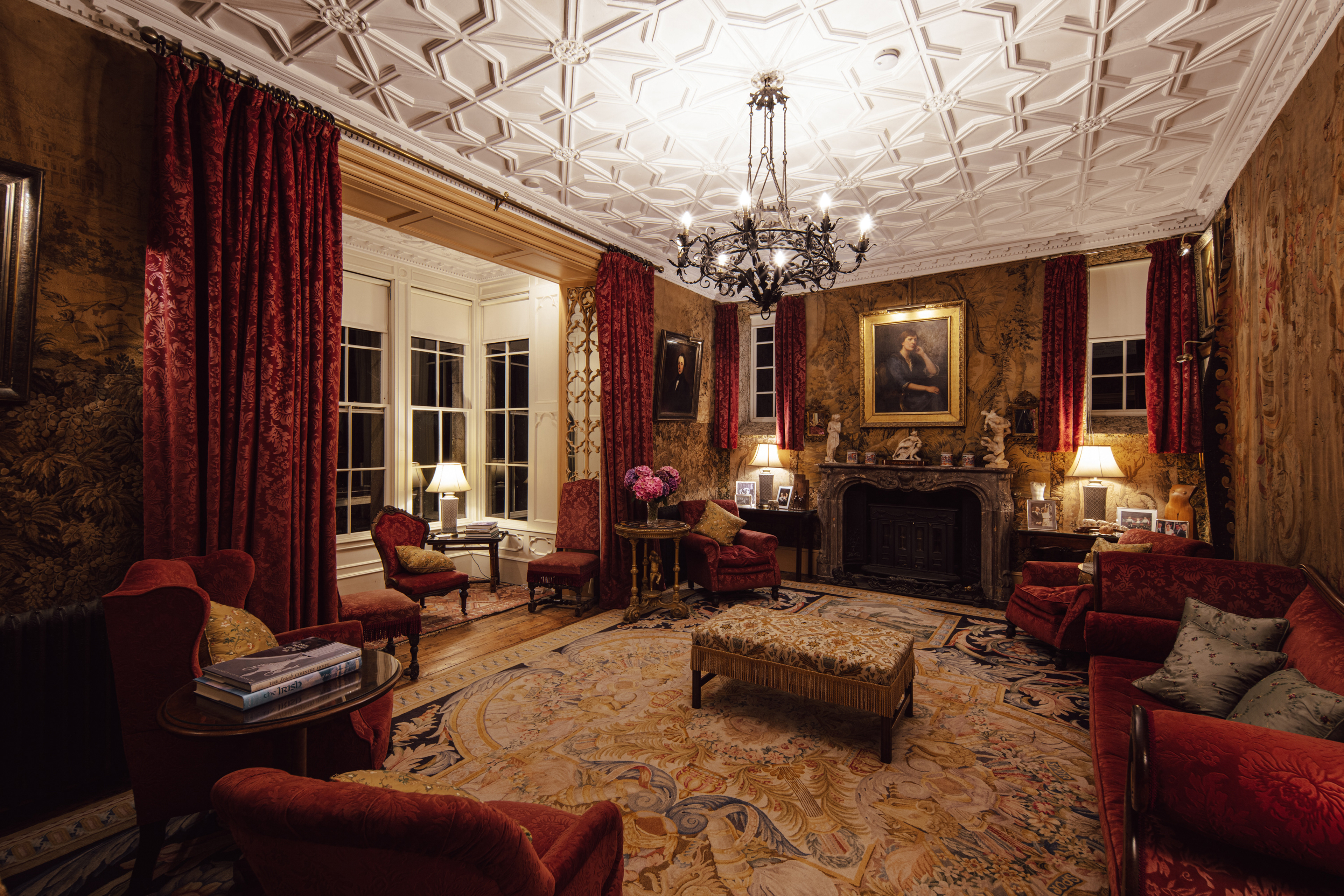
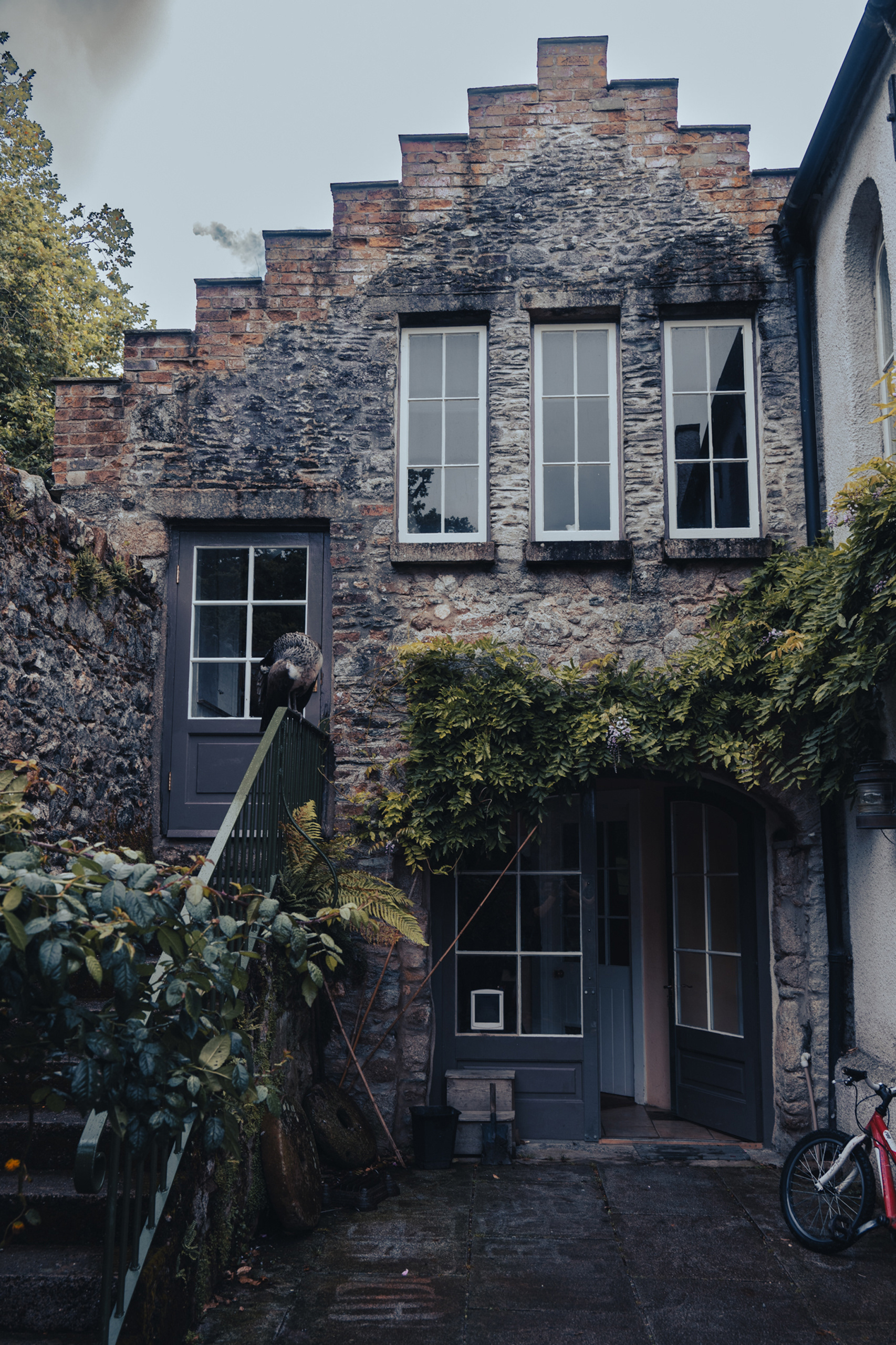
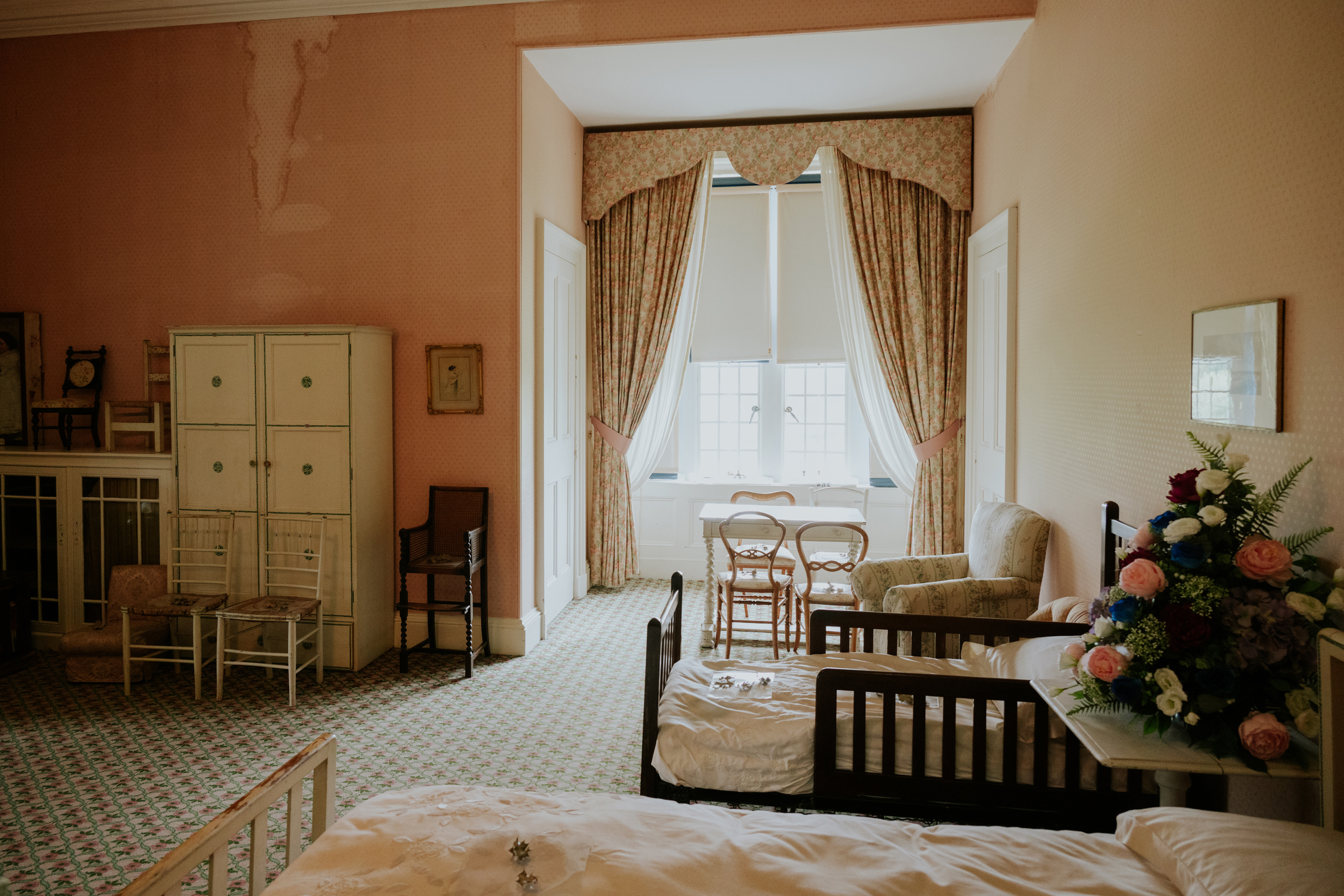
The next night we slept in a castle for the first time, booked through Airbnb. Huntington Castle stands at the edge of Clonegal, a village in County Carlow on the old road between Dublin and Wexford. Sir Laurence Esmonde built it in 1625 around a fifteenth-century tower house. Its position on that road is why Oliver Cromwell's army took it in 1650, on the march to Kilkenny. The castle was renamed Huntington around 1680, after the English place the Esmondes came from, and their descendants, now the Durdin-Robertsons, still live there. In summer the family opens the house for guided tours. At night, they rent part of it to people like us.
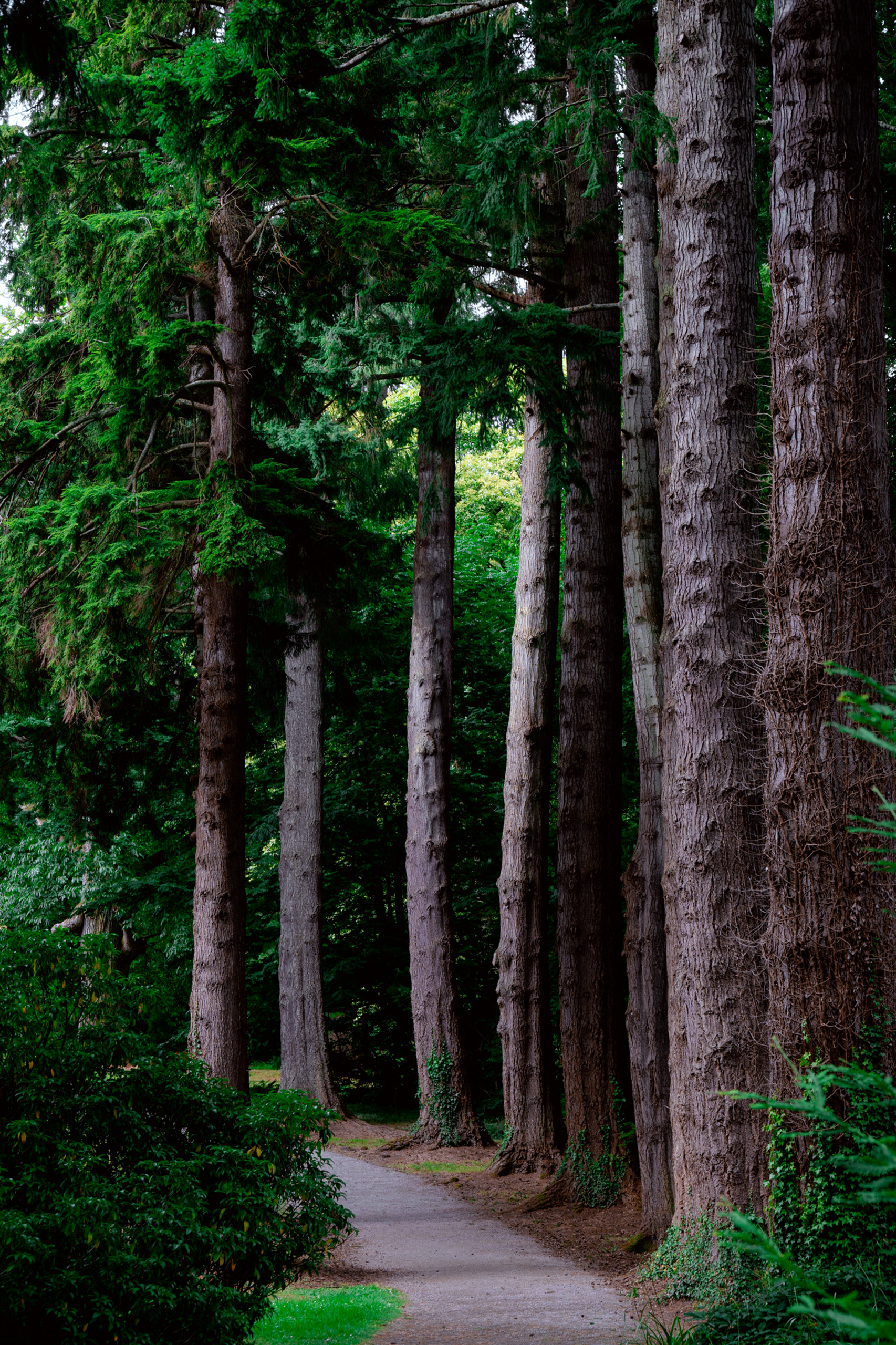
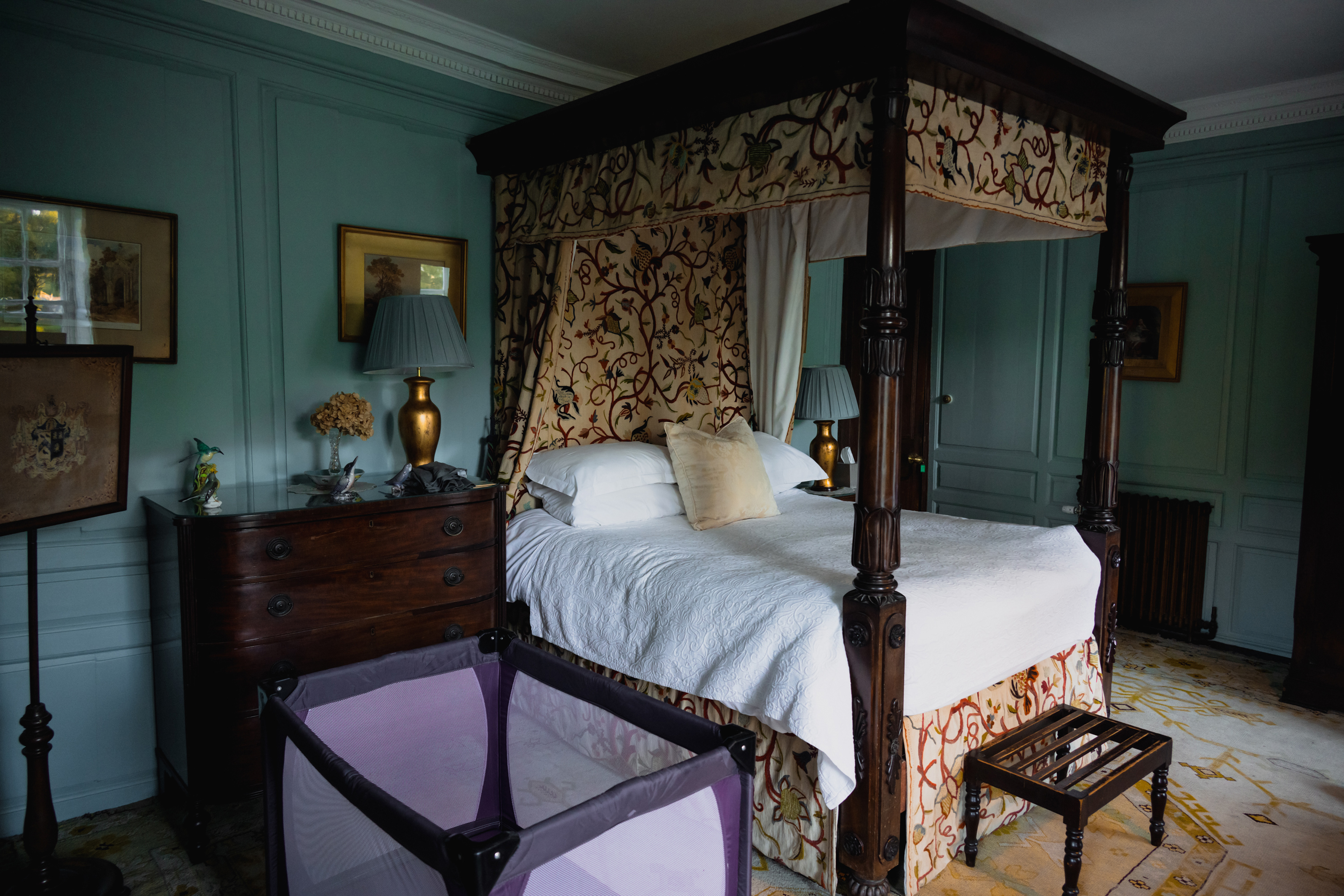
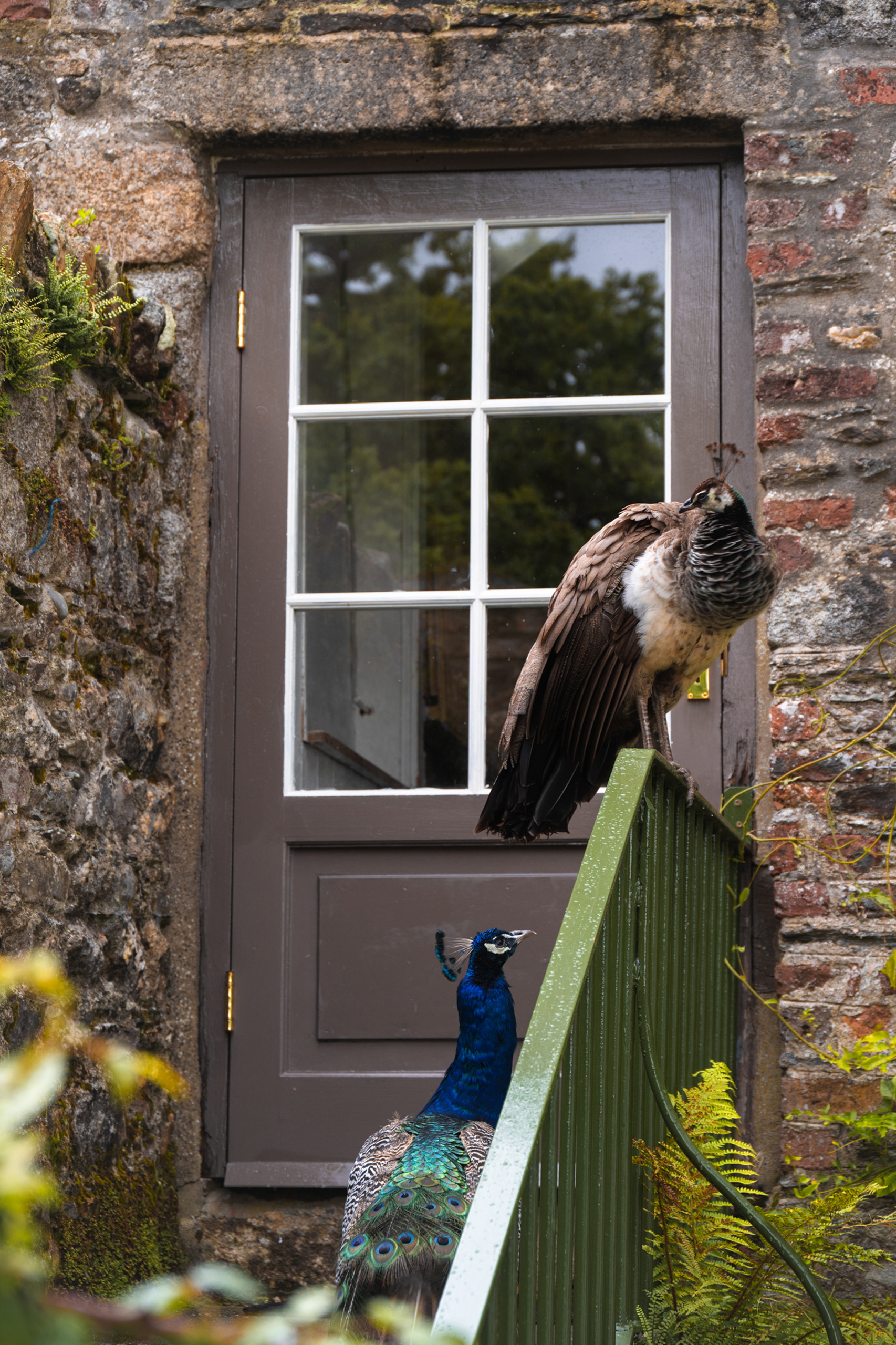
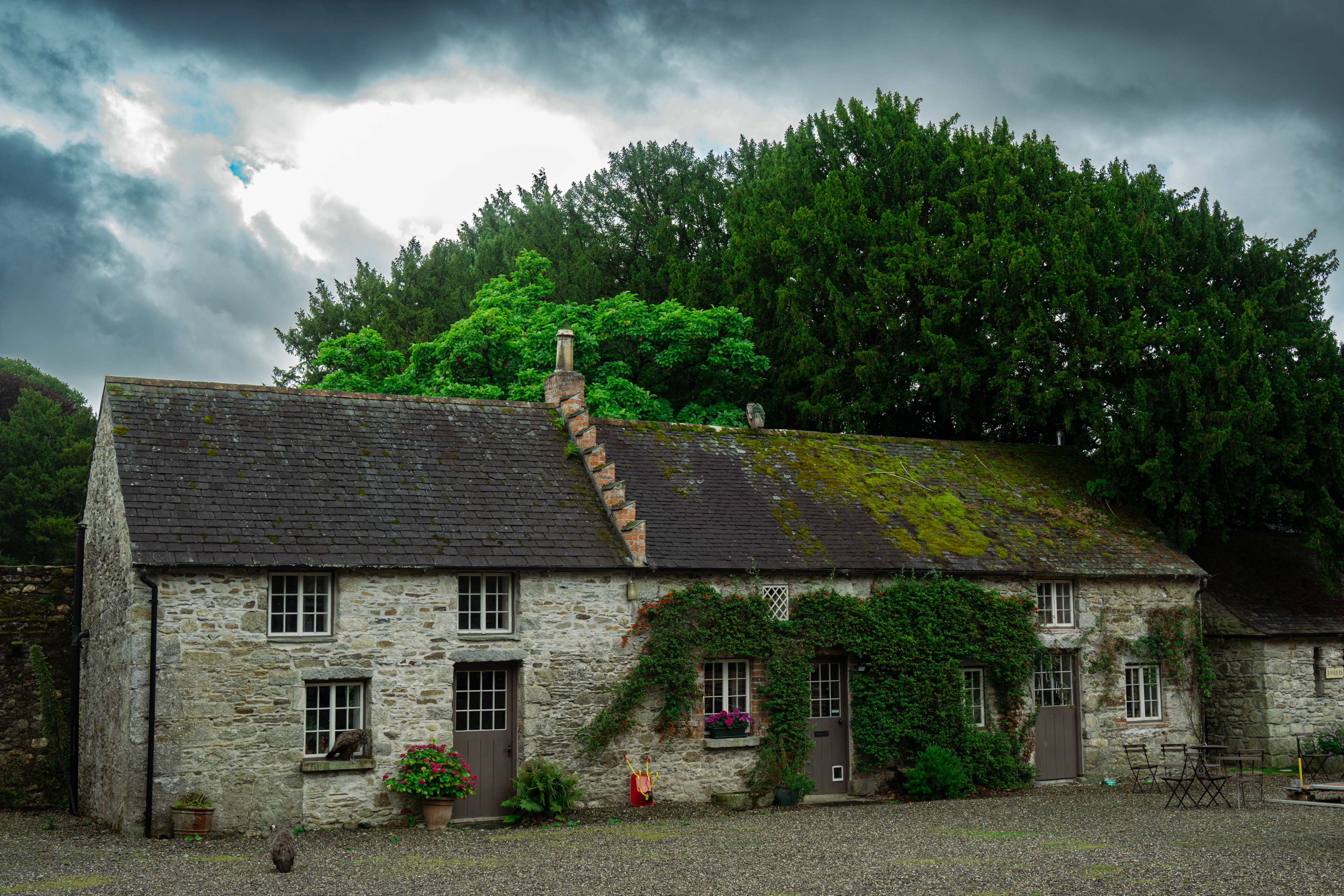
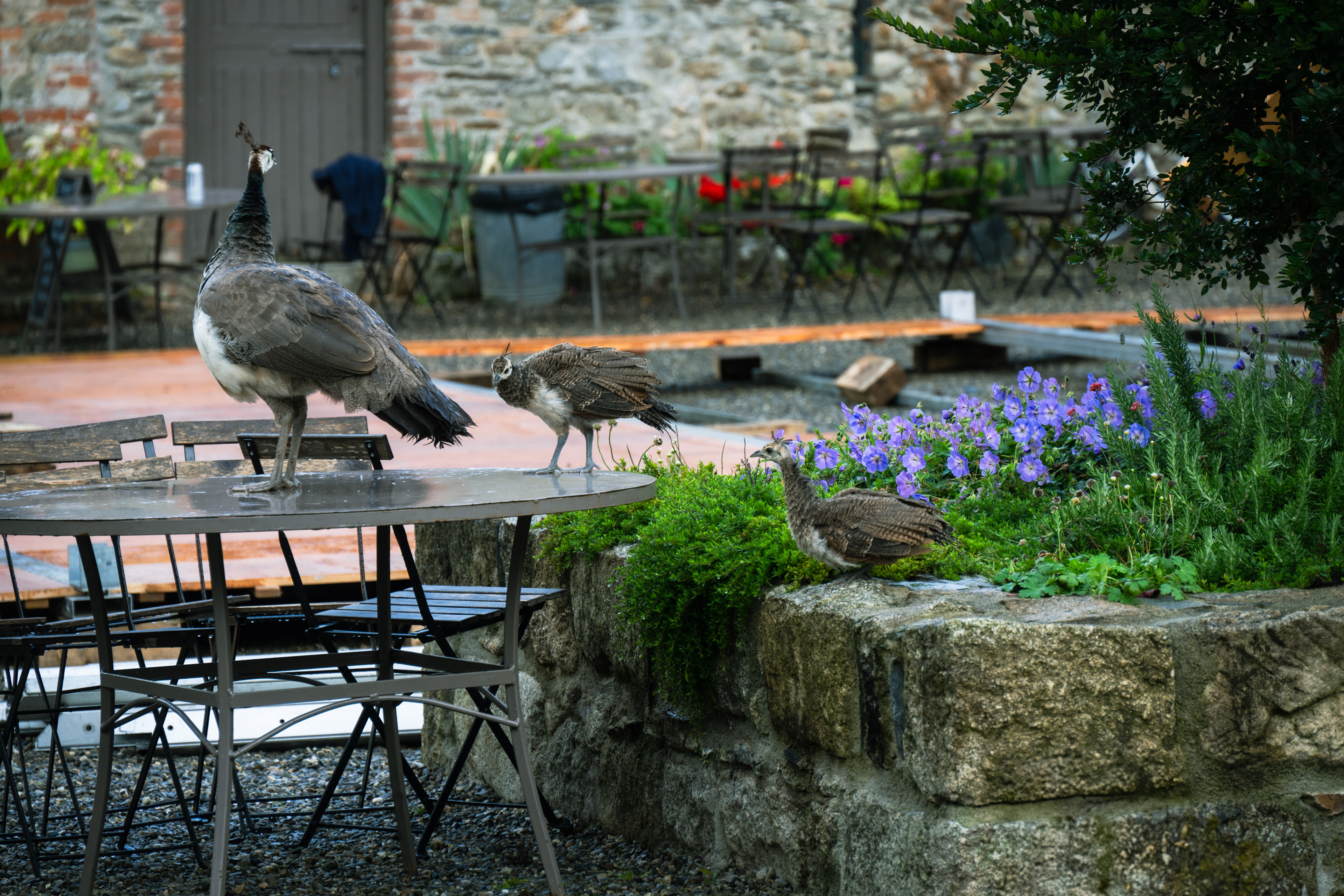
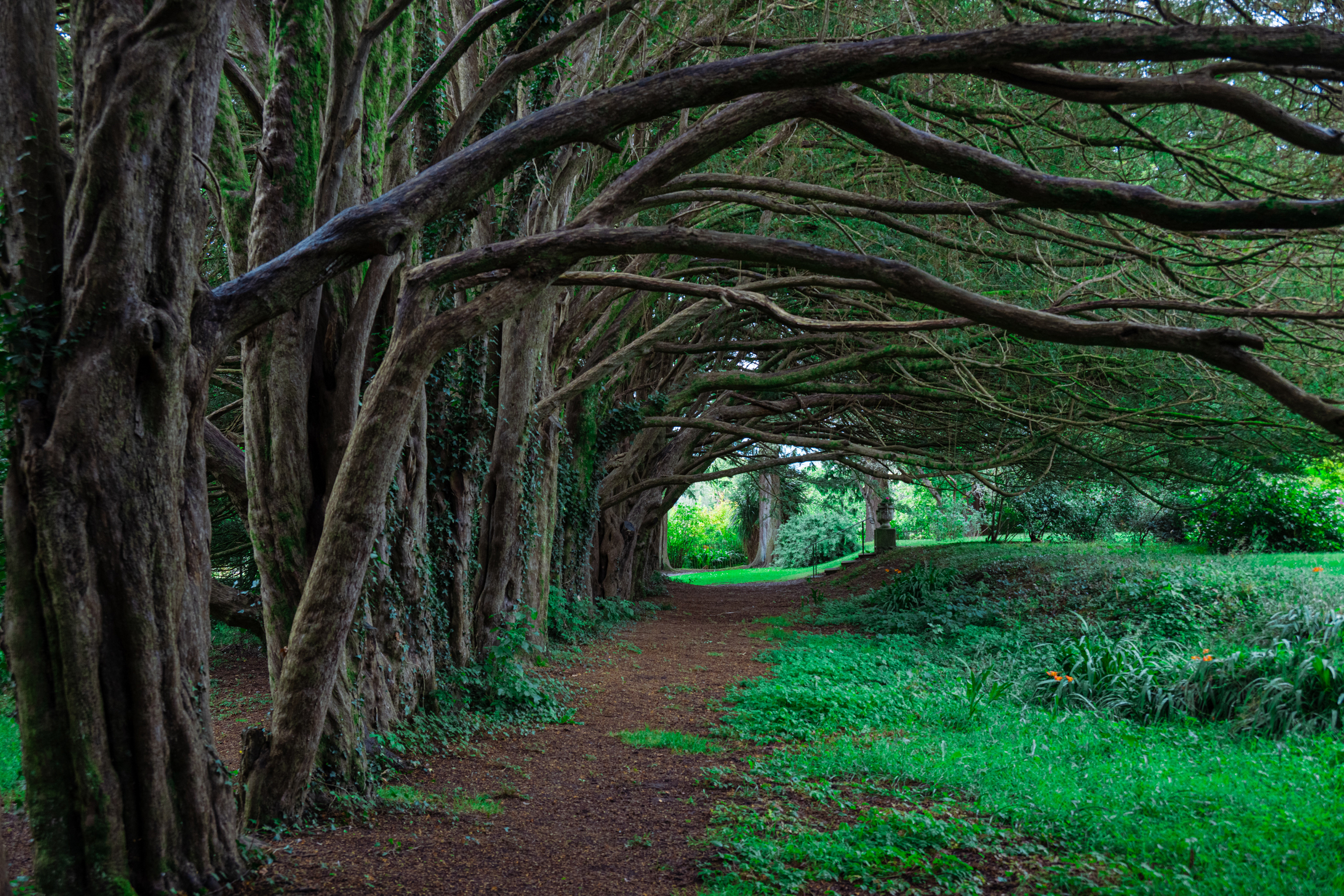
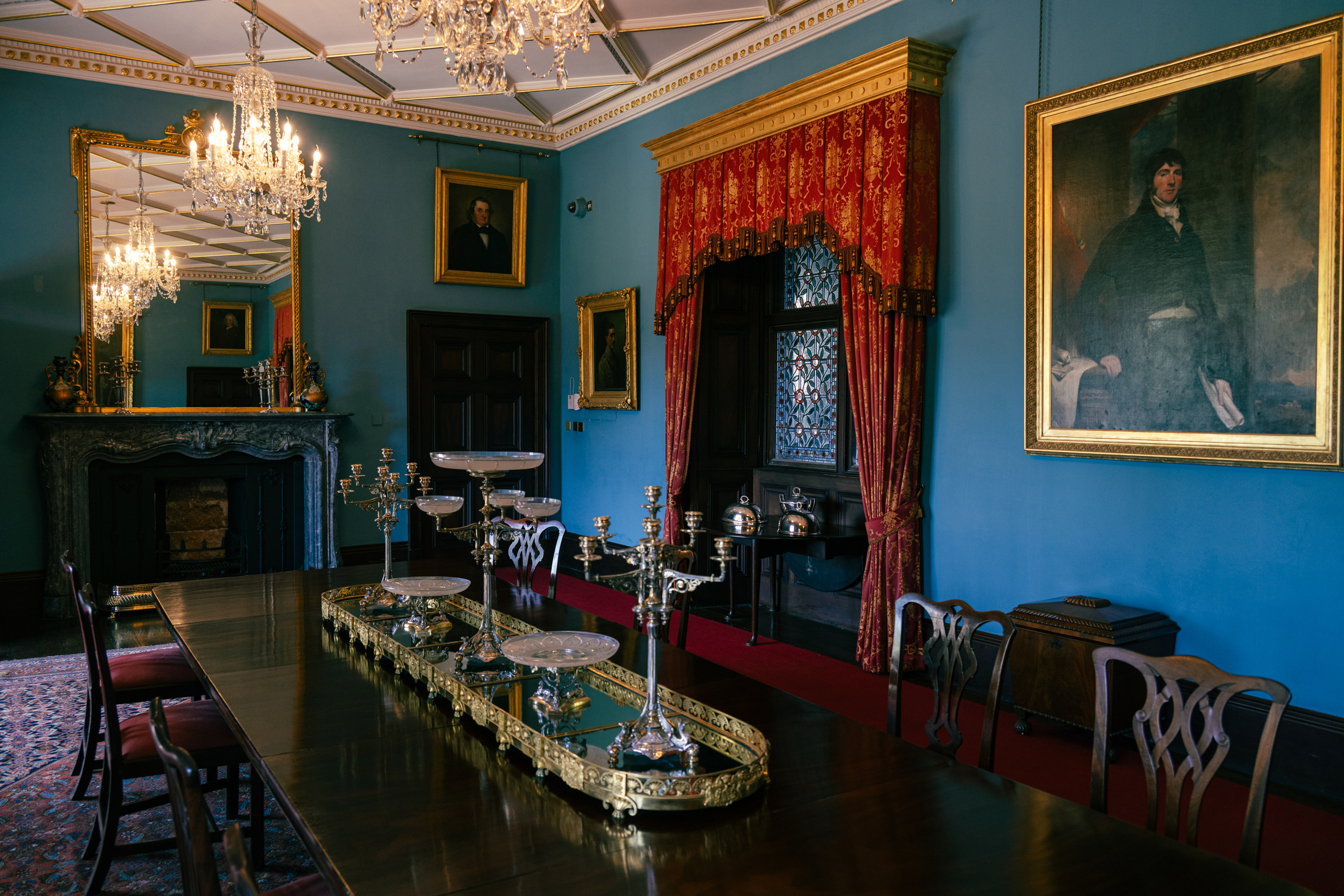
We photographed the rooms as if we were writing an inventory: our bedroom, the living room, a sun room, the dining room, a study, the bathroom, the staircase. Outside were peacocks, a cottage, the gardens and a stretch of forest. The Esmondes laid out most of those gardens in the seventeenth century, including an avenue of lime trees from the 1680s and a yew walk said to be about five hundred years old. Kubrick filmed scenes for Barry Lyndon here as well. That gave our two nights in Wicklow and Carlow a theme neither of our booking confirmations mentioned.
We did not see the house's strangest room. In the old basement, Olivia Robertson and her brother Lawrence built a temple to the Egyptian goddess Isis, and in 1976 the family founded the Fellowship of Isis there, a spiritual order that still counts the castle as its home. We only learned about it afterward. The castle has been a garrison, a family seat, a film set and a temple. It was the first time we had slept in a house that had been one family's home for four centuries.







Castles and Ruins
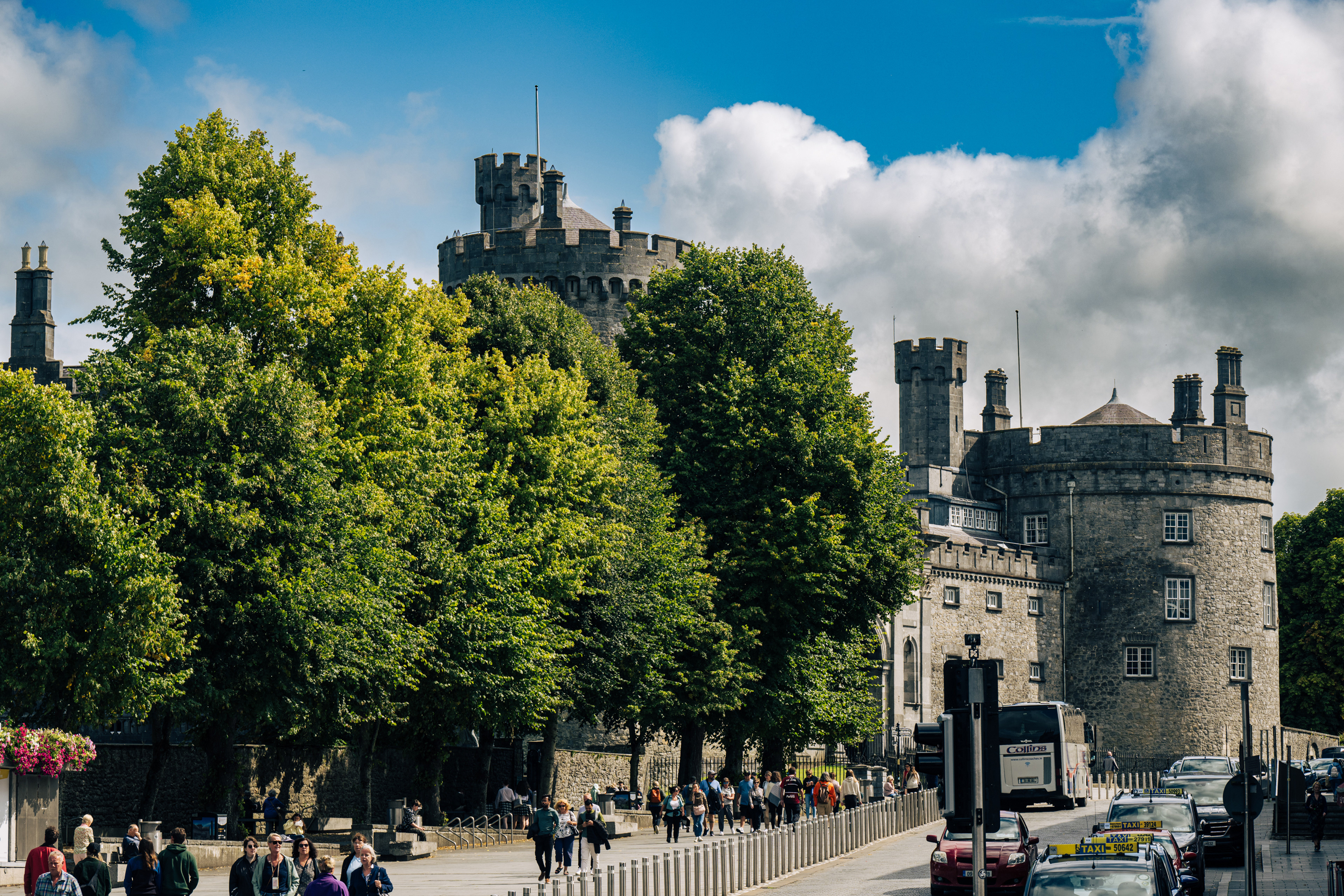
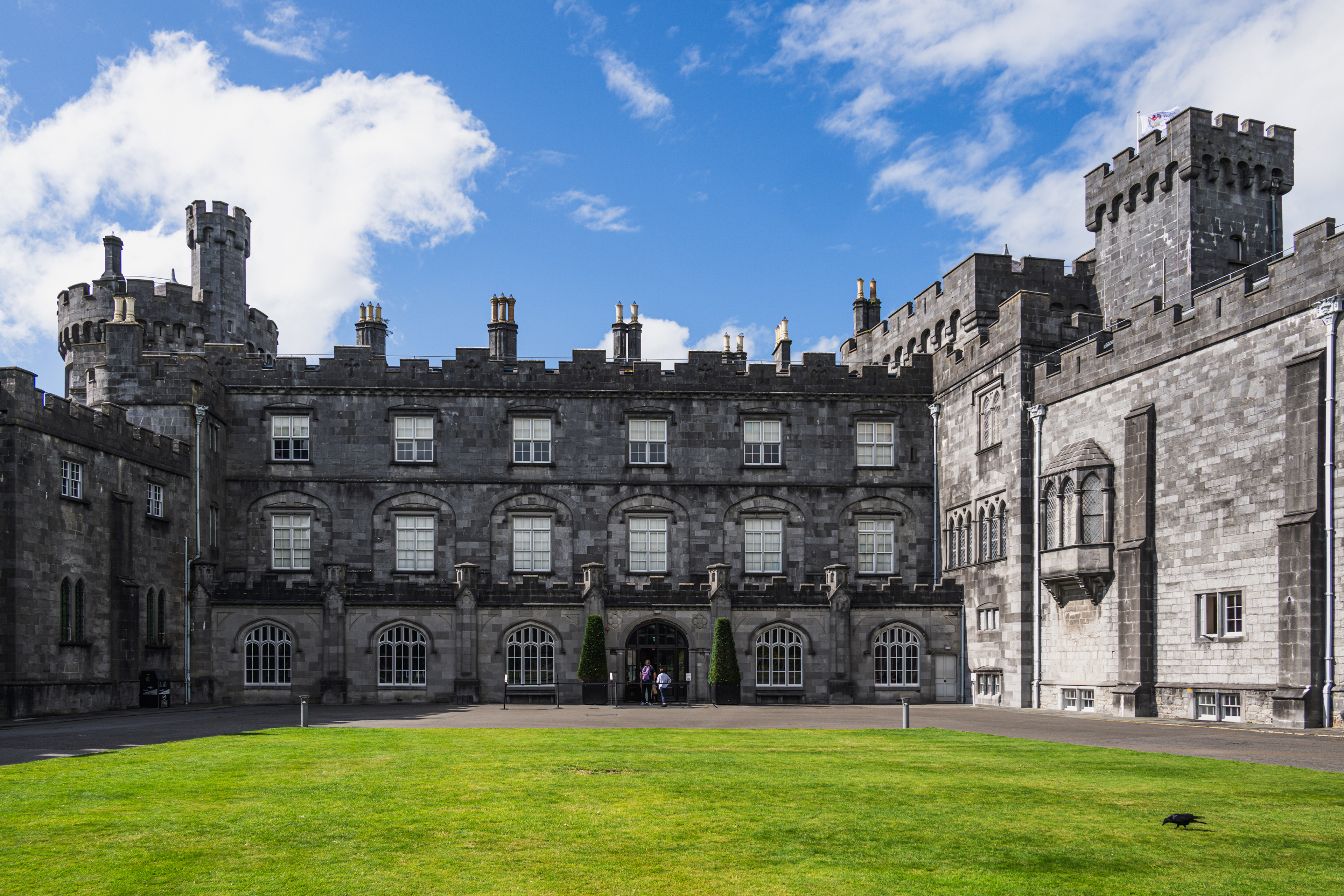
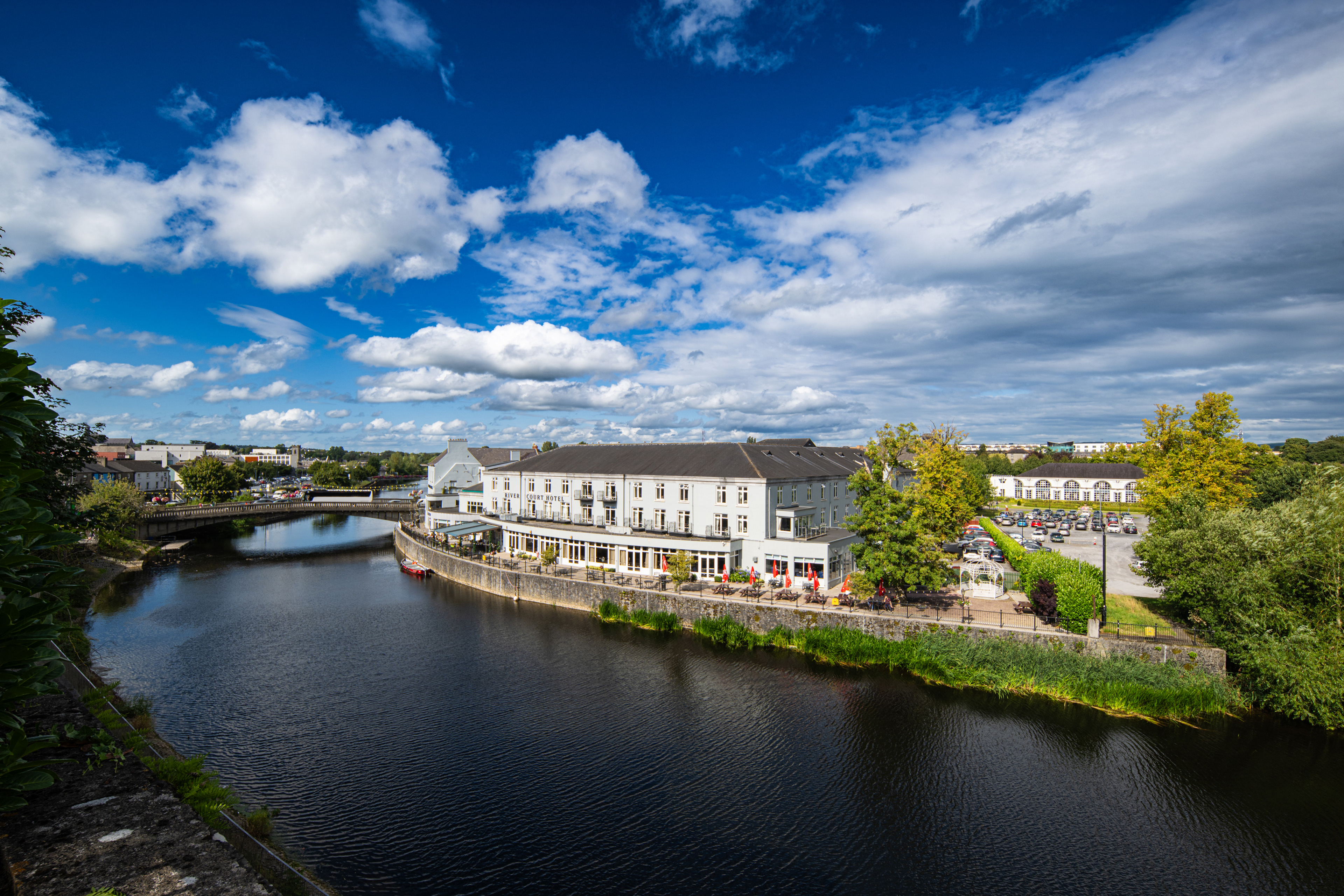
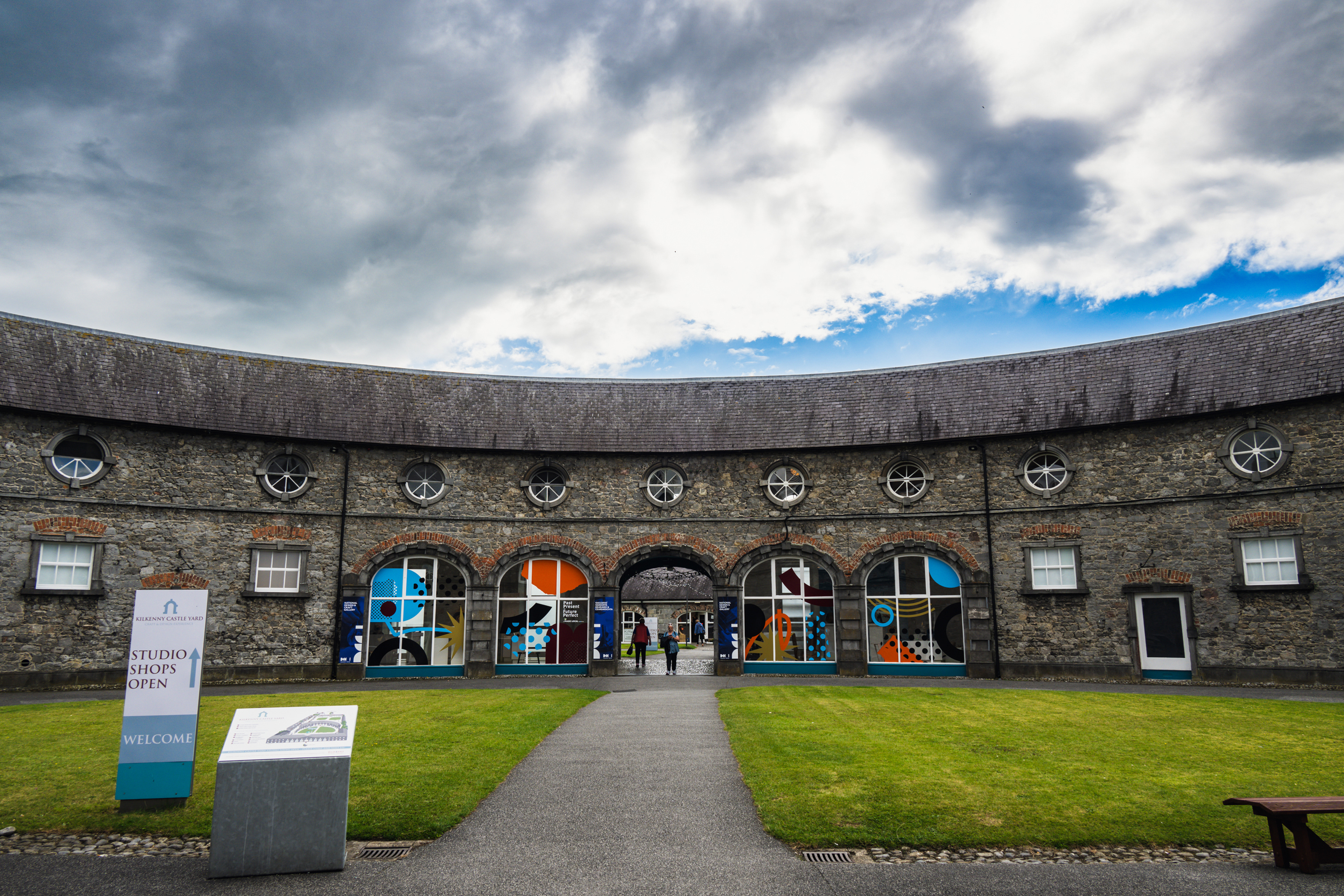
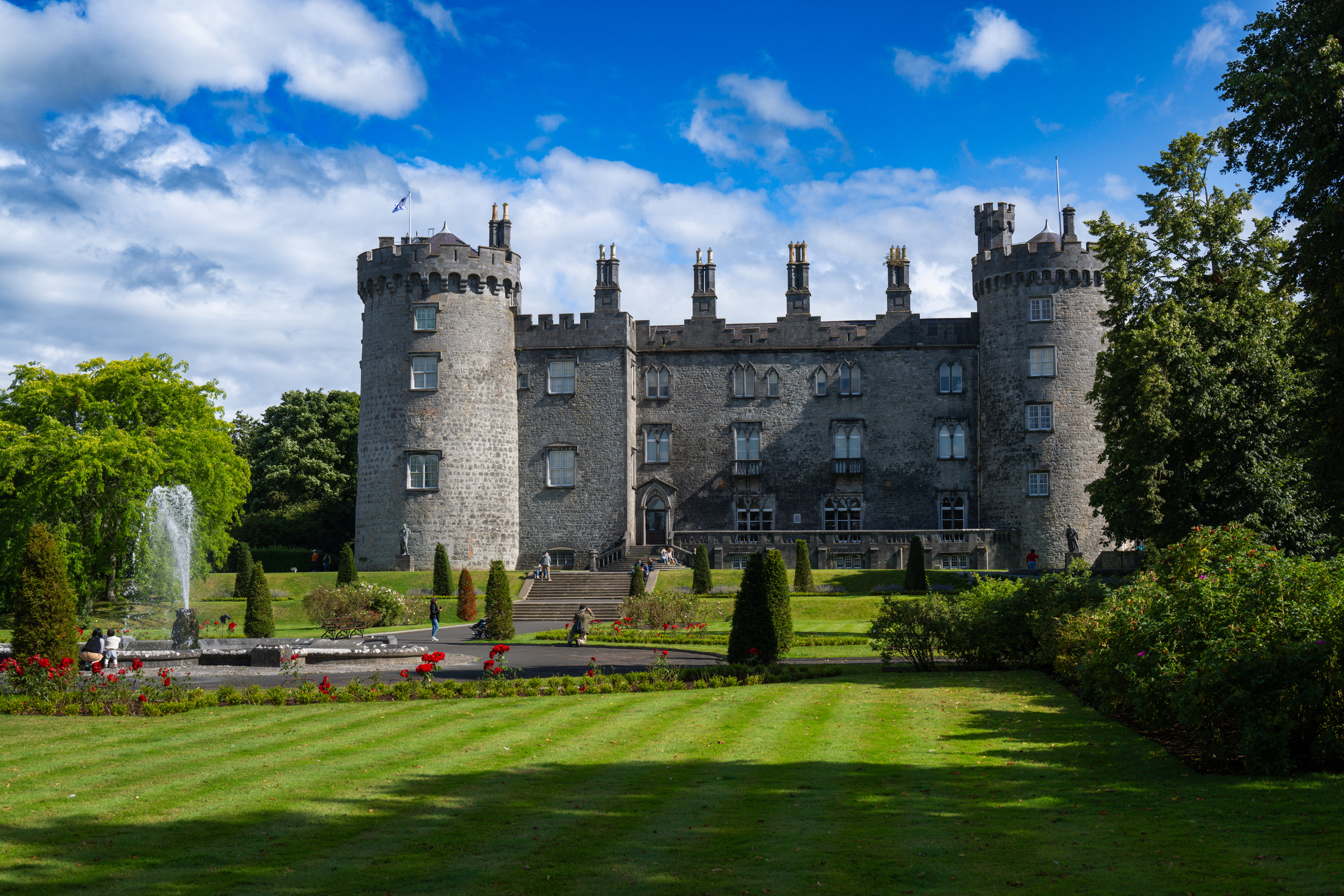
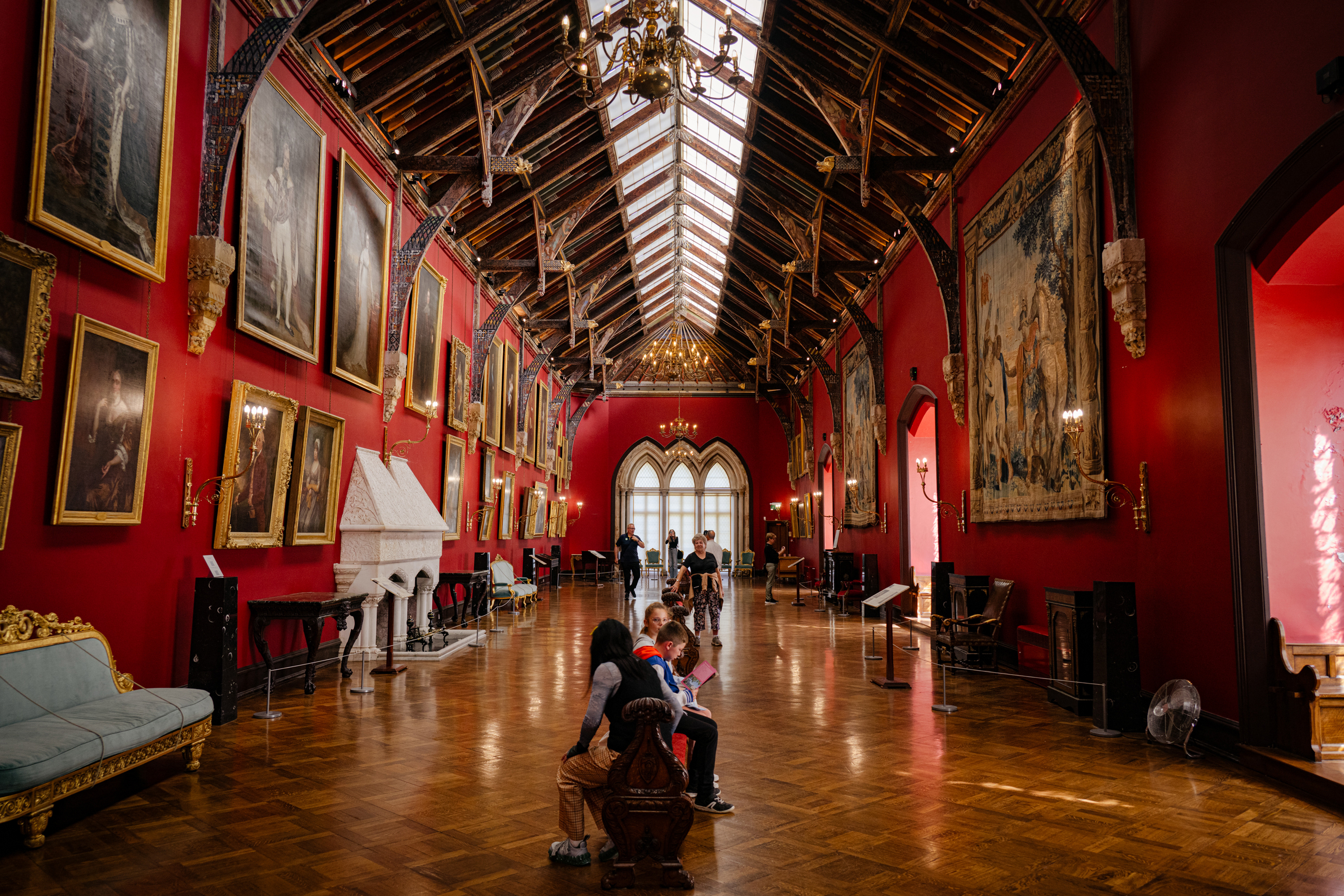
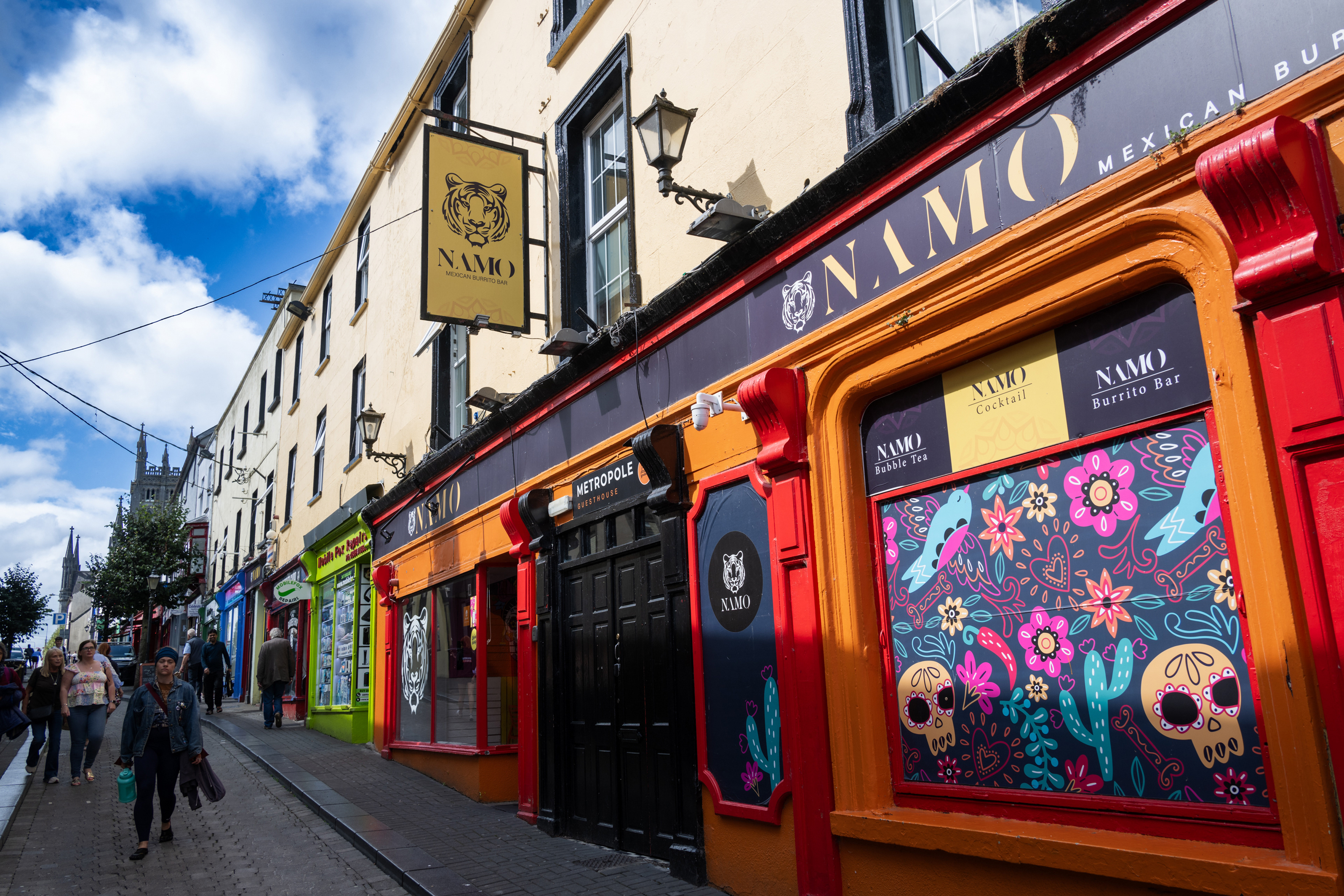
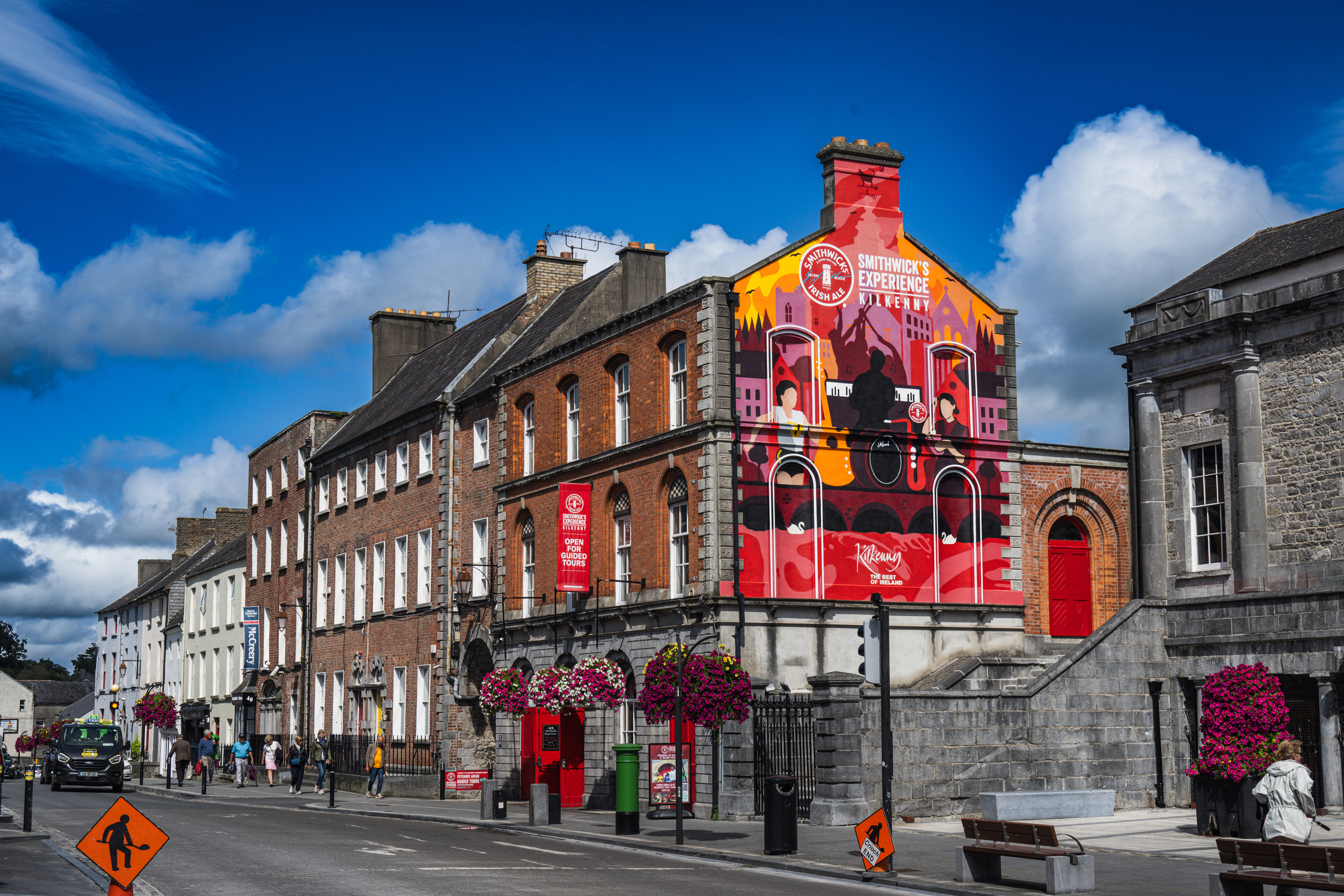
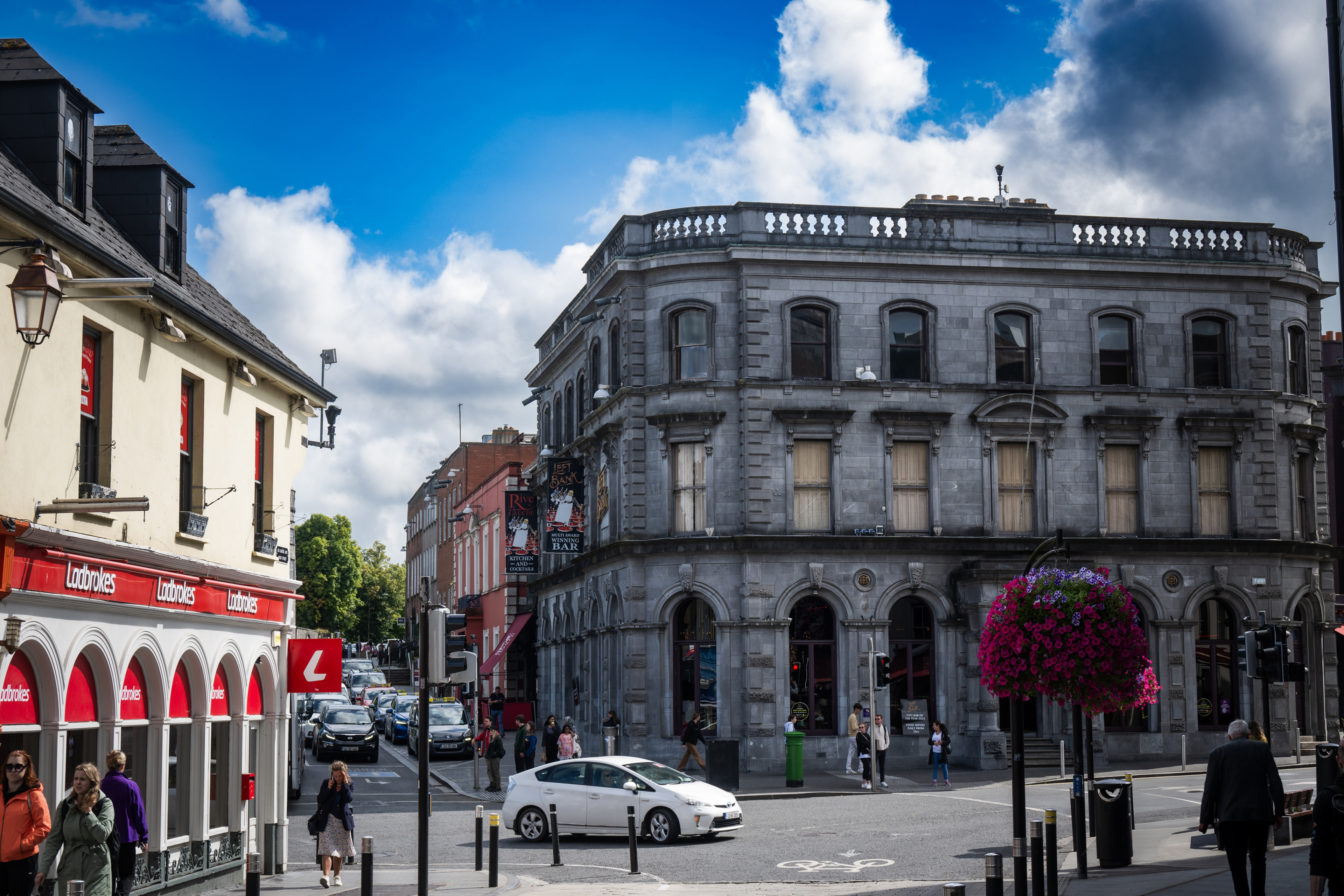
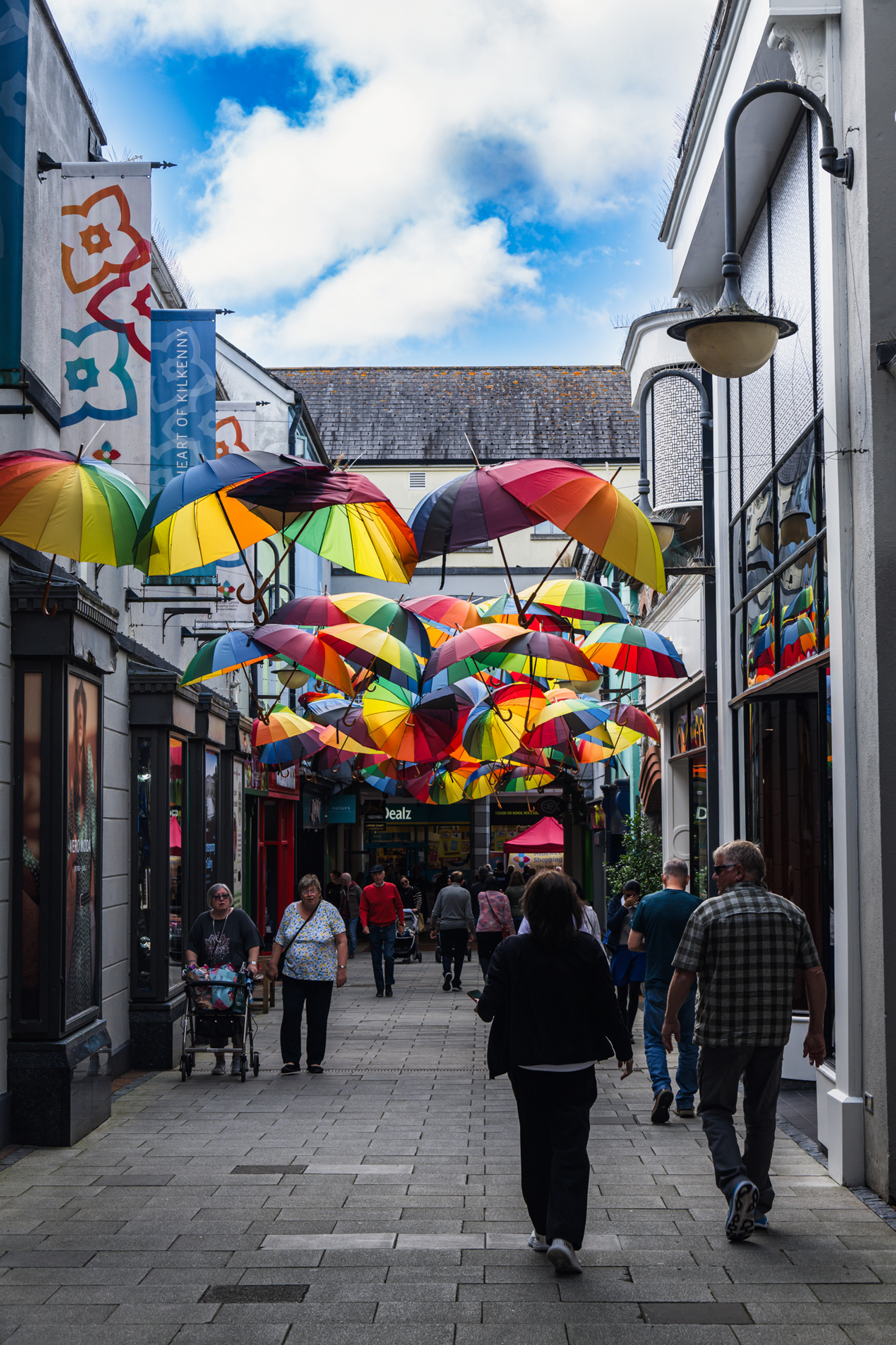
From Huntington we drove to Kilkenny, where the castle stands over a bend in the River Nore. The first stone castle on the site was finished in the thirteenth century. In 1391 James Butler, the third Earl of Ormond, bought it, and his family held it for more than five hundred years. By the 1960s it was badly run down, and in 1967 the sixth Marquess of Ormonde sold it to a local restoration committee for fifty pounds. He explained that the family did not want to see it fall into ruin, since Ireland already had too many ruins. The state restored the castle, and it is open today. We walked through the interiors and then out into the town, along what is now promoted as the Medieval Mile, past brightly painted shopfronts.
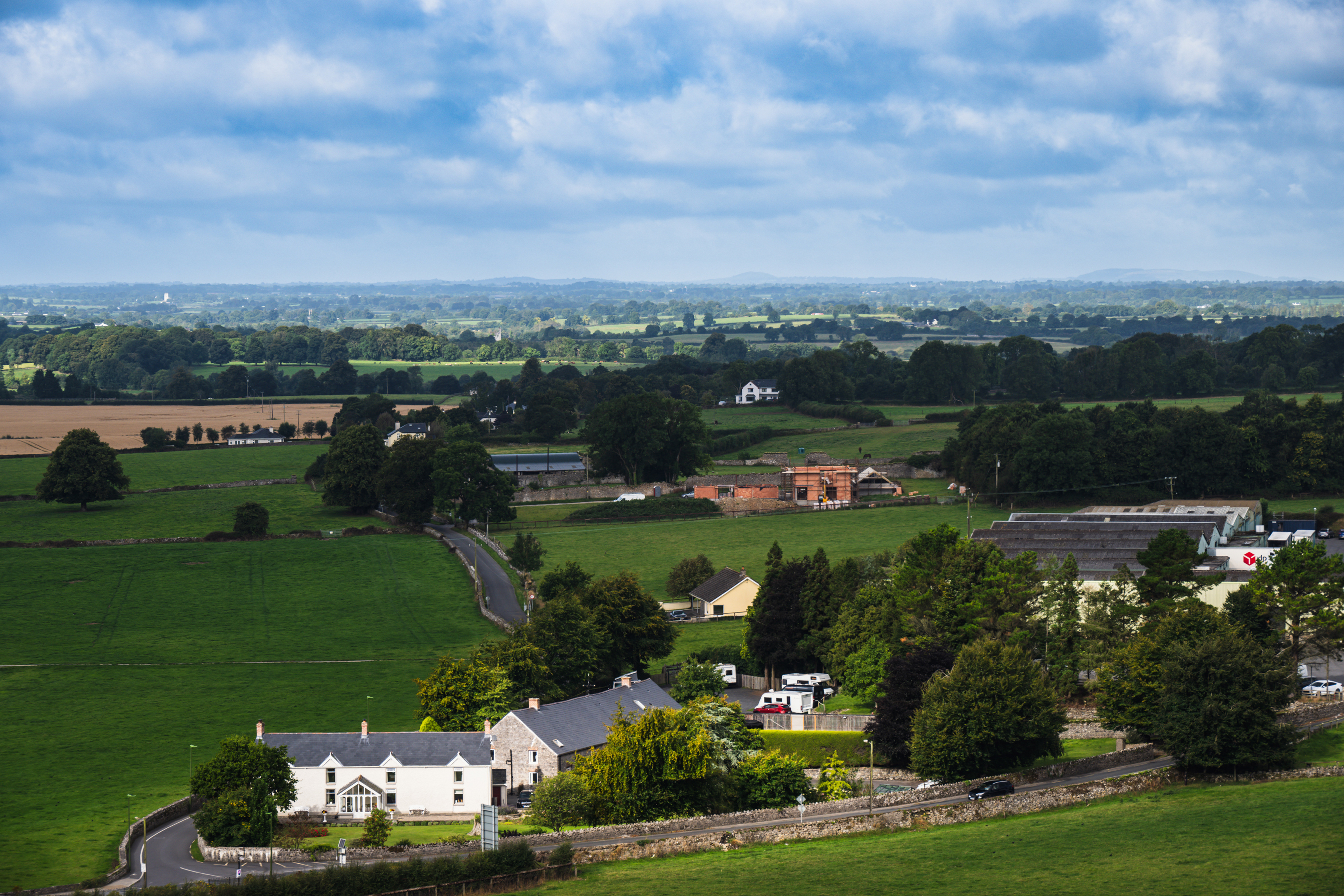
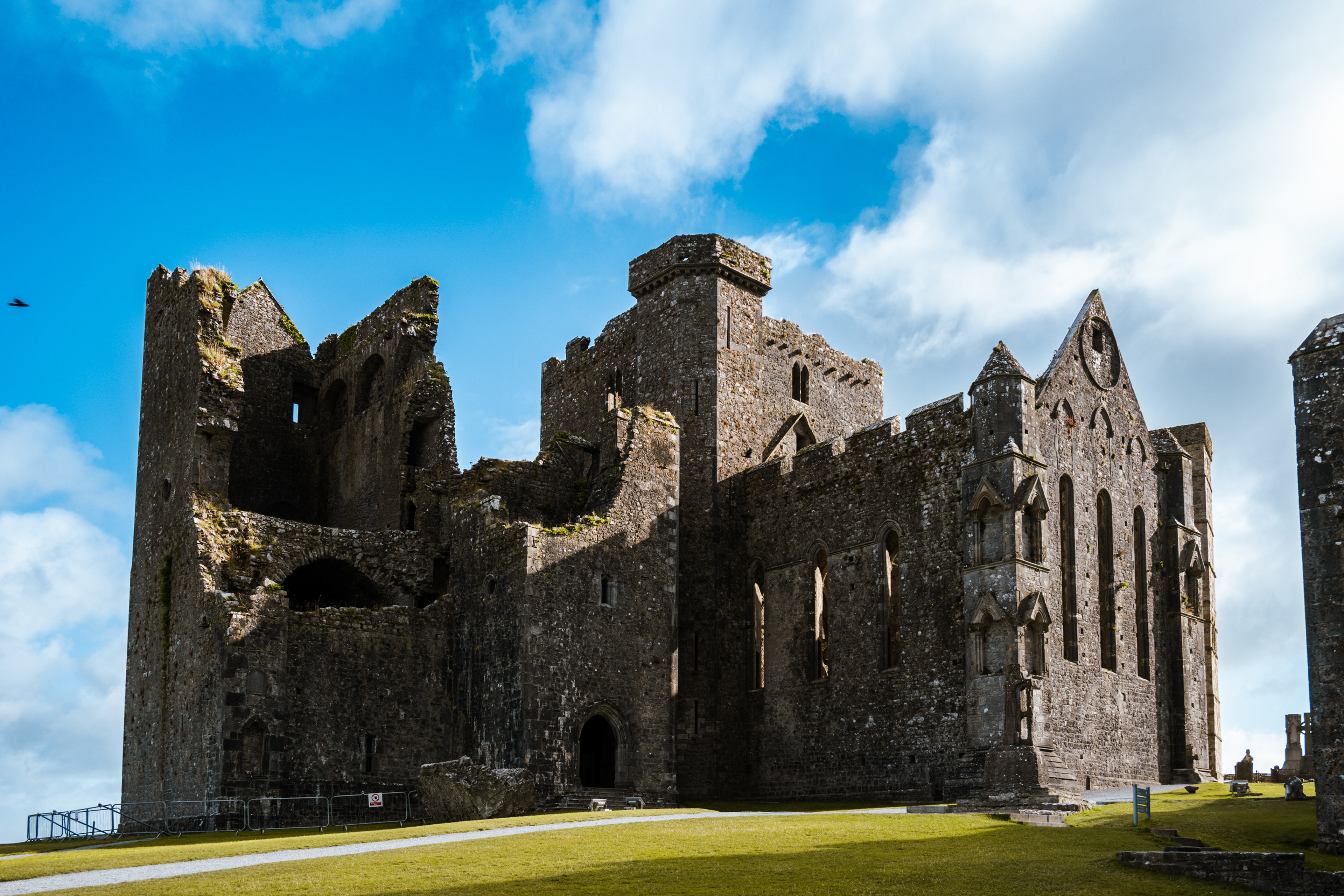
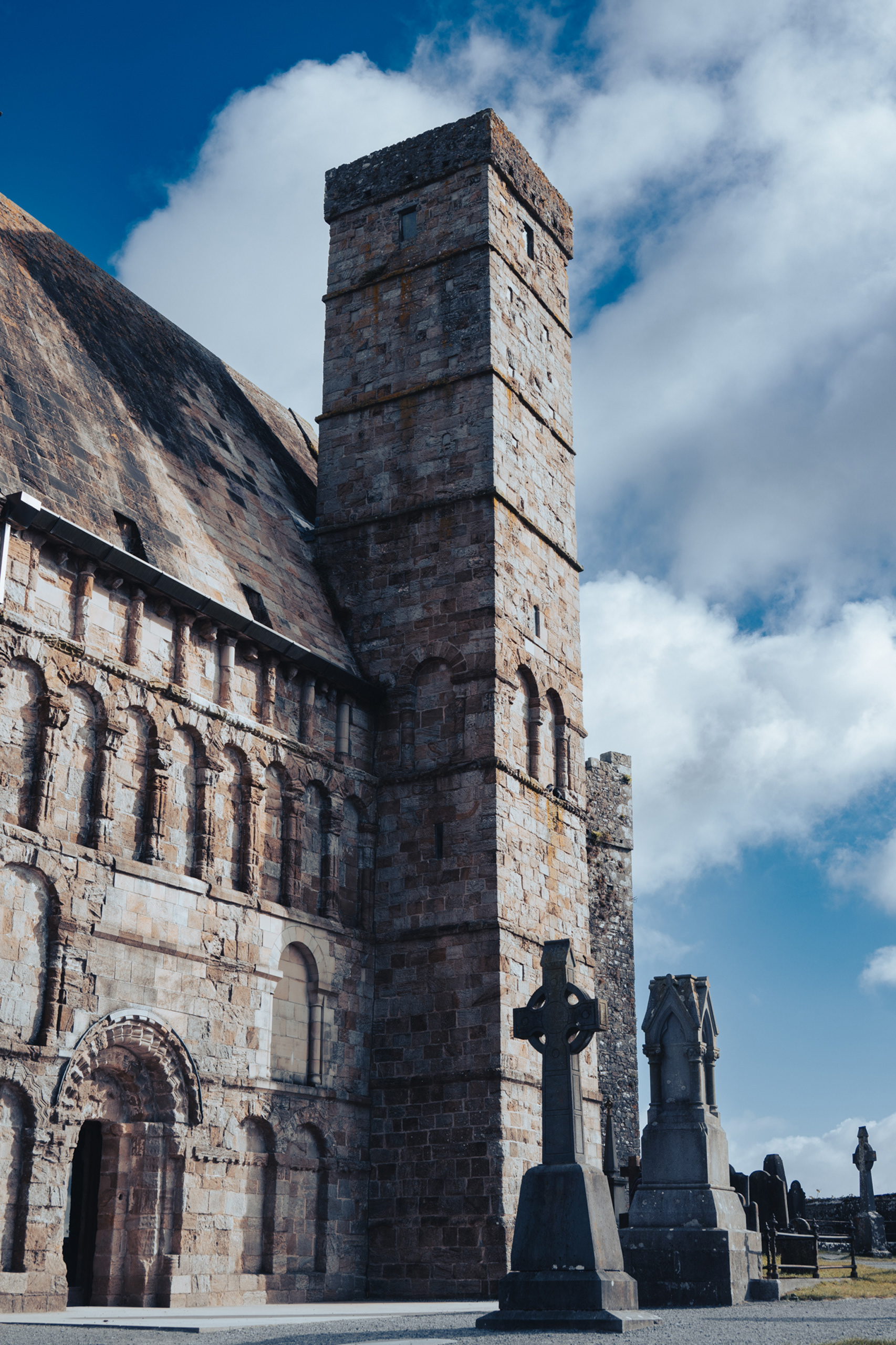
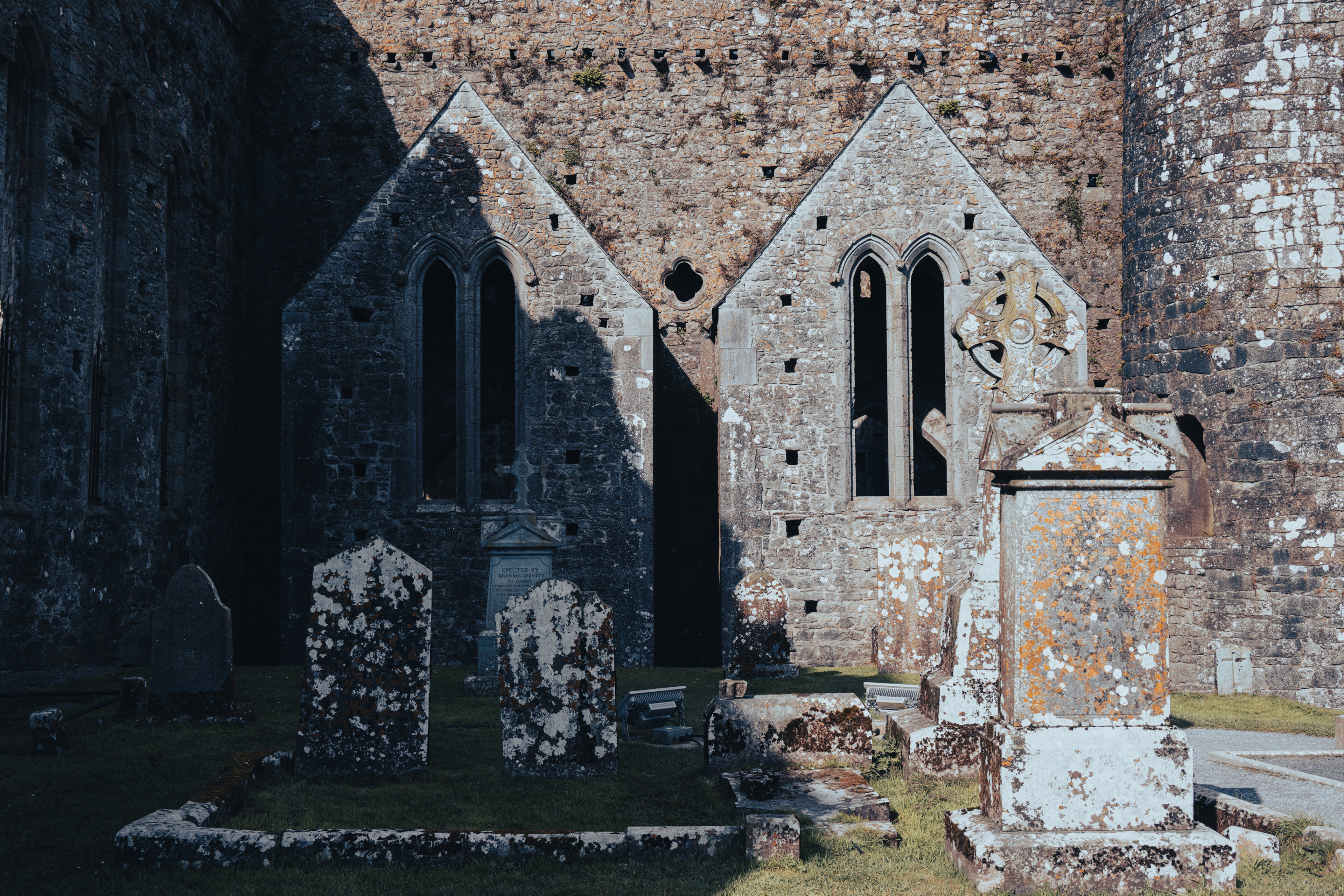
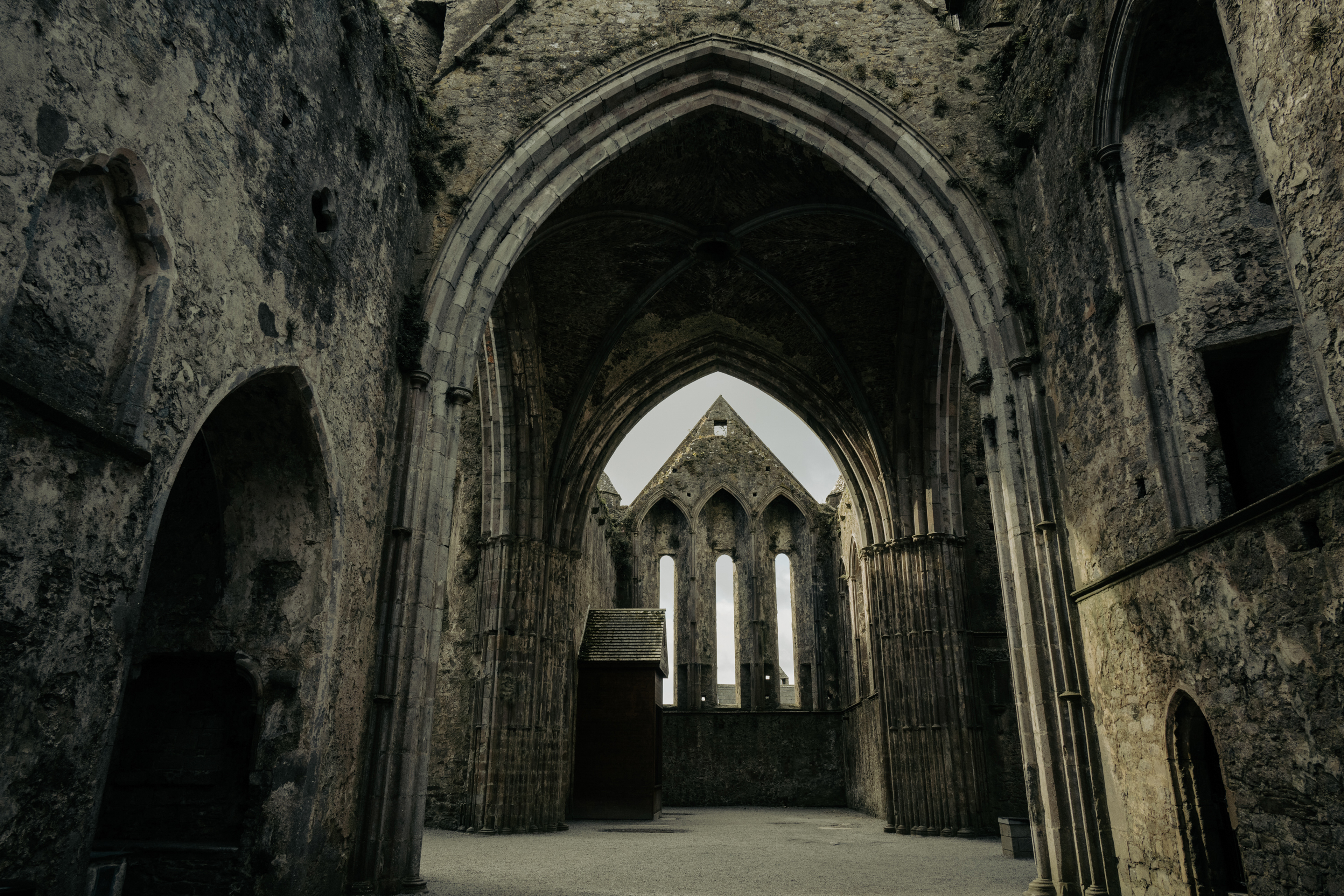
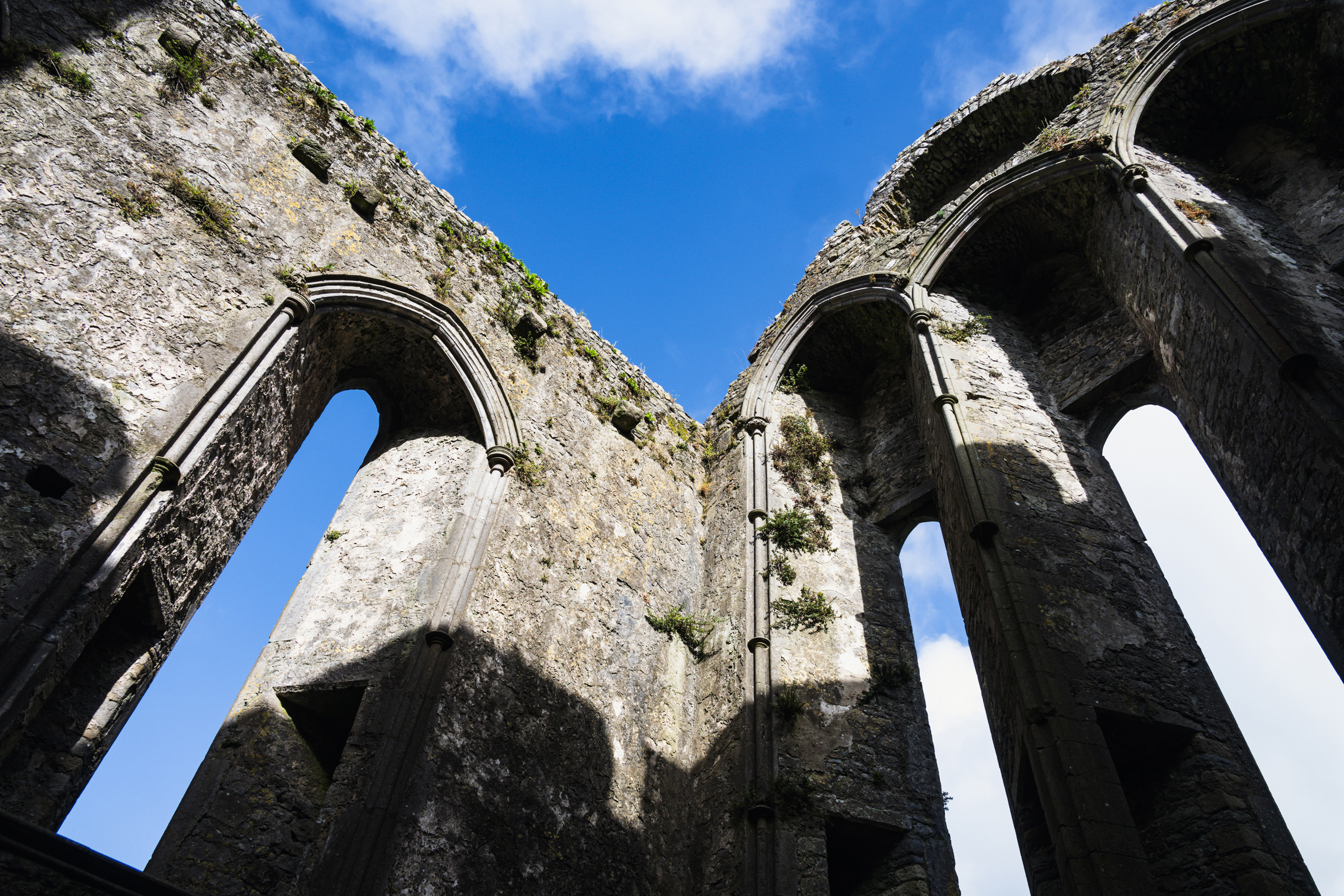
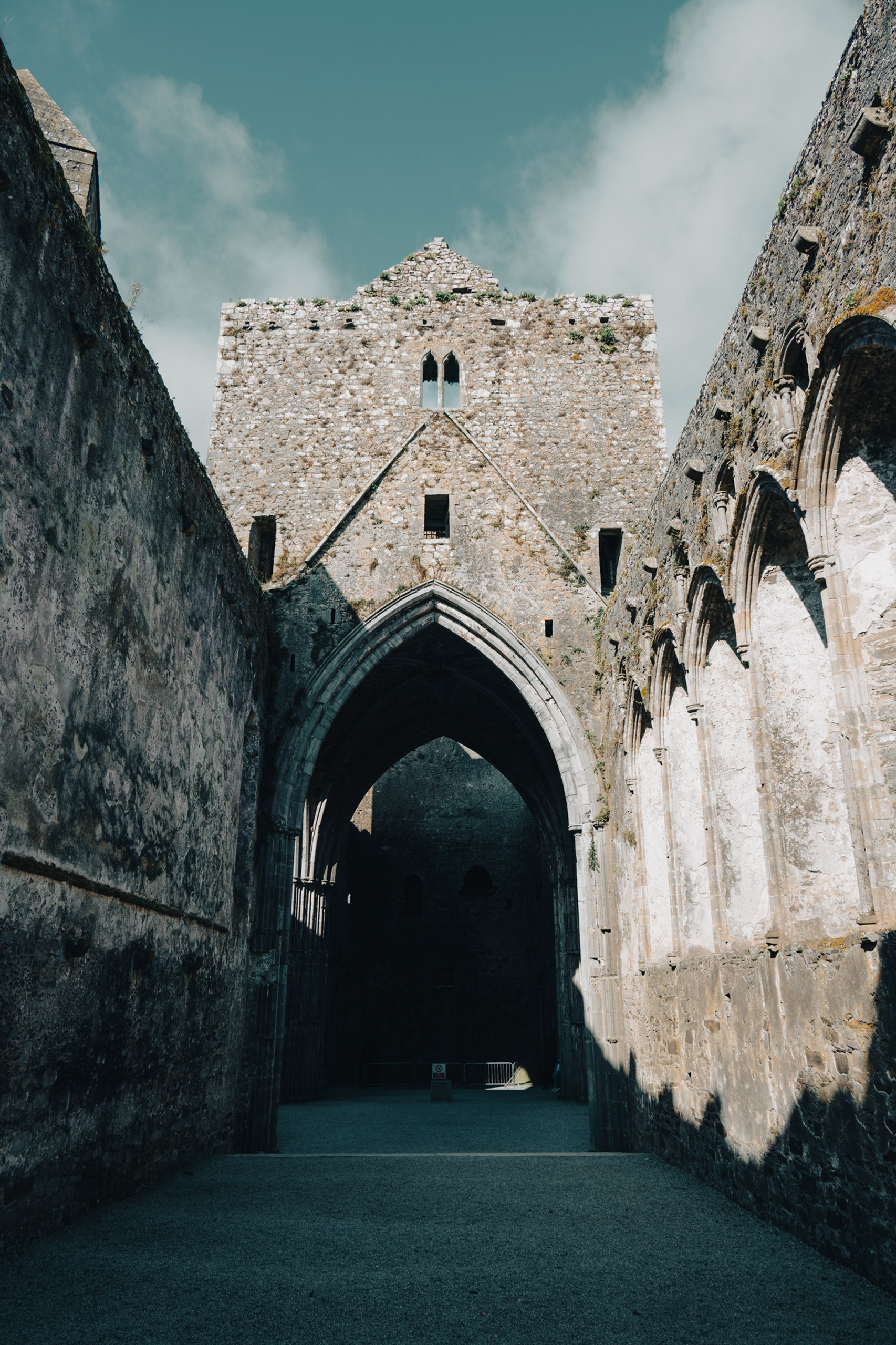
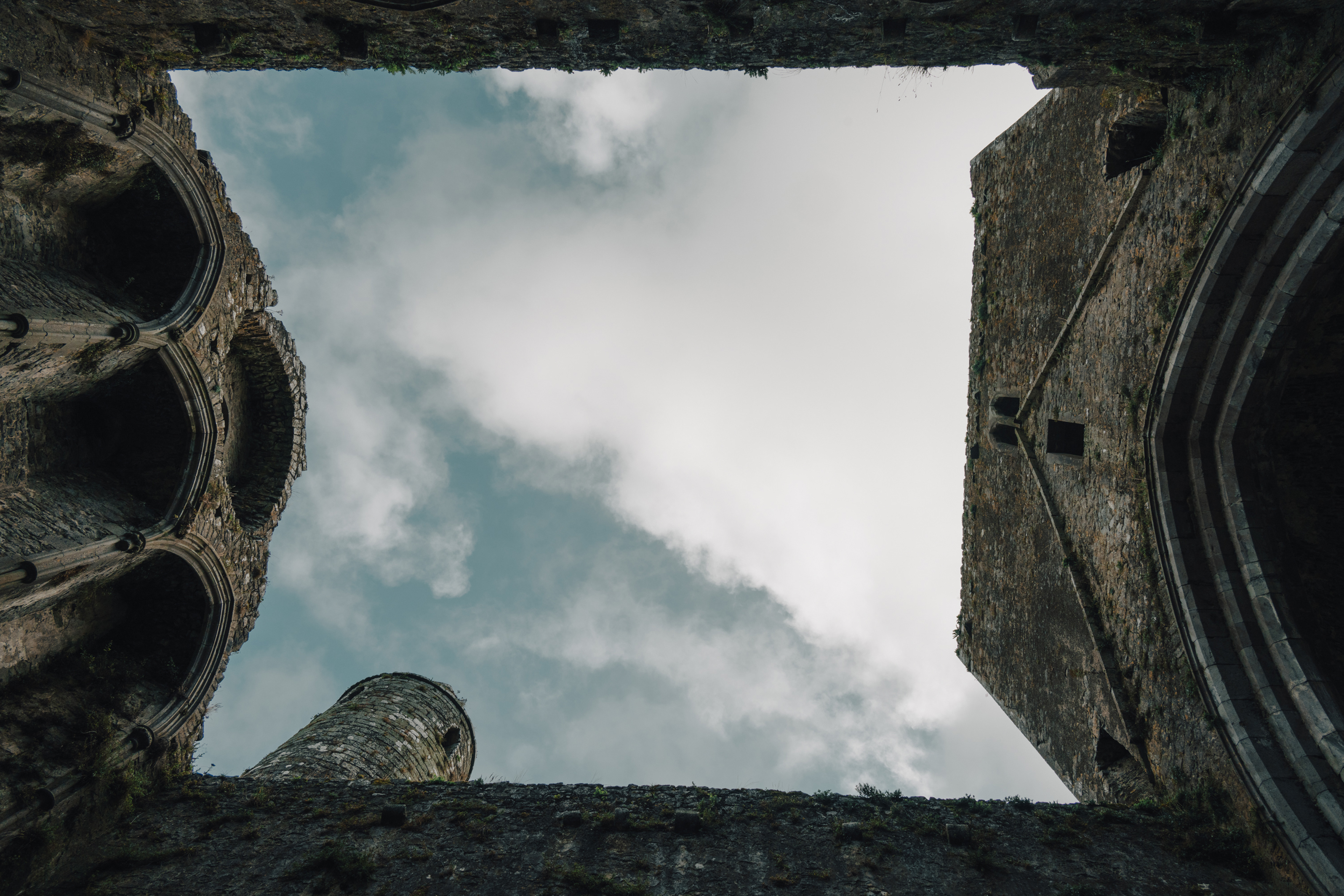
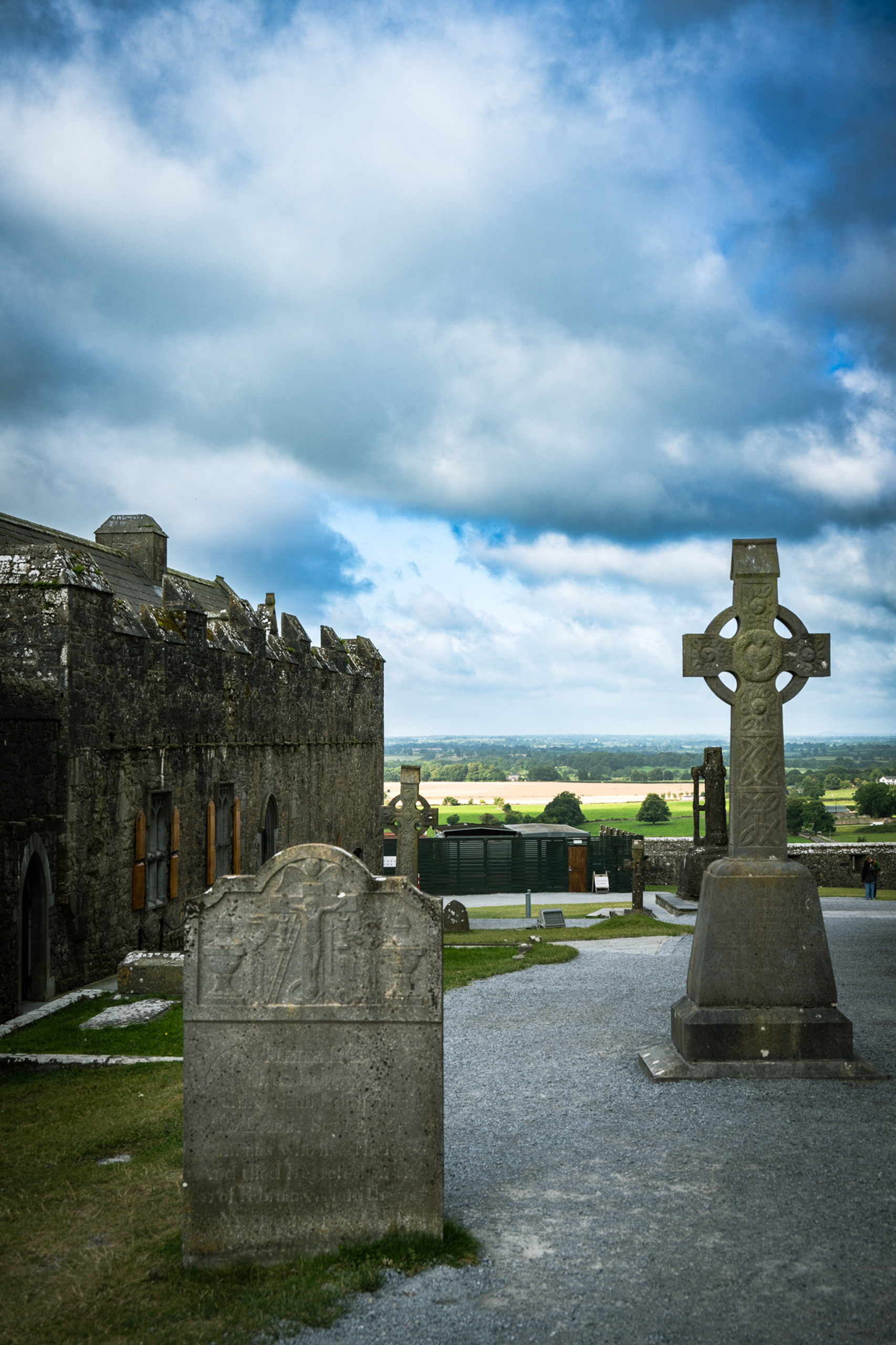
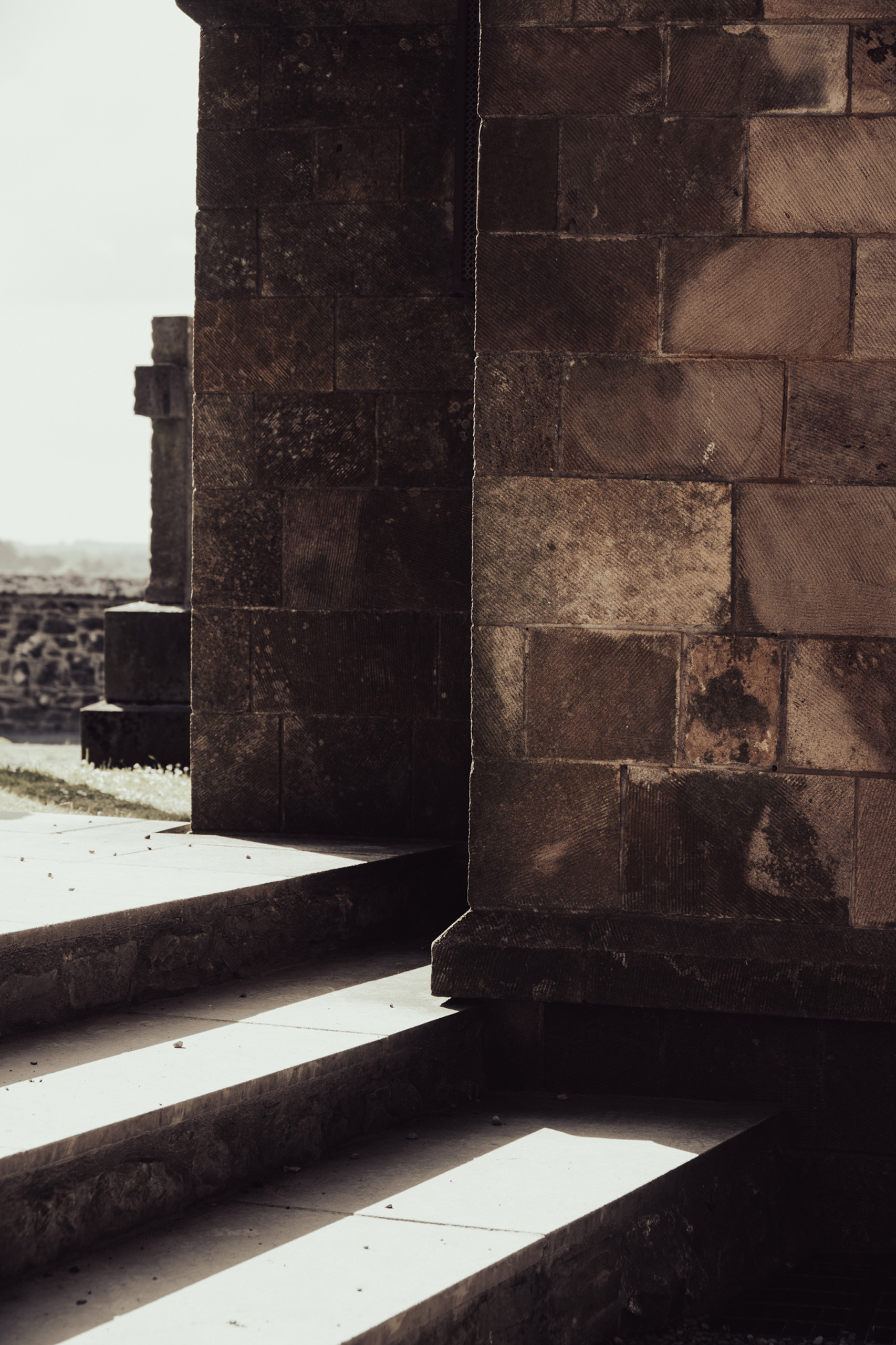
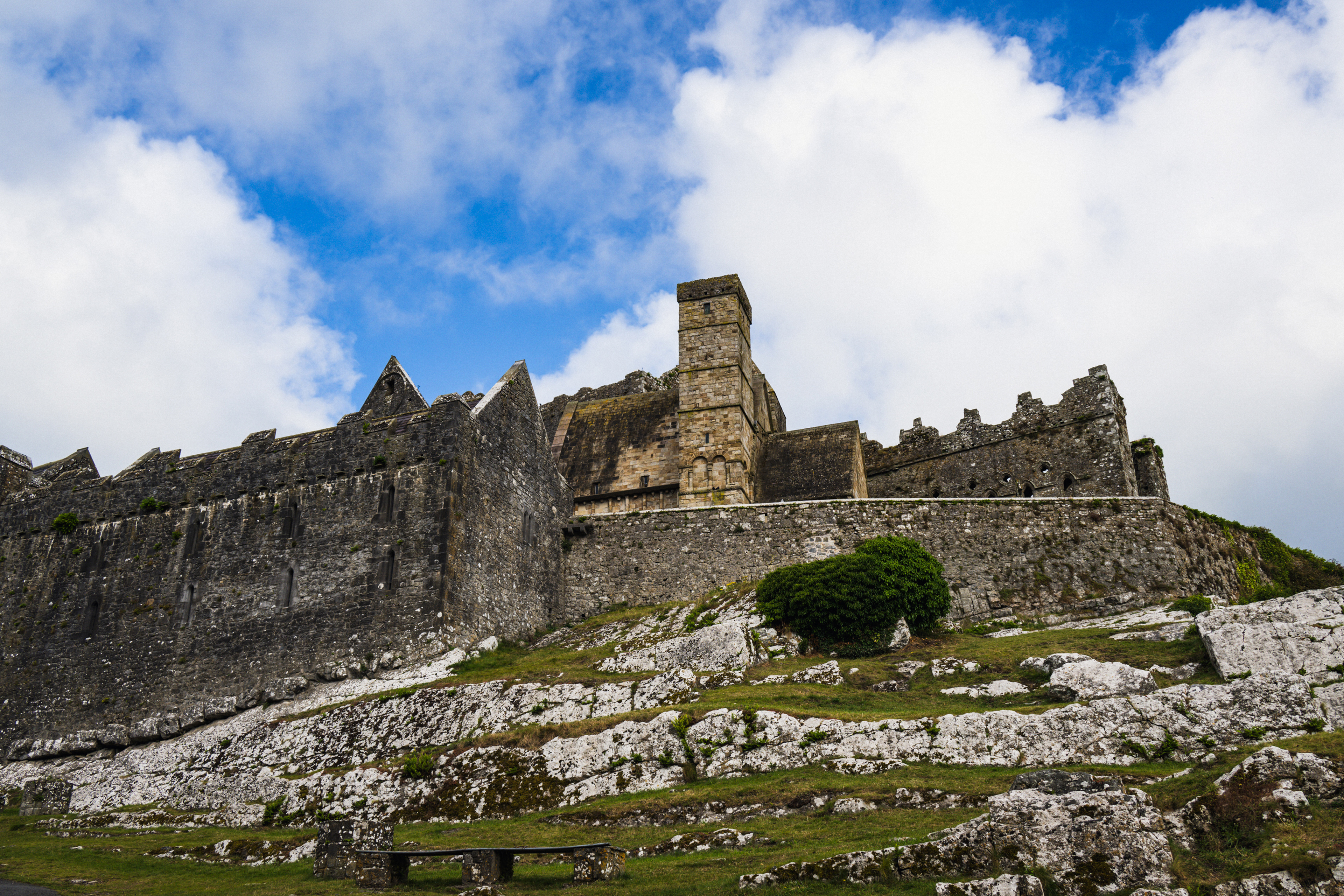
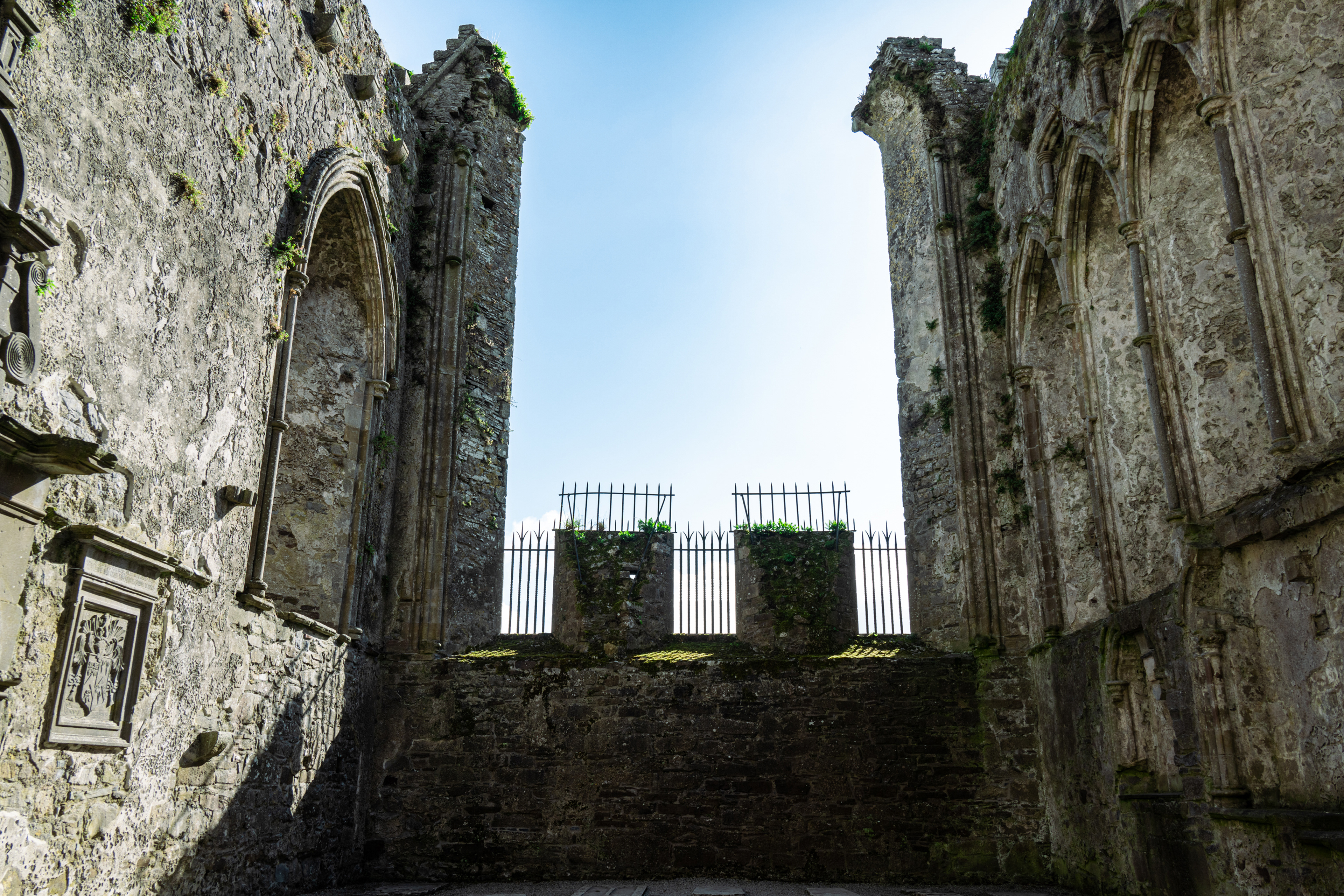
Later that day we reached the Rock of Cashel, a limestone outcrop rising out of the flat Tipperary farmland with a roofless cathedral, a round tower and a chapel crowded onto its top. It was the seat of the kings of Munster, and Brian Boru was crowned there in the tenth century. In 1101 King Muirchertach Ua Briain gave the fortress to the Church, which built most of what stands today in the twelfth and thirteenth centuries, including Cormac's Chapel, consecrated in 1134. The local explanation for the rock is simpler than the geological one. The Devil, the story goes, bit a piece out of a mountain about thirty kilometers to the north, still called the Devil's Bit, and spat it out here. We photographed the Rock at length, along with the town of Cashel below it.
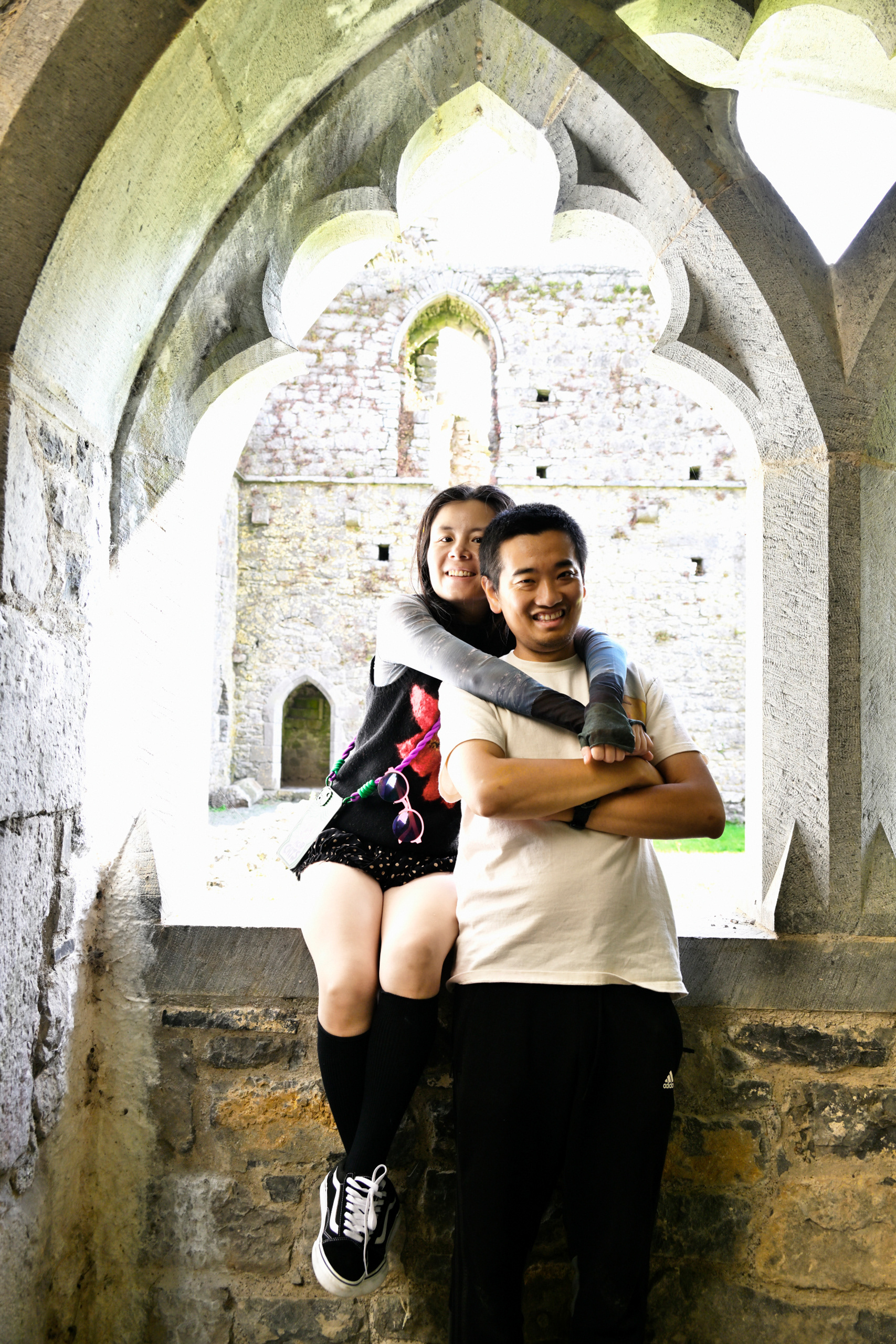
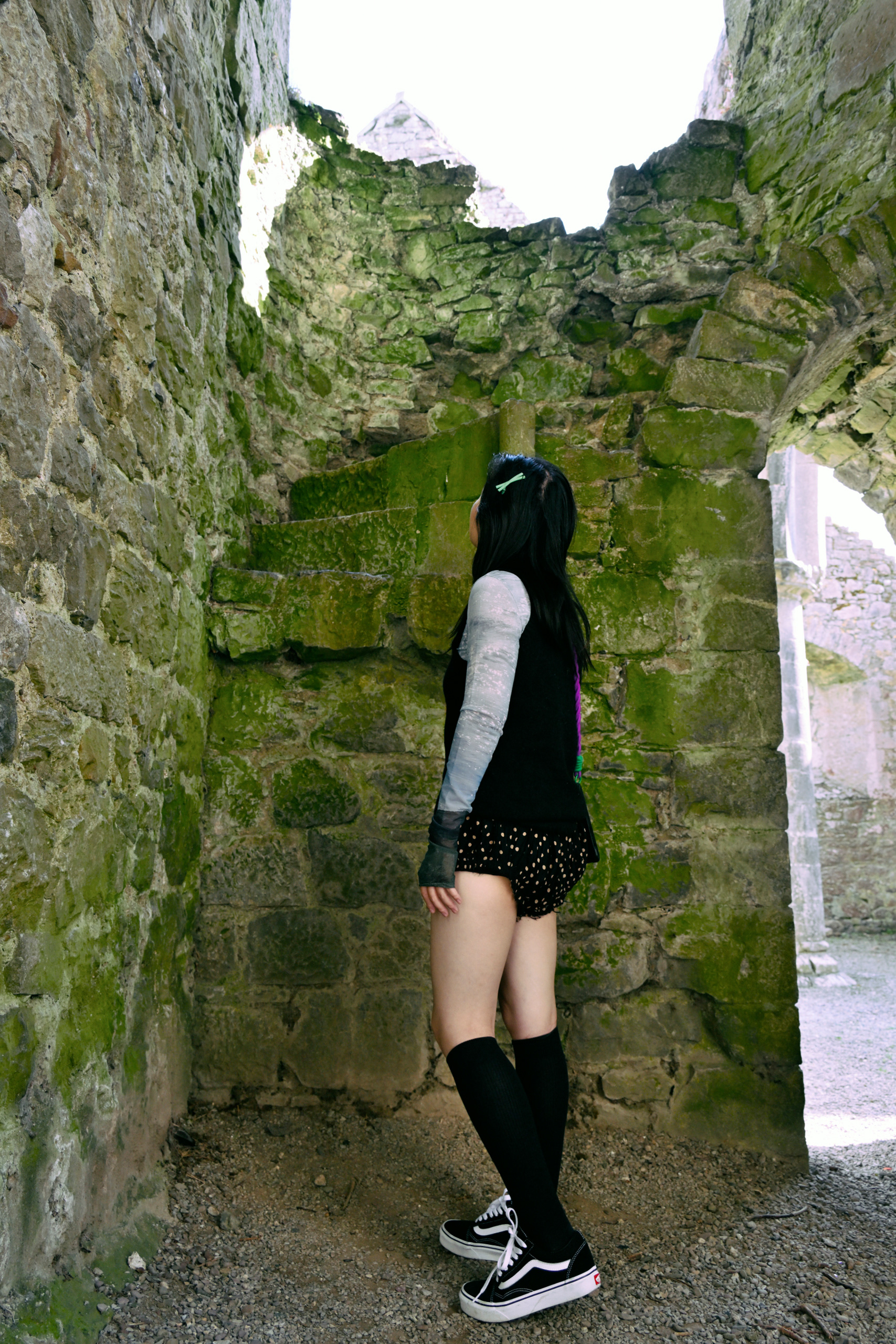
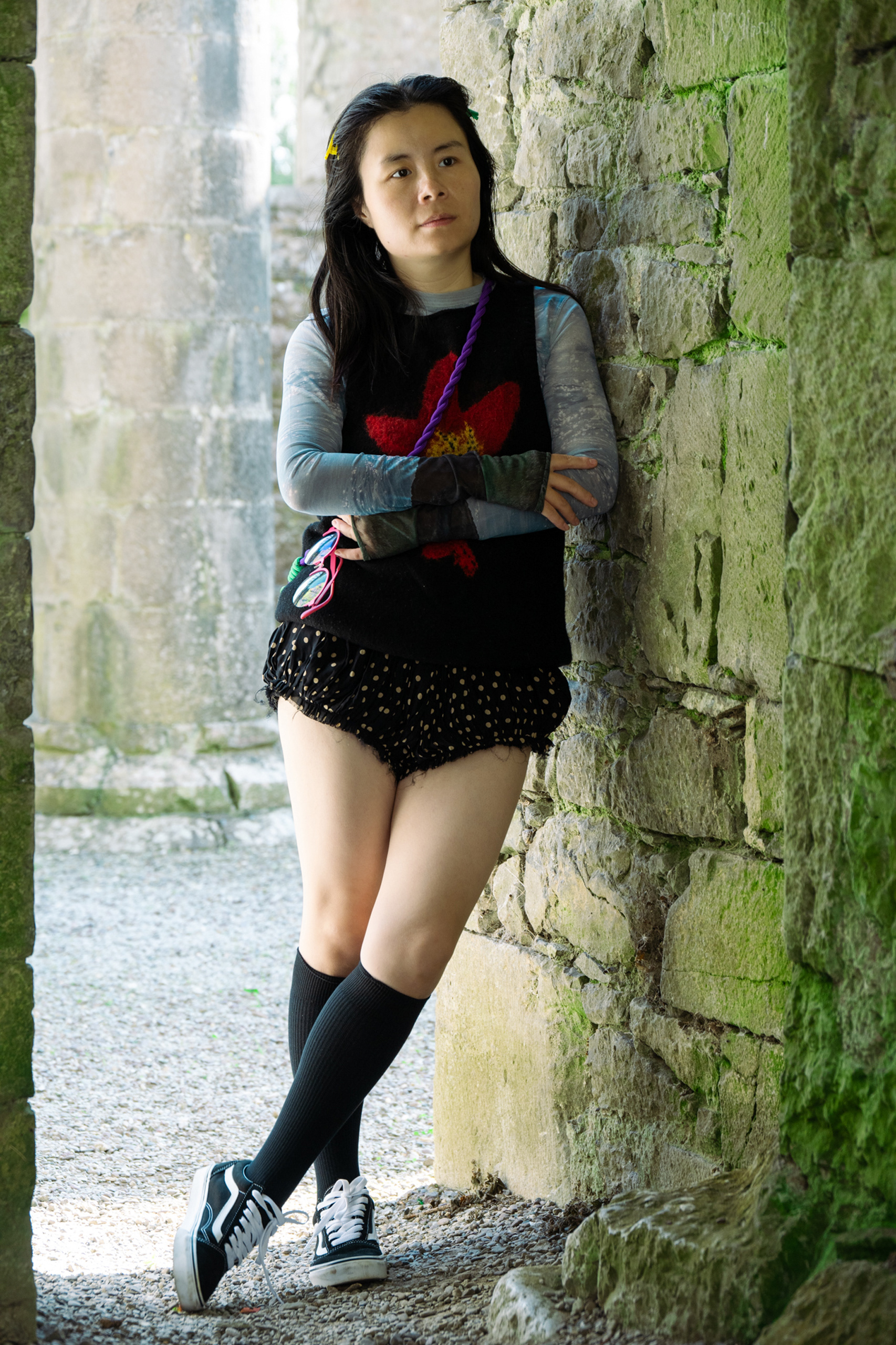
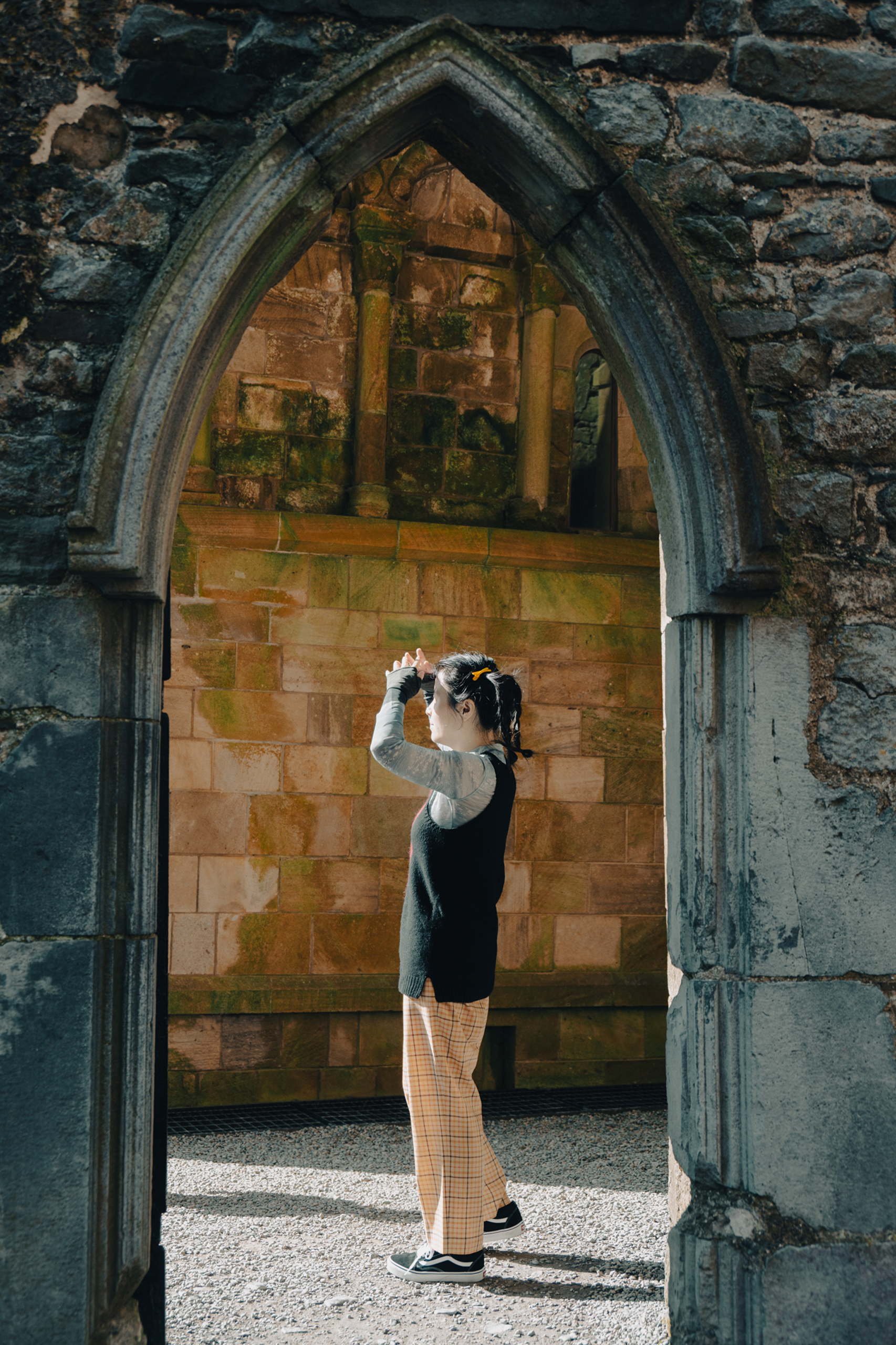
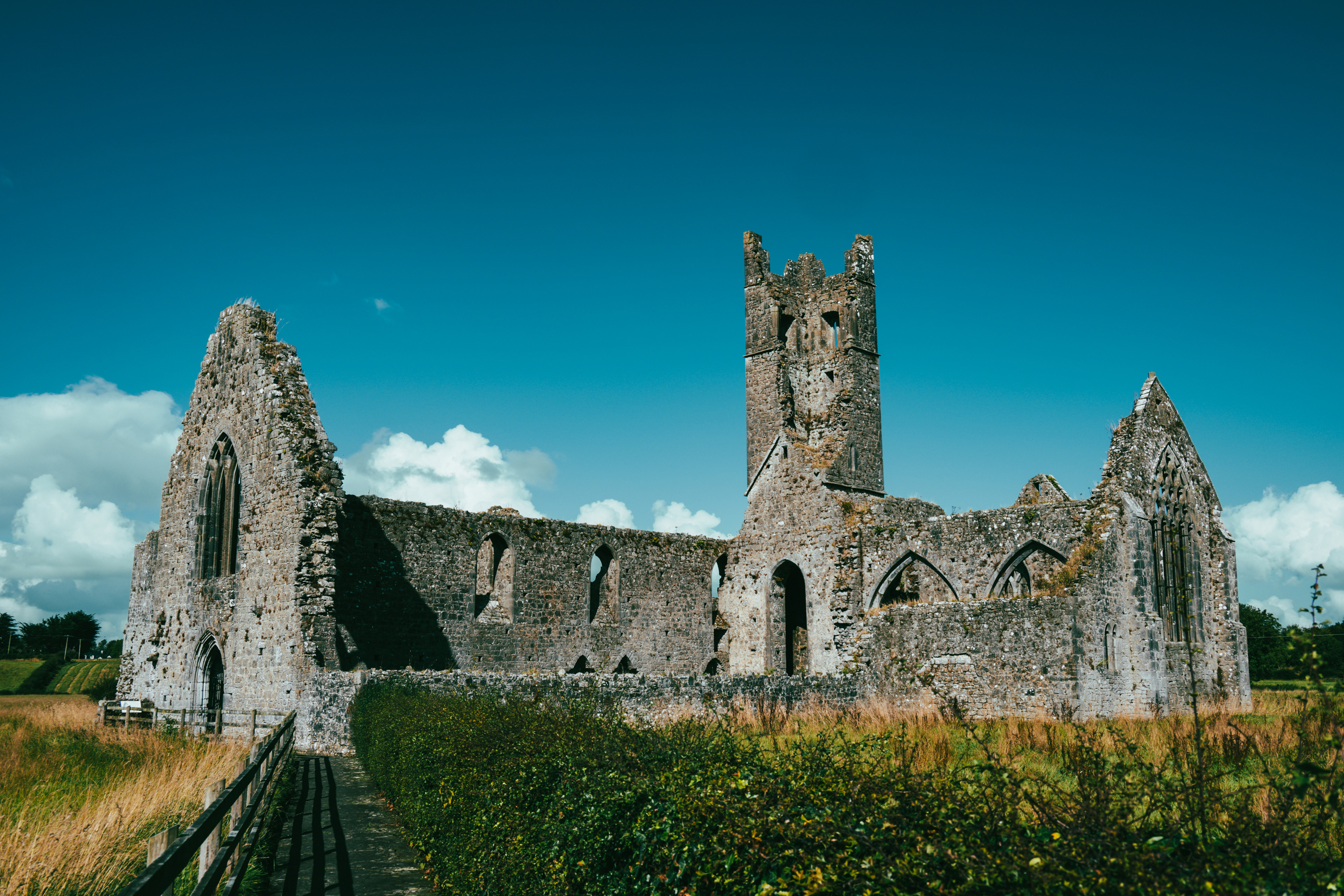
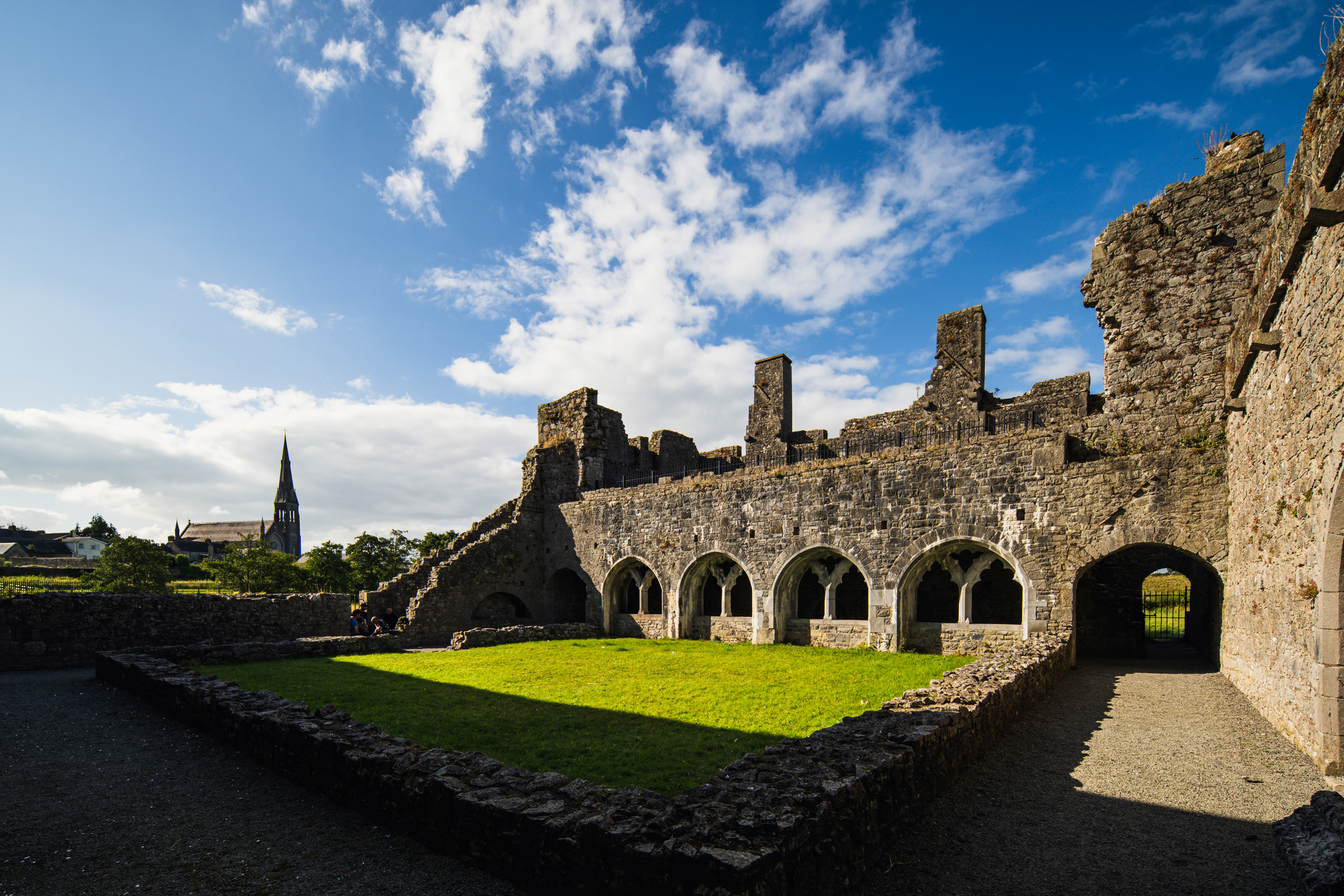
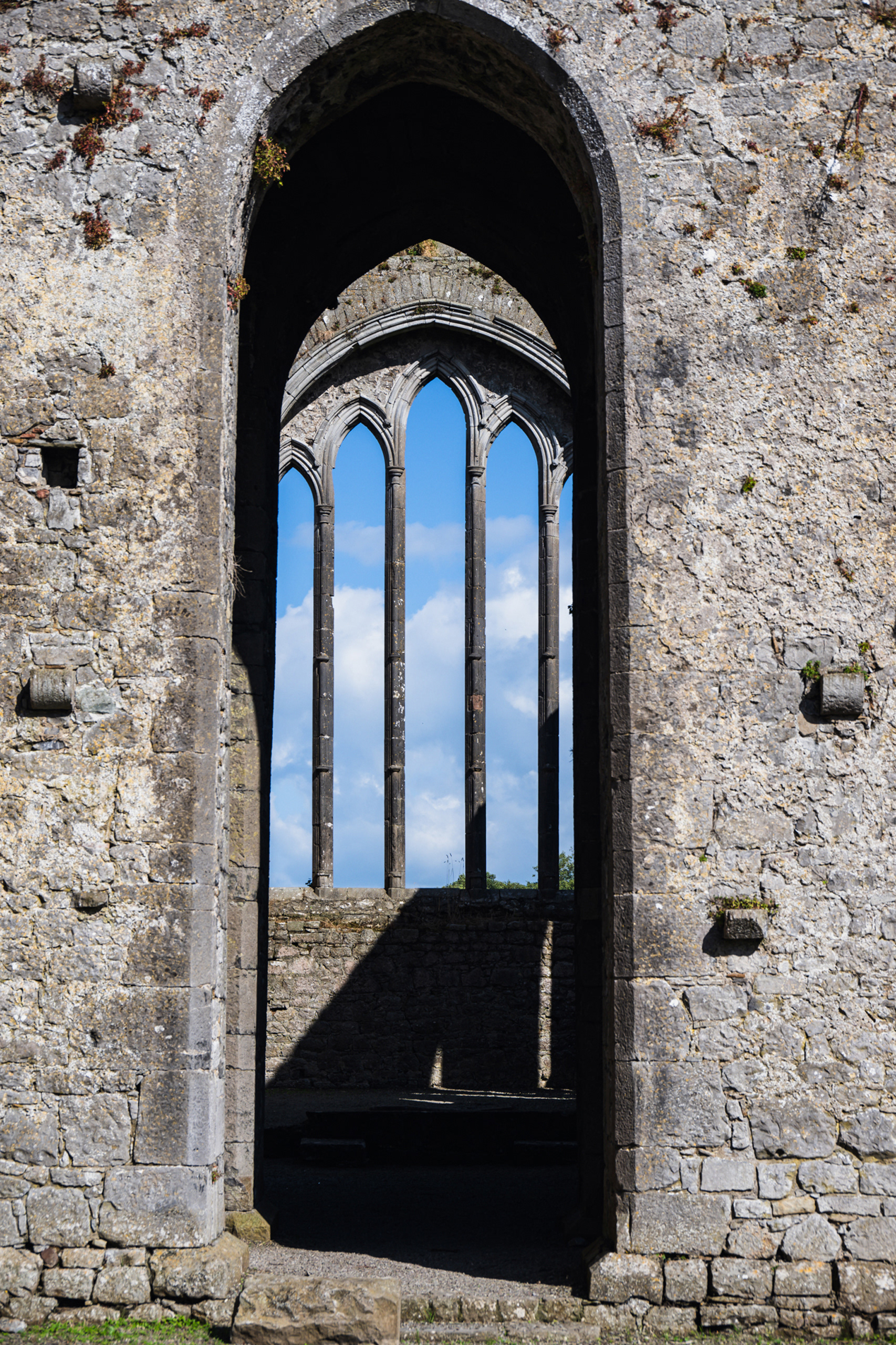
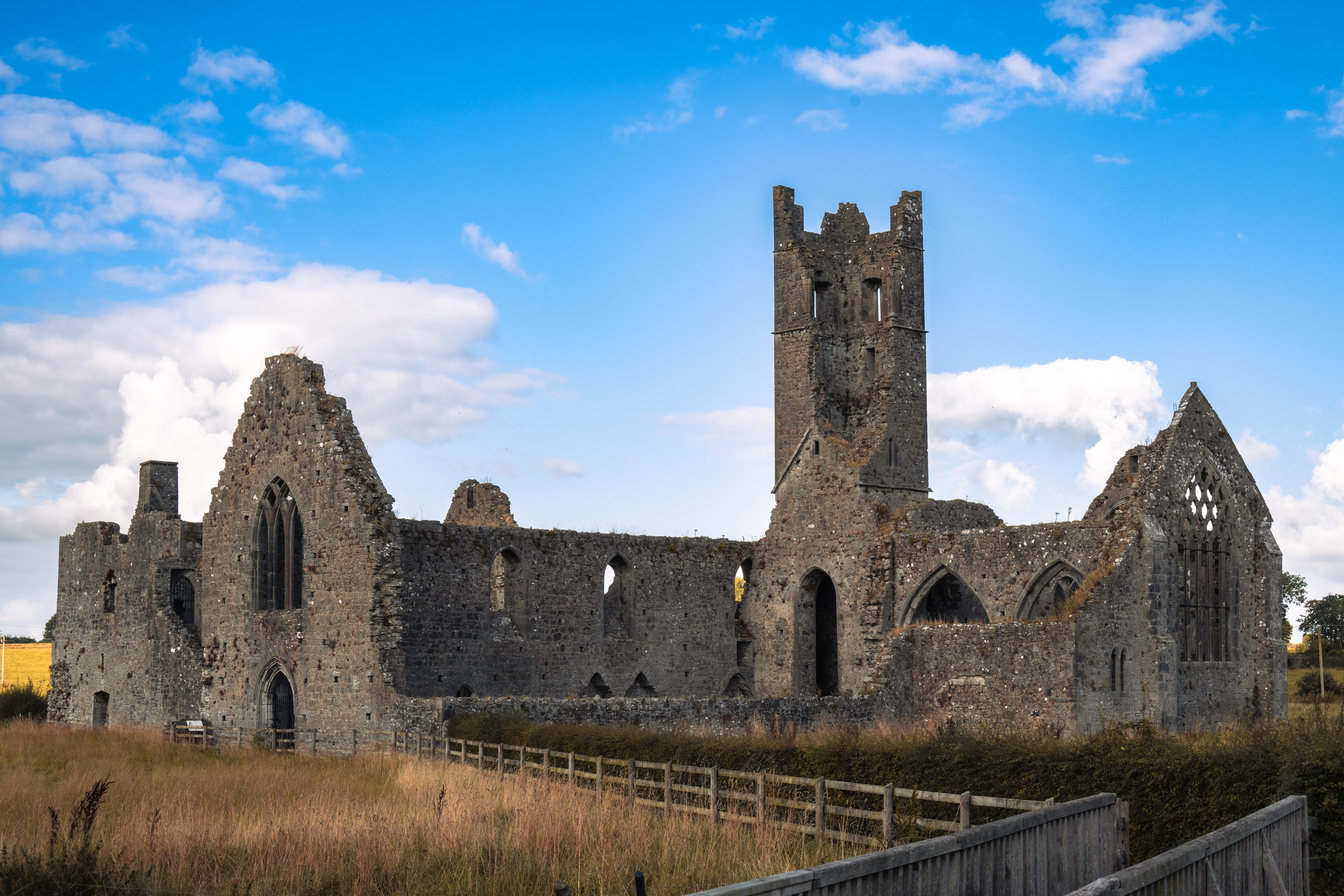
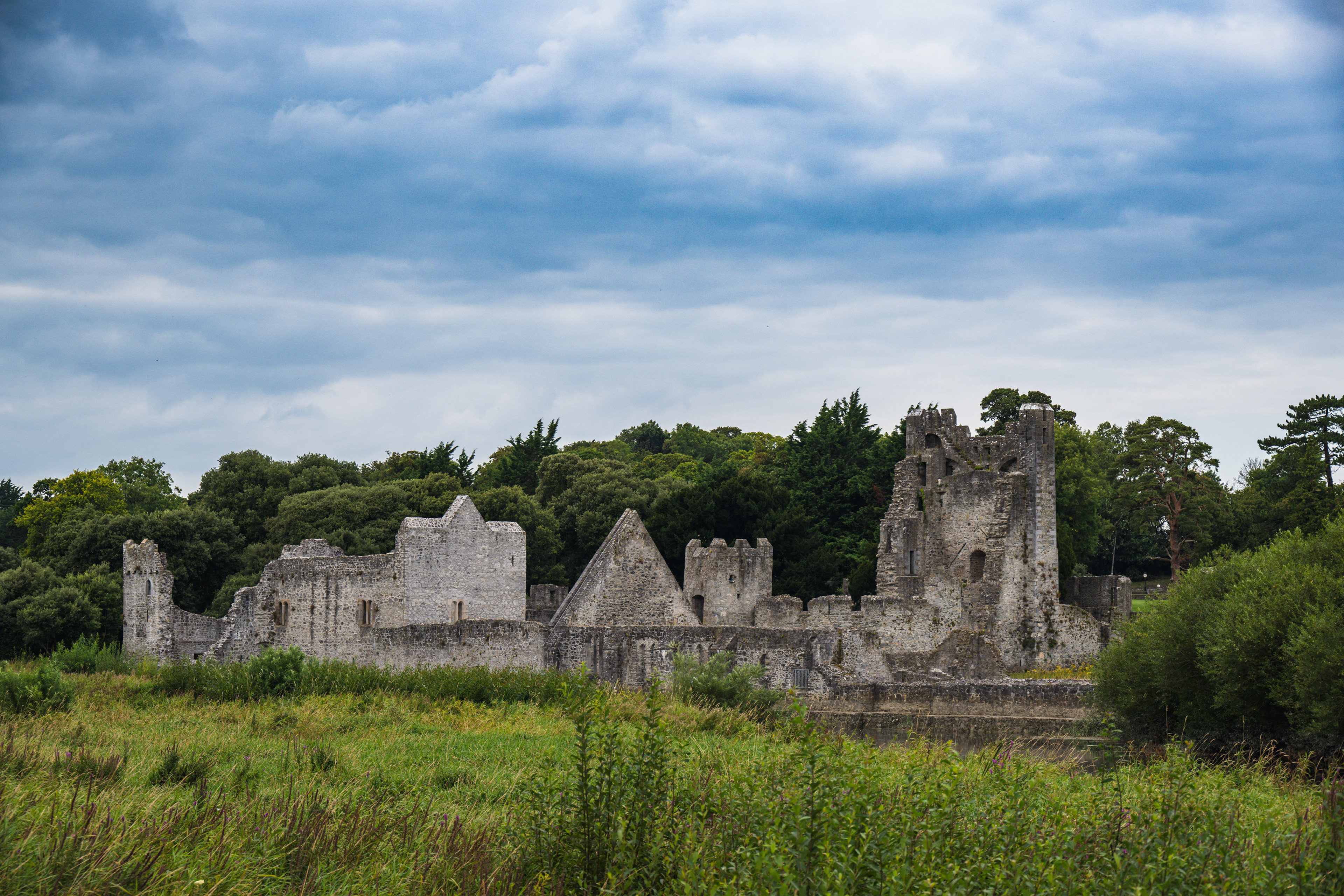
Not every ruin came with a visitor center. In Kilmallock, in County Limerick, on the way to our next farm stay, we stopped at the Dominican priory, founded in 1291 on the bank of the River Loobagh just outside the medieval town walls. It is an unguided site, roofless, with a tall five-light window in the choir and small carved stone heads throughout that may be portraits of the priory's benefactors. Kilmallock is one of the best-preserved walled towns in Ireland. In Adare, where we went for afternoon tea, the camera also caught Desmond Castle, a ruin on the River Maigue. After a week of castles and abbeys, some restored, one sold for fifty pounds and many left to the weather, we found we disagreed with the sixth Marquess: Ireland has a great many ruins, and we never found them to be too many.








The Farm Stays
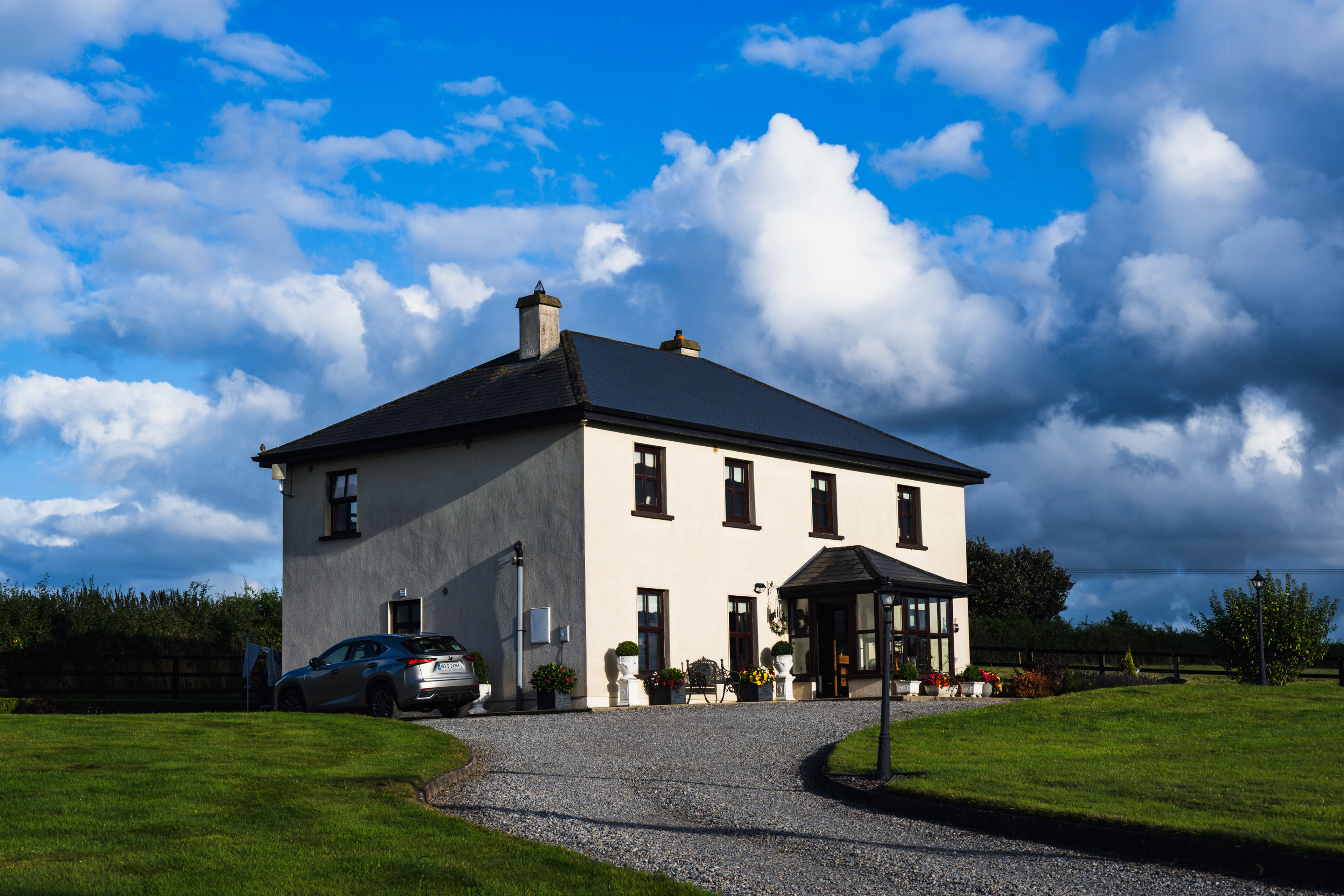
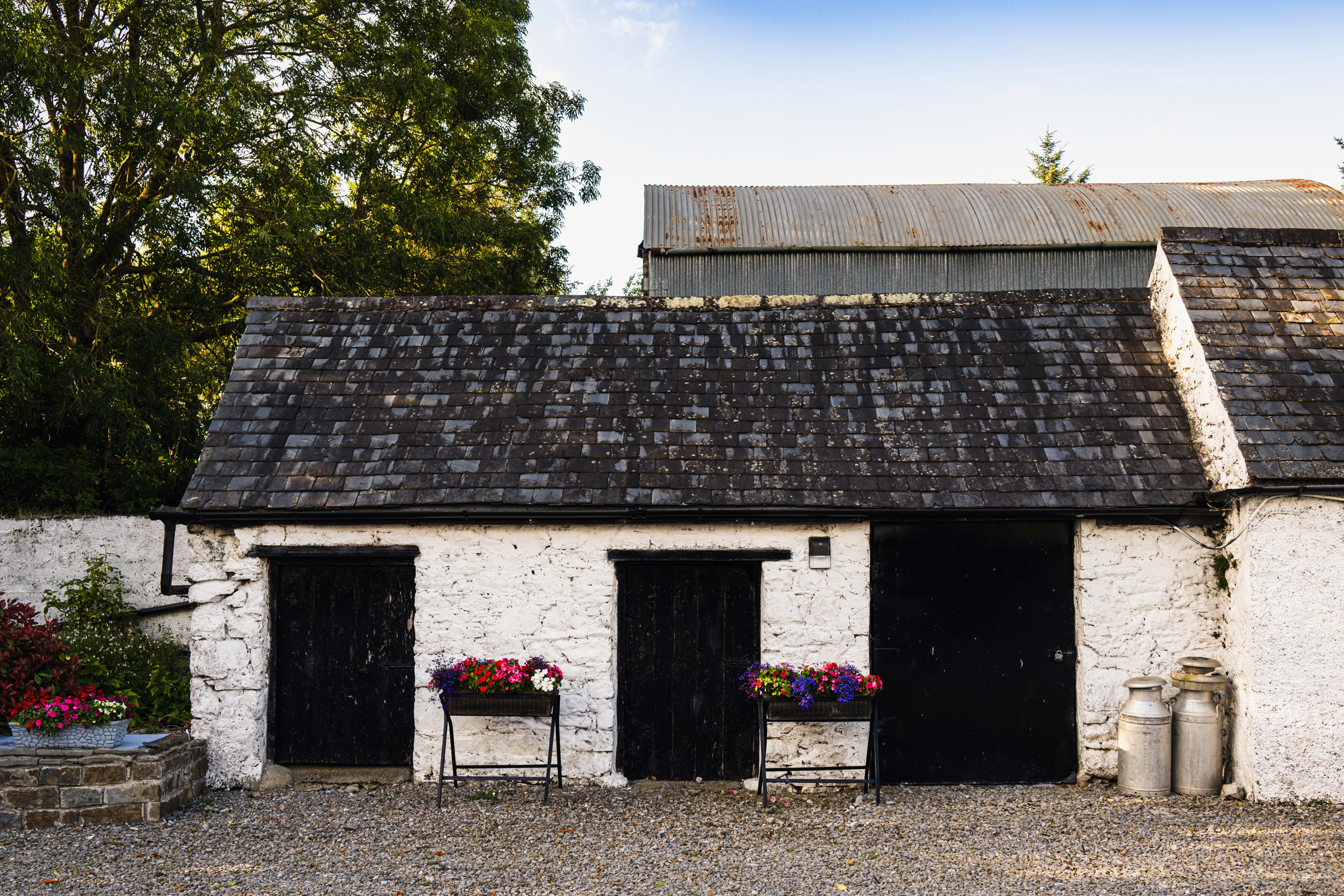
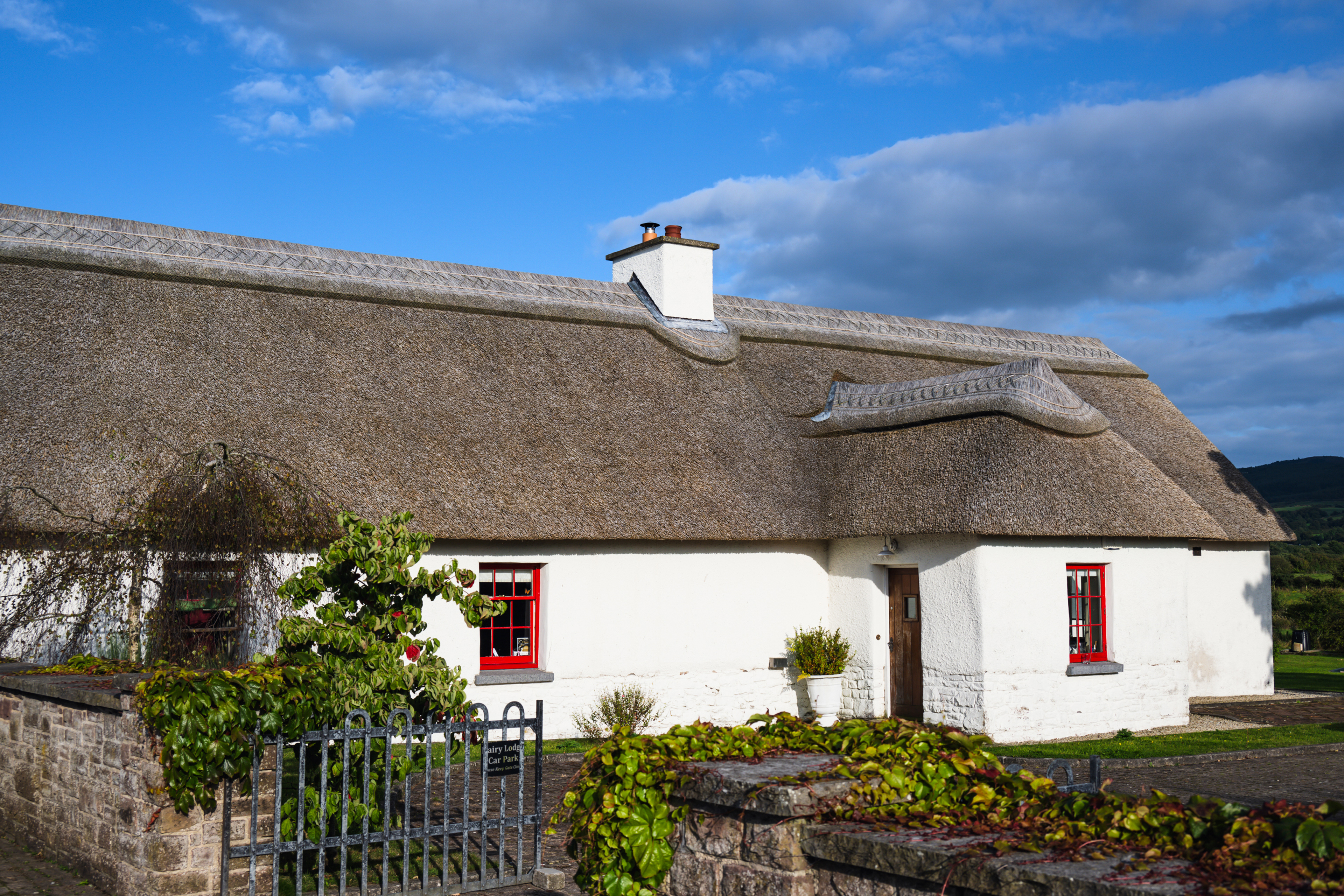
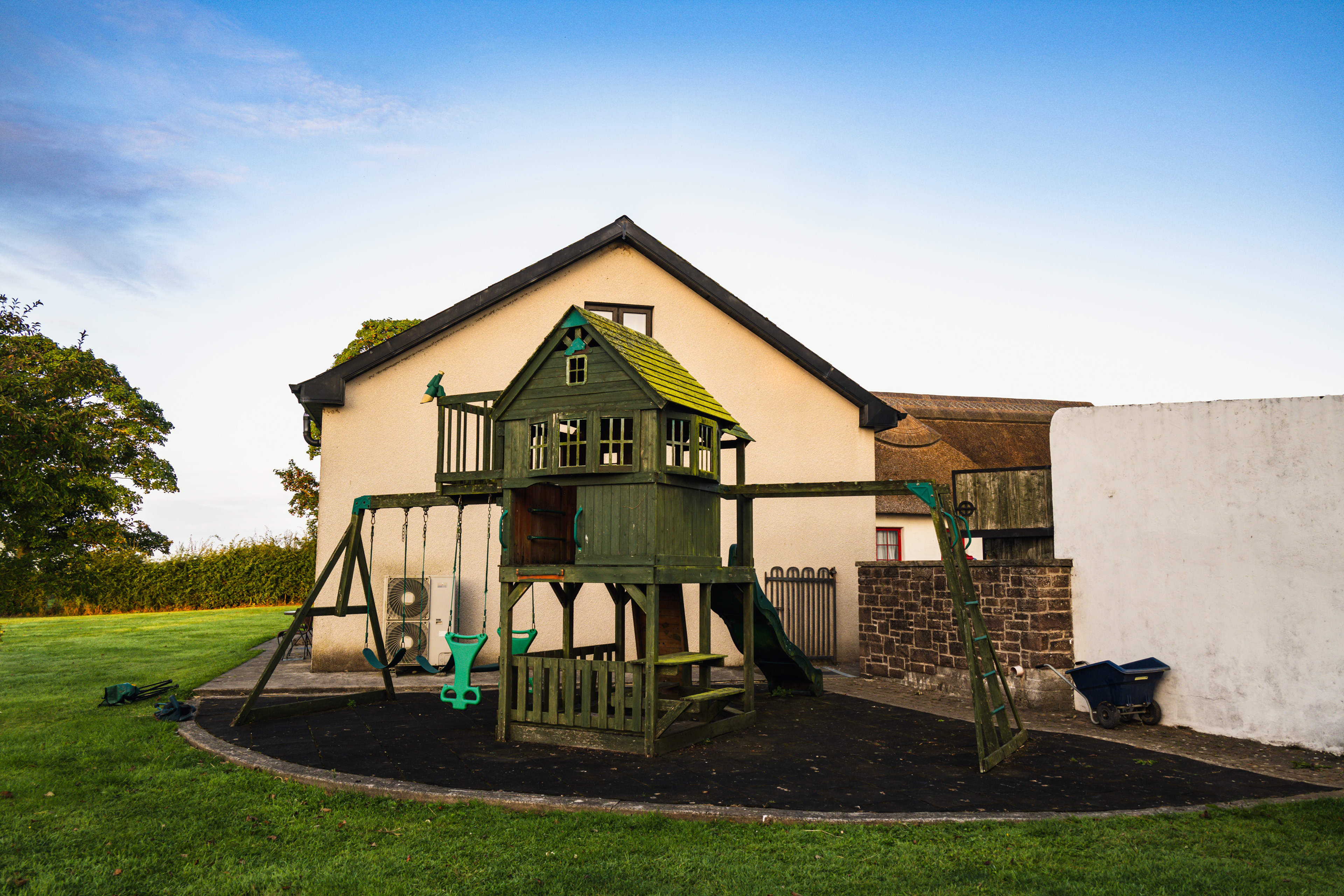
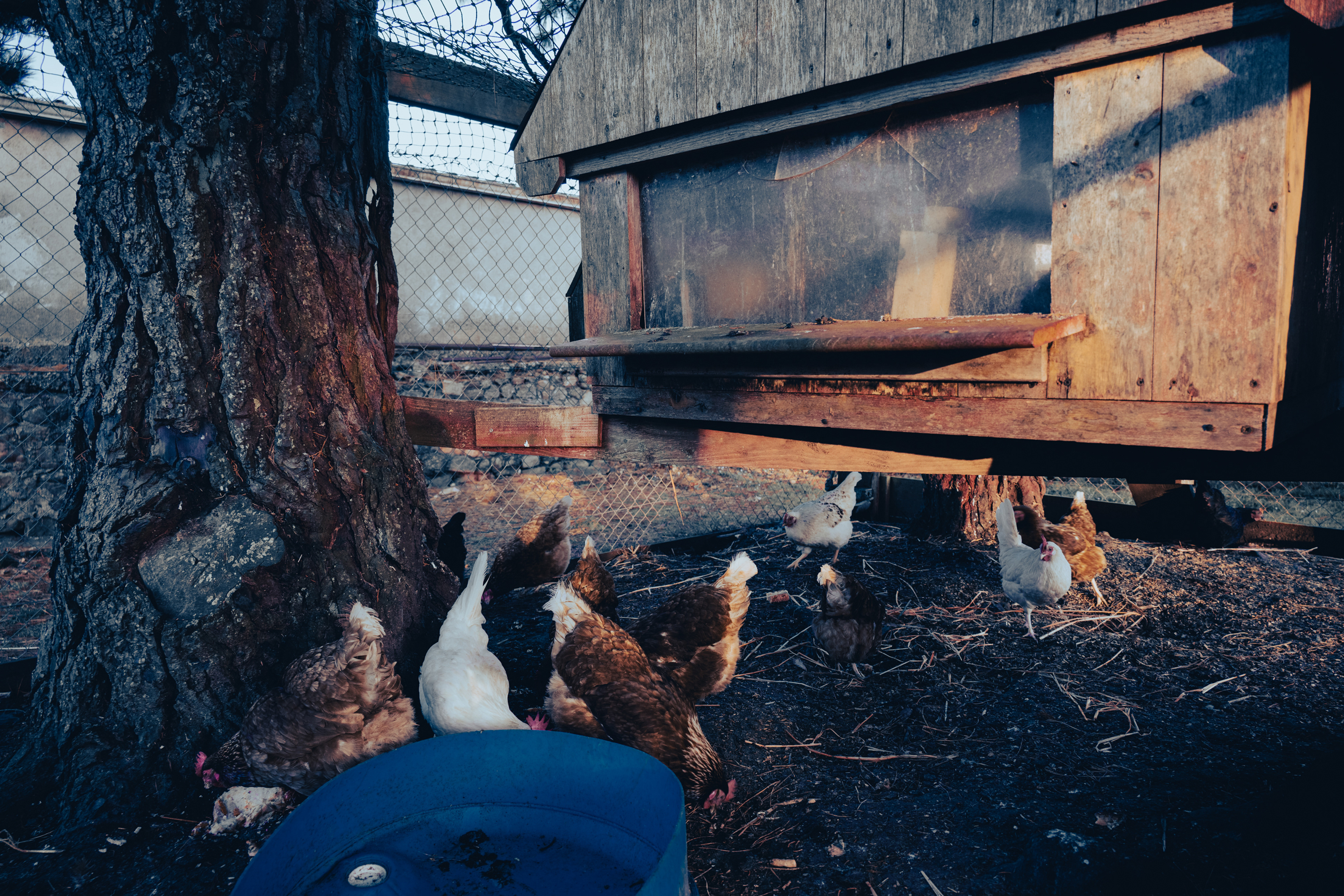
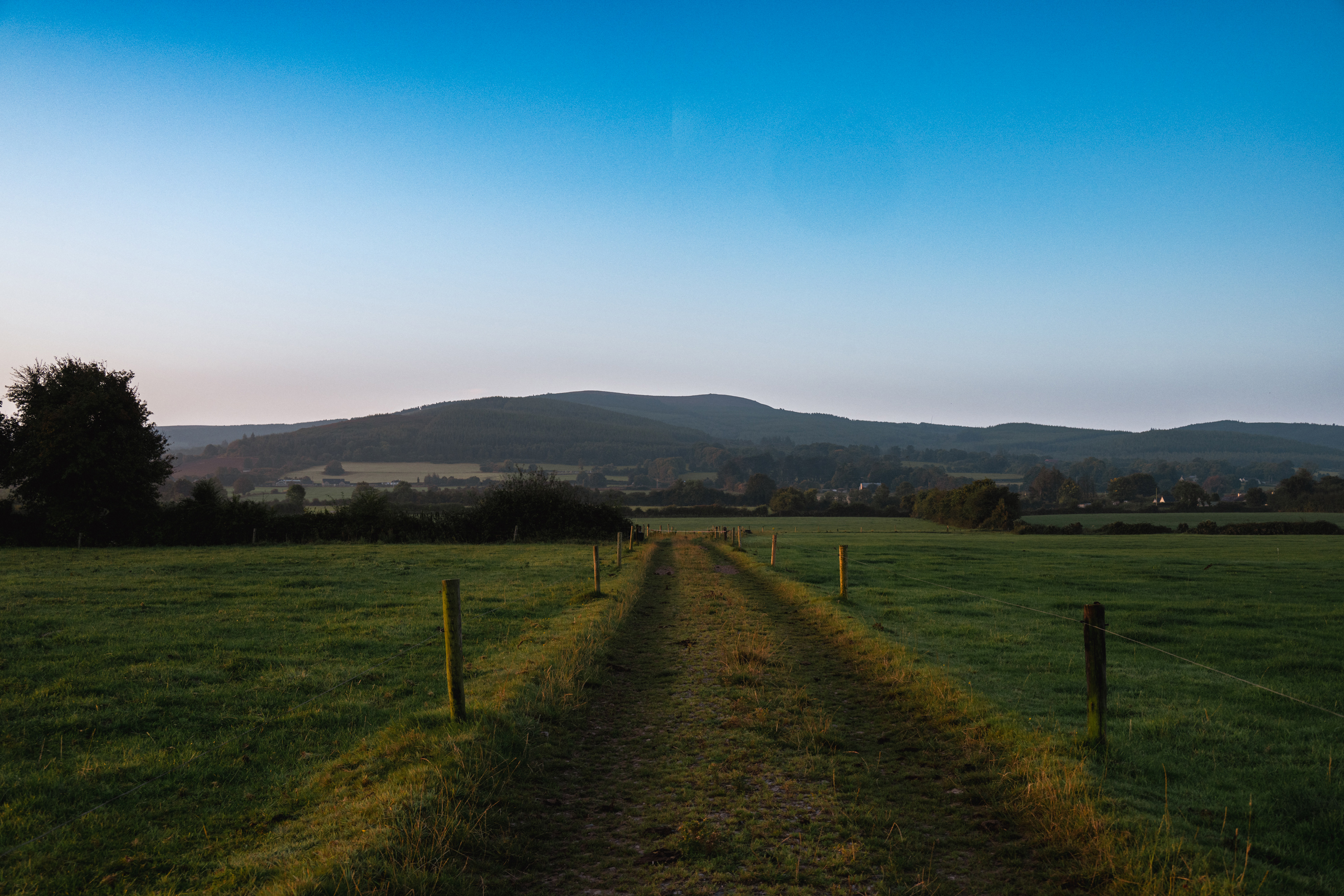
Our daughter asked for nights on working farms, and we booked two. The first was a farmhouse at Ballygarrane, where we arrived after Cashel for a single night. The second was Dairy Lodge, which we booked for two nights so that one day could stay mostly empty. The itinerary entry for that day reads, in full, "stay in the lodge." With a toddler along, we had built a quiet day into the middle of the trip on purpose. It did not stay quite as quiet as planned: we stopped at Kilmallock on the way in, and the next day we decided, on a whim, to drive to Cobh, which had not been on the plan at all.
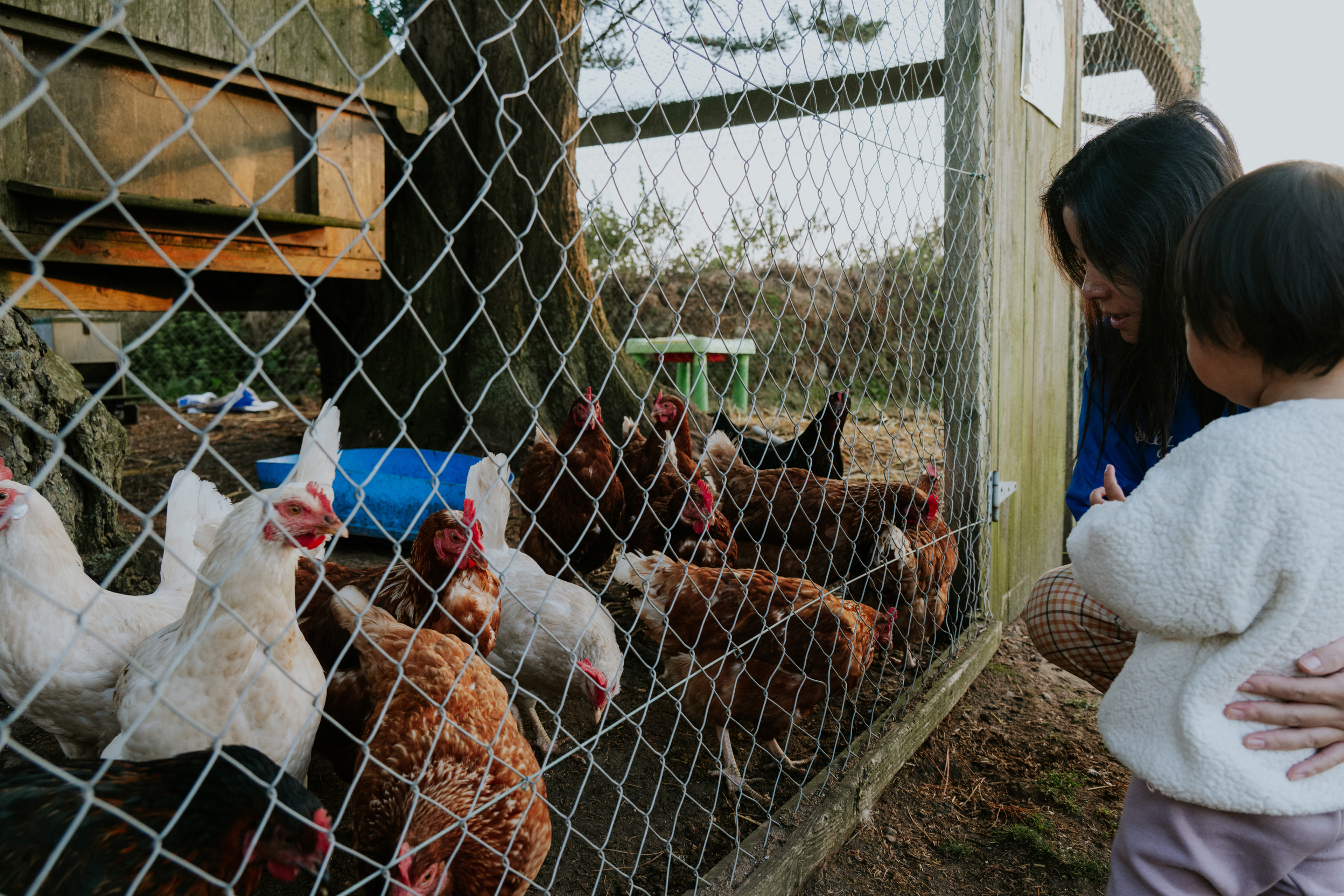
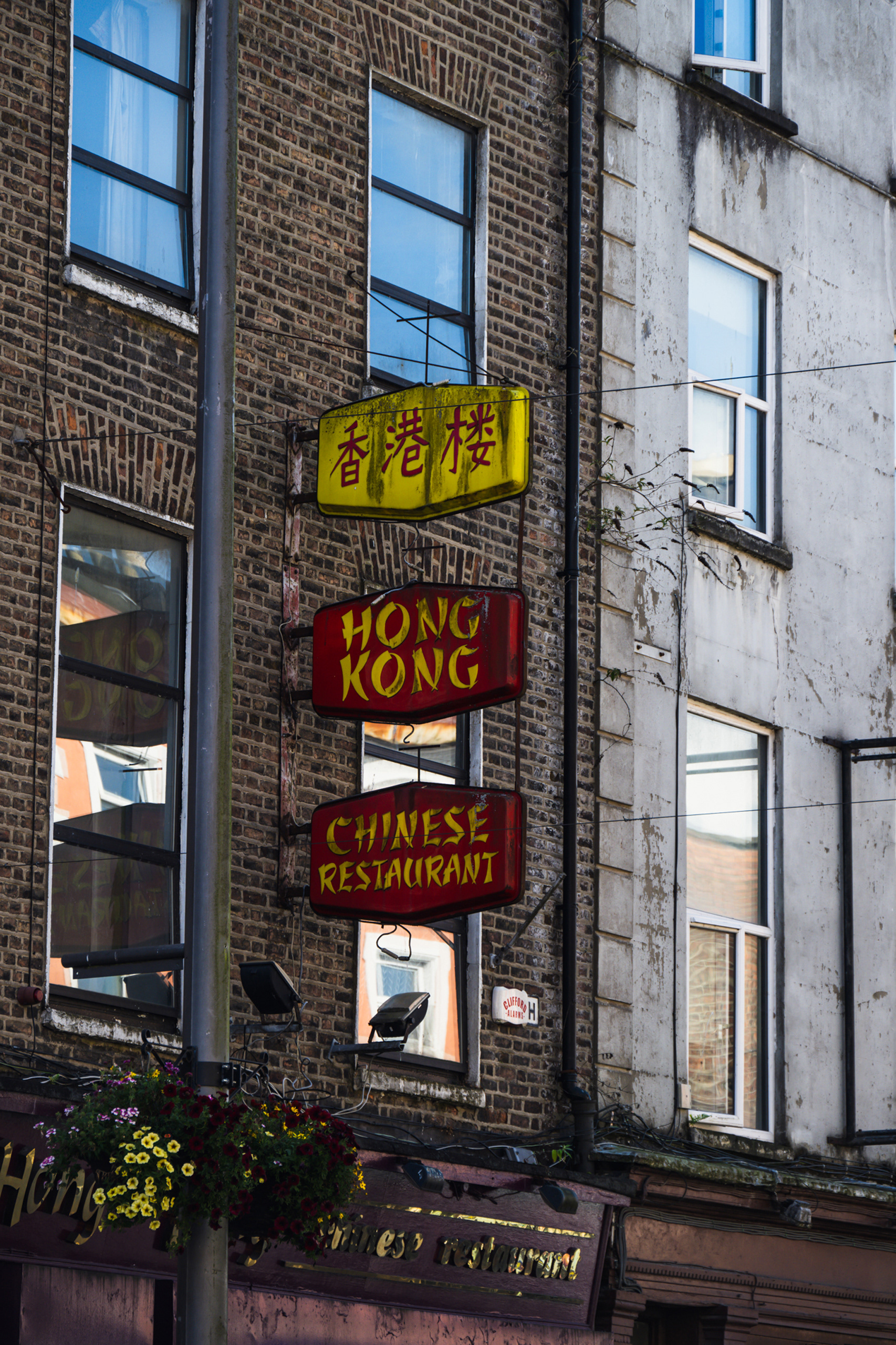
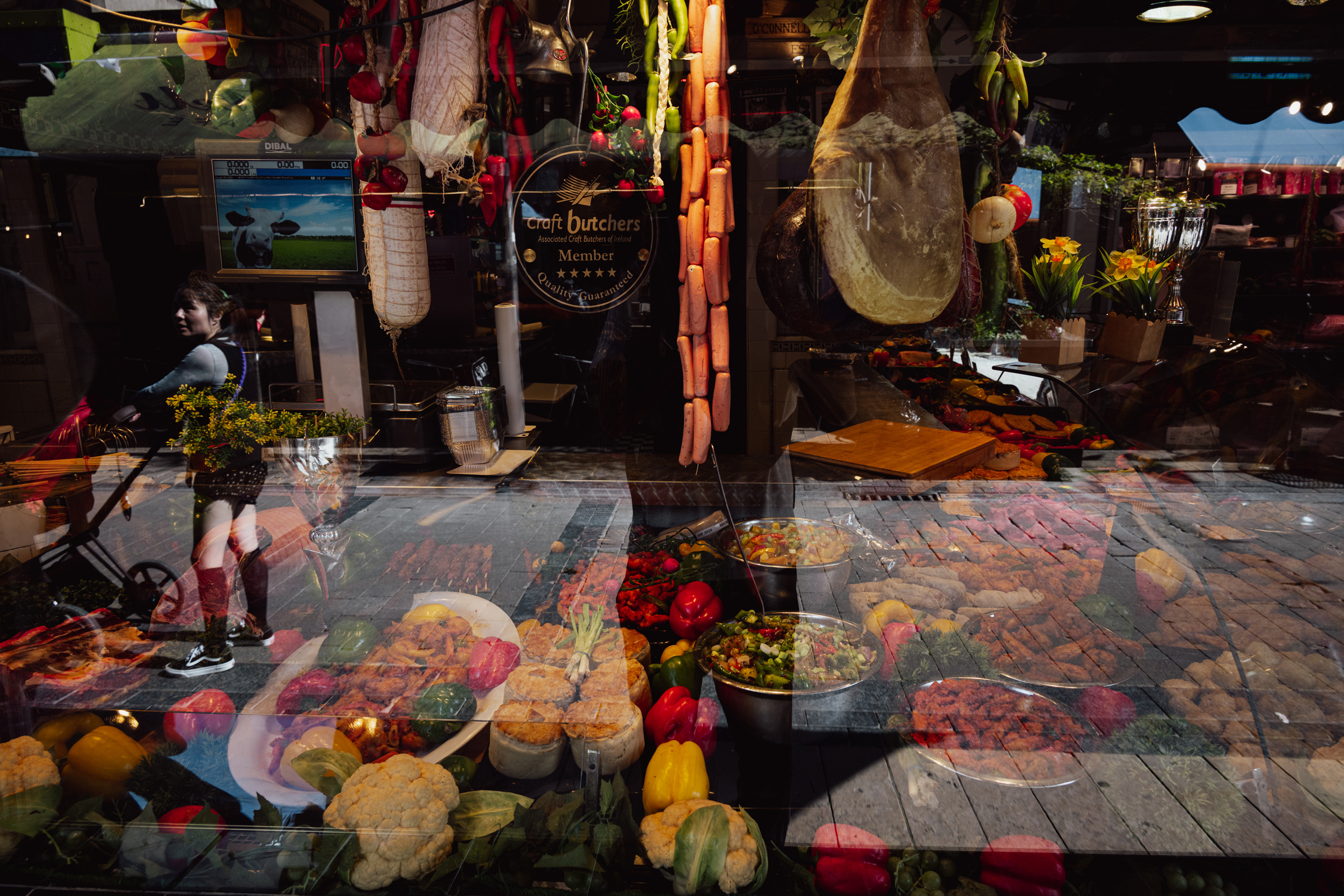
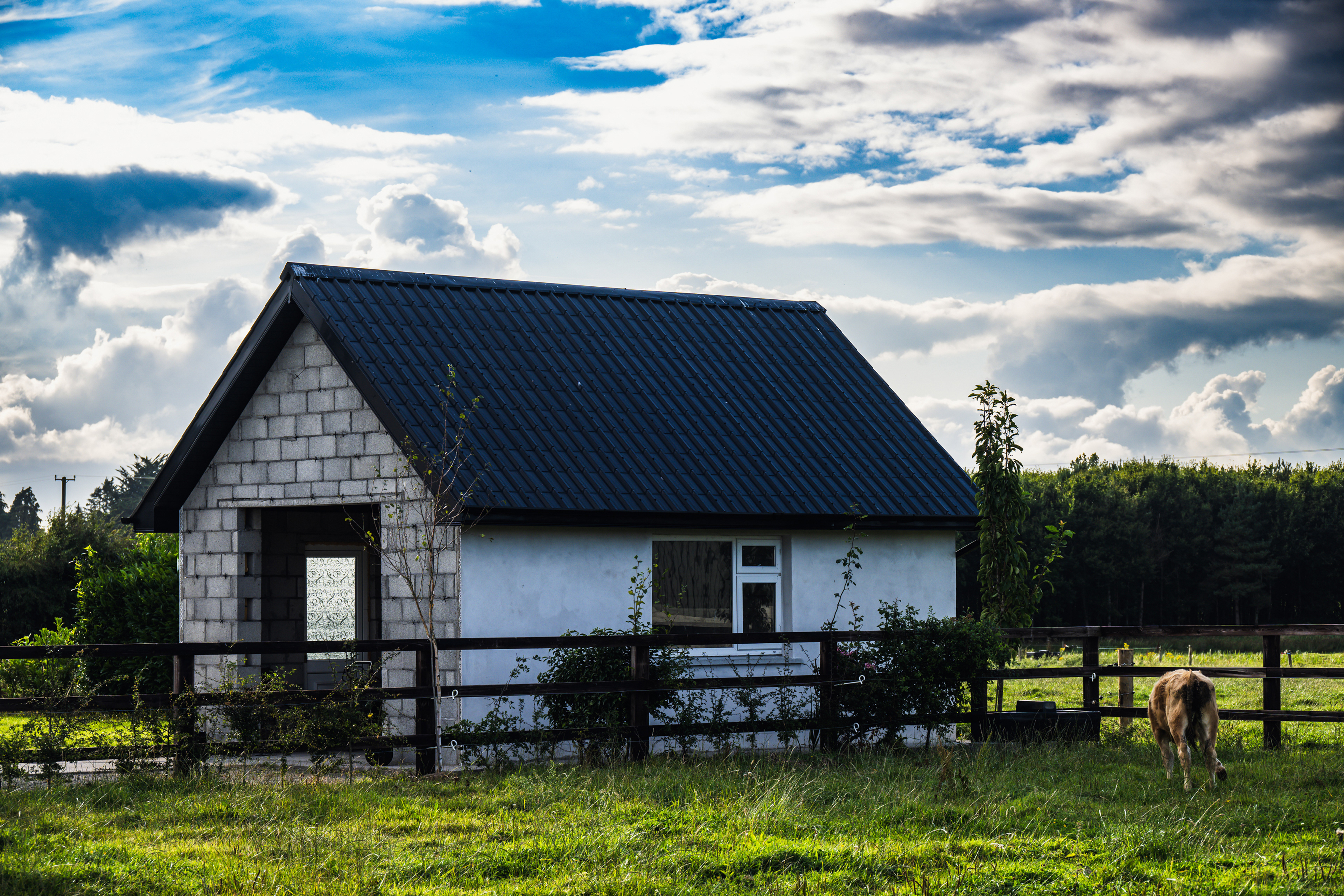
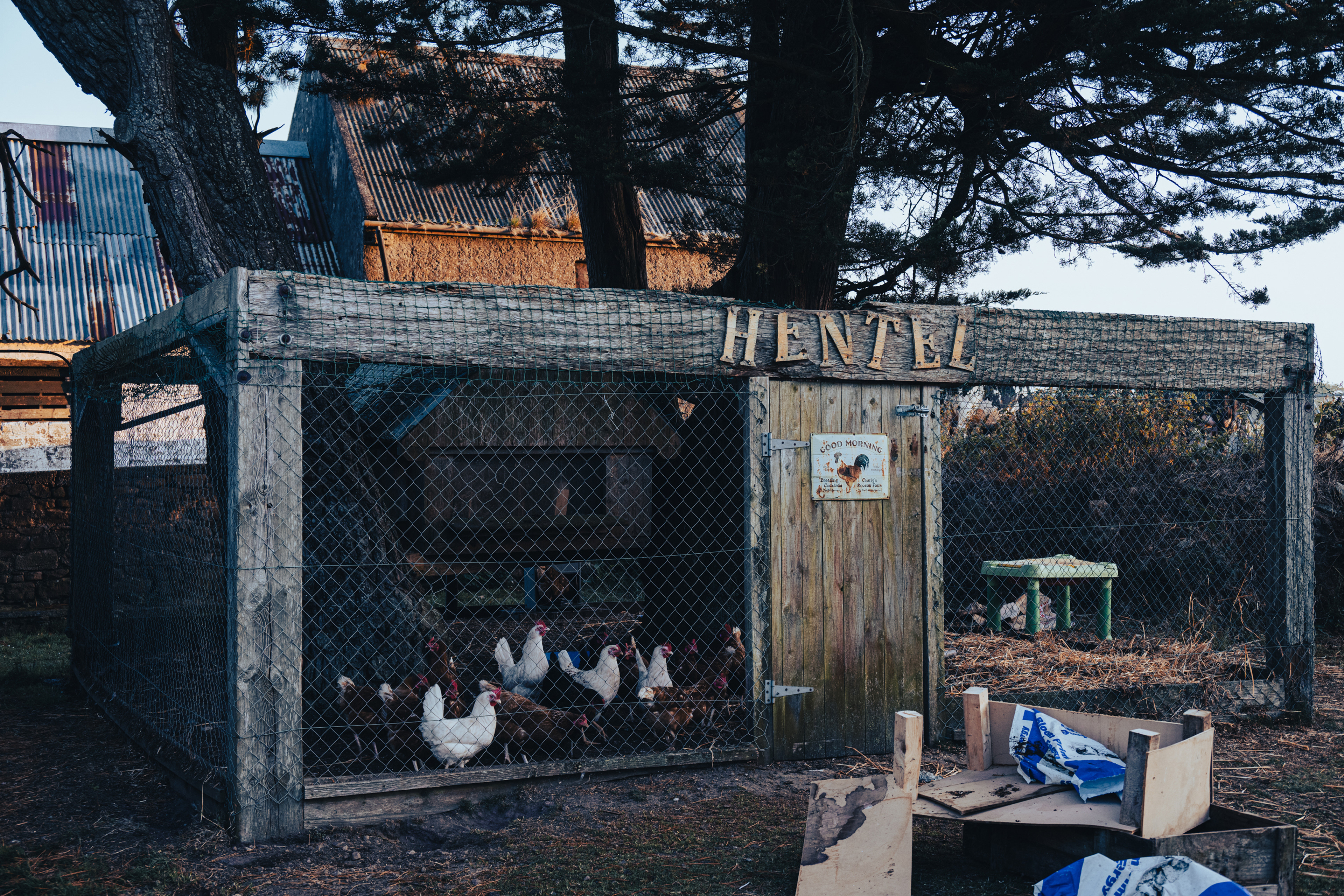
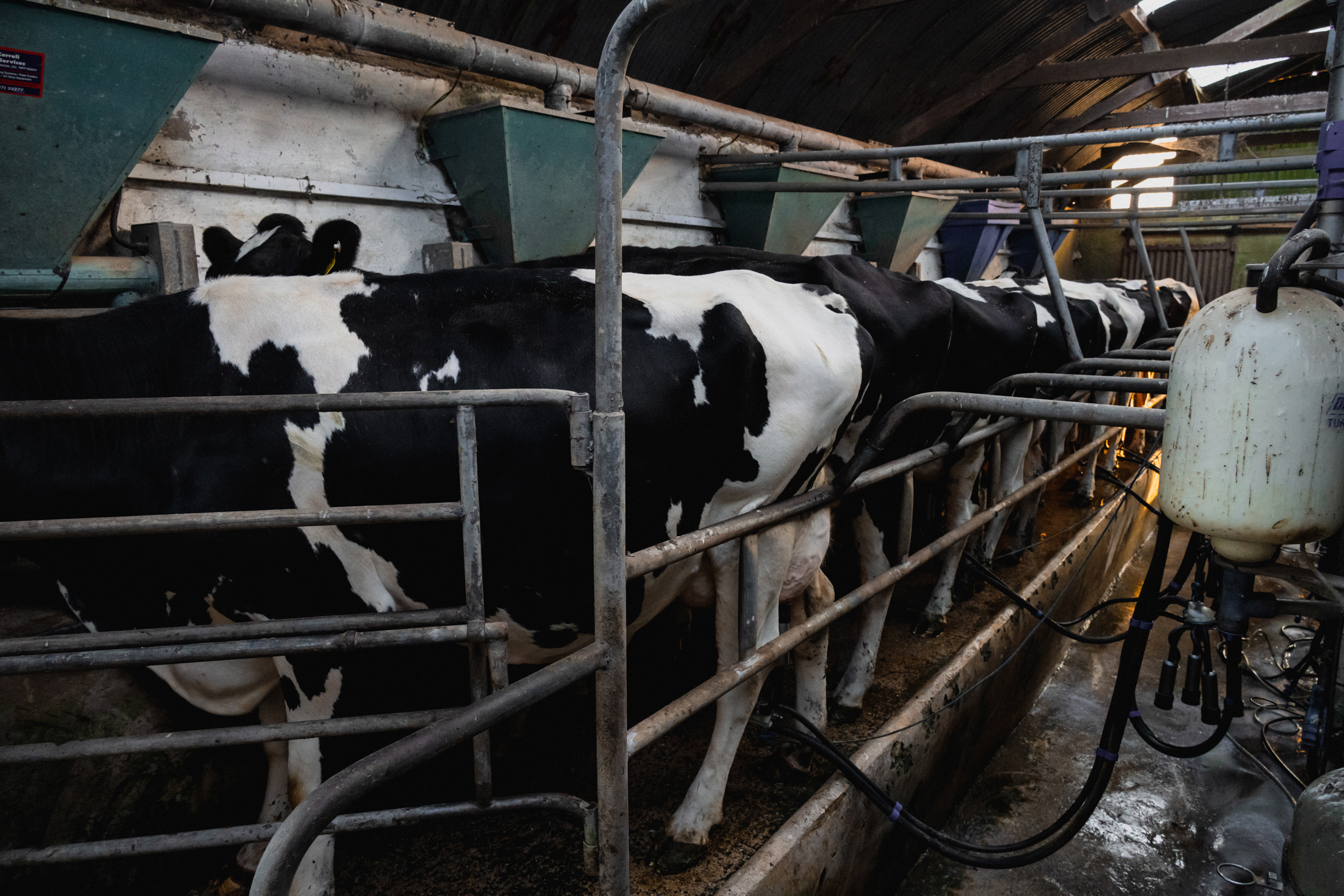
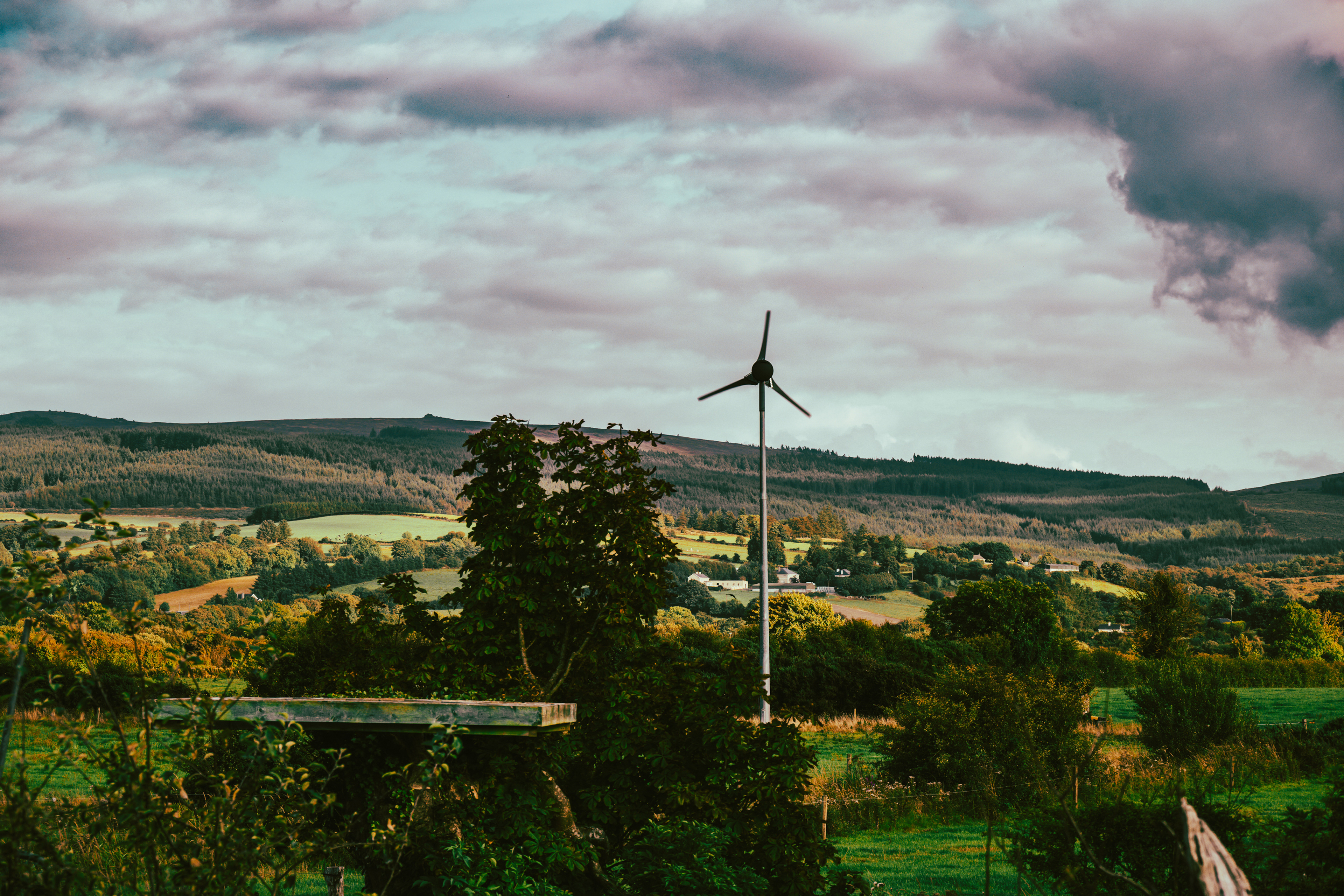
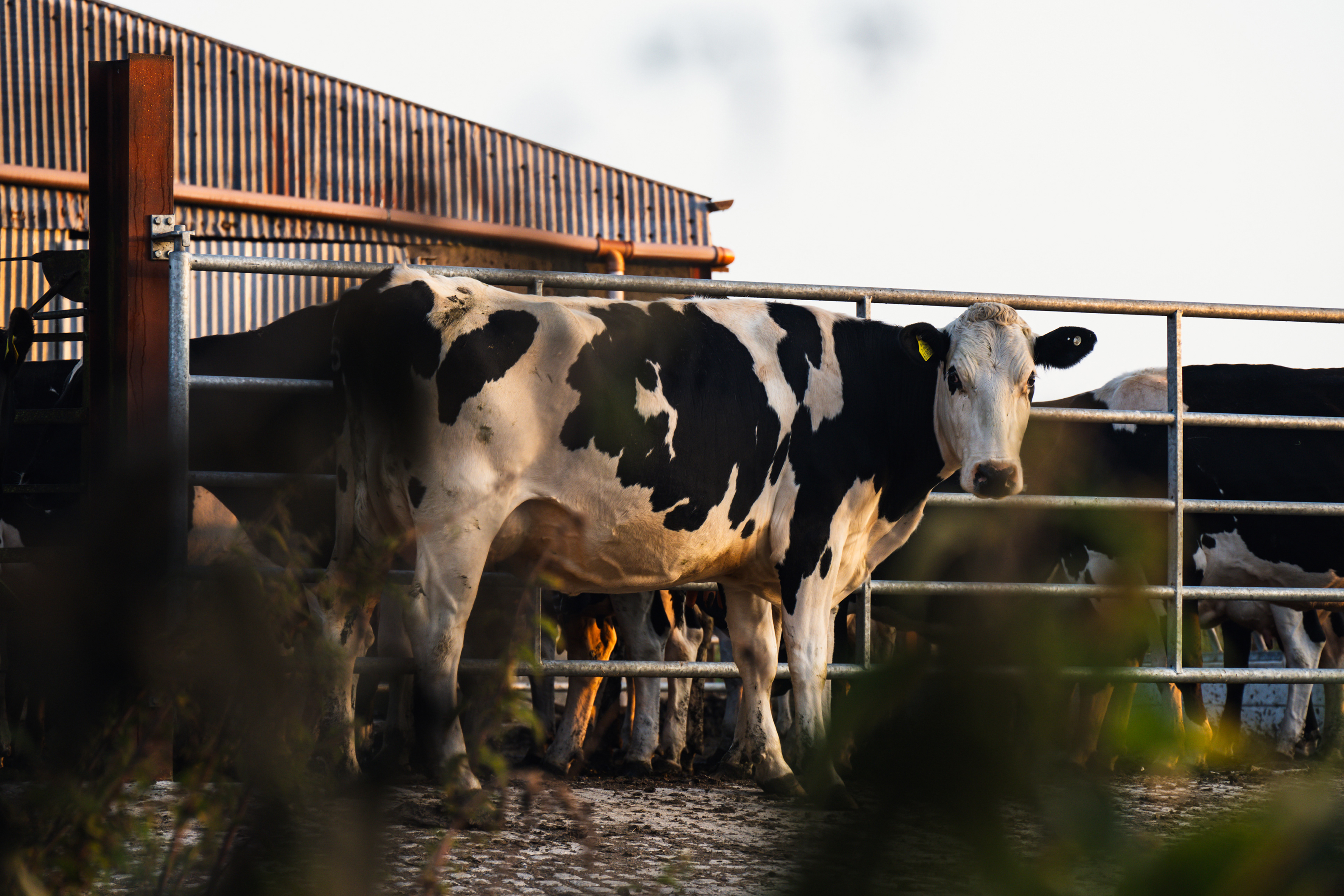
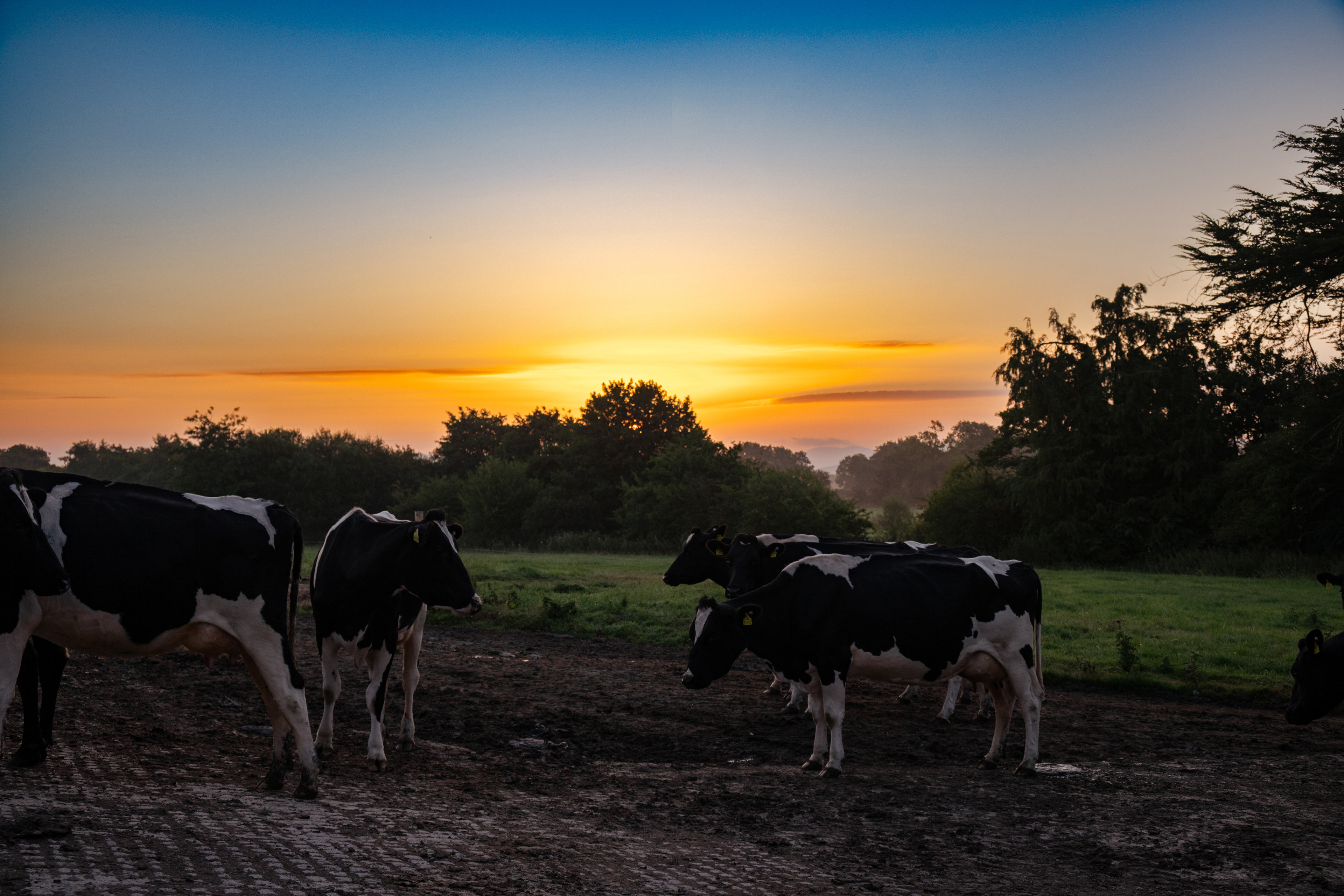
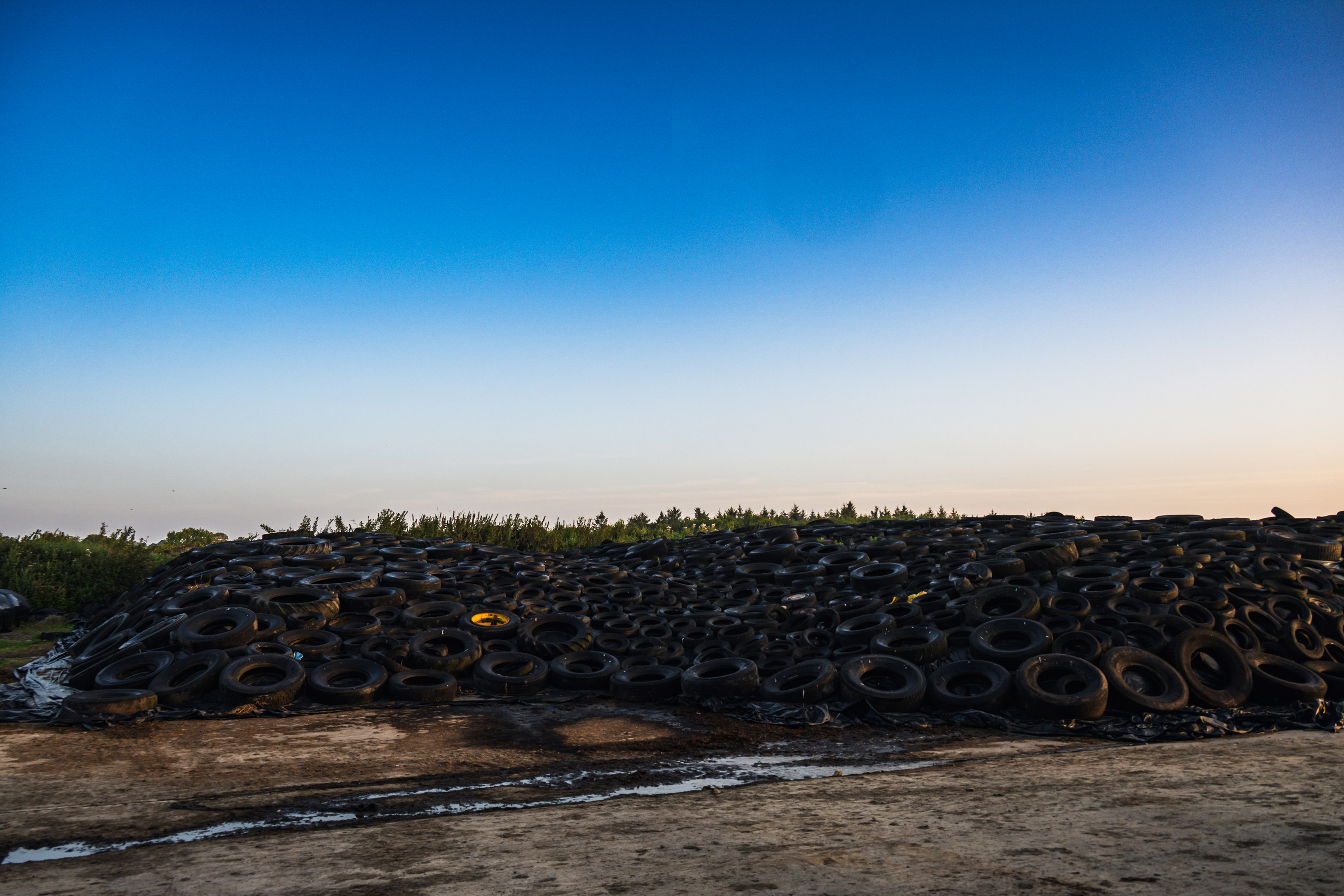
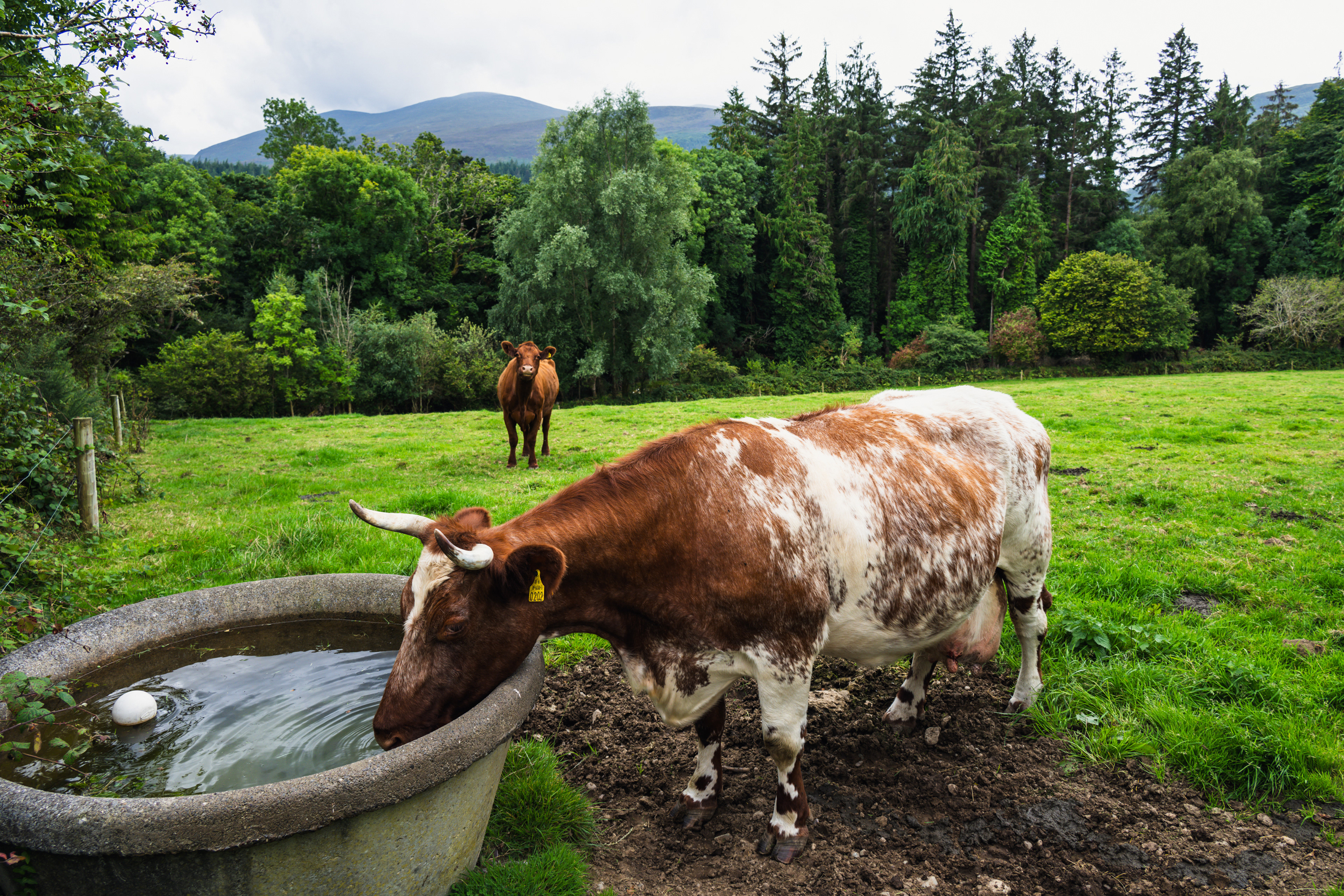
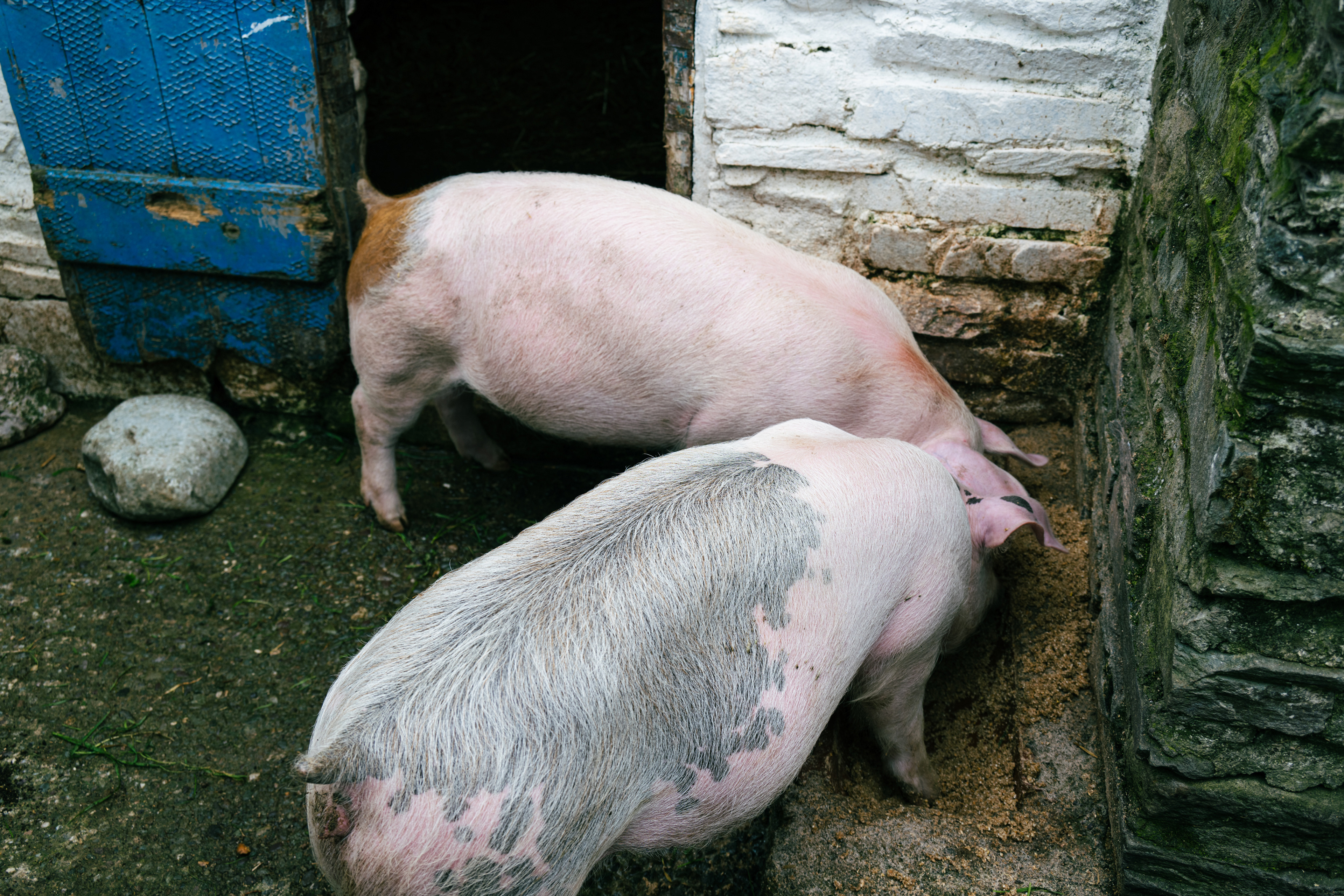
Dairy Lodge sits on a working dairy farm, and guests are welcome to look around. Ireland keeps more cattle than it has people, and here we got to see where some of them work: we watched the cows being milked. The lodge has its own kitchen, and for once on this trip we cooked for ourselves. Dairy Lodge was also our base for County Limerick. From there we drove to Adare for afternoon tea. In Limerick city the camera caught the street rather than the sights: a Hong Kong Chinese restaurant, a butcher's shop, the ordinary business of an Irish city on a weekday.
Cobh
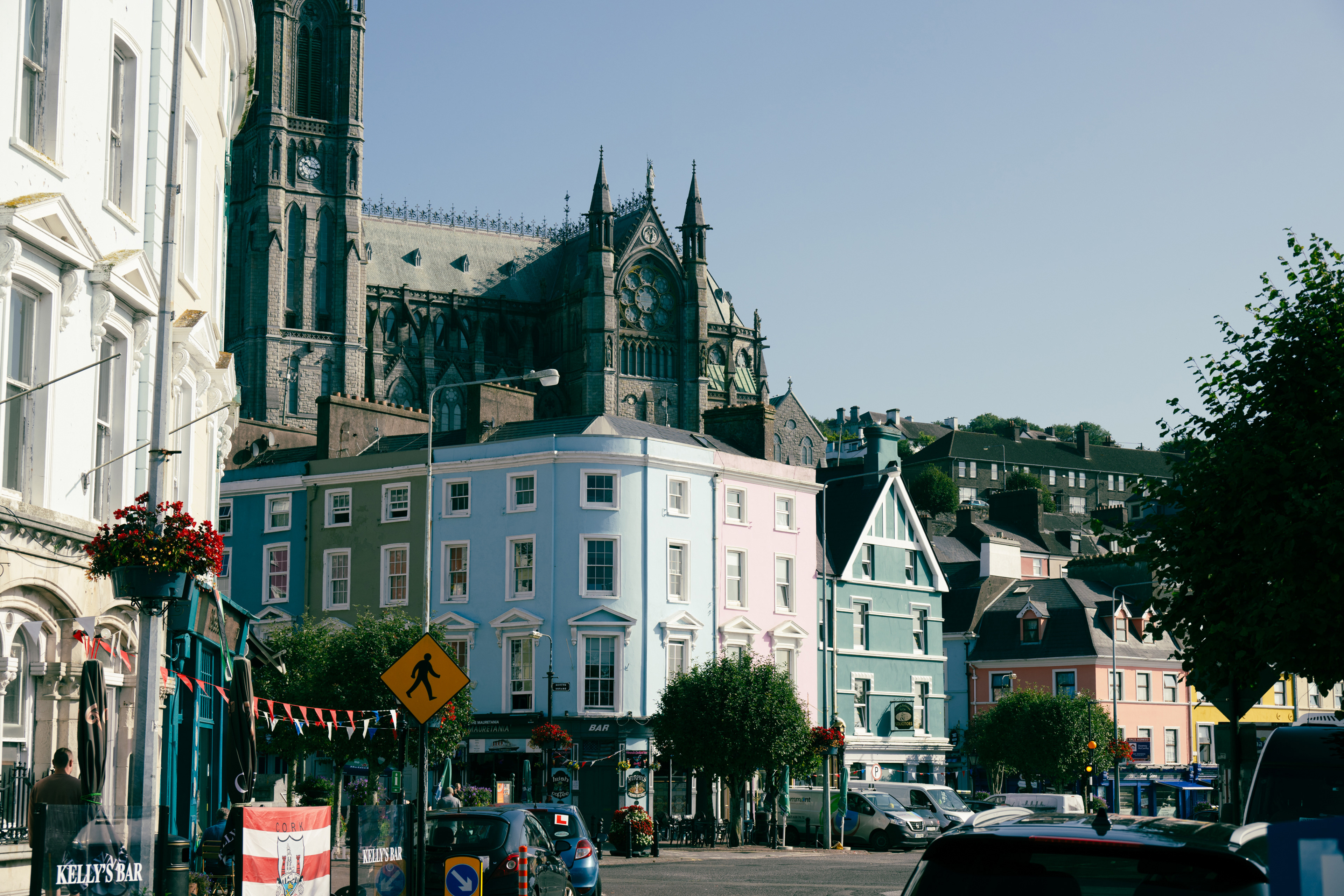
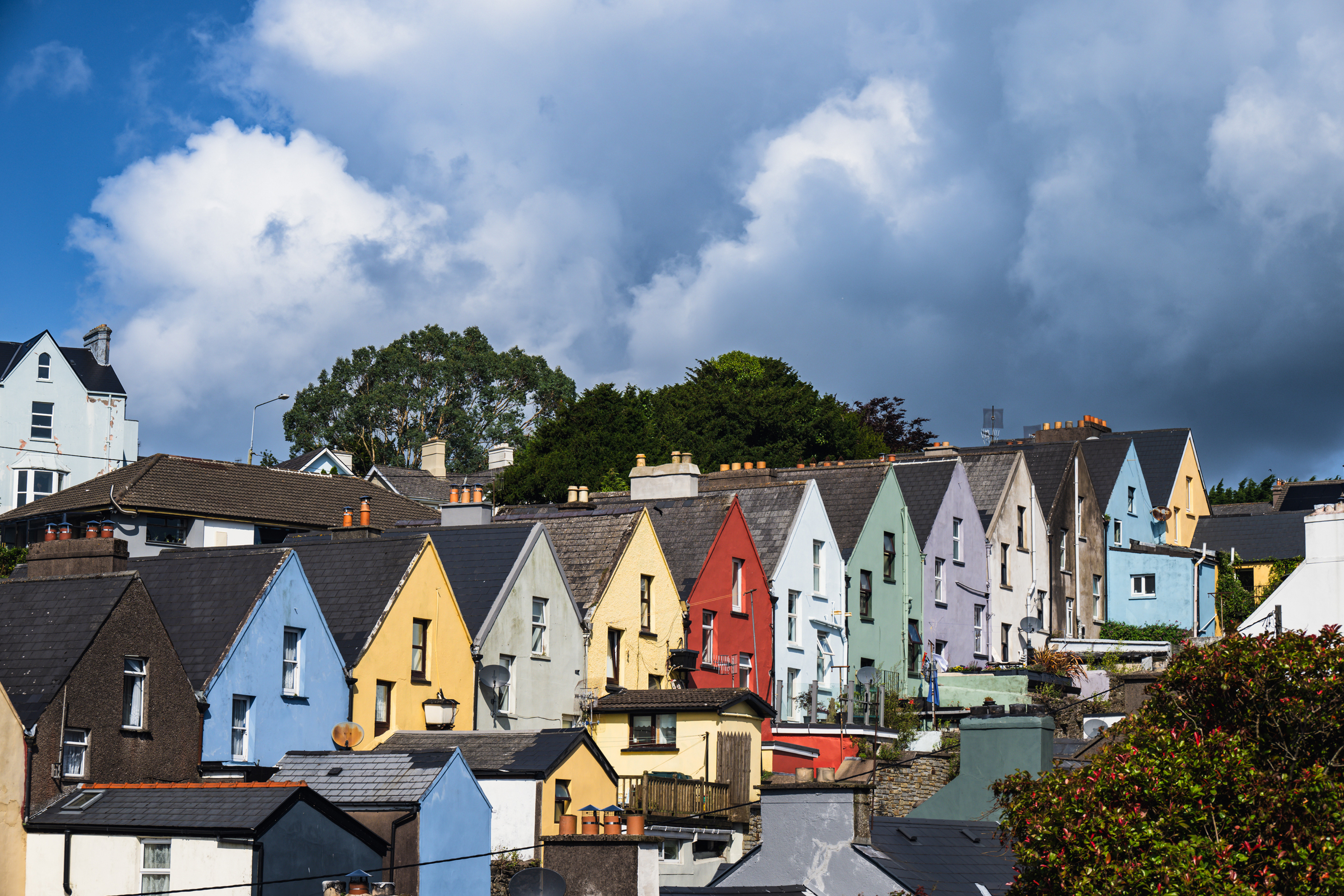
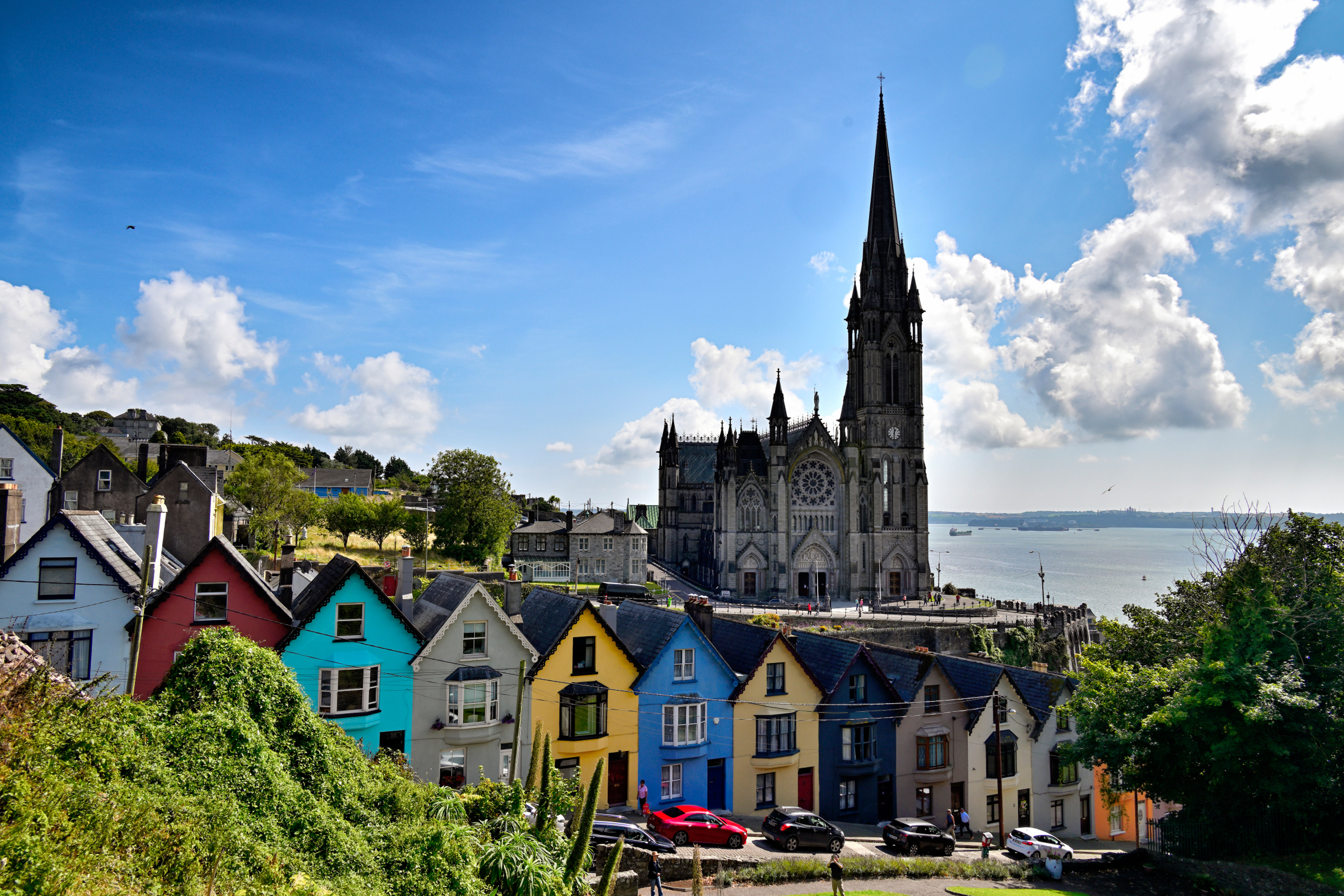
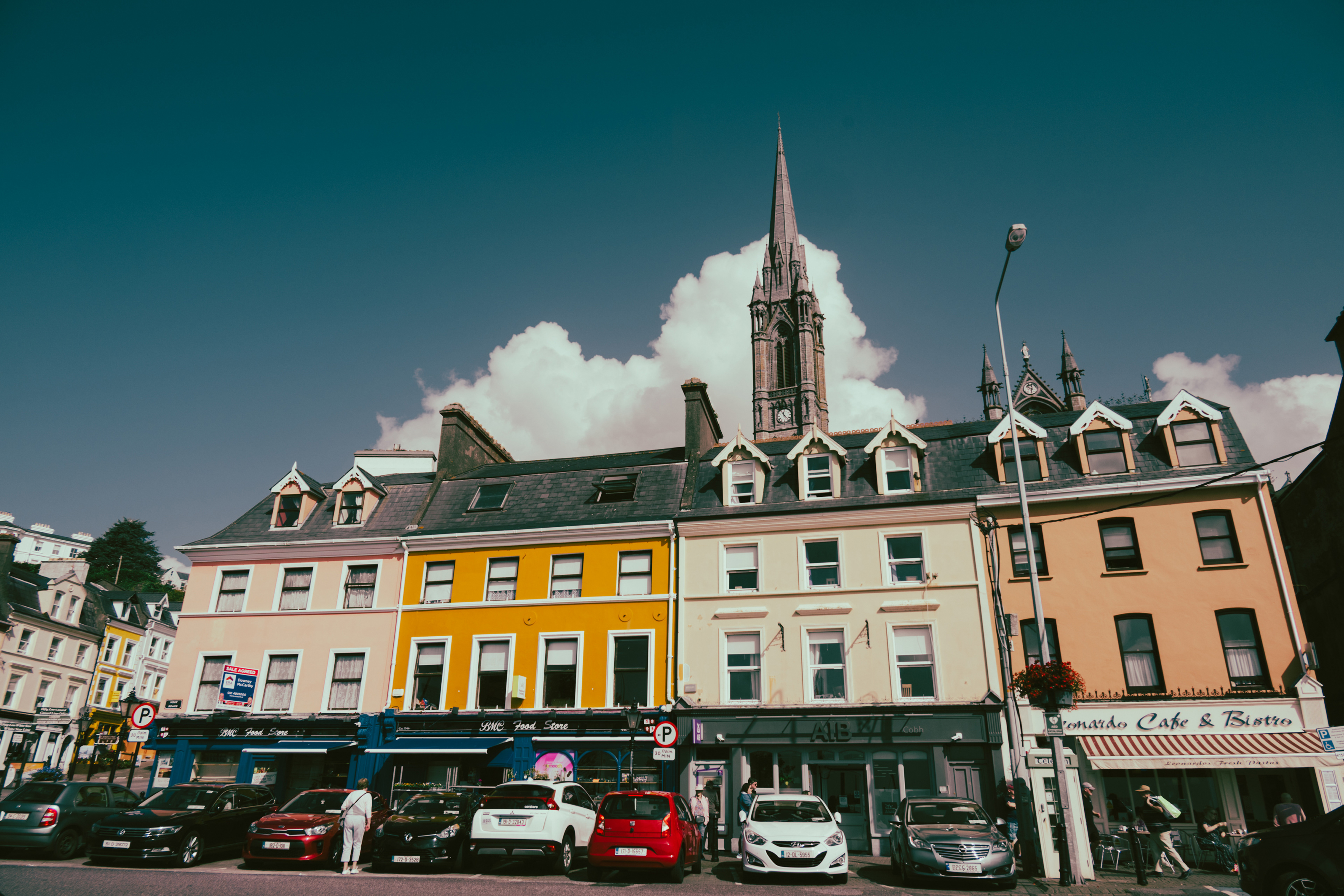
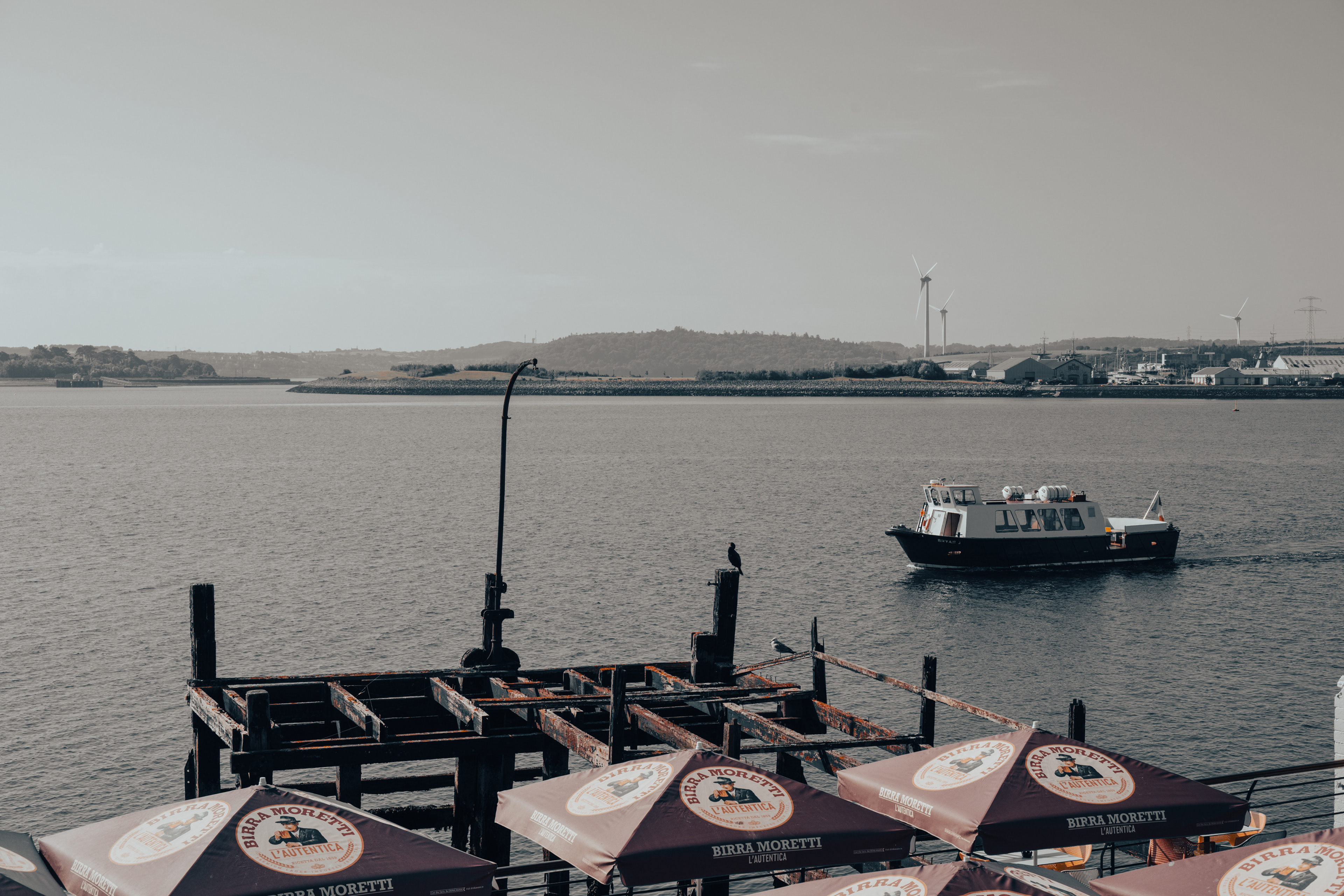
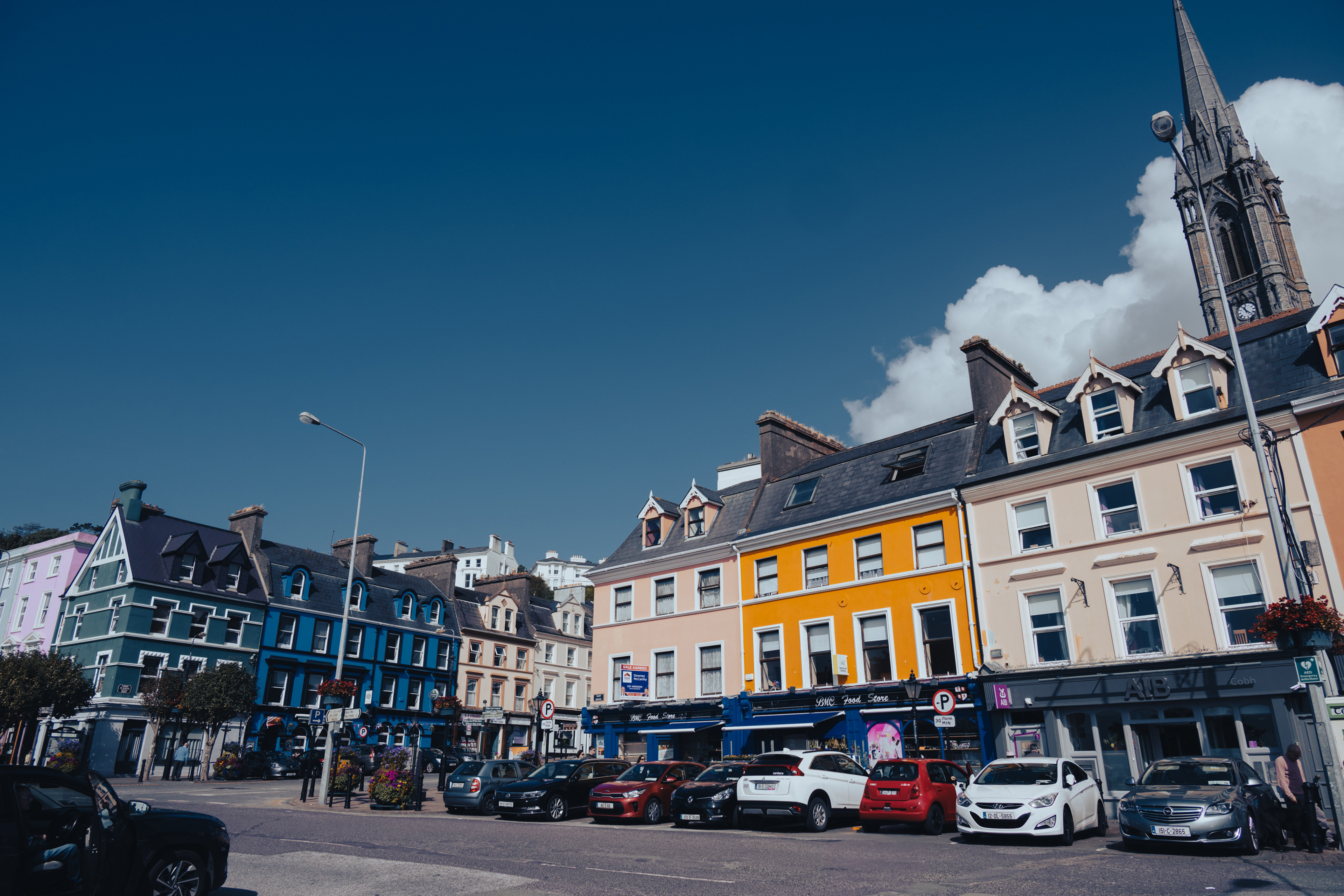
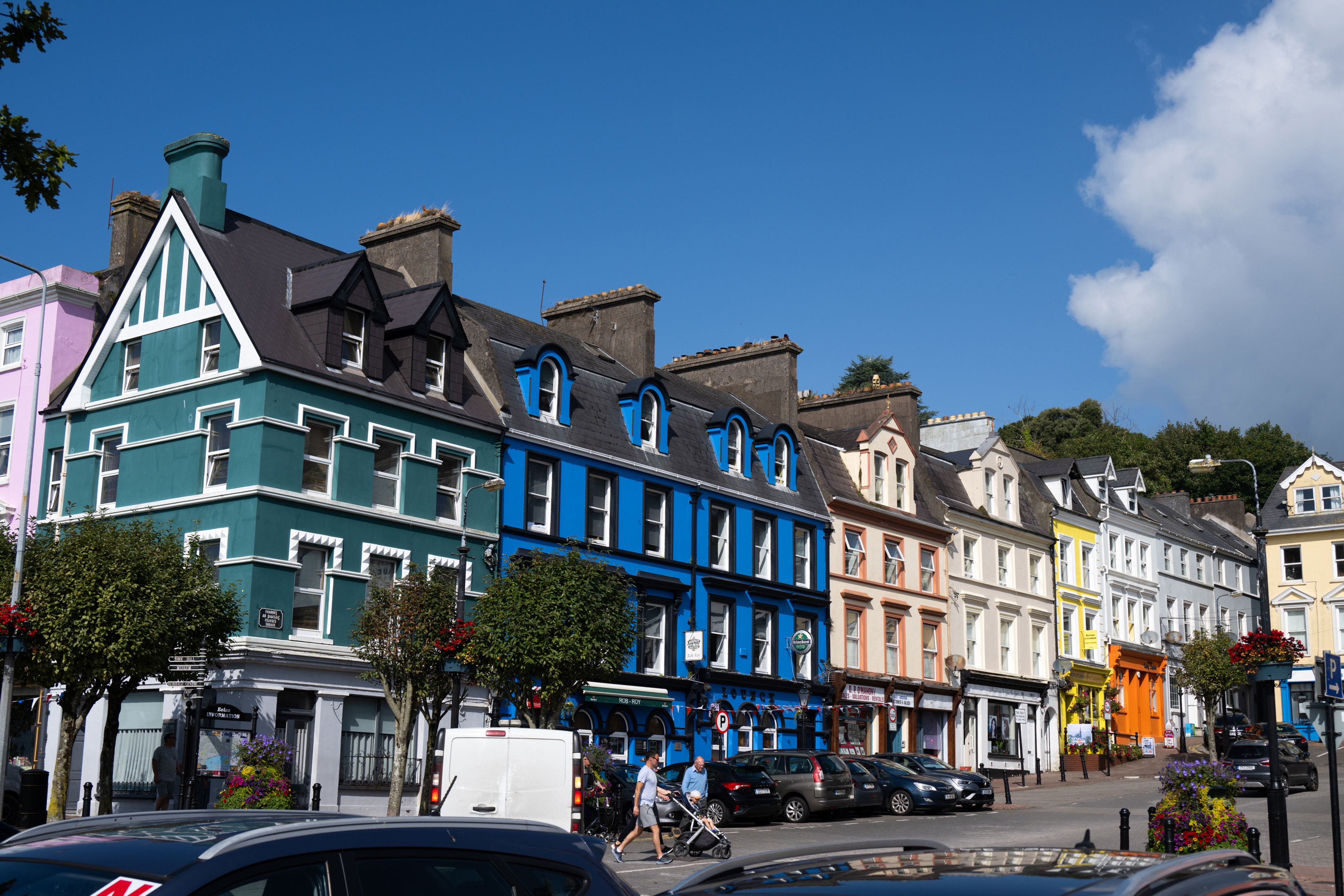
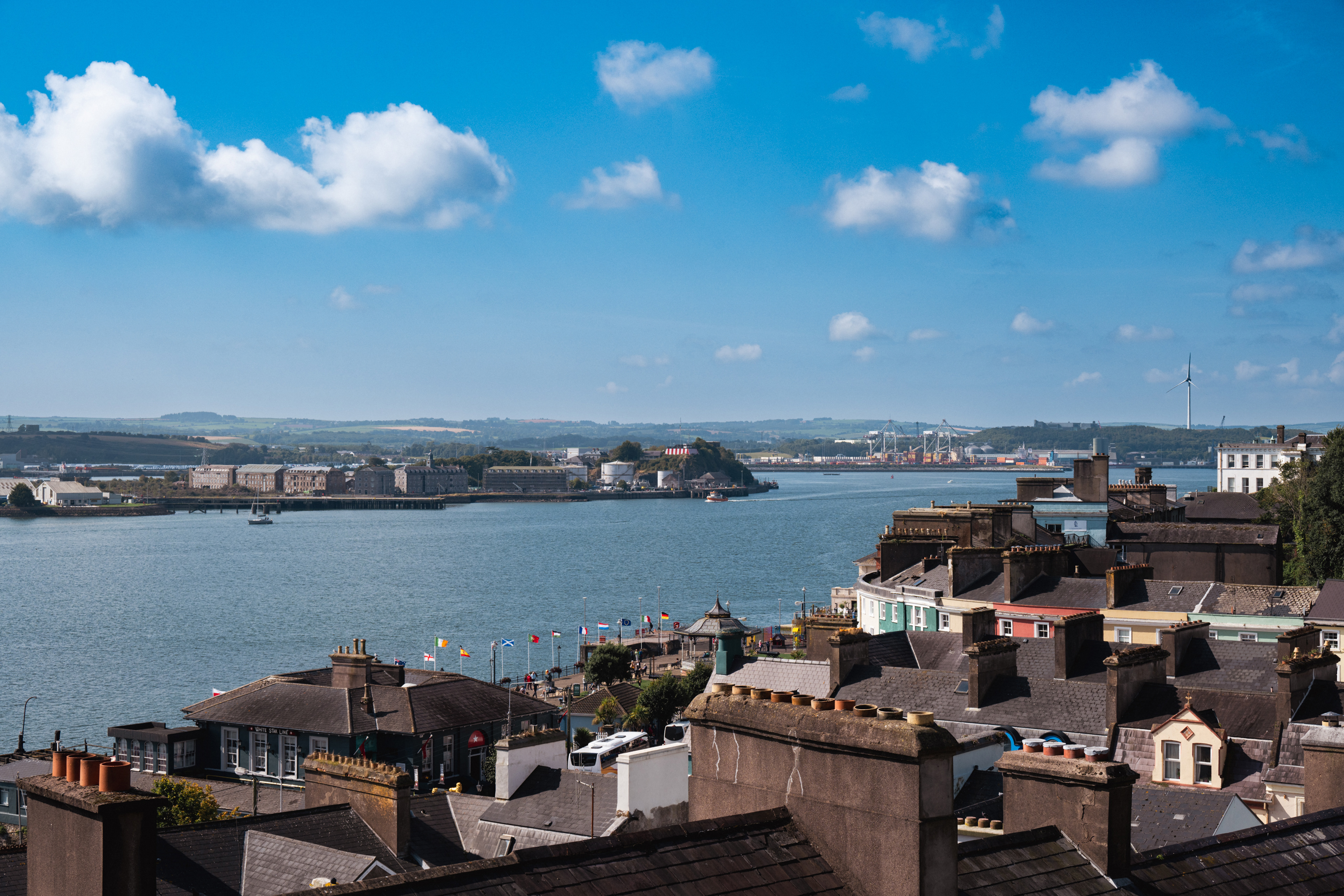
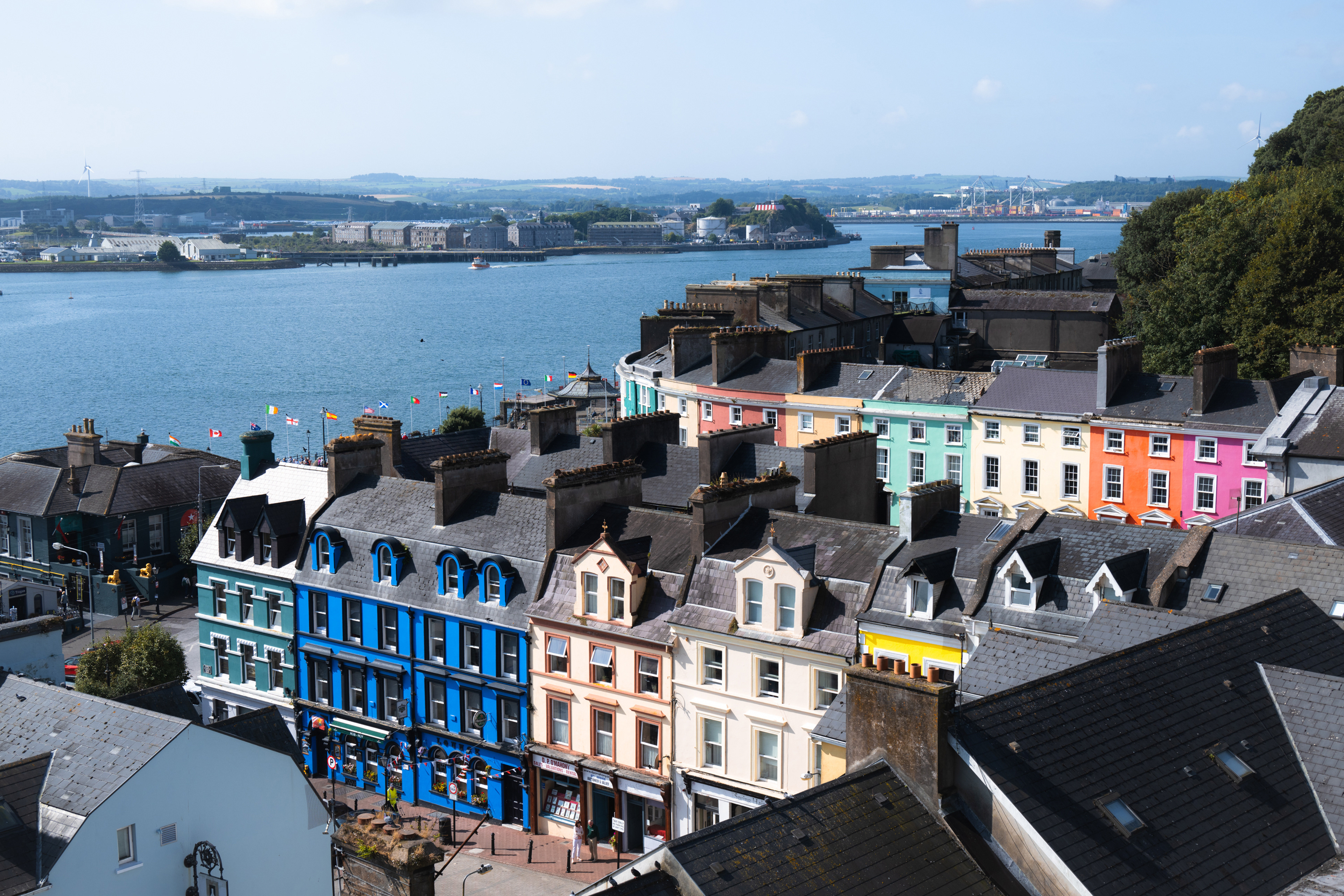
Cobh was the one stop on the trip we never planned. We drove down from Dairy Lodge on a whim, with no bookings and no list of sights. The town sits on Great Island in Cork Harbour. For much of its modern history it was called Queenstown: it was renamed for Queen Victoria's visit in 1849 and took back an Irish spelling of its old name, Cove, in the early 1920s. The town climbs steeply from the waterfront to St Colman's Cathedral. On one of its steepest streets, West View, stands a row of terraced houses known as the Deck of Cards, each painted a different color, stepping down the hill one after another with the cathedral's spire behind them. It is the photograph everyone takes in Cobh, and we took it too.
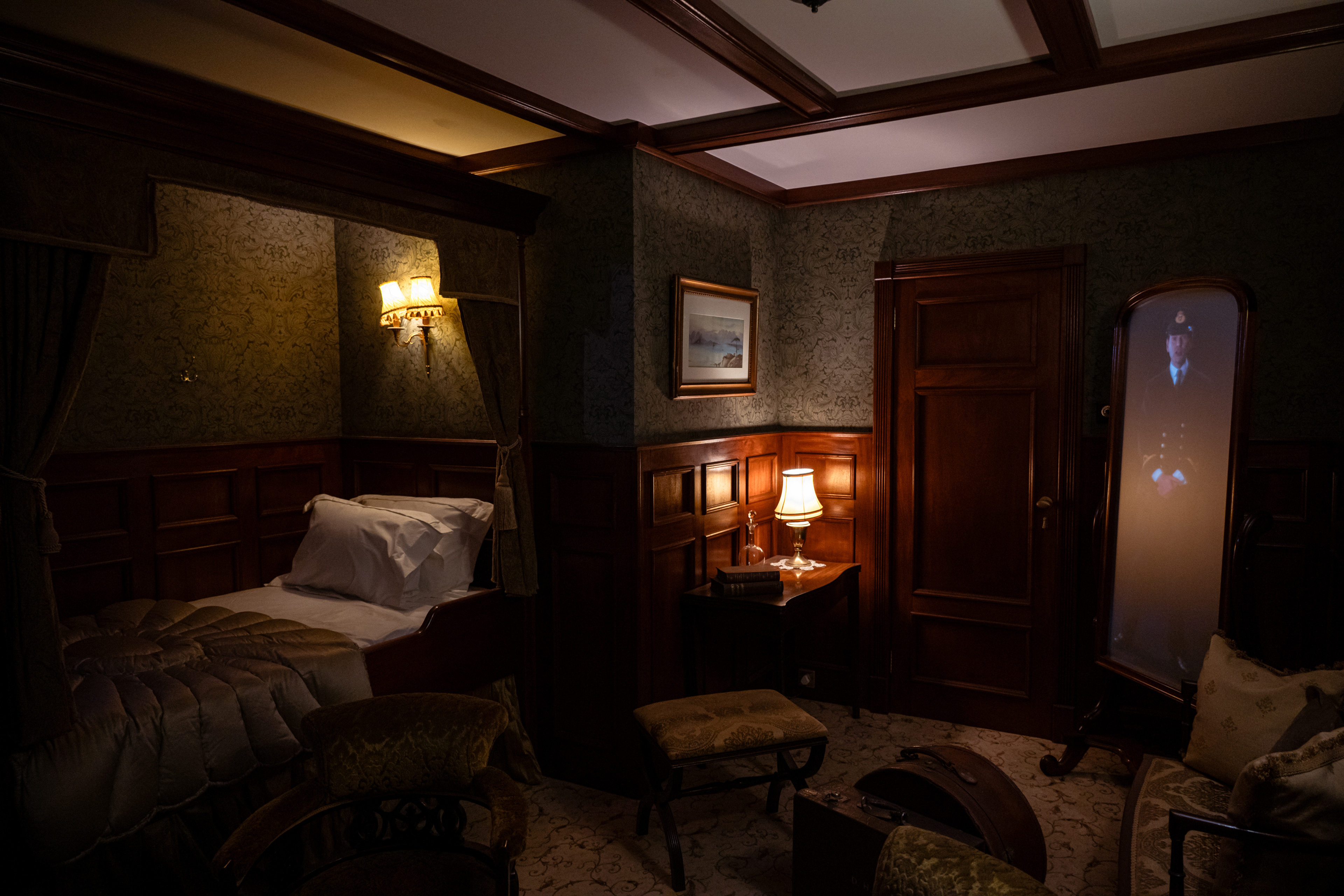
The other thing everyone photographs in Cobh is a building. On April 11, 1912, the Titanic anchored off the harbour mouth on its first and only voyage. Tenders carried 123 passengers out to it from Cobh, the last to board before the ship left for New York. They had bought their tickets at the White Star Line office on the waterfront, which now houses the Titanic Experience. We went through it, and each ticket there is a replica boarding card carrying the name of one of those 123 passengers. Queenstown was the Titanic's last port of call. For a far larger number of people, it was the last of Ireland they saw: the harbour was a main departure point for the emigrant ships that carried Irish families to America through the nineteenth and early twentieth centuries.
For me, Cobh also had a professional interest. Its deepwater quay is the only dedicated cruise berth in Ireland, and most cruise ships calling at Cork tie up there, almost beside the town center. Passengers walk off onto the same waterfront the emigrants and the Titanic's last passengers left from. Having seen the town from the land side, I have a clearer sense of what a cruise client gets from a day in port here: a short walk to the Deck of Cards, the Titanic story on the waterfront, and a train to Cork for anyone who wants more.

Killarney
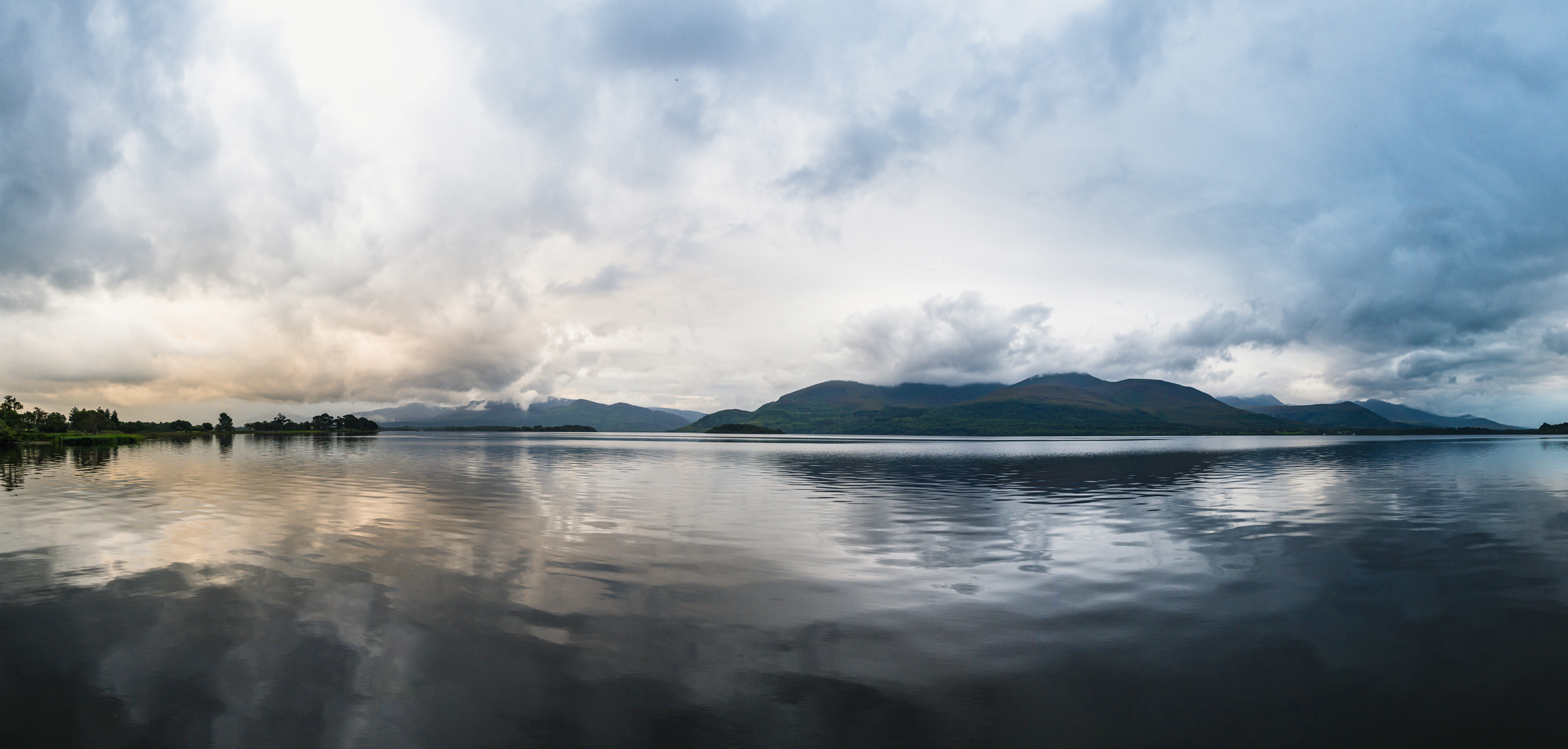
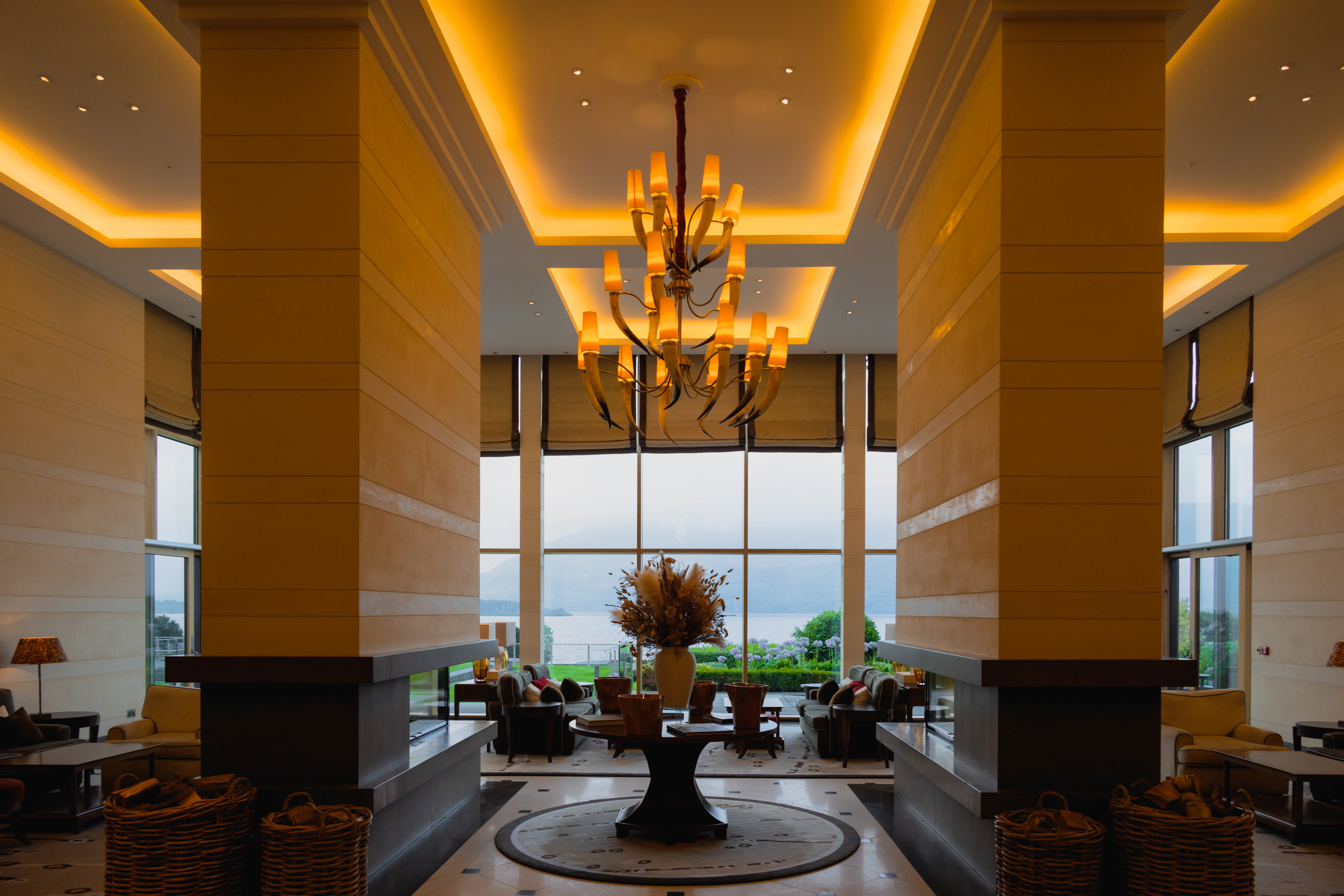
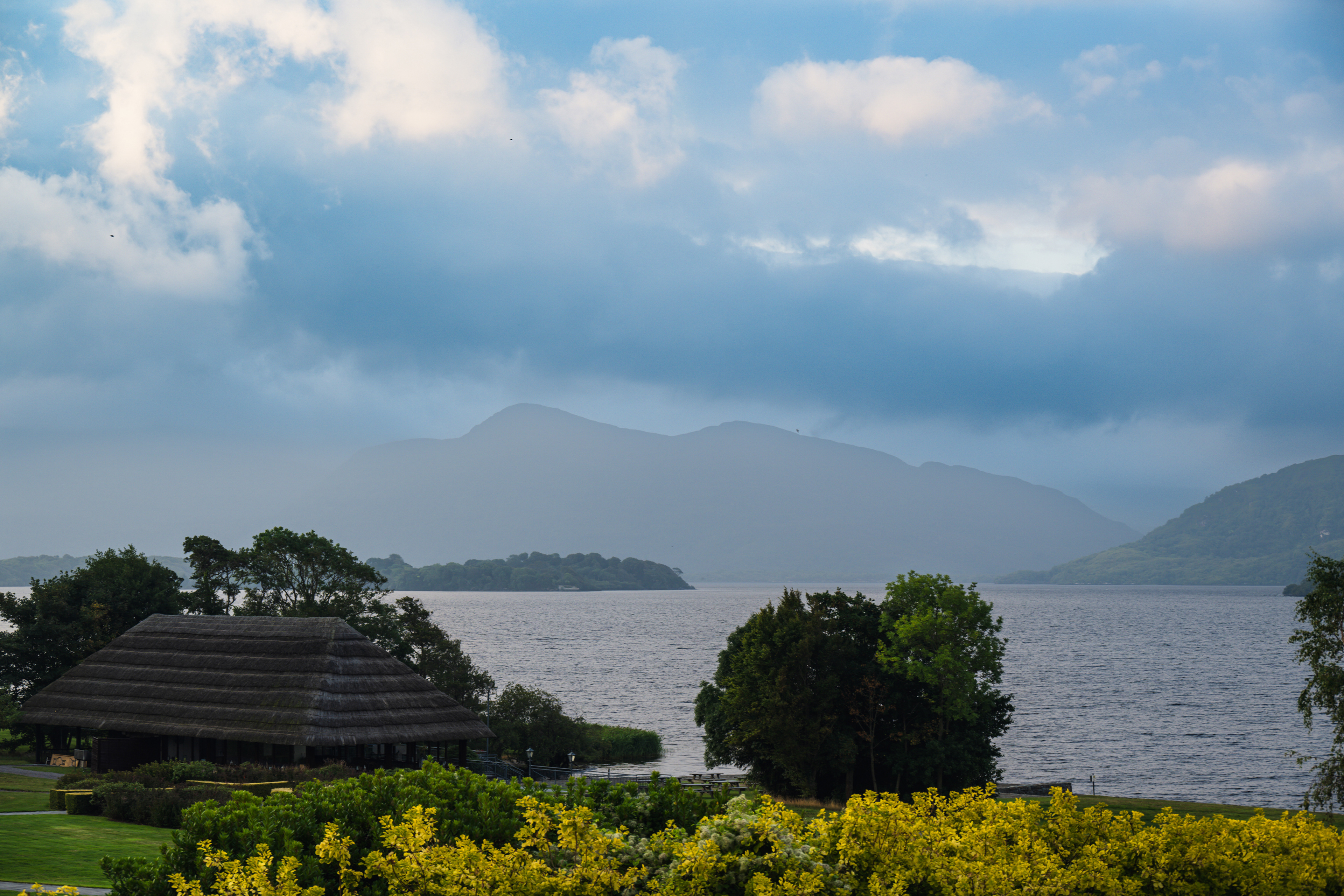
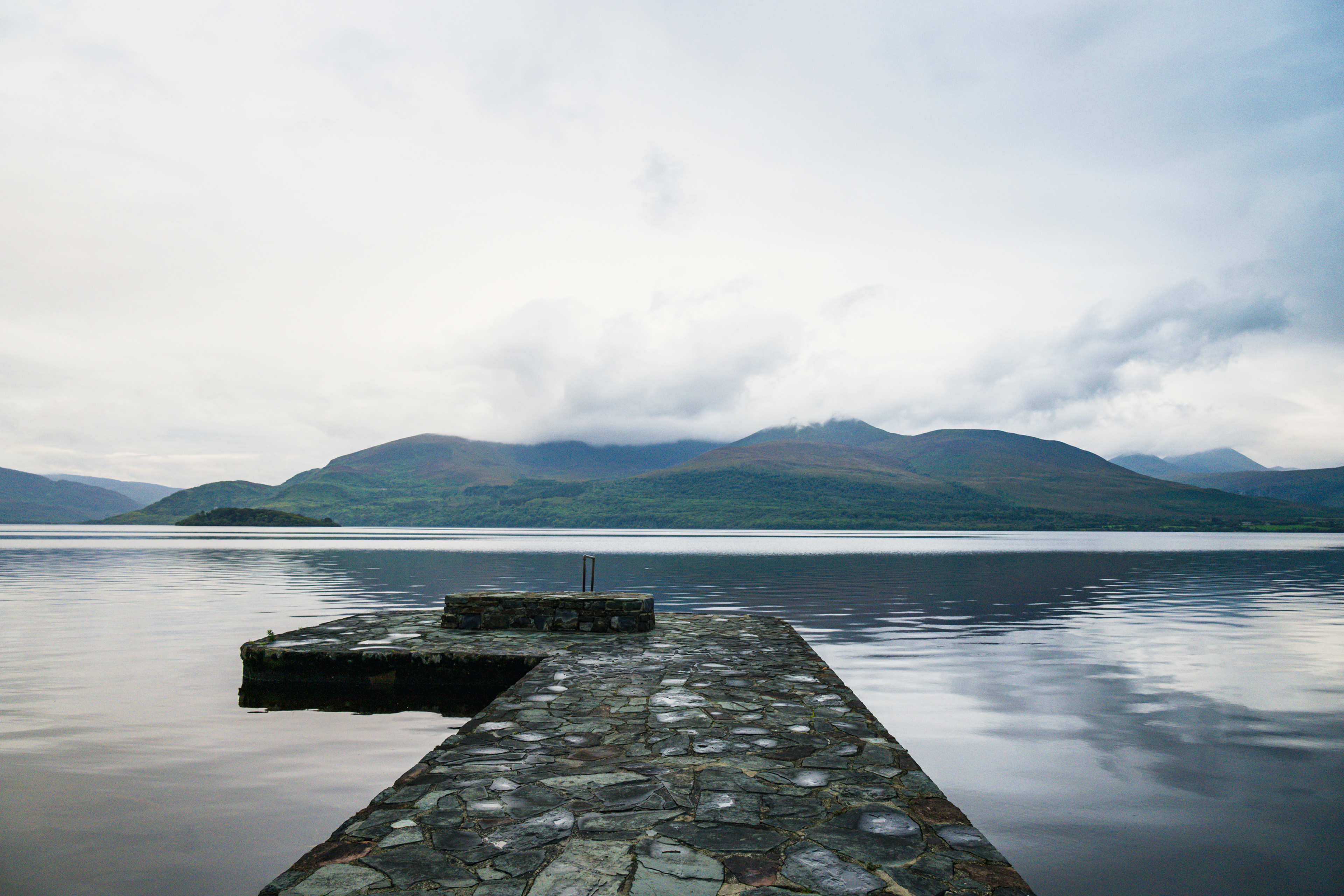
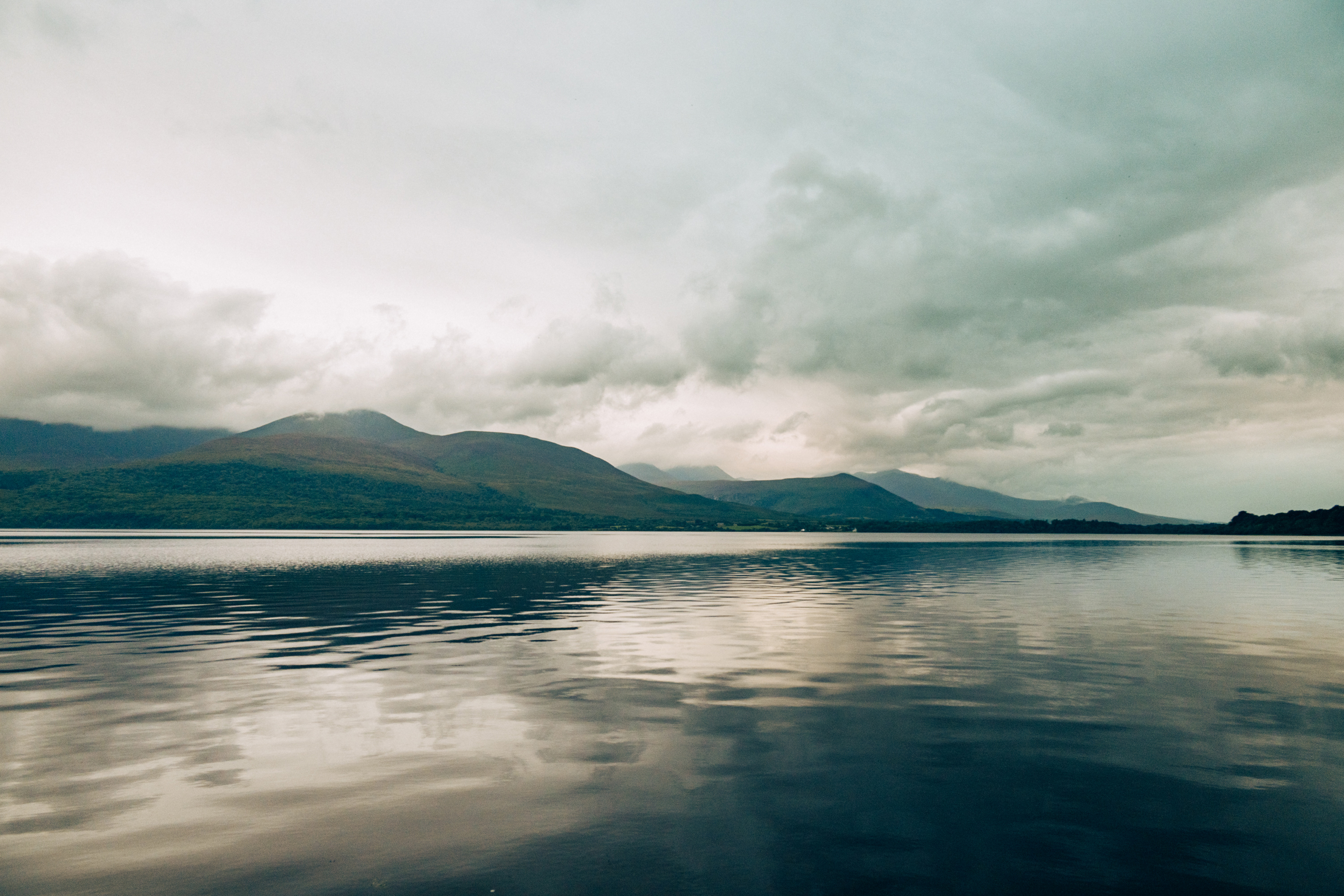
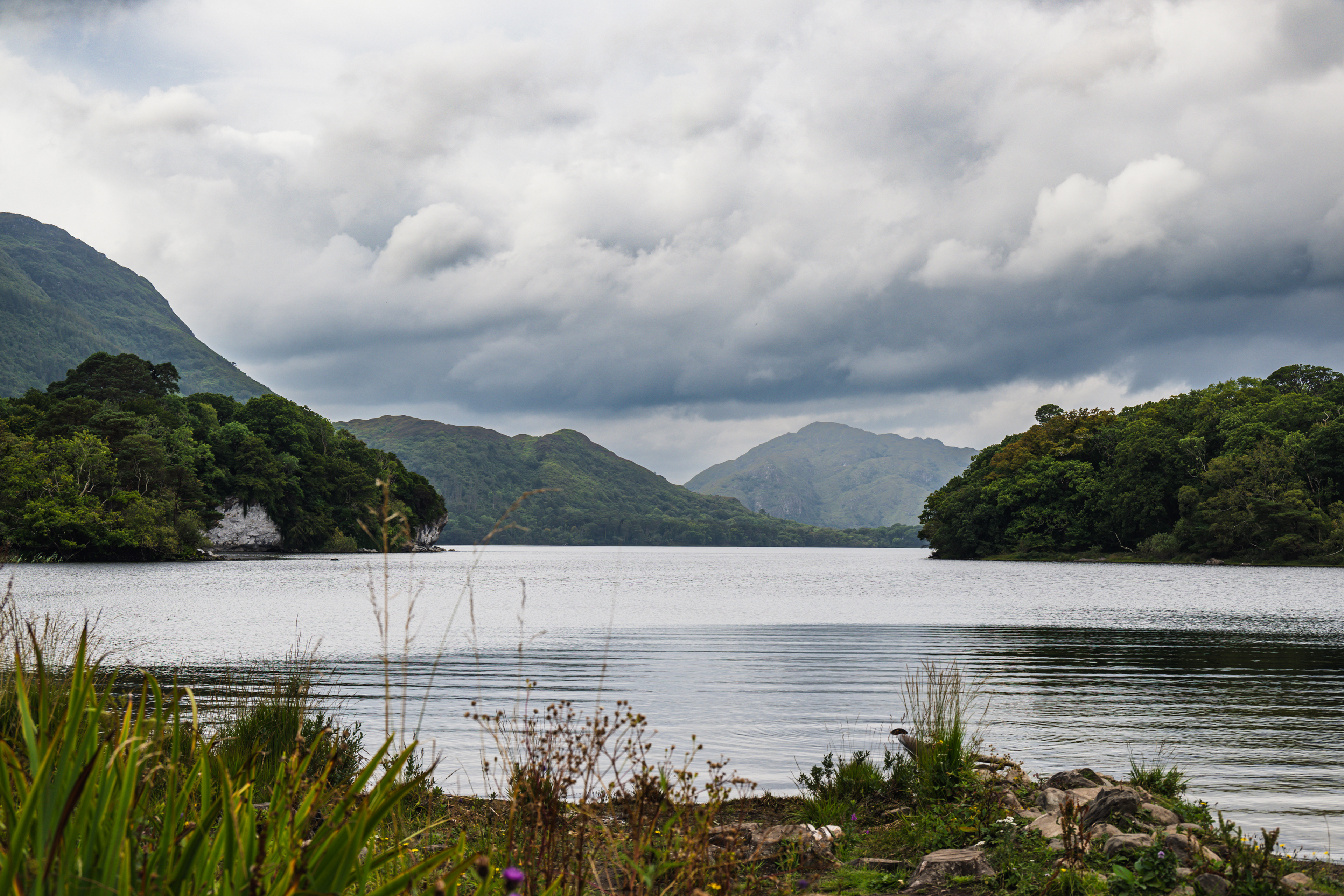
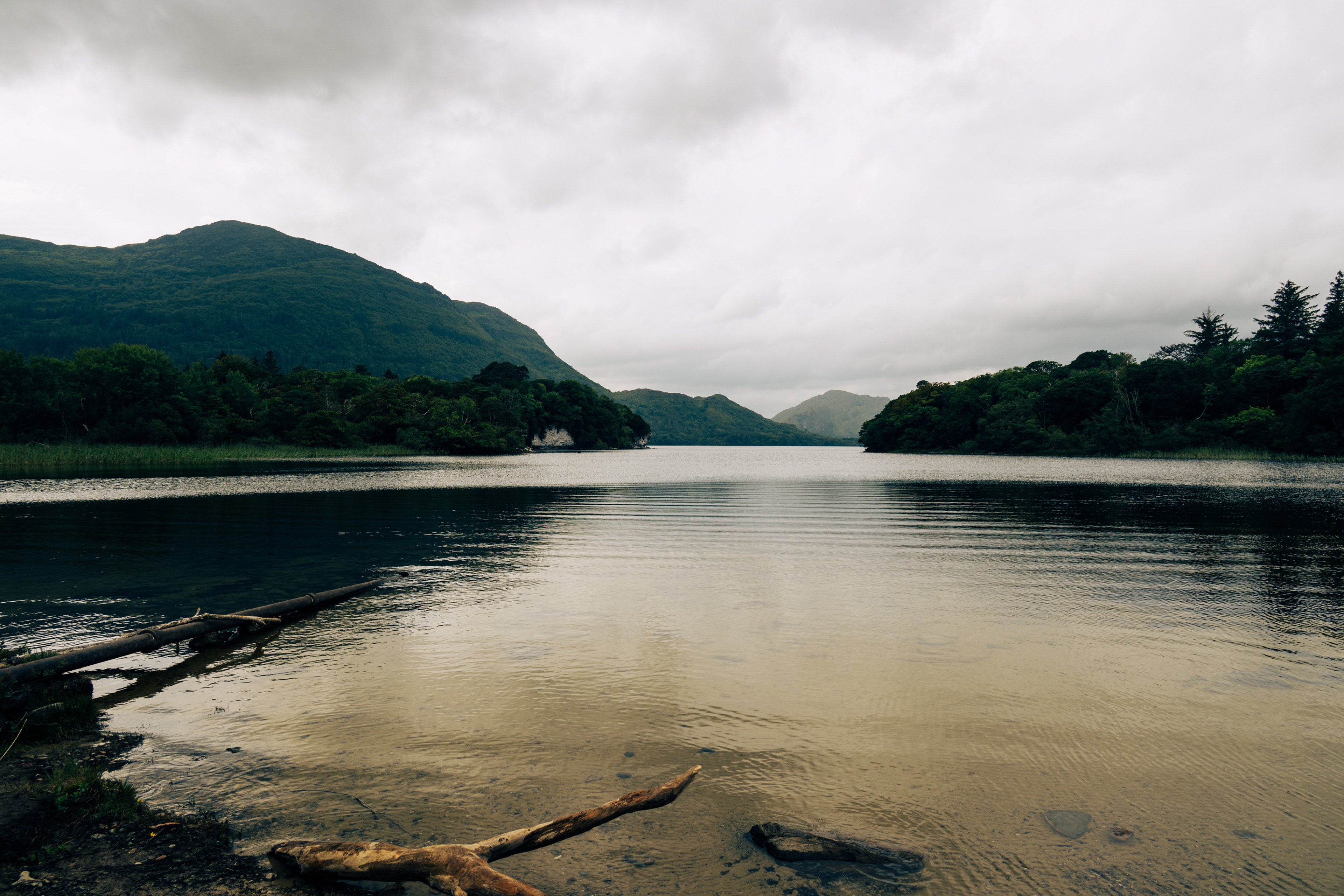
We spent the last two nights of the loop at the Europe Hotel on the shore of Lough Leane, one of the best hotels around the lakes of Killarney. The hotel has an unlikely origin. In 1958 Hans Liebherr, the German founder of the crane company that bears his name, opened a factory near Killarney and found the area short of places for visitors to stay. He bought a plot directly on the lake, intending it for another factory, and built a hotel there instead. It opened in 1961 as the first of the Liebherr hotels. From the lakeside the view runs across Lough Leane to MacGillycuddy's Reeks, the highest mountain range in Ireland, which is more than a factory would have needed.
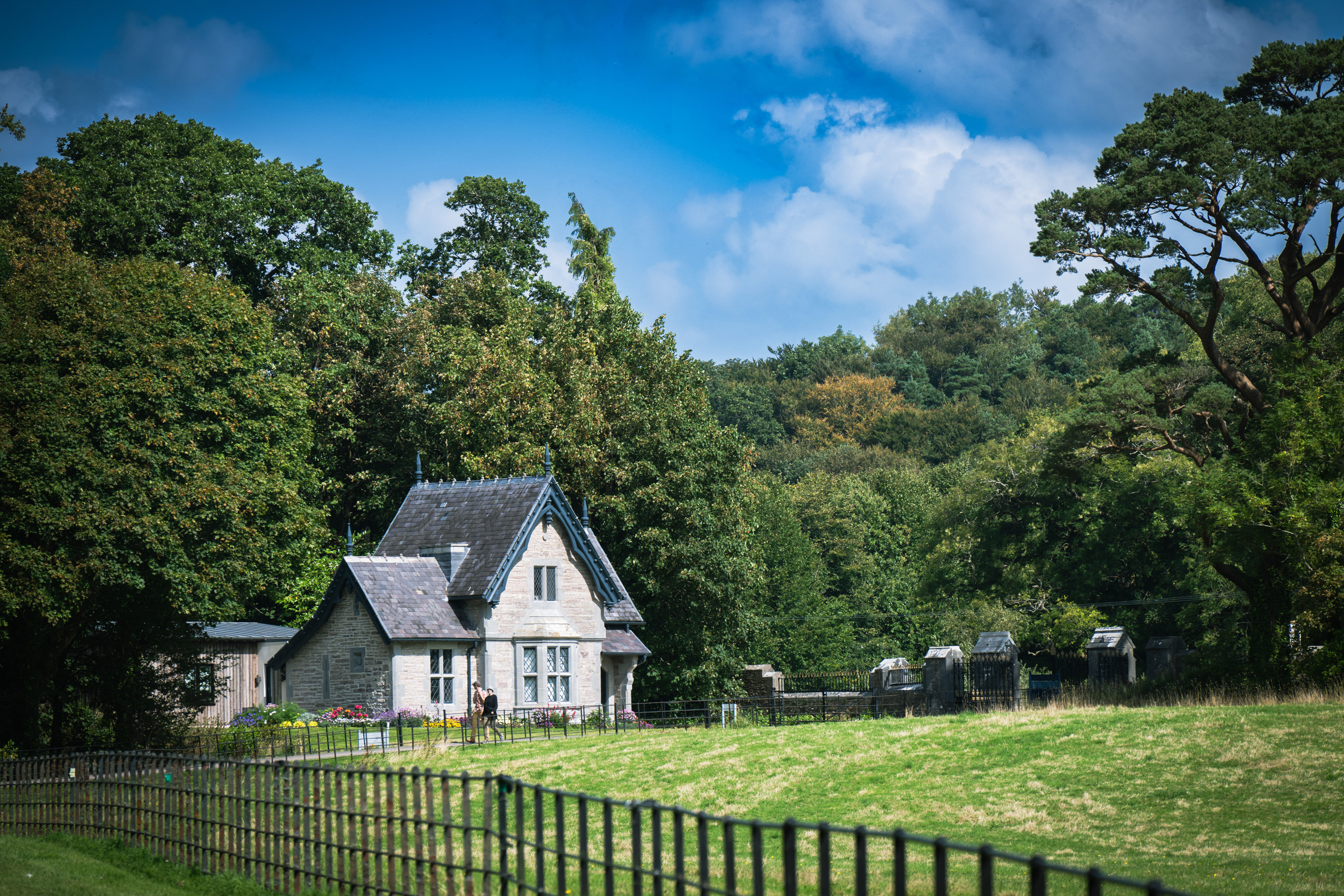
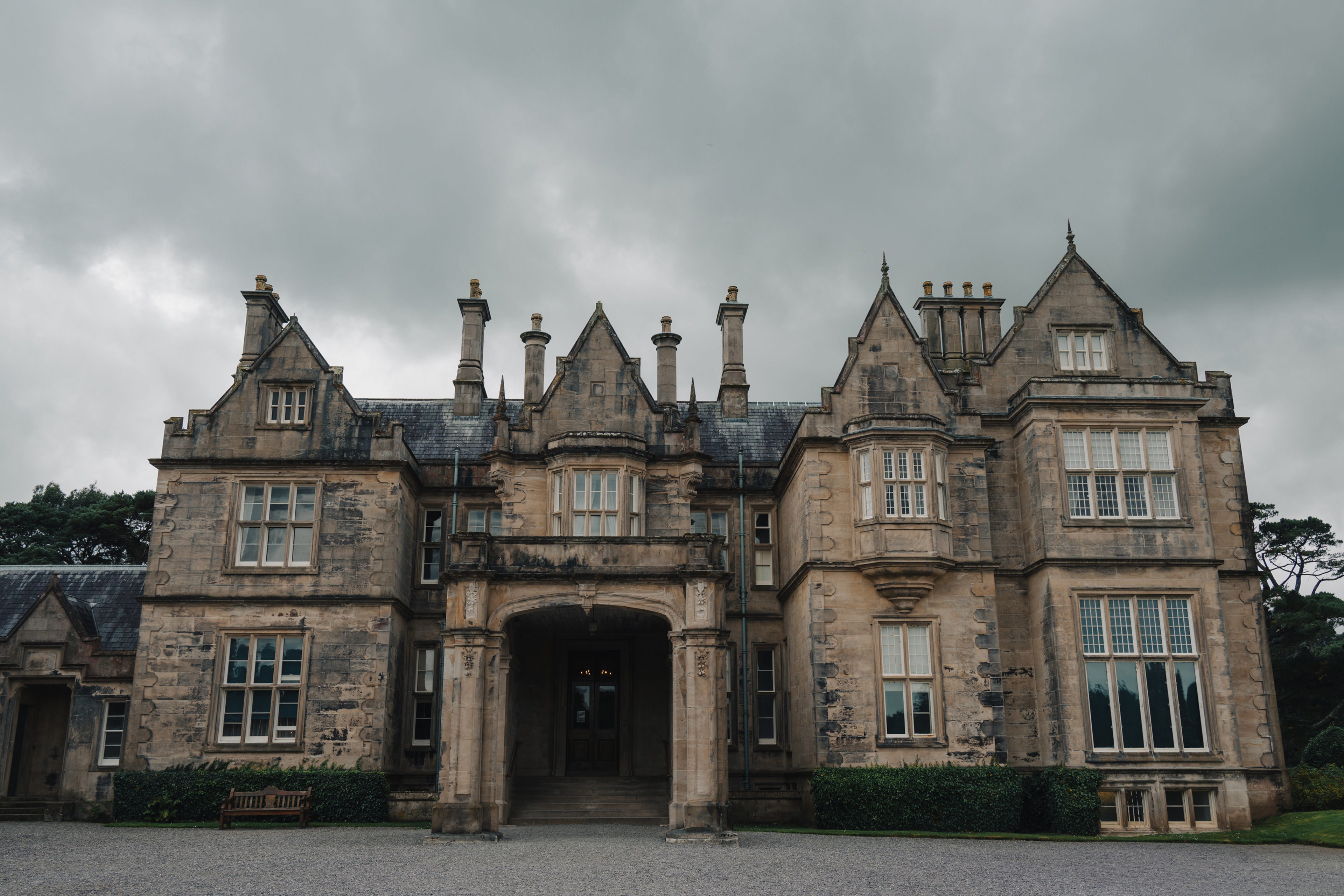
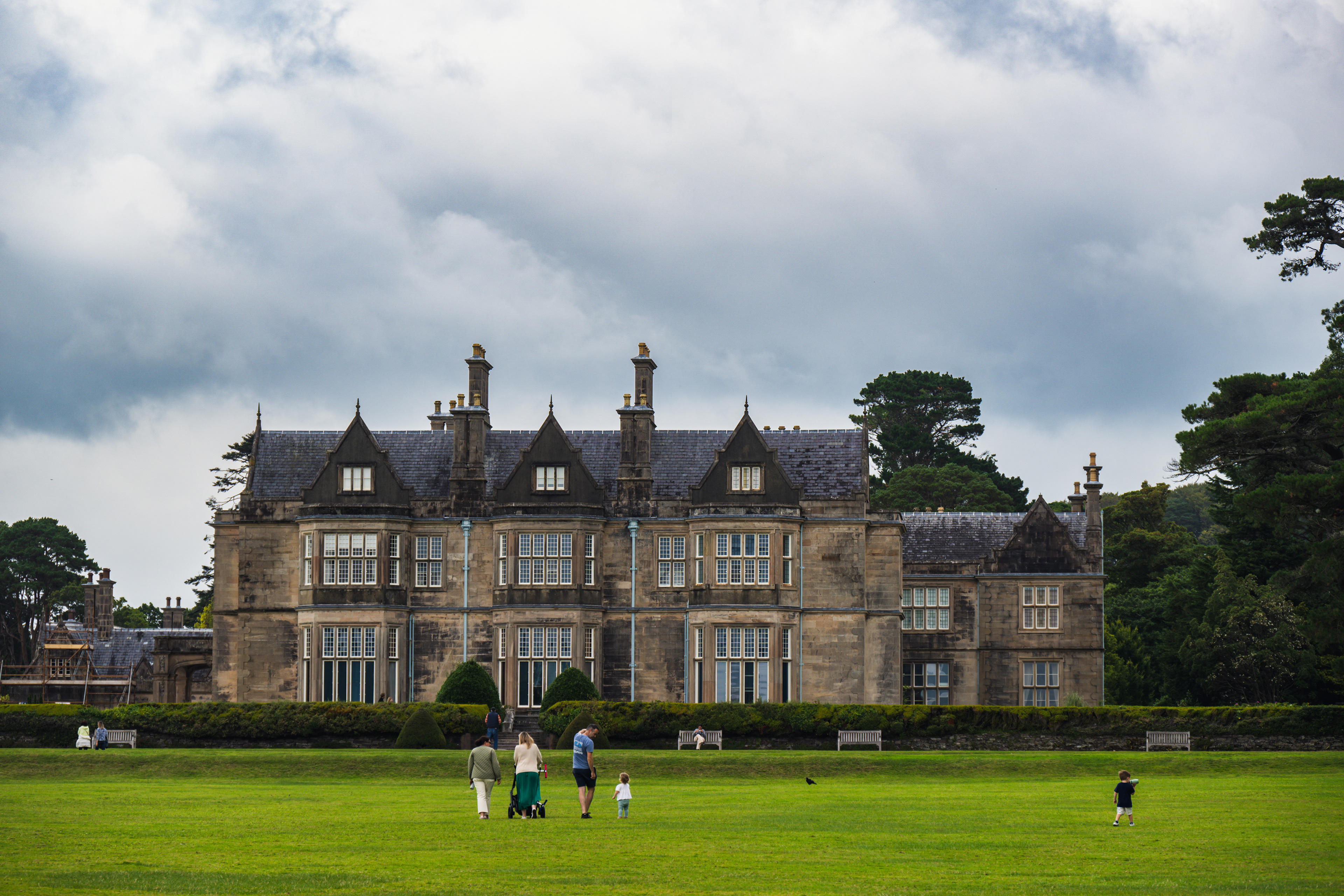
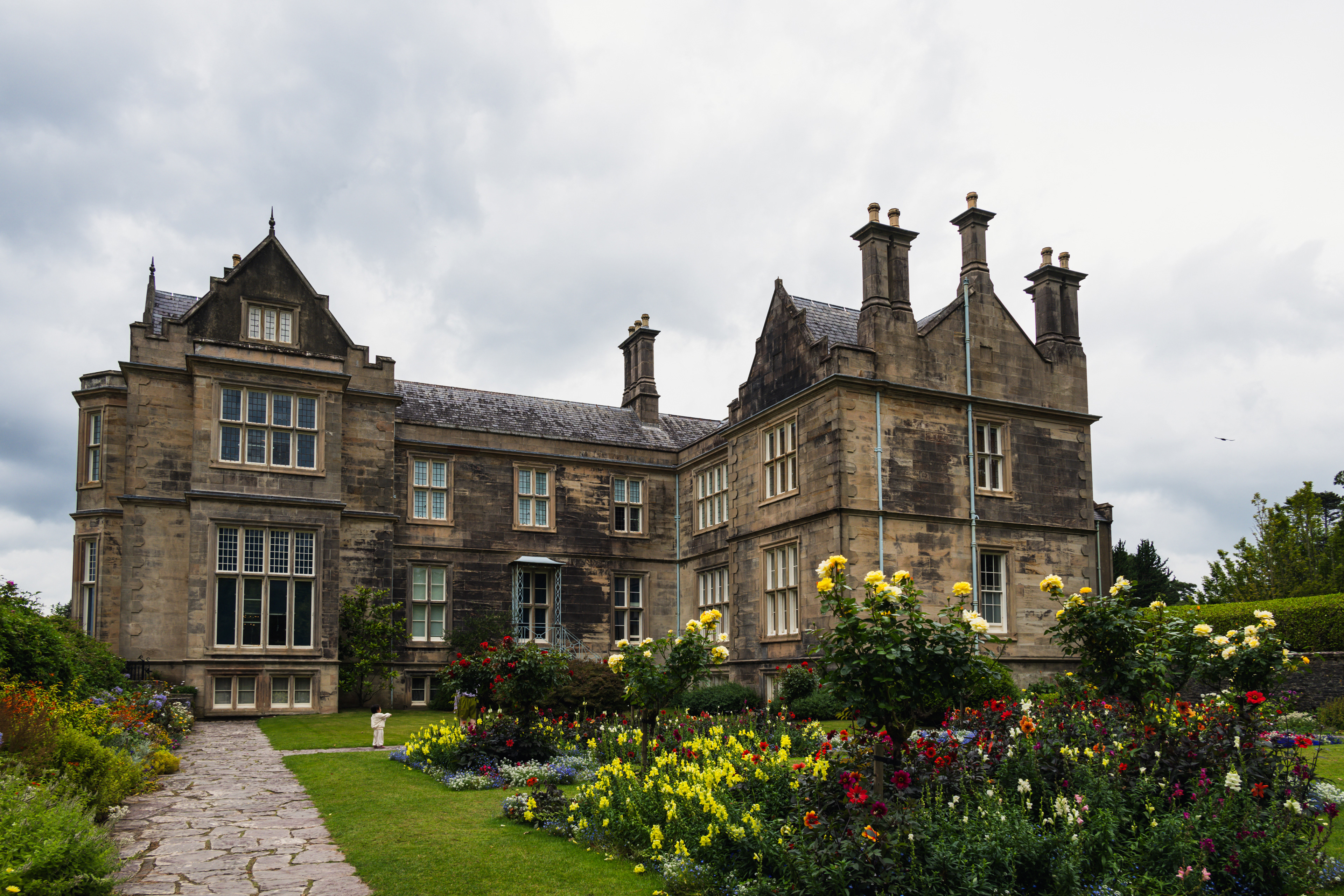
Muckross House stands on a narrow peninsula between Lough Leane and Muckross Lake. It was completed in 1843 for Henry Arthur Herbert and his wife, the watercolorist Mary Balfour Herbert. In 1861 the Herberts hosted Queen Victoria, and the cost of preparing for her visit is said to have helped ruin them. Lord Ardilaun, of the Guinness family, bought the estate in 1899. In 1911 it changed hands again, bought by William Bowers Bourn II, a Californian whose fortune came from the Empire gold mine, as a wedding present for his daughter Maud and her Irish husband, Arthur Vincent. The Bourns grew so attached to Killarney that they built a country house in California with Muckross as its model, on a lake near Woodside, and called it Filoli. It is less than an hour's drive from our home.
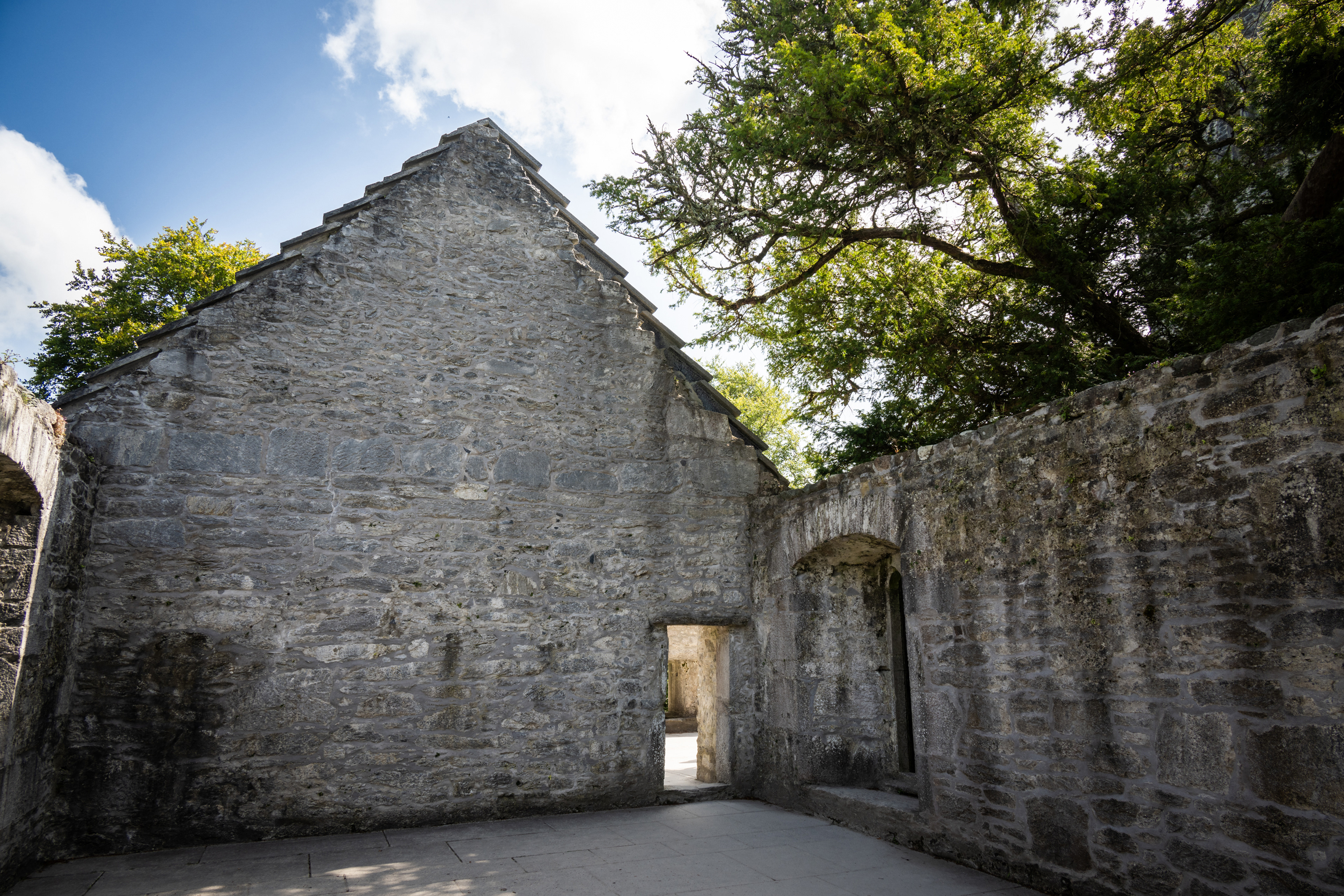
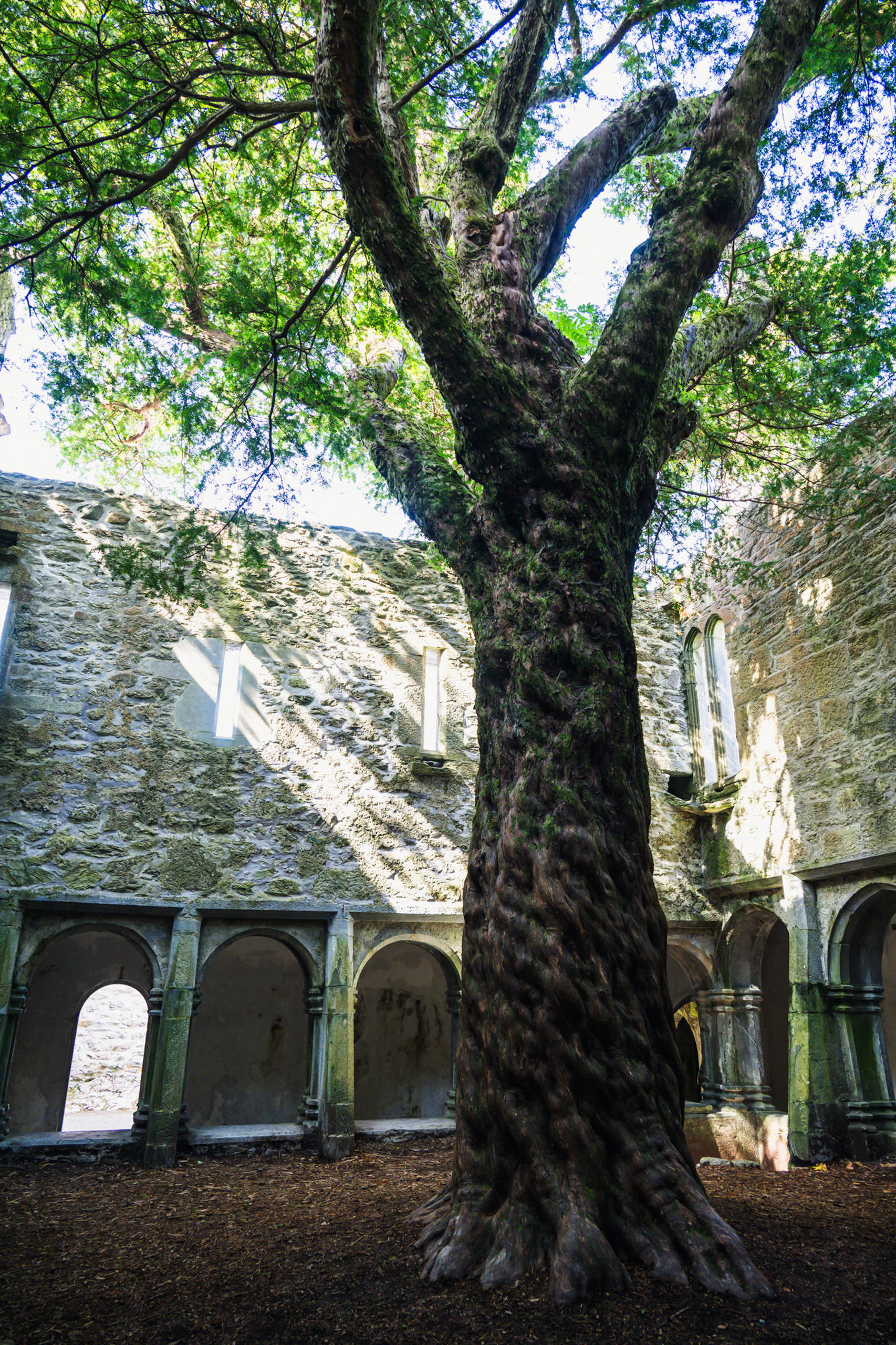
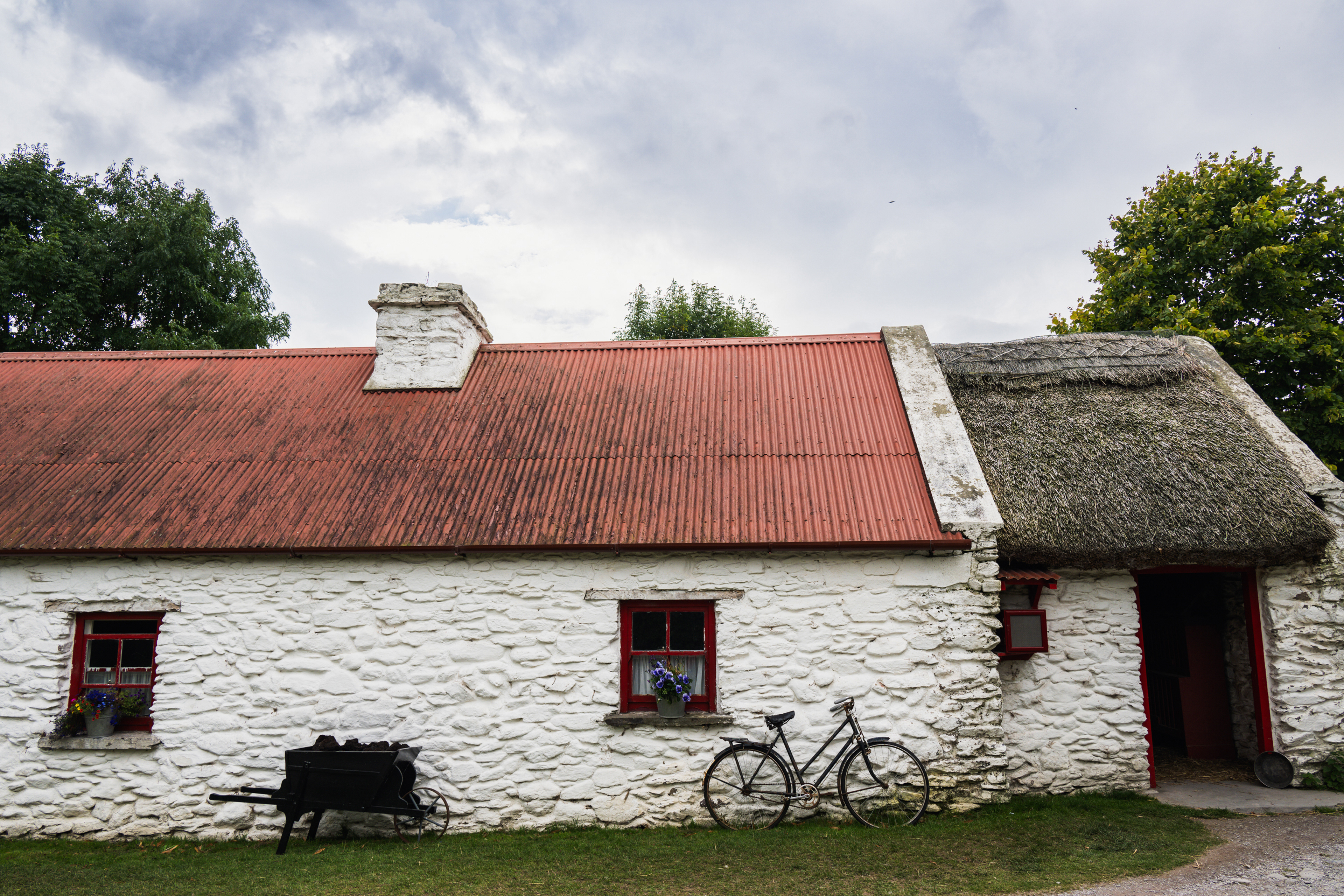
Maud died of pneumonia in 1929. In 1932 her husband and parents gave Muckross House and its eleven thousand acres to the Irish state in her memory, and the estate became the country's first national park, the core of what is now Killarney National Park. We visited the house, walked the gardens and the lakeshore, and spent time at the Muckross Traditional Farms, where working farmhouses recreate Kerry farm life from the decades before rural electrification. Nearby stands Muckross Abbey, a roofless Franciscan friary with a yew tree growing in the middle of its cloister. The yew is said to be as old as the friary, and whatever its real age, it has outlived every family that owned the land around it.










Afternoon Tea
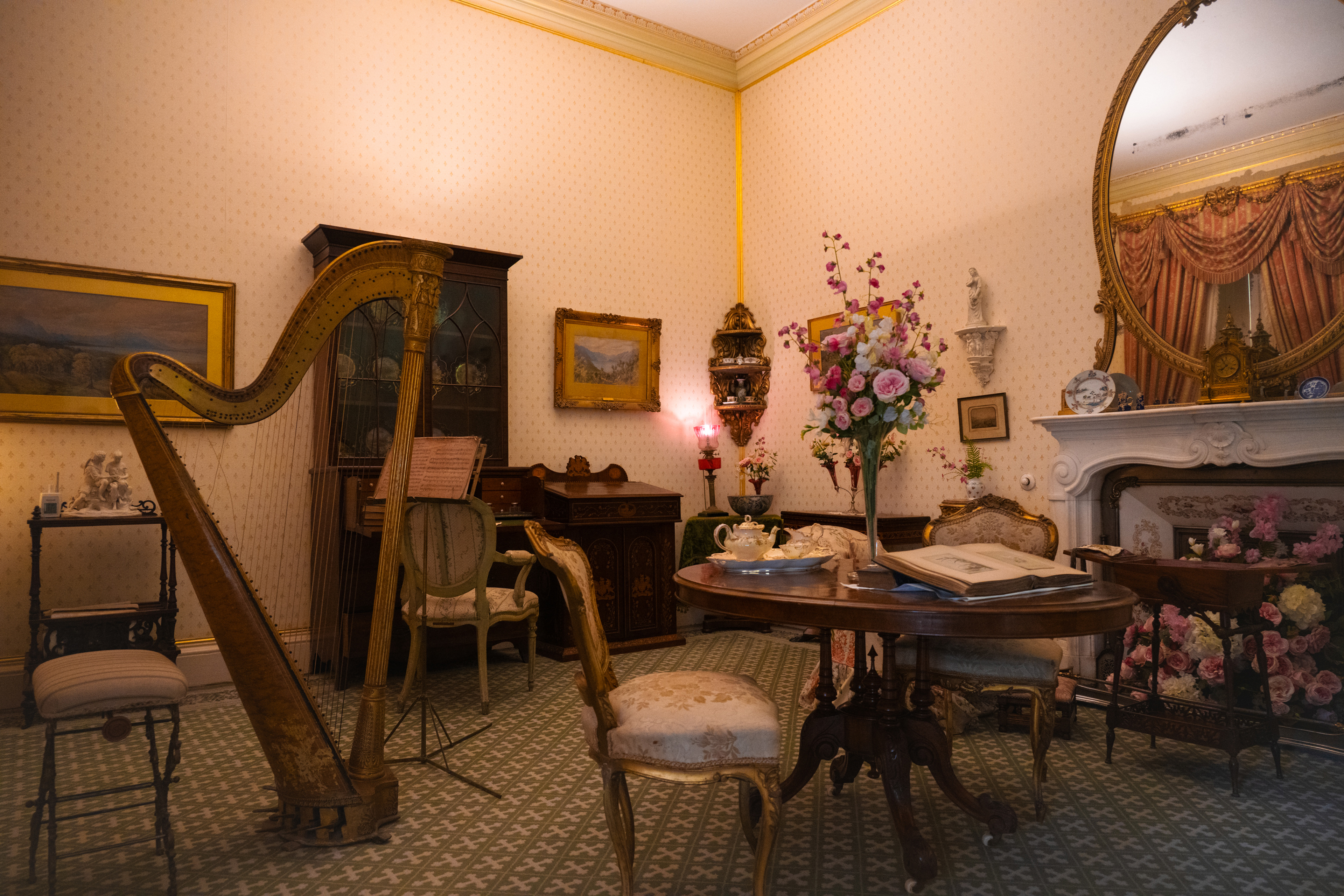
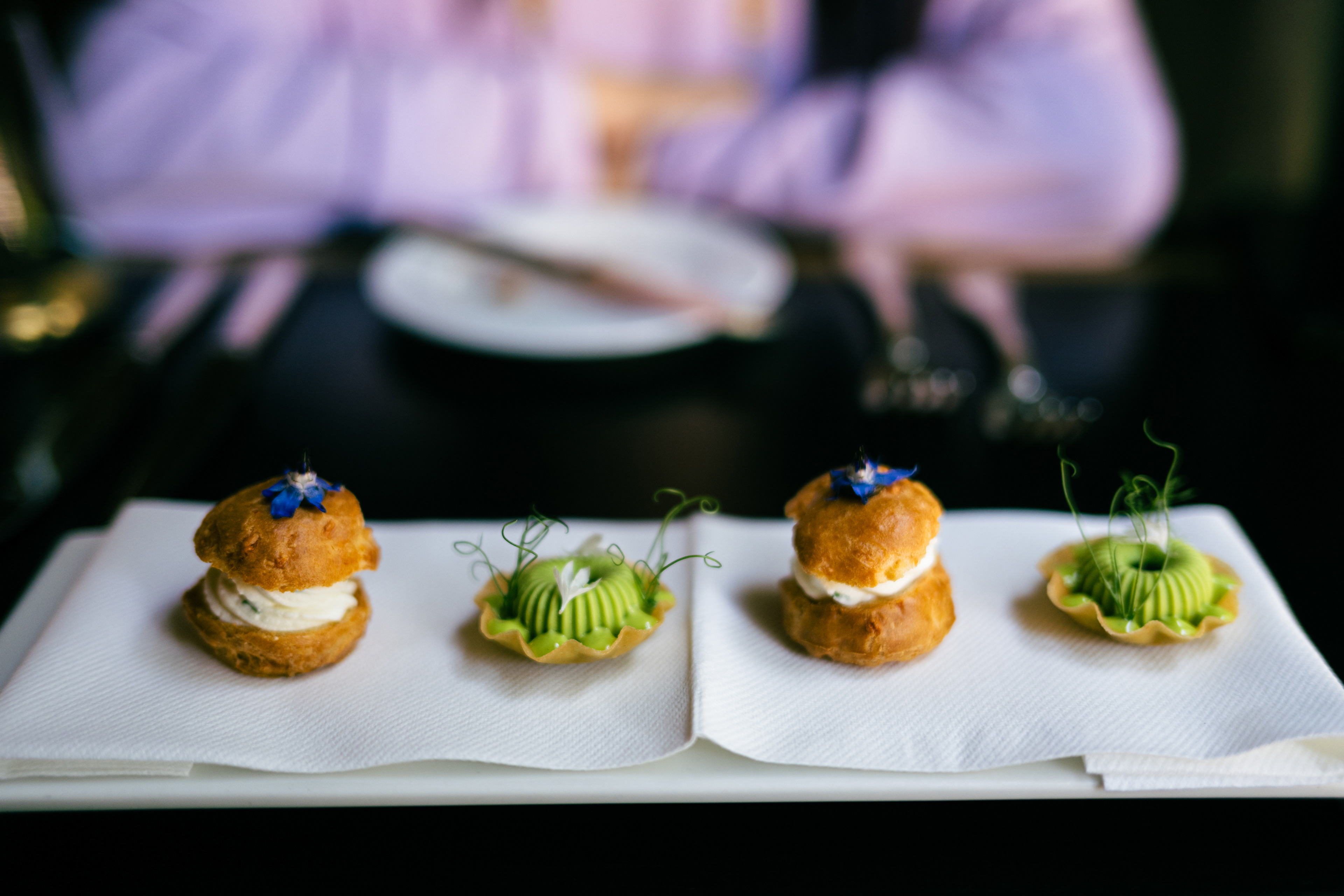
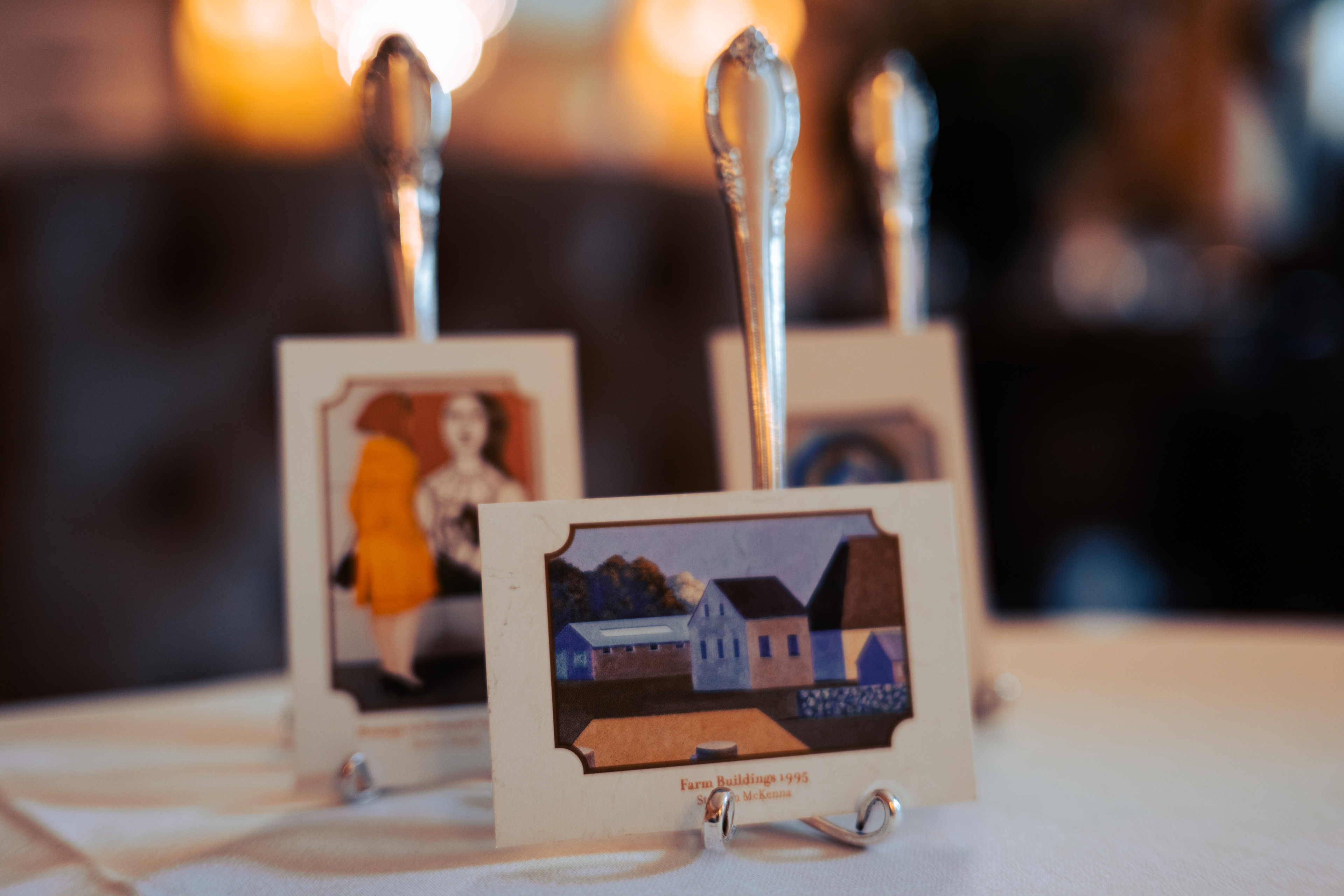
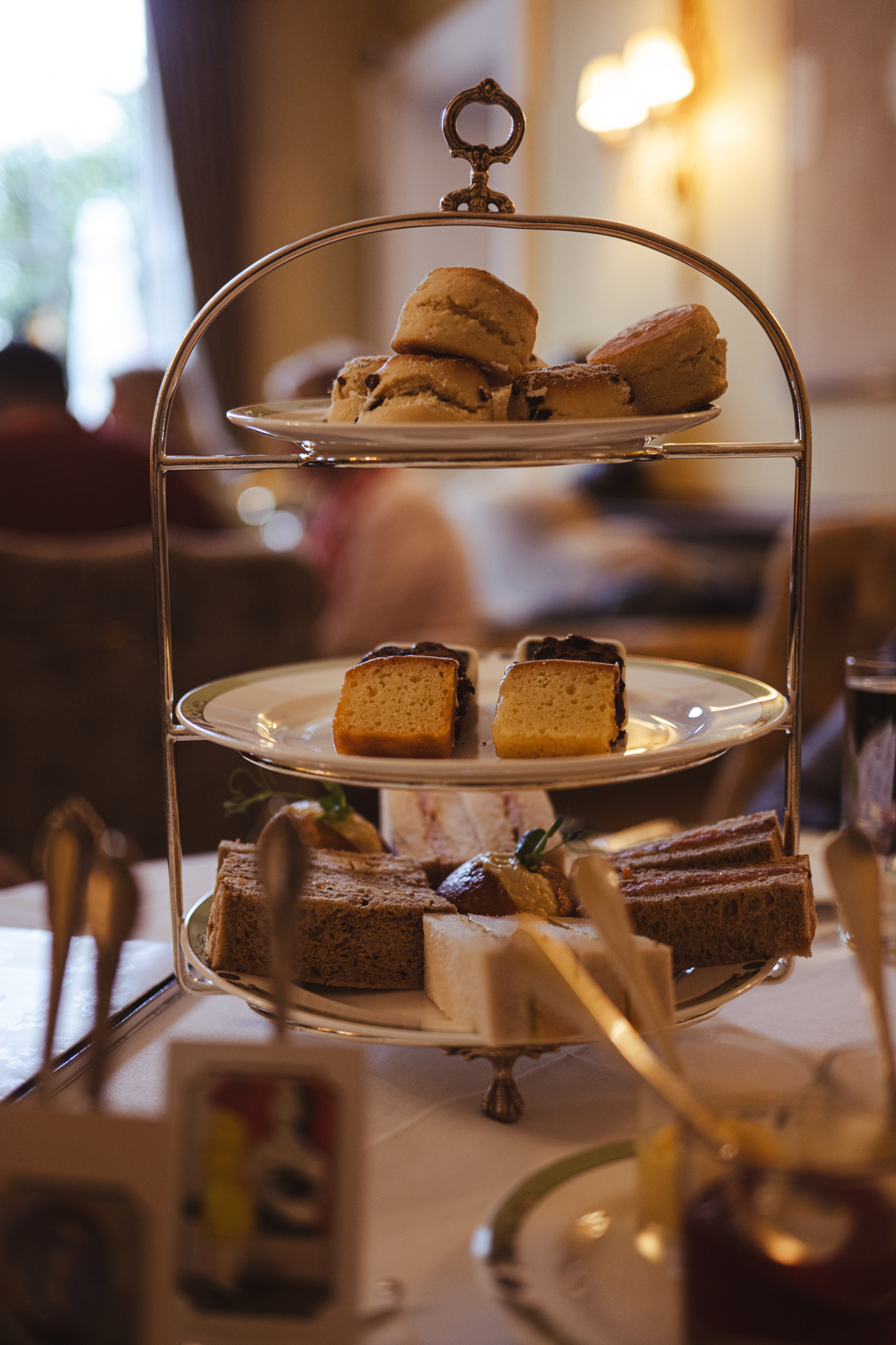
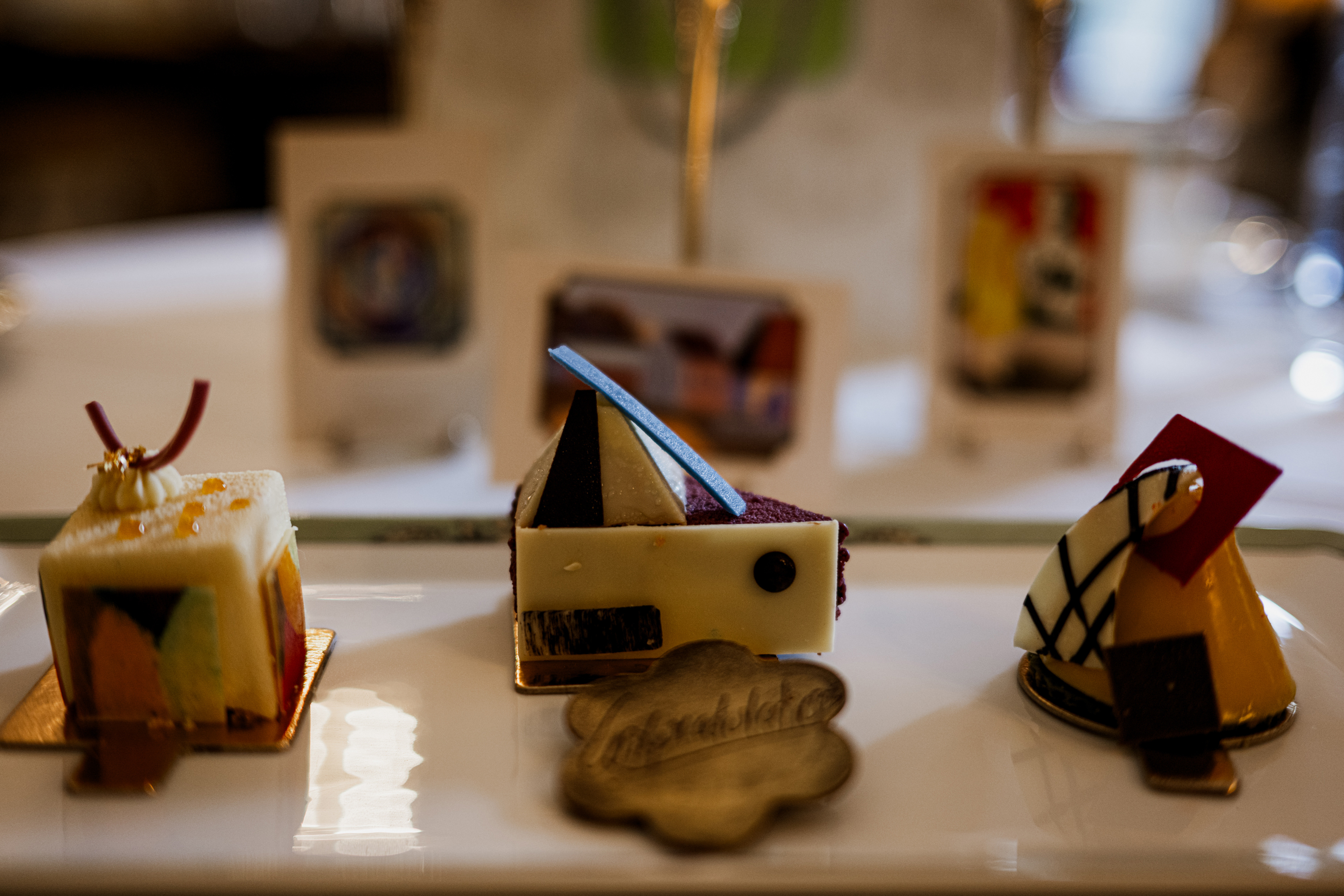
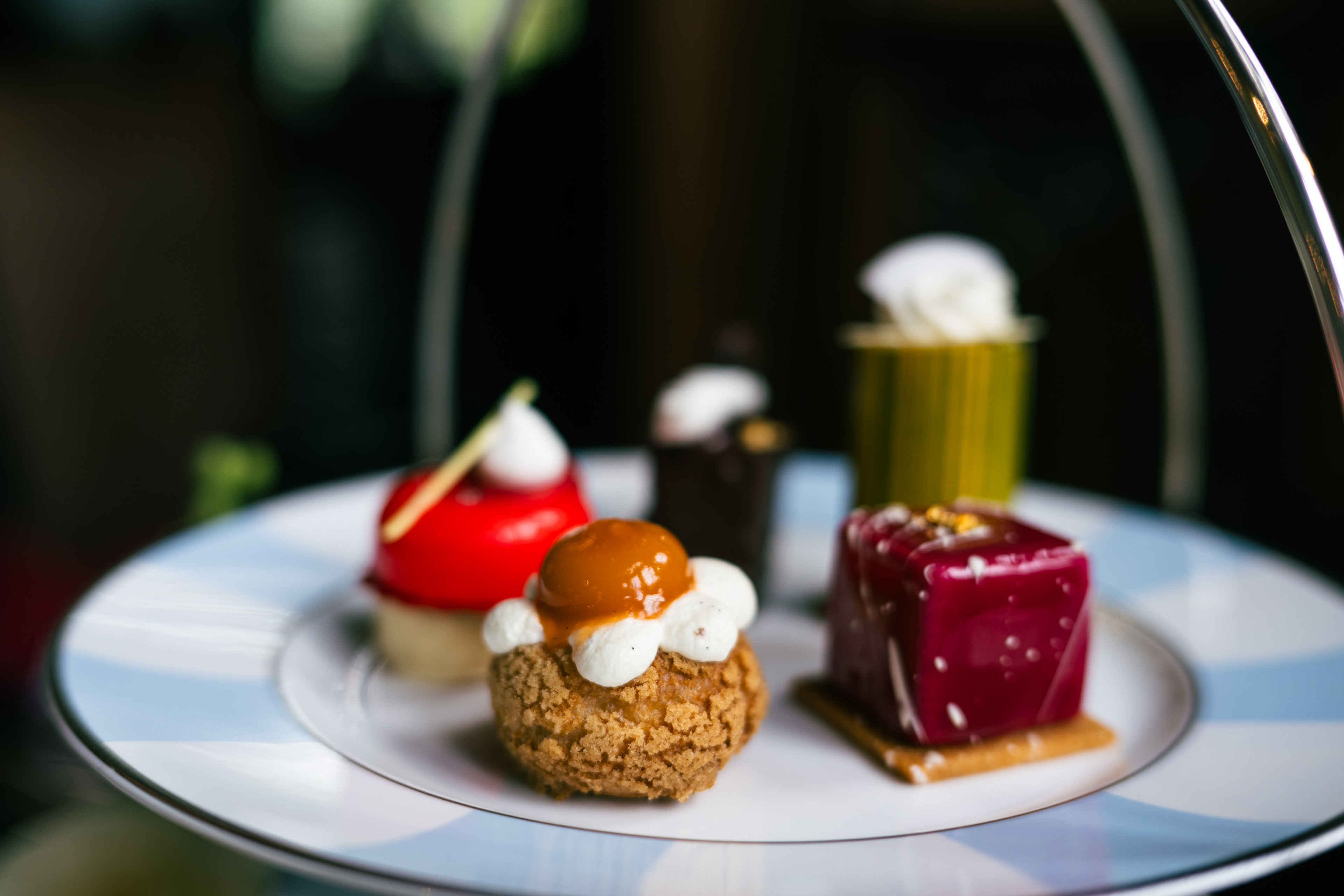
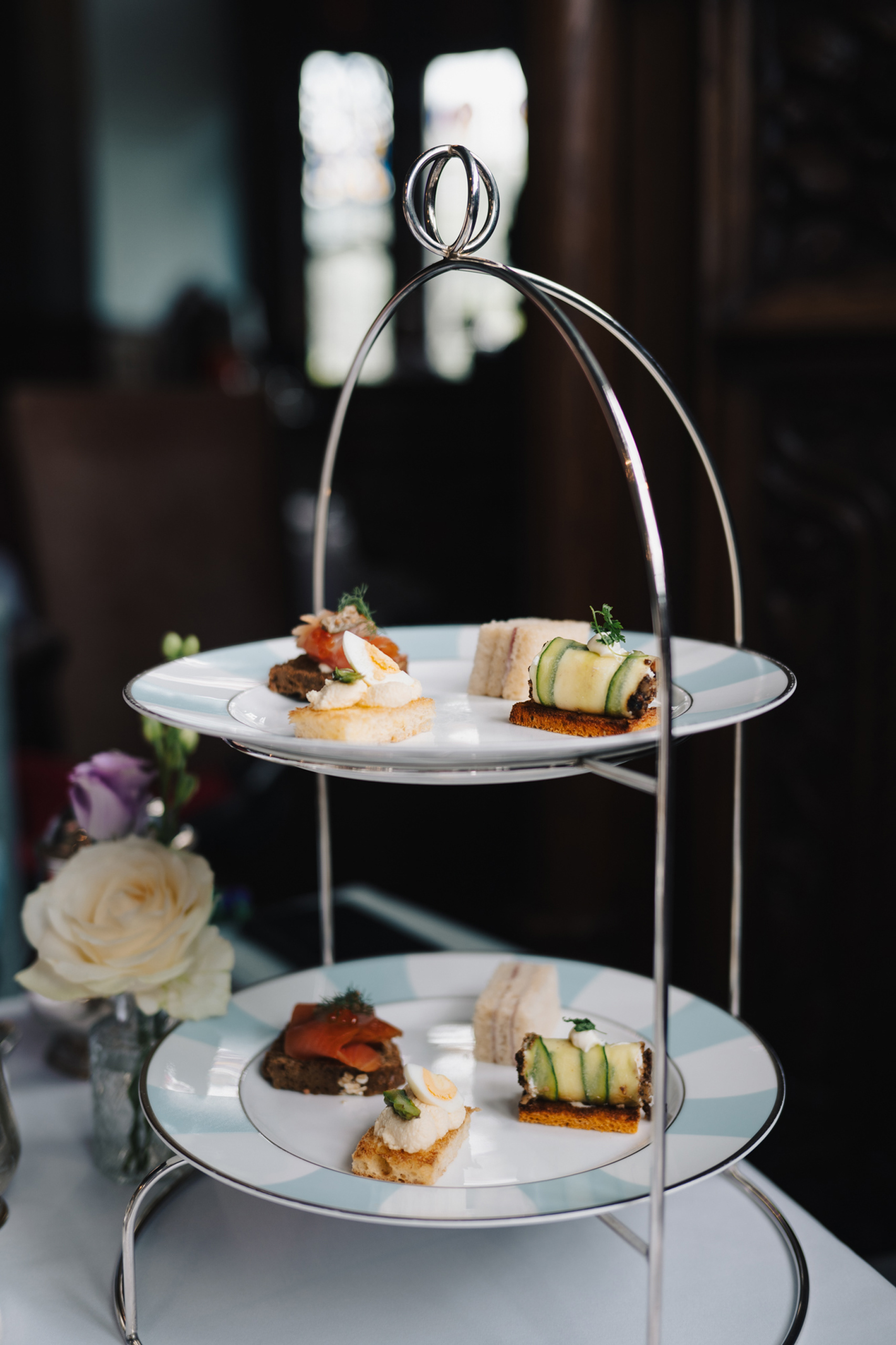
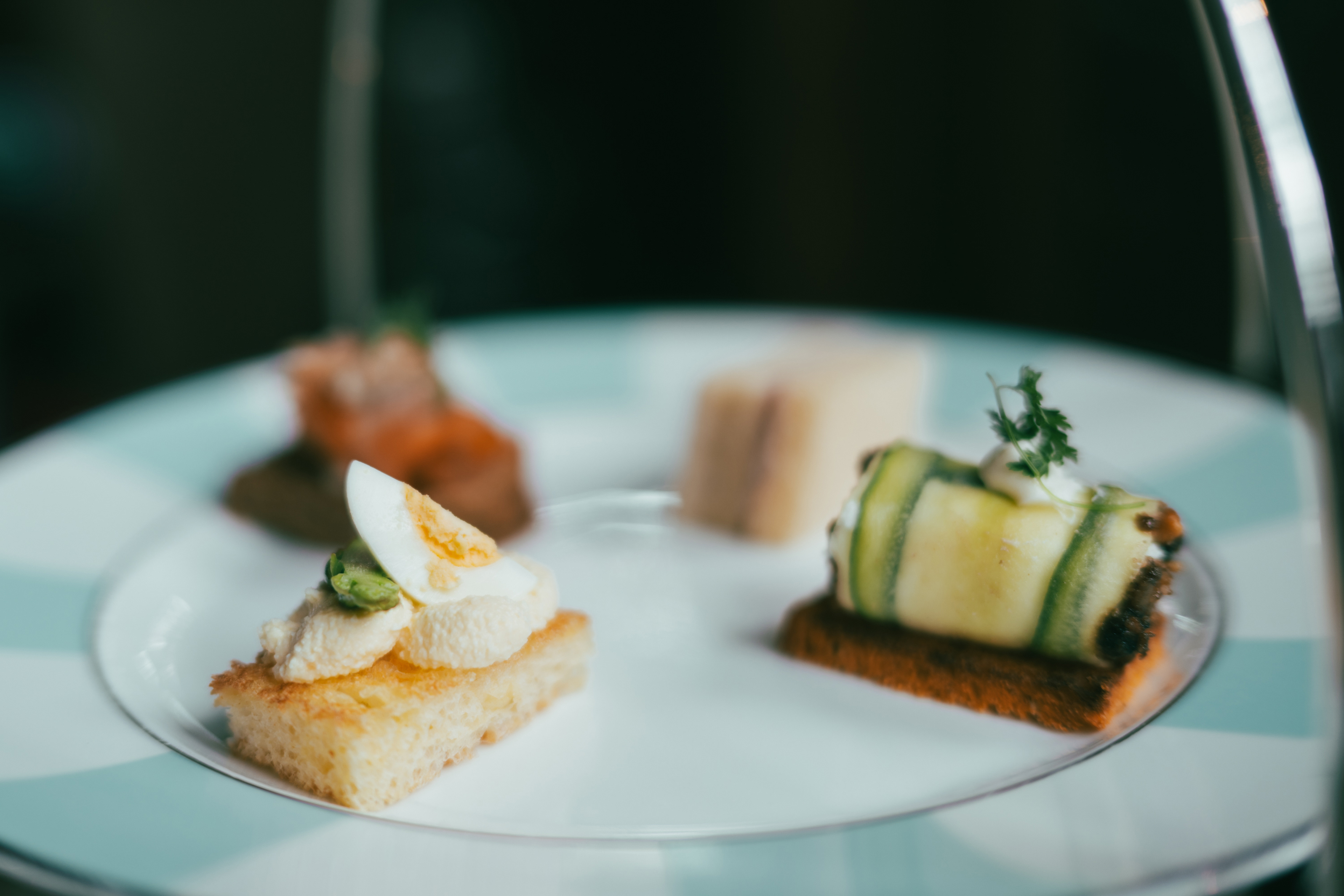
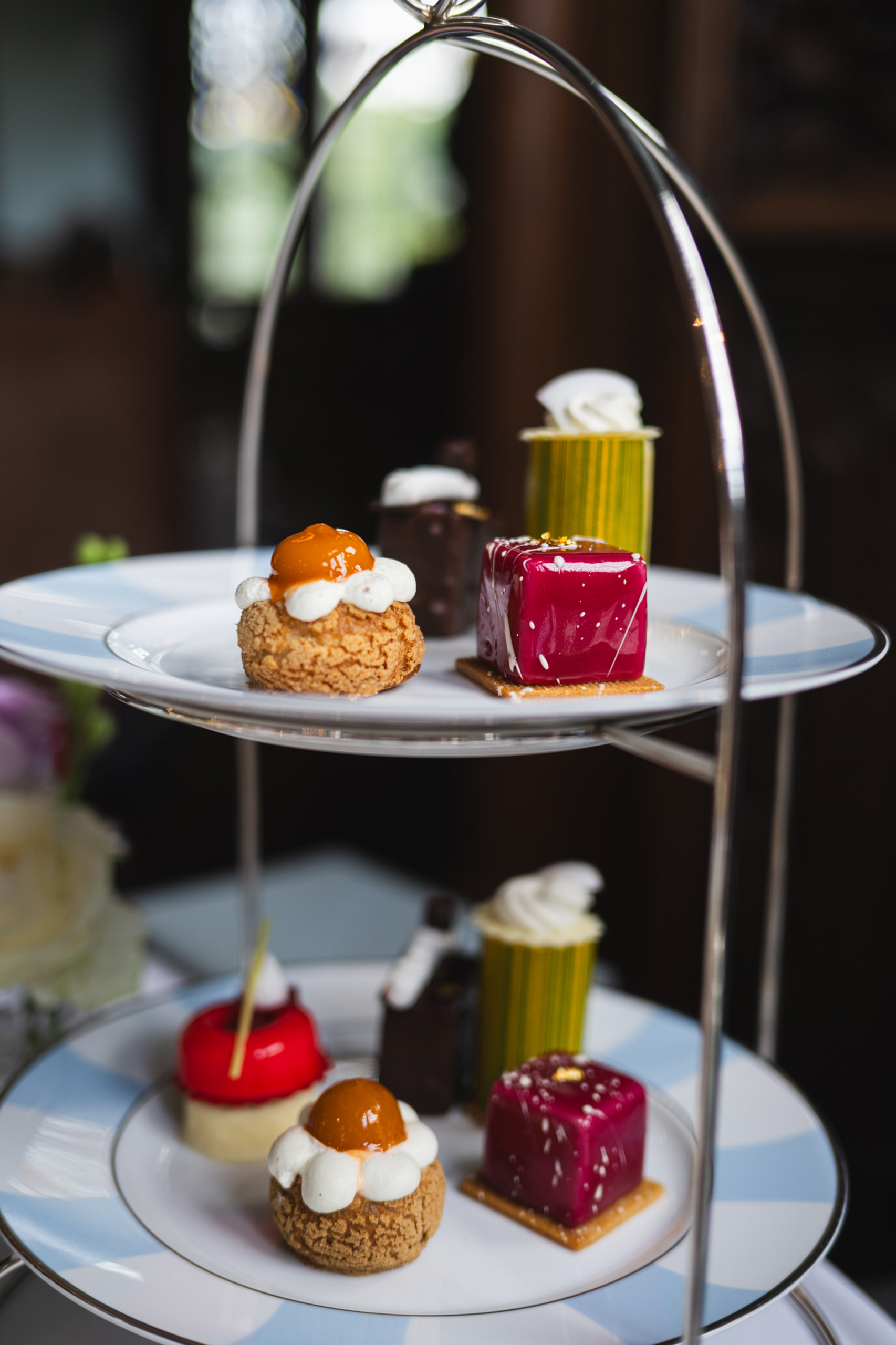
Neither of us had sat down to a formal afternoon tea before this trip, and we booked two. The first was the Art Tea at the Merrion Hotel in Dublin, on our second afternoon in the city. The Merrion occupies four Georgian townhouses built in the 1760s, one of them the birthplace of the Duke of Wellington. It holds what it describes as the largest private art collection in Ireland, mostly nineteenth- and twentieth-century Irish paintings hung throughout the public rooms. The pastry kitchen takes its cue from those walls. Each pastry is inspired by a specific work in the collection, and tea is served in the Georgian drawing rooms, overlooking the hotel's gardens.
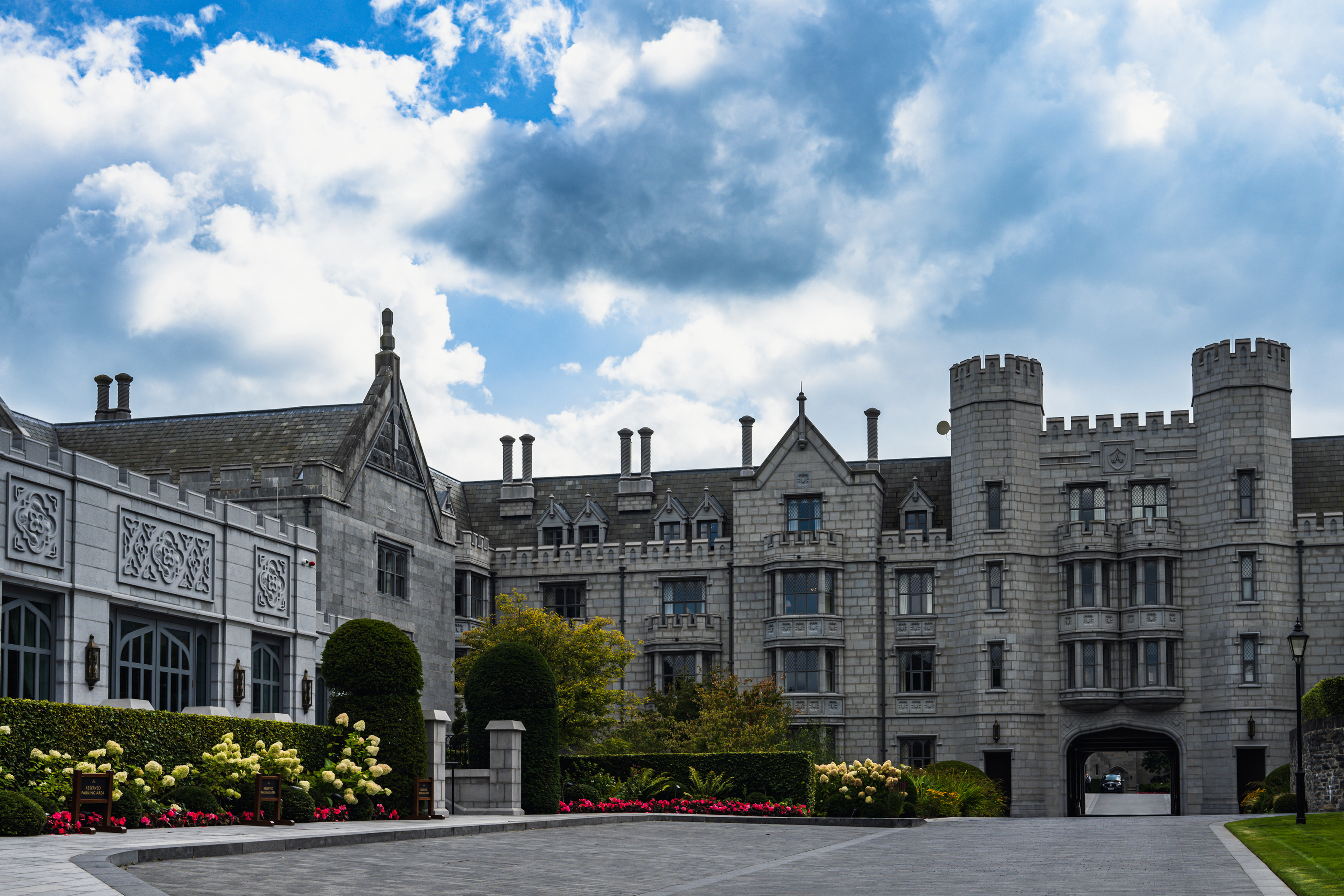
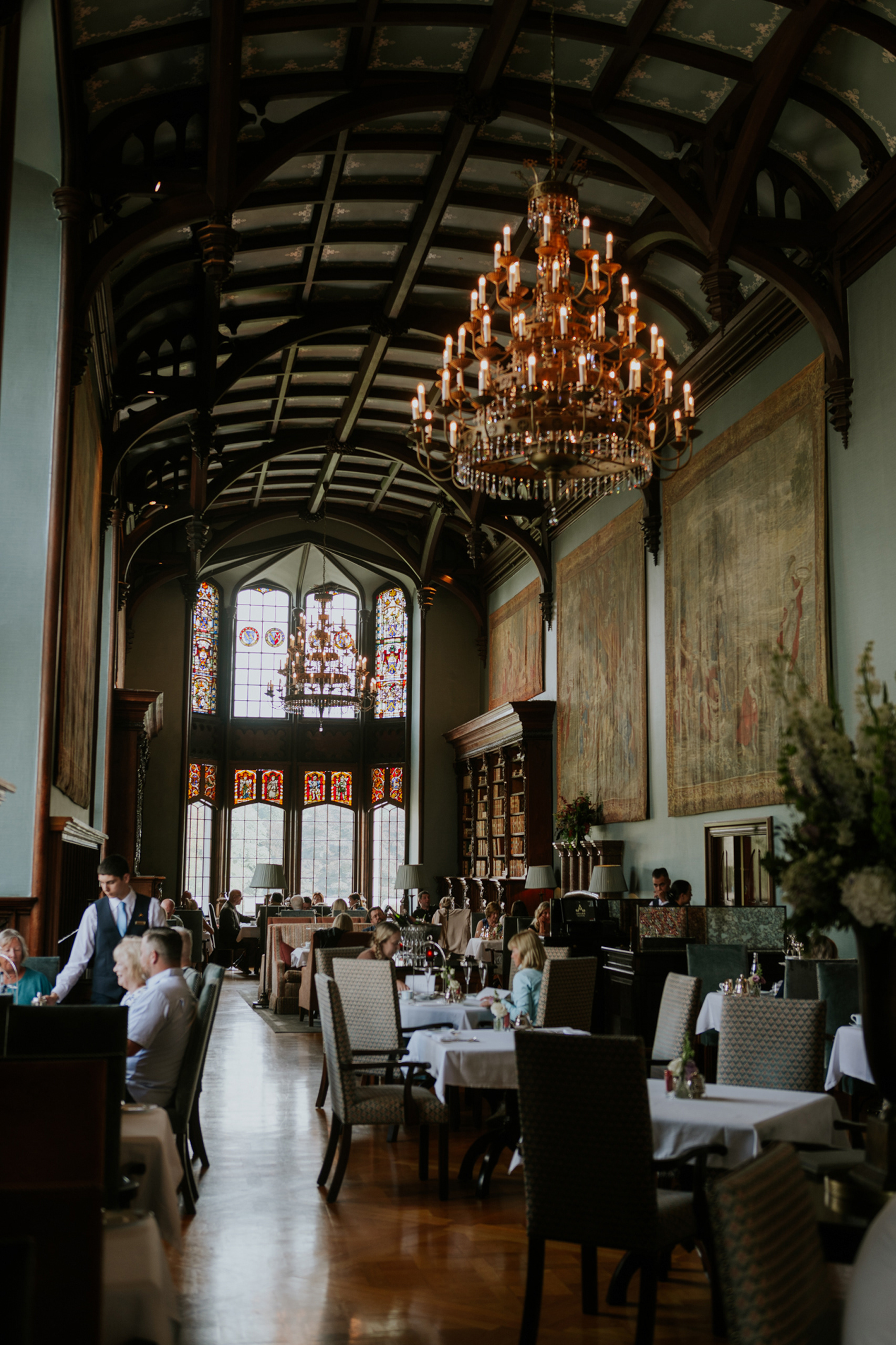
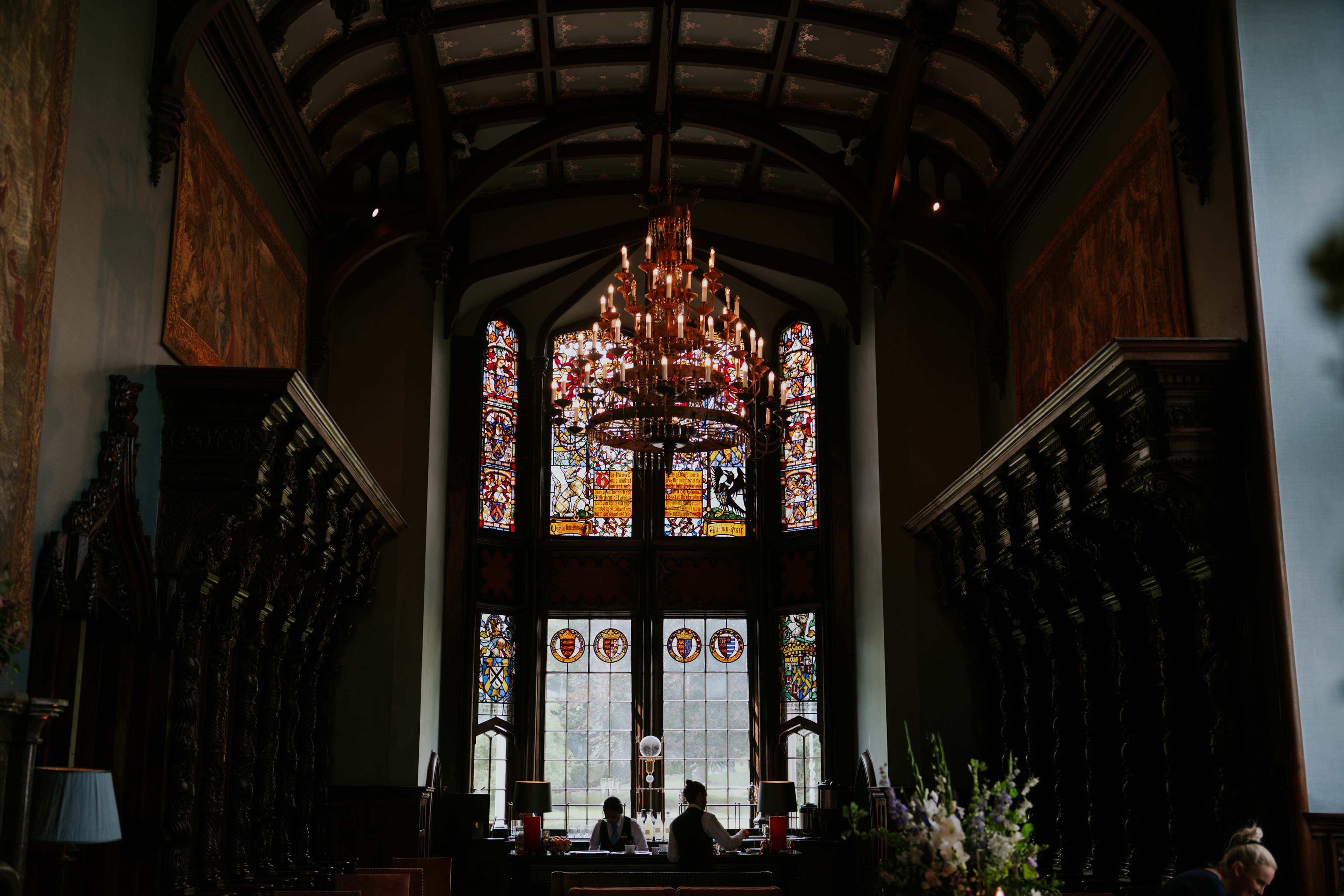
The second tea was at Adare Manor in County Limerick. Adare Manor was the seat of the Earls of Dunraven. The present house is a Gothic Revival mansion, all towers and leaded windows beside the River Maigue, which the second Earl began in 1832 and his son finished some thirty years later. It has been a hotel since the 1980s and will host the Ryder Cup in 2027. On a road trip built around car seats and early dinners, the two teas were the most civilized pauses we allowed ourselves.

At the Table
Dining in Ireland started well at the bill. The prices on the menu were the prices we paid, because tax was already included, and nobody expected a tip. Service was part of the meal, and a tip only came up if we raised it ourselves. Across the trip, restaurants gave us better food for the money than we are used to in the Bay Area, and the service was warm without any sense of angling for a percentage.
Our first dinner in Ireland was at Pearl Brasserie, in a basement on Merrion Street next door to the Merrion Hotel. It has served French cooking with Irish ingredients since 2000, in a warren of small rooms and booths, and we booked an early table. In Dublin we also had a steak lunch at F.X. Buckley on Pembroke Street before driving out to Powerscourt, and we ate at Chai-Yo on Baggot Street, which serves Thai, Japanese and Chinese dishes. In Limerick city we stopped at the Carnival Asian Store, a Chinese restaurant that is rarely find in rural Ireland.
In Kilkenny we ate at Ristorante Rinuccini, in a semi-basement on the terrace directly opposite the castle. It is named for Giovanni Battista Rinuccini, the papal envoy who arrived in Kilkenny in 1645 and spent his years in Ireland in steady opposition to the Marquis of Ormond, whose family owned the castle across the street. Nobody at the restaurant seemed to hold the old feud against the building.
The detail we still bring up from the whole trip is breakfast at the Europe Hotel in Killarney. It included fresh fish fried whole, as part of the regular breakfast rather than an extra on the bill. In Killarney we also ate at the Europe's Brasserie and at The Peregrine in the Killarney Park Hotel, booked for six o'clock. Restaurants had been on our planning notes as a highlight alongside the castles and the farms, and by the end of the trip they had earned their place on that list.
Looking Back
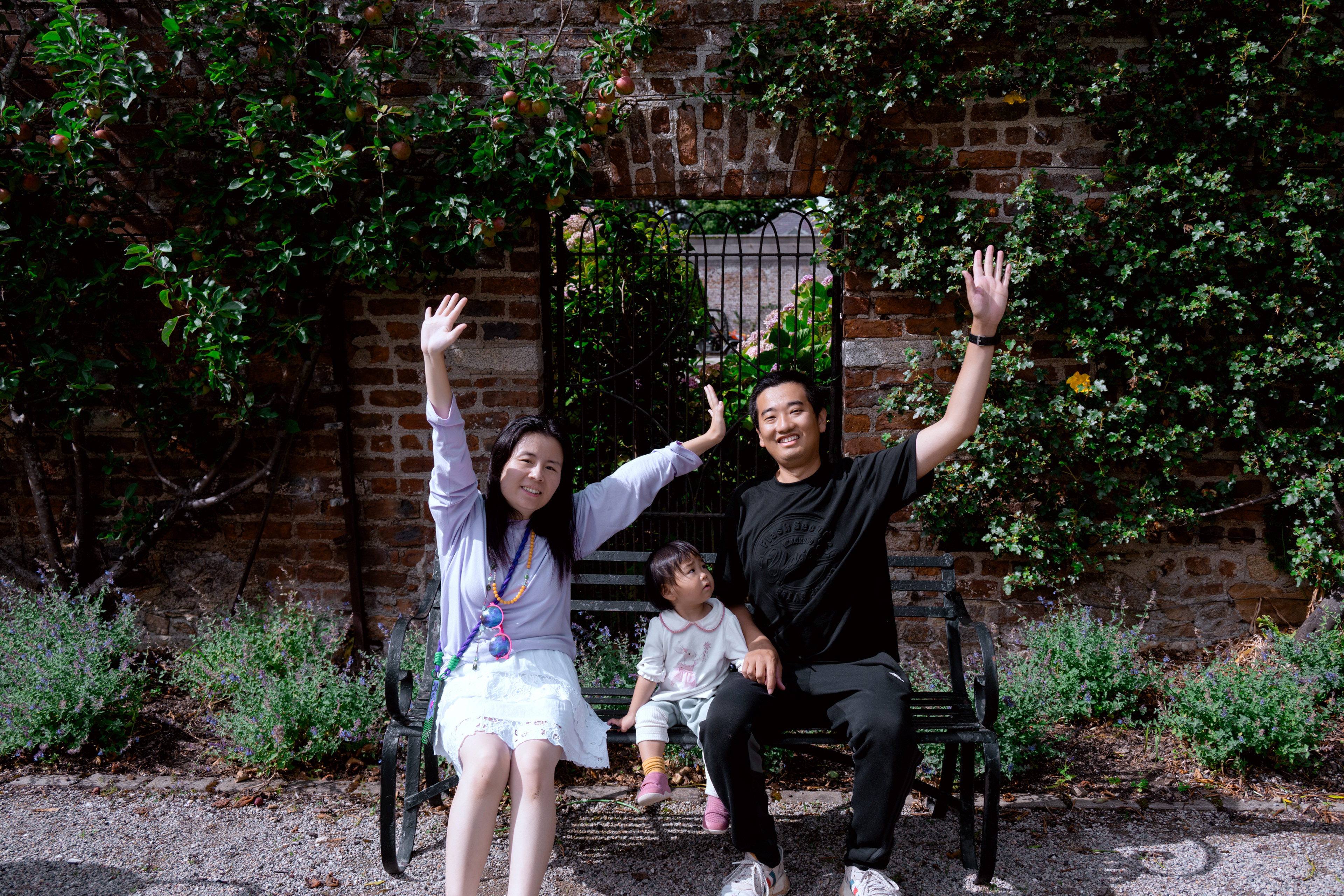
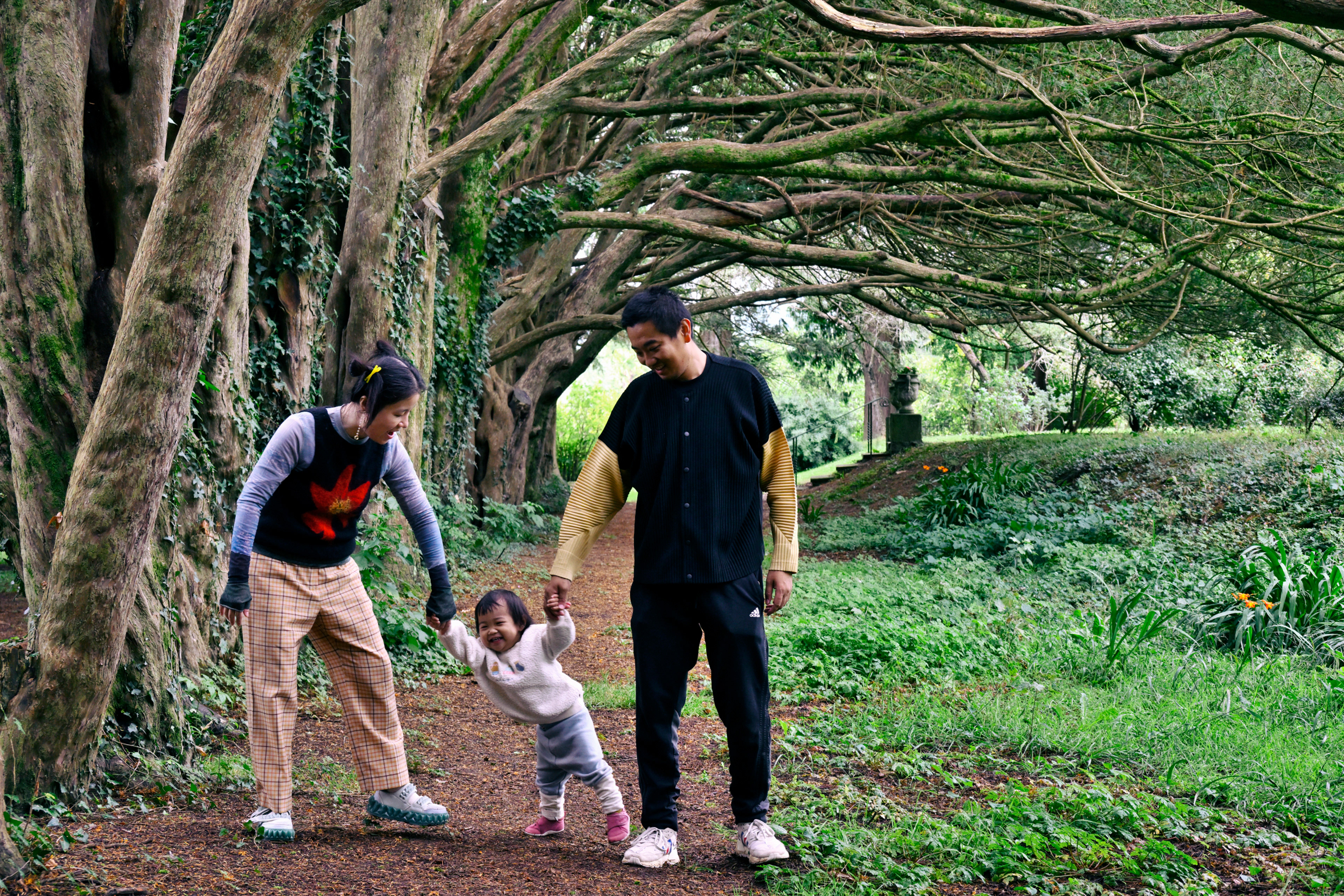
We went to Ireland to mark ten years of marriage. What we brought home was mostly a sense of how easy the country made it to travel as three. The trip ran at our daughter's pace rather than ours: early dinners, a day left mostly unplanned, nights in houses with room to move. Nowhere we took her, from castles to country pubs to hotel dining rooms, did anyone treat a toddler as a problem to be managed. People welcomed her, and that made the whole trip easier than we had planned for.
The other thing we remember is how much old stone there was. On most days we stopped at a castle, an abbey or a ruin. Some had been restored, some were still family homes, and Kilkenny Castle had once been sold for fifty pounds so that it would not become another ruin. We had slowed down because of our daughter, and Ireland suited that pace well: there was always something worth stopping for a short drive away.