Some places you don't just visit. Alaska is one of them. I'd been dreaming about it for years, and when the opportunity finally aligned (a milestone birthday, a wedding anniversary, and a once-in-a-decade Denali Road Lottery permit we somehow managed to pull), we designed a 15-day itinerary that would take us through almost every paved and unpaved road the state has to offer.
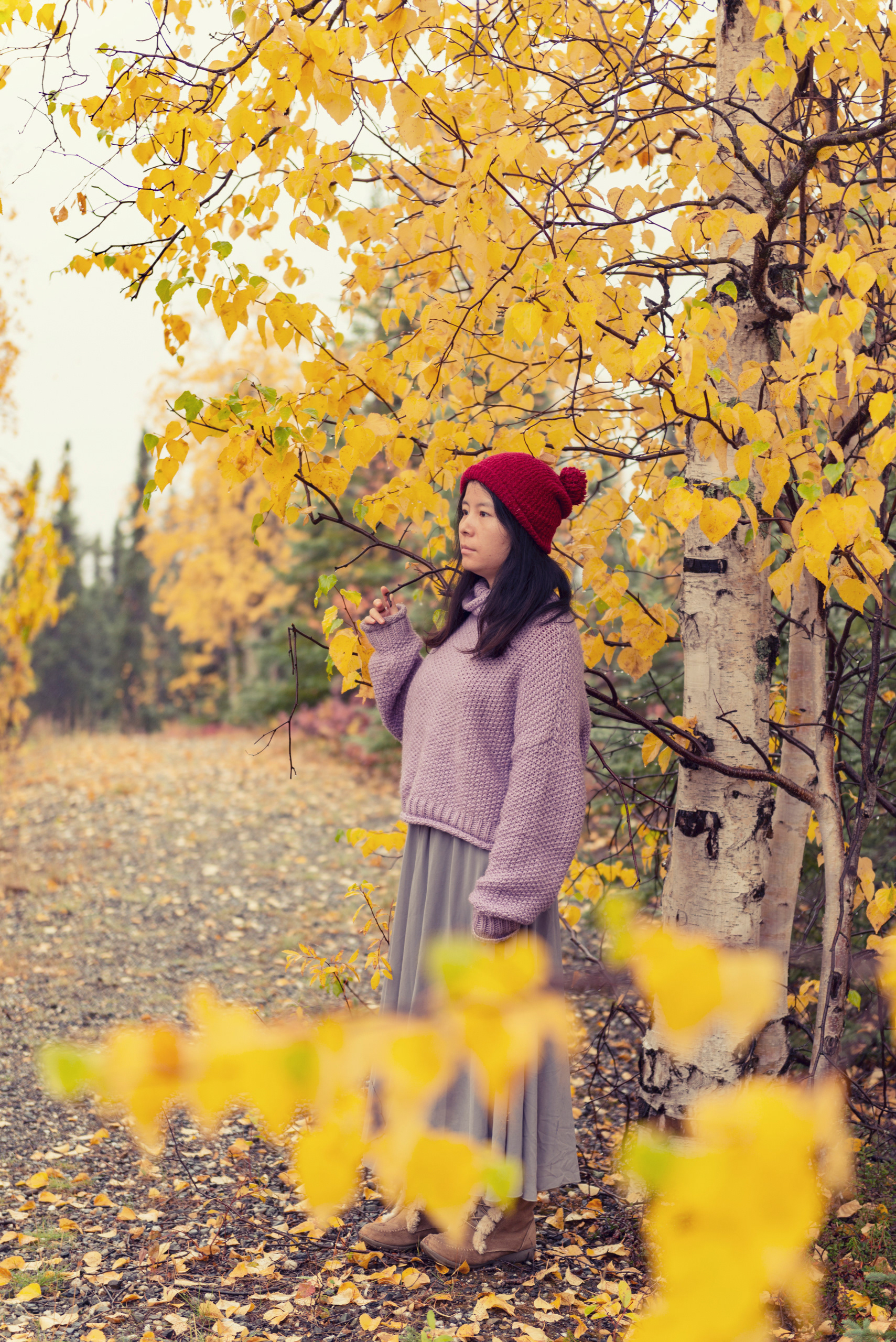
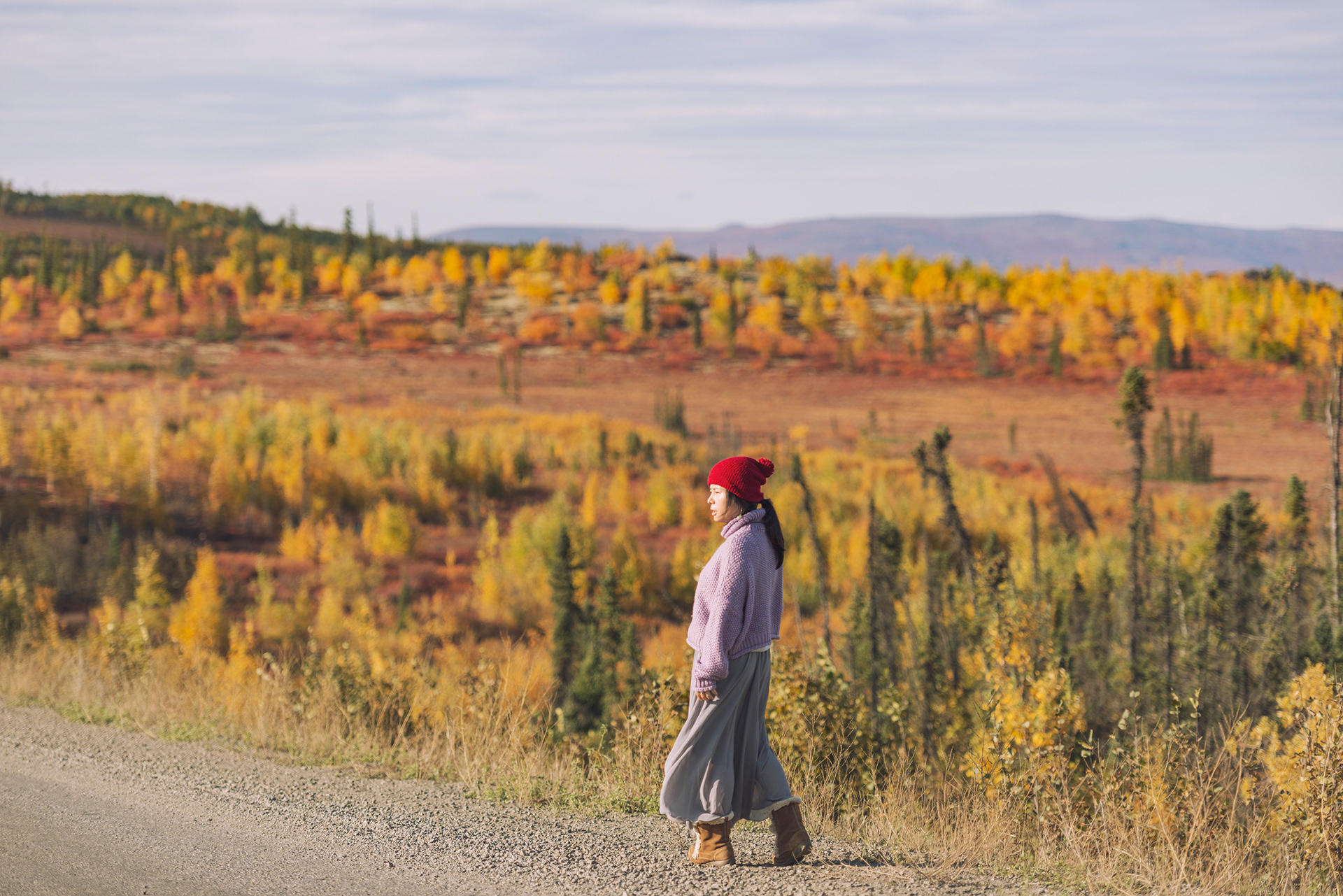
We chose late August through early September deliberately. It's a narrow window that gets several things right at once: the tourist season is winding down, so prices are lower and crowds thinner; the brief Alaskan autumn paints the tundra and boreal forest in crimson, gold, and amber; the aurora season reopens after the summer's midnight sun; and the wildlife is hyperactive, gorging on calories before winter locks everything down. The timing turned out to be exactly right.
This is the story of the northern half of that journey: a trek up the Dalton Highway through the Arctic Circle to the edge of the Arctic Ocean, a night when the sky turned inside out above us, and everything that happened on the road in between.
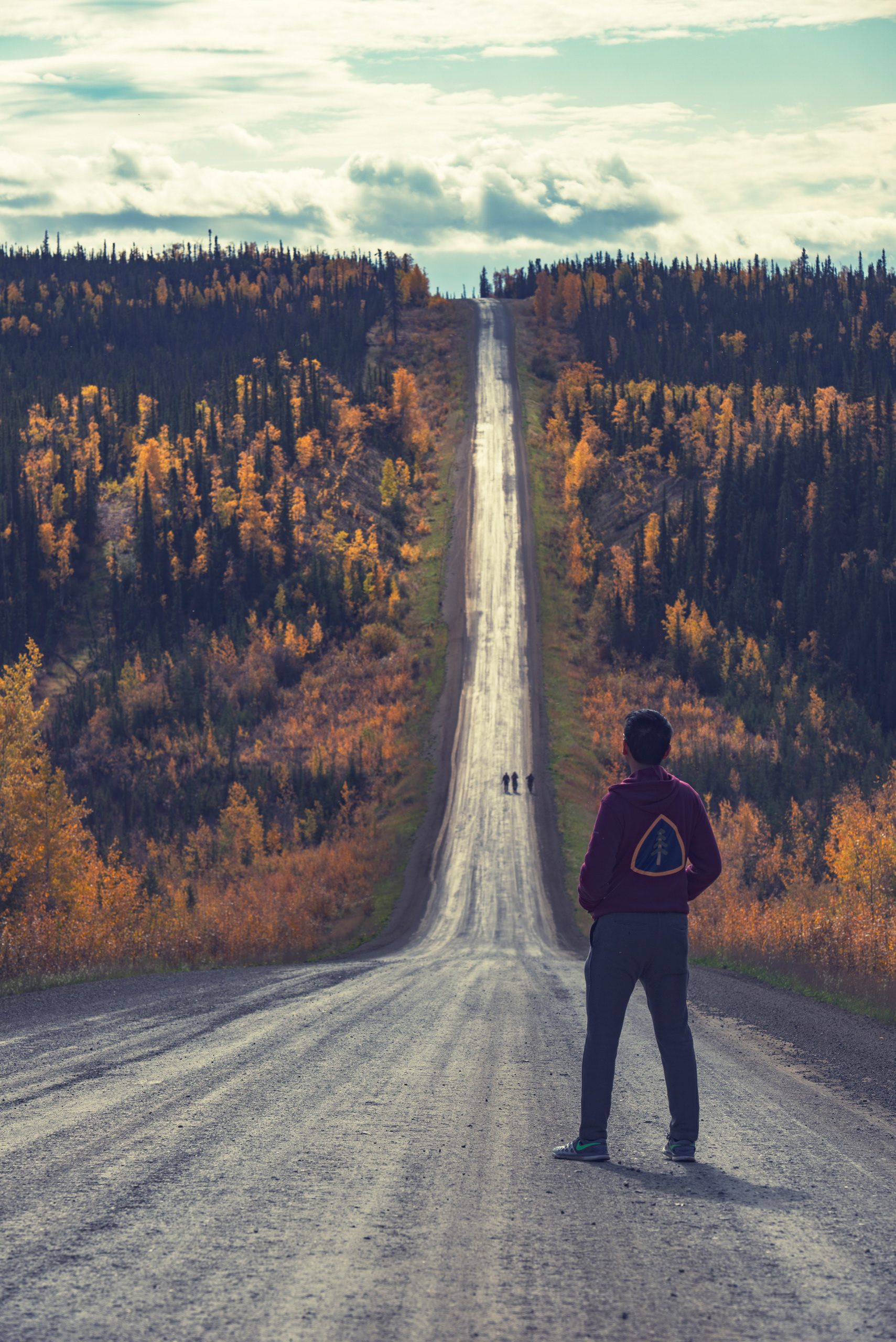
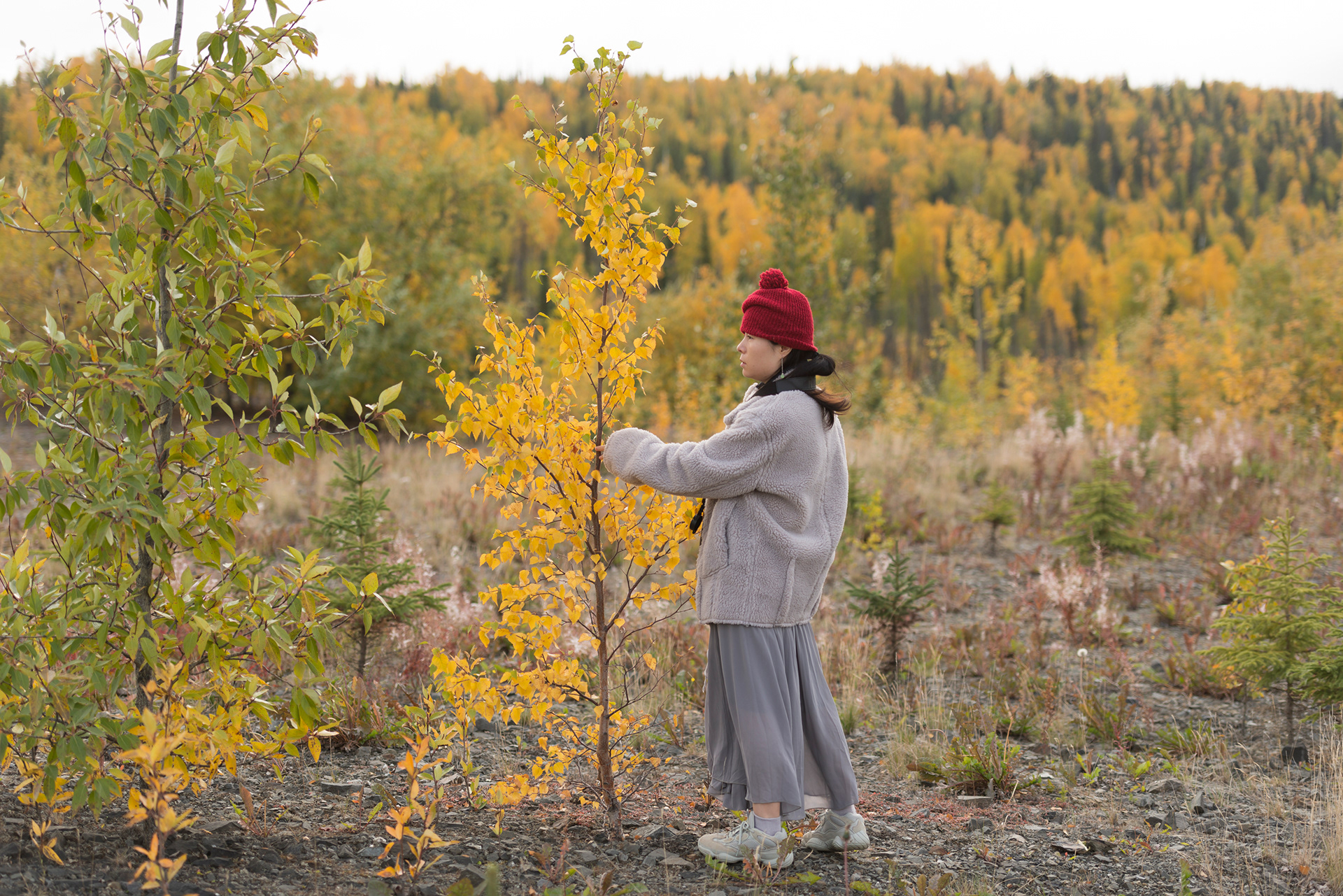
The State That Defies Intuition
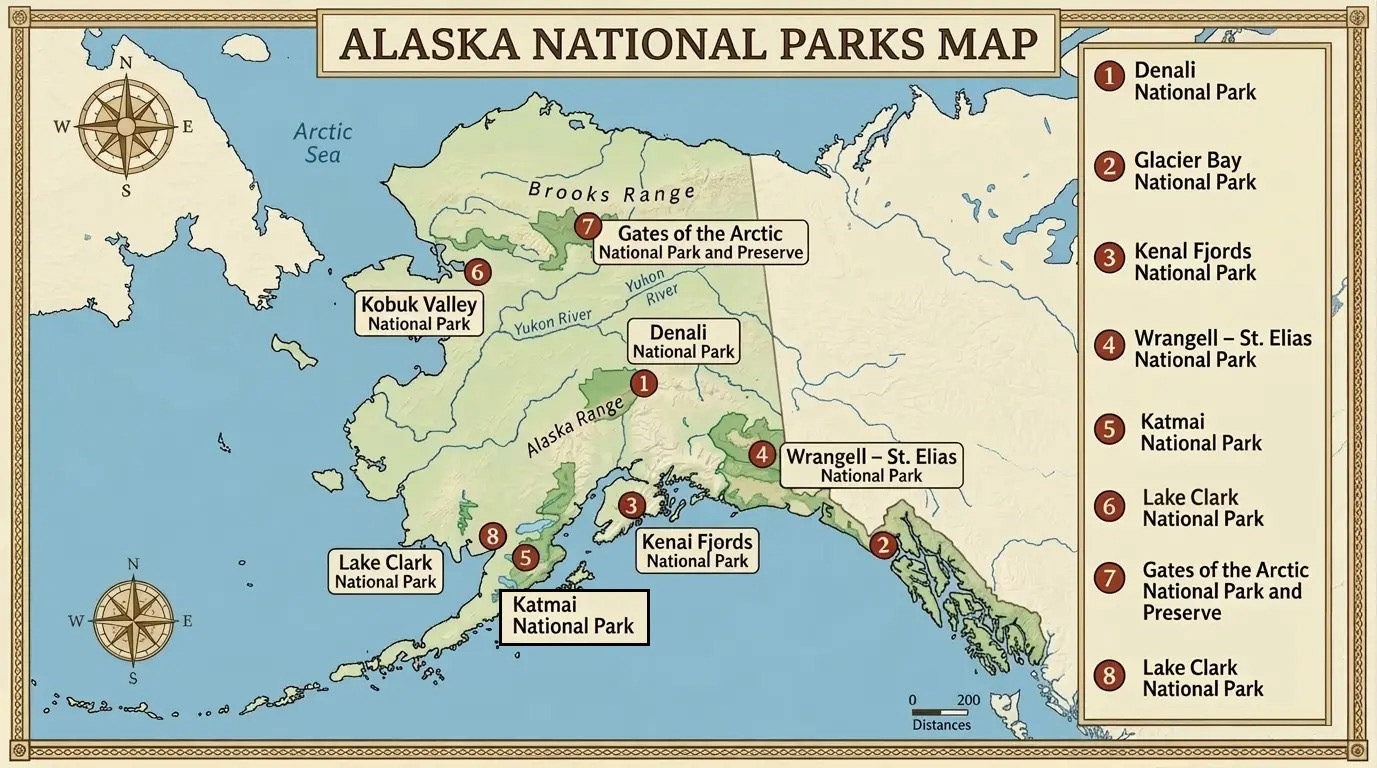
Alaska confounds expectations at every turn. It's the largest U.S. state by a margin that's almost embarrassing, larger than the next three largest states combined. It holds three of the country's geographic extremes: the northernmost point (Barrow, on the Arctic Ocean), the westernmost point (apparently), and, because the Aleutian Islands cross the 180° meridian, technically the easternmost point too. It has roughly 100,000 glaciers, more coastline than all other U.S. states put together, and eight national parks.
What it doesn't have much of is roads. The highway network is sparse by design, not neglect. Most of Alaska is simply untouched wilderness. We drove nearly every major road in the state over fifteen days, and that still left enormous blank spaces on the map. That feeling of frontier is not a marketing slogan. You feel it every time the pavement ends.
The Dalton Highway
There are roads, and then there is the Dalton Highway.
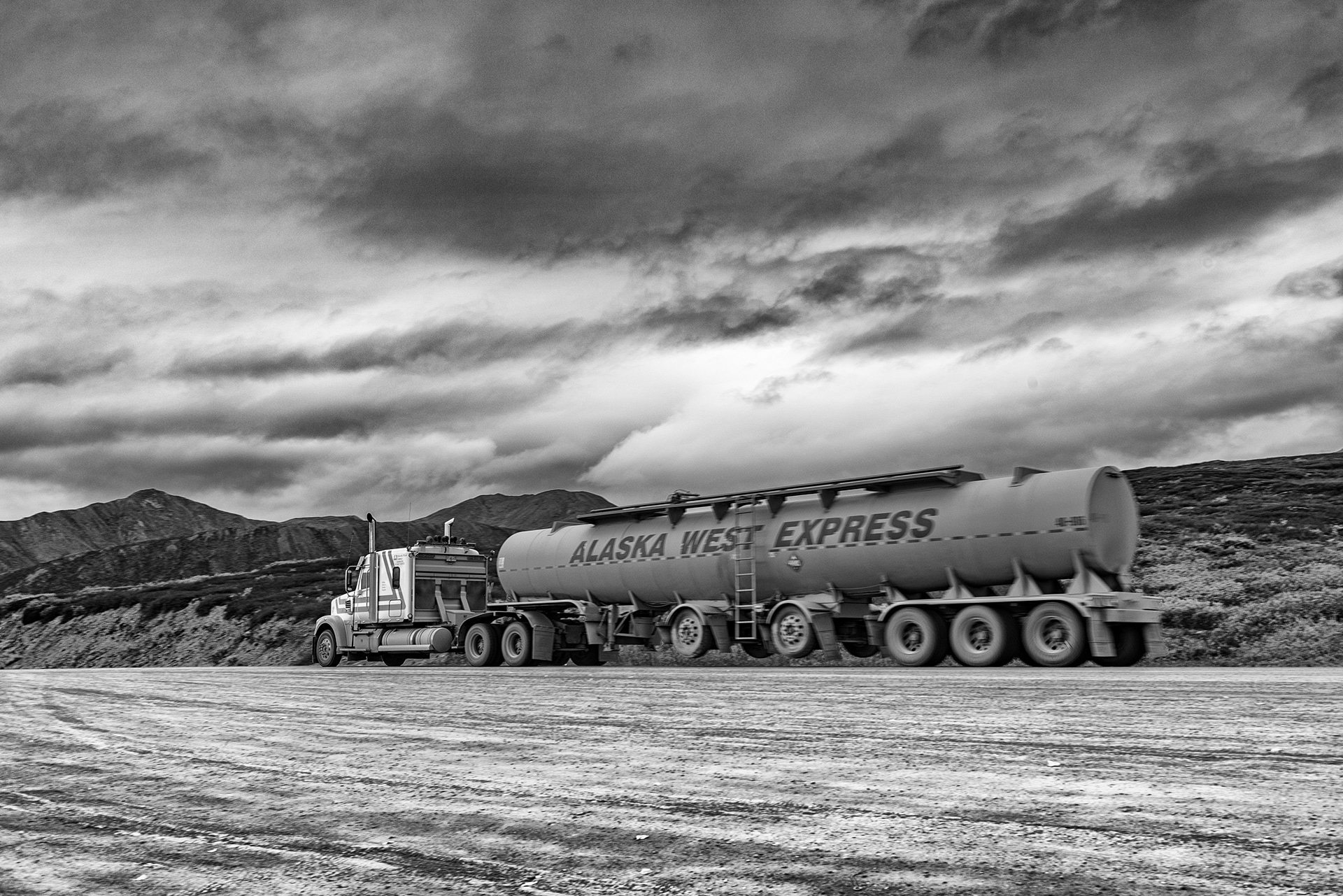
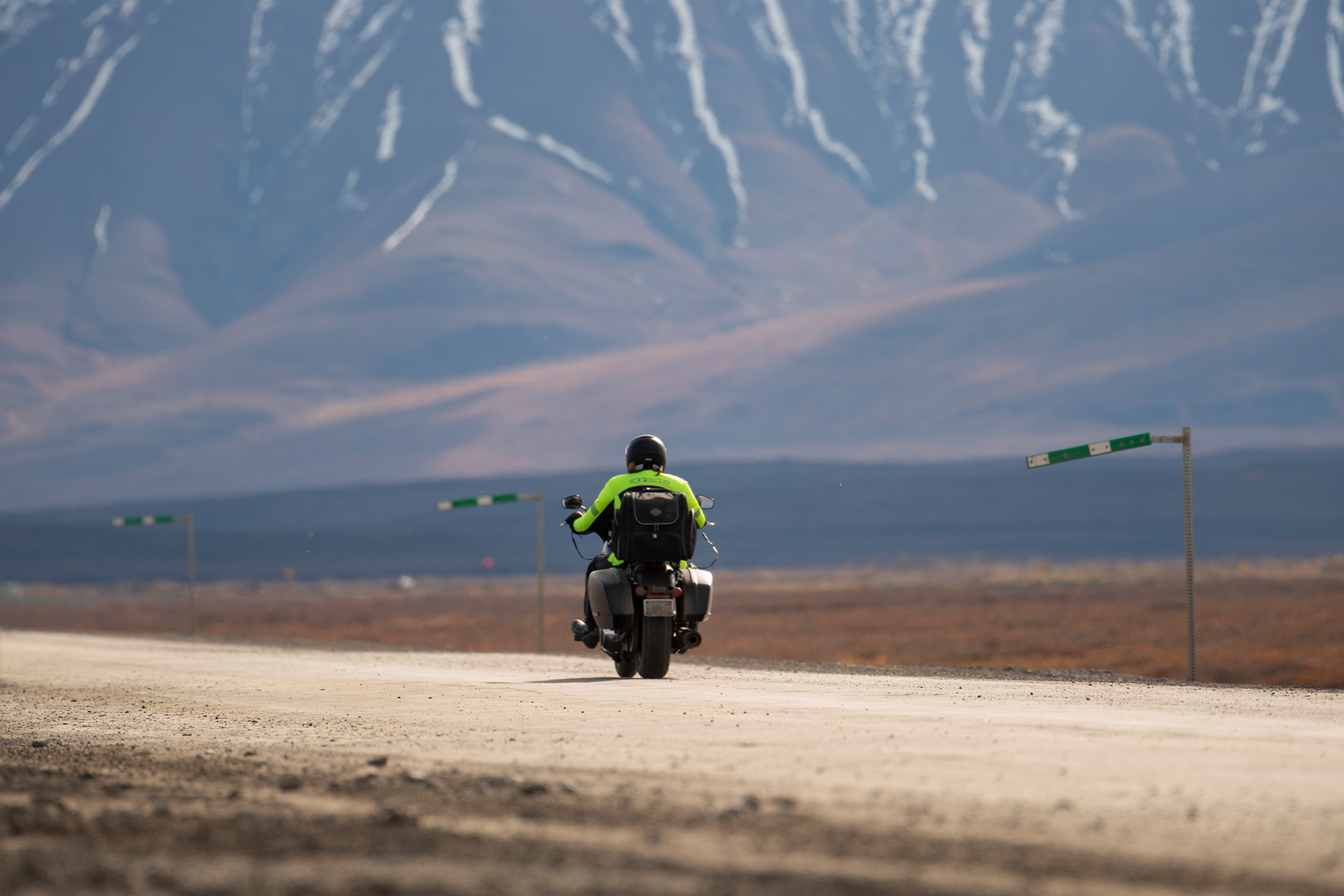
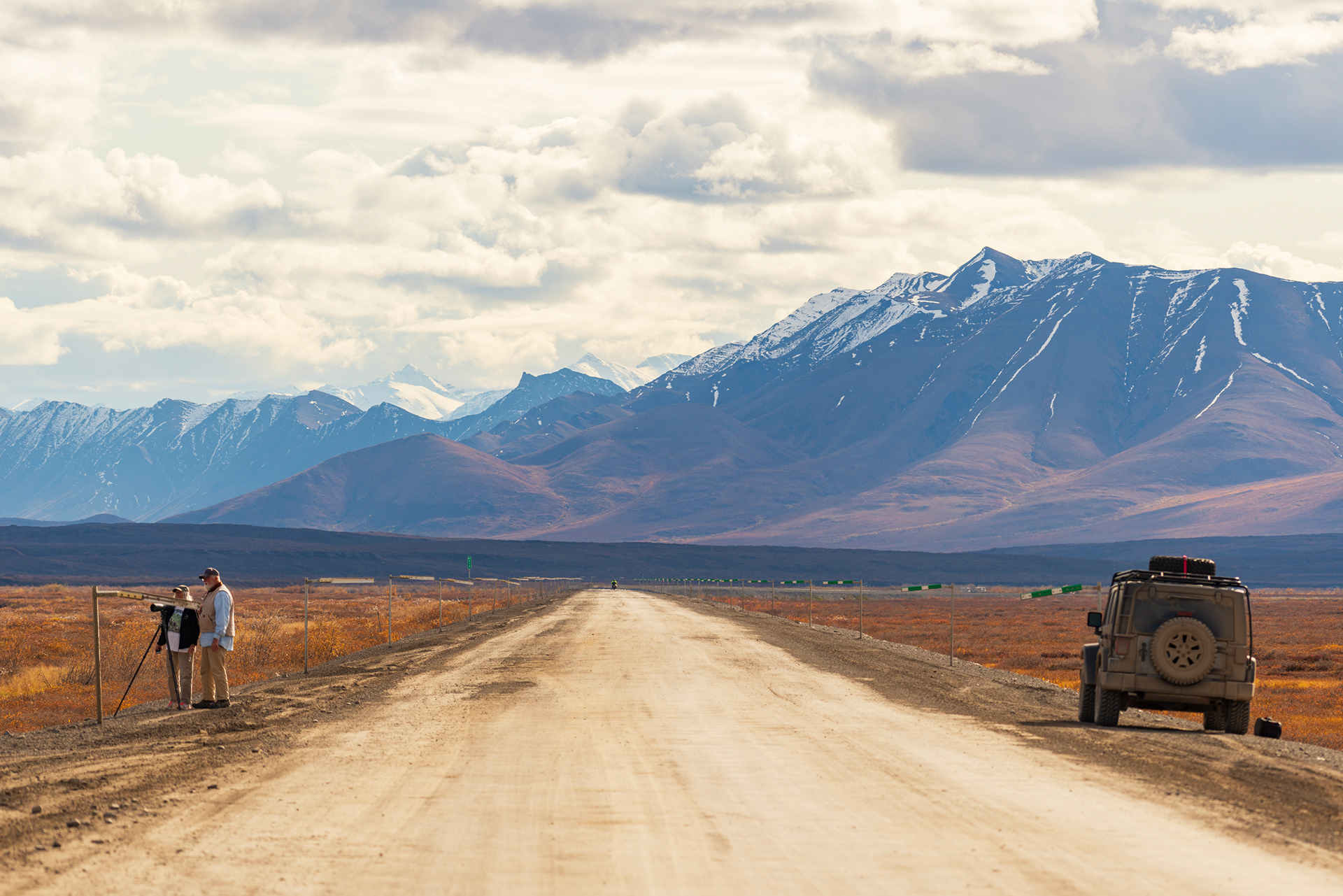
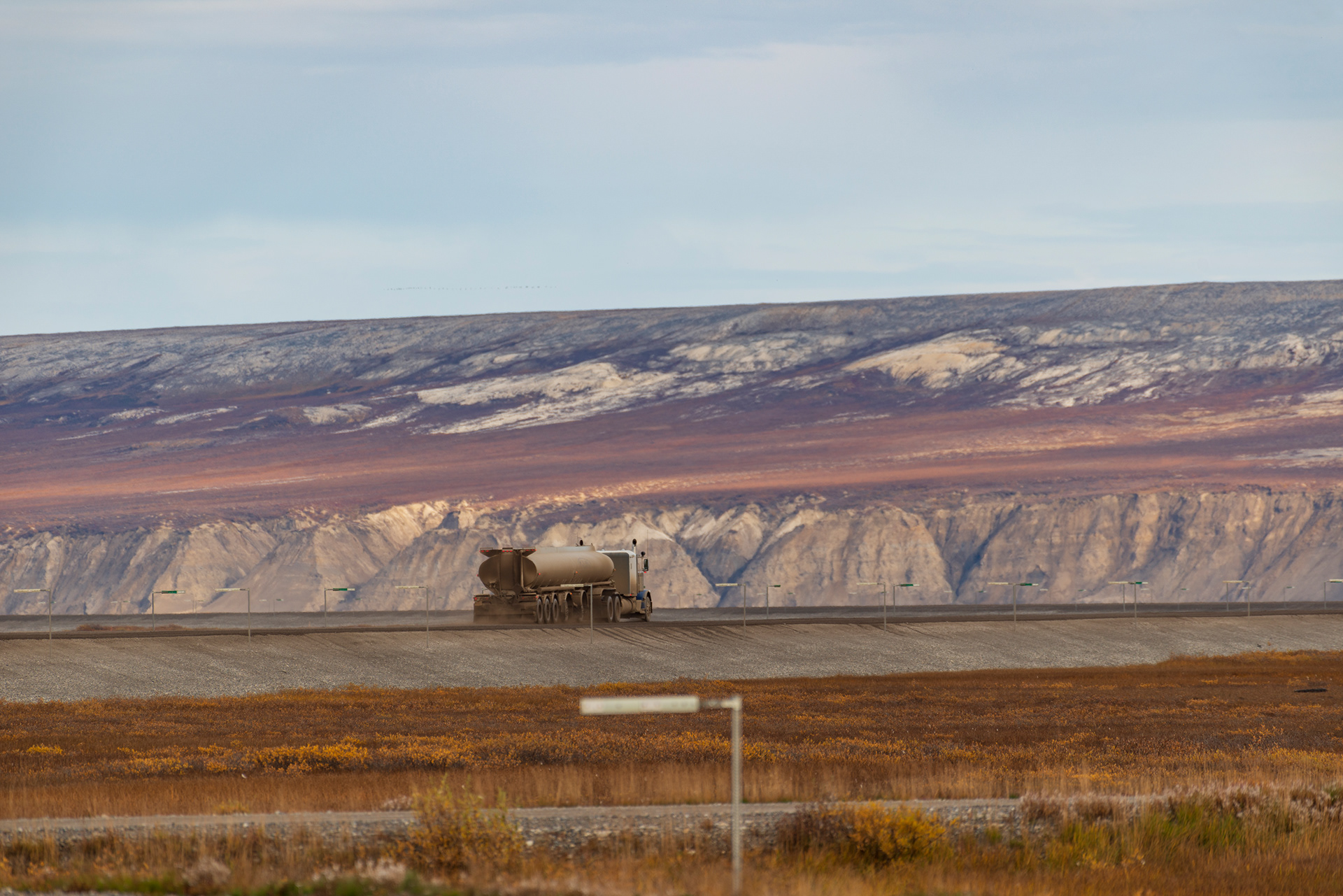
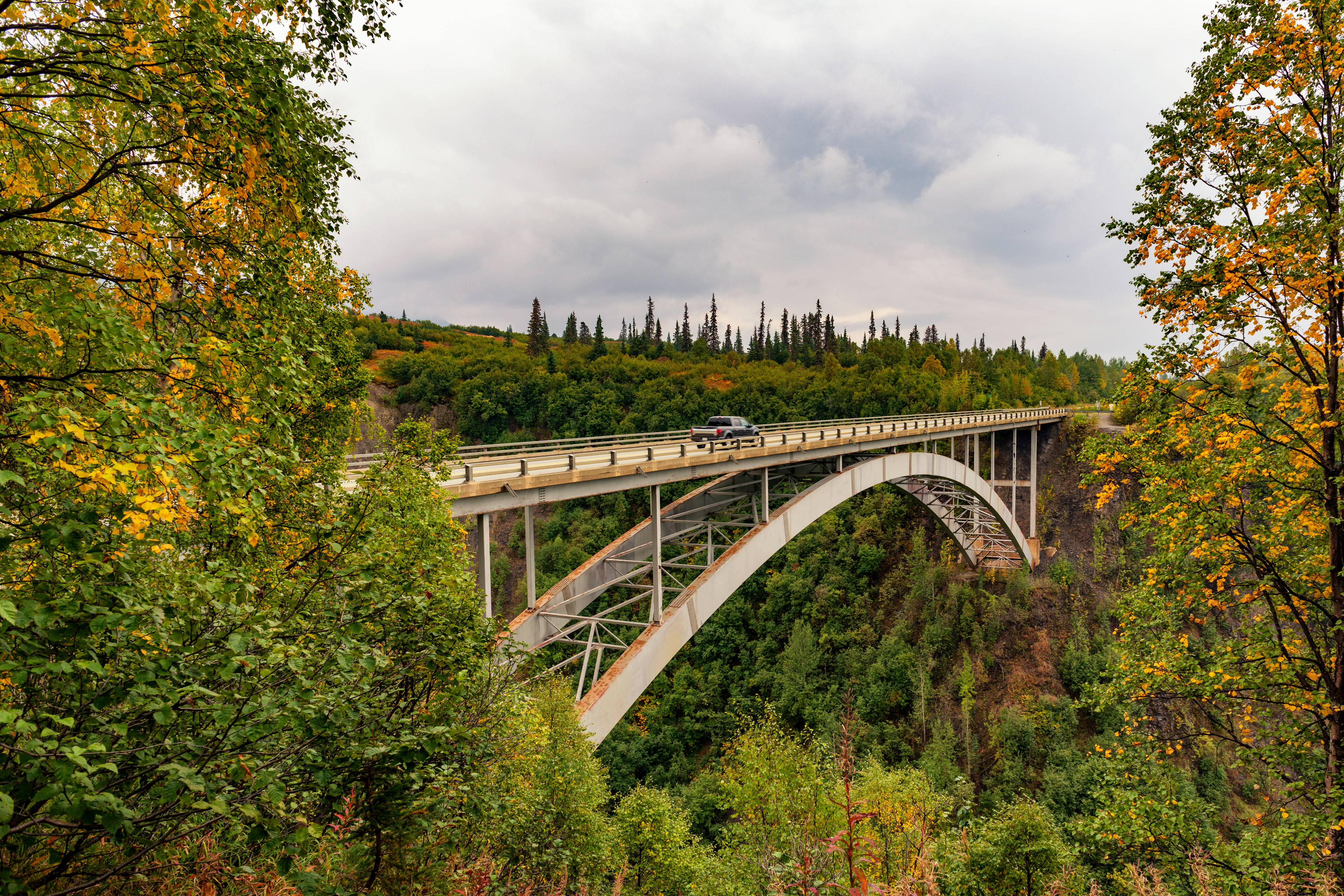
Its reputation reads like a dare: dubbed "the most dangerous road in the world" by a BBC documentary series; mostly unpaved; almost no services for 415 miles; home to eighteen-wheeler convoys hauling freight to an oil field at the top of the continent. It runs from Livengood Junction, just north of Fairbanks, straight north to Deadhorse and the Arctic Ocean, crossing the Arctic Circle en route, climbing over the Brooks Range at Atigun Pass (4,739 feet, the highest point on Alaska's road system), and descending into the vast, treeless North Slope. The Dalton Highway is one of only two roads in the Americas that reaches the Arctic Ocean (the other is the Dempster Highway in Canada's Yukon).
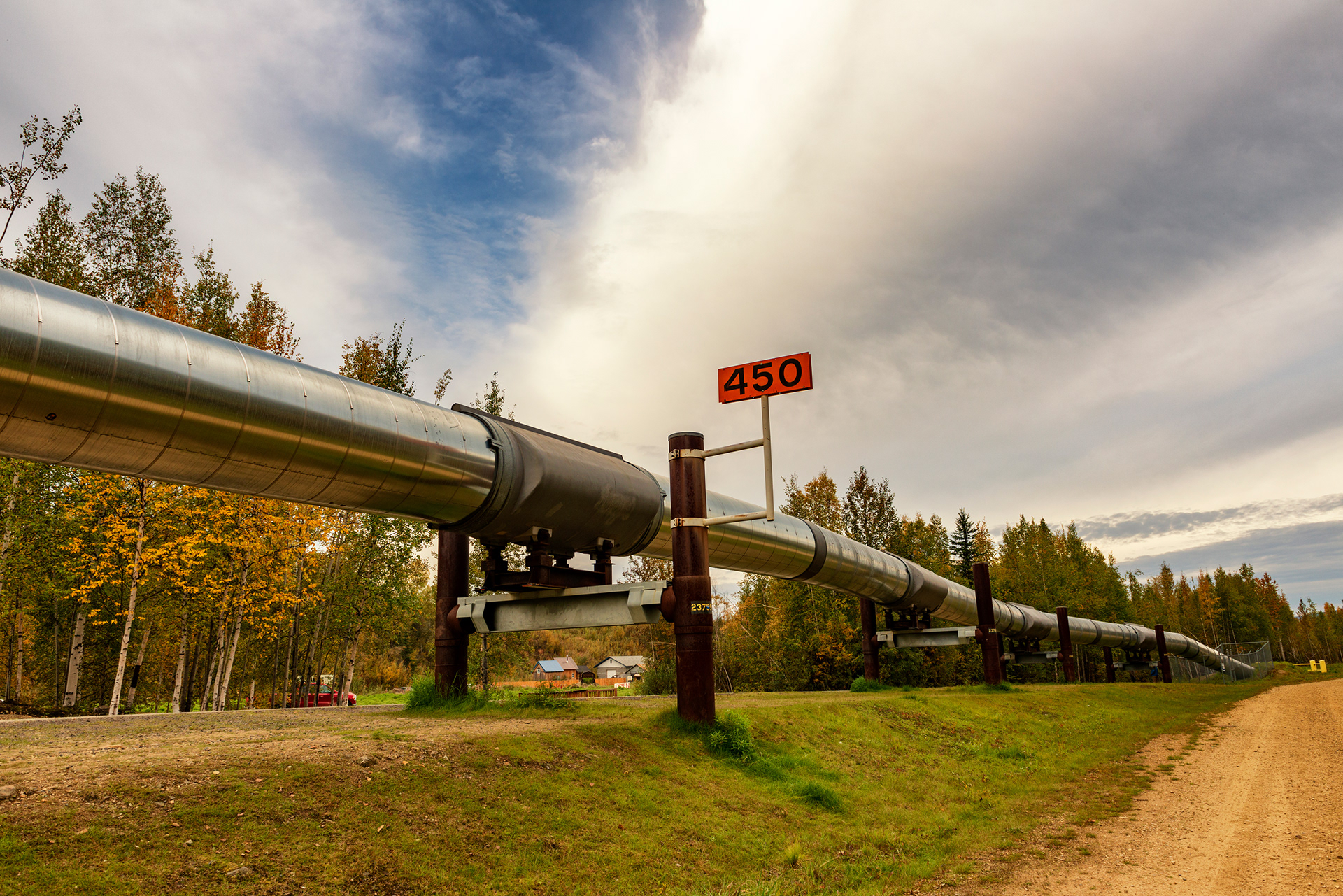
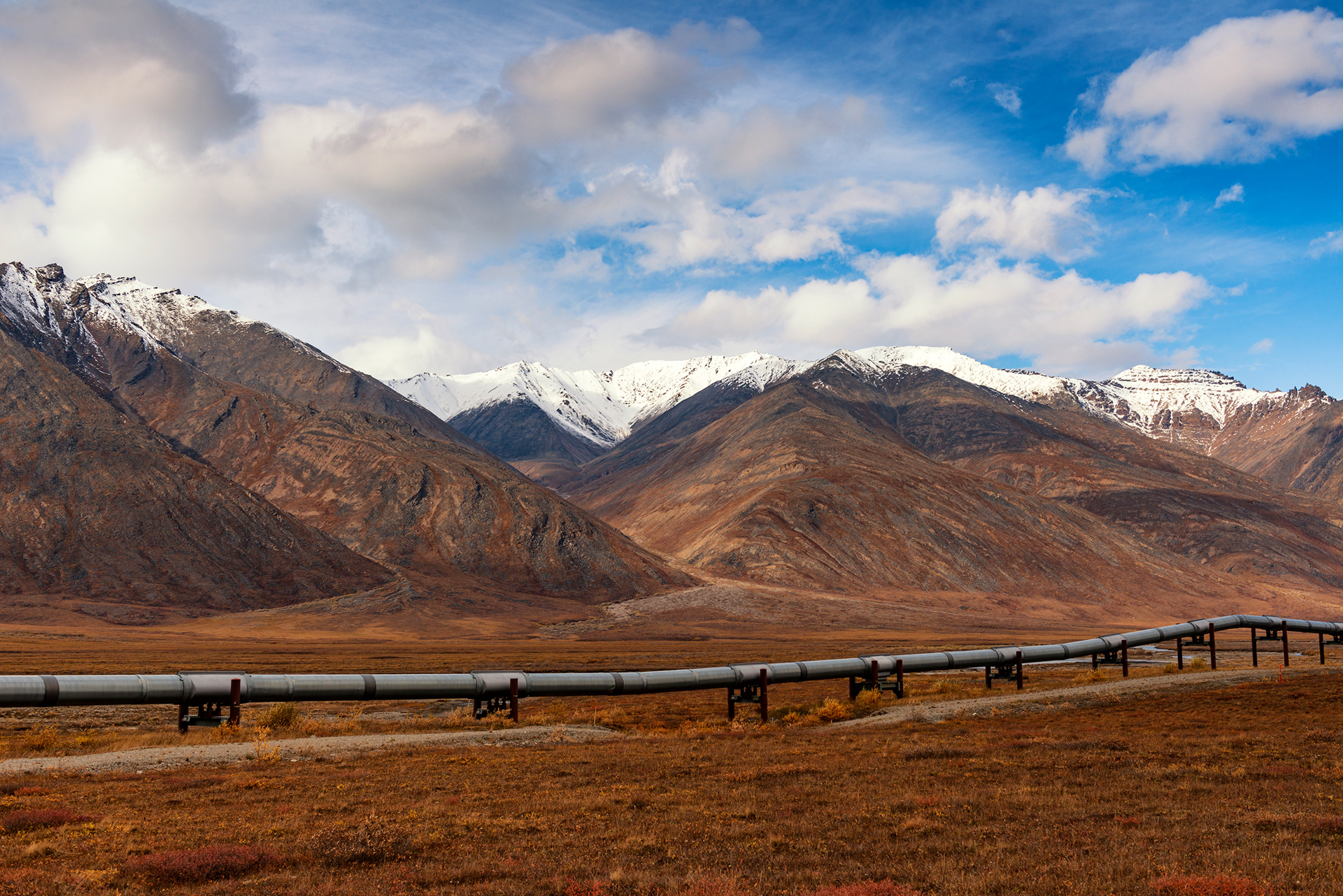
The Dalton was built for black gold. In 1968, enormous oil reserves were discovered near Prudhoe Bay on the Arctic Coast, and the U.S. government, facing an energy crisis, commissioned an 800-mile pipeline from the fields to the southern port of Valdez. Construction on the Trans-Alaska Pipeline began in 1974; the highway was hacked out of the wilderness in just five months to support it. The pipeline itself took three years. Both opened in 1977.
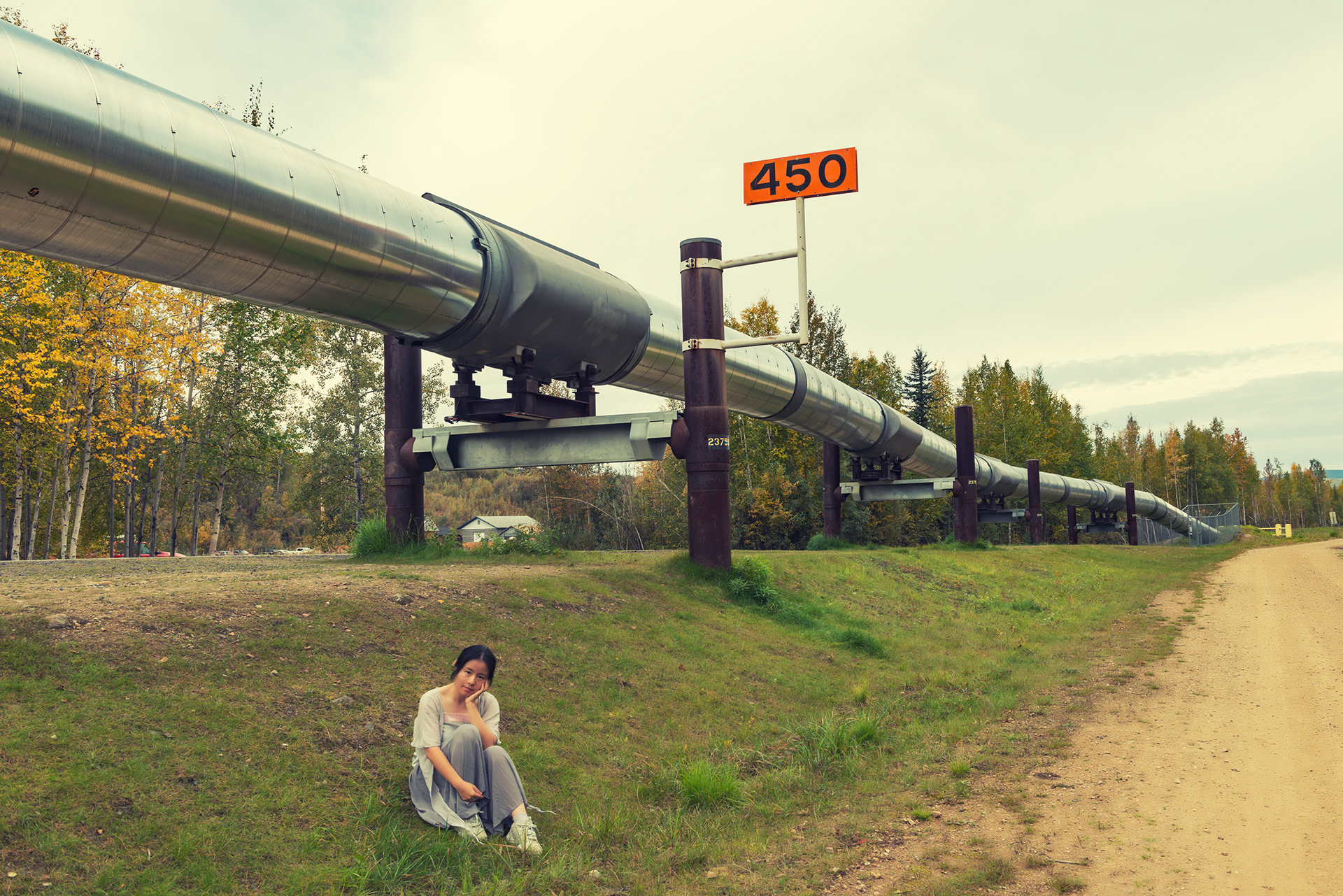
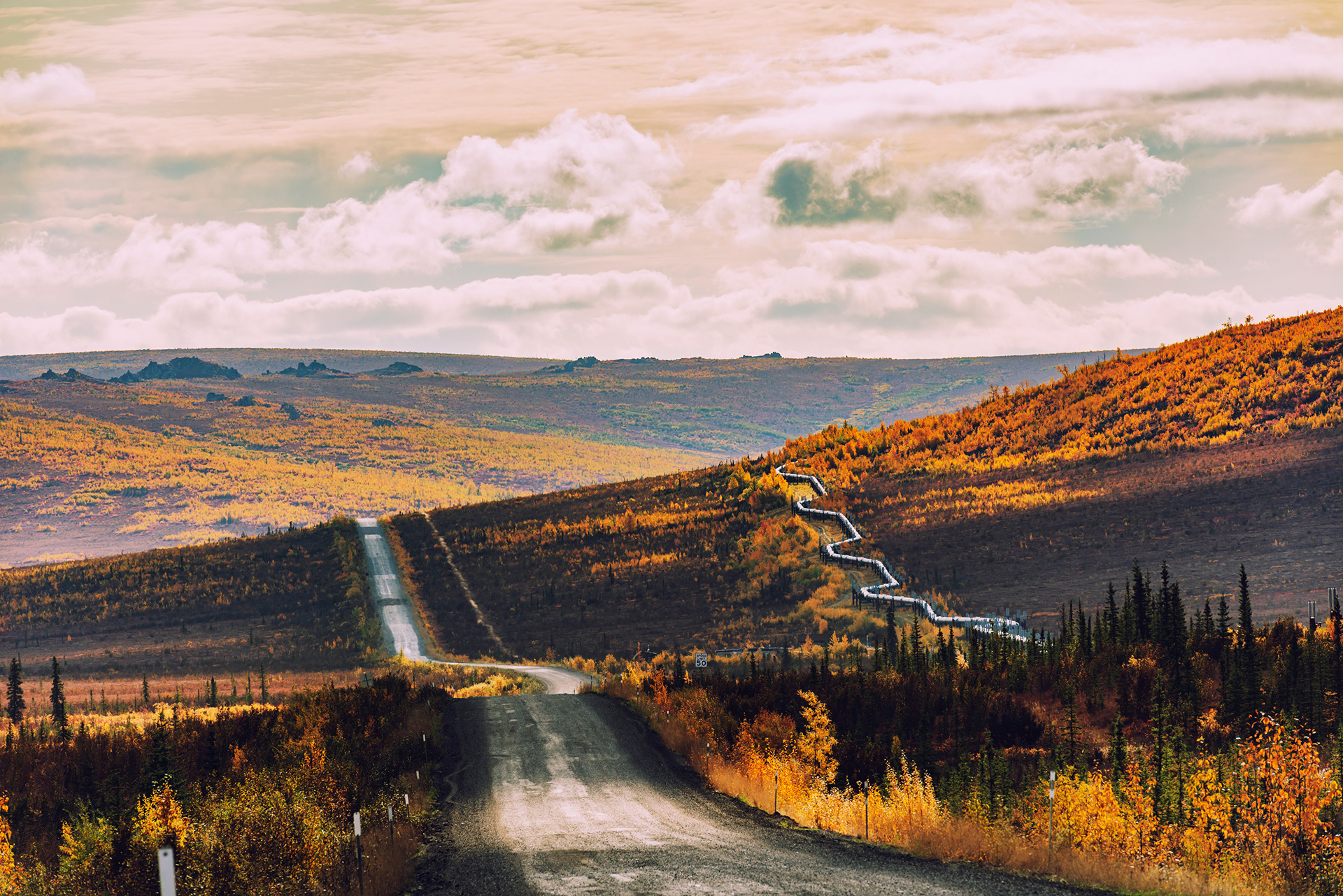
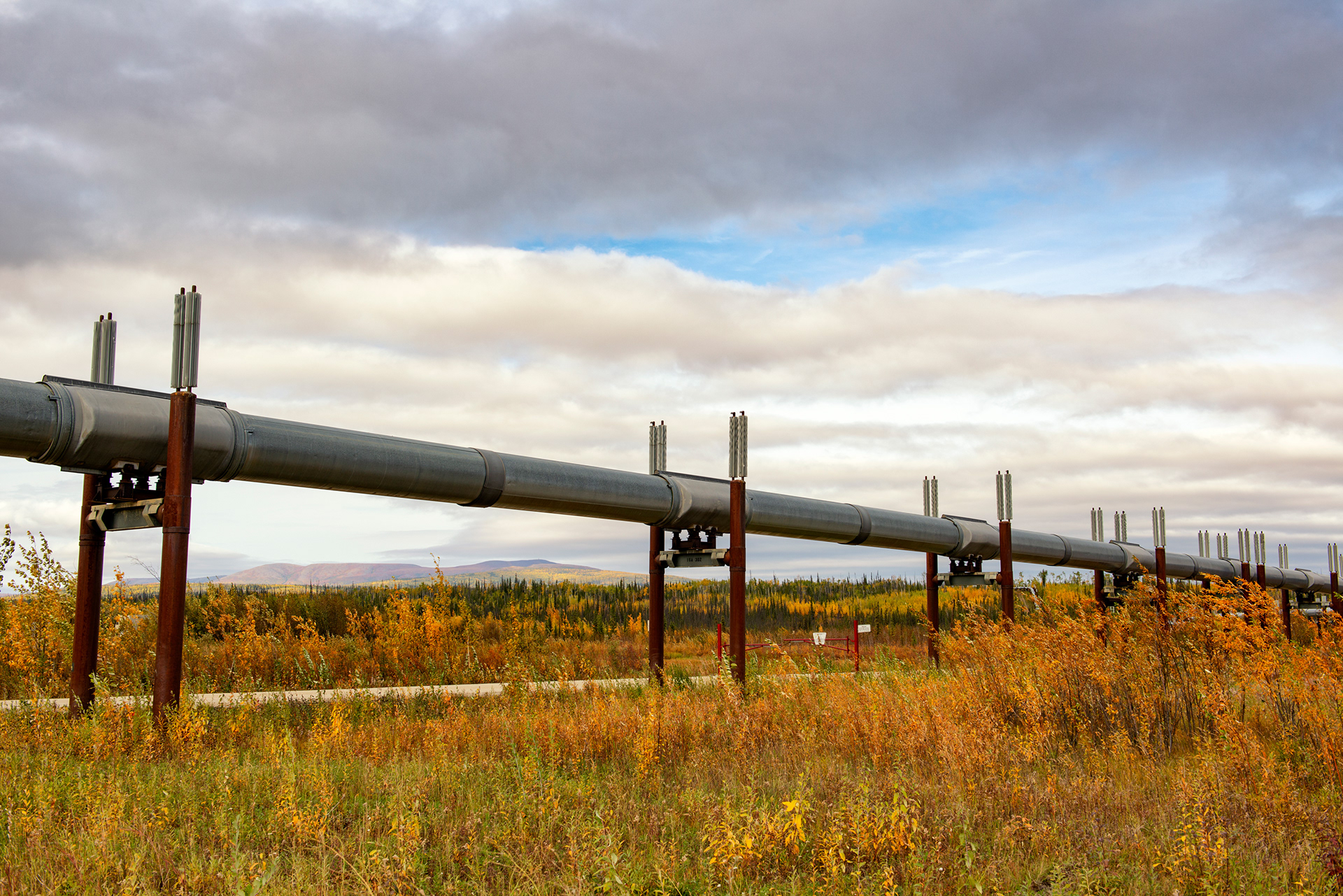
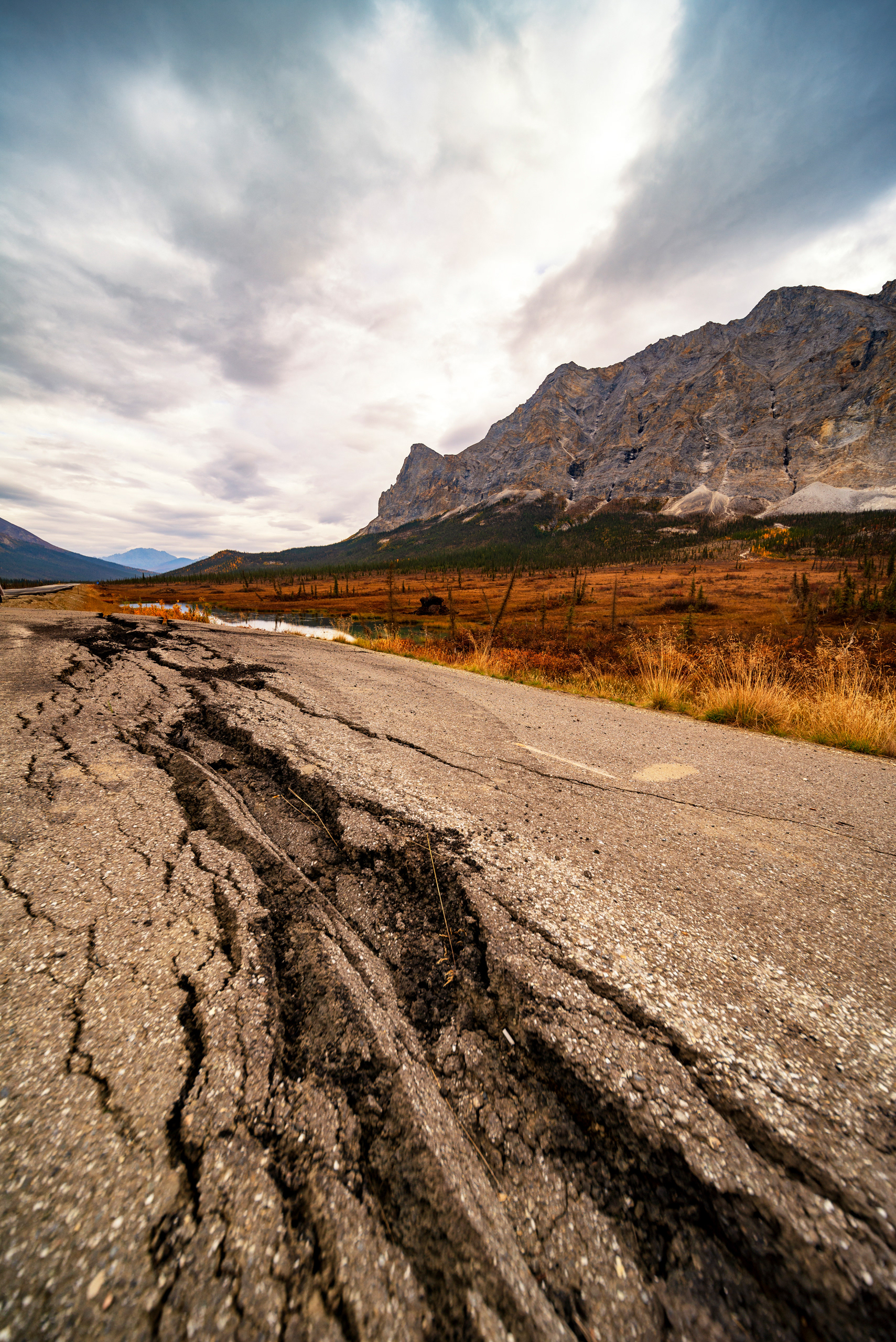
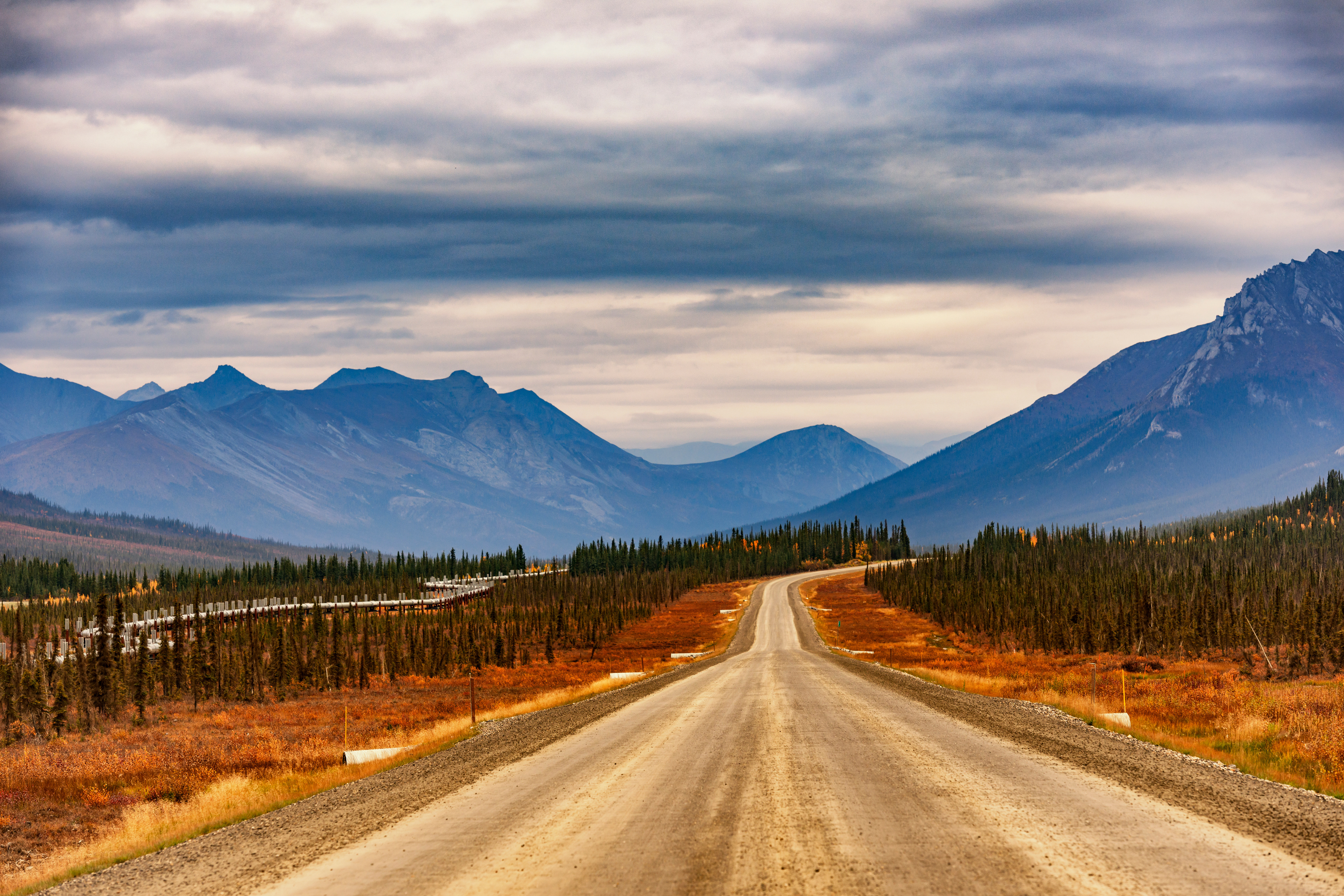
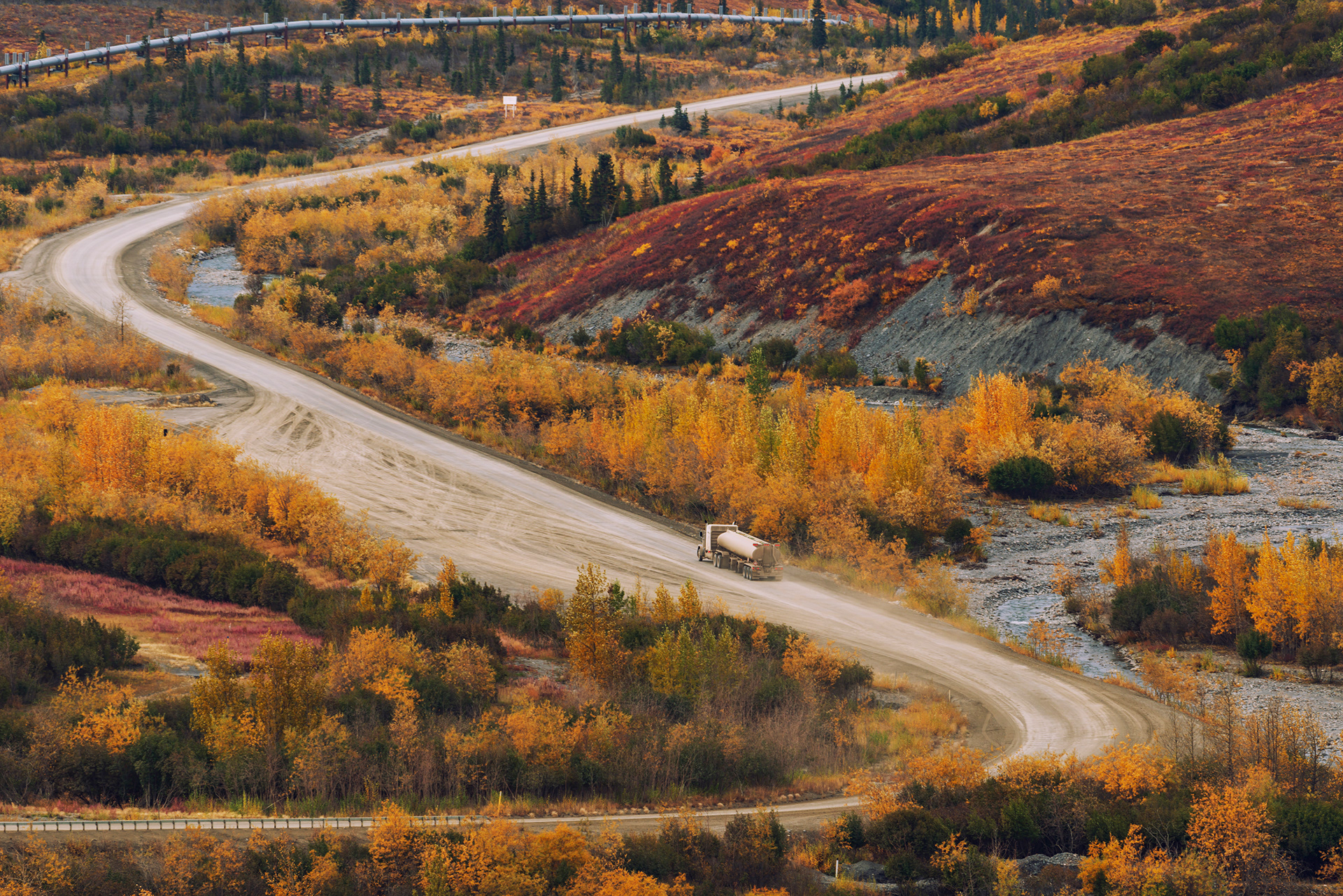
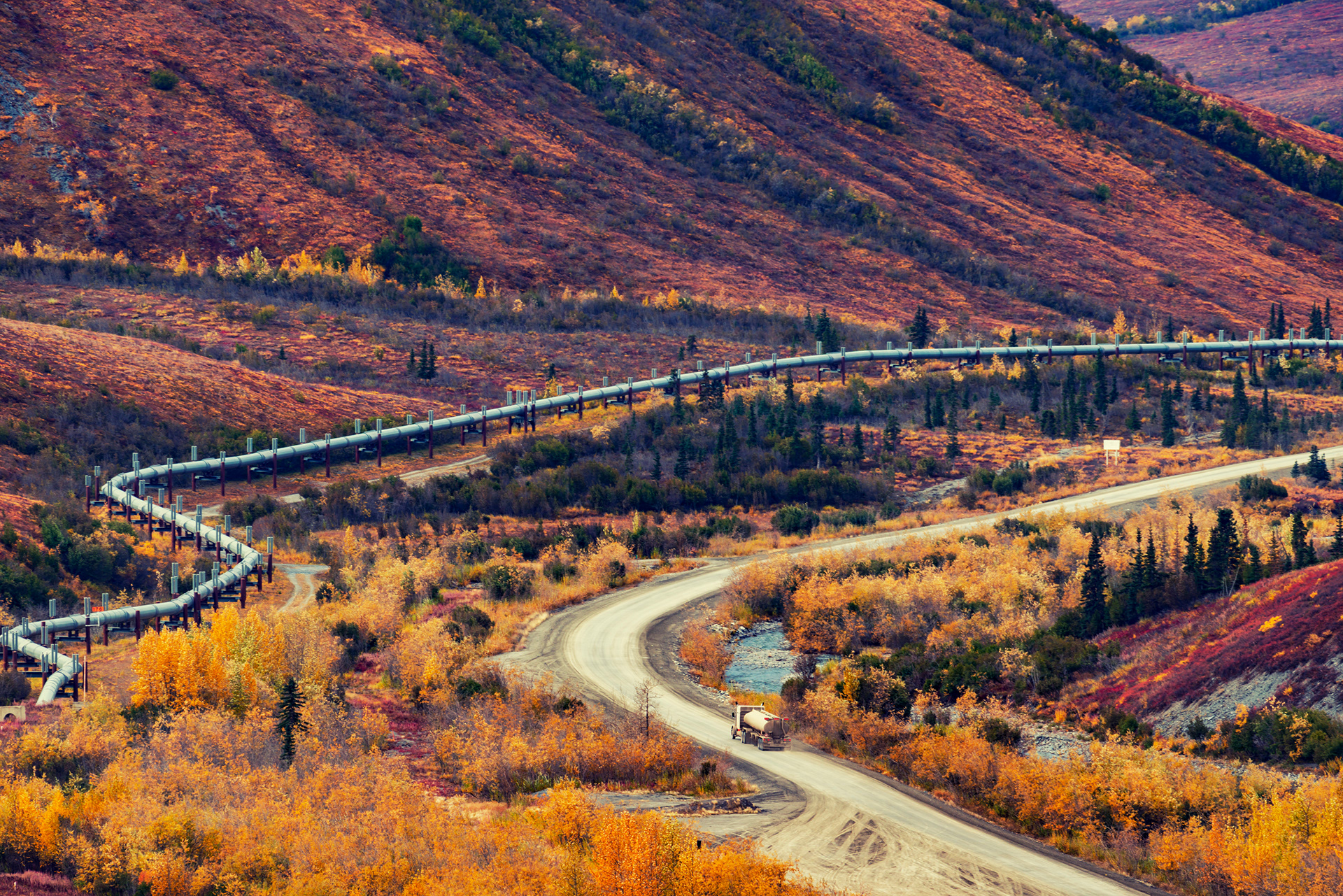
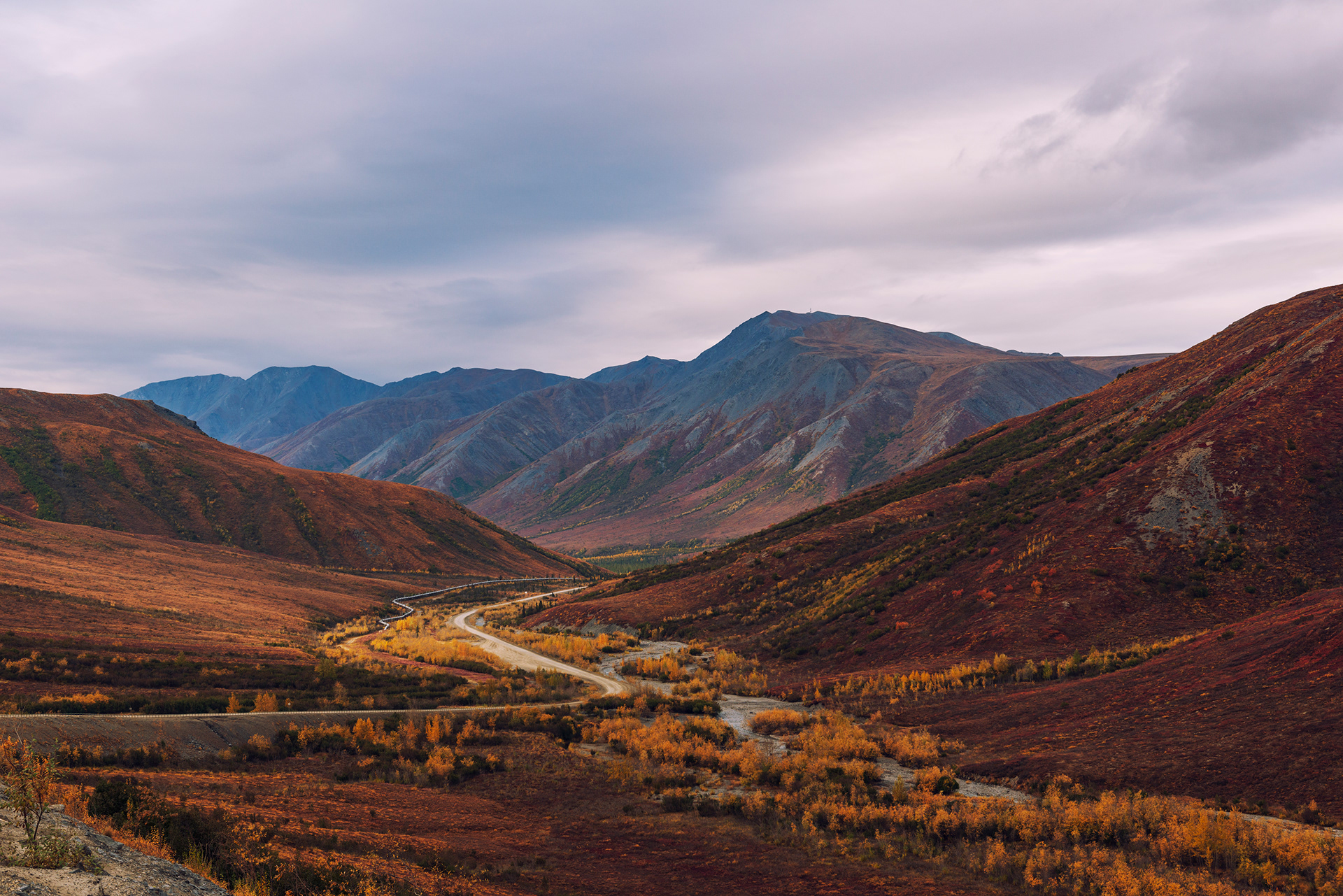
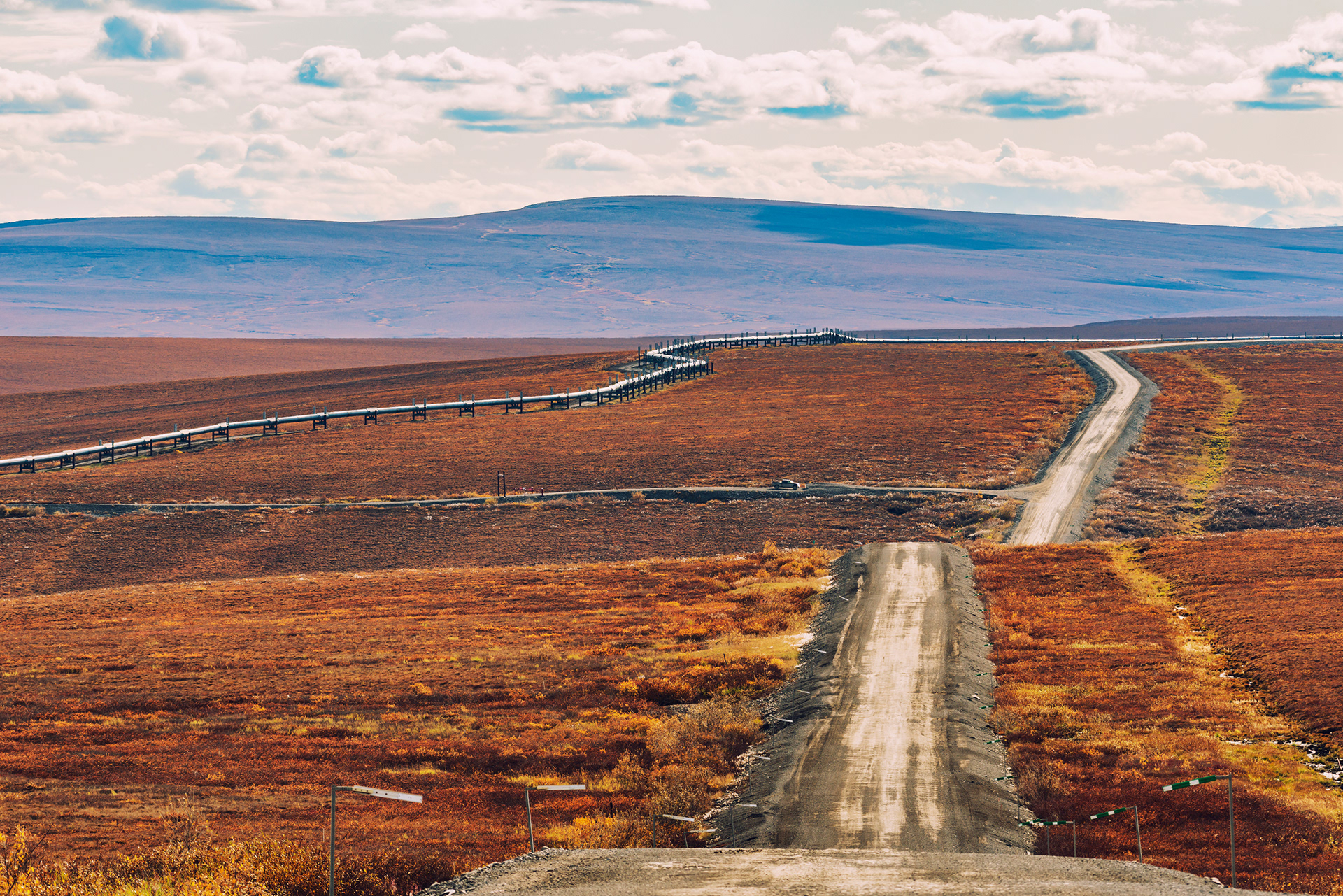
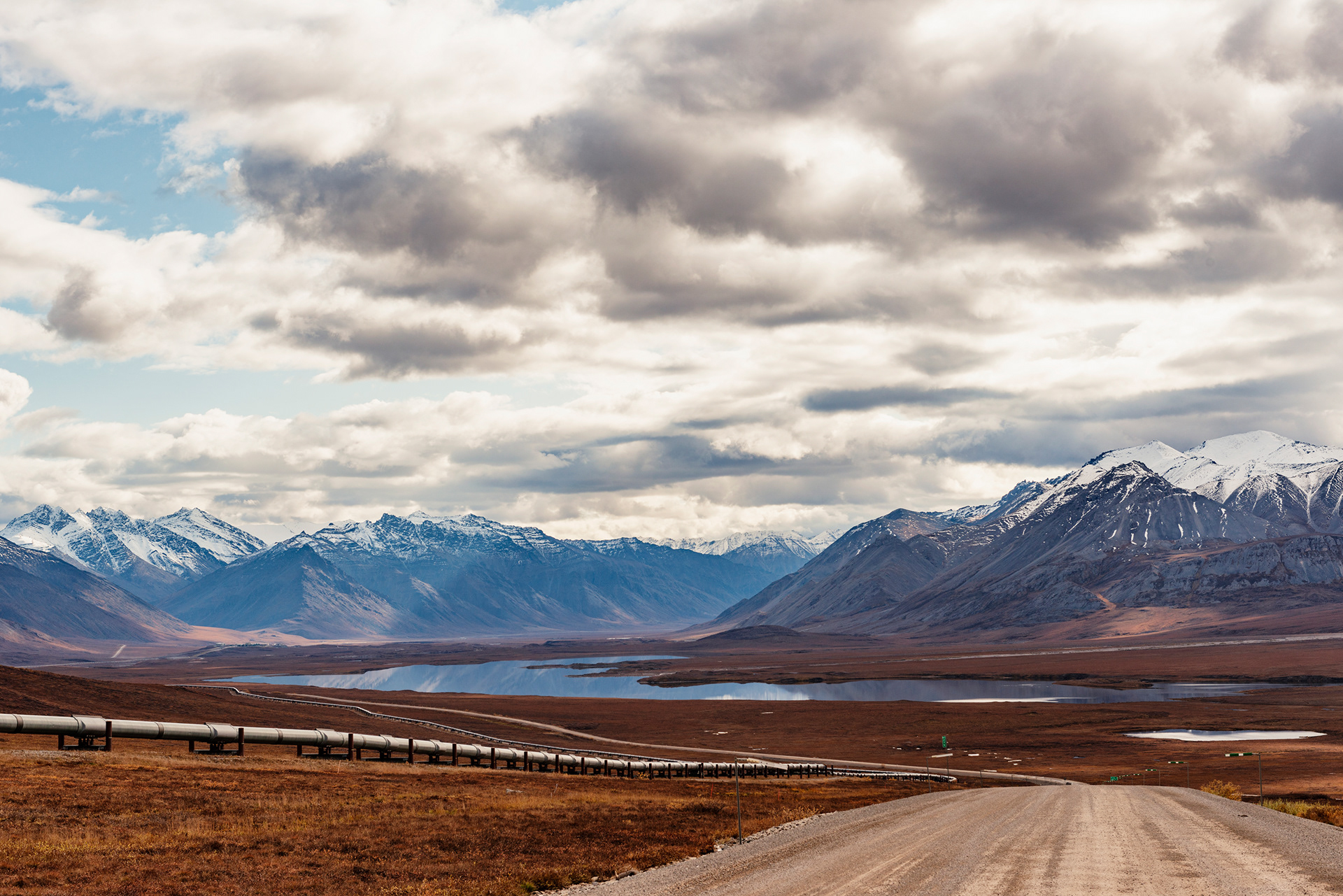
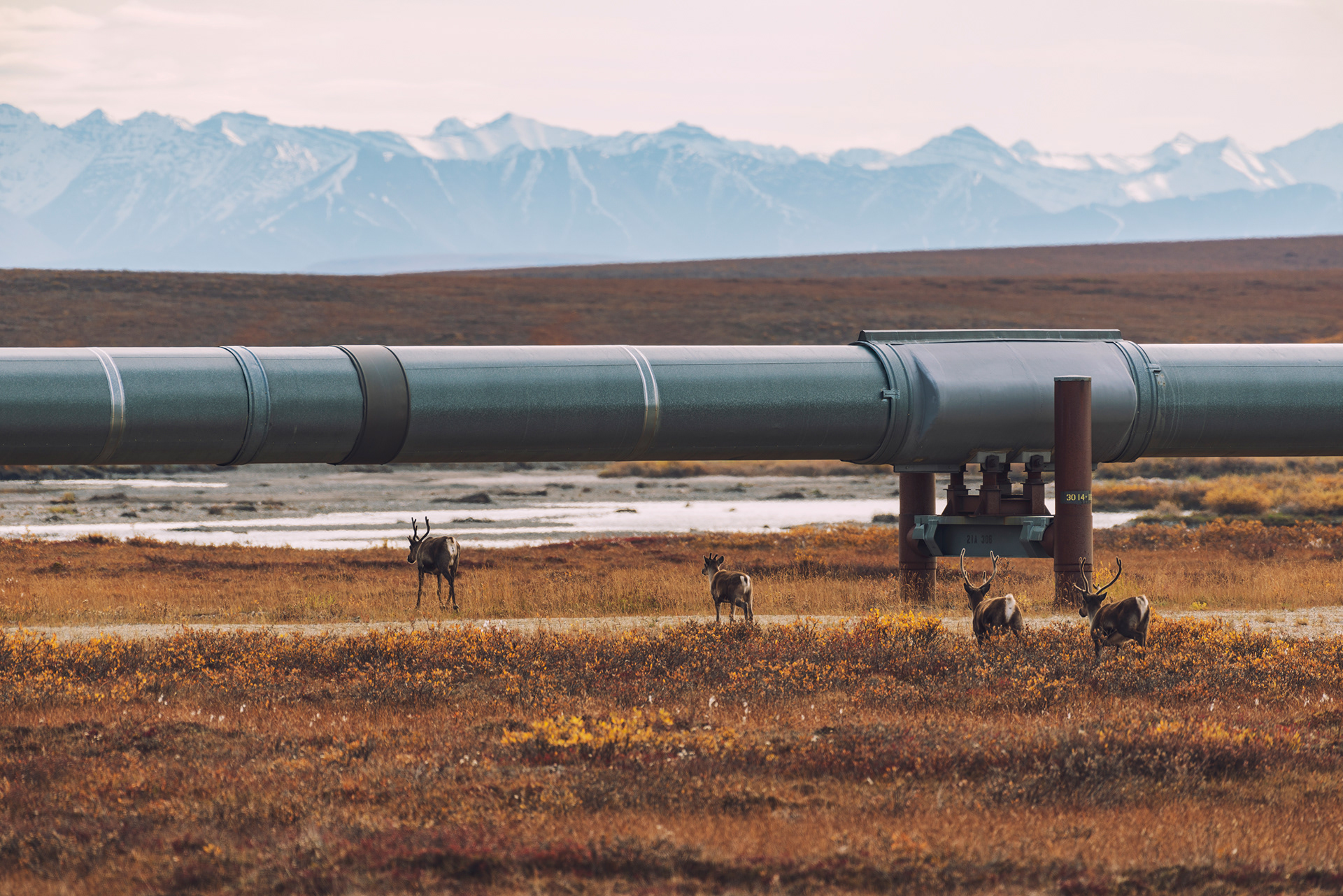
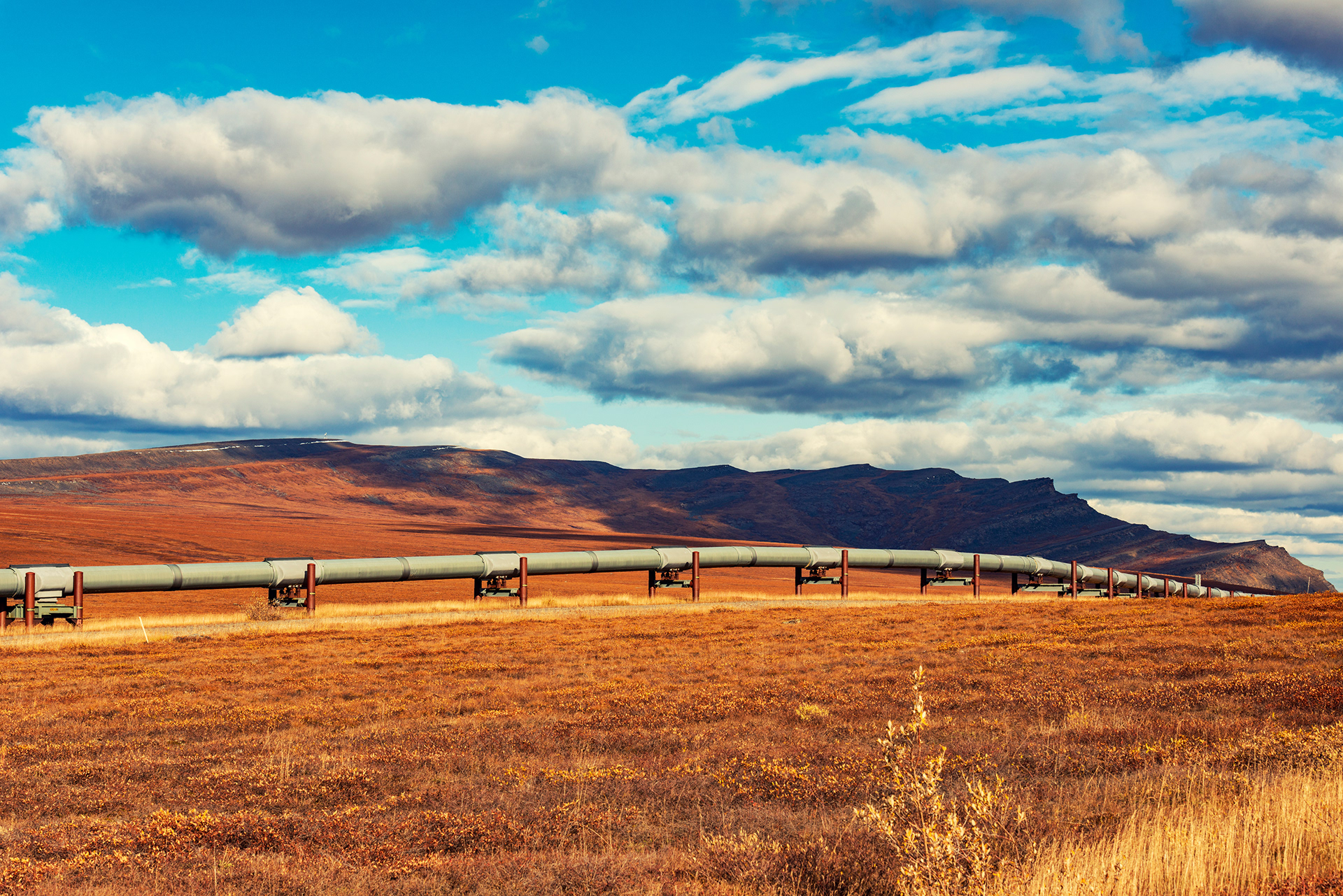
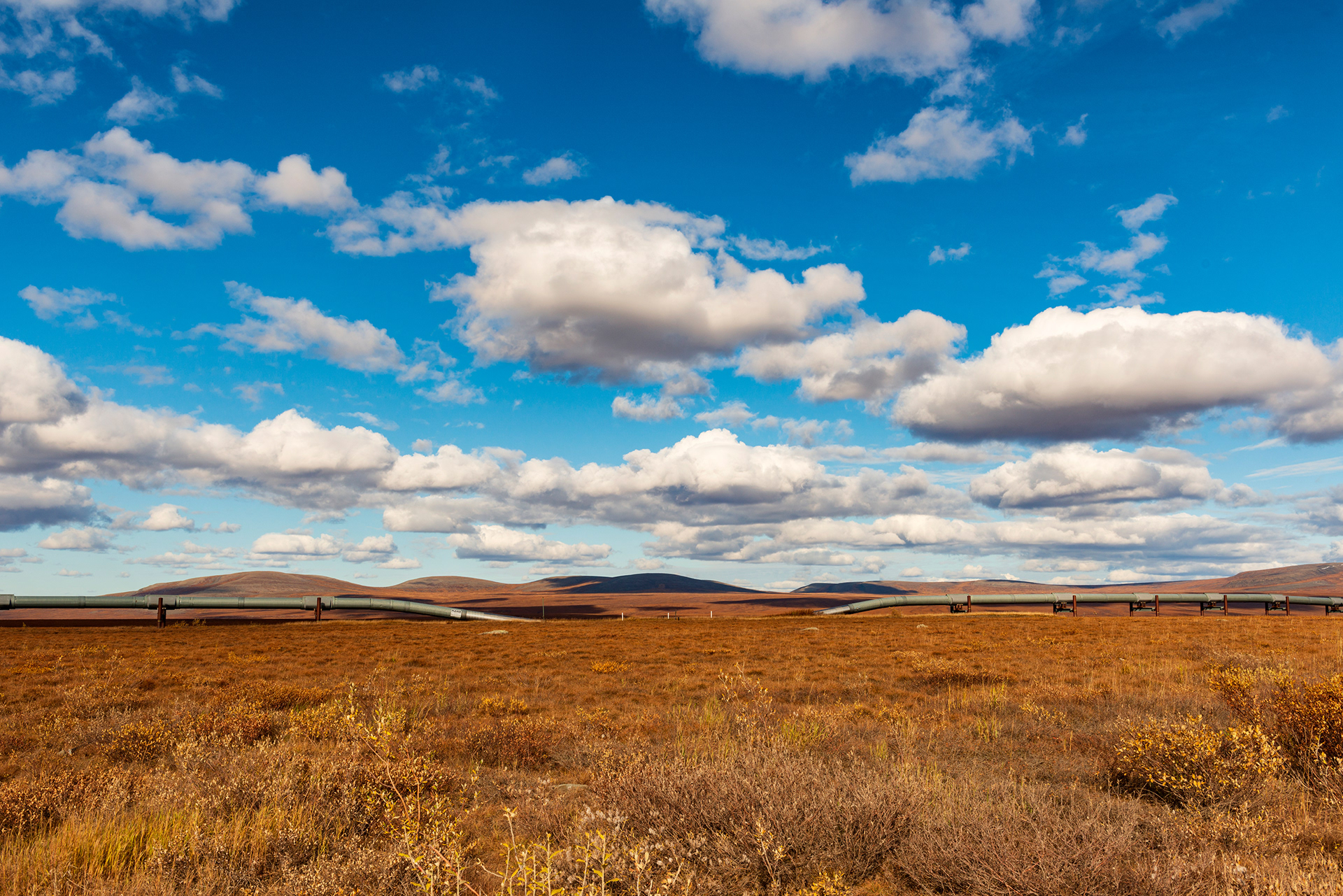
Driving the Dalton today, the pipeline is your constant companion. It parallels the road for much of the route, sometimes running overhead on elevated supports (which allow animals to pass beneath) and sometimes buried underground (where it crosses permafrost that can't support the heat of the oil). At intervals, pump stations push the crude southward. The whole system moves roughly 500,000 barrels per day.
What you need to know before you go:
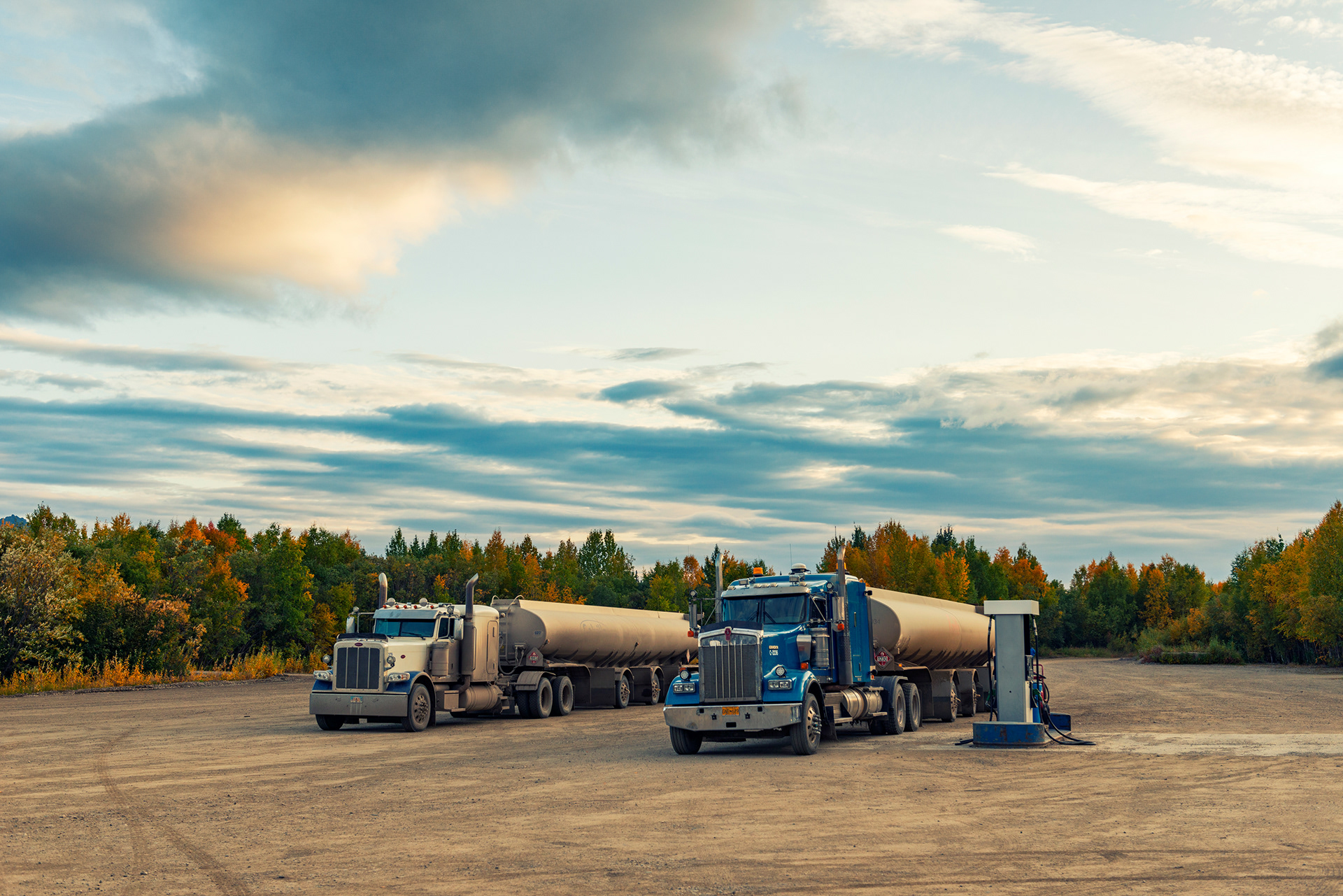
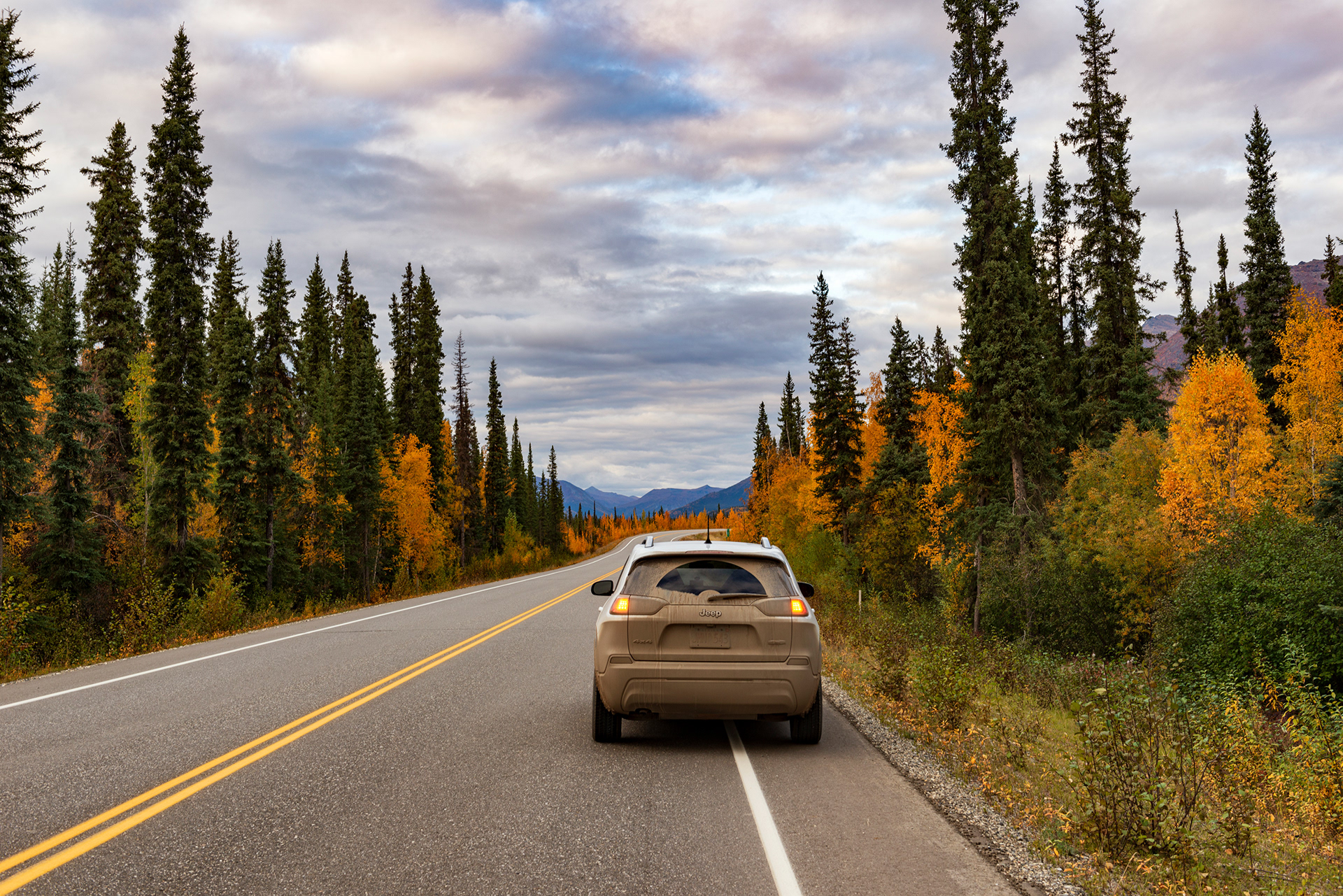
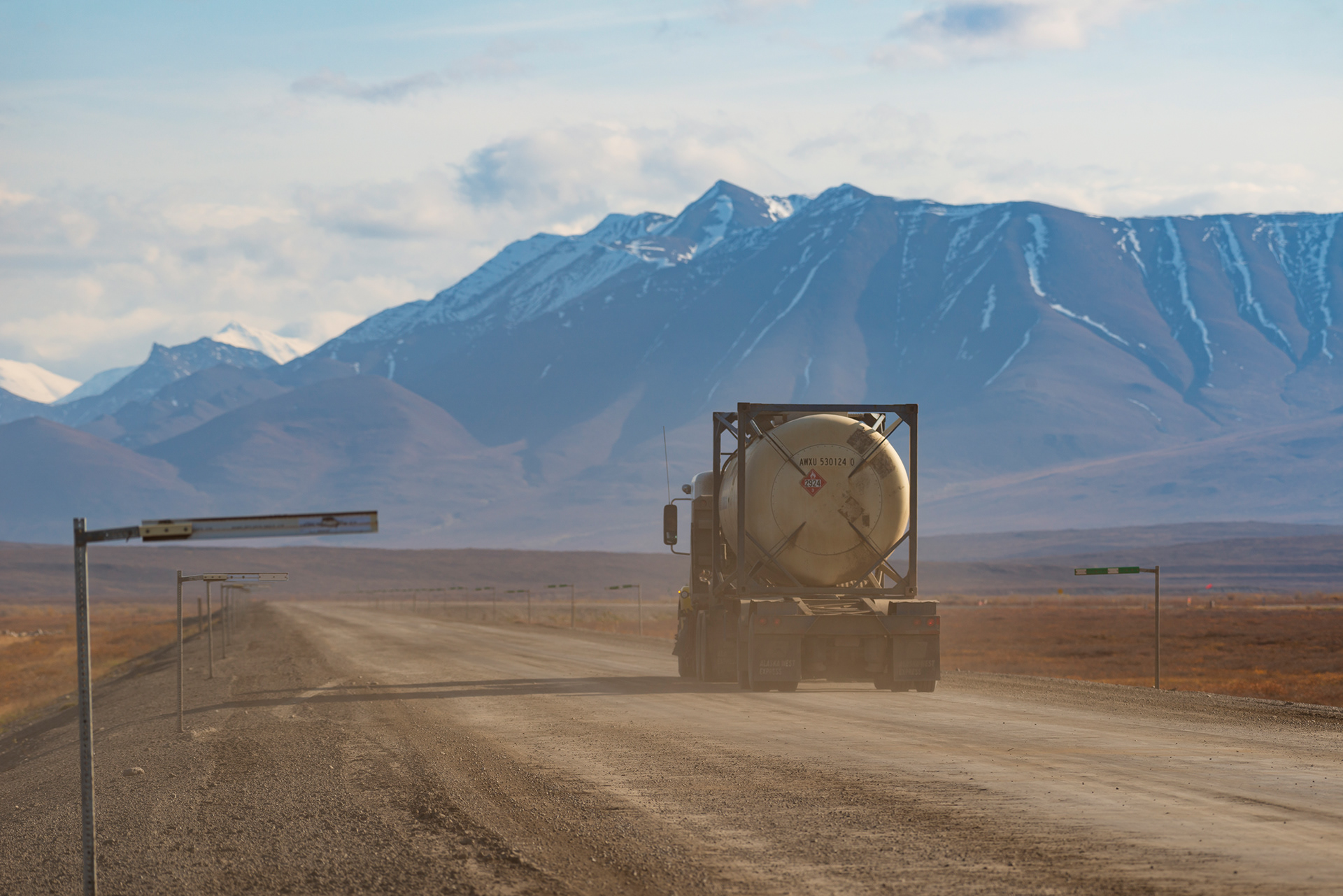
The Dalton allows no margin for improvisation. The only fuel stops are at Yukon Crossing (mile 56), Coldfoot (mile 175), and Deadhorse at the end. Fill up at every one — no exceptions! Most major rental car companies prohibit their vehicles on this road; you'll need a local outfitter who specifically allows unpaved highway driving. A 4WD SUV is mandatory. When eighteen-wheelers blow past at highway speed, they kick up gravel that can crack a windshield, so give them wide berth and slow down. And carry more water, food, and cold-weather layers than you think you need.
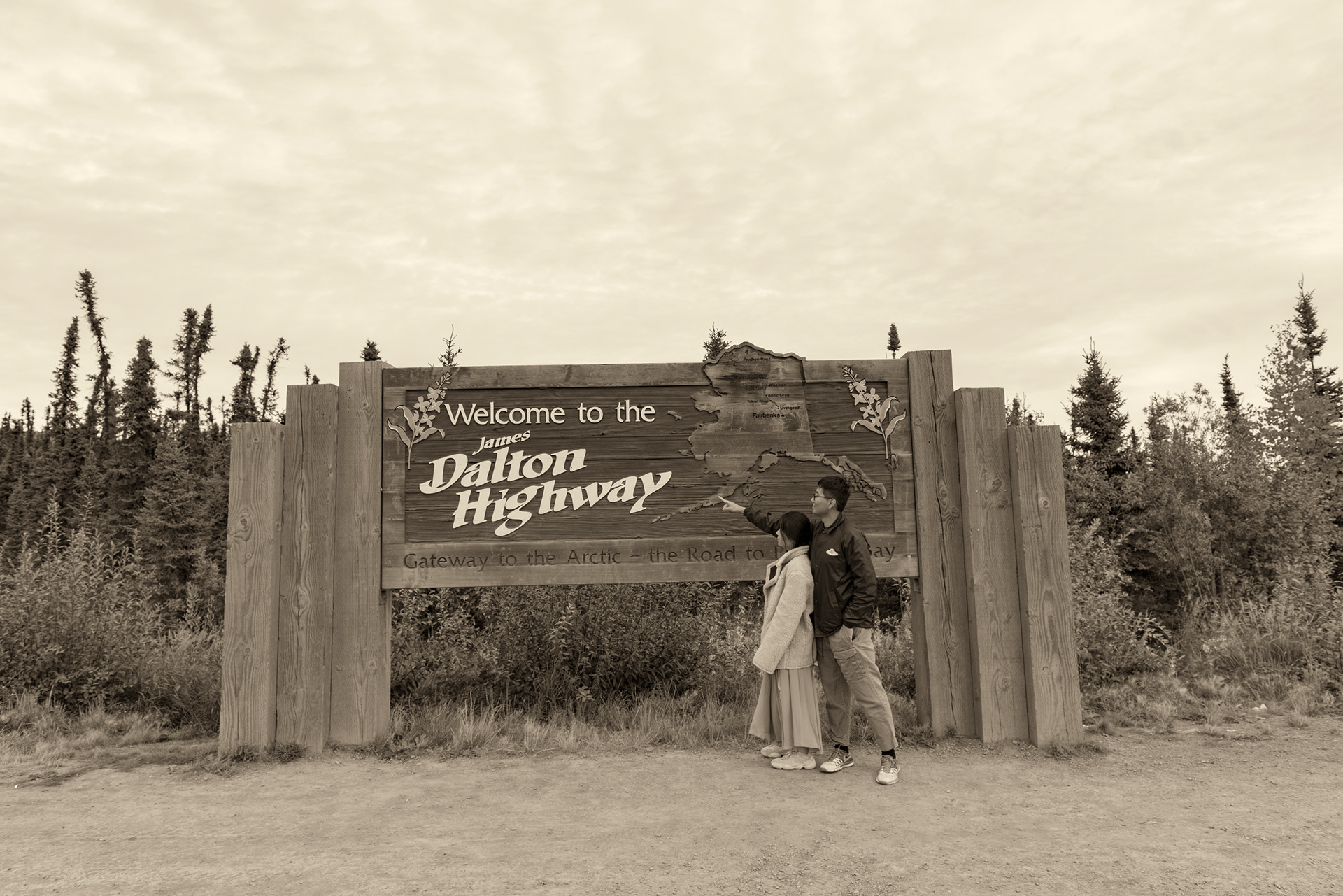
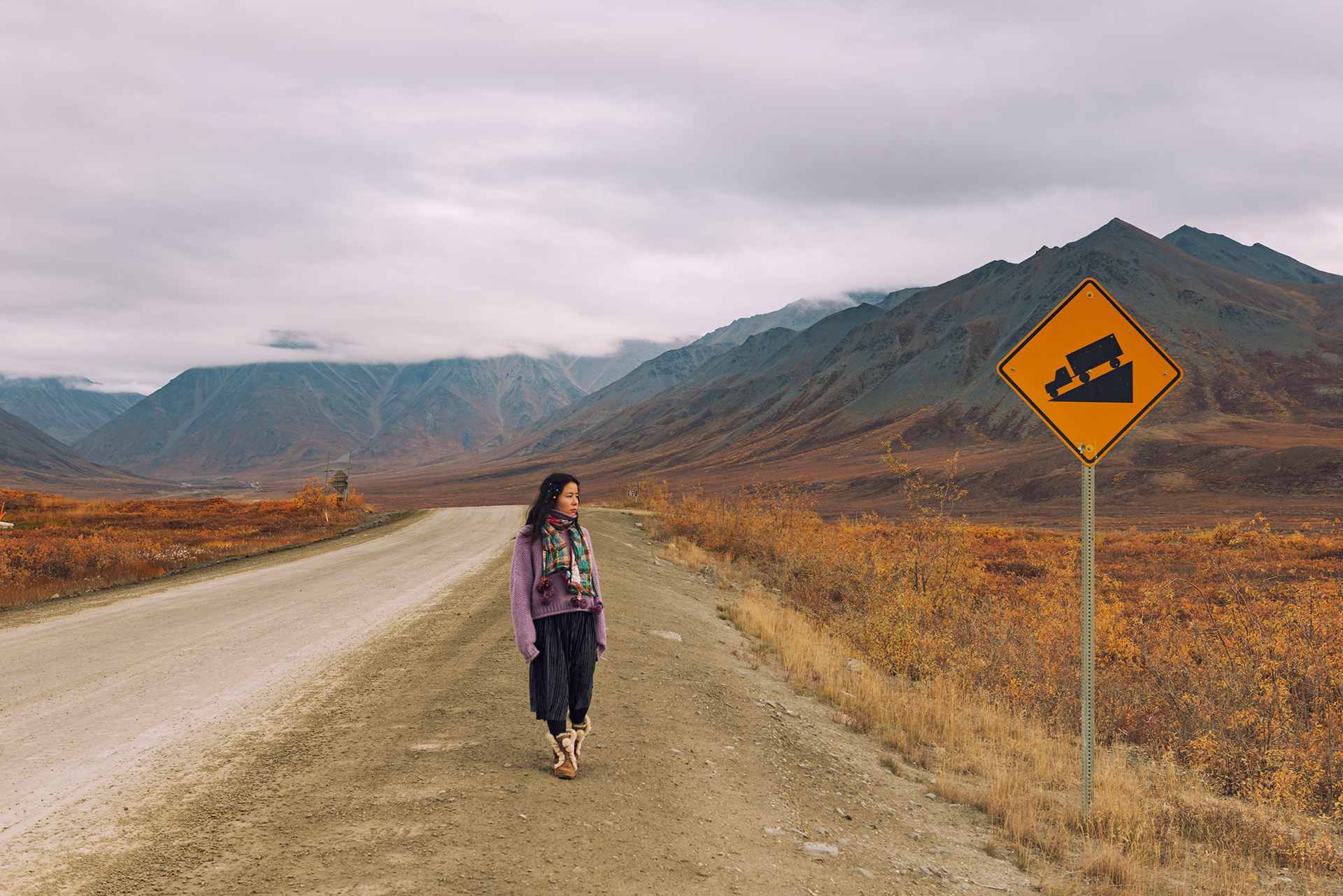
Dalton Highway Sign
The Southern Dalton: Fairbanks to Coldfoot
We left Fairbanks on Day 2 with a full tank and the kind of nervous anticipation that comes before something you've only read about.
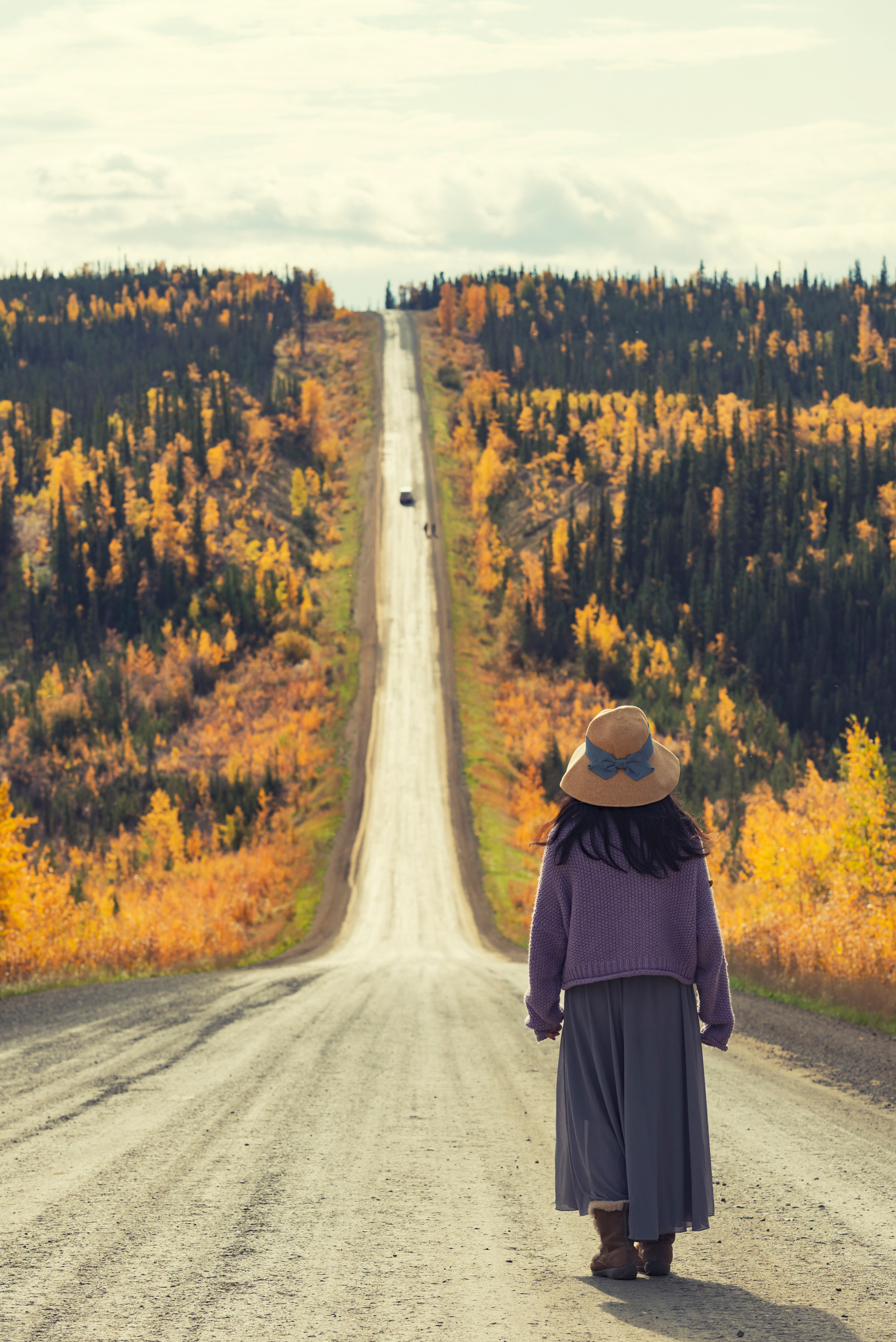
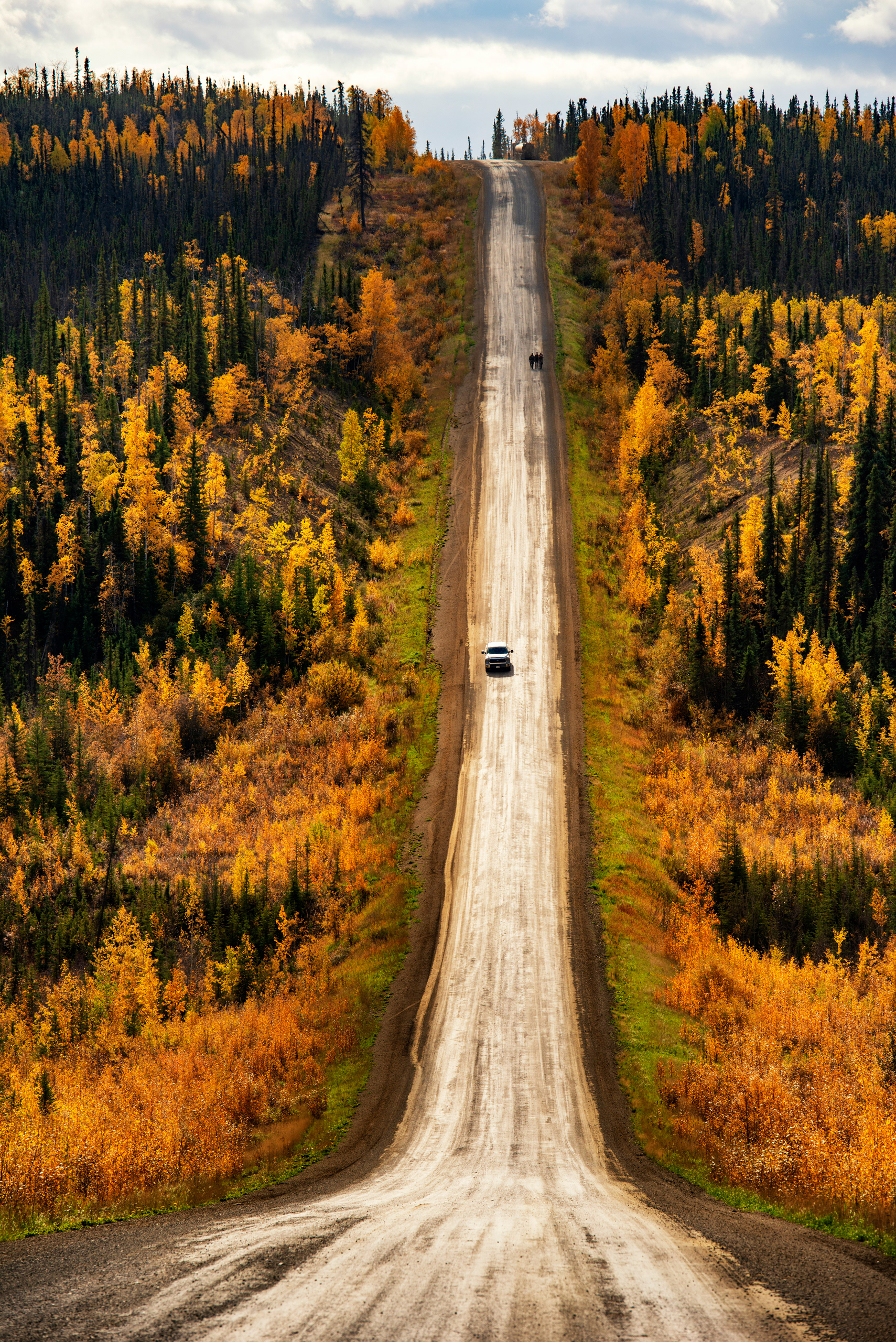
The southern half of the Dalton, from the junction at Livengood to the truck stop at Coldfoot, is 175 miles of boreal forest, river crossings, and long climbs onto ridges where the trees thin out and the view opens. It has the road's only two fuel stops, its only staffed visitor station, and the Arctic Circle sign. It is also the section most people drive, because the tour vans from Fairbanks turn around at the circle and head home.
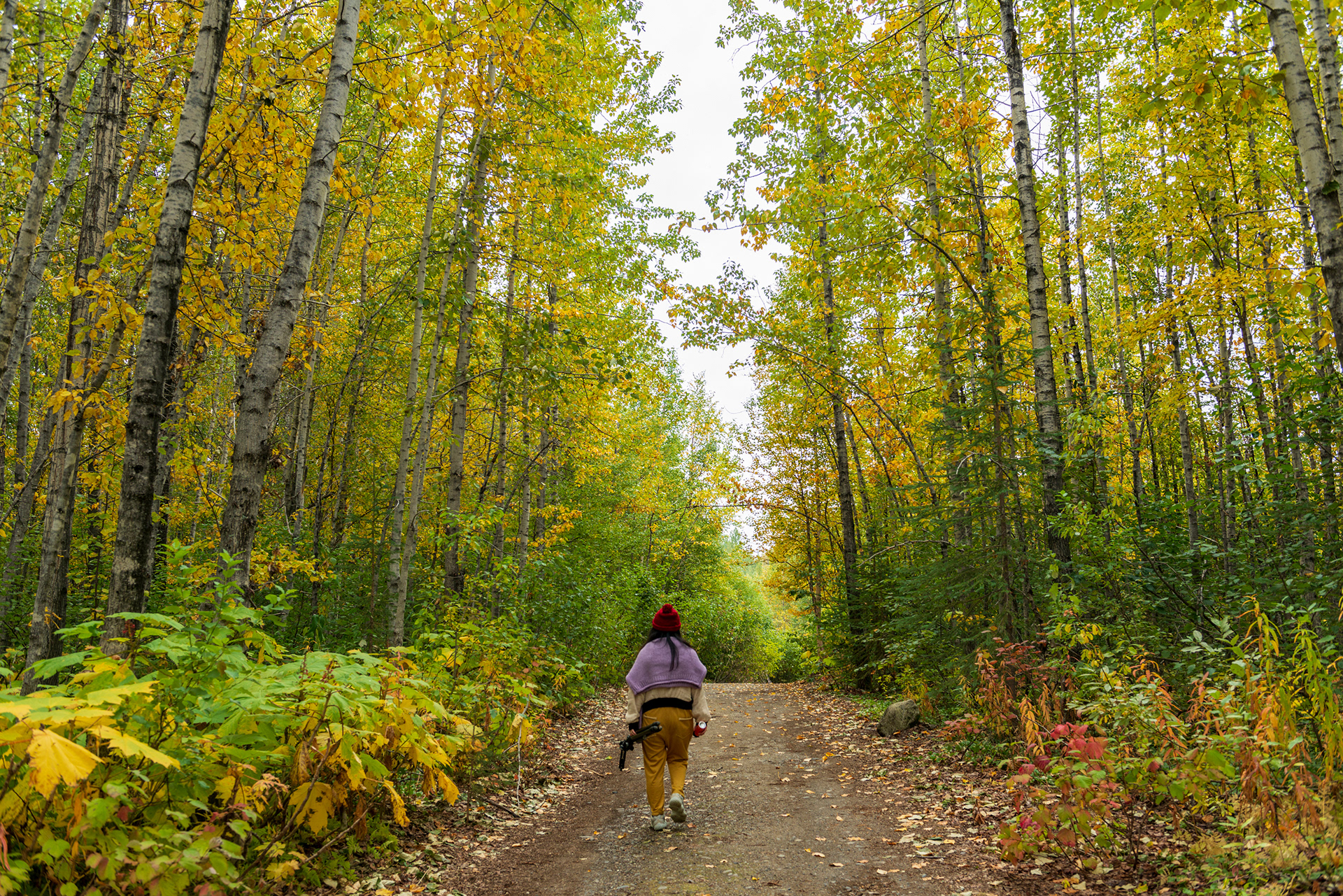
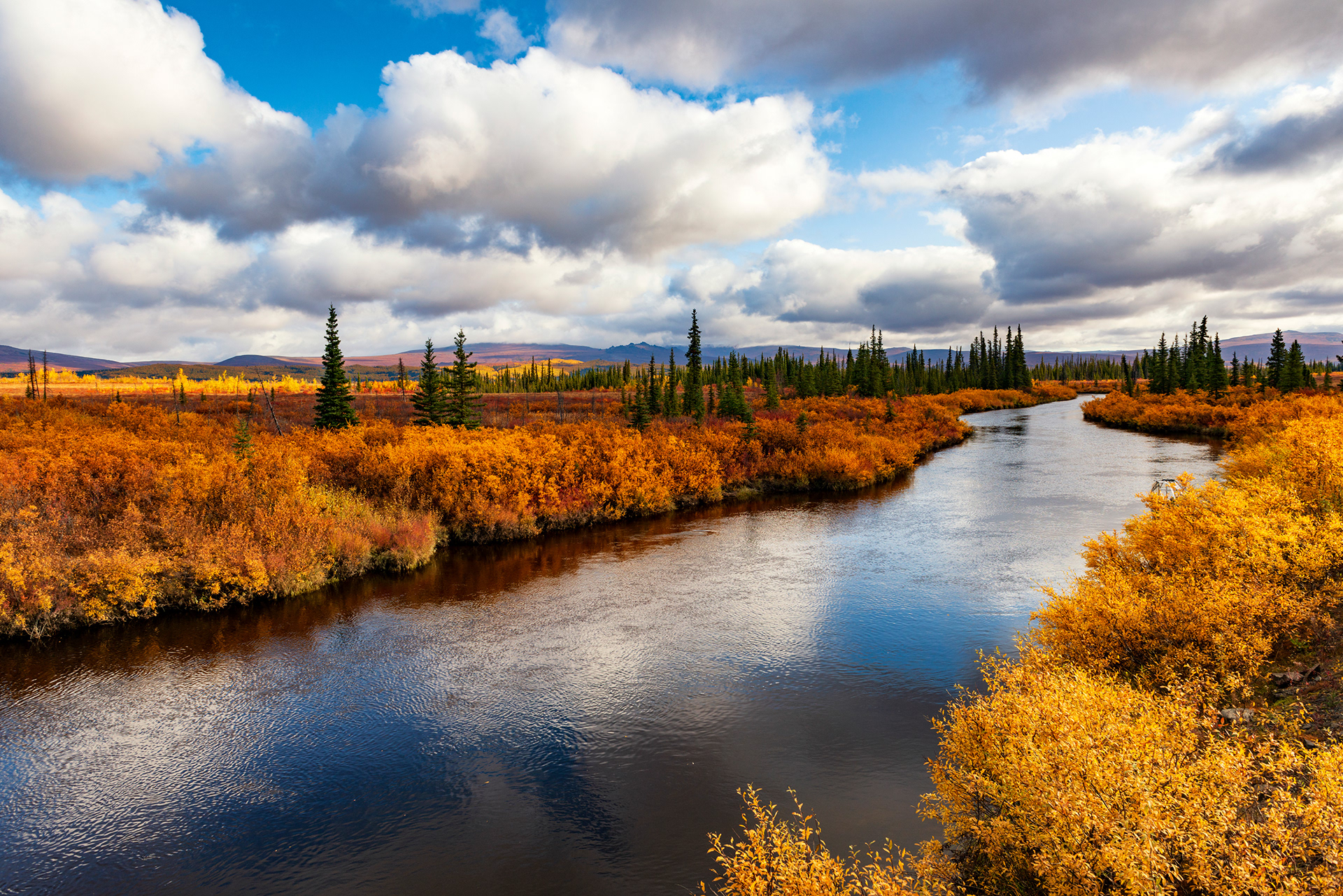
One thing to understand before the list below: Alaska is not a place you see by collecting sights. There are named pullouts and signed viewpoints, and I've listed the ones we stopped at, but on the Dalton the road itself is the attraction and the best moments rarely came with a sign. A bend where the pipeline caught the light. A hillside that turned red while we watched. A creek we never learned the name of. Treat what follows as a reference, not a checklist. When something looks good, stop. There is almost never anyone behind you.
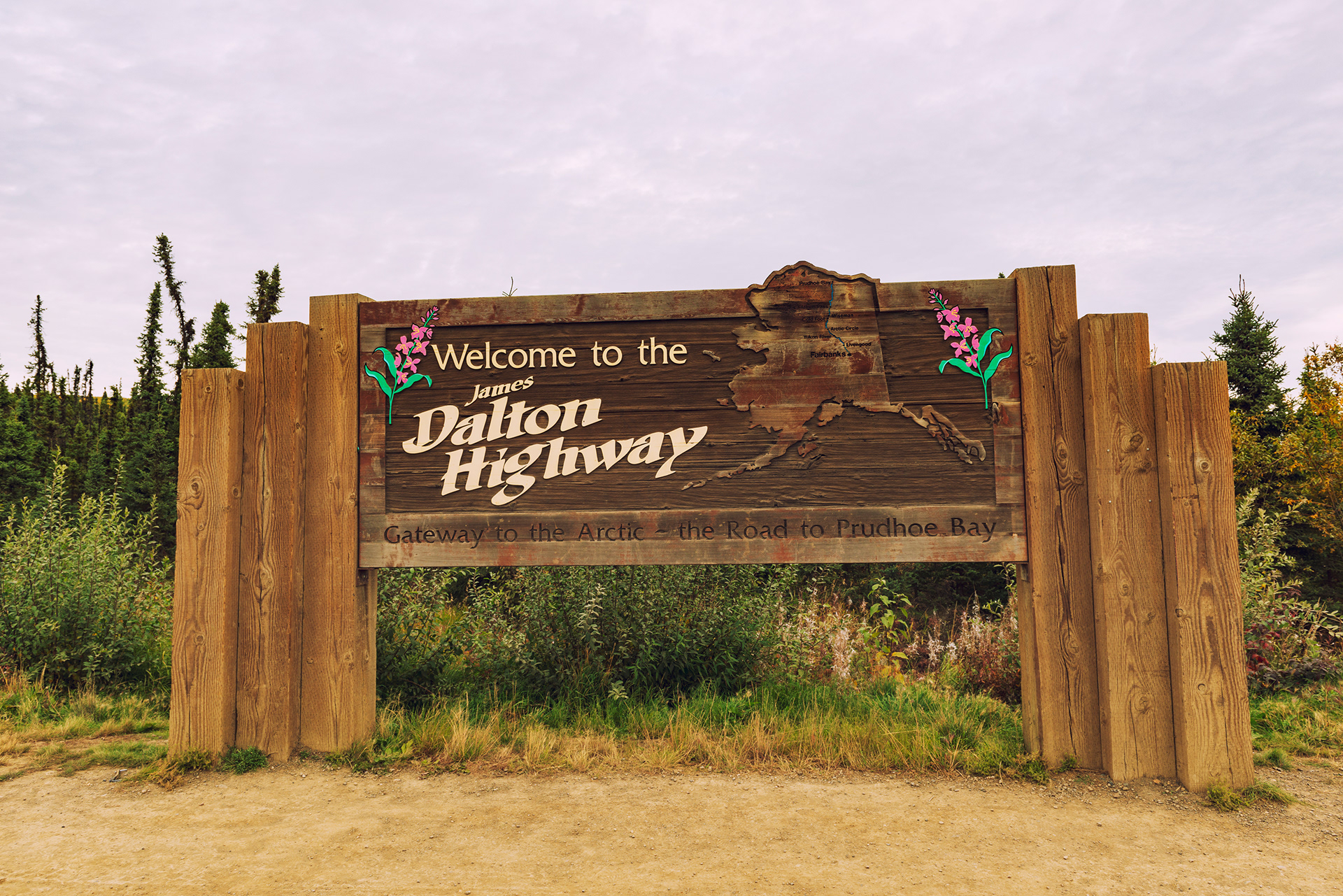
Dalton Highway Sign (Mile 0): The road begins at an unceremonious junction where a sign announces what you're about to attempt. Nearby, a small park displays the history of the Trans-Alaska Pipeline. It's a good place to take stock before committing.
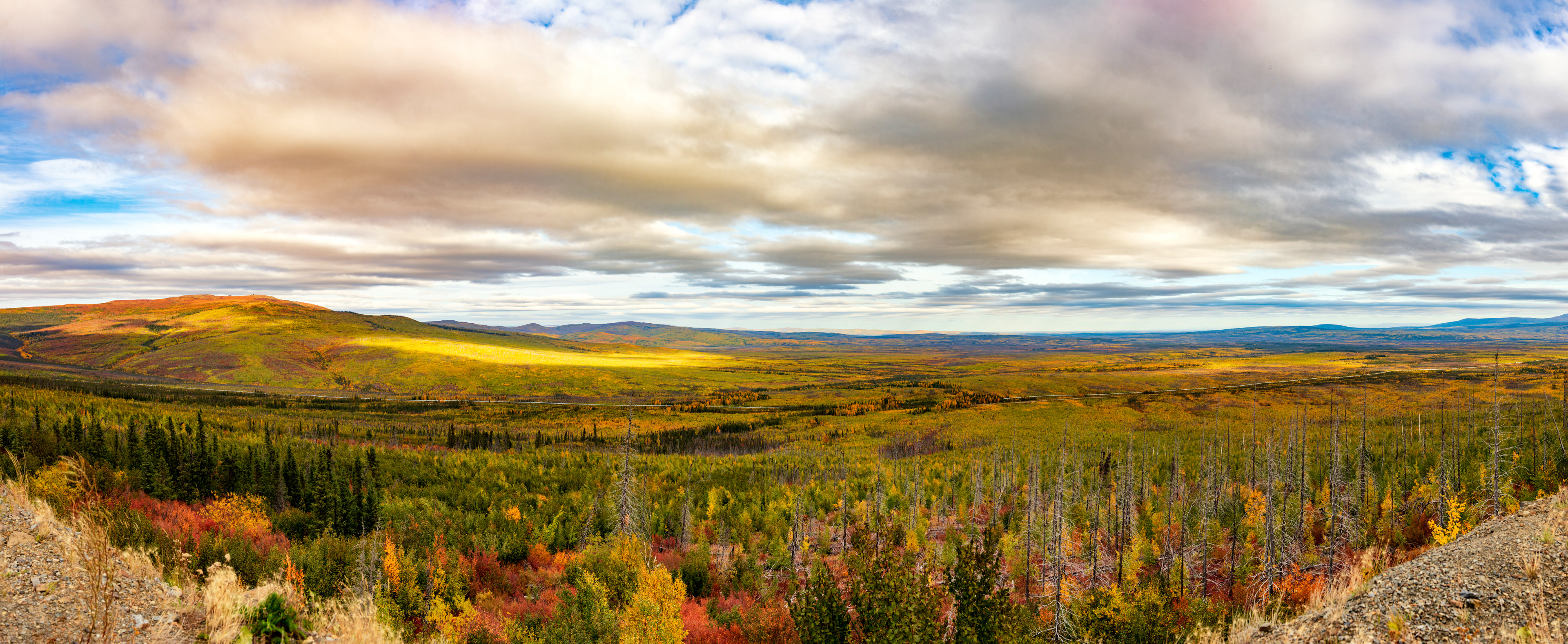
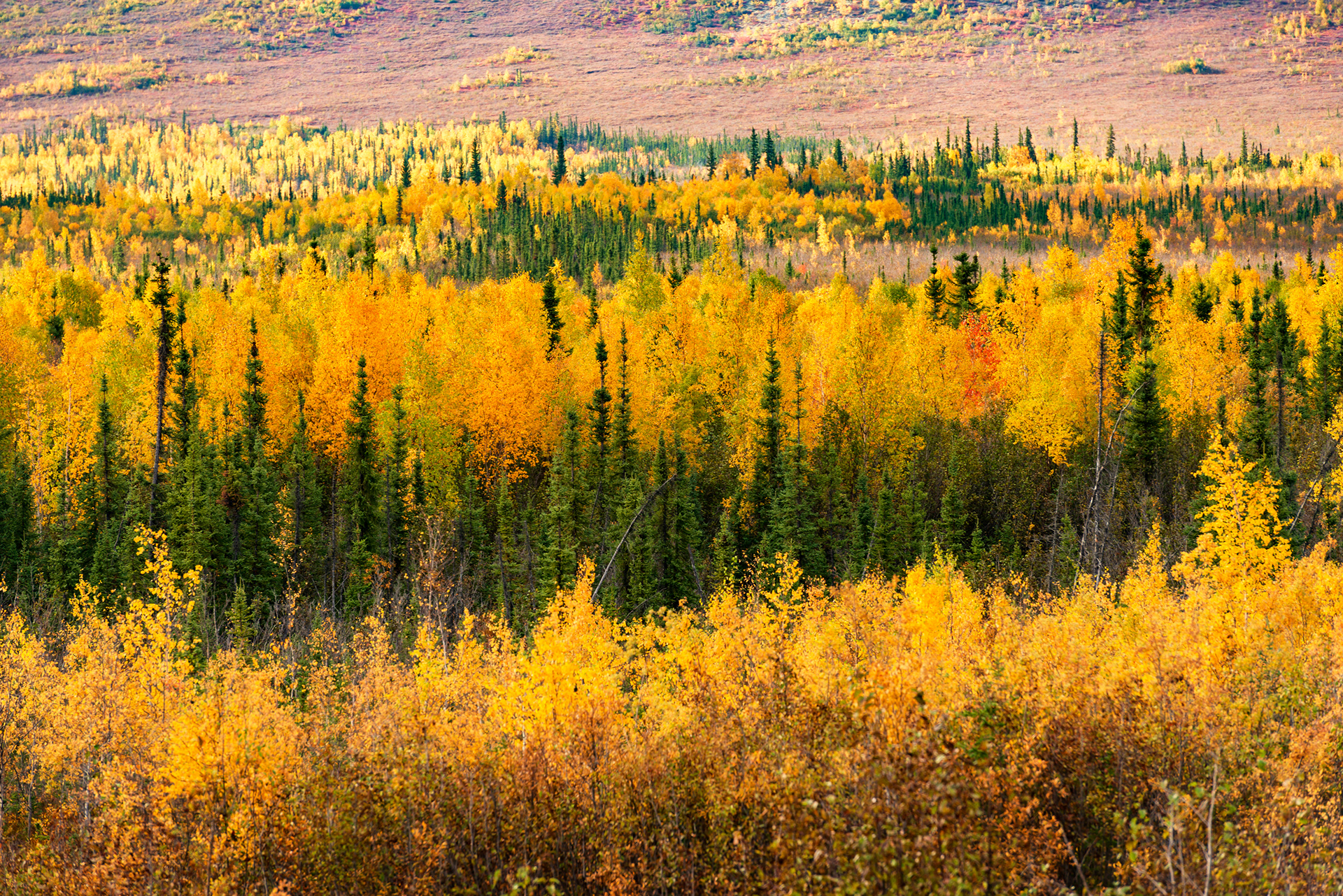
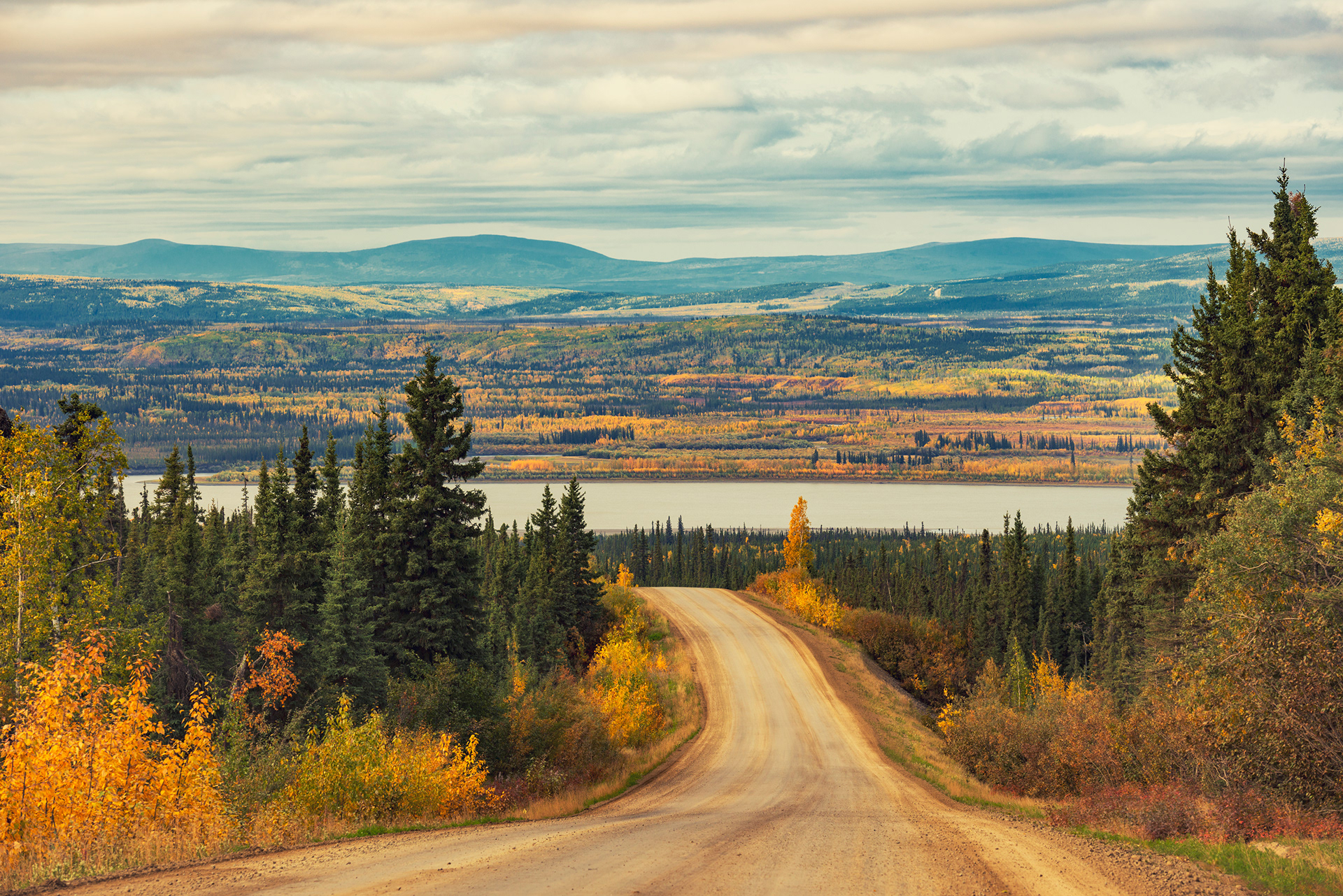
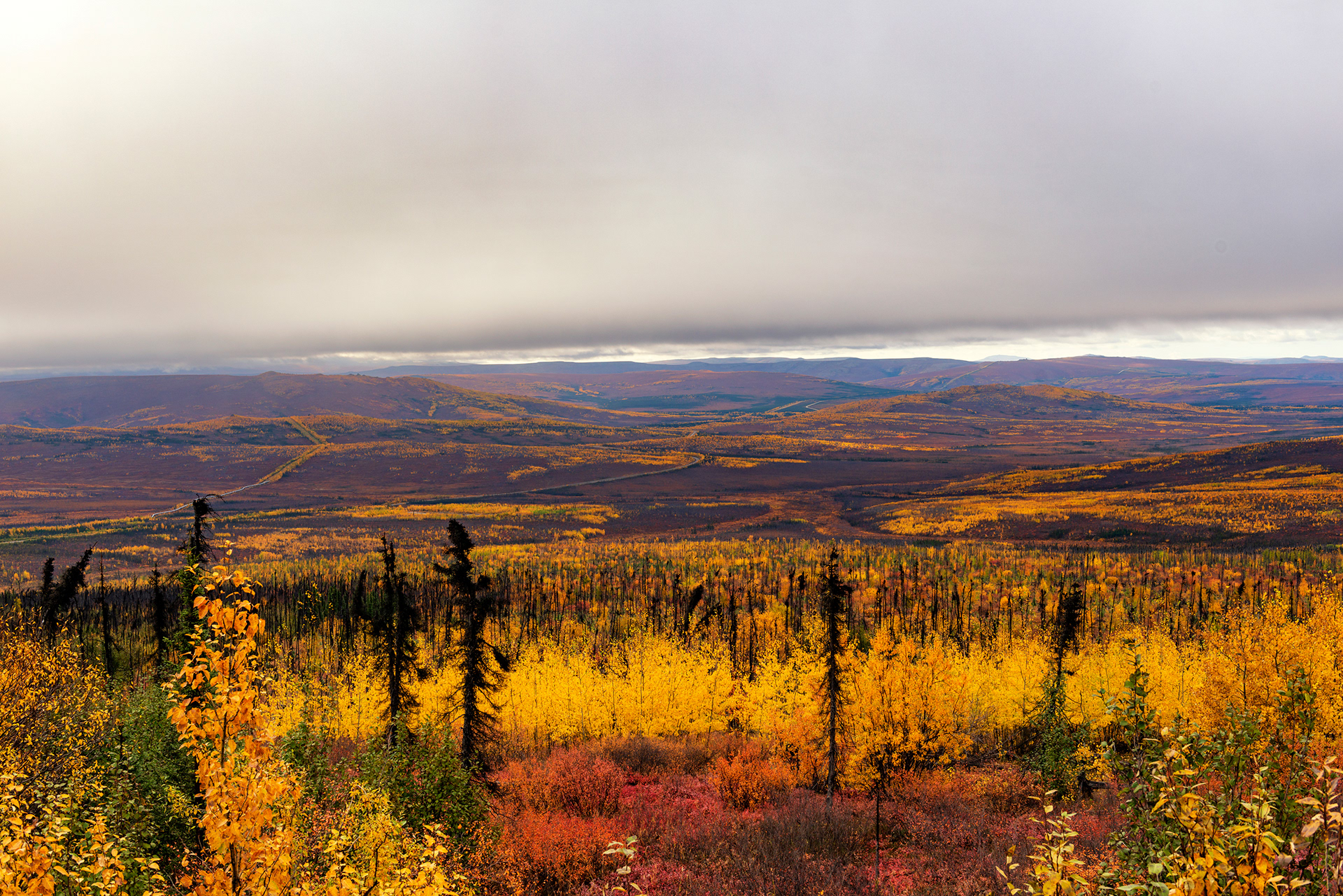
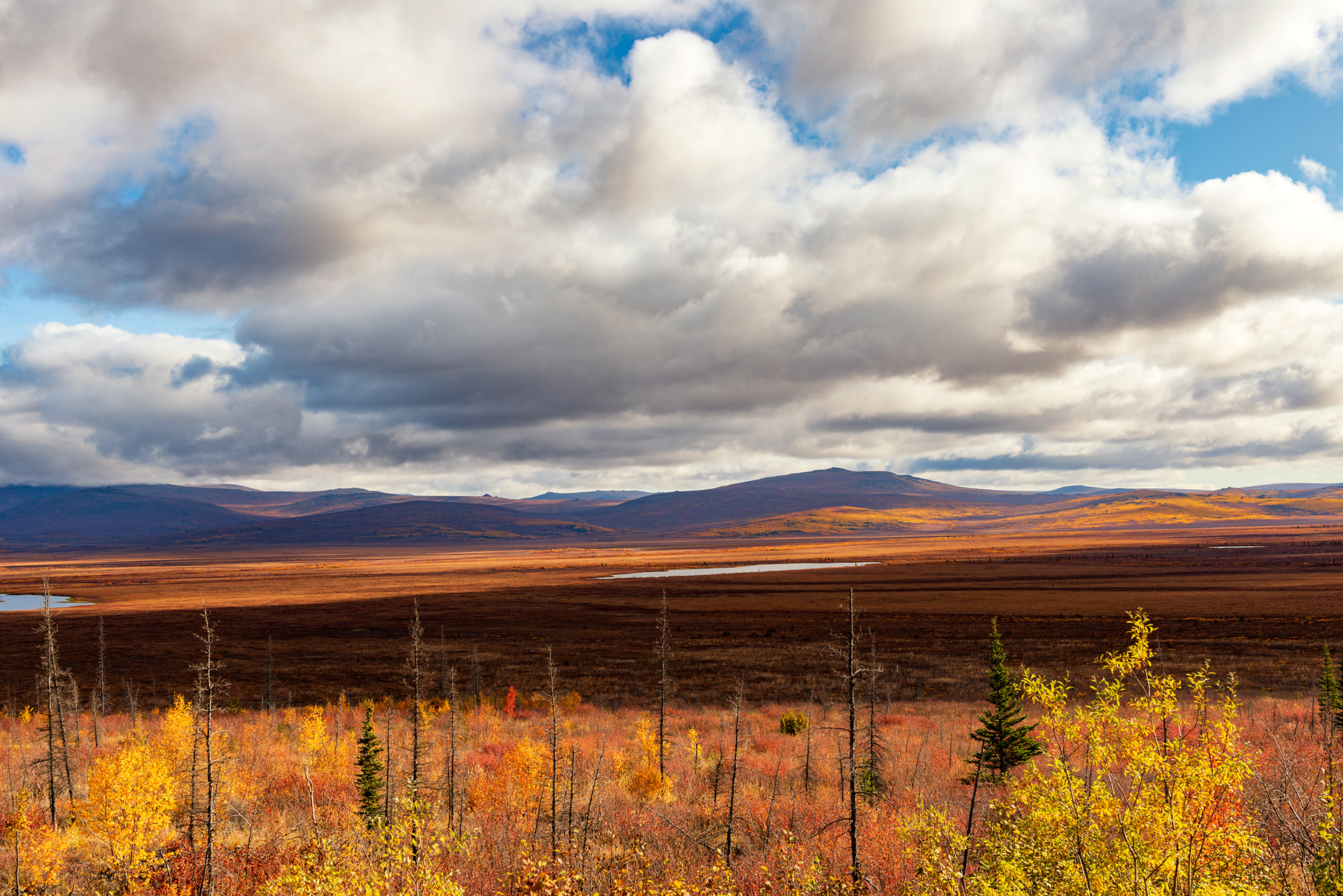
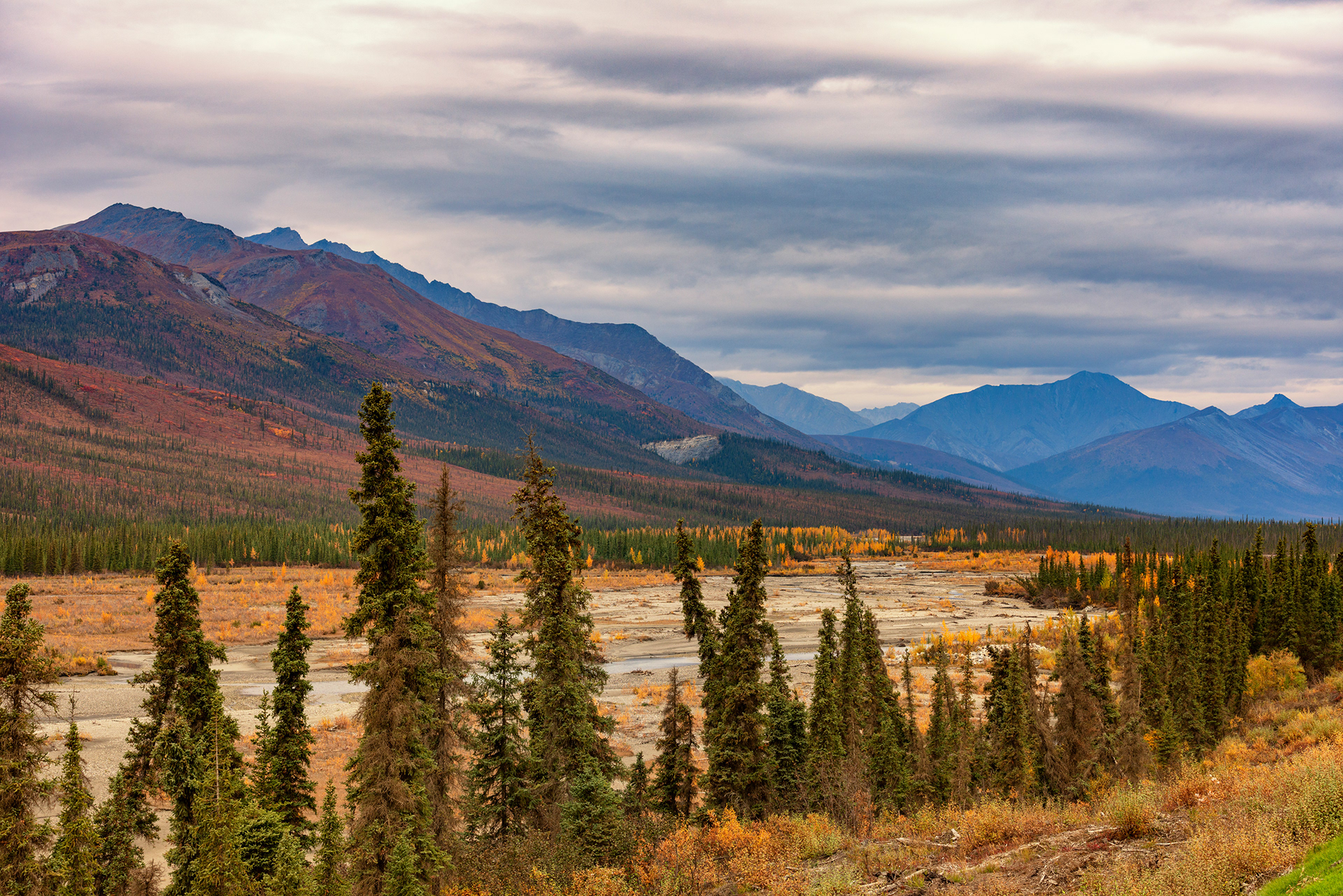
Hess Creek Overlook: About twenty miles in, still south of the Yukon, a pullout delivers a panoramic sweep of the surrounding boreal forest. The perspective is wide and almost vertiginous. The land stretches out in every direction with no indication that other humans exist anywhere within it. This is the look of Alaska at its most characteristic.
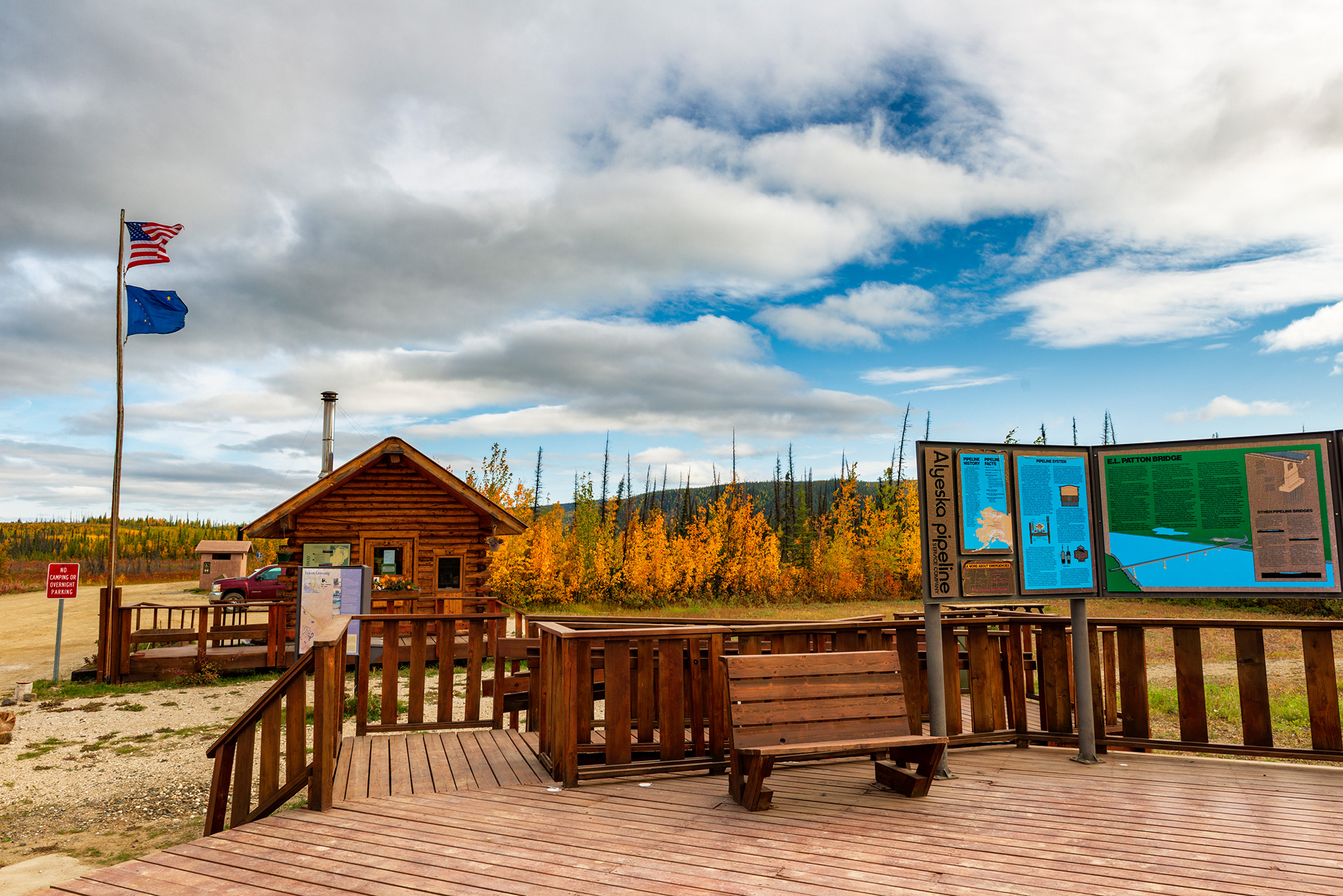
Yukon River Crossing (Mile 56): The Yukon river is one of North America's great rivers, 1,980 miles from its Canadian headwaters to the Bering Sea. Crossing it here, on a bridge that also carries the pipeline, feels significant. The visitor station on the north bank is run by a volunteer ranger who stamped our Arctic Circle crossing certificates even though we hadn't technically crossed yet (he called it "cheating," but gave us the stamps anyway). This is the only fuel stop for the first hundred miles, so top off.
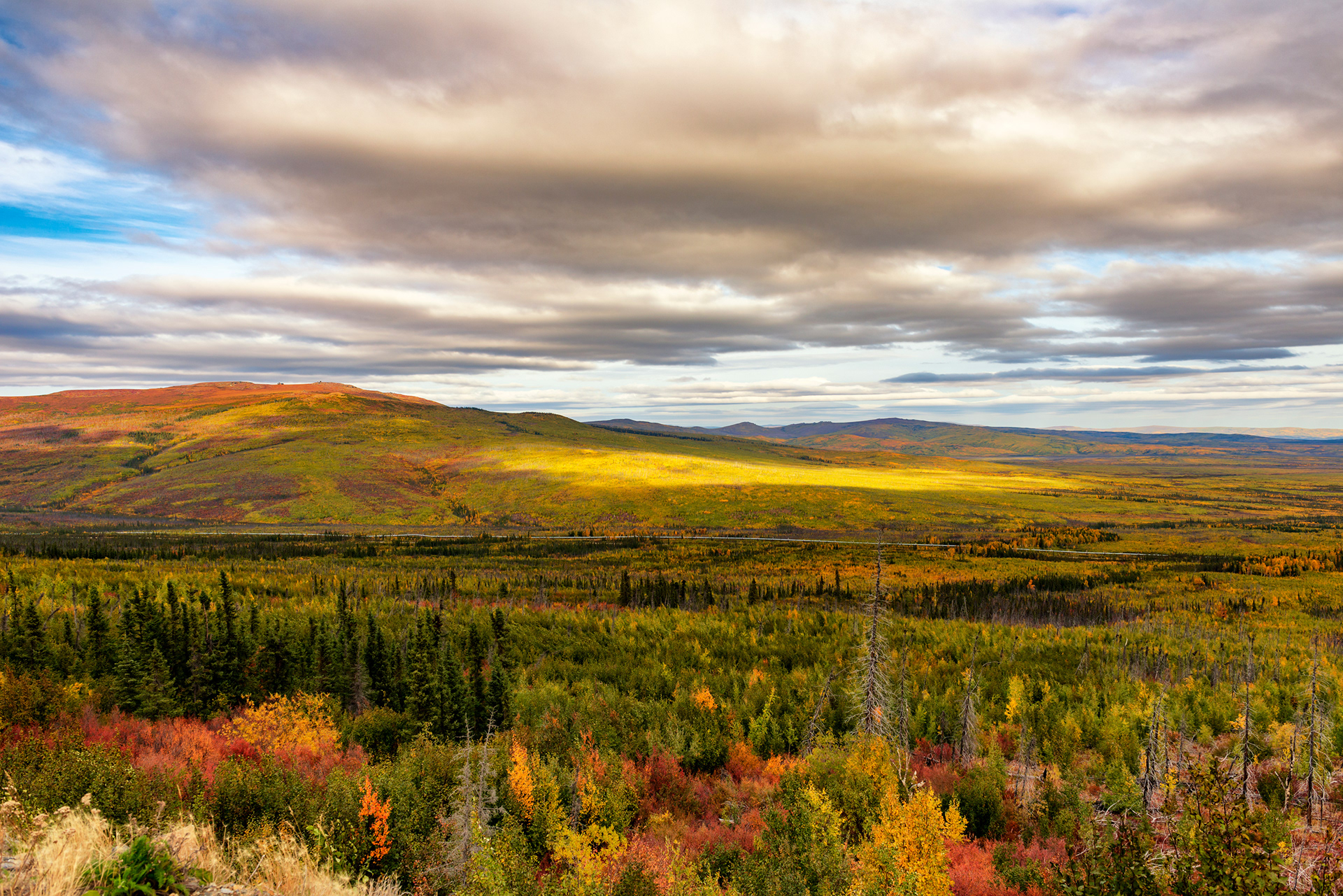
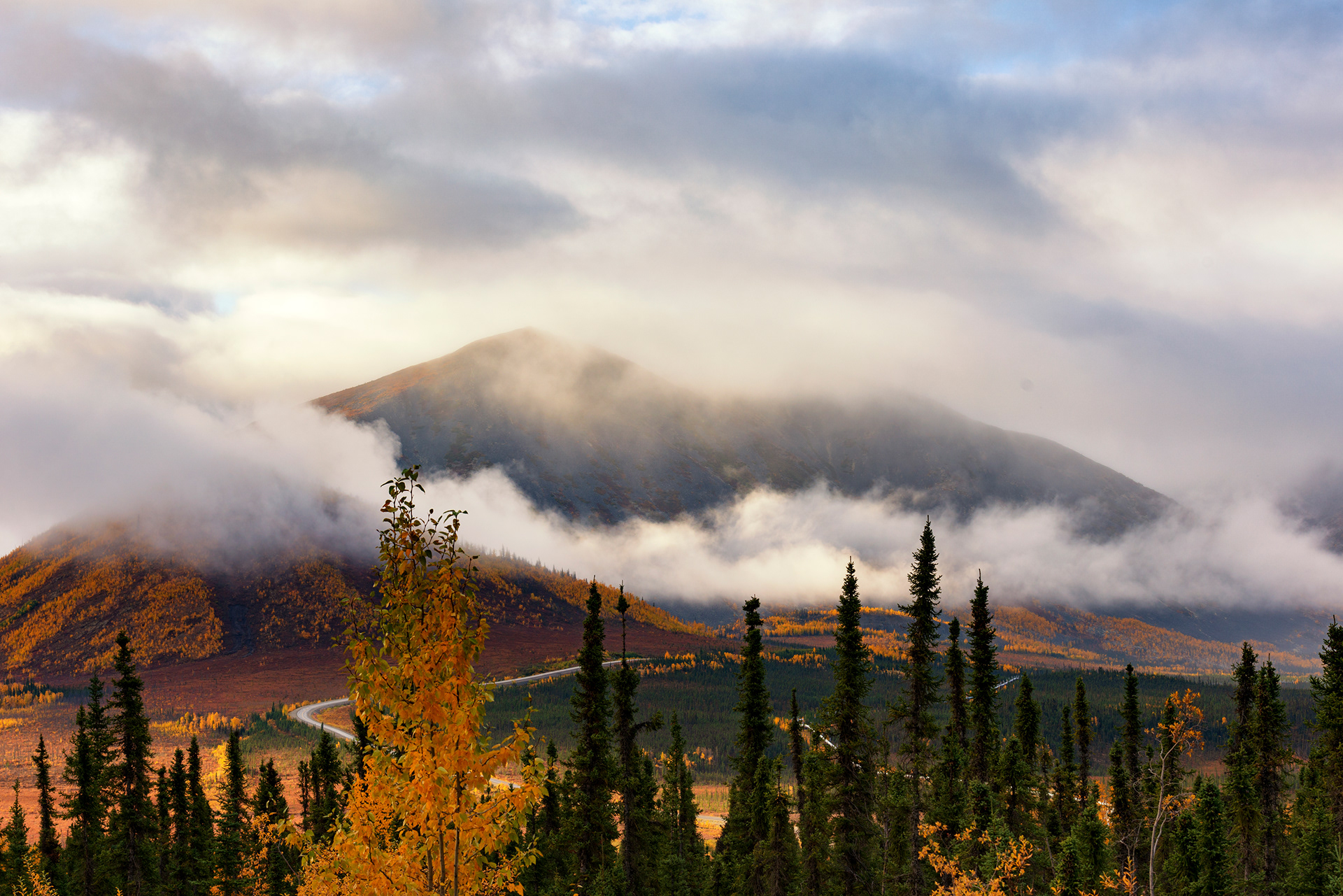
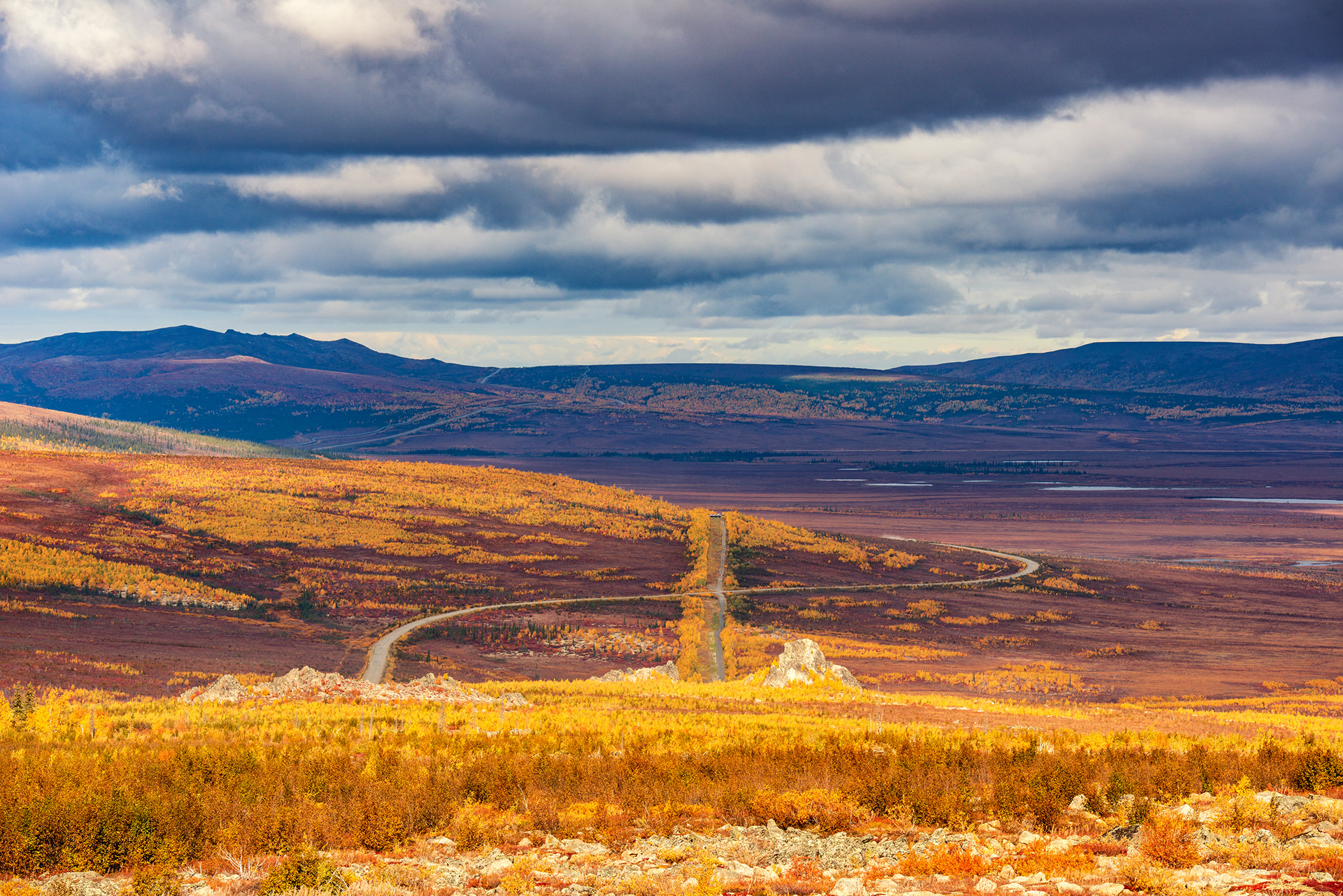
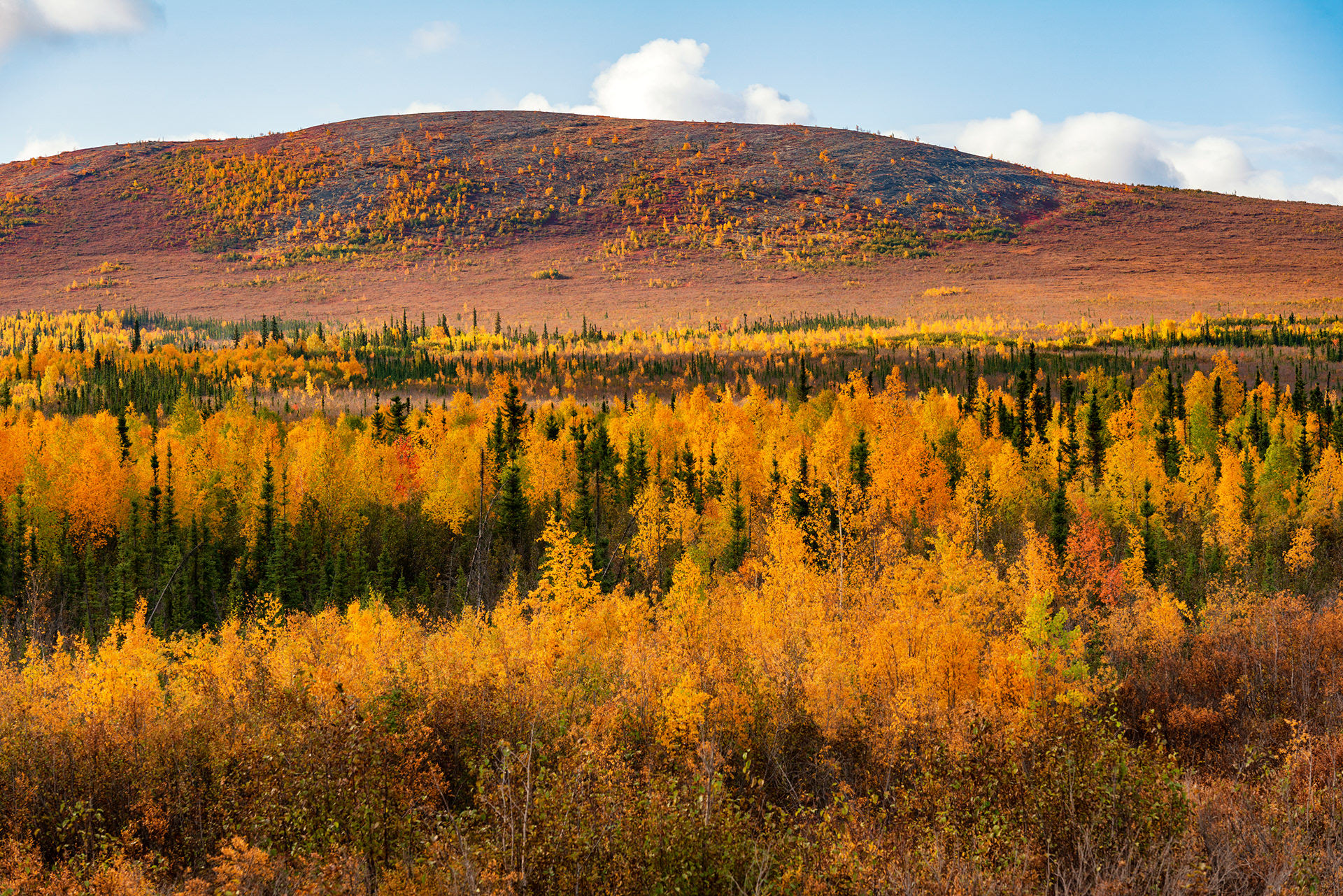
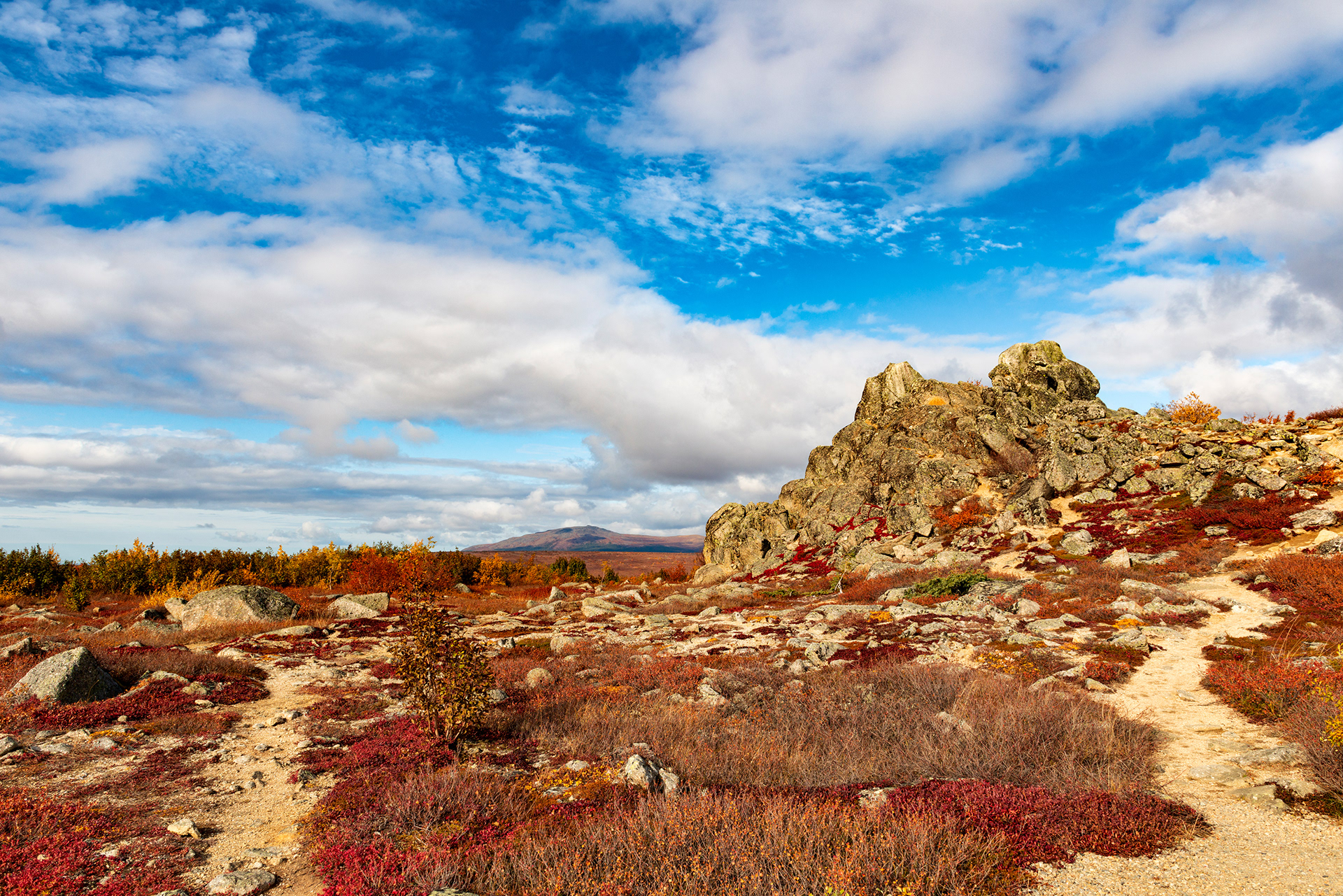
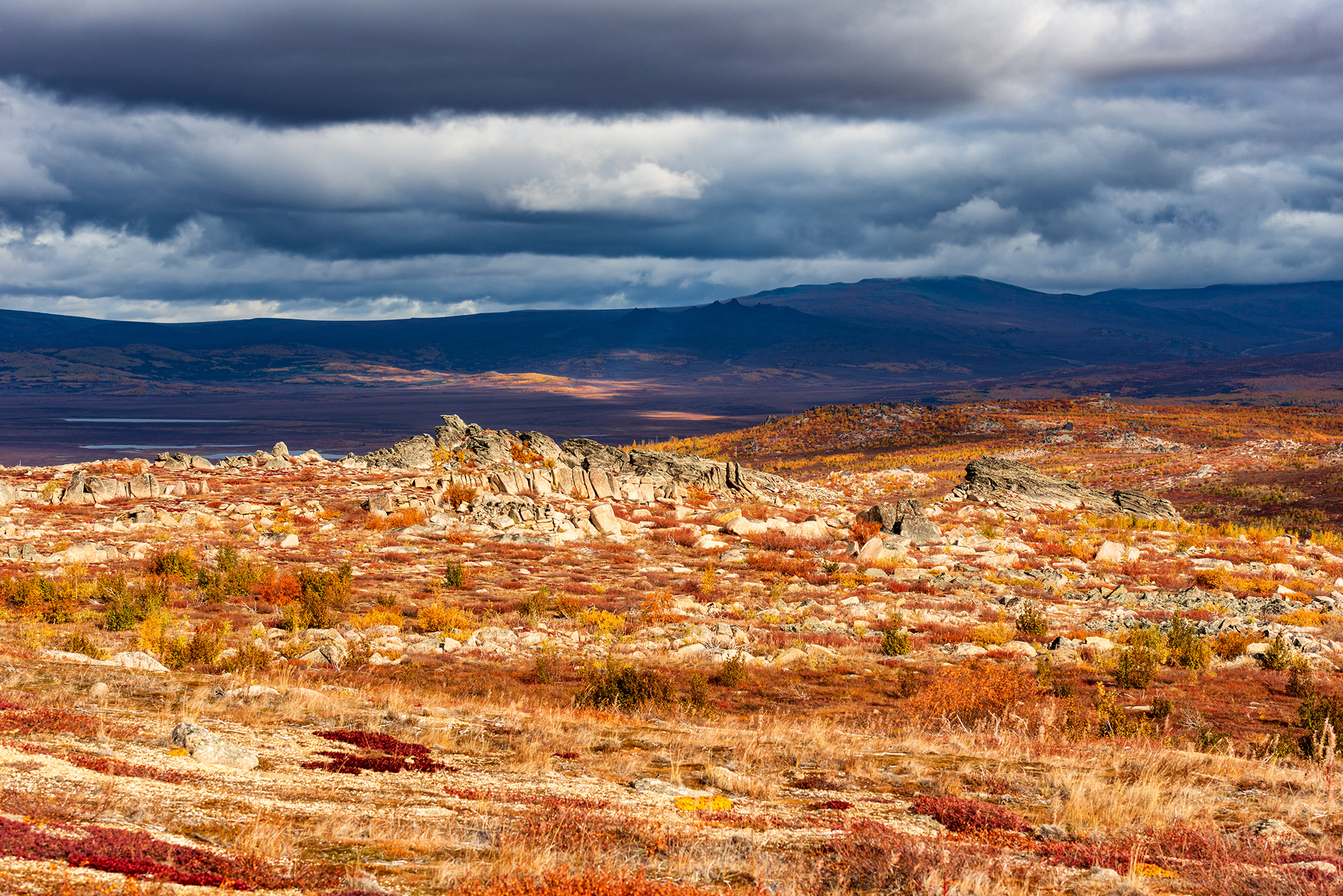
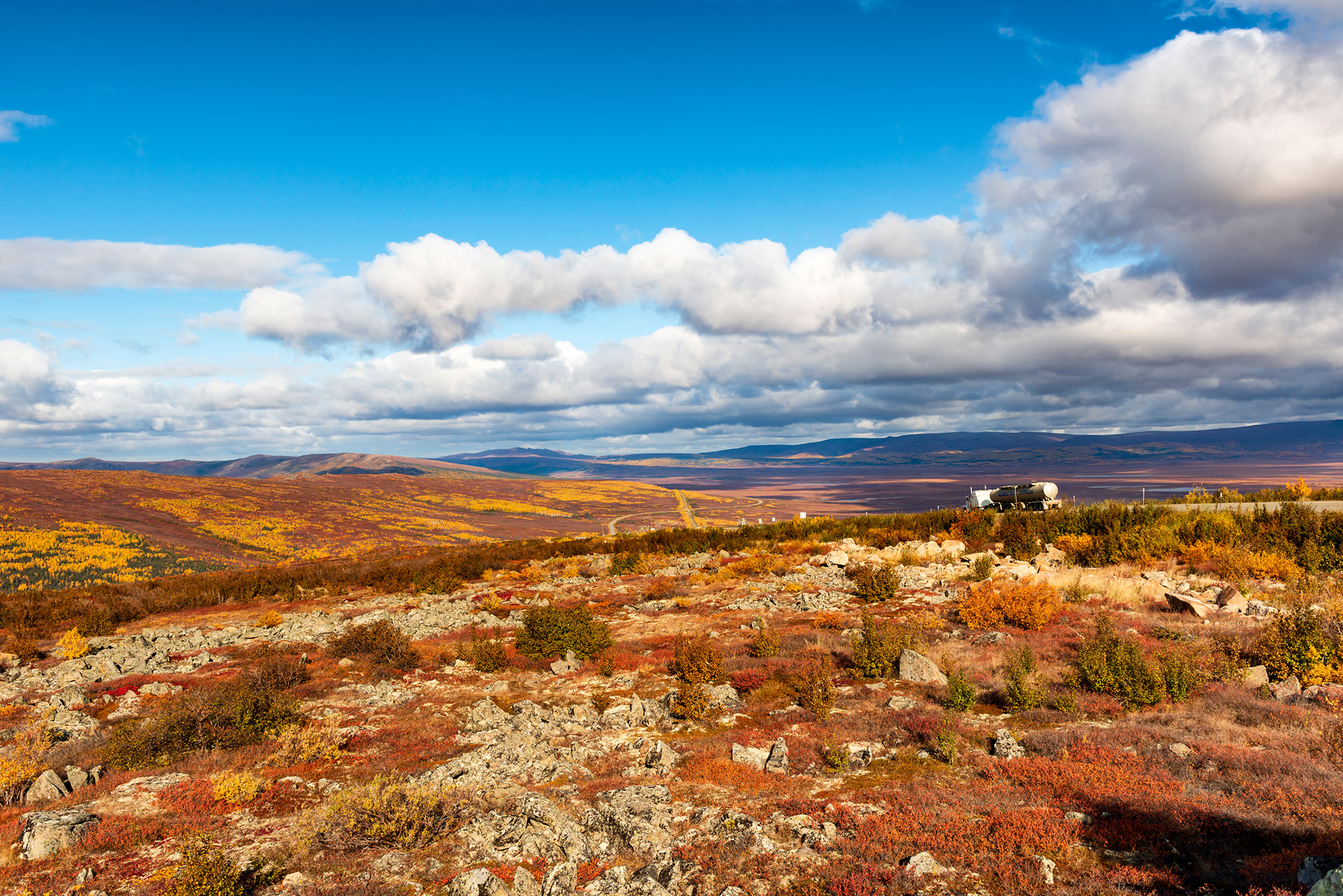
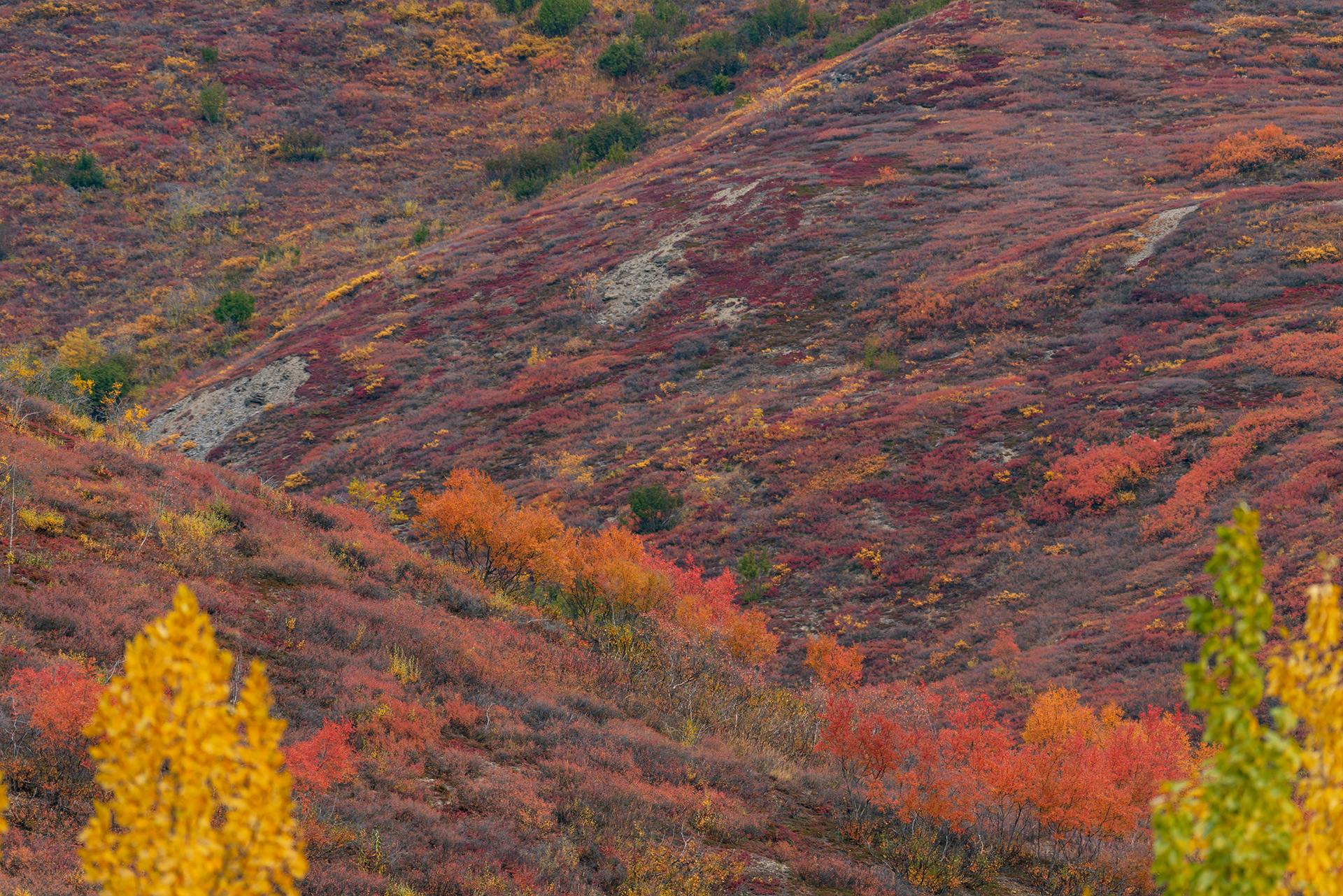
86-Mile Overlook: A short spur climbs above the treeline and opens onto one of the Dalton's most dramatic viewpoints: a bird's-eye sweep over the Yukon Flats, with the winding road visible far below. The autumn colors at this elevation, set against the scale of the valley, looked like something poured from a painter's palette. Do not skip this one.
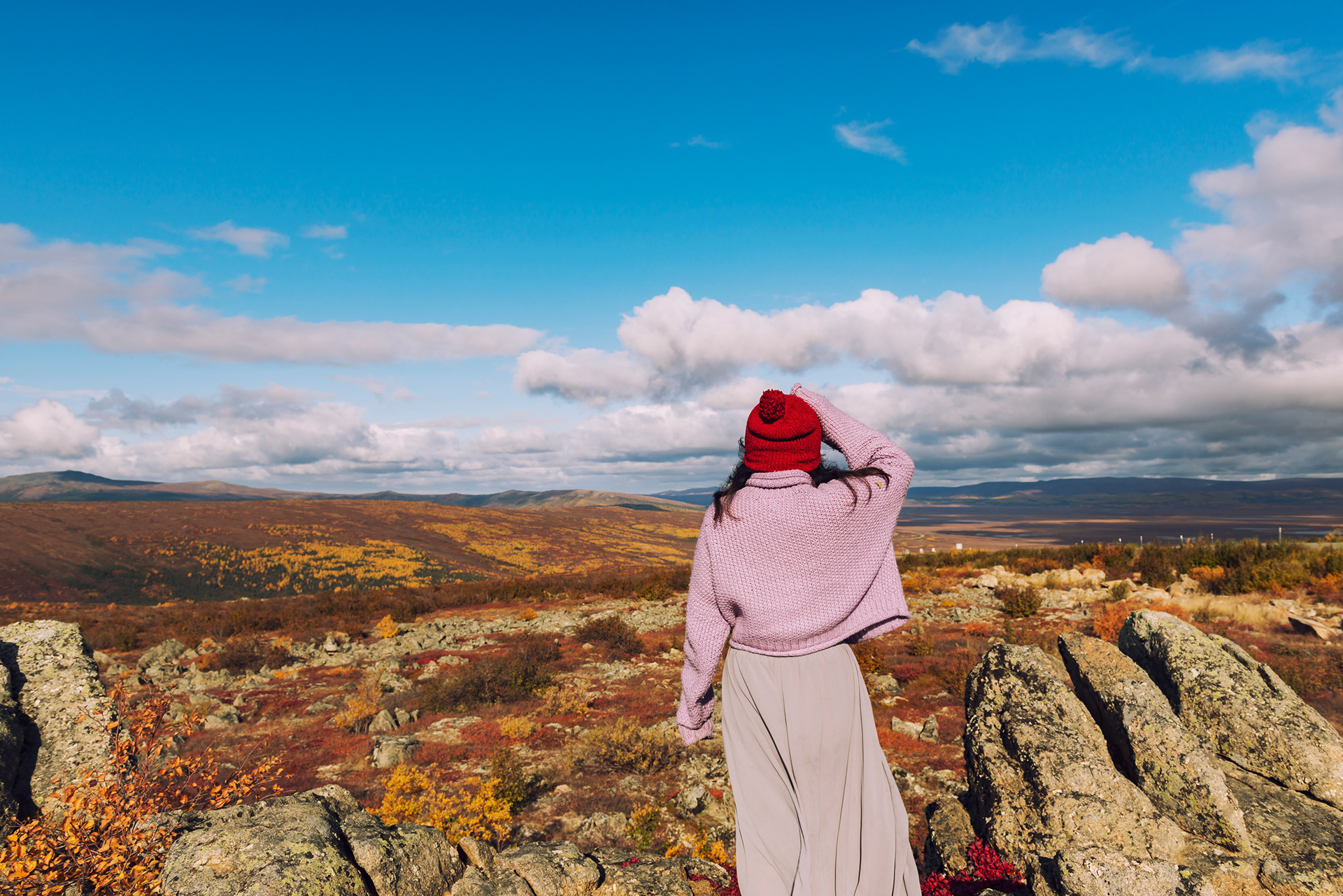
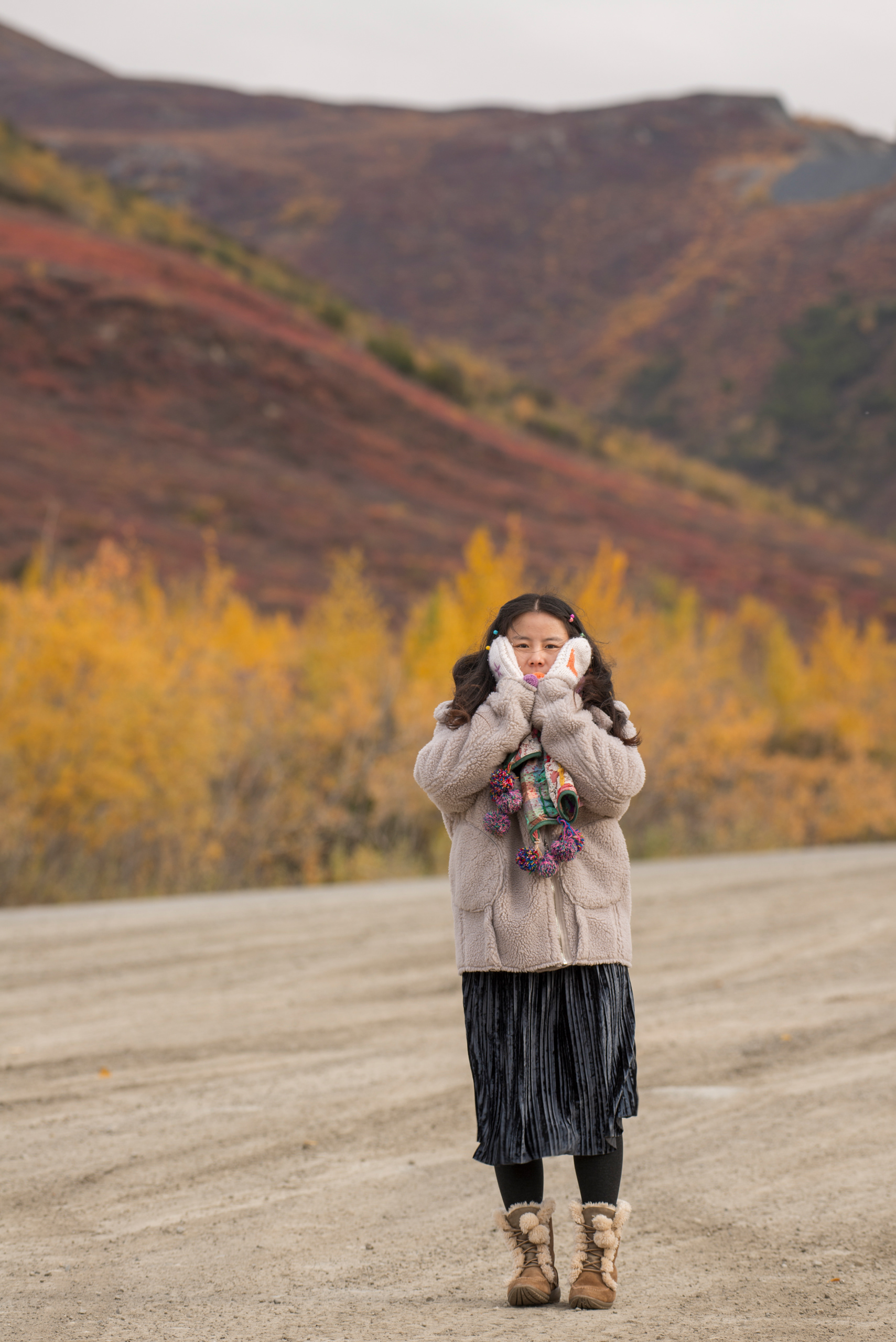
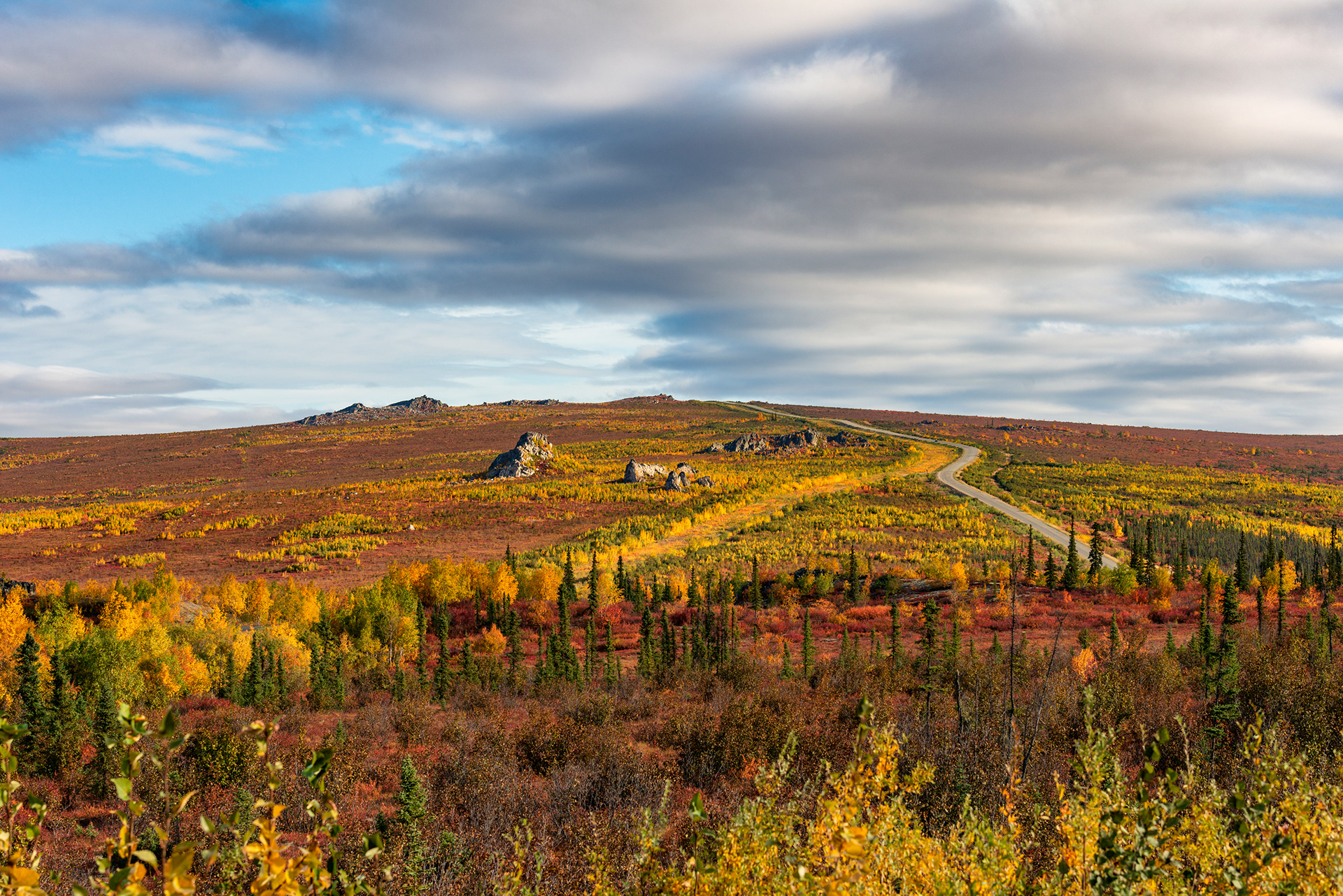
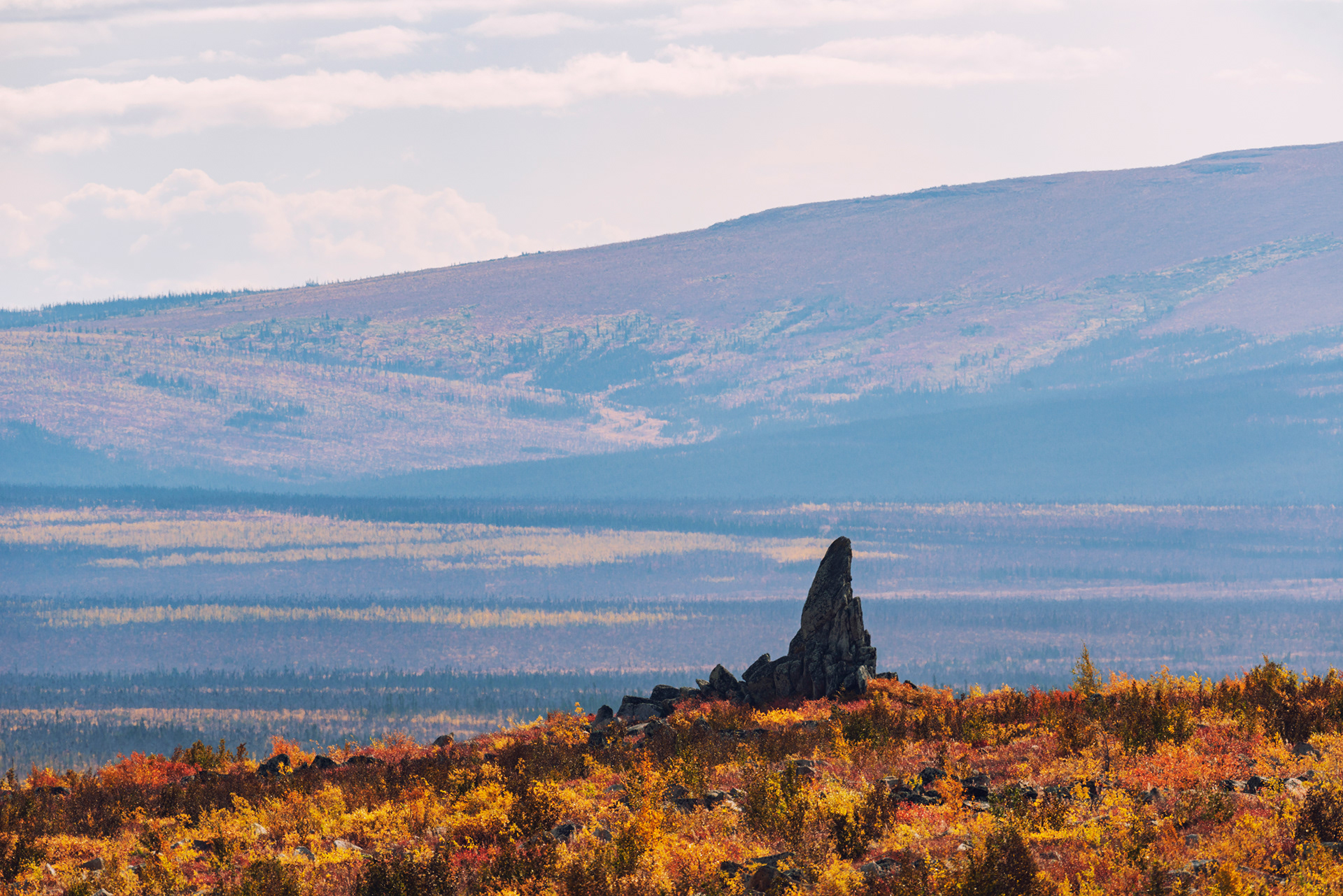
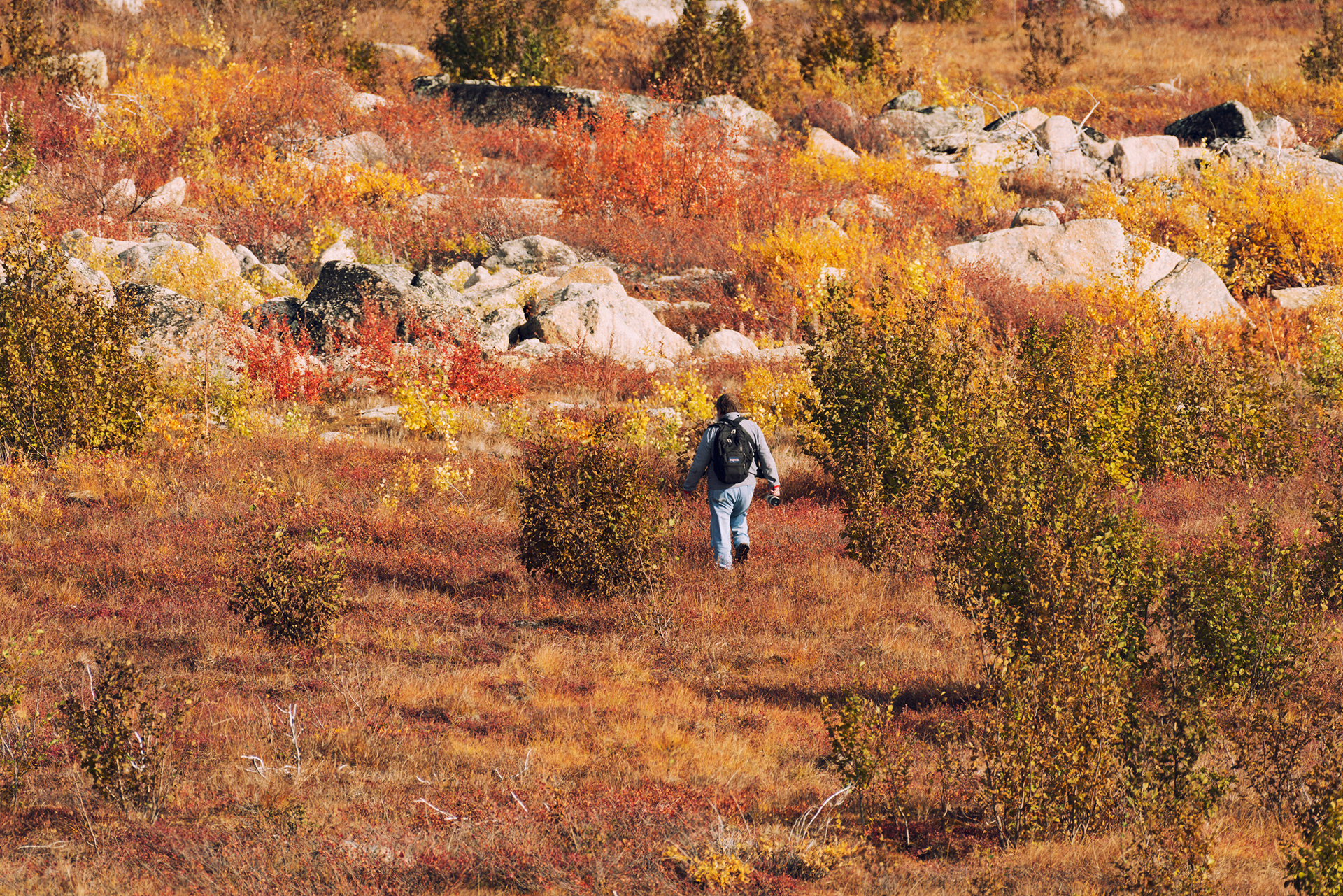
Finger Mountain: If I had to recommend just one stop on the entire Dalton, it would be Finger Mountain. A distinctive rock formation shaped like a pointing finger gives it the name, but the reason to stop is the hiking system that fans out from the parking area. Even a short loop around the ridgeline above the parking lot rewards you with 360-degree views of tundra, mountains, and the pipeline threading south toward the horizon. The same ranger from the Yukon Crossing was there when we arrived. Done with his official duties for the season, he'd driven up just to enjoy it. He told us it was his favorite spot on the whole highway. I believe him.
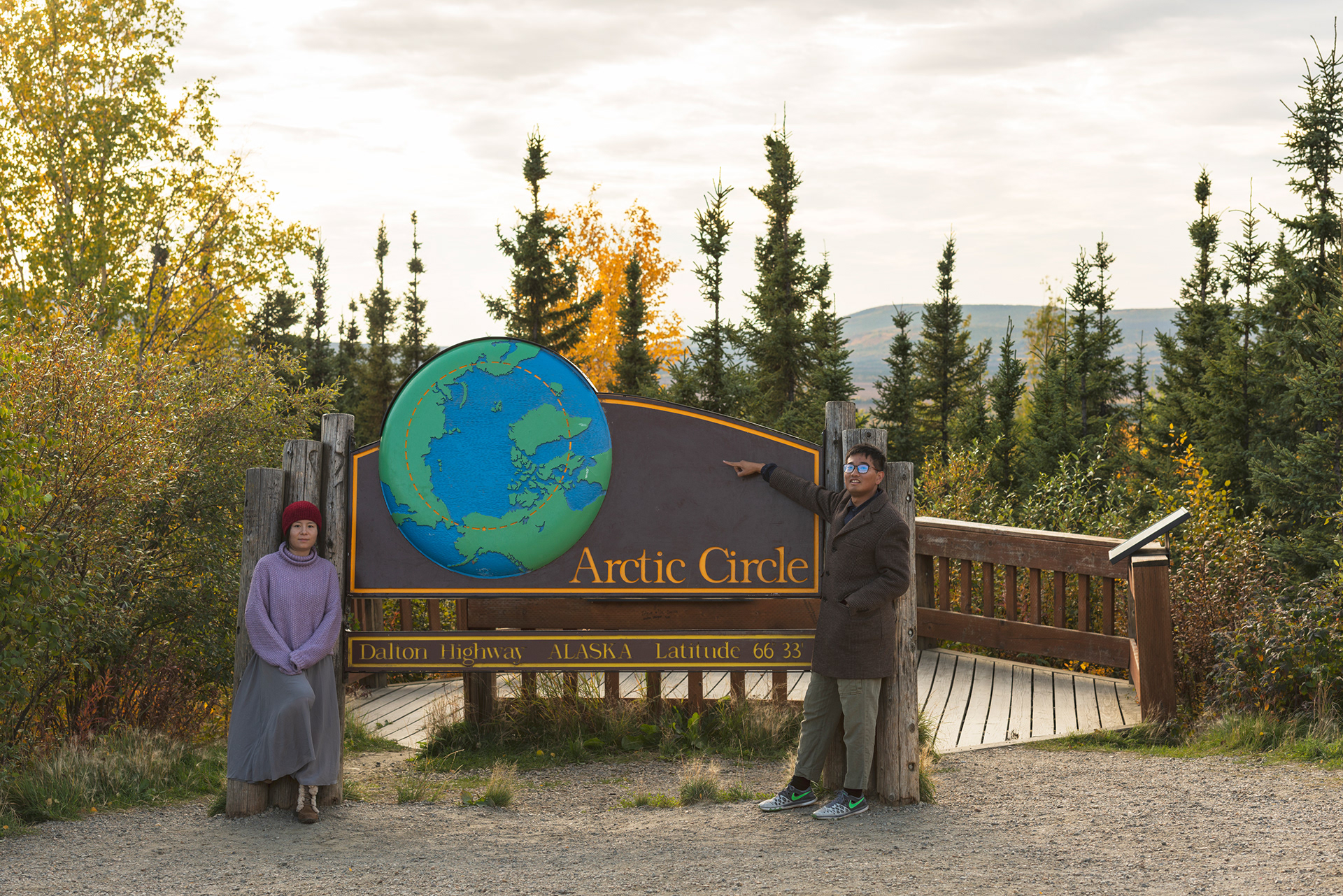
Arctic Circle Sign: At approximately mile 115, a sign marks the latitude 66.5°N, the line where the midnight sun first appears at the summer solstice and where polar night first descends at the winter solstice. In practical terms, crossing it means you've entered the Arctic. Most day-trippers from Fairbanks turn back here. We pressed on.
Gobbler's Knob: A roadside pull-off where the Brooks Range first comes into view to the north, a wall of dark mountains across the horizon, rising from the tundra. In summer you can watch the midnight sun roll along the ridge. In September we watched the light go golden at 9 PM and the mountains turn purple.
Coldfoot & Wiseman
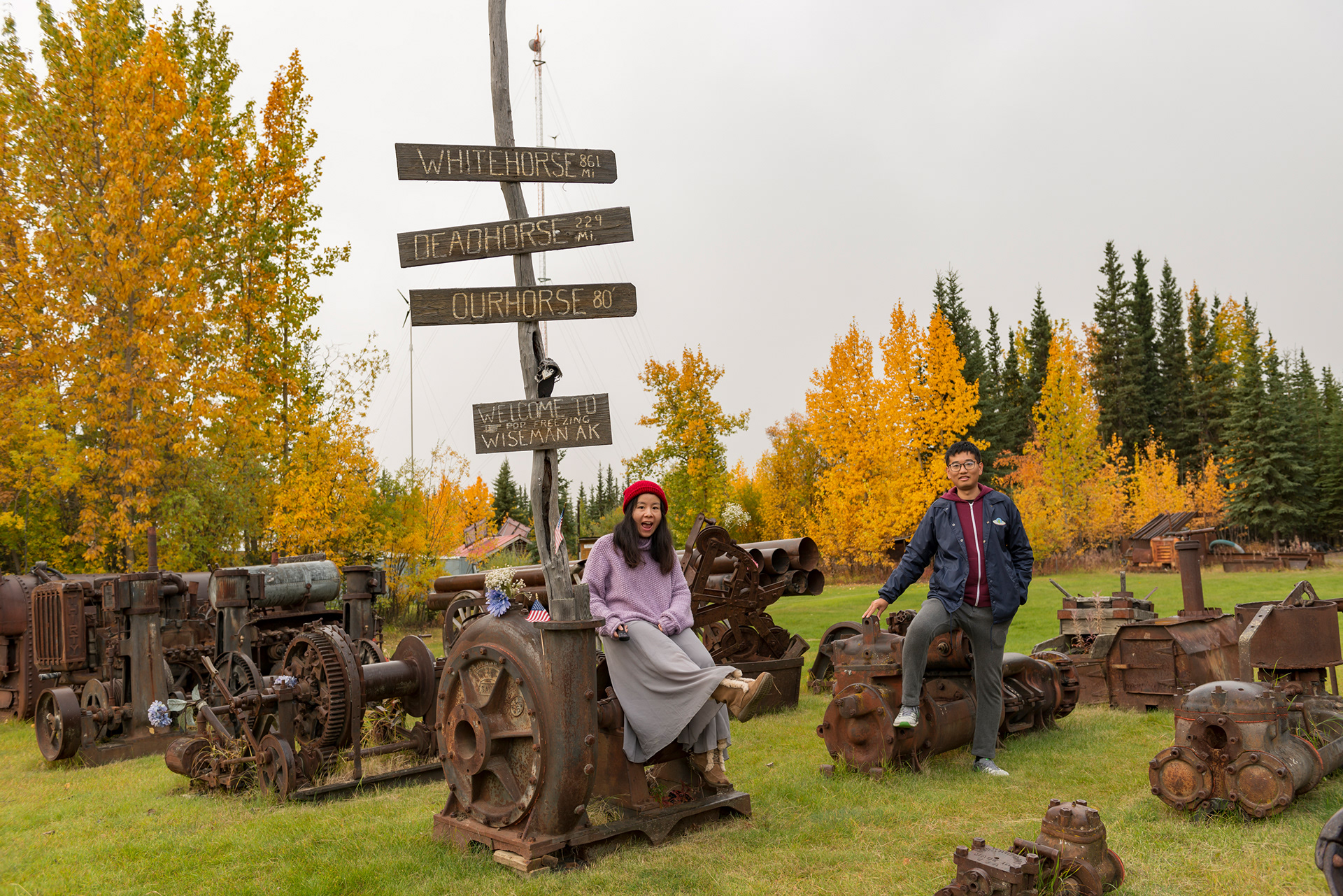
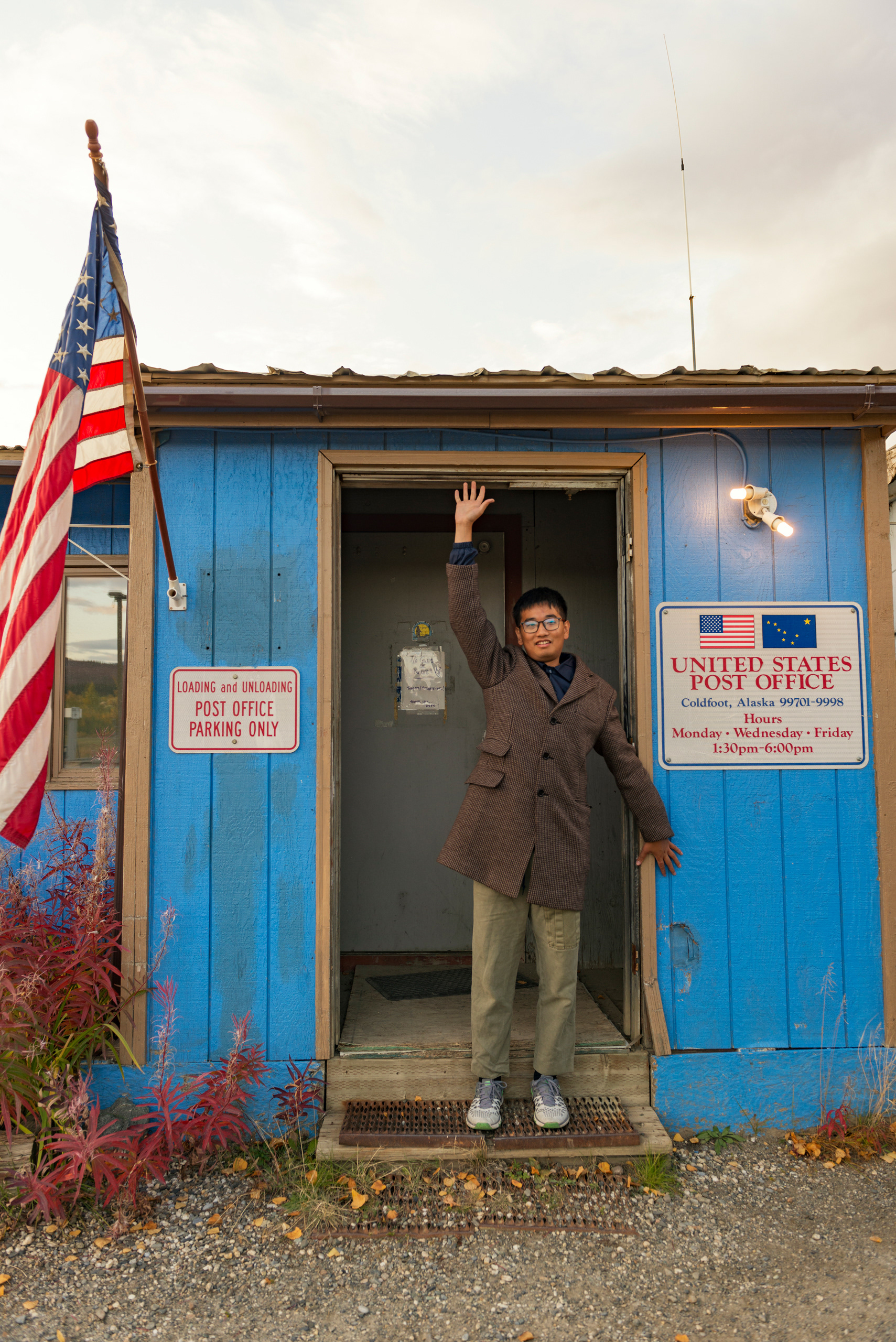
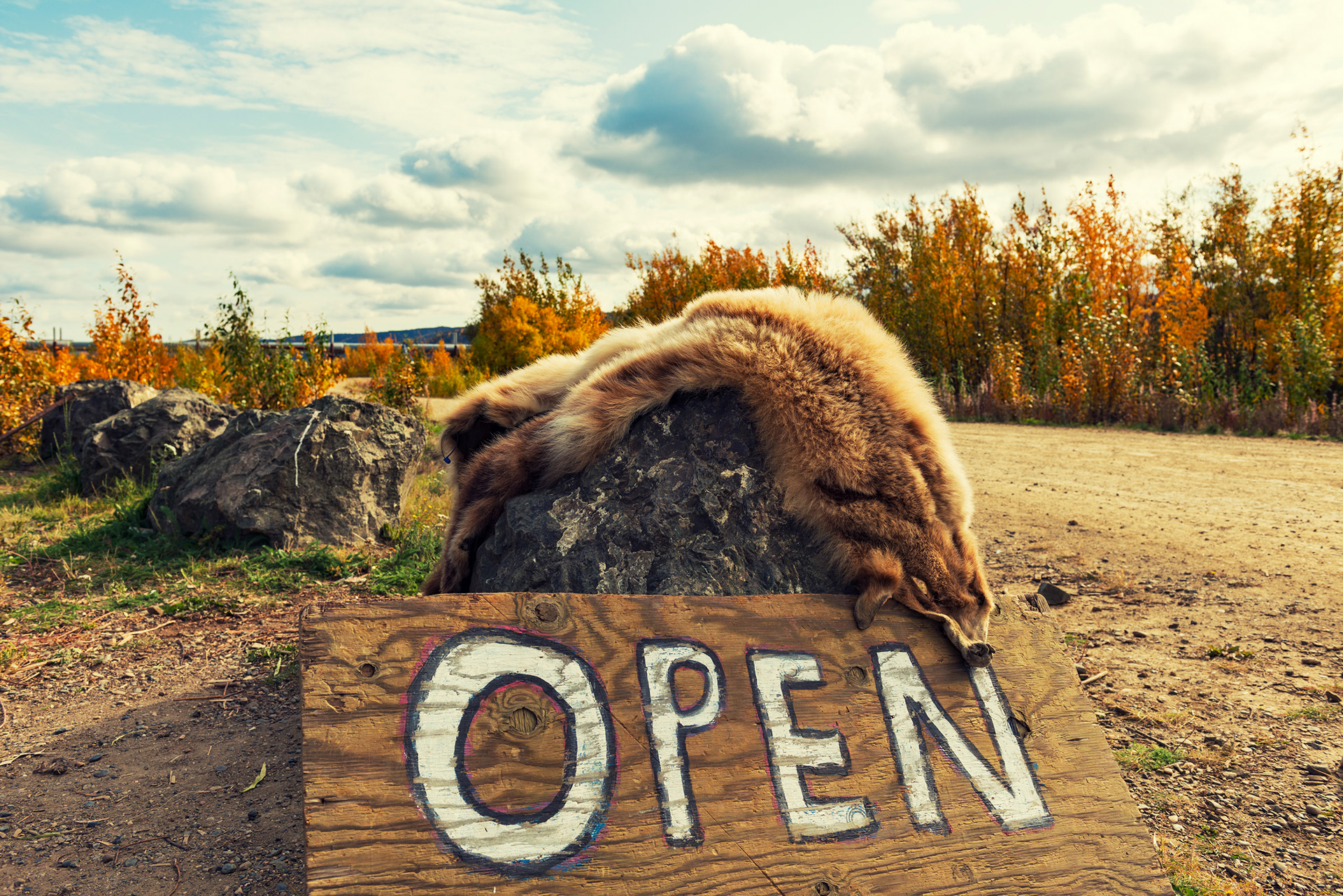
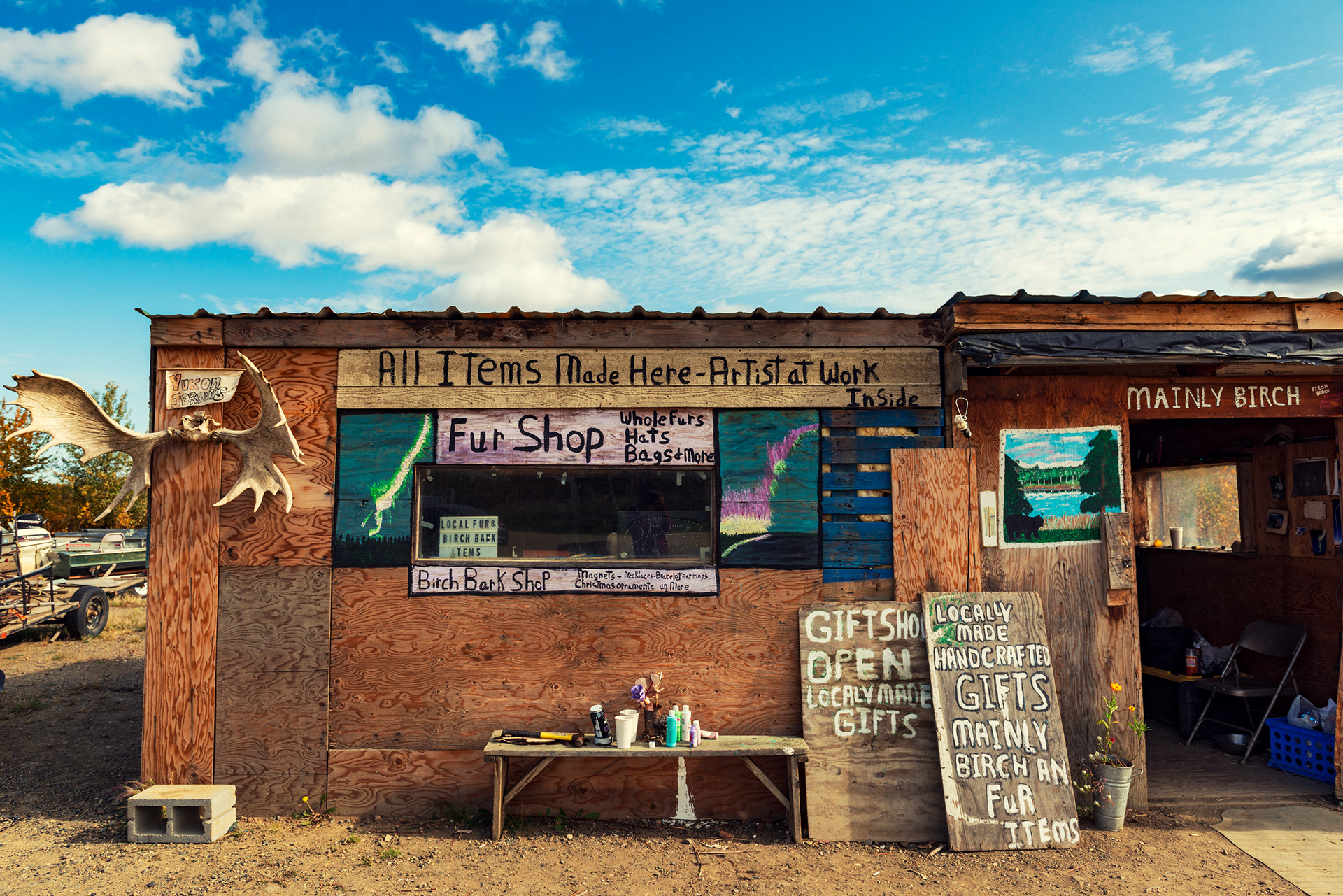
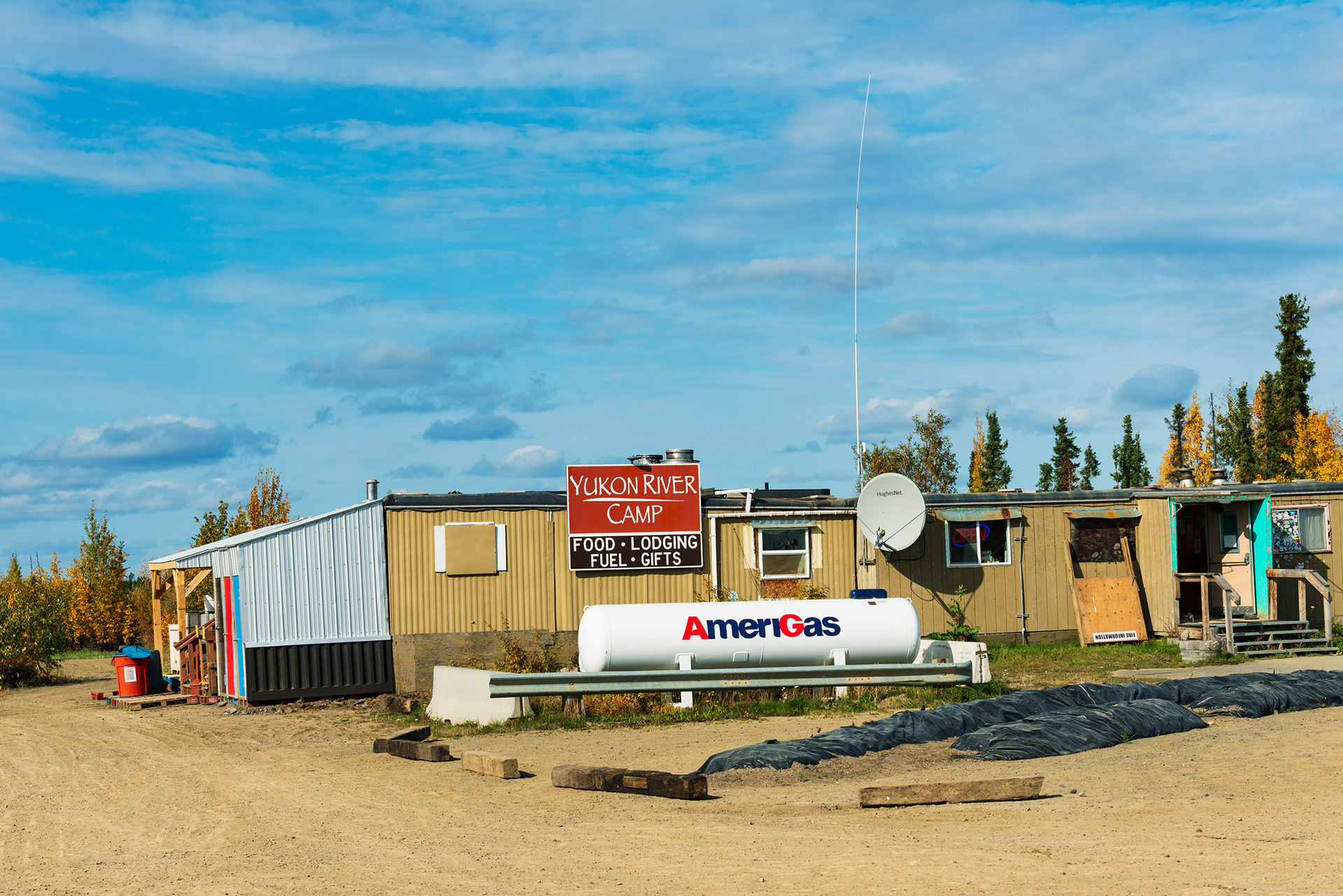
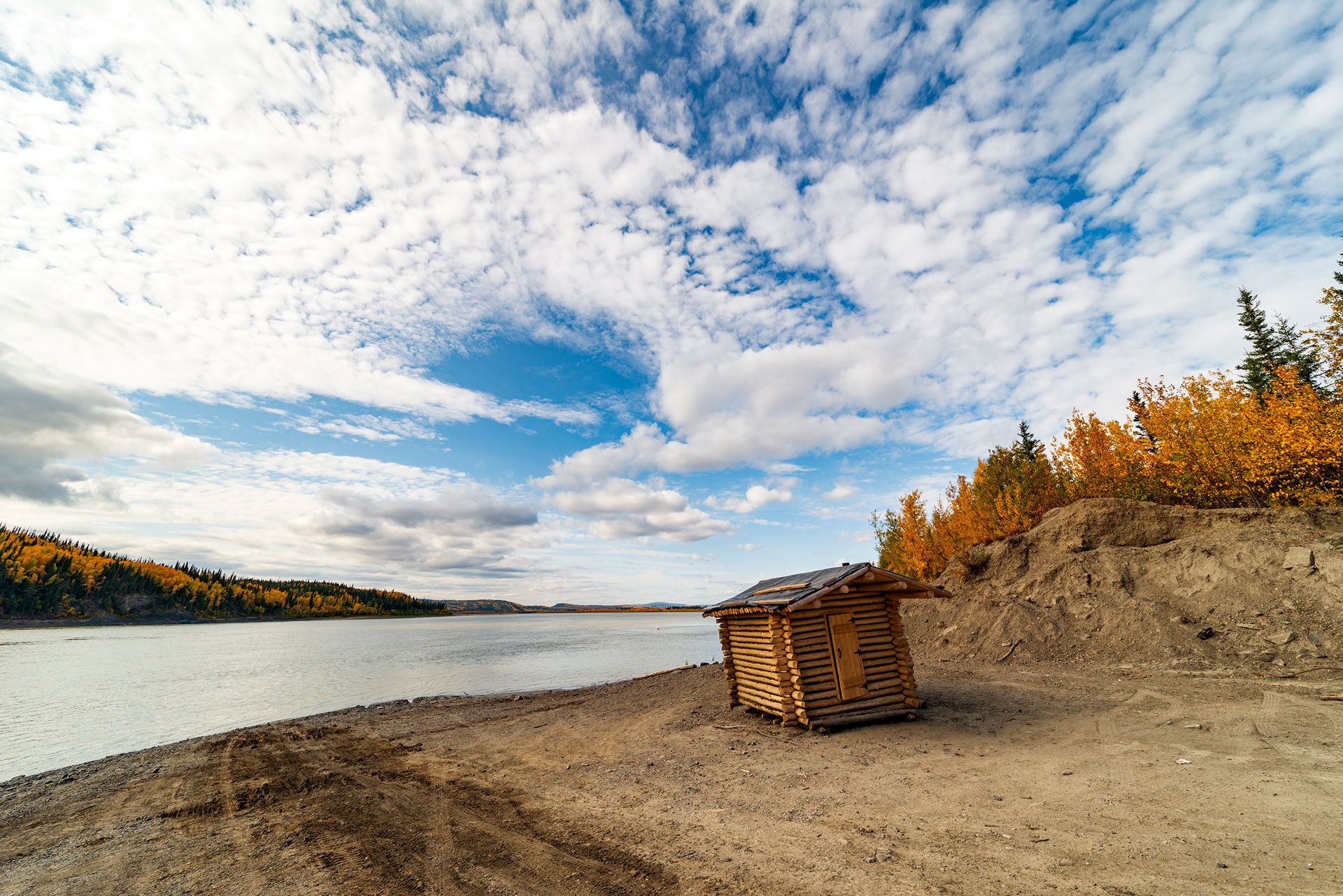
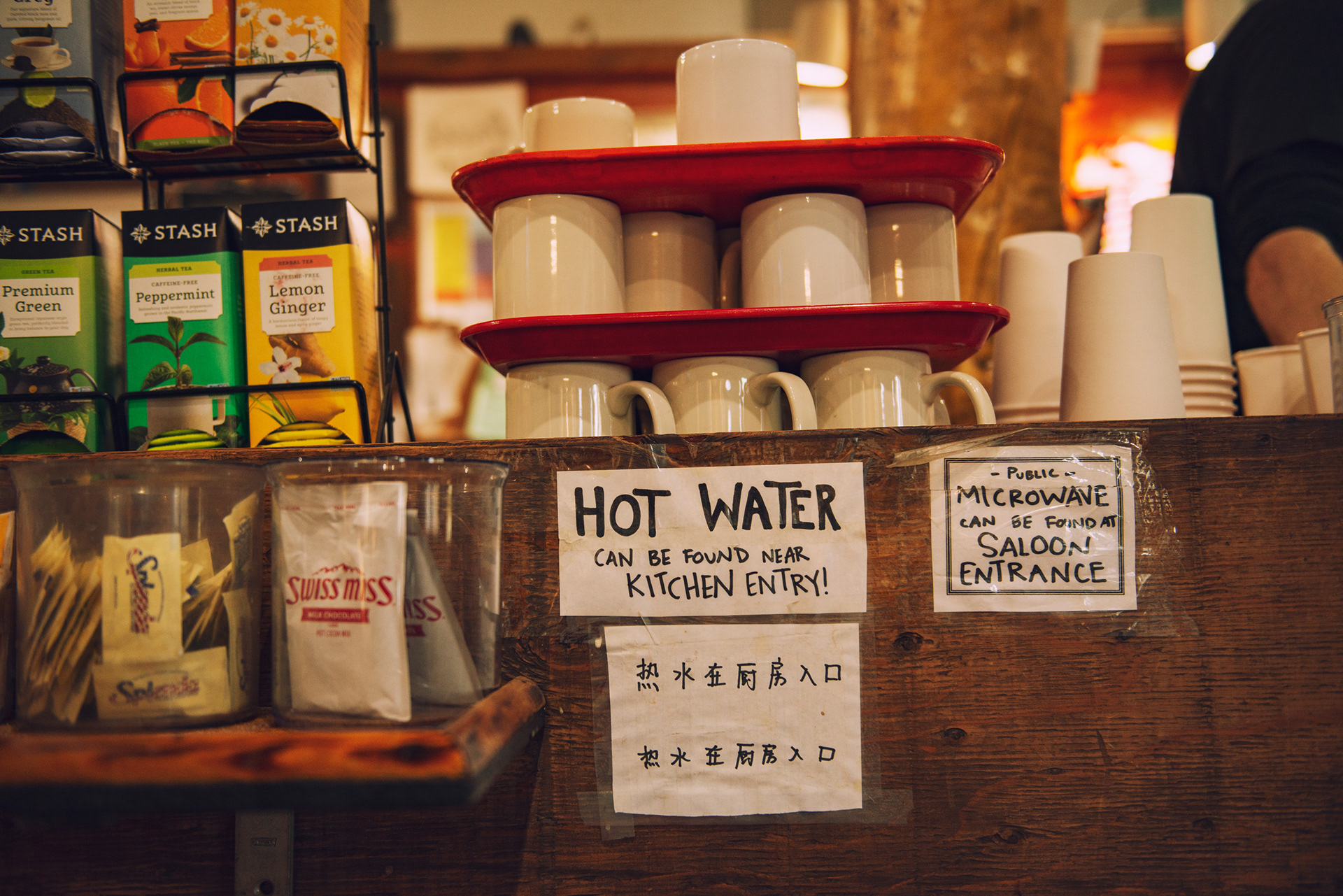
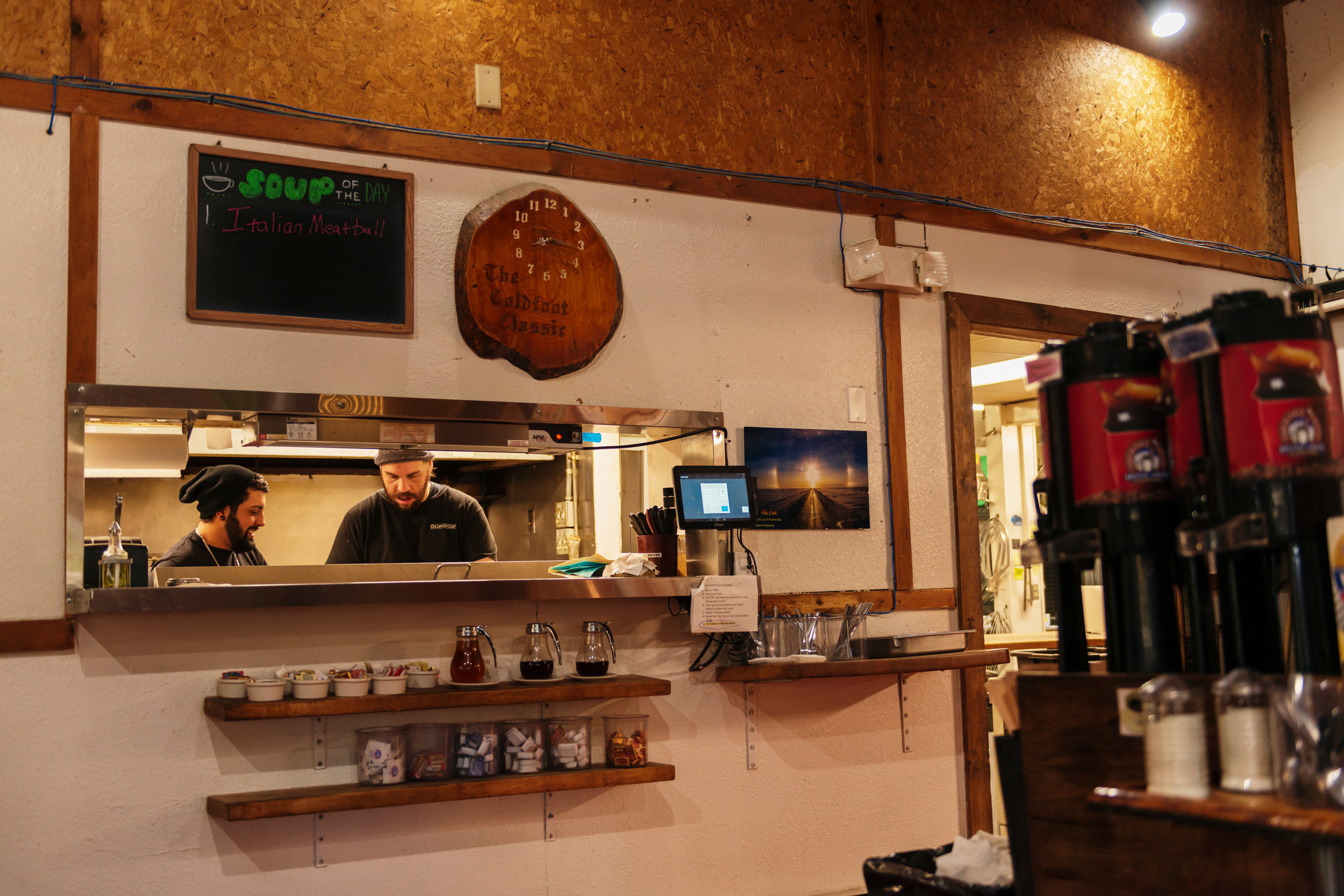
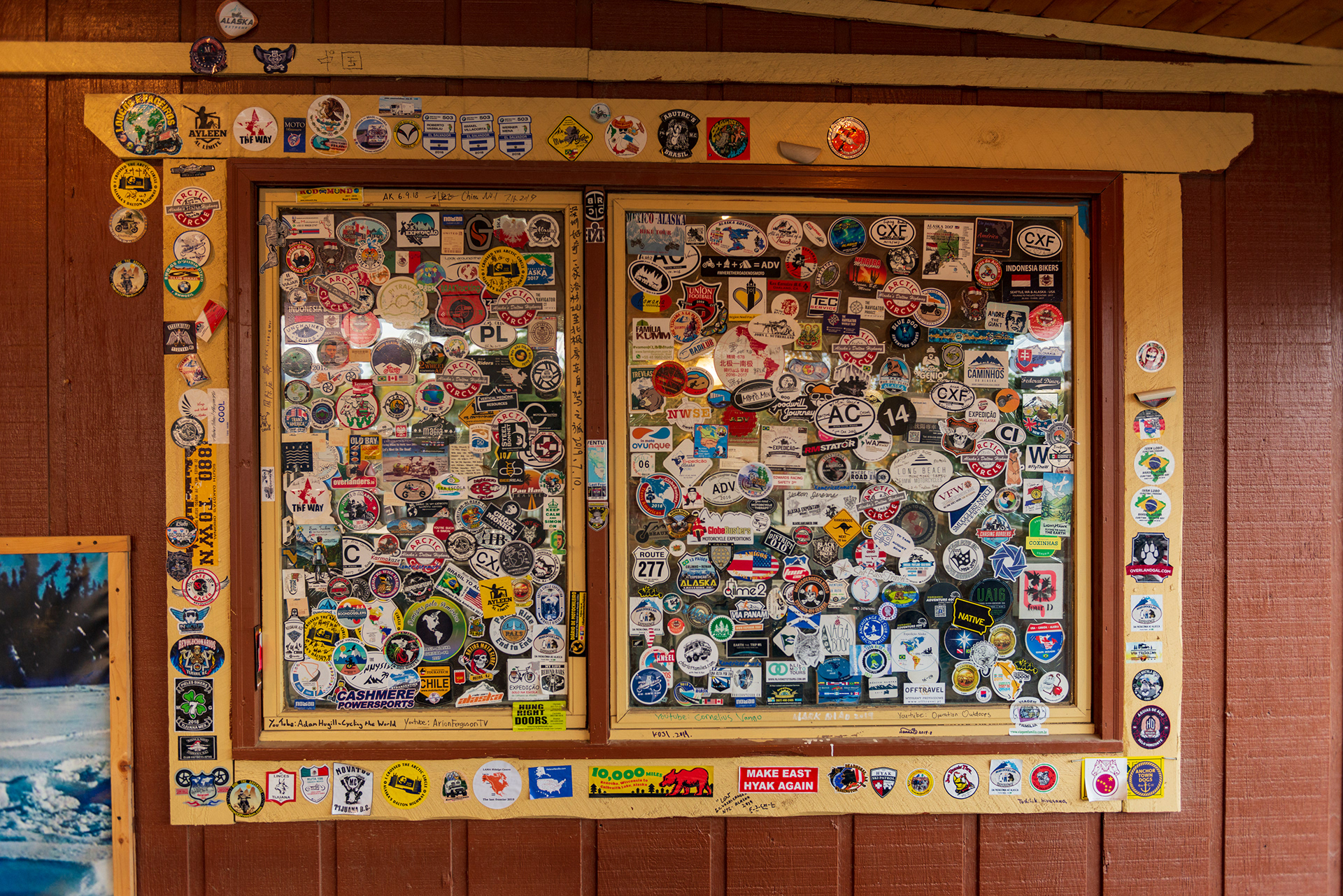
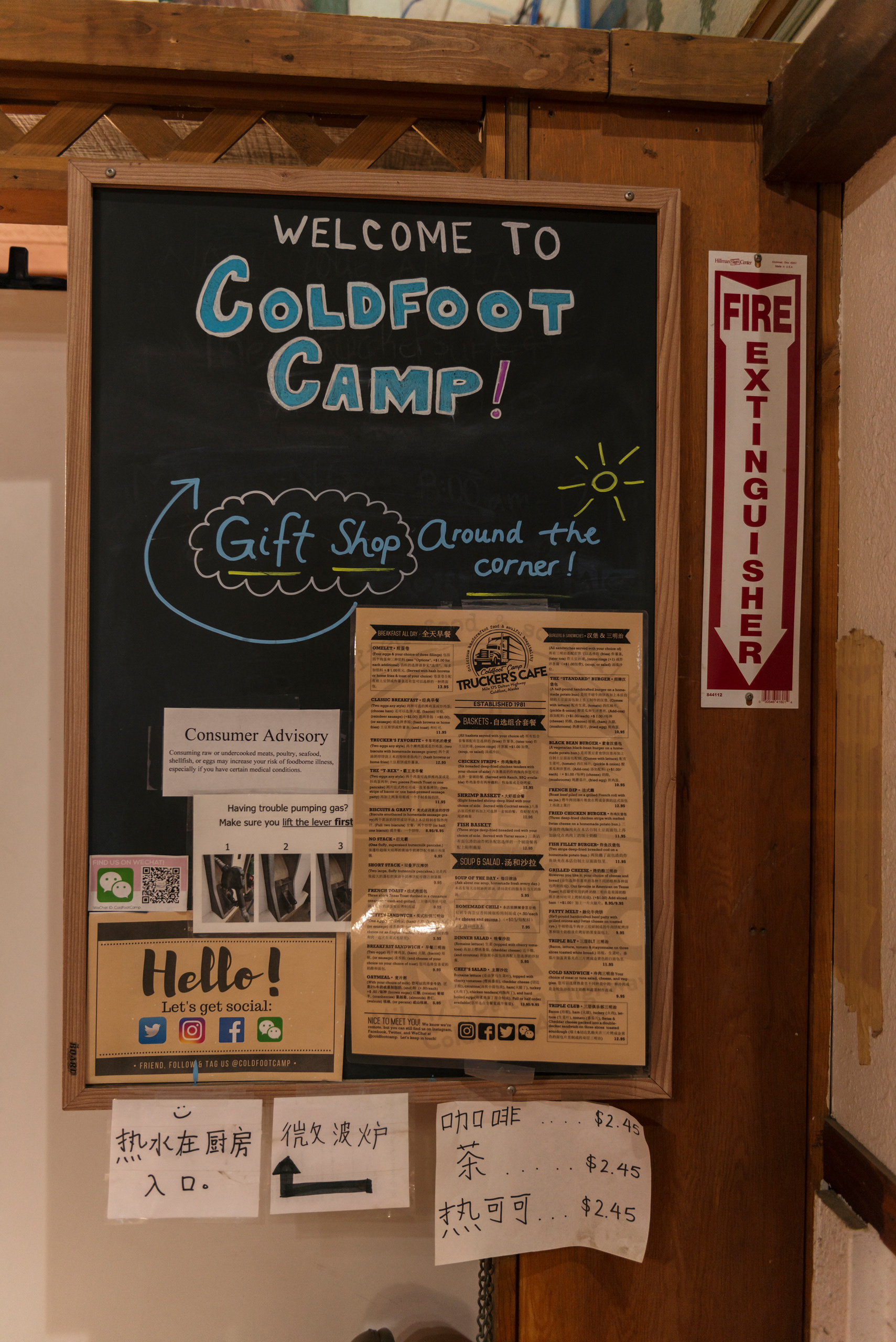
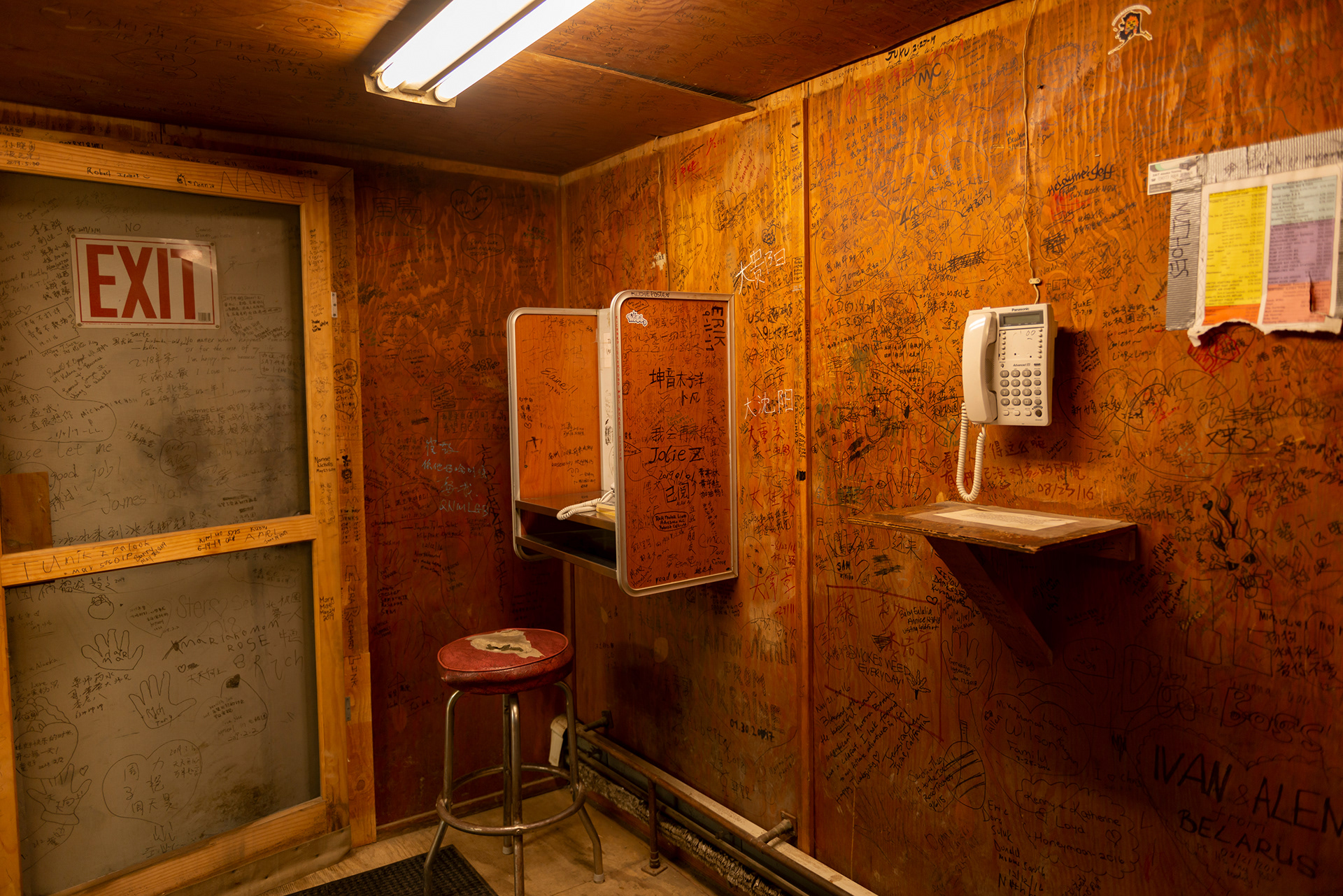
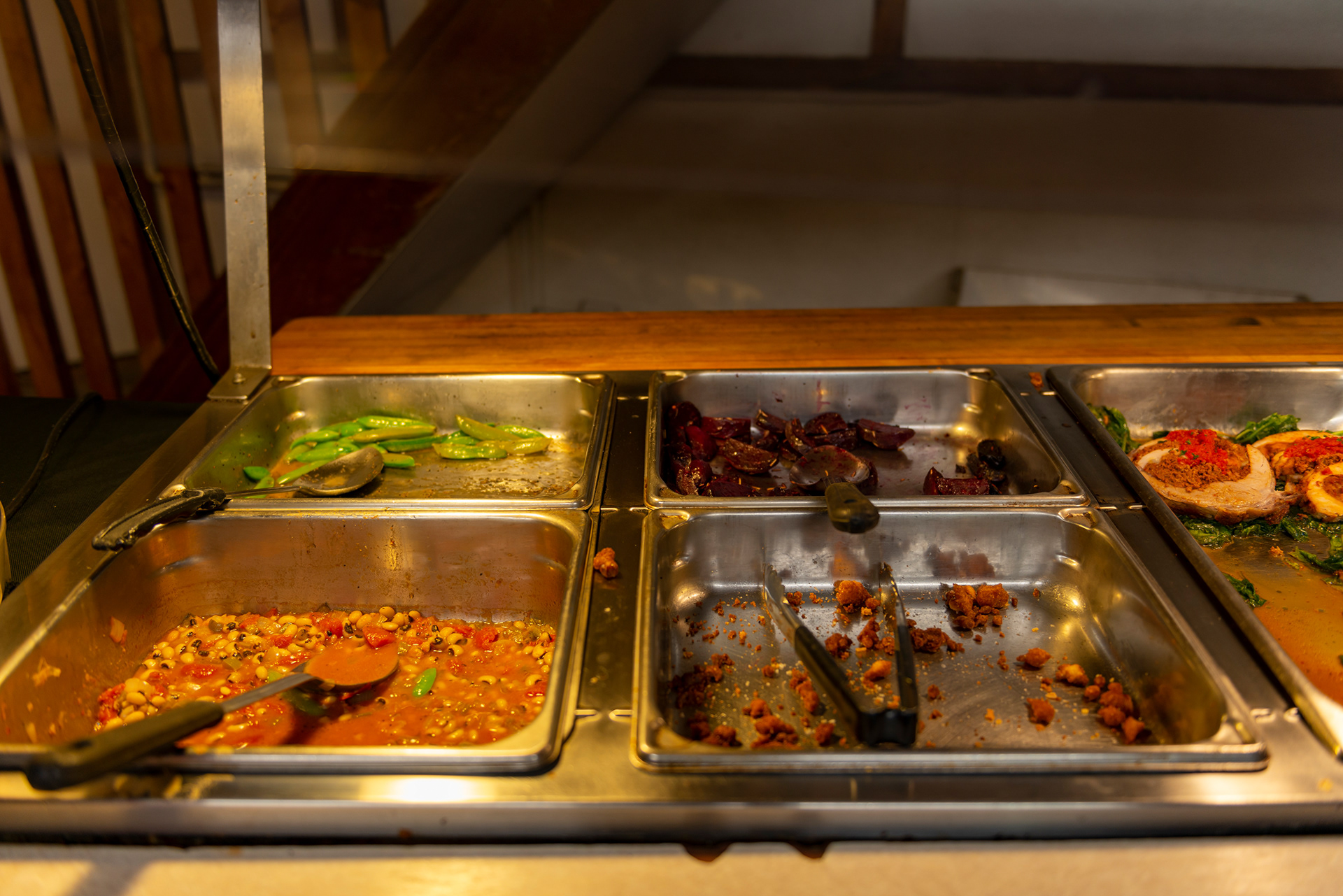
Coldfoot sits at mile 175 and exists for exactly one reason: it is the last fuel stop before Deadhorse, 240 miles further north. Top off without exception. There is nothing between here and the end of the road. What's gathered around the fuel pumps is a trucker's rest stop with a restaurant, a row of rooms, and the Arctic Interagency Visitor Center, the best place on the Dalton to pick up national park maps, speak to a ranger, and get an honest weather briefing for the road ahead. The first thing I did was wash my hands in hot water, and I stood at the sink longer than a person should. Everything in the car, including us, wore a fine grey dust. The food at Coldfoot Camp is exactly what you'd expect from a place that primarily serves long-haul drivers: enormous portions with unremarkable quality. After two days on the road, it tasted like a feast. There is a public phone bolted to the wall by the bathroom, and the wall around it is covered in handwriting, names and hometowns and dates going back decades. People who reach Coldfoot seem to feel they should leave proof.
We did not stay. The rooms are converted containers, and nearly all of them are singles, one narrow bed each, built for truckers who travel alone. Two rooms for the two of us would have cost more than a night in San Francisco.
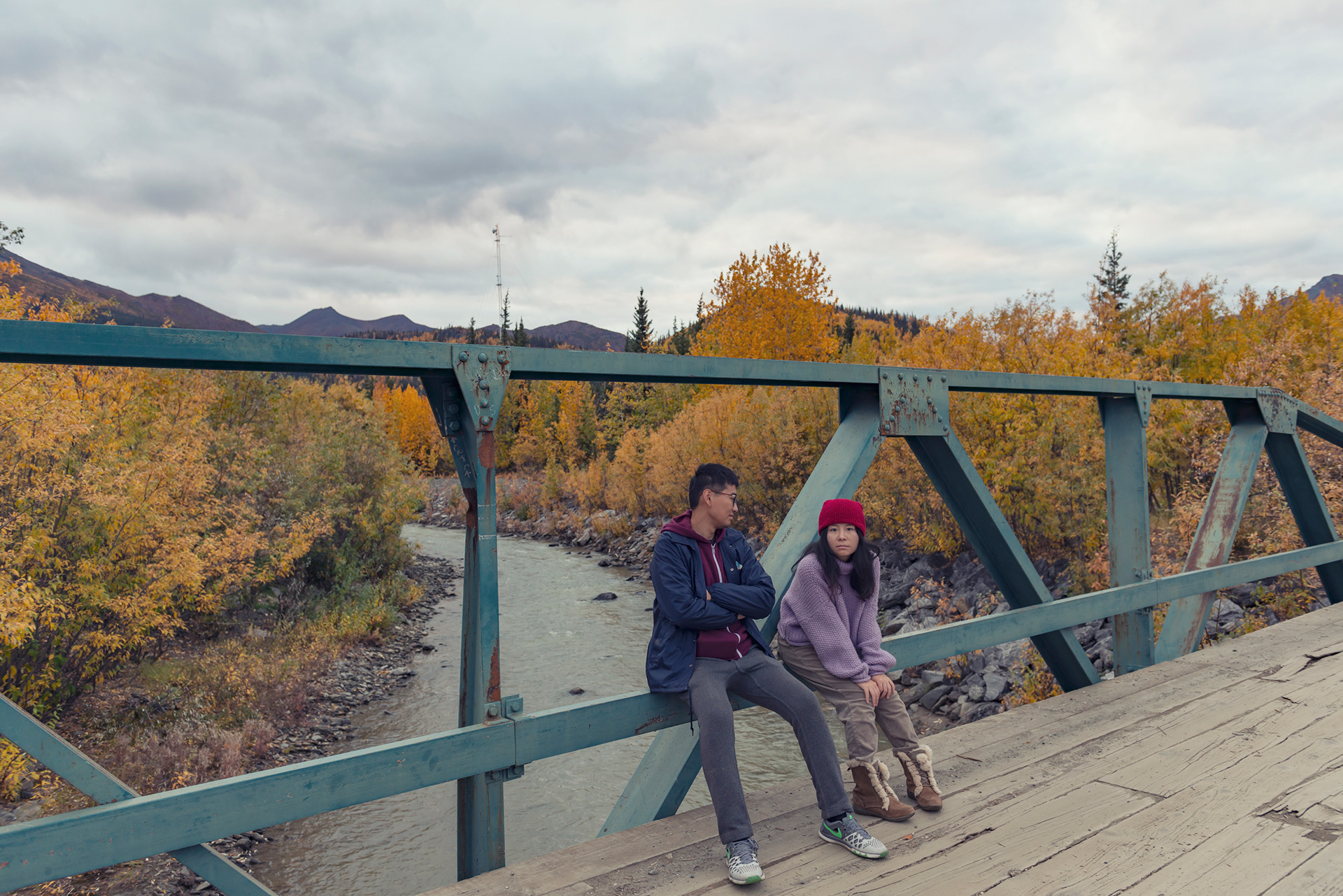
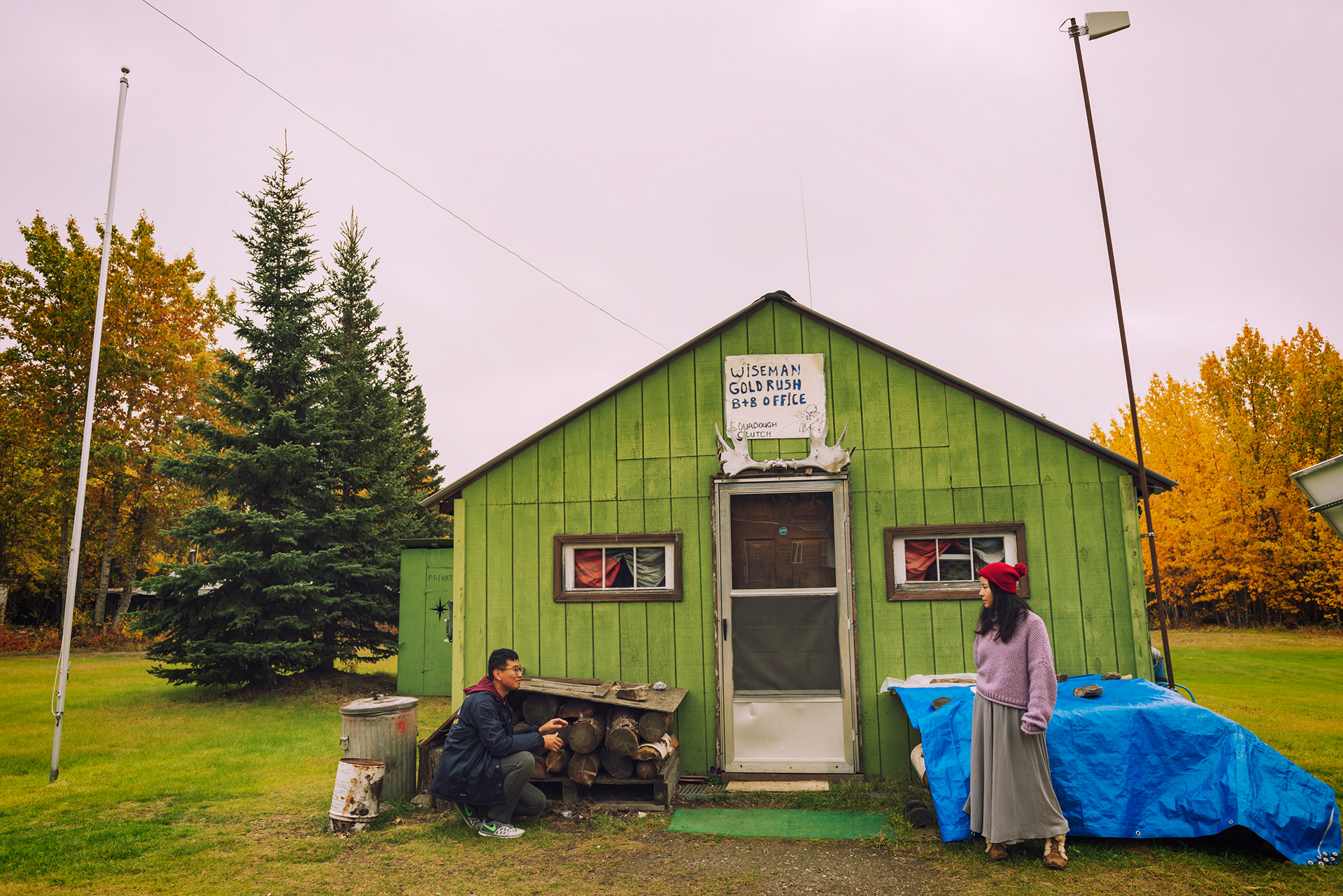
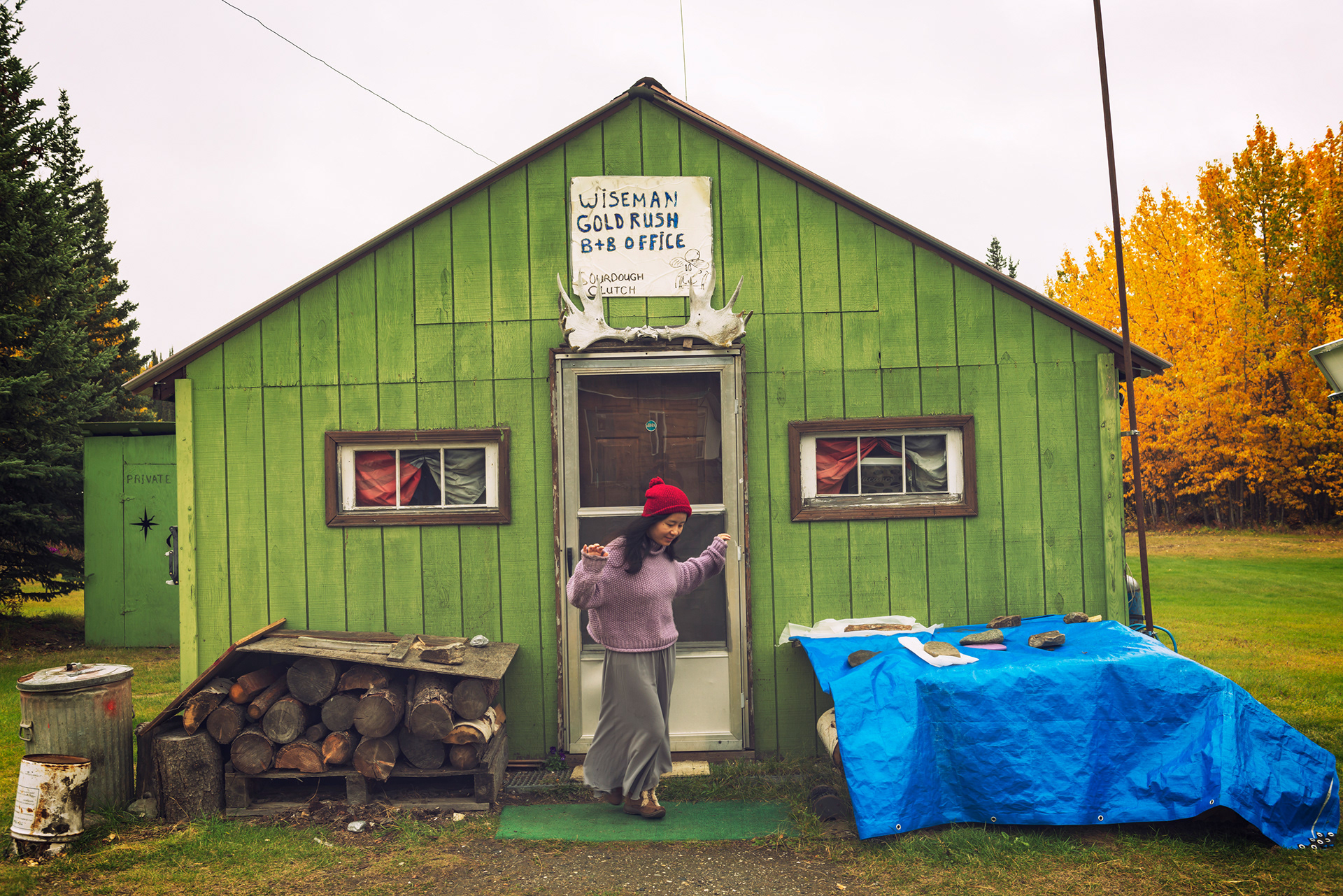
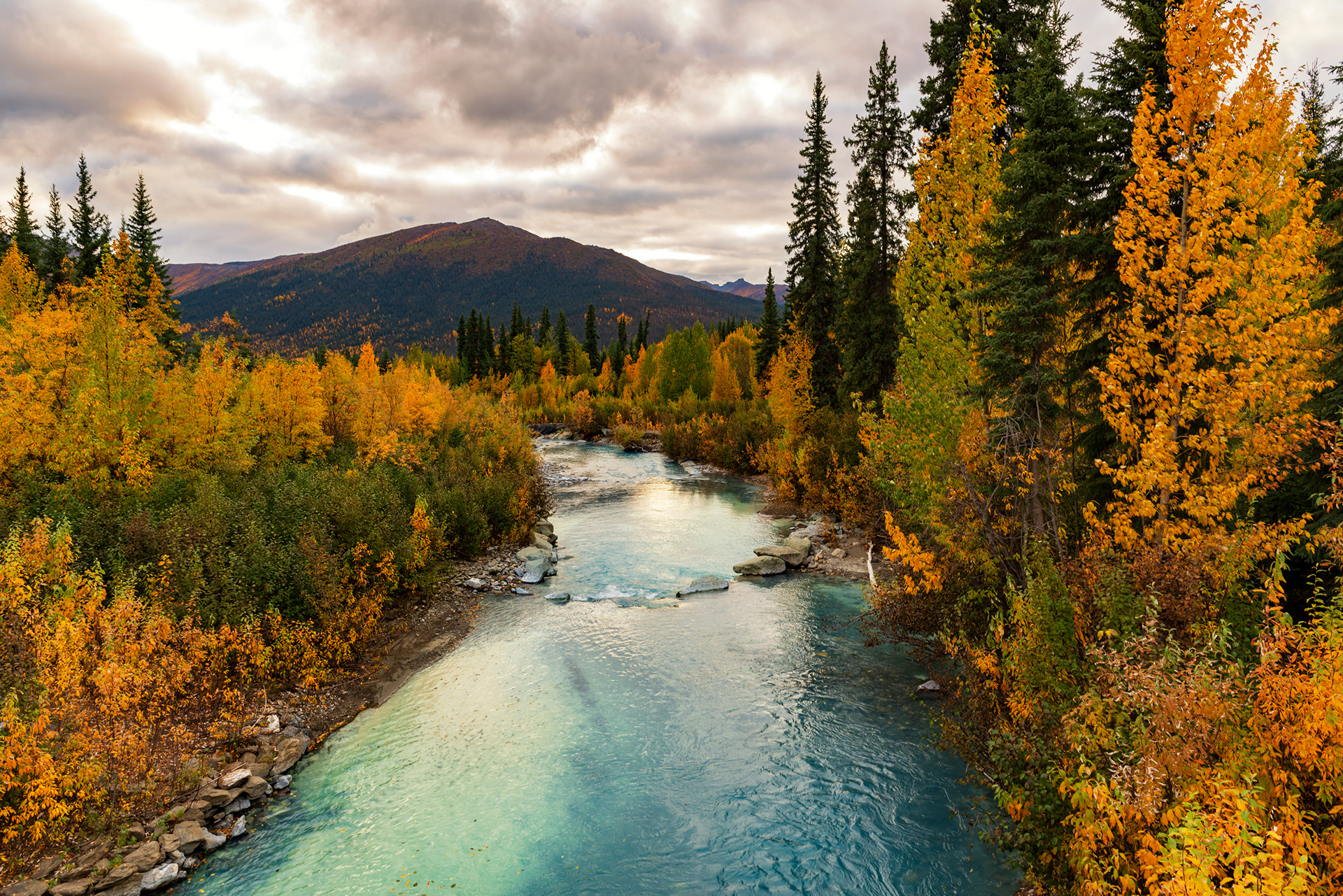
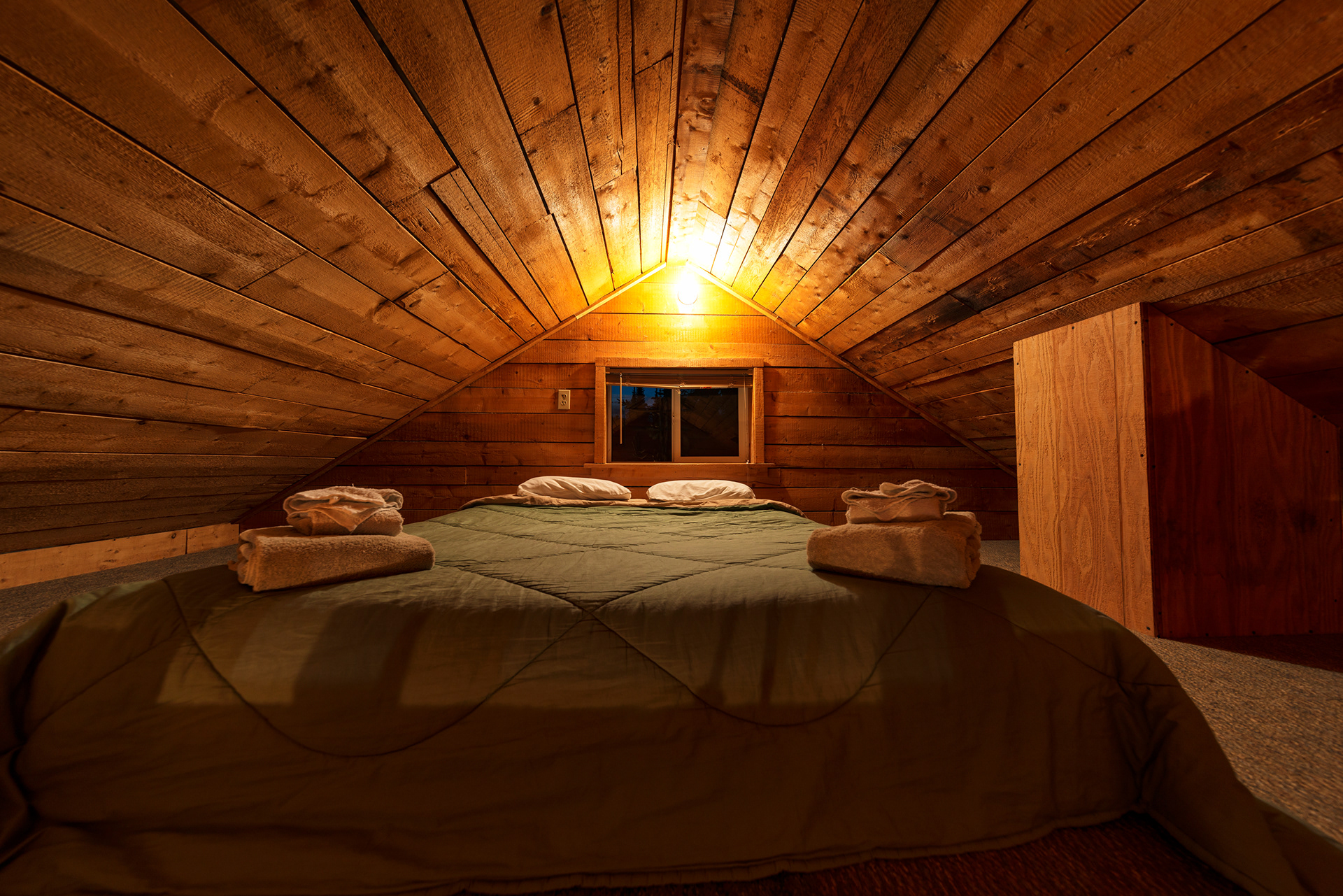
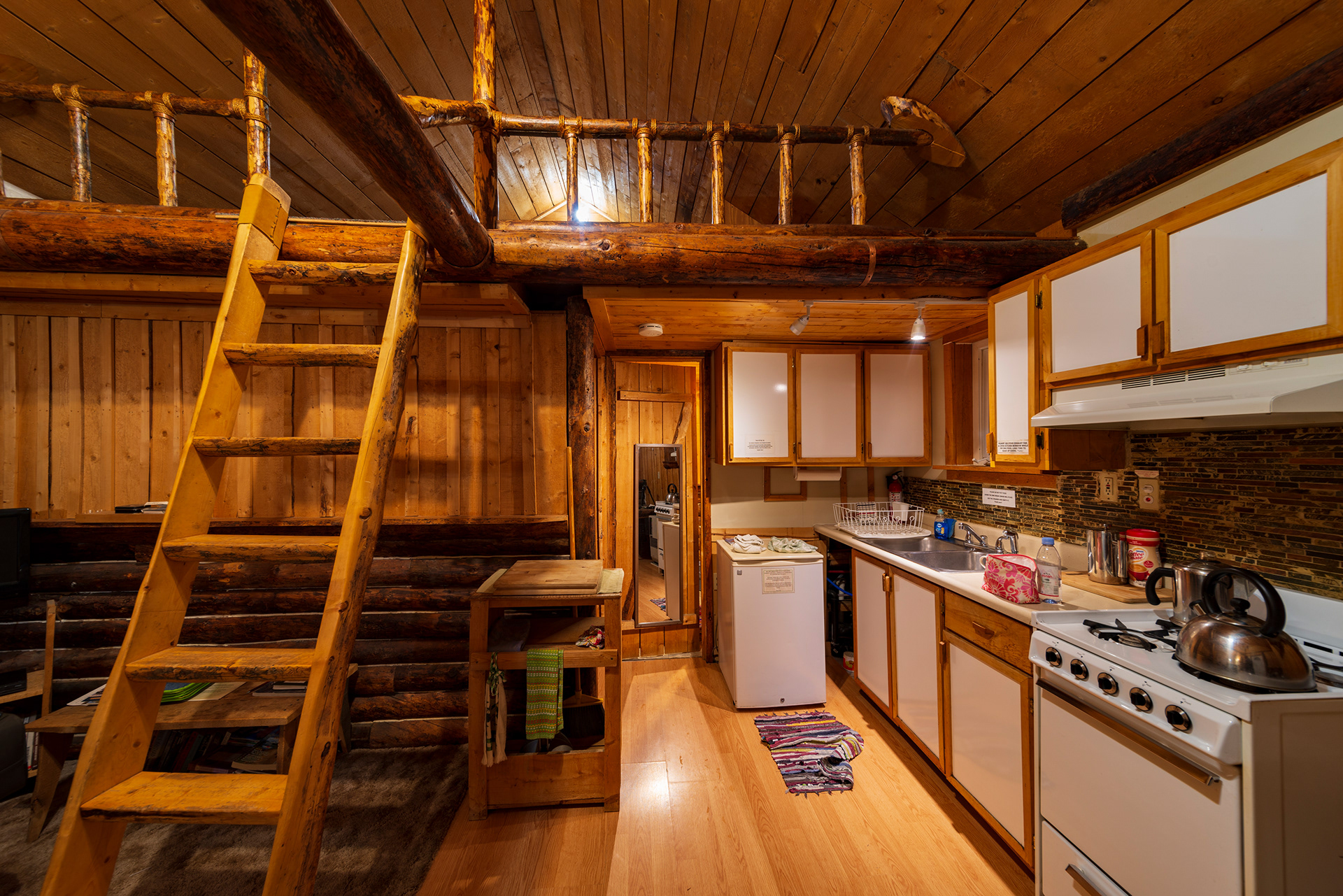
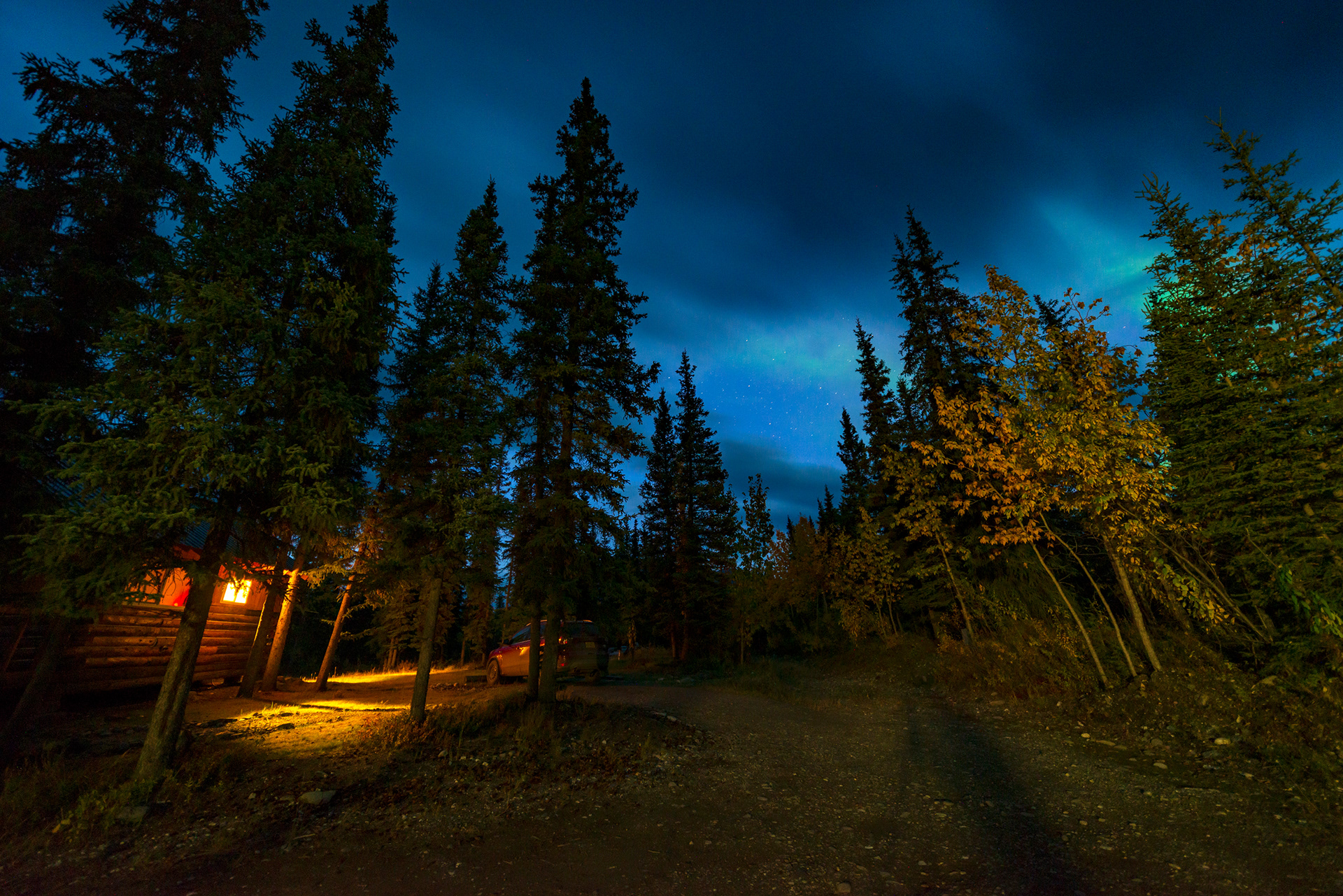
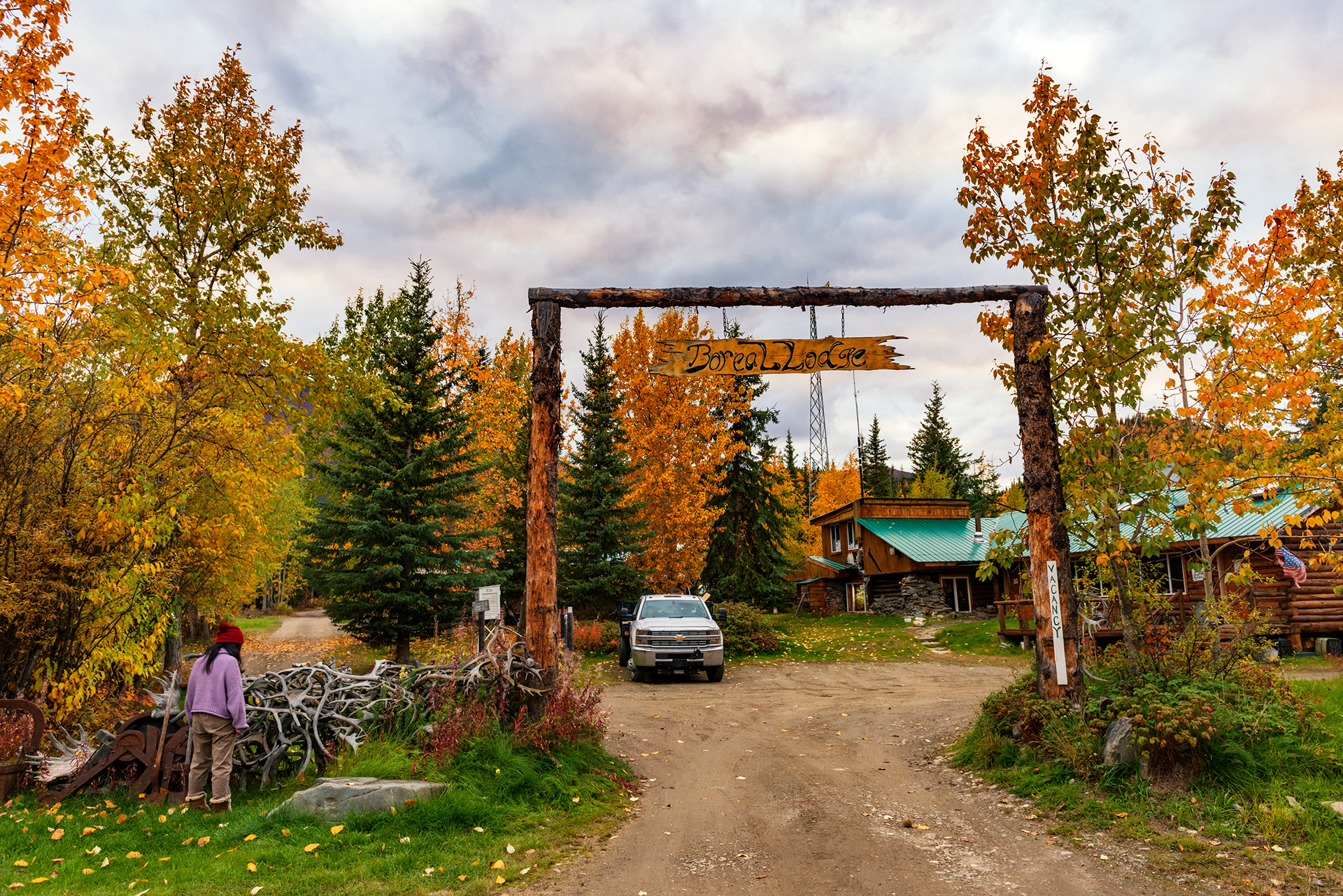
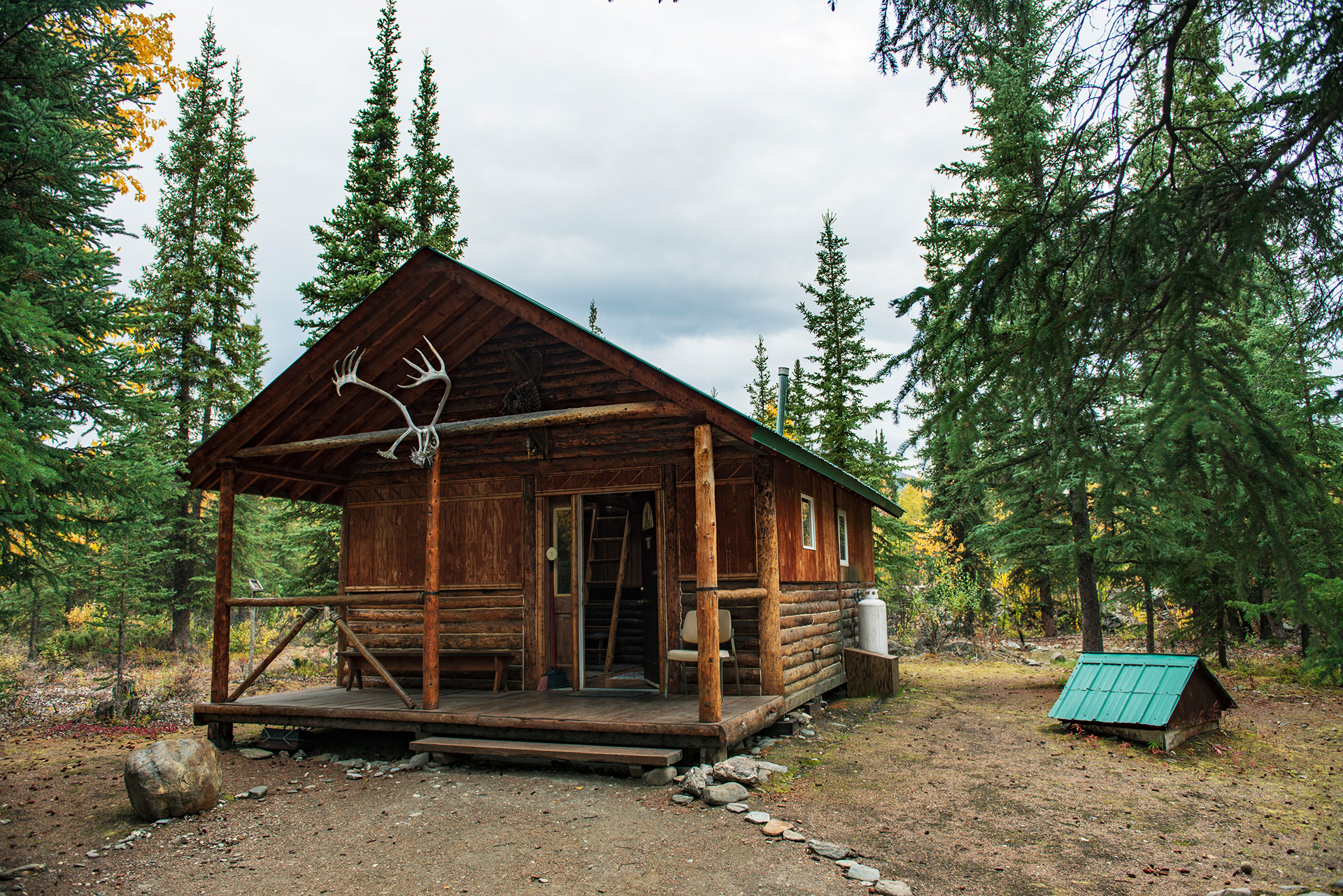
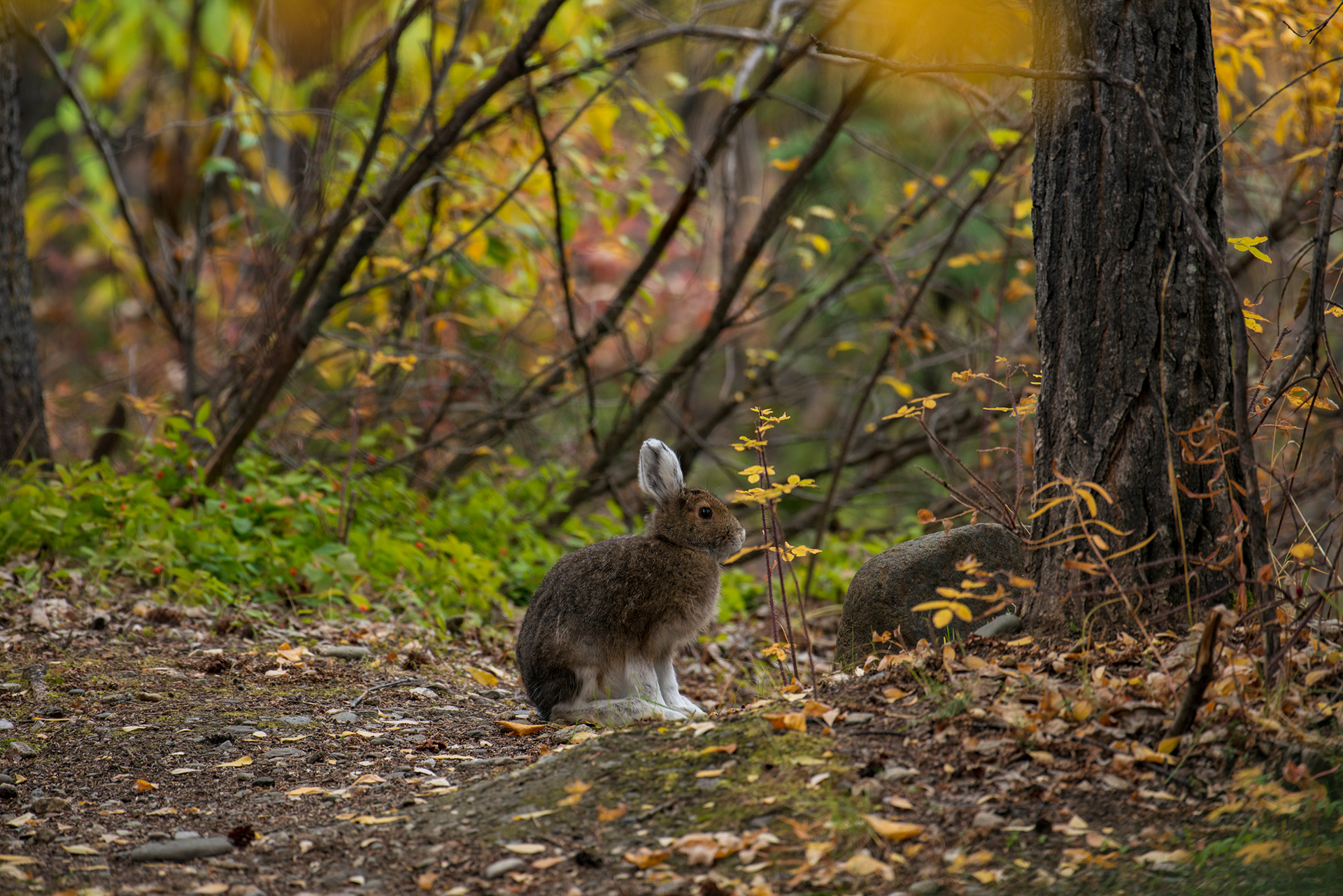
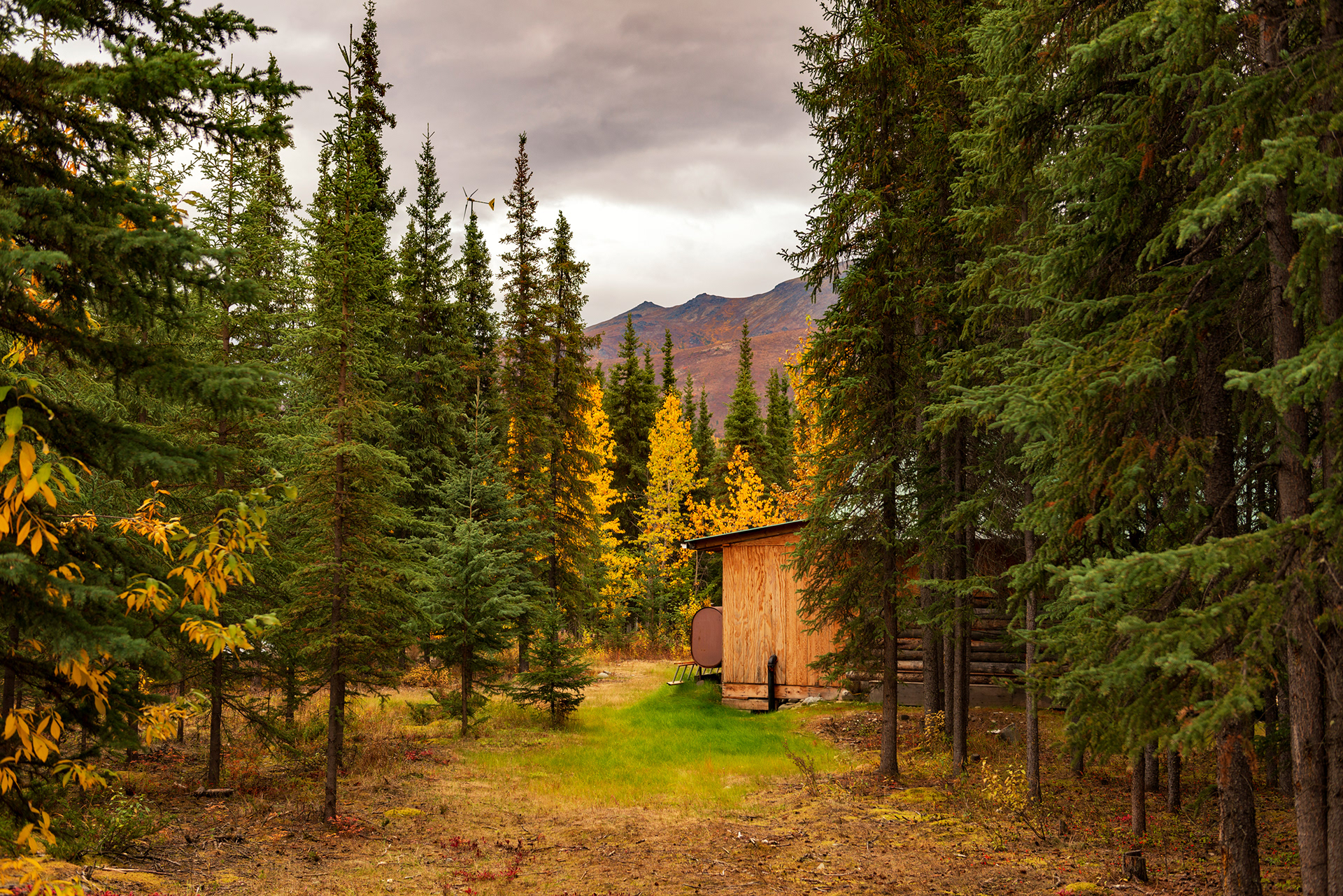
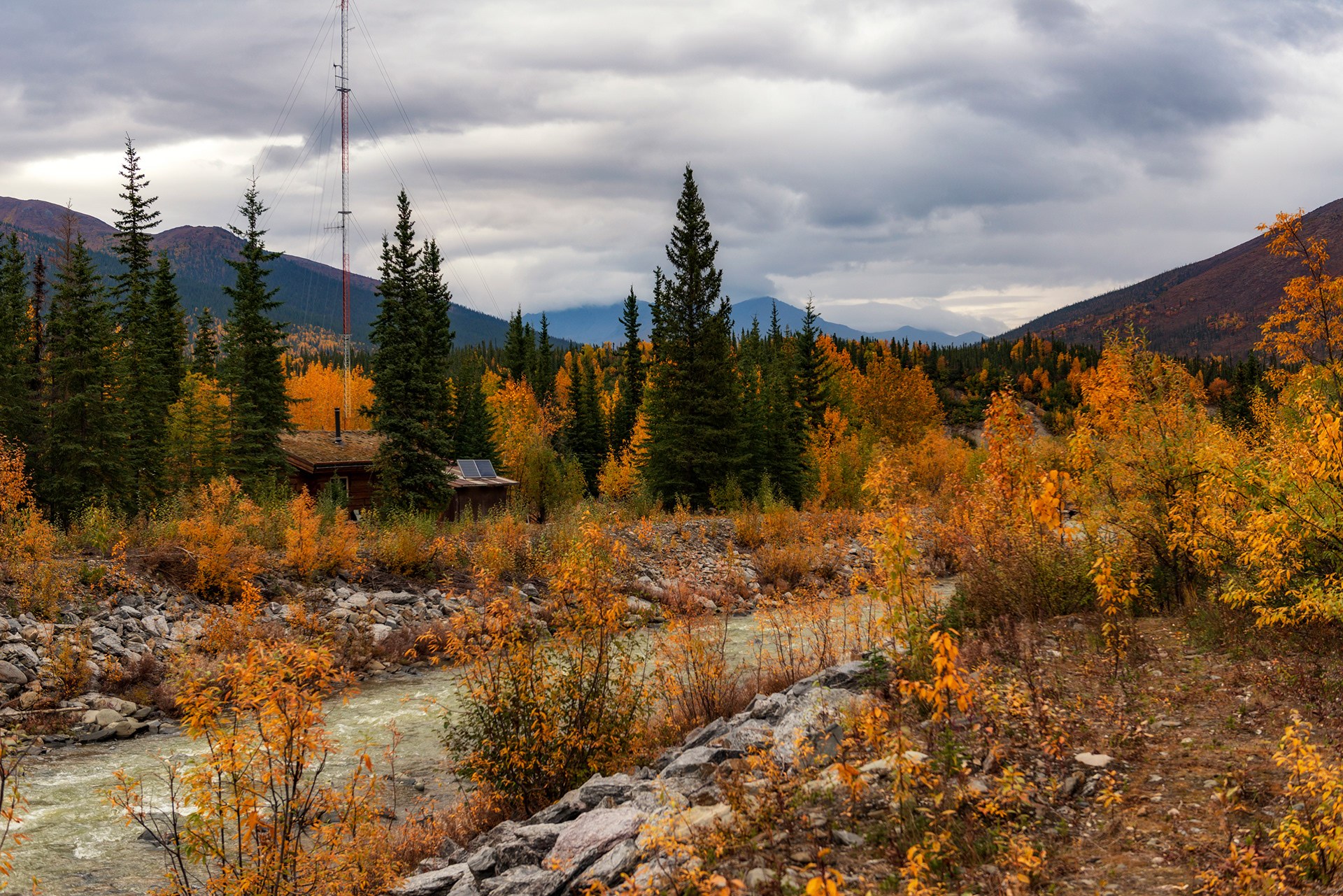
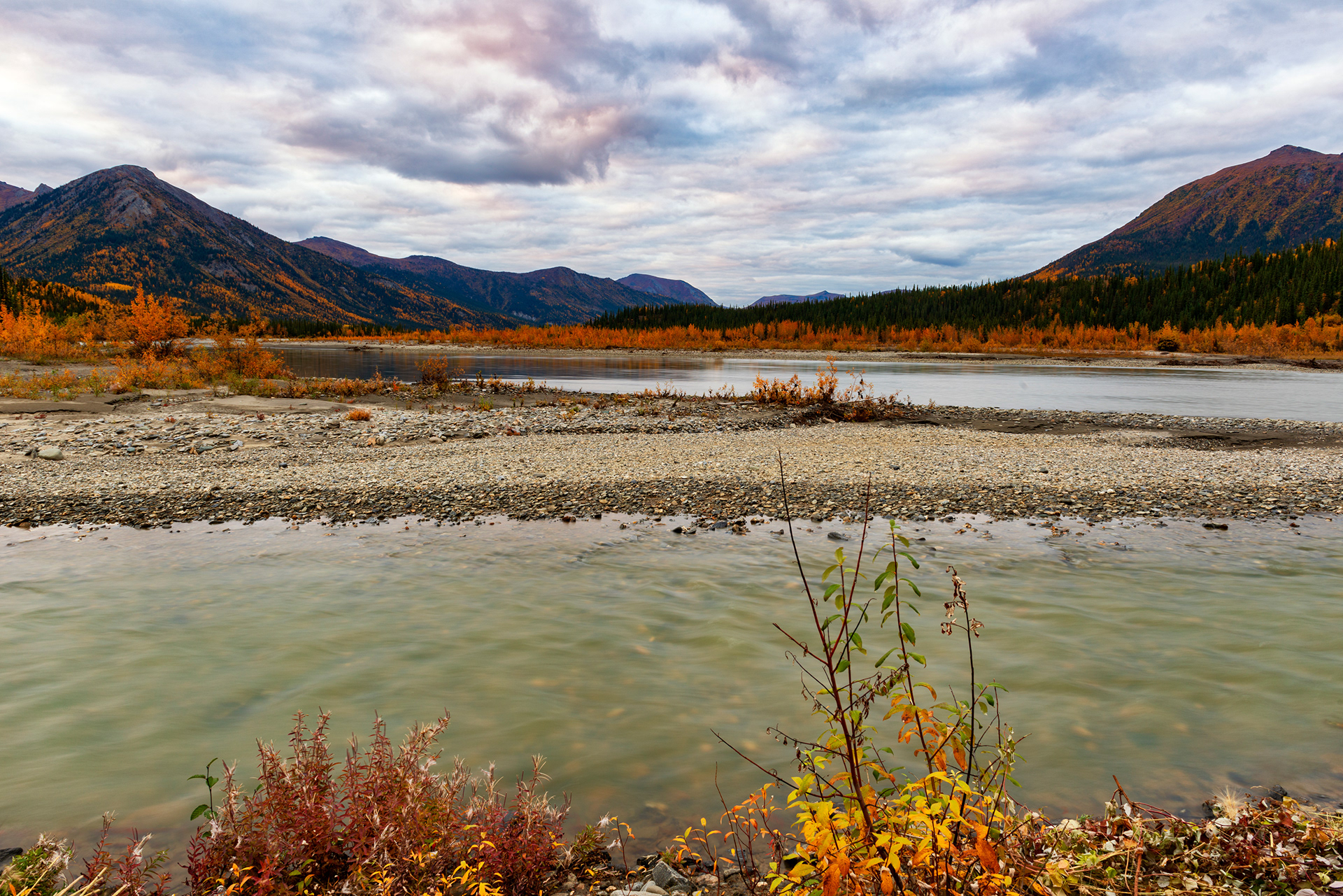
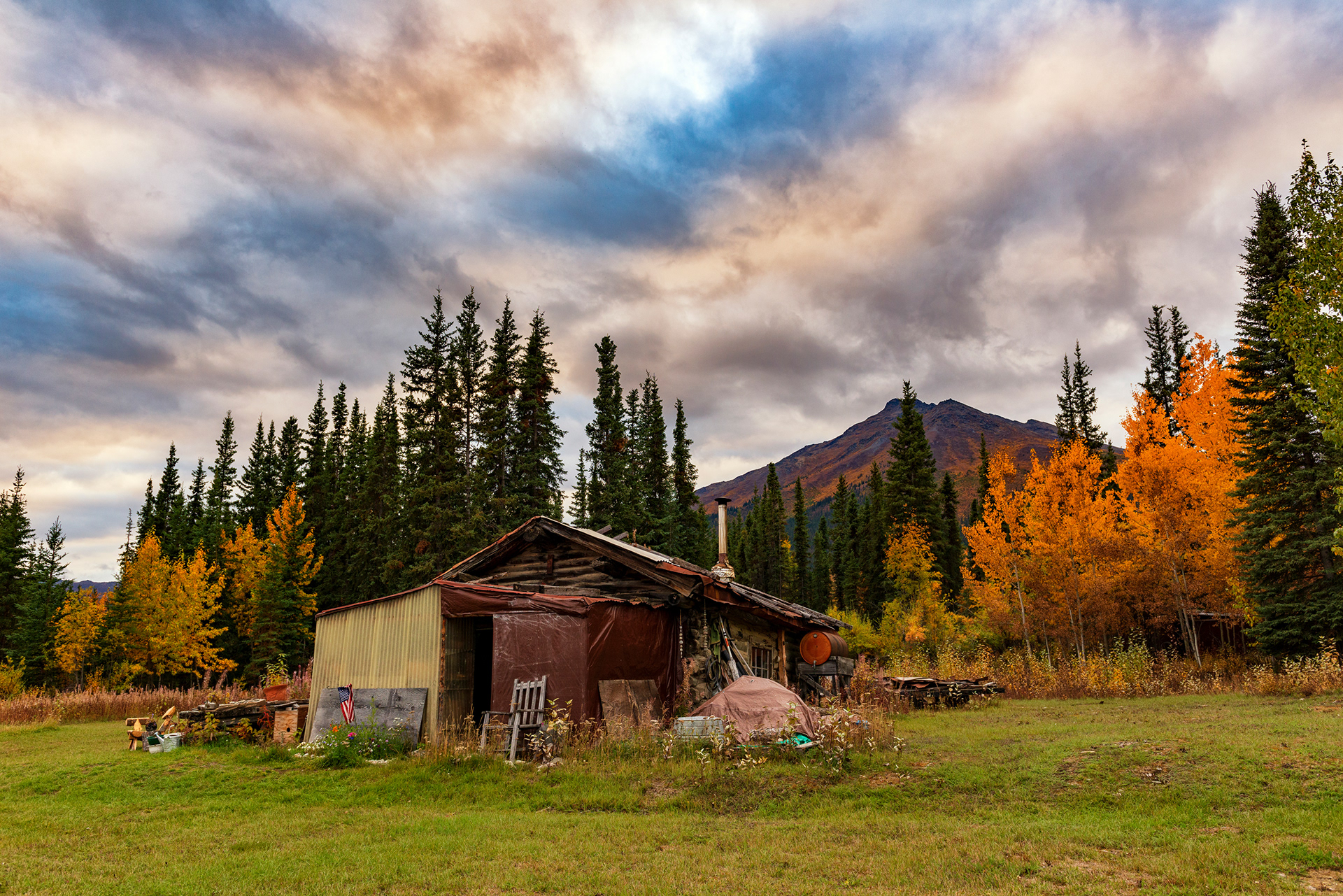
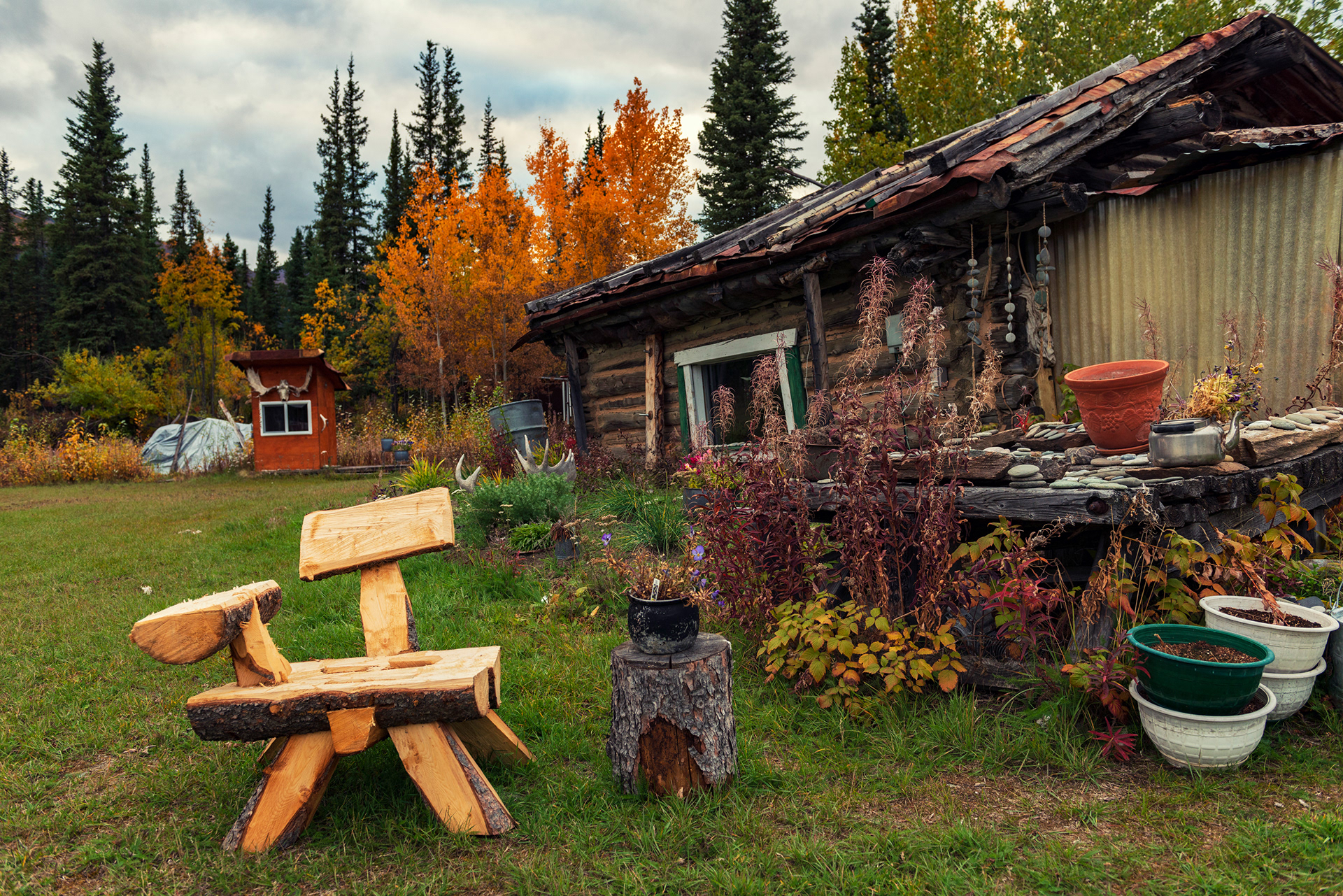
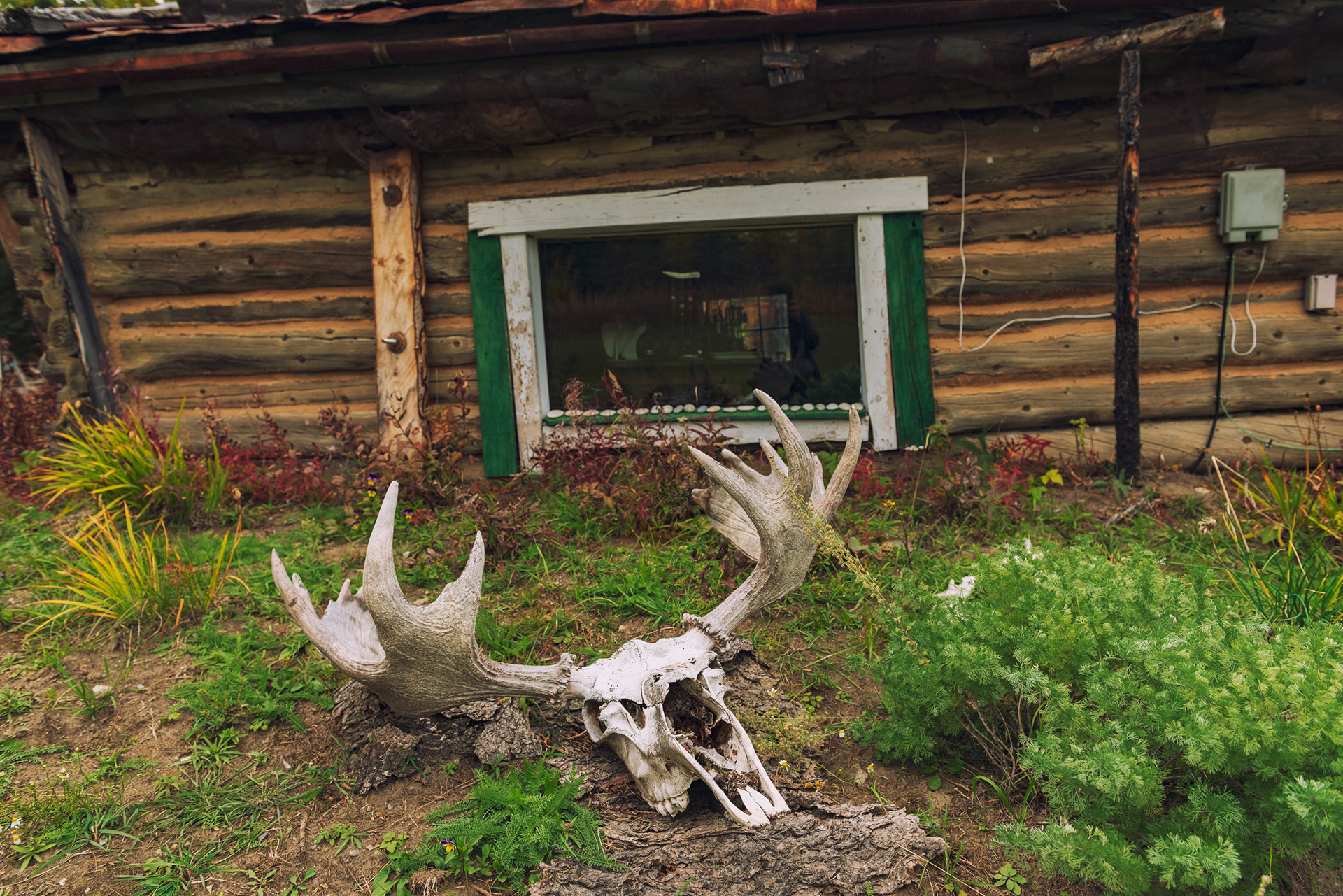
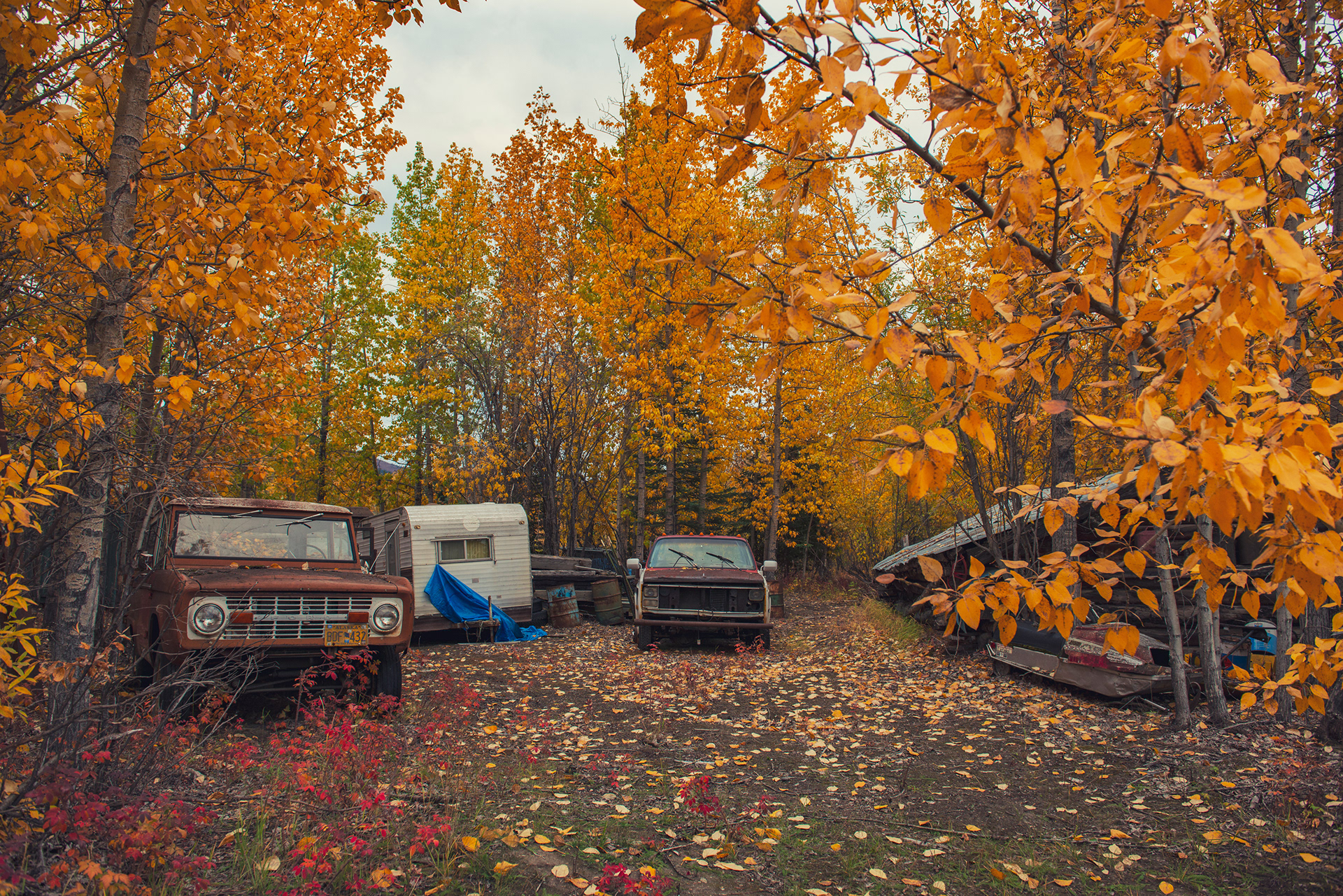
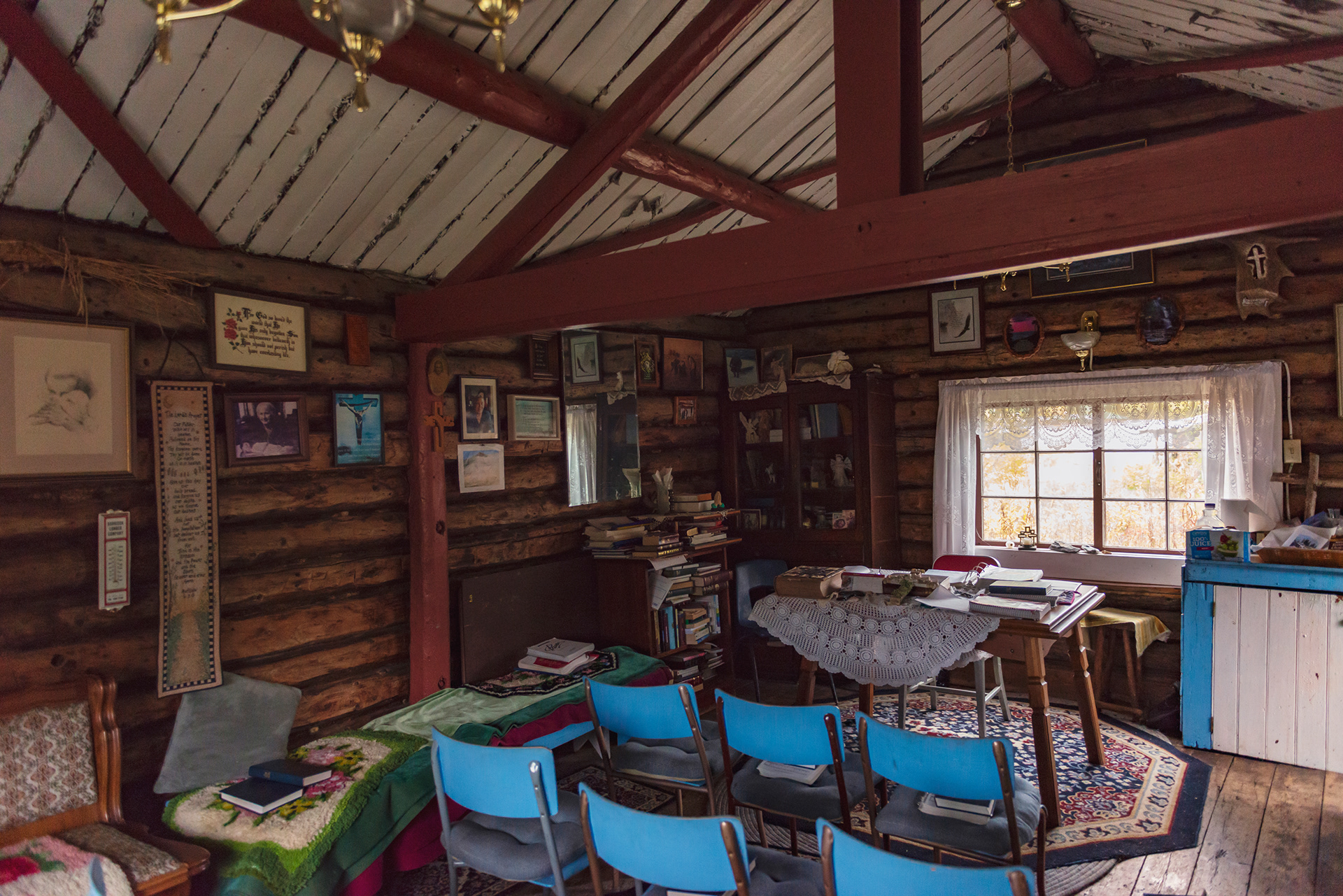
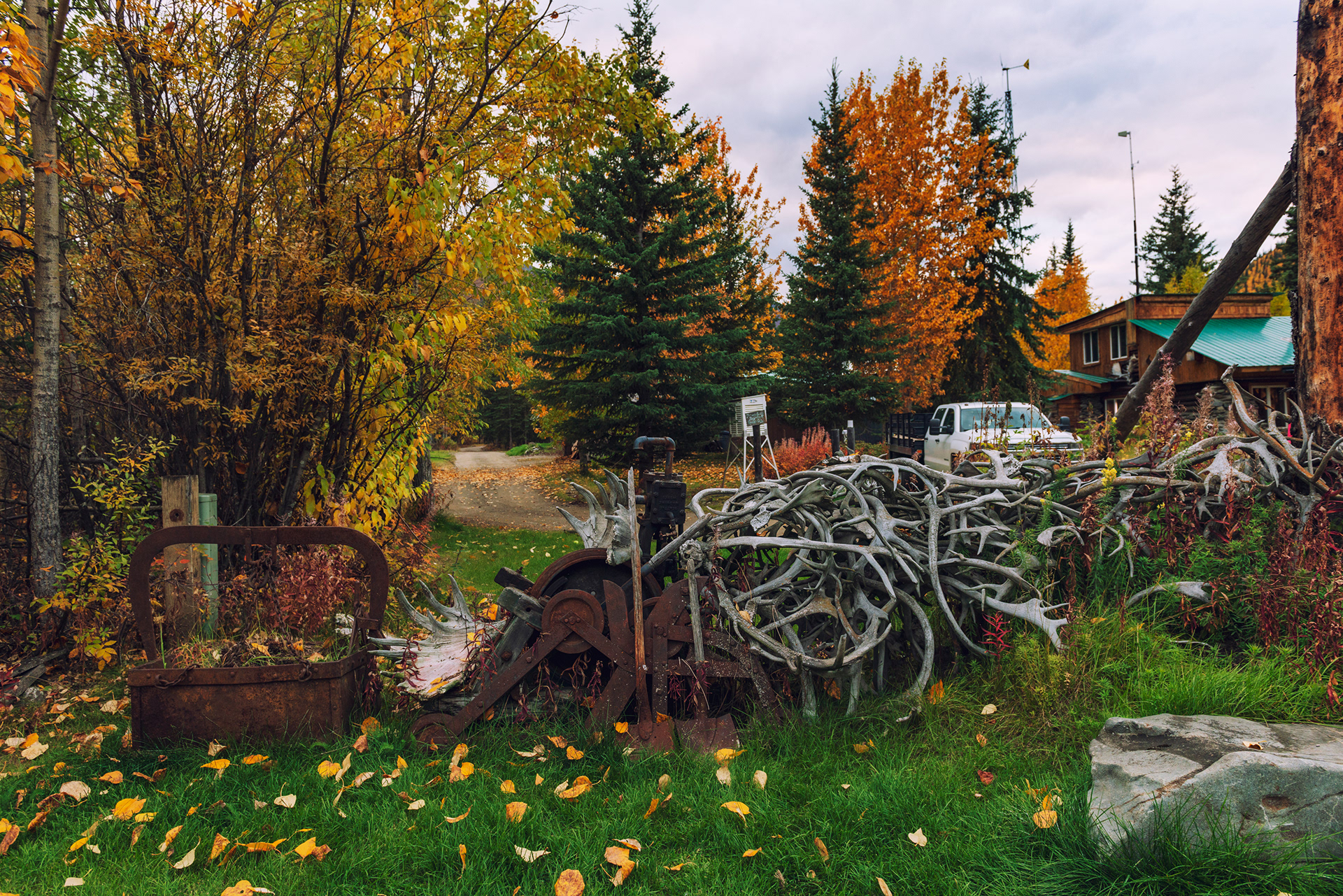
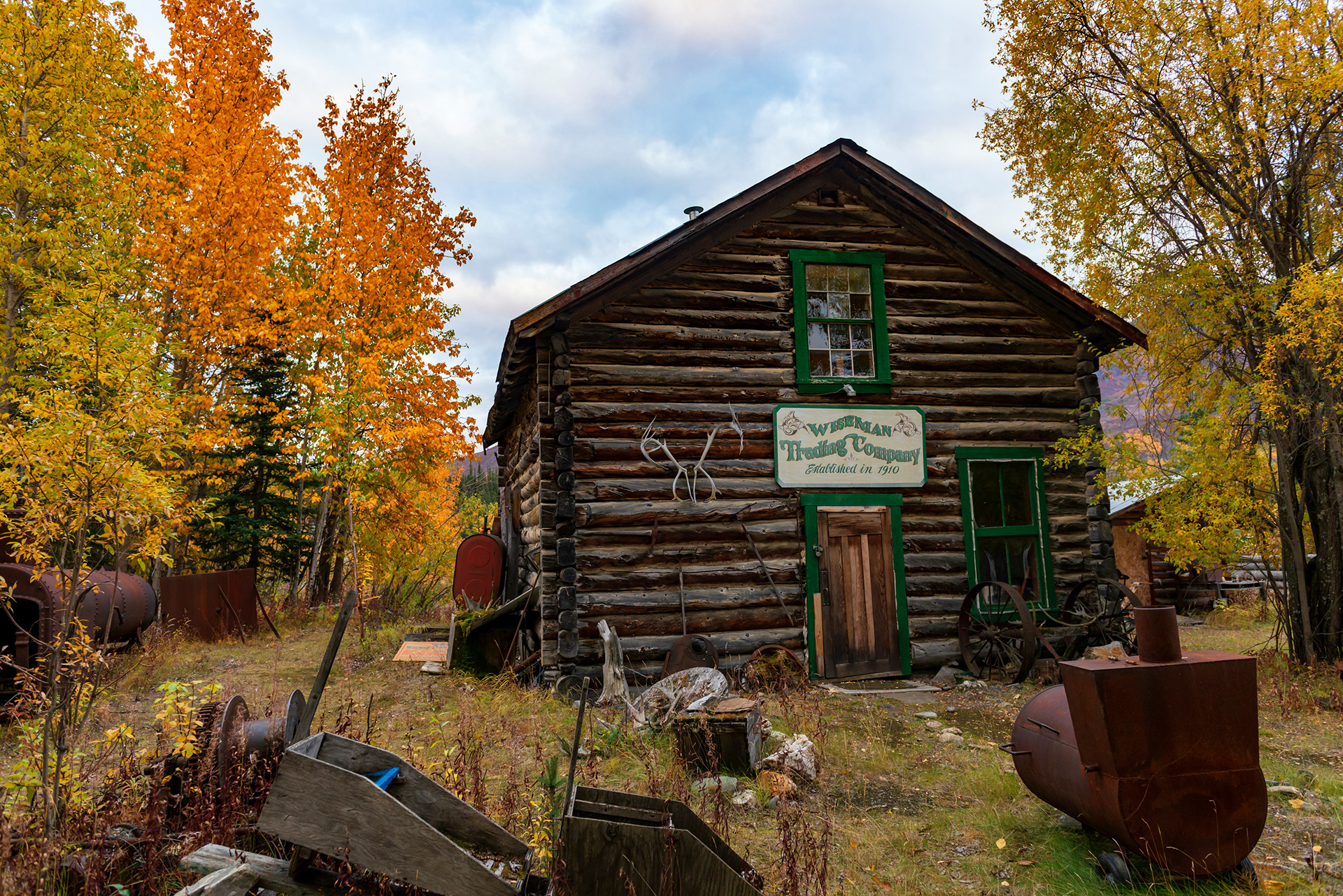
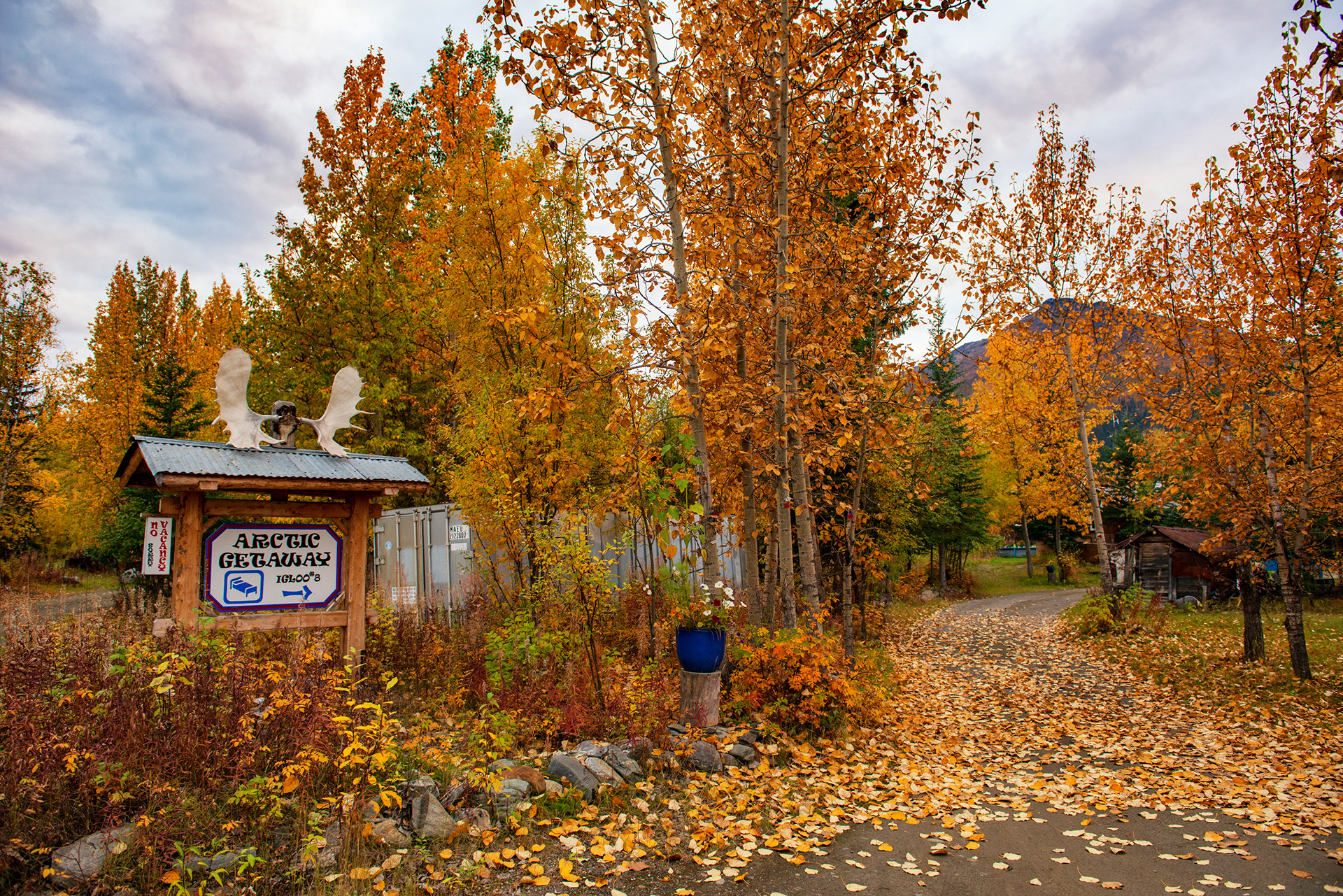
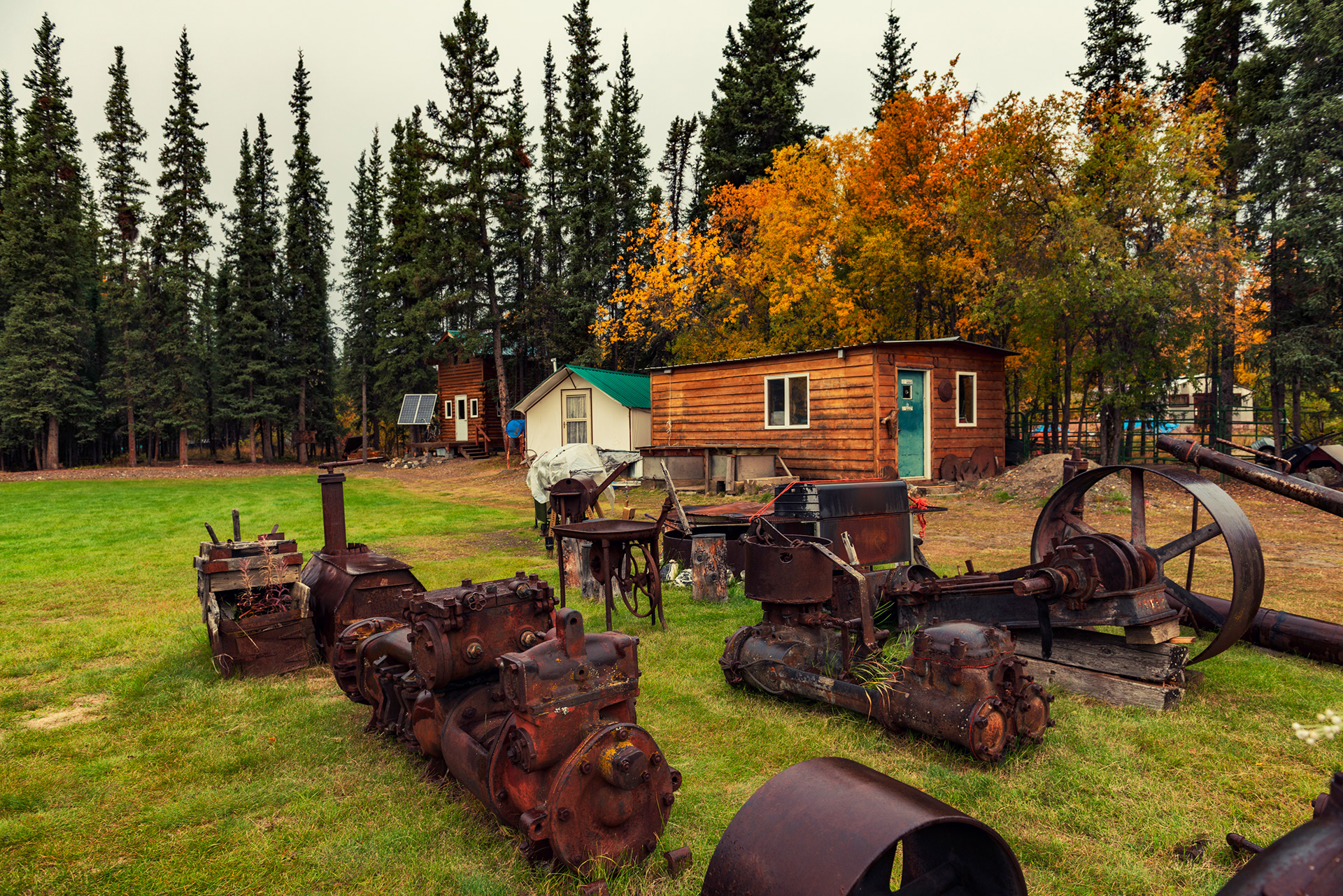
Fourteen miles north, Wiseman is everything Coldfoot isn't. It's a tiny settlement, population in the single digits, that feels like someone's pastoral fantasy of Arctic living made real: wood cabins, a clear river running behind the properties, mountains in every direction, vegetable gardens, chickens in yards. It is absurdly beautiful for something so small. We stayed at Boreal Lodge, a lovely cabin with a kitchen downstairs, a sleeping loft up a wooden ladder, and the sound of the river at night. A rabbit was sitting by the door when we pulled in and did not consider us worth leaving for. I'd booked the cabin six months in advance and nearly didn't get it. If Dalton Highway is on your list, book Wiseman the day you decide to go.
It's also one of the best aurora-viewing spots on the highway. Near-zero light pollution, and the surrounding peaks create a natural amphitheater that frames the sky in every direction. On clear nights in September the aurora can appear as early as 10 PM.
The Northern Dalton: Wiseman to the Arctic Ocean
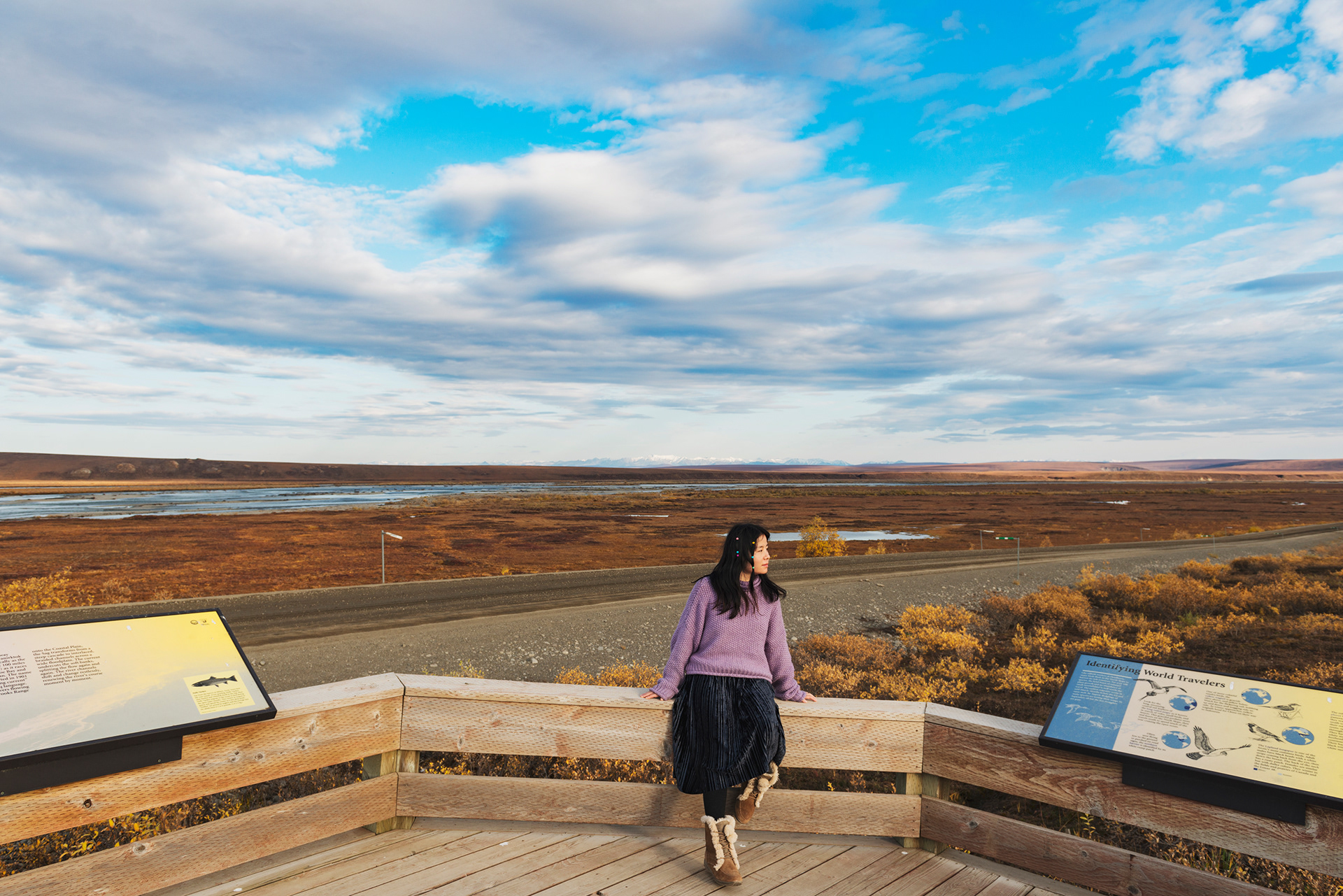
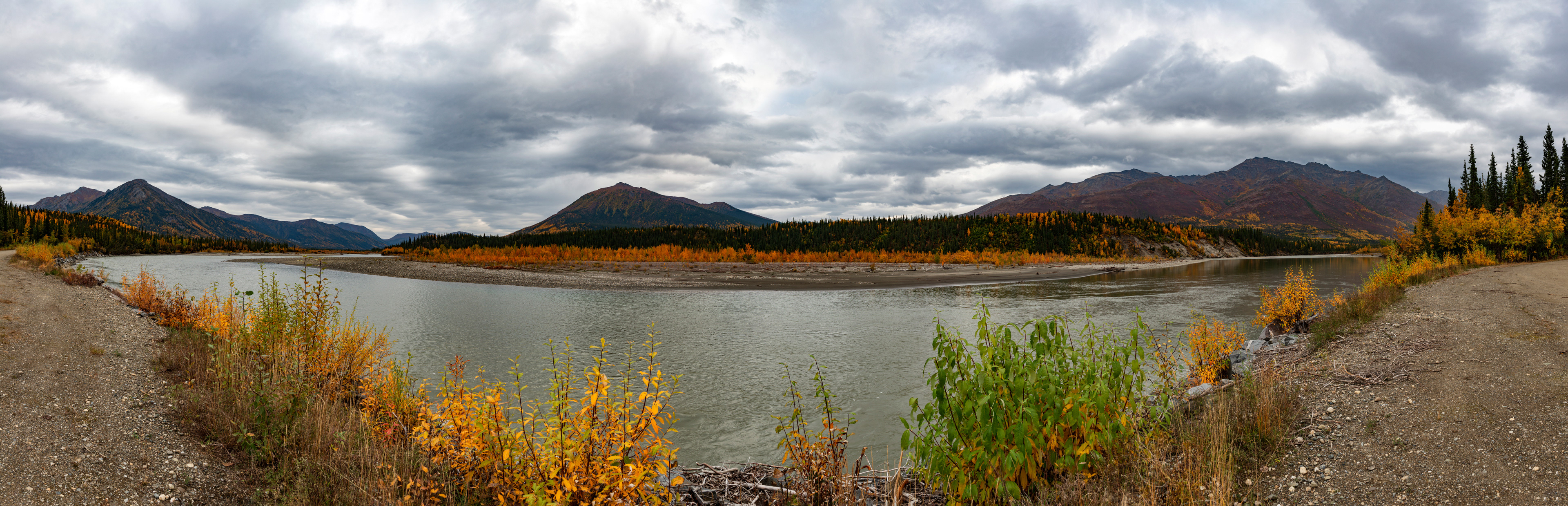
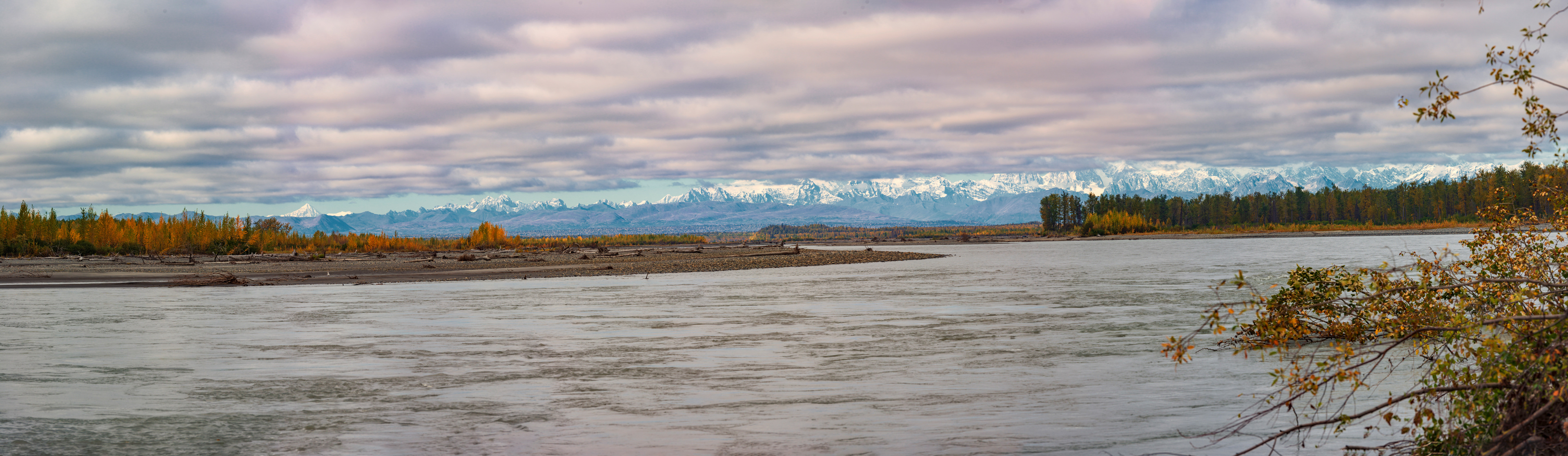
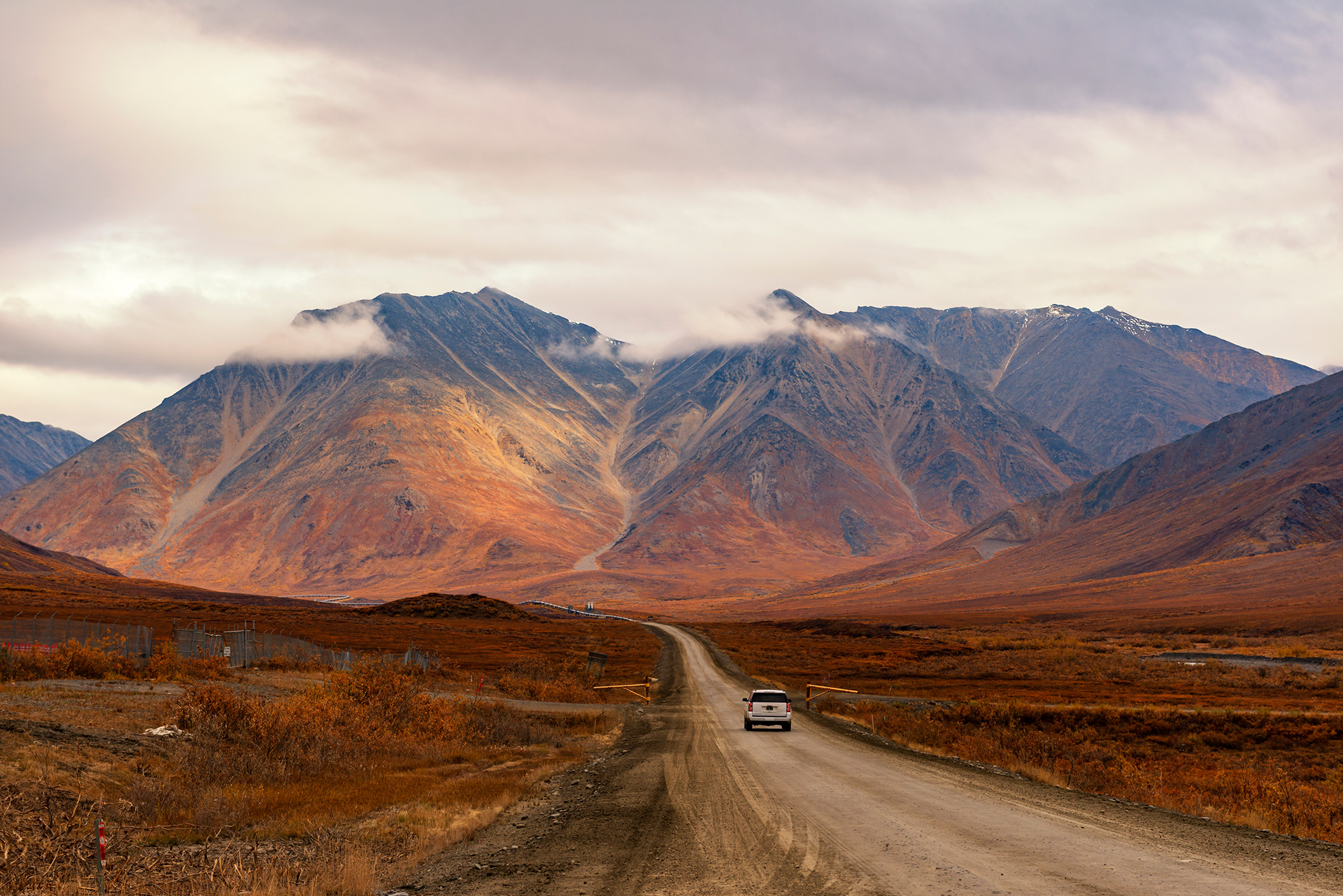
North of Wiseman the road changes character. The forest gives way to bare mountains, the mountains give way to tundra, and for 240 miles there is nothing: no fuel, no food, no cell signal, and for long stretches no other cars. This is the part of the Dalton that the documentaries were filmed on. In winter it earns the reputation. In early September it was quiet and enormous, and the only real hazards were the trucks and the temptation to stop every five minutes.
The stretch divides itself into three pieces. First the climb through the Brooks Range to Atigun Pass, where the road crosses the continental divide. Then the long descent onto the North Slope, flat to every horizon. And finally the last hundred miles to Deadhorse, where the tundra begins to show signs of the oil field before the town itself appears. We drove it in a day going north and a day coming back, and the two days felt like different roads.
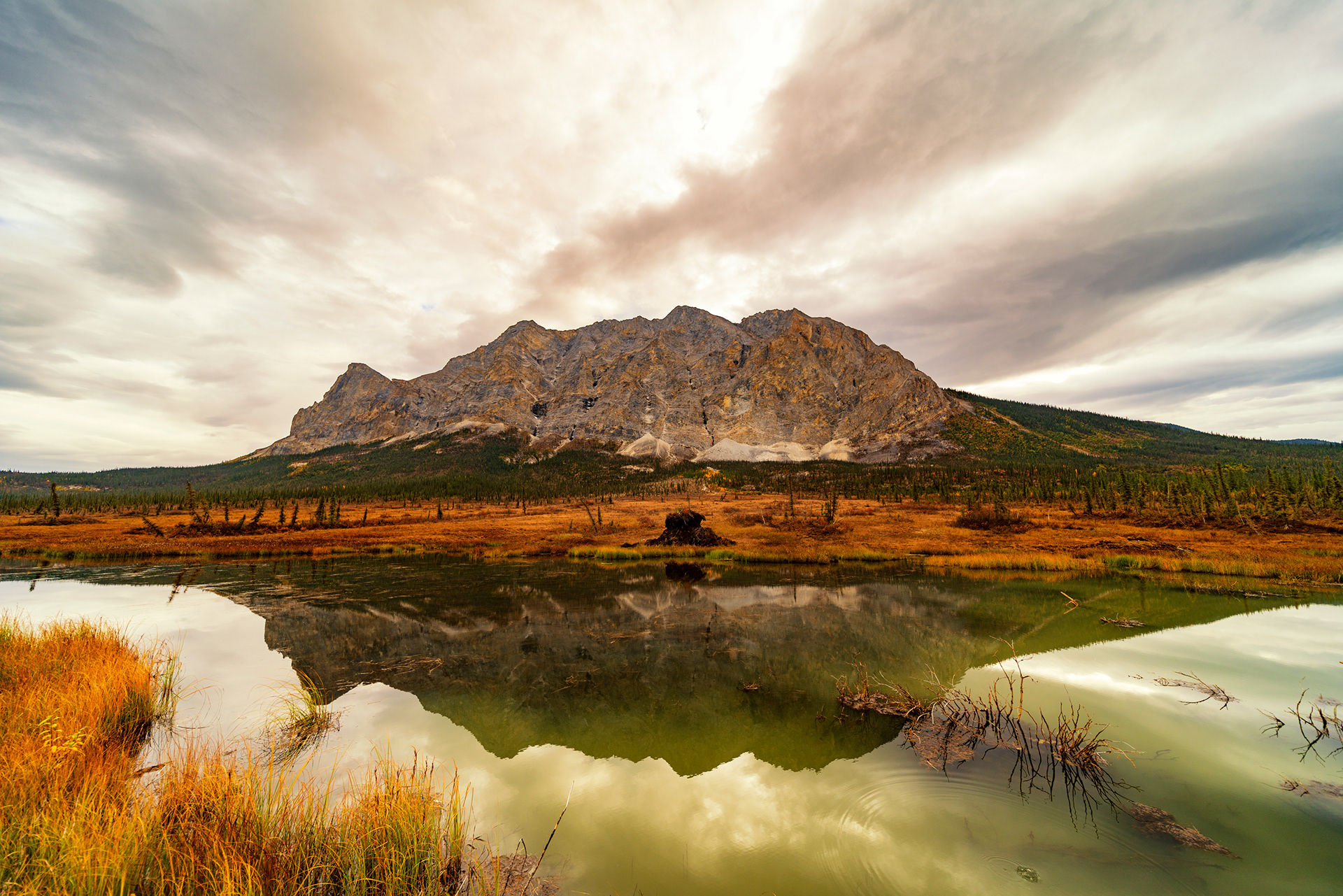
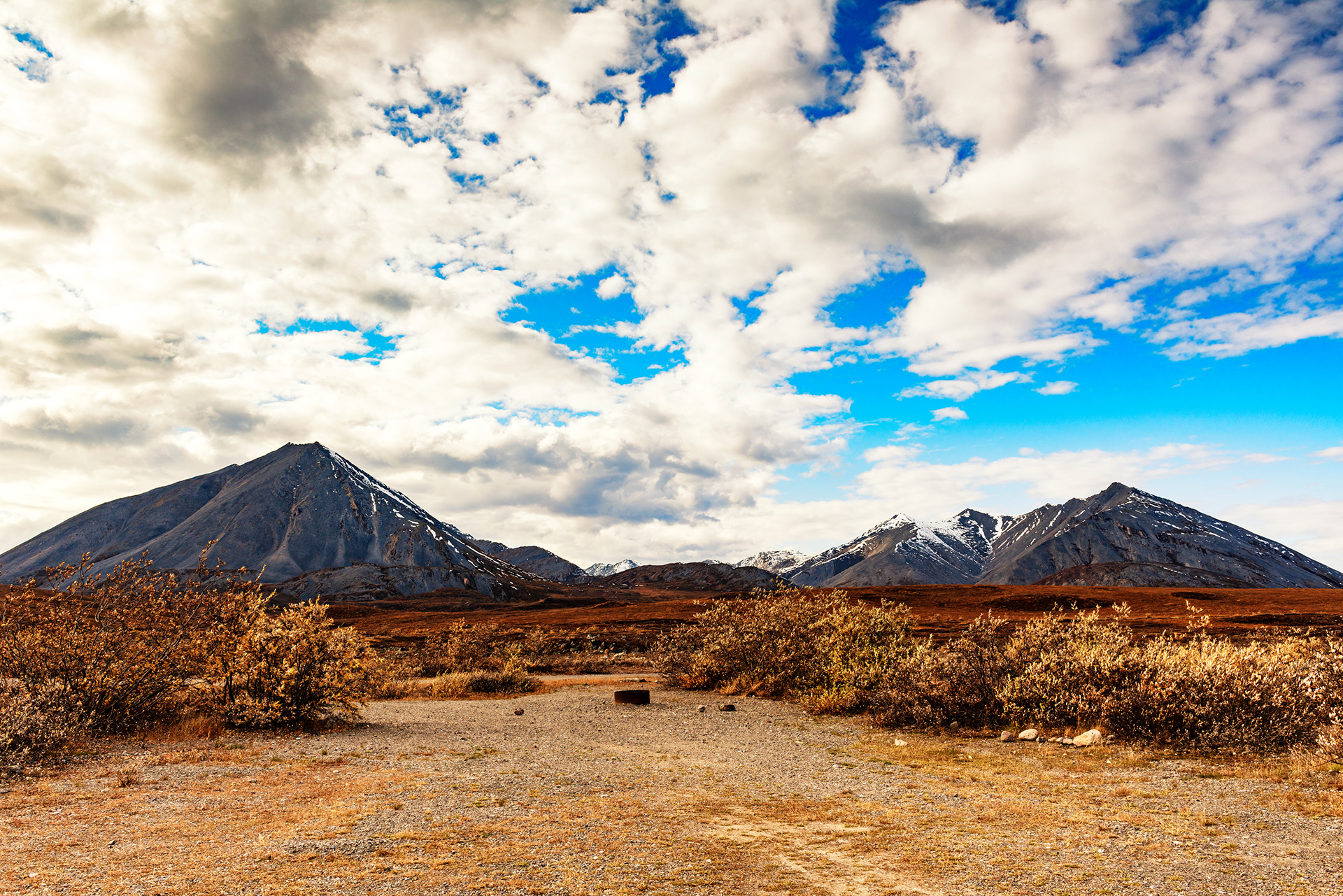
Sukakpak Mountain: Fifteen miles north of Wiseman, this pyramid-shaped peak is locally known as an "aurora magnet" — supposedly the topography creates favorable conditions for northern lights viewing. Whether that's fact or lore, the mountain is striking regardless. At its base, pingos emerge from the tundra: dome-shaped ice hills formed when subsurface water expands within permafrost, pushing the soil upward over hundreds of years. Each one is a slow-motion geological event.
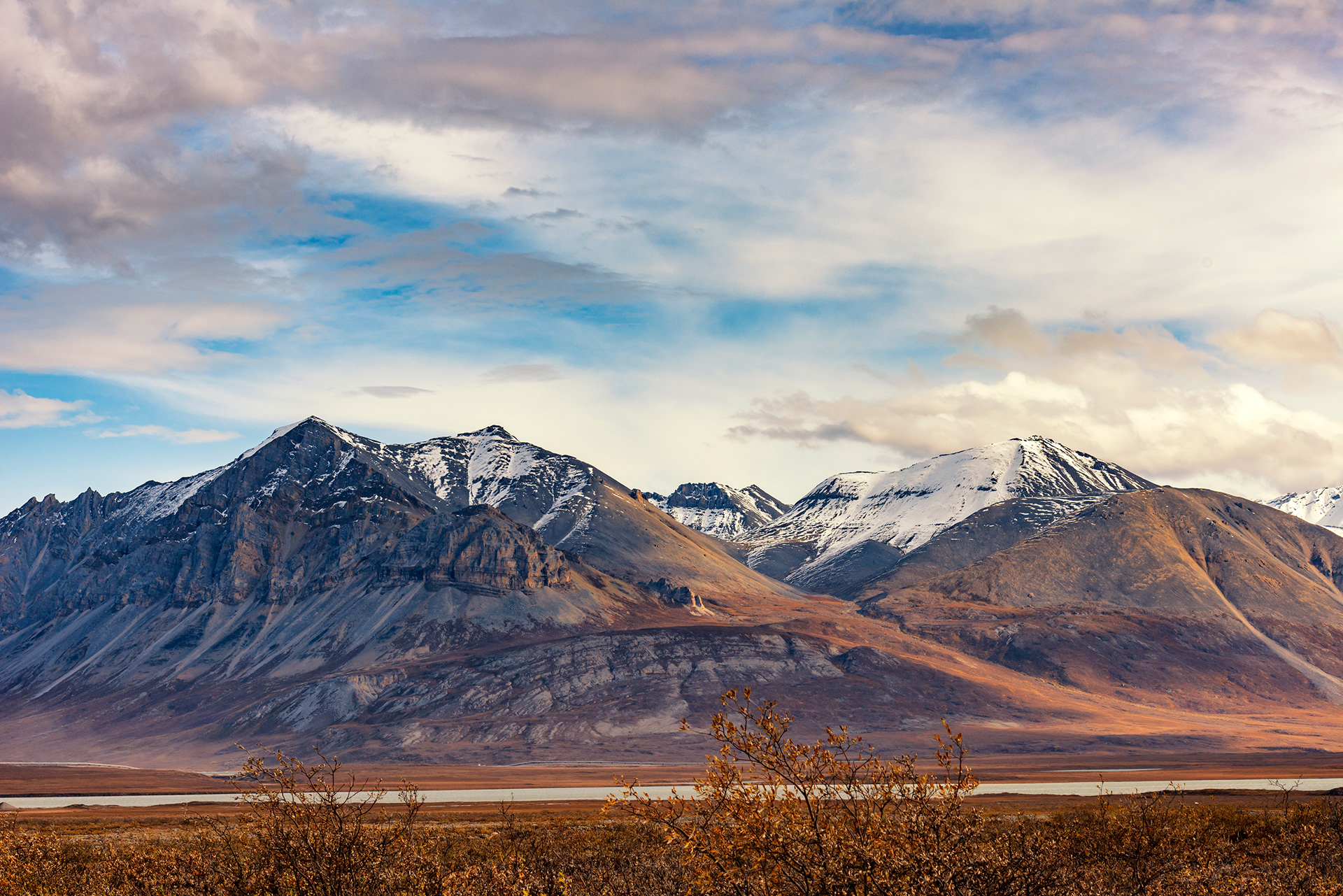
Gates of the Arctic National Park: From Sukakpak northward, the Dalton Highway runs alongside the eastern boundary of one of the most remote national parks in the US. Gates of the Arctic covers 8.5 million acres of the central Brooks Range. It is the second largest national park in the United States, entirely above the Arctic Circle, with no roads inside, no maintained trails, no visitor facilities, and no entrance fee. Its name comes from two peaks flanking the North Fork of the Koyukuk River: Frigid Crags and Boreal Mountain. Robert Marshall, the conservationist who explored this area on foot in 1929, named them "the gates of the Arctic" in his journals, describing them as the threshold of true northern wilderness. The park was formally established in 1980, and the name stuck.
Access is intentionally difficult. The most common way in is by bush plane from Coldfoot or the small town of Bettles to the west, landing on a gravel bar and hiking out from there. You can also simply walk in from the Dalton Highway. There's no fence, no gate, no sign announcing the park boundary. One step off the road and you're in 8.5 million acres of wilderness with no infrastructure of any kind. We watched its ridgelines from the road for miles, and that was enough to understand what Marshall meant.
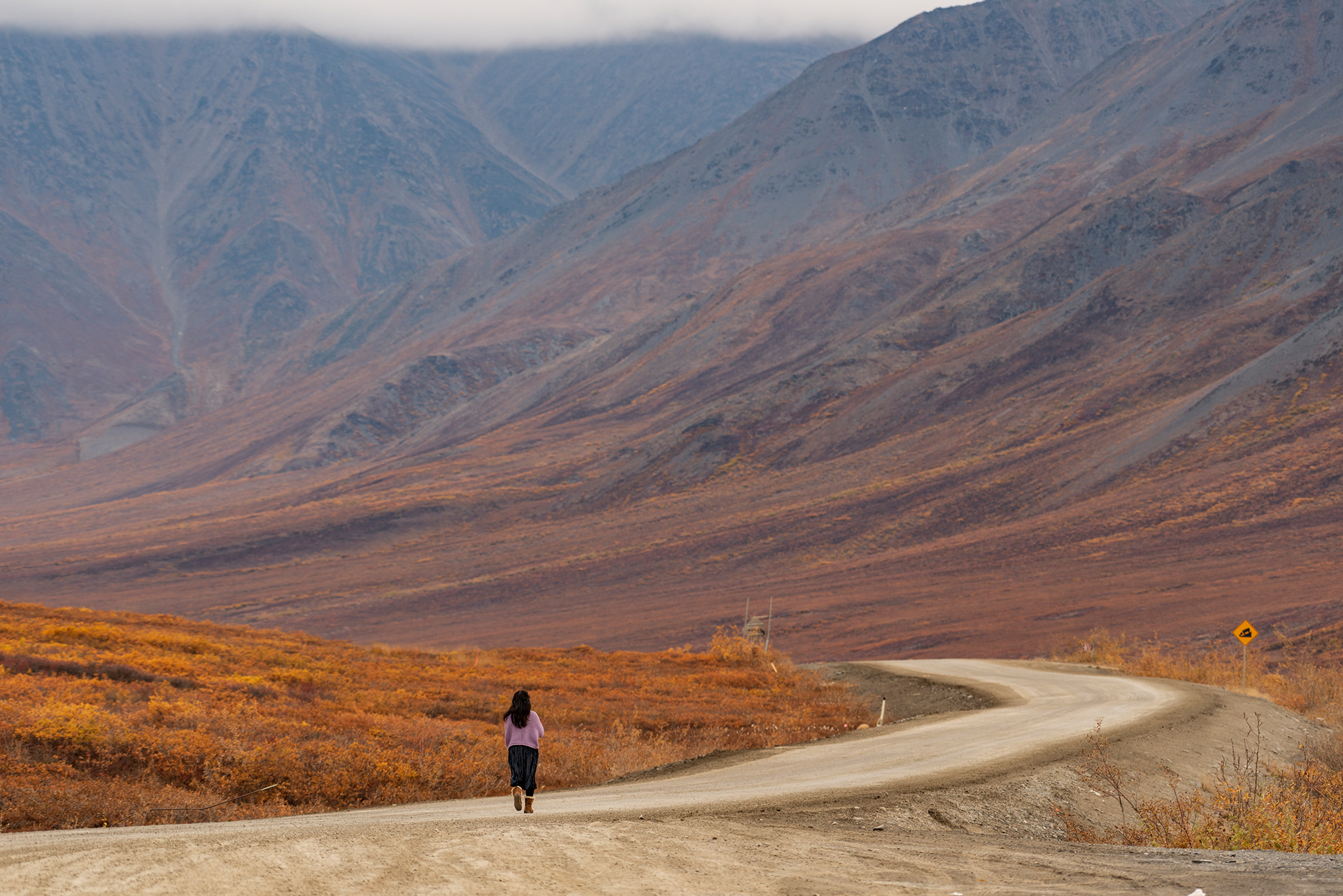
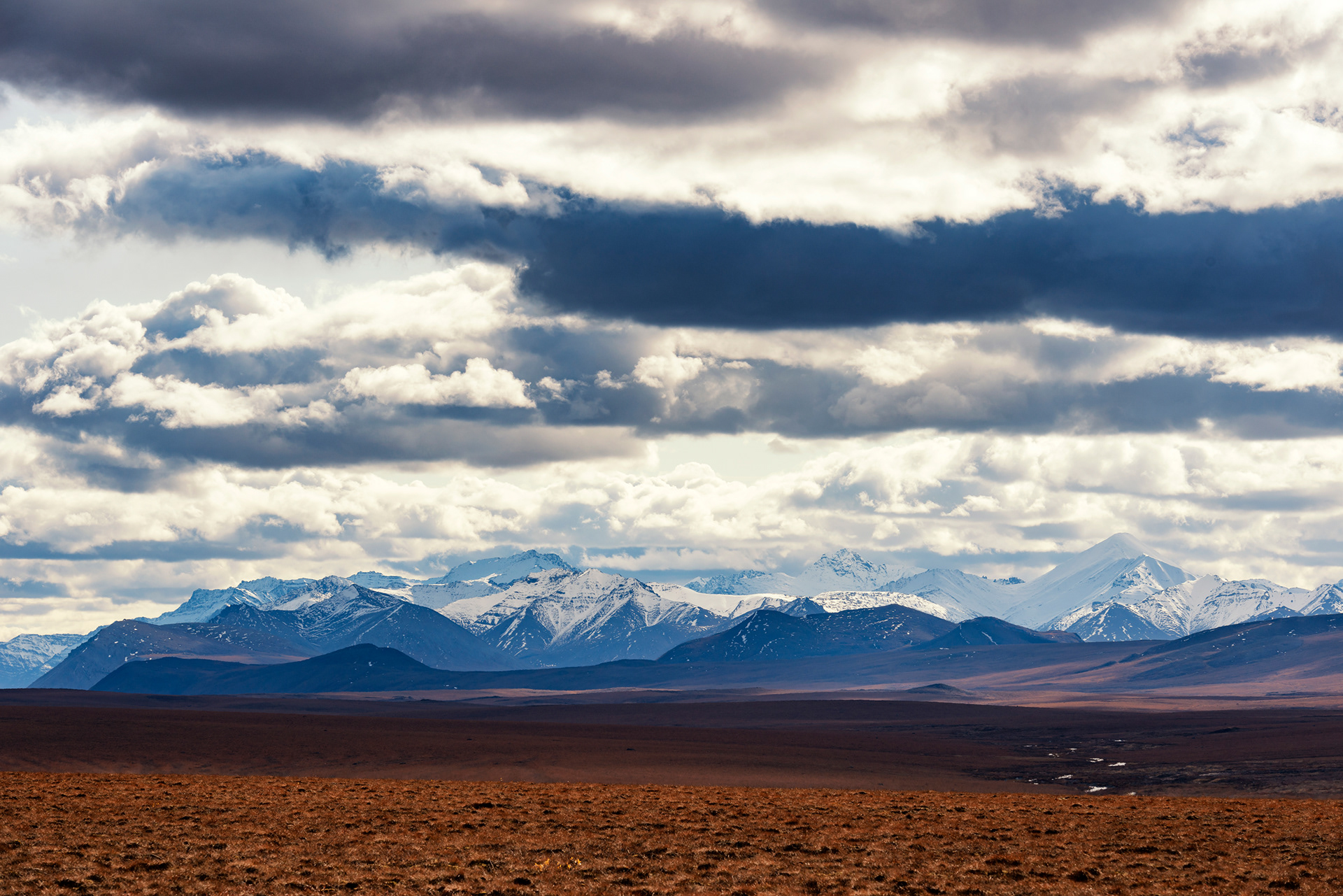
Atigun Pass: The Brooks Range is a continental divide: every drop of water south of it eventually flows to the Bering Sea, and every drop north drains to the Arctic Ocean. Atigun Pass, at 4,739 feet, is the crossing point — the highest elevation on Alaska's road system and a place that can receive snow in any month of the year. When we came through in early September, clouds were stacked against the peaks like wool against glass. The road through the pass is steep, narrow, and spectacular.
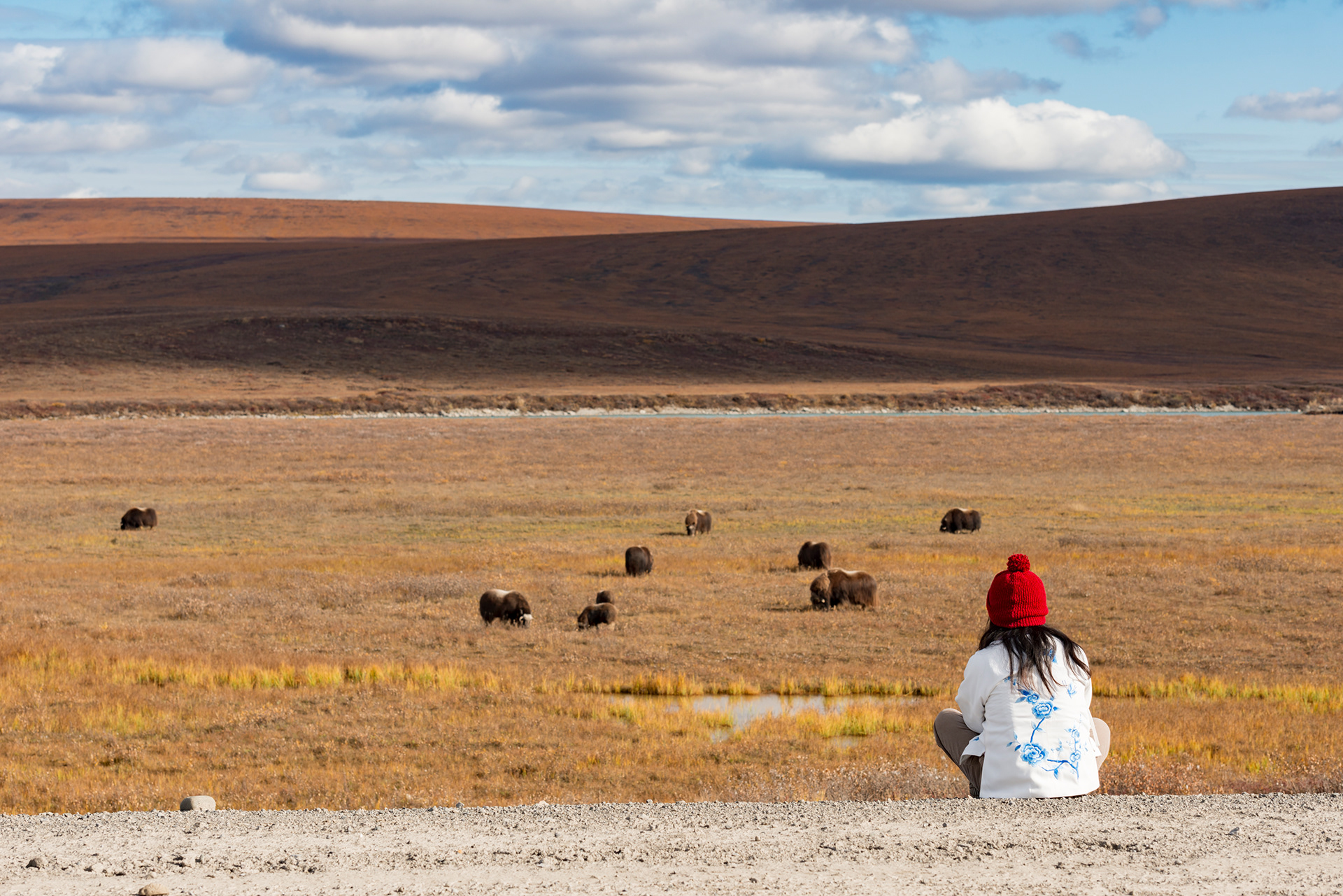
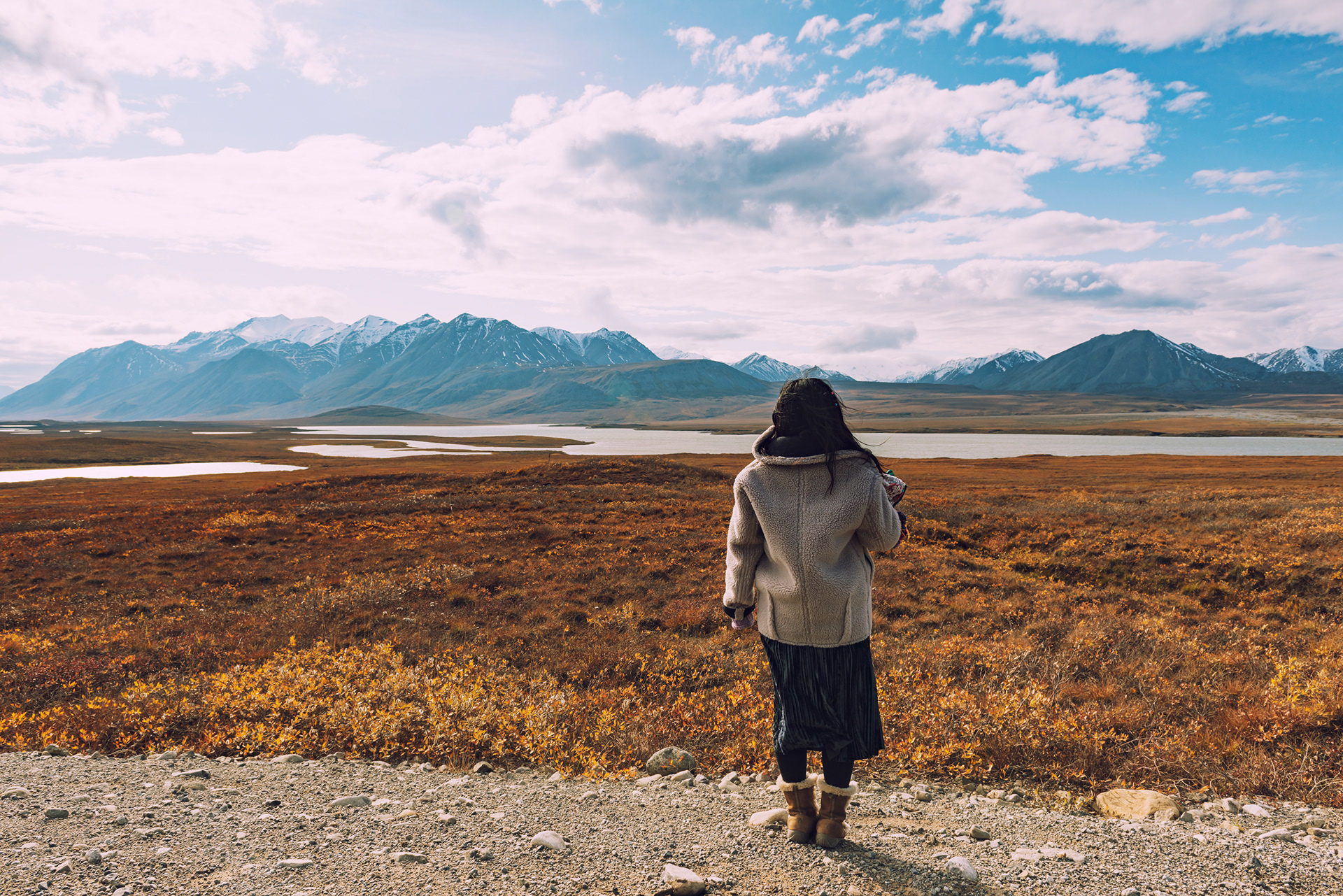
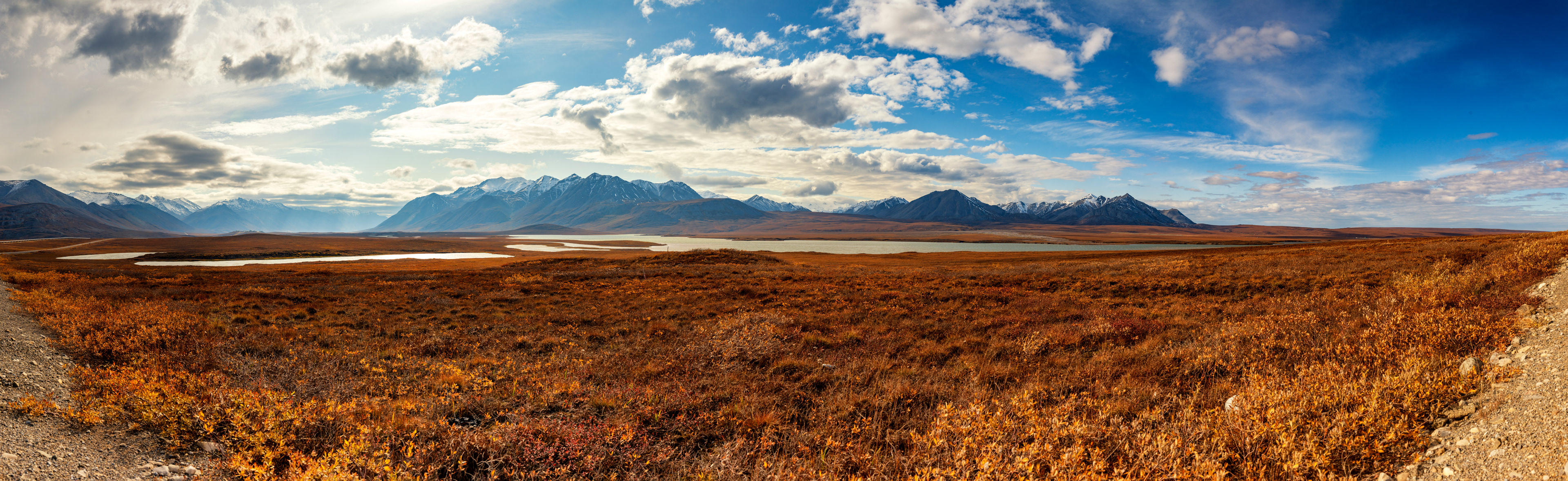
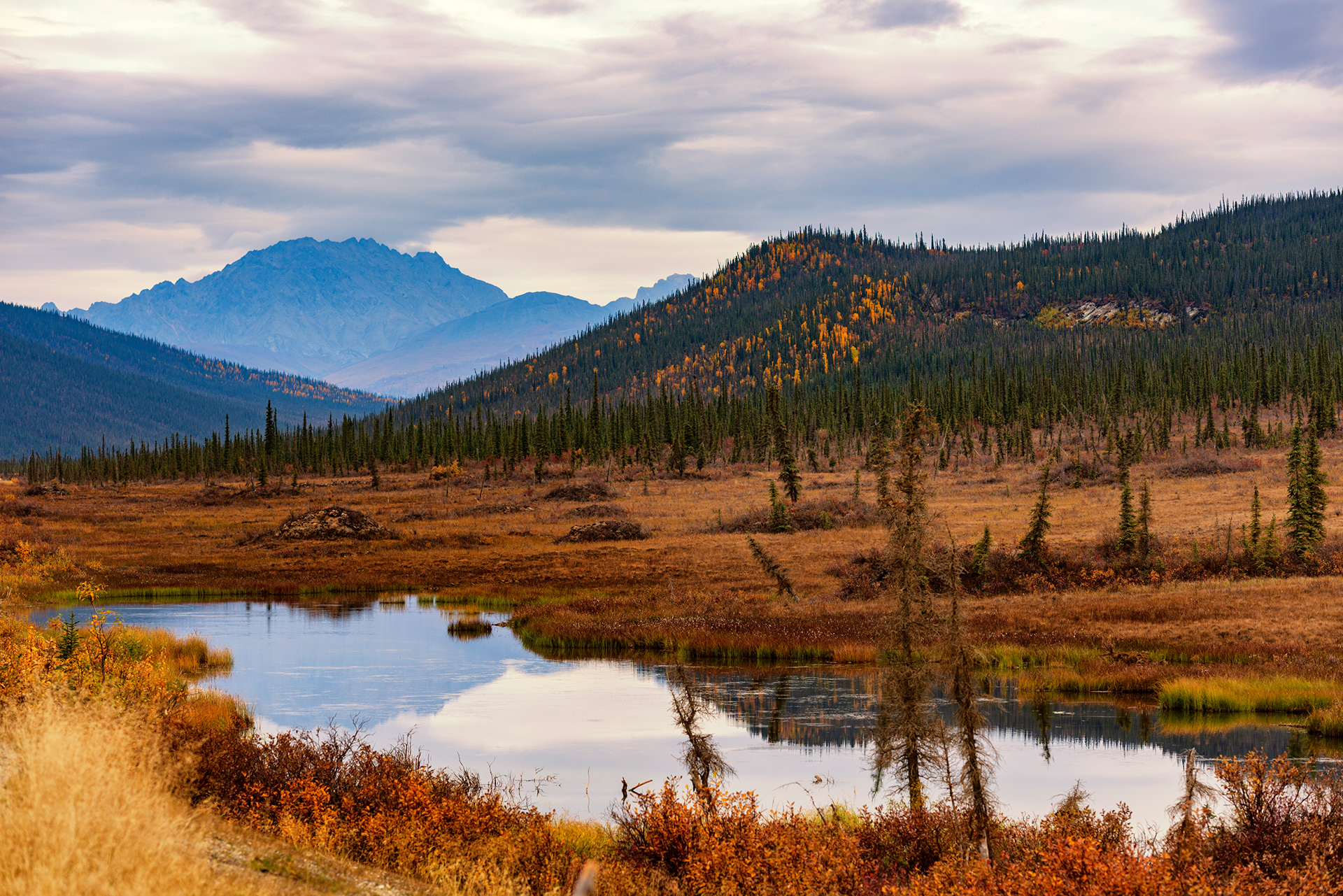
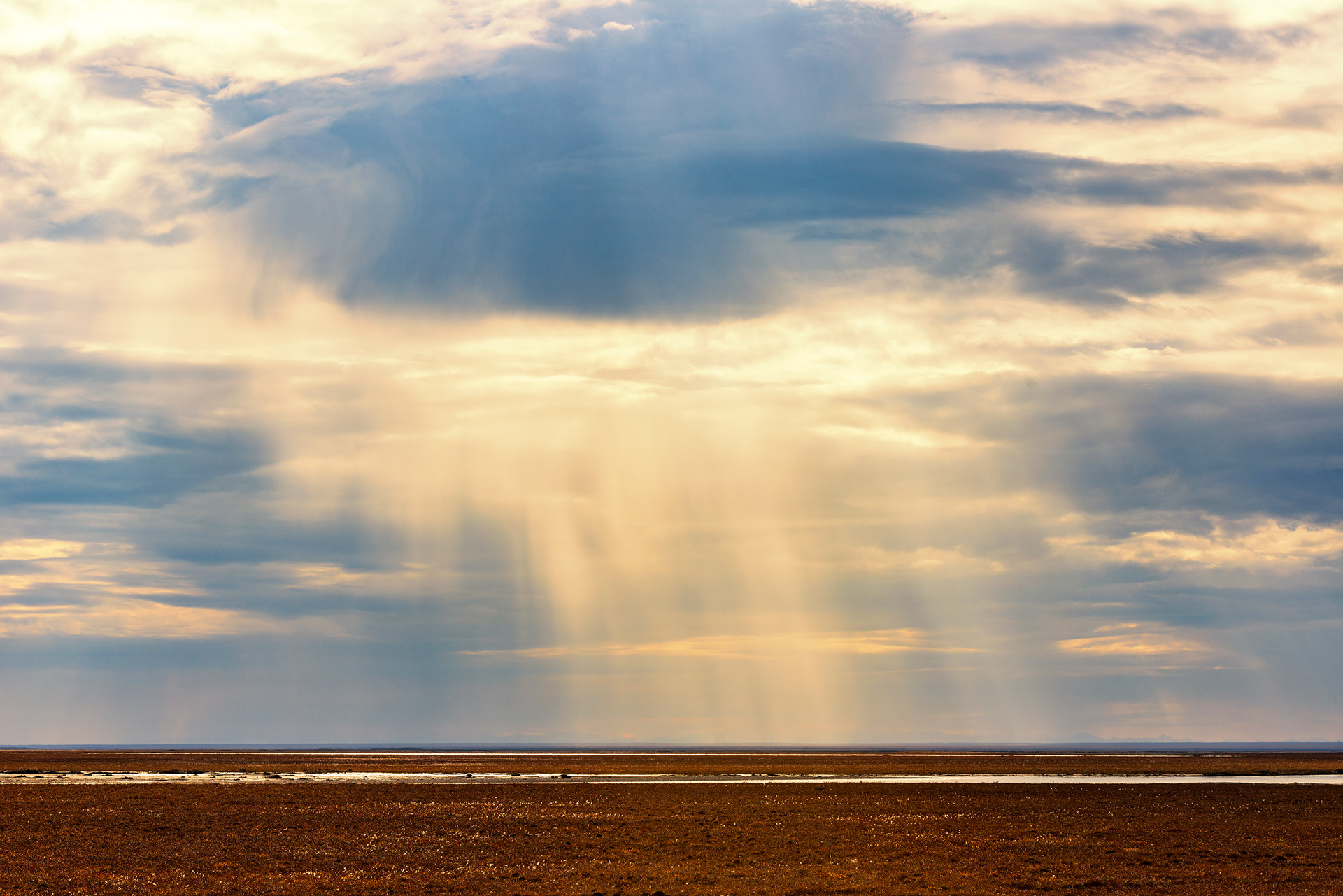
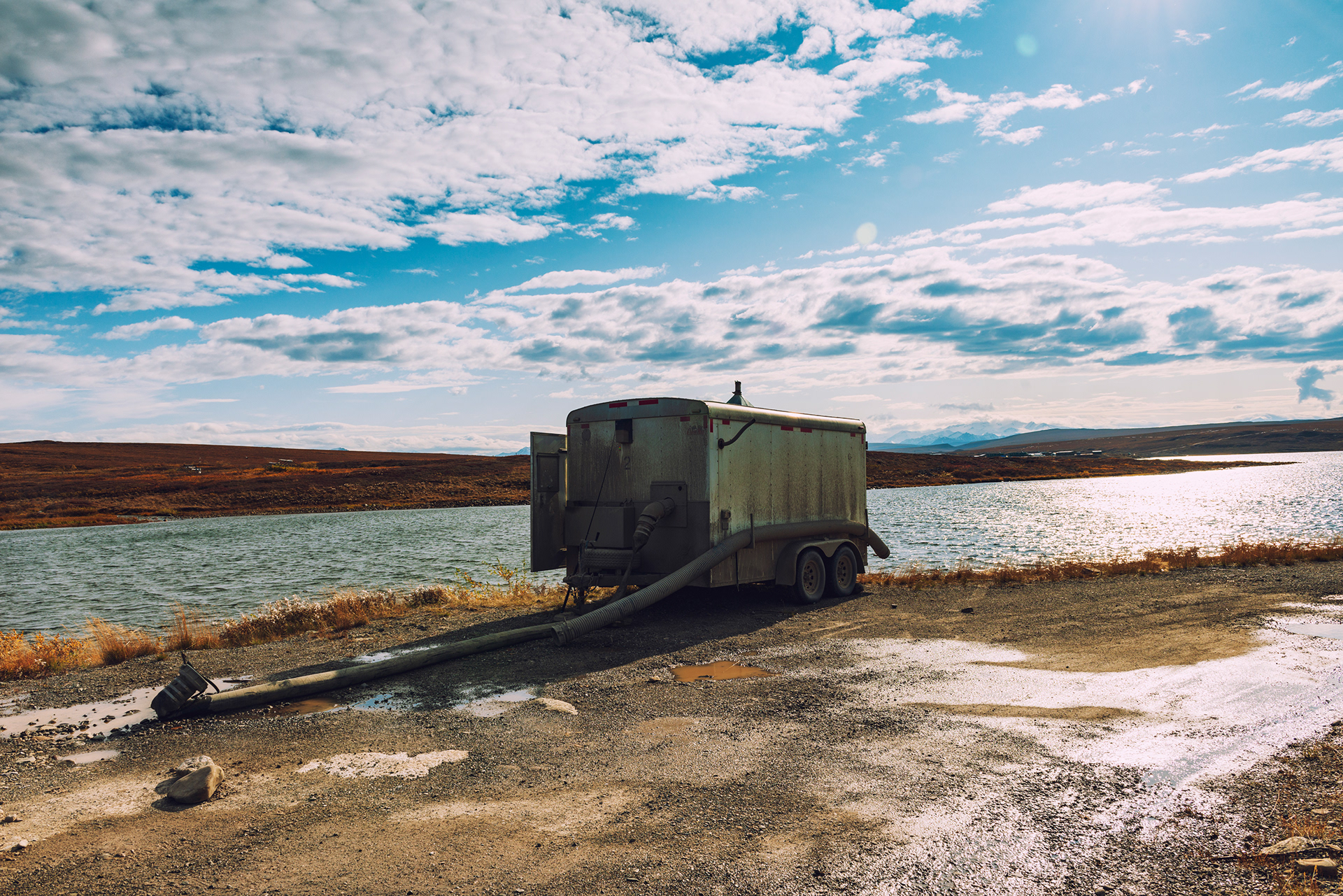
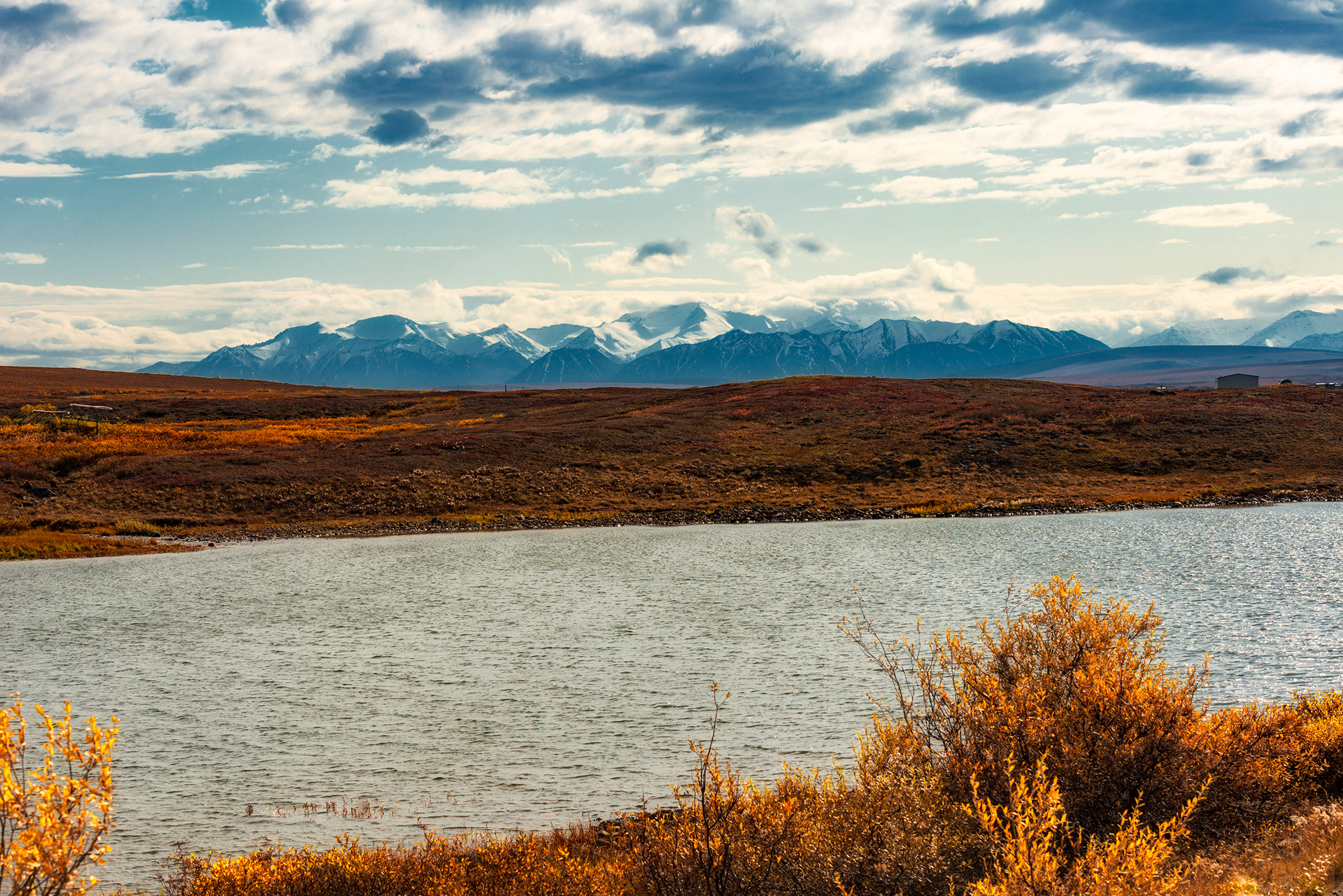
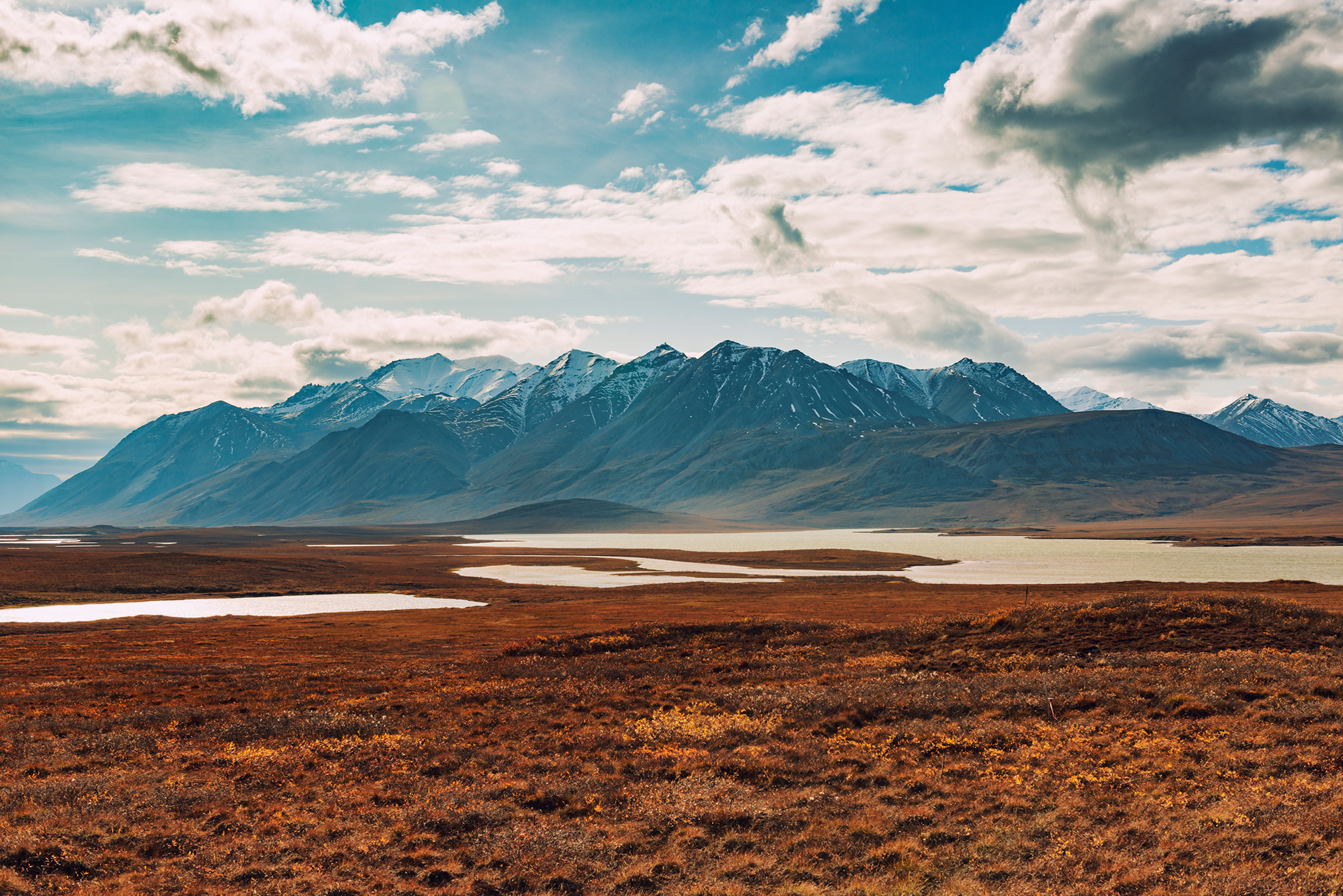
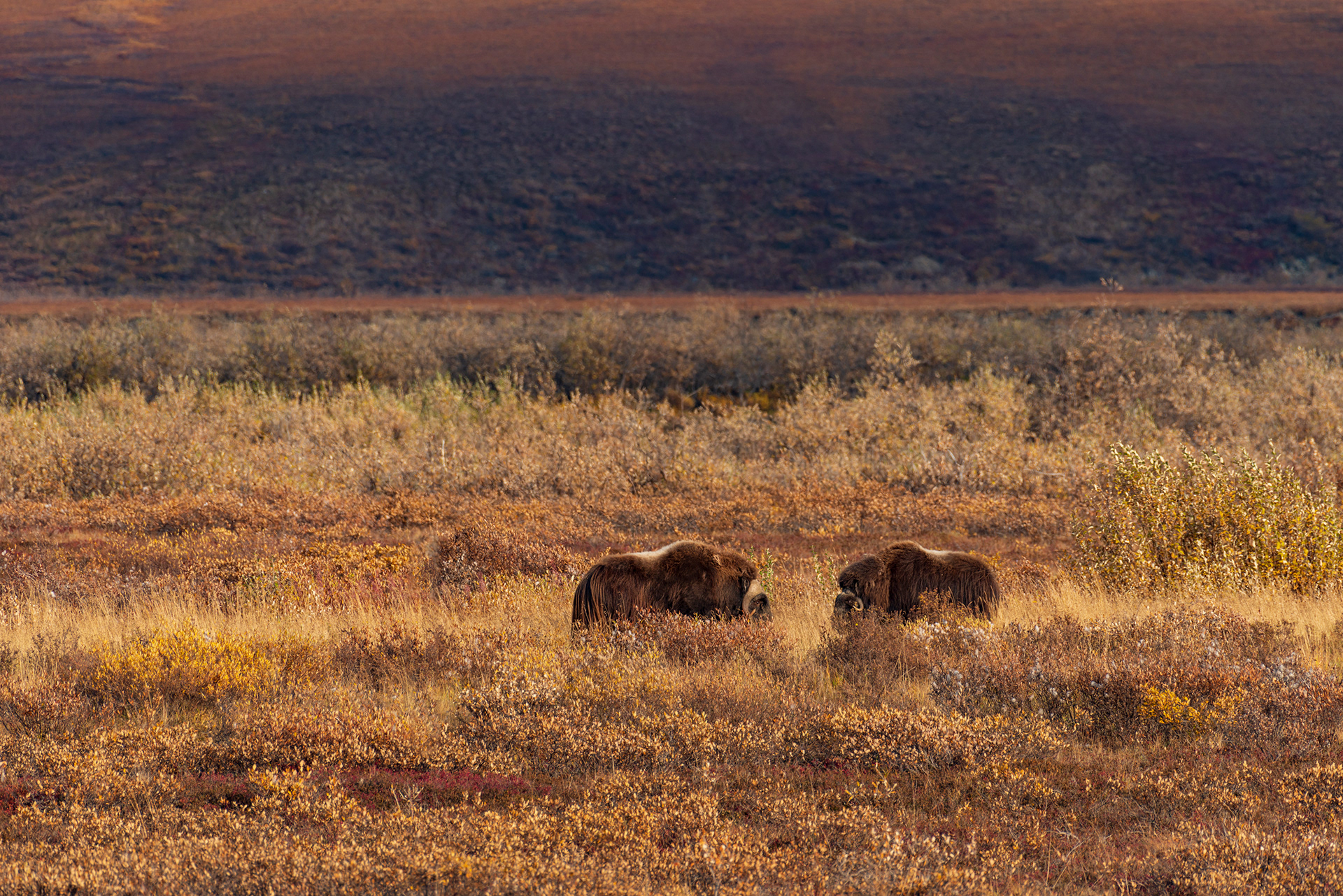
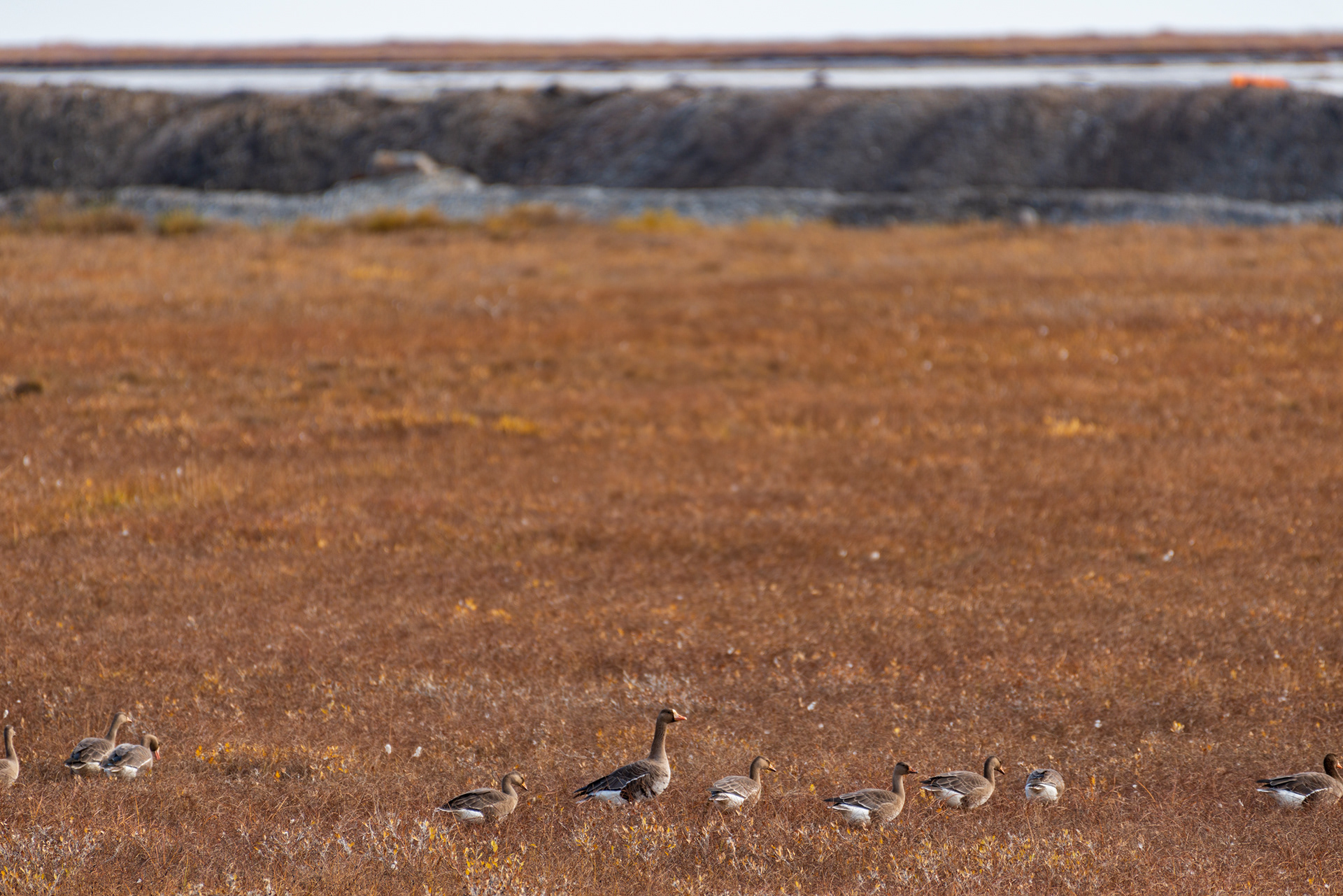
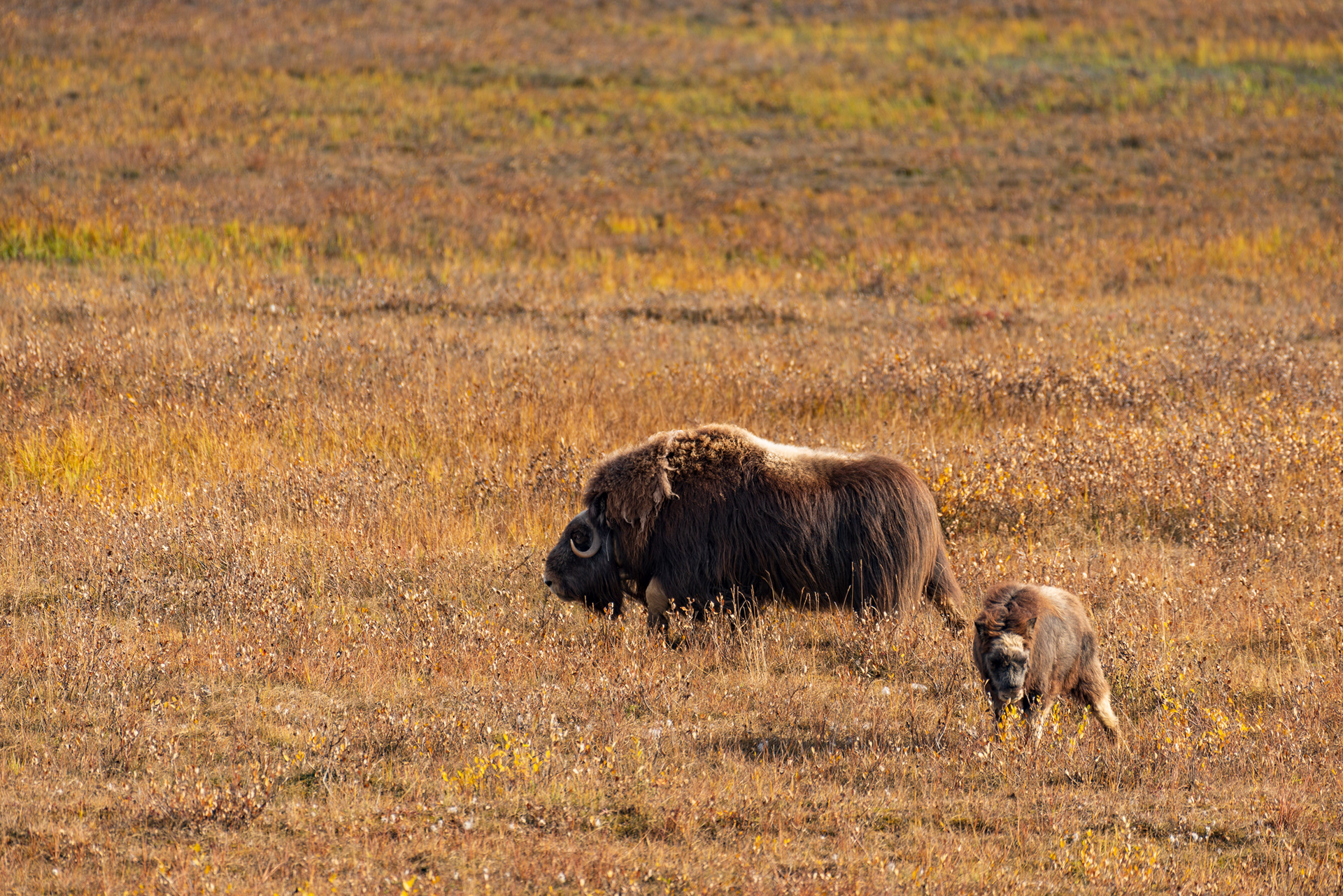
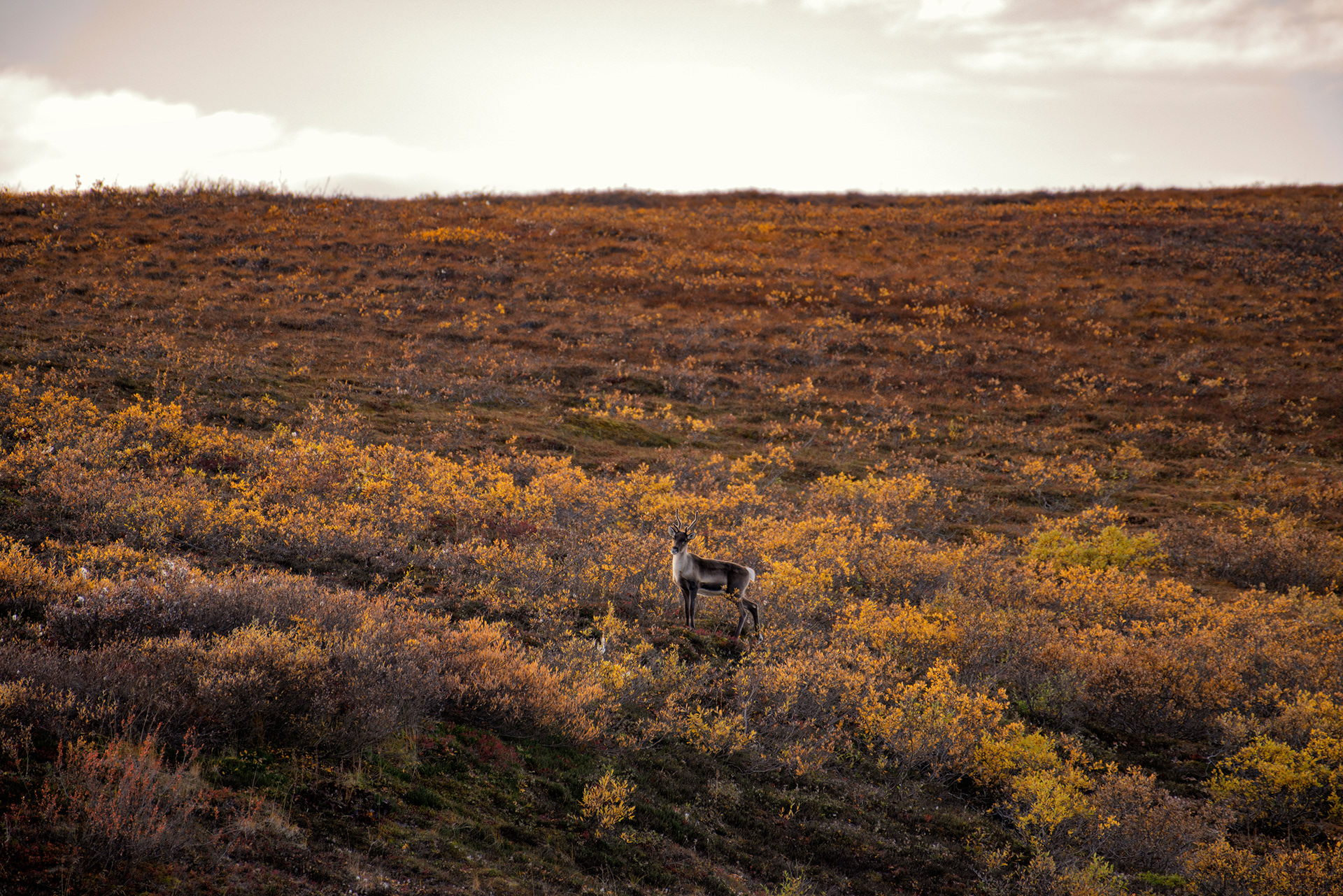
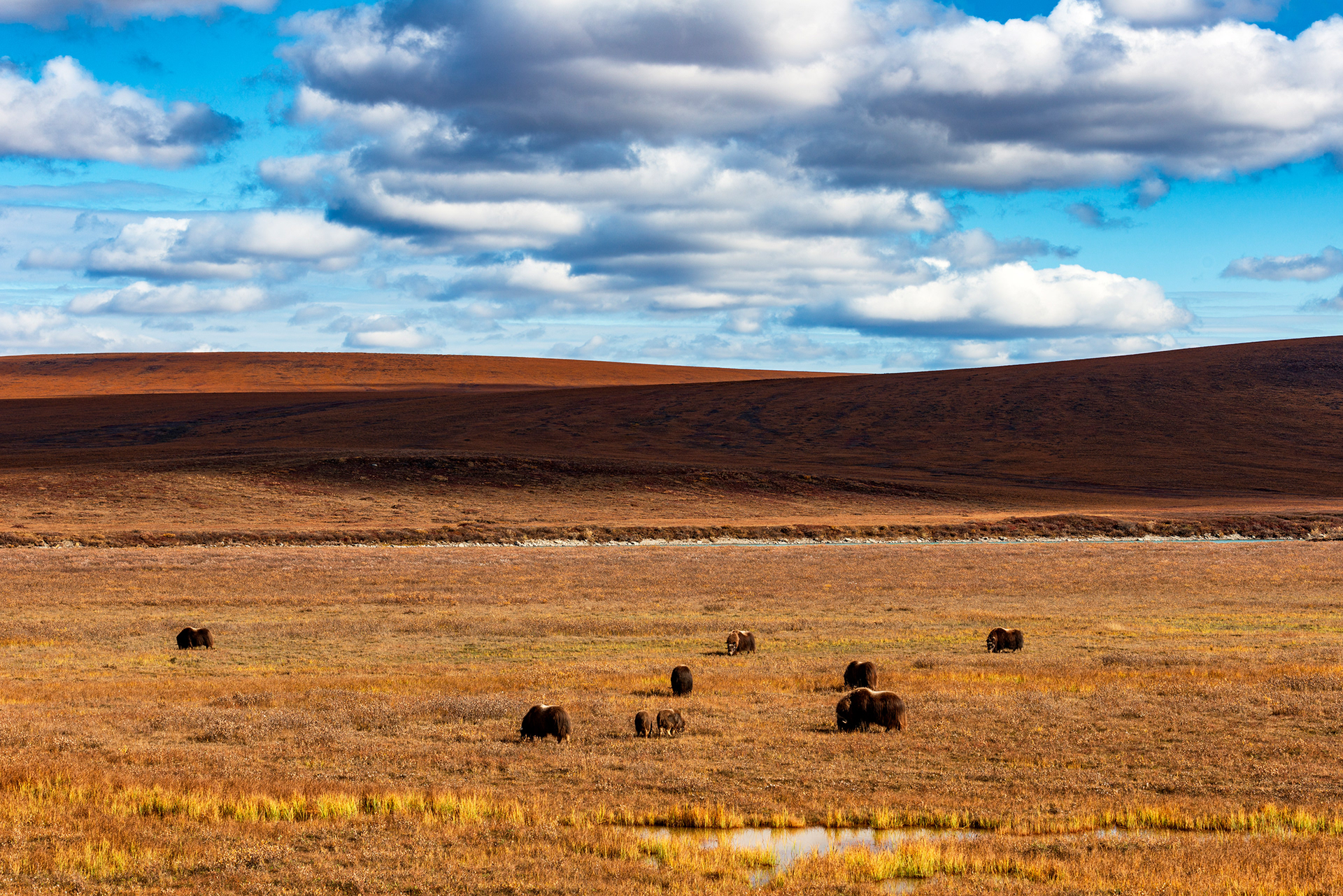
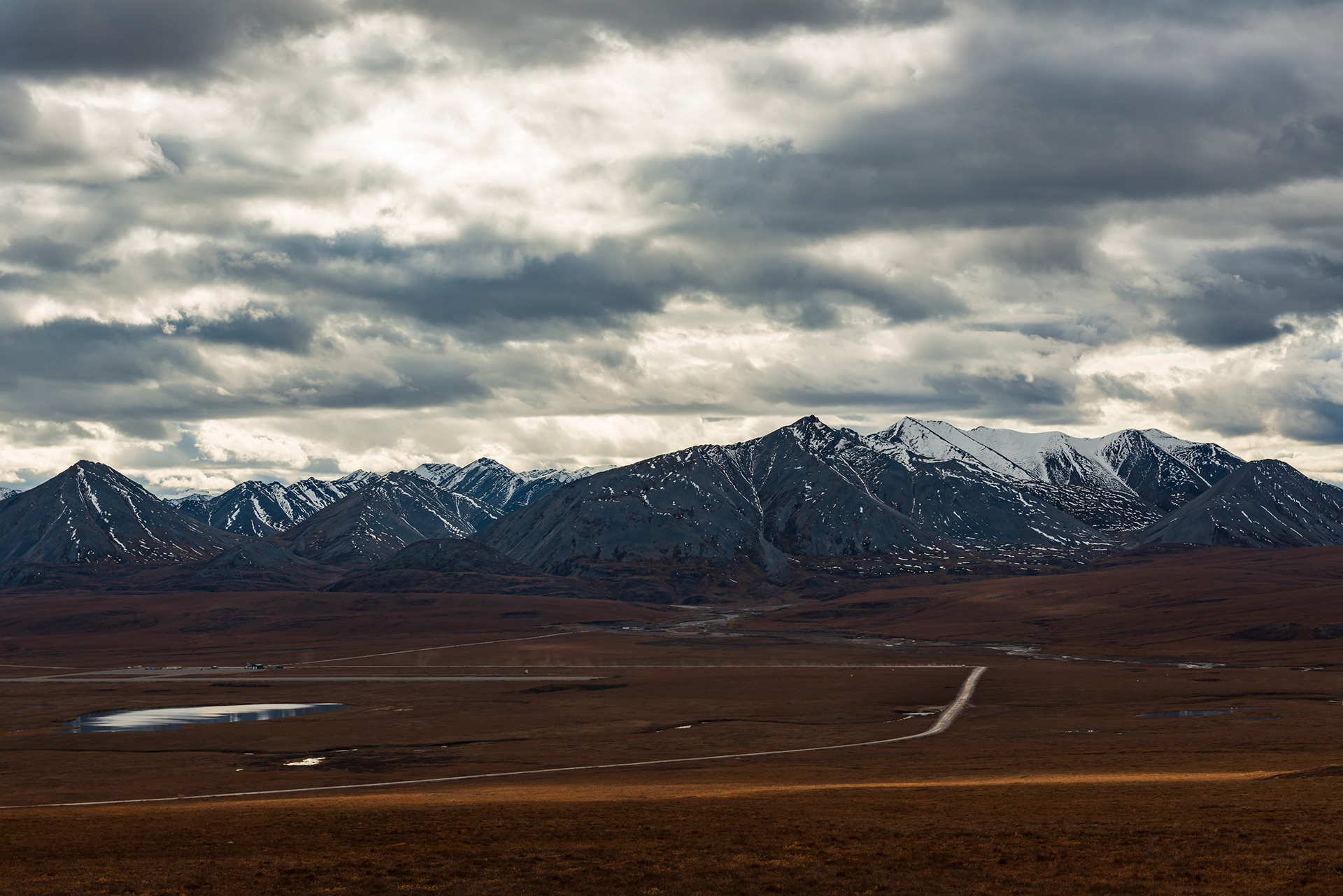
The North Slope: Once you descend from the Brooks Range, the landscape transforms completely. The trees disappear. The mountains recede. What opens ahead is a vast, flat tundra studded with lakes, crossed by caribou migration routes, and inhabited by muskox, Dall sheep, and grizzly bears. We watched a herd of muskox move across the plain, their shaggy silhouettes prehistoric against the pale sky. A line of caribou crossed the road directly in front of us, threading under the elevated pipeline as if they'd done it a thousand times, because they have.
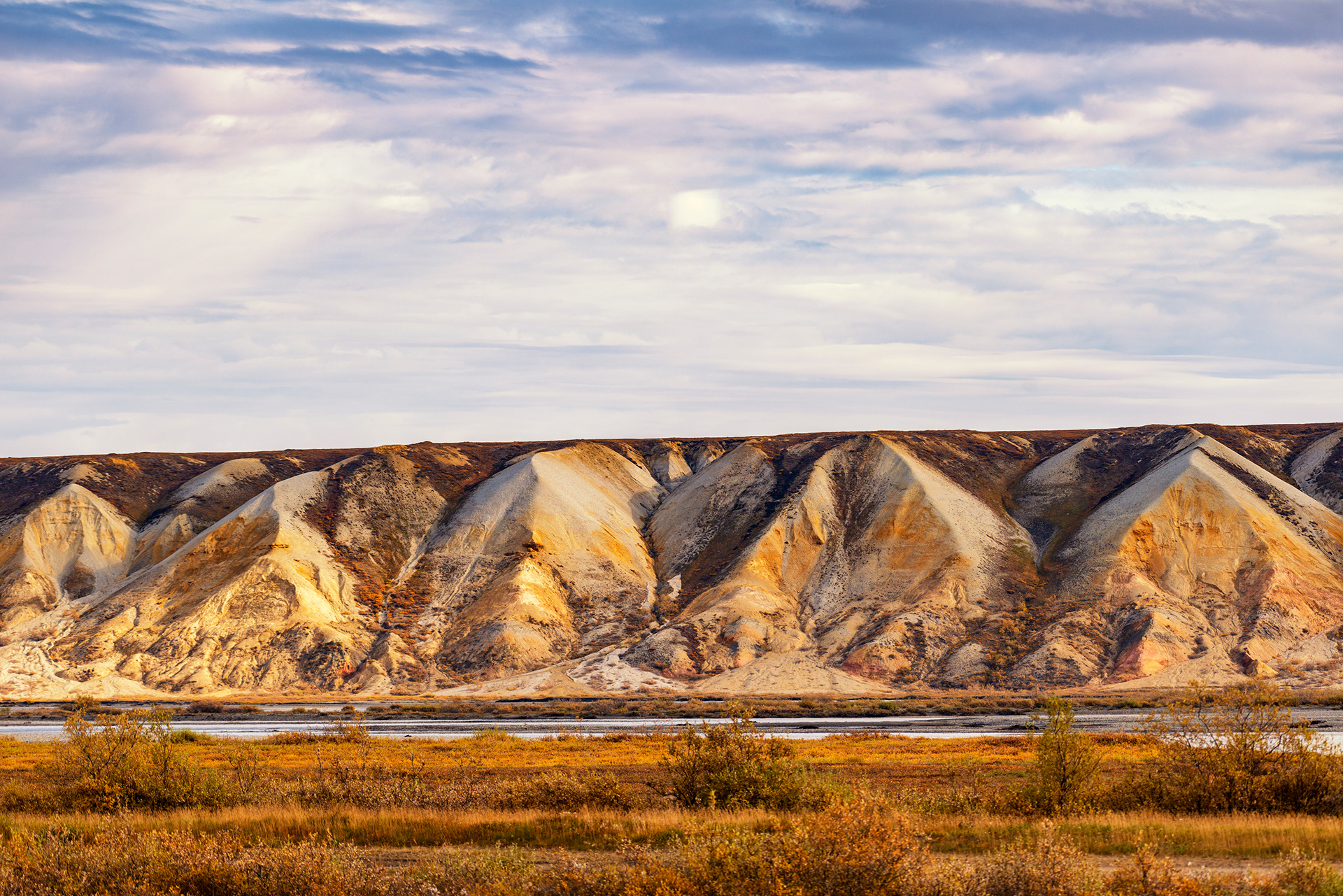
Franklin Bluffs: Iron-rich cliffs that glow rust and amber in slanted Arctic light. Named for Sir John Franklin, the 19th-century British Arctic explorer whose doomed expedition in search of the Northwest Passage remains one of exploration history's great tragedies. Standing here at latitude 69°N, with the tundra stretching to every horizon, it's easier to understand what compelled those men north in the first place.
Deadhorse / Prudhoe Bay
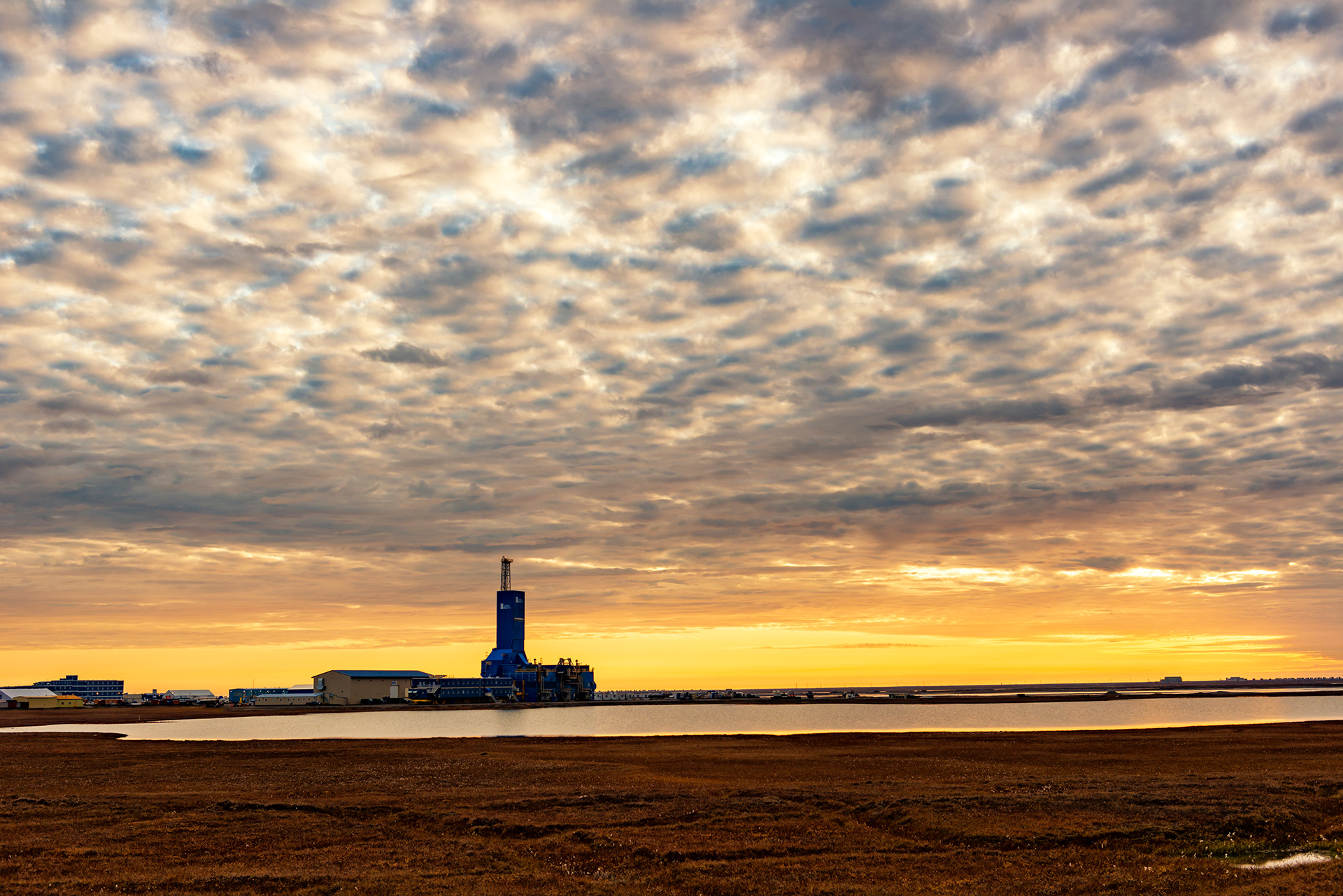
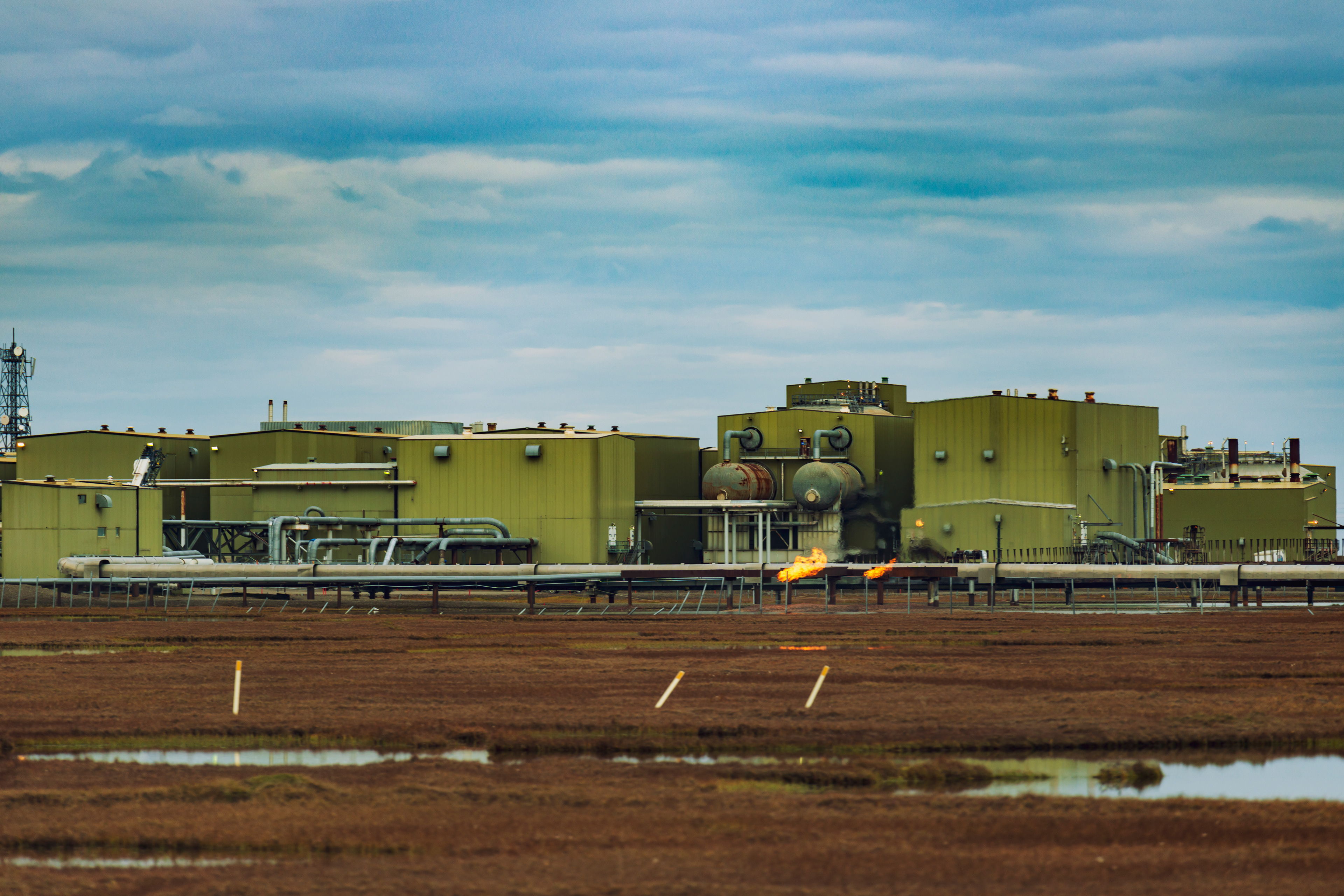
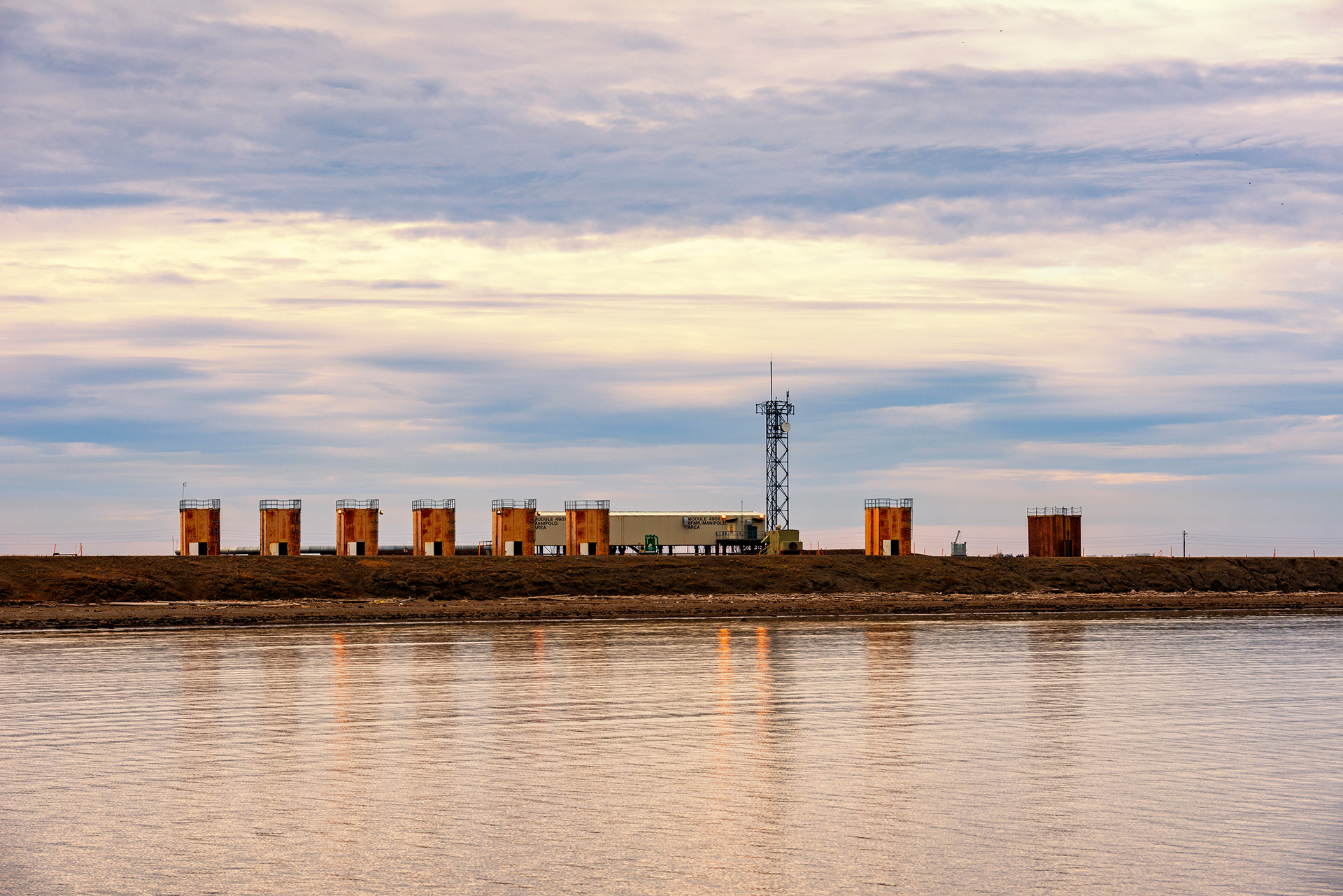
We knew we had arrived when our phones started chiming in the cupholder, catching up on two days of messages. Then the buildings came into view: low, rectangular, a few thin towers among them, and off to one side a flare stack burning gas from the wells, its flame visible for miles across the flat.
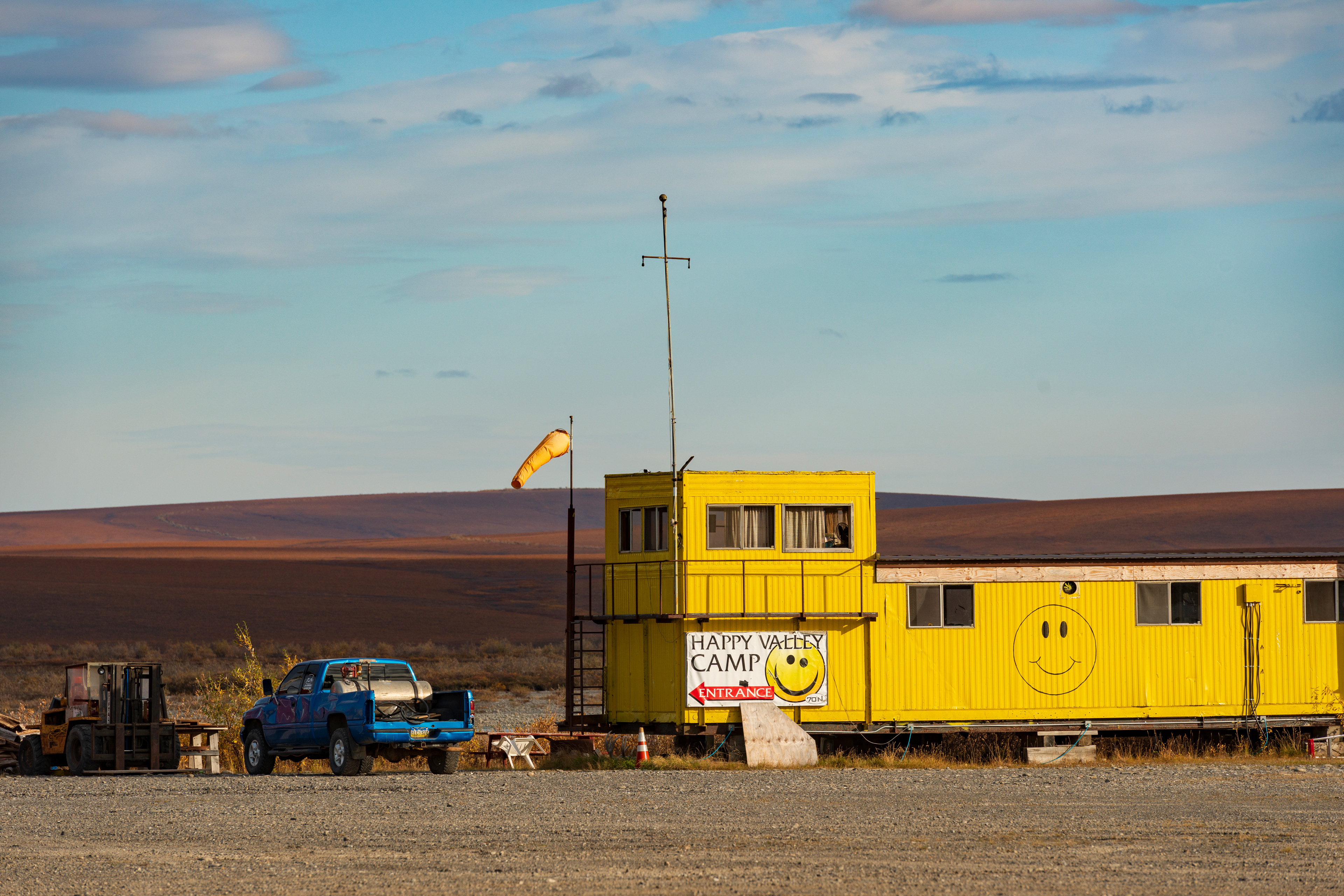
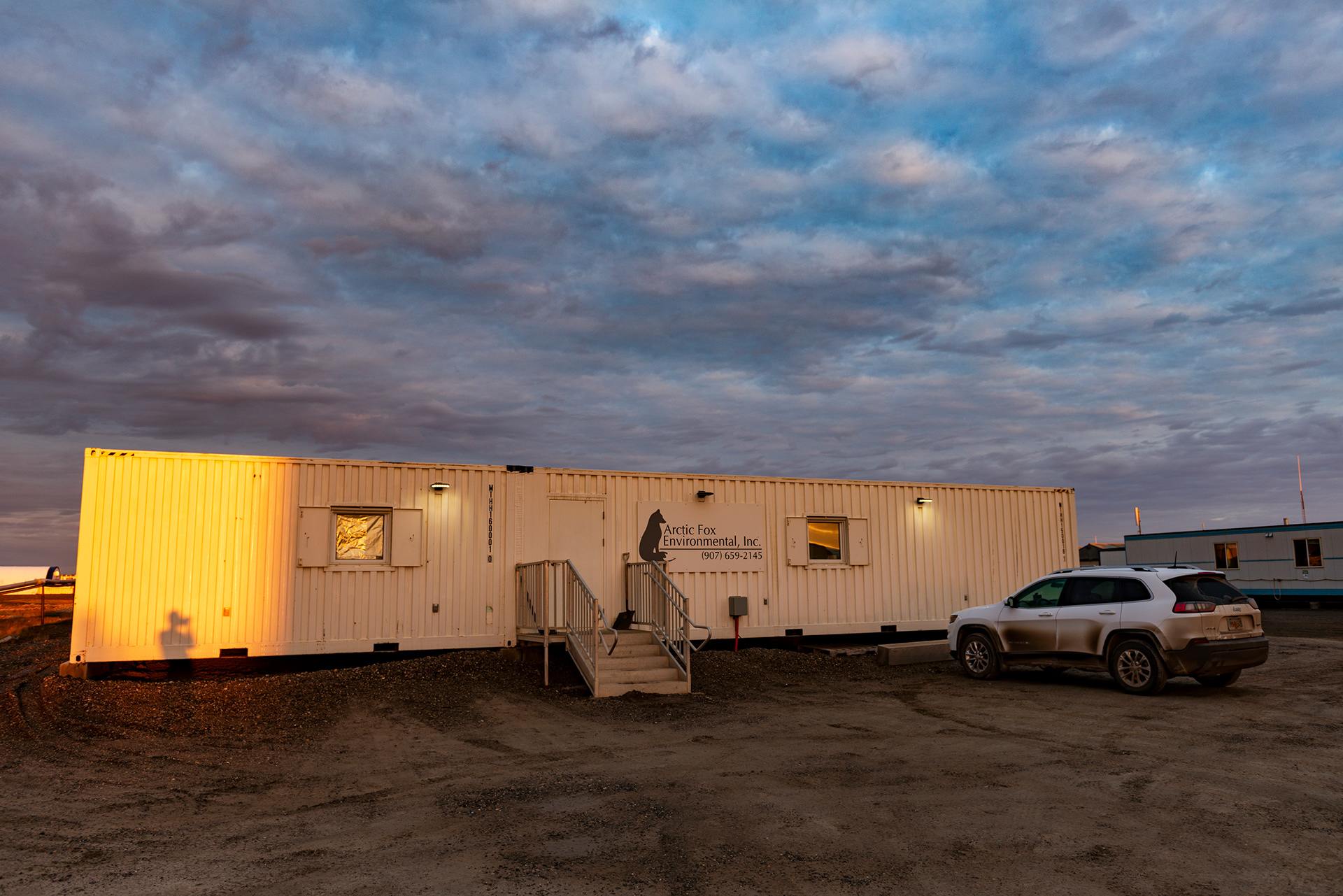
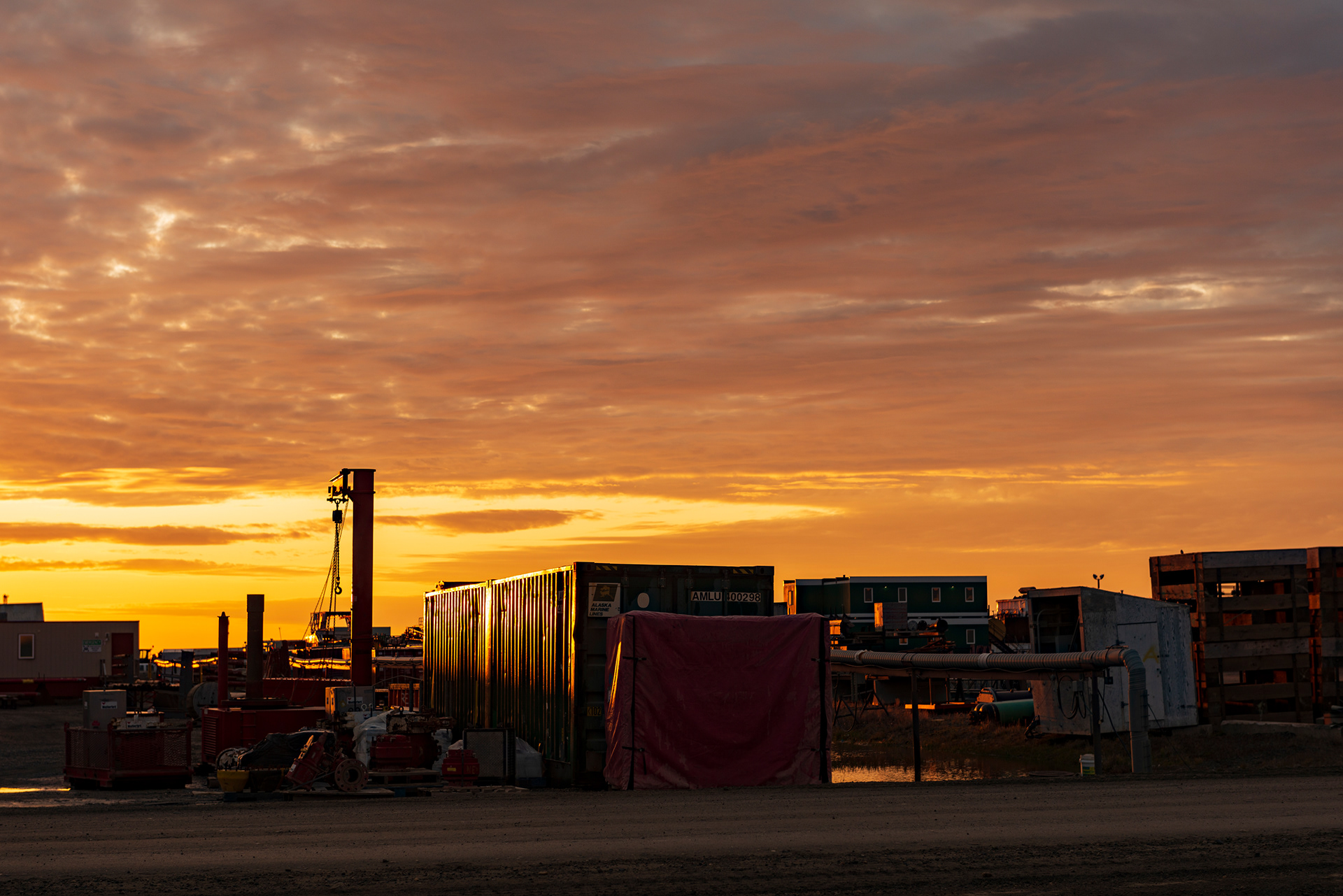
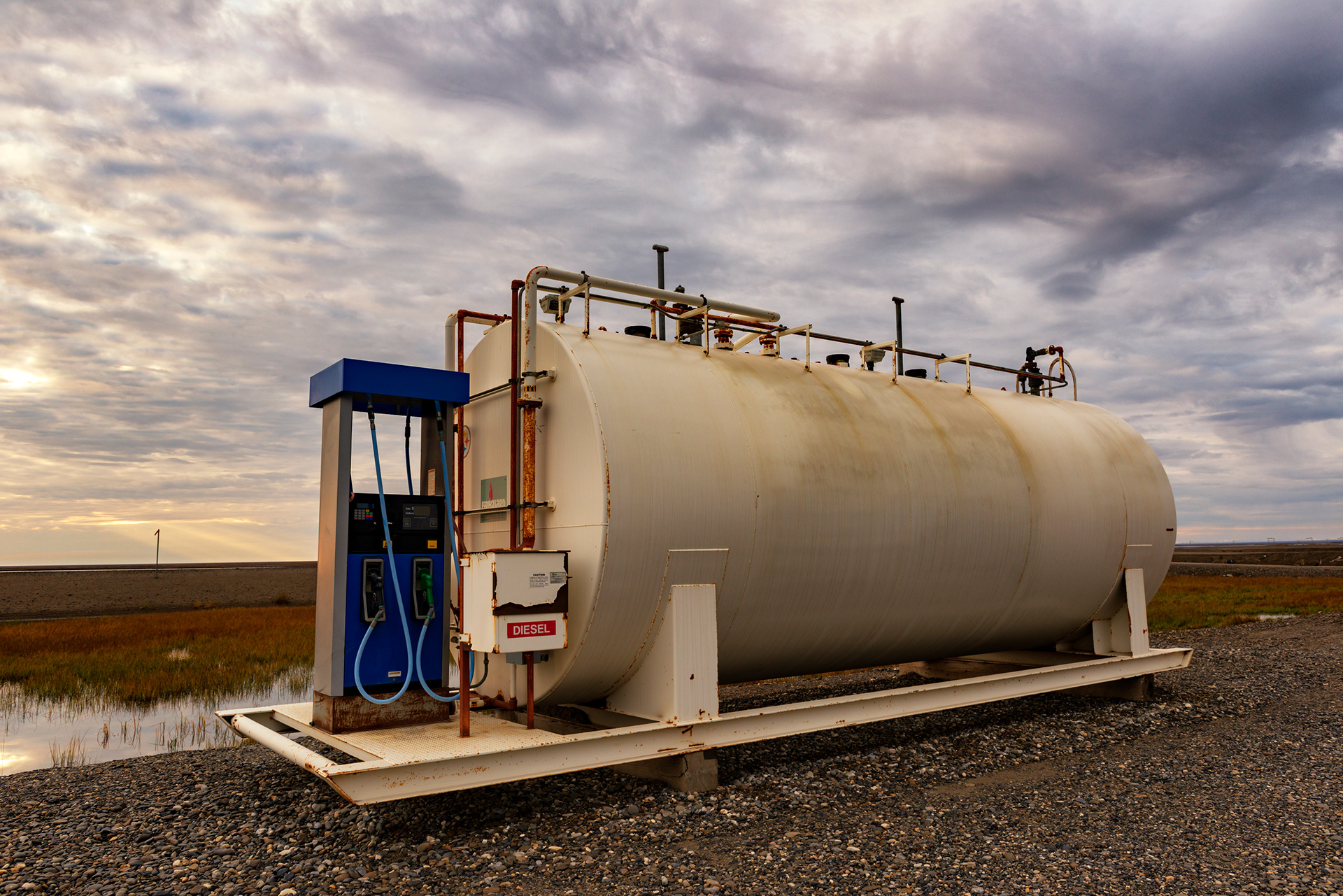
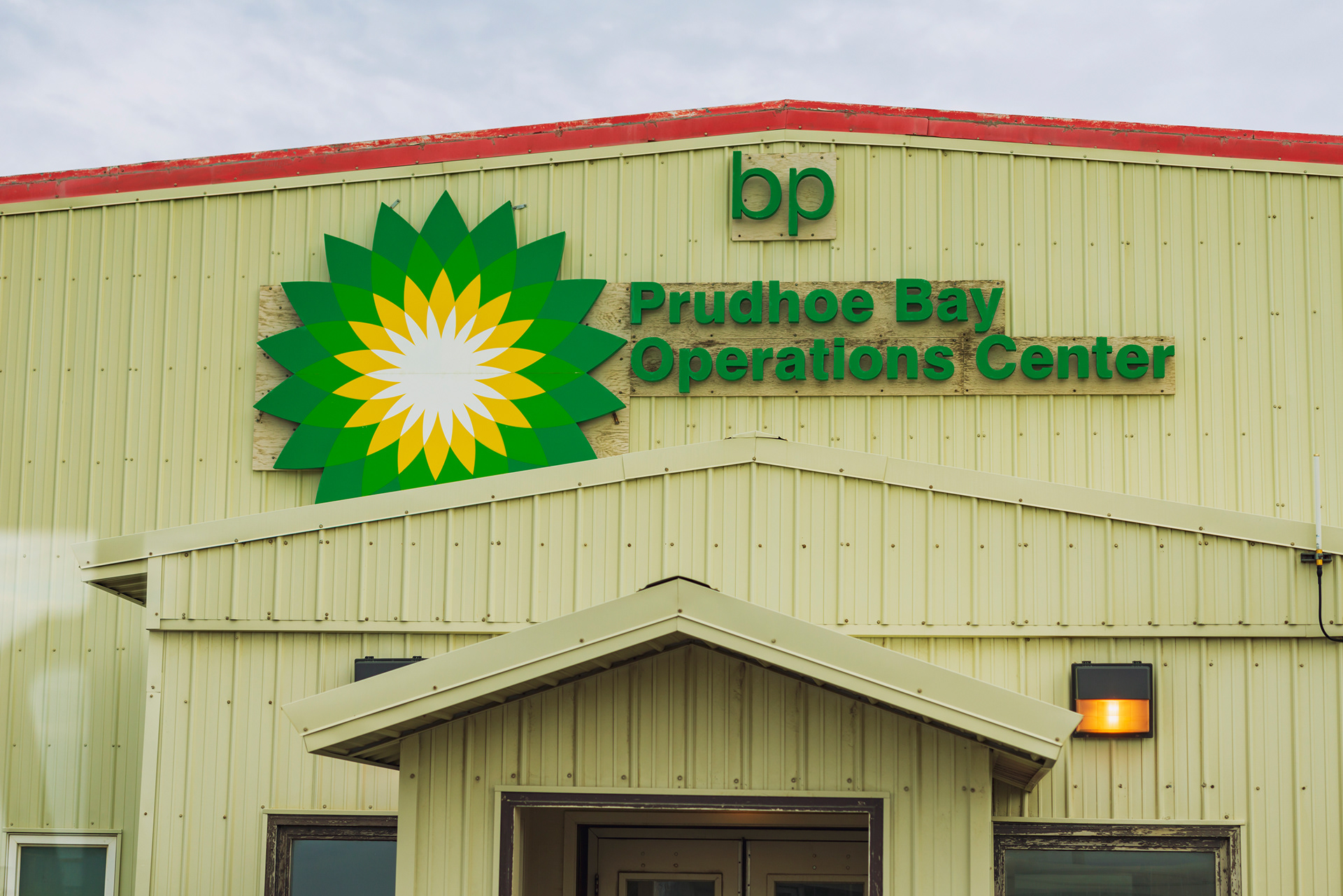
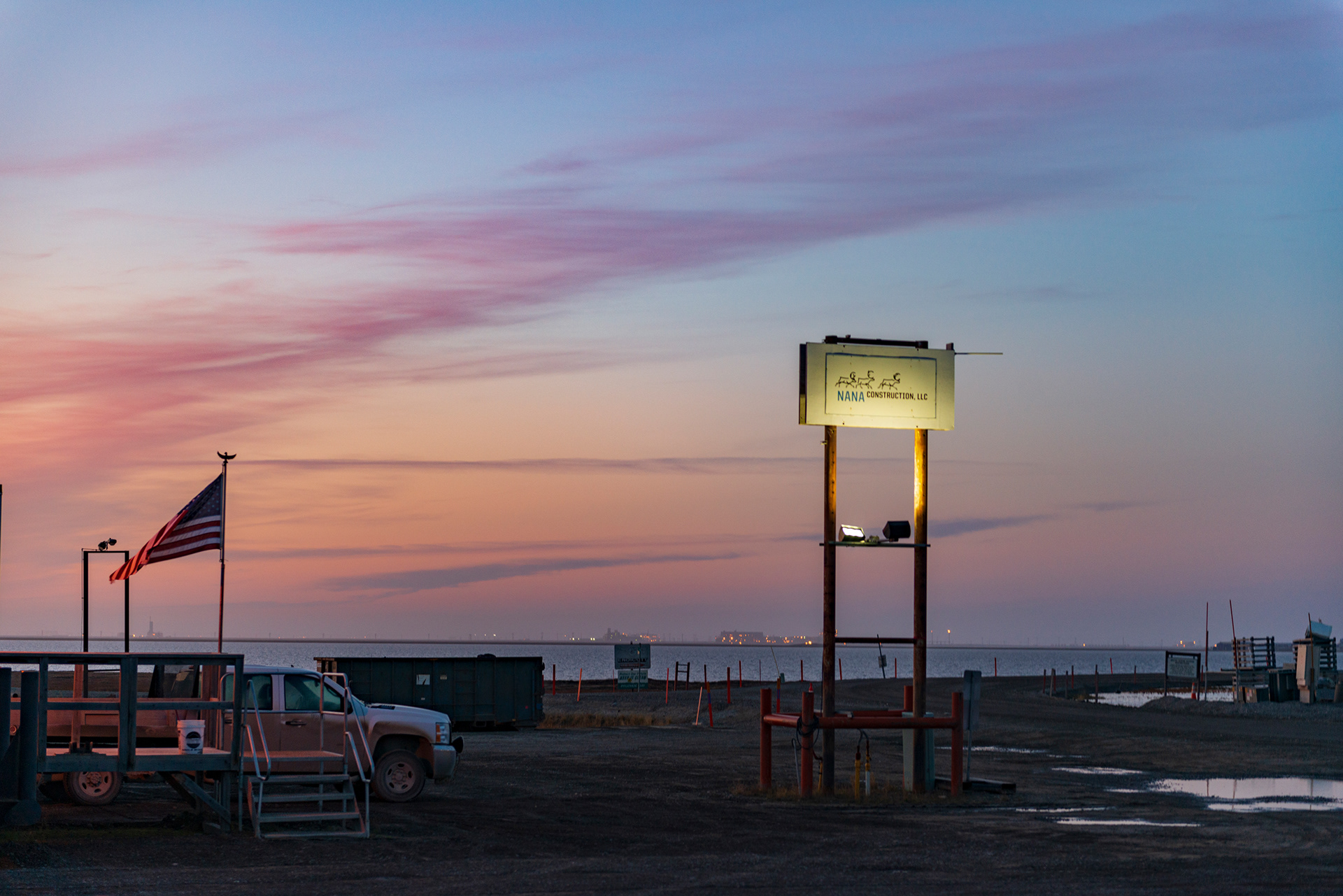
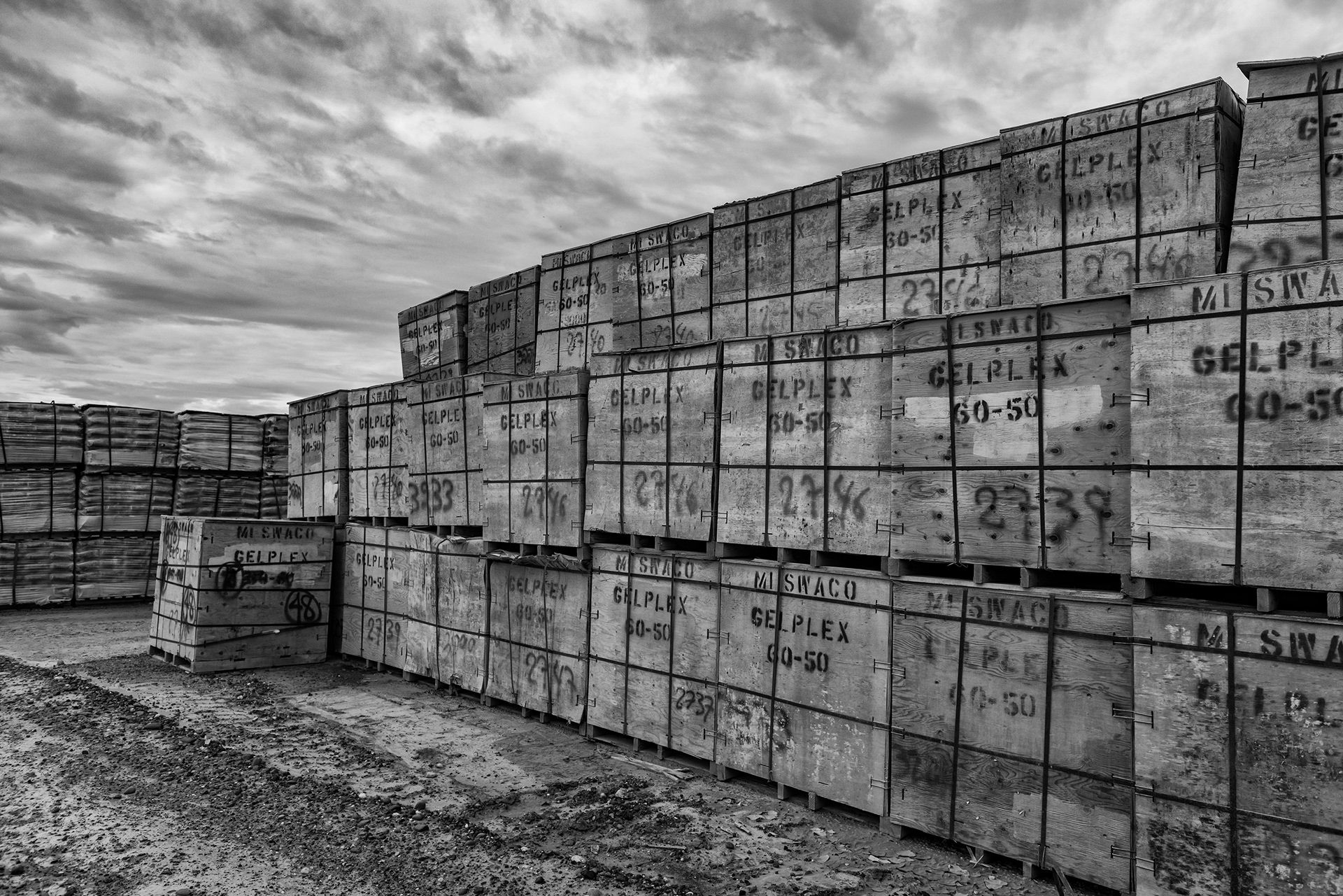
Deadhorse is not a place you visit for its beauty. It is an oil field town at latitude 70°N, the northernmost community in the United States accessible by road. The infrastructure is industrial: container-box buildings set on pilings above the permafrost, pipe yards, heavy equipment grinding through mud-slick roads, the constant rumble of machinery. BP has its regional headquarters here. Everyone in town works for the field or for the companies that serve it. There are no houses, no school, no church. The air smells of petroleum.
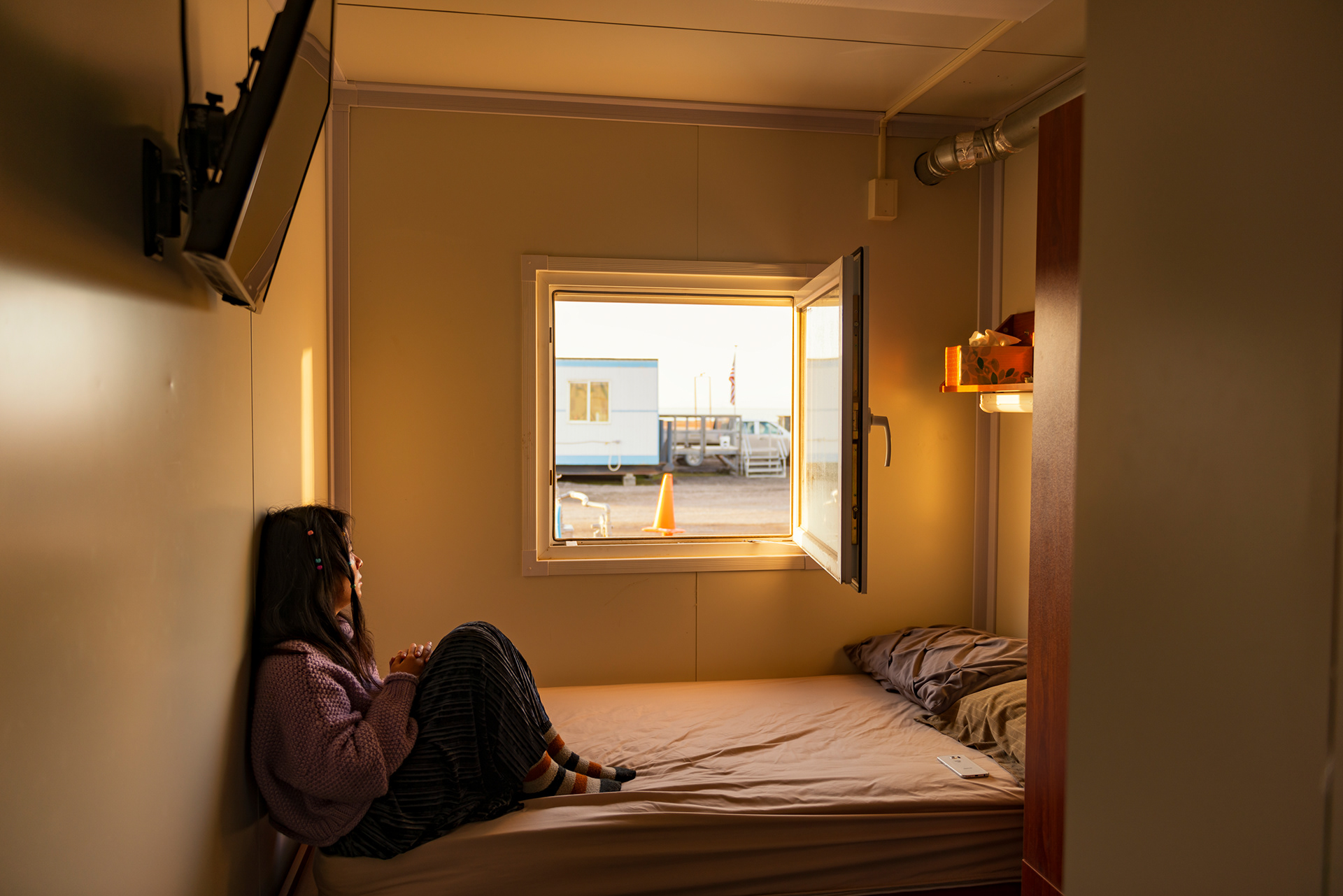
We arrived in the late afternoon after two solid days of driving. The hotels here rent single container rooms to workers, starting around two hundred dollars a night, and while planning the trip we had searched for a long time before finding an Airbnb host willing to let two people share one room for the price of one. The room had a twin bed. We slept in it together, one of us against the wall and one of us mostly off the edge. It was by far the most unusual night of the trip. The gas station took us ten minutes to figure out, since there was no attendant, no sign, and a pump that would not start until a man in coveralls walked over and showed us the switch. That tank was the most expensive of the trip. The oil in the pipe is crude; it goes south to be refined, and the gasoline comes all the way back up on a truck.
But Deadhorse isn't the point. The Arctic Ocean is.
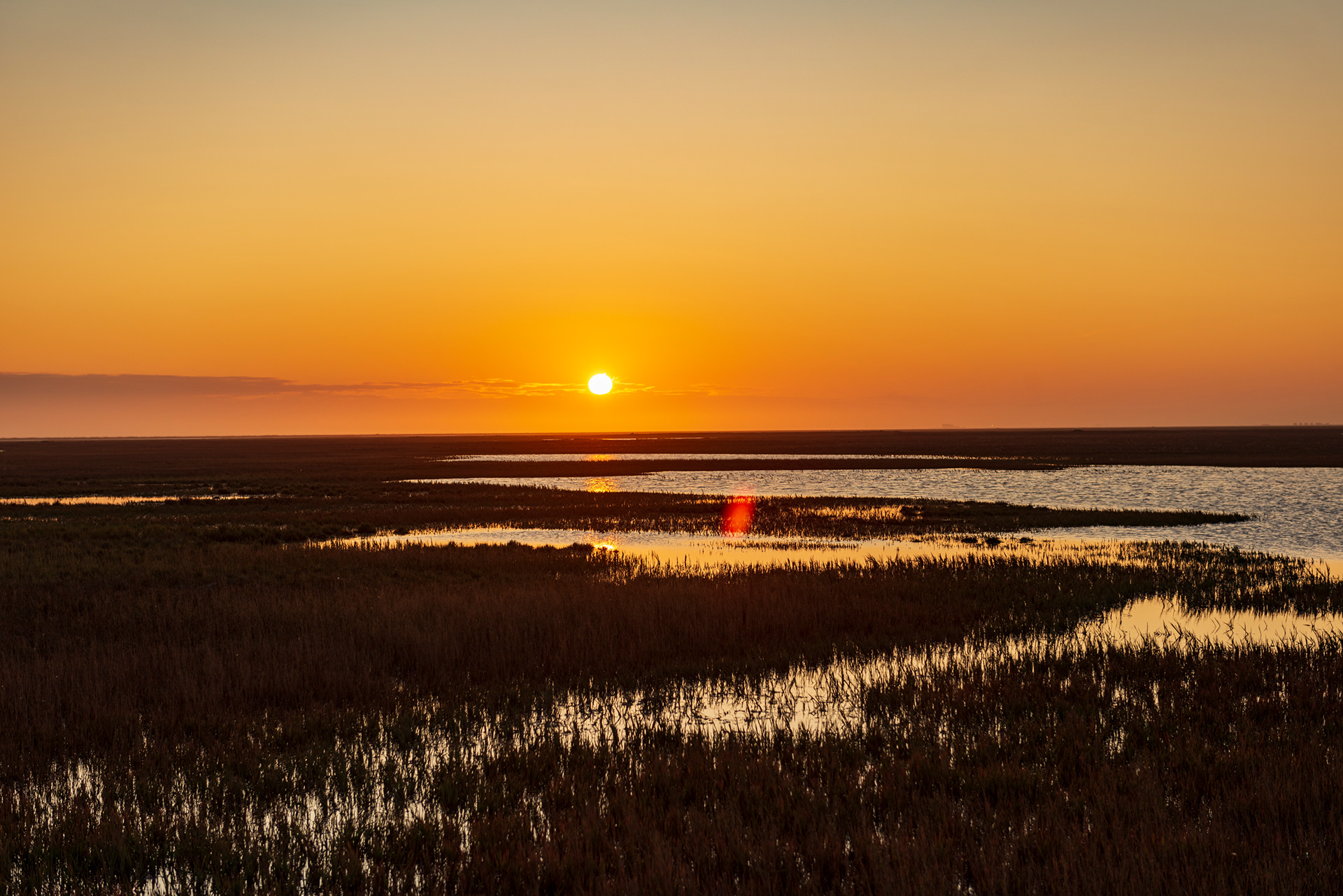
The town is eight miles from the sea, and the eight miles between are oil field, closed to anyone without a badge. The only way to the water is a tour that leaves from Deadhorse Camp each morning, and we were on it at 7:30 AM with 20+ passengers and a driver-guide who had clearly made this run a thousand times. He took us through the field slowly: wells, pump houses, the gathering lines running between them, the stack with its flame. He had a story for almost every building, and he told them in the flat, unhurried voice of a man who had long ago stopped finding any of it strange.
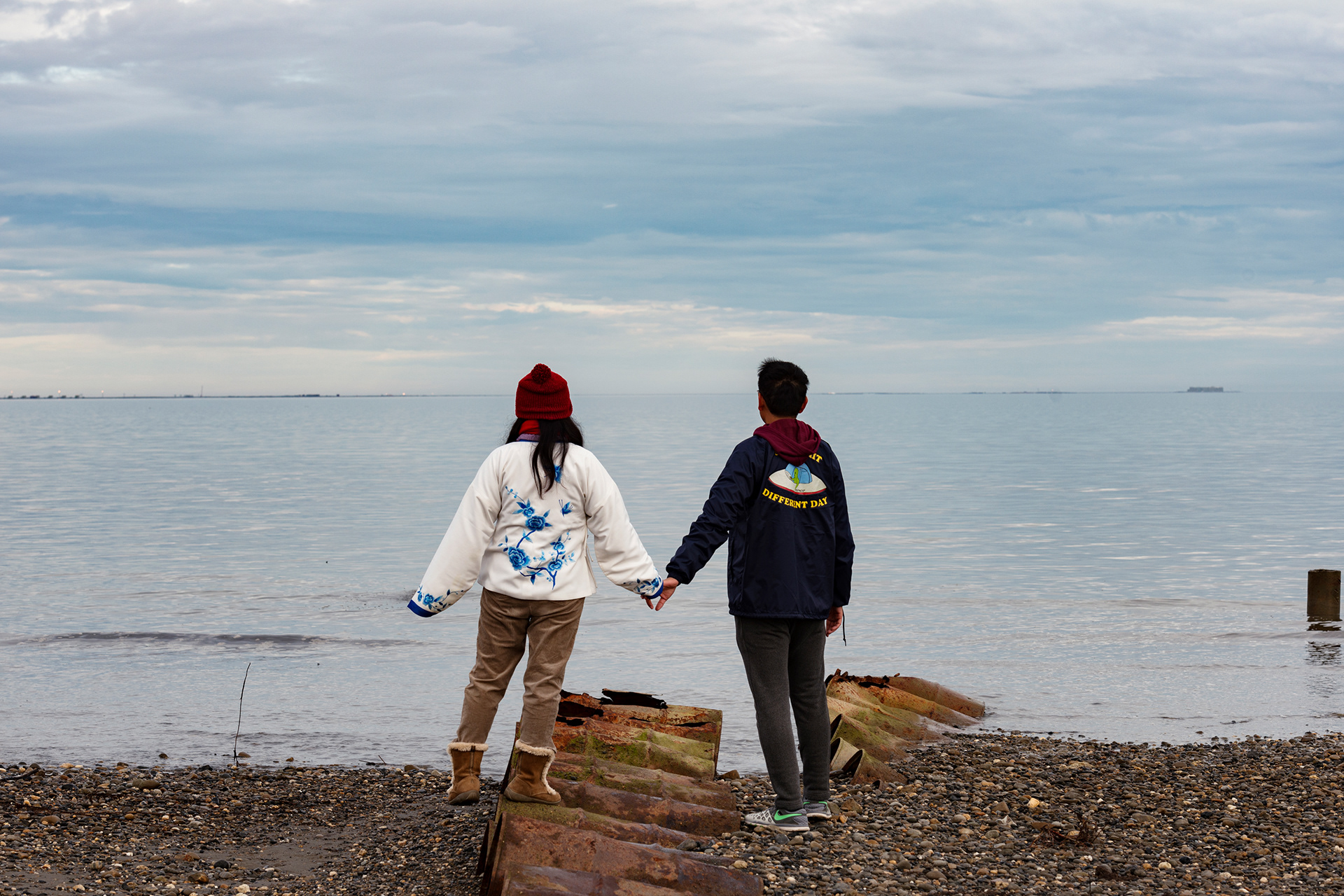
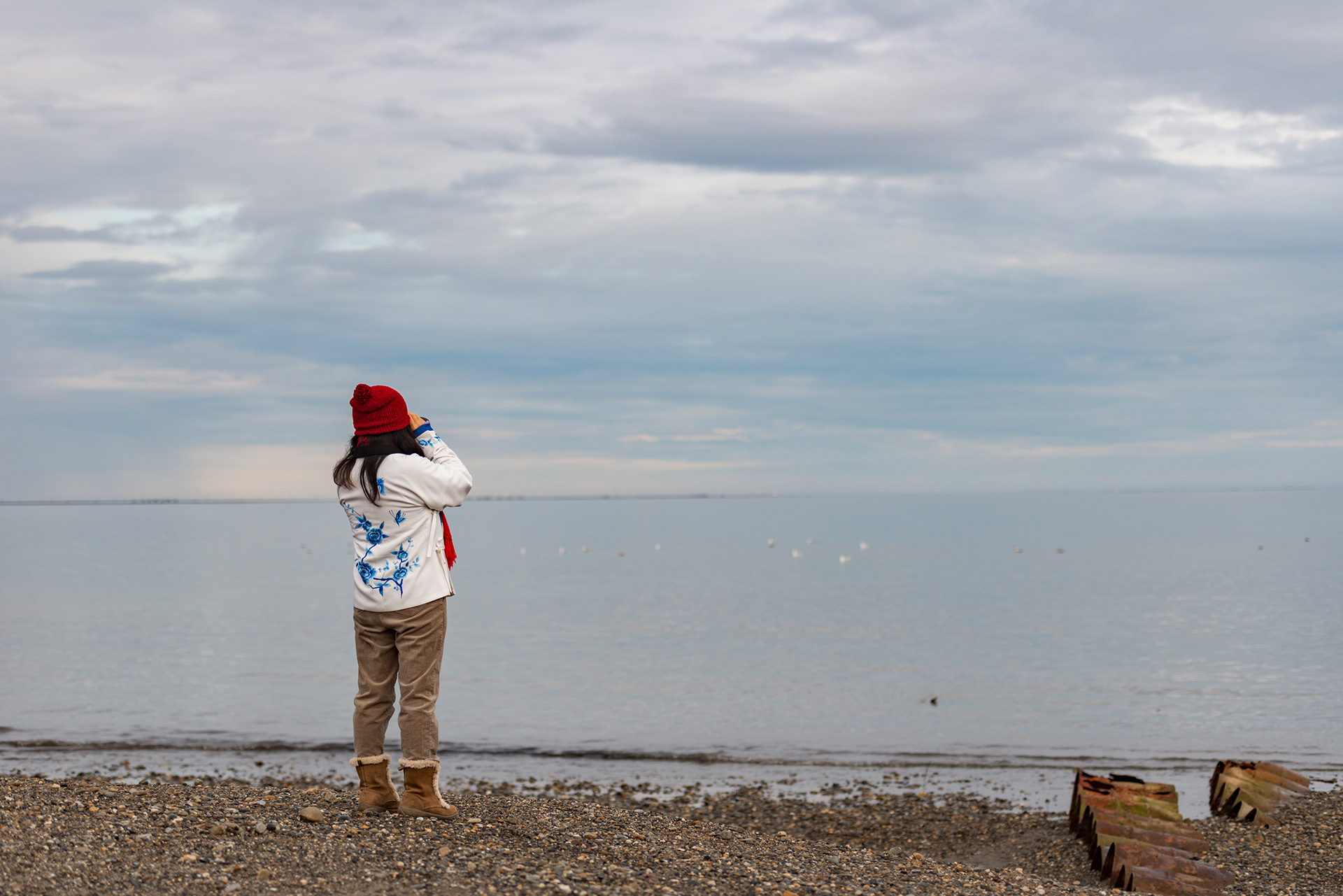
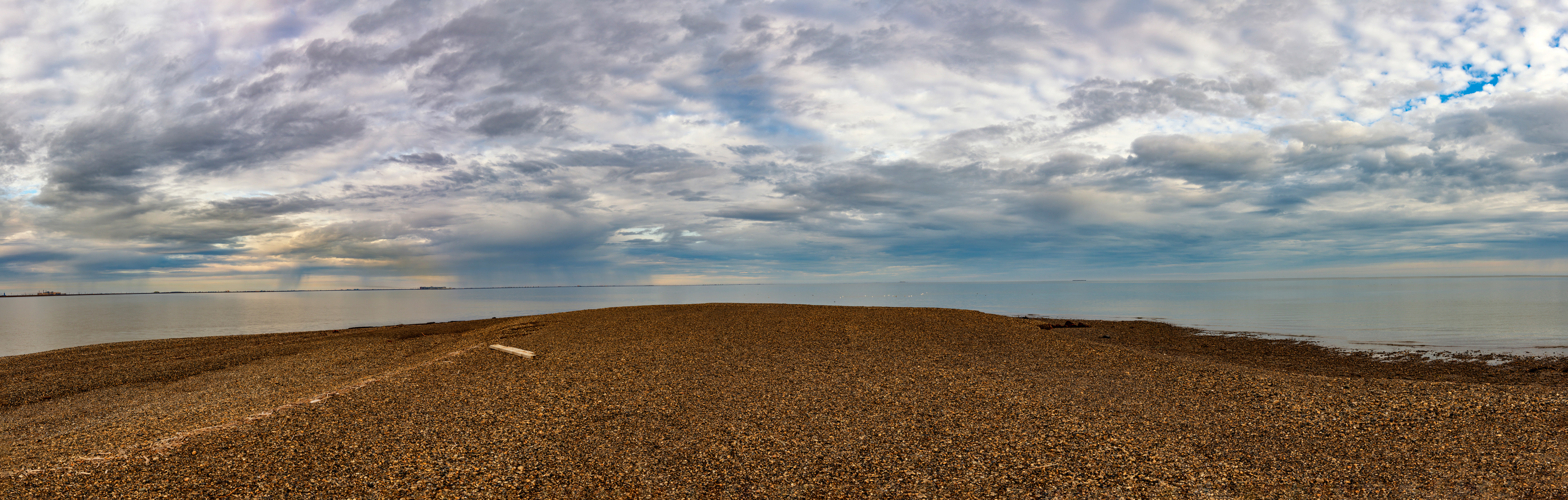
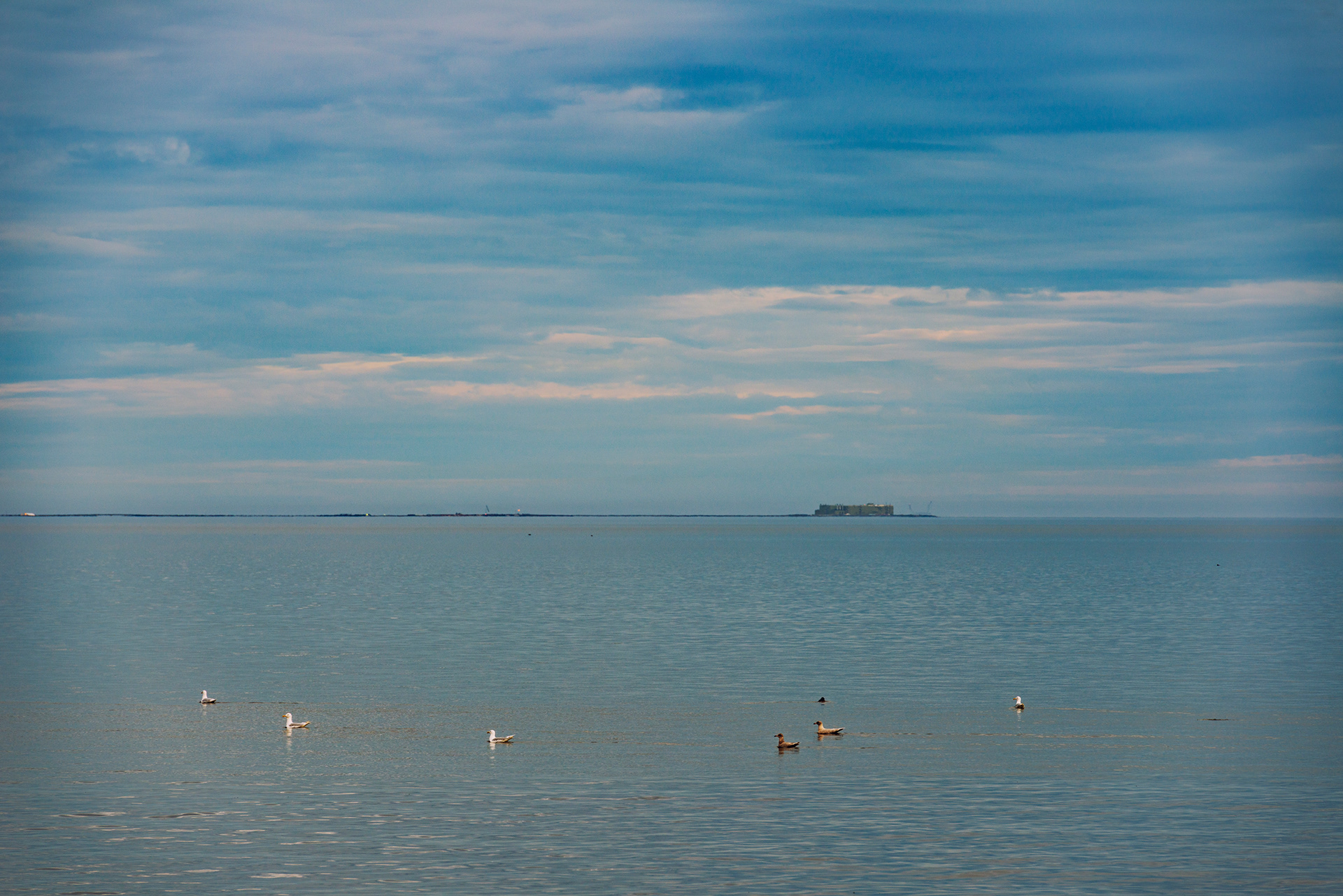
Then the road ended at a gravel beach and there it was. The Arctic Ocean in September is iron-gray and cold in ways that go beyond temperature. It feels like a boundary, an edge of the world. It's open only from July through September; the other months it's locked under pack ice, and the ice was due back within weeks of when we stood there. The driver mentioned that some passengers swim, and that he keeps towels on the van for them. We were not among them. I put my hand in and held it there until the cold reached my elbow.
We stood on the shore at 70°N and let it register that we had driven here from Anchorage. Every mile of tundra, every mountain pass, every refueling stop had led to this moment of standing at the top of a continent with nothing between us and the North Pole but open sea.
The Aurora
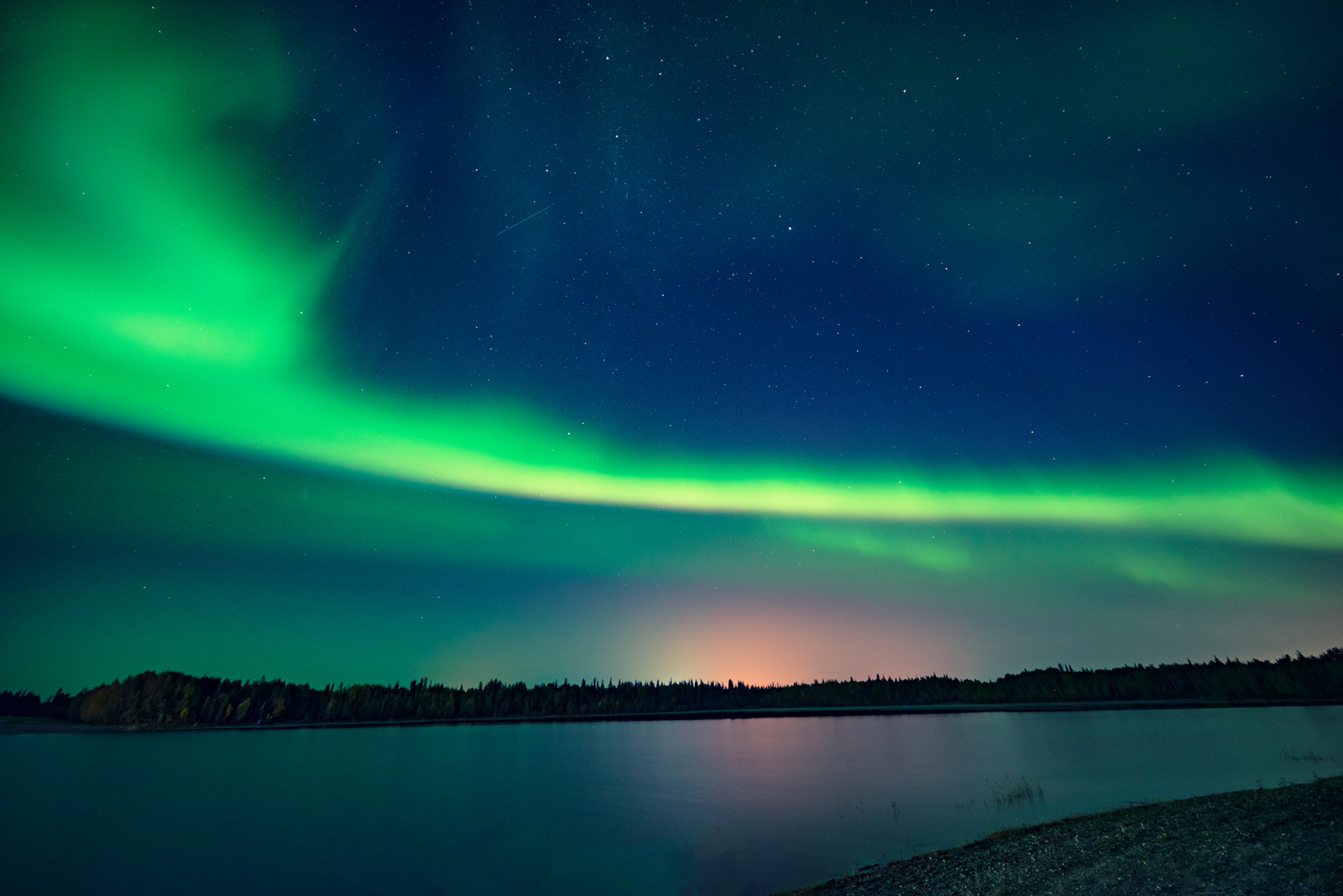
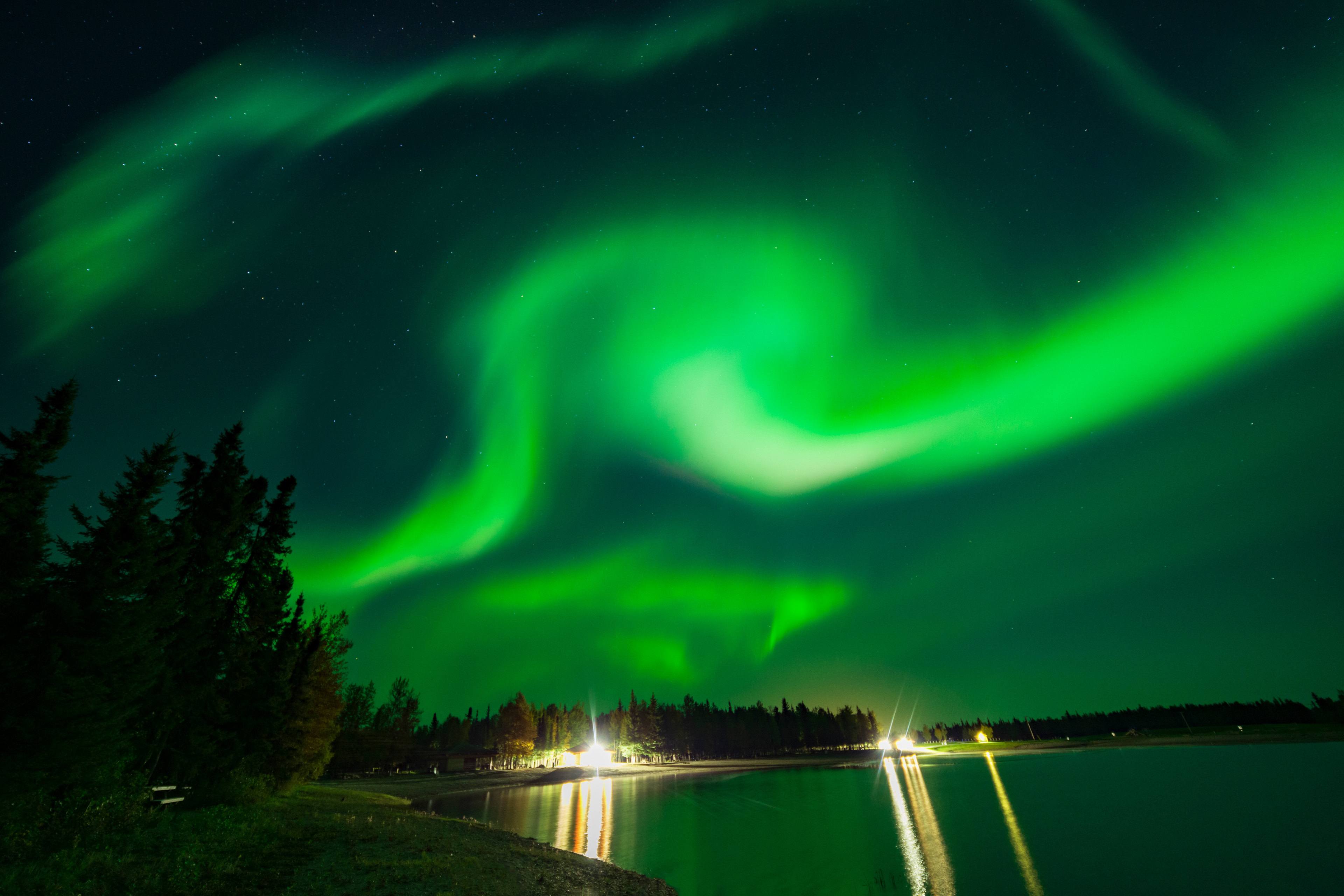
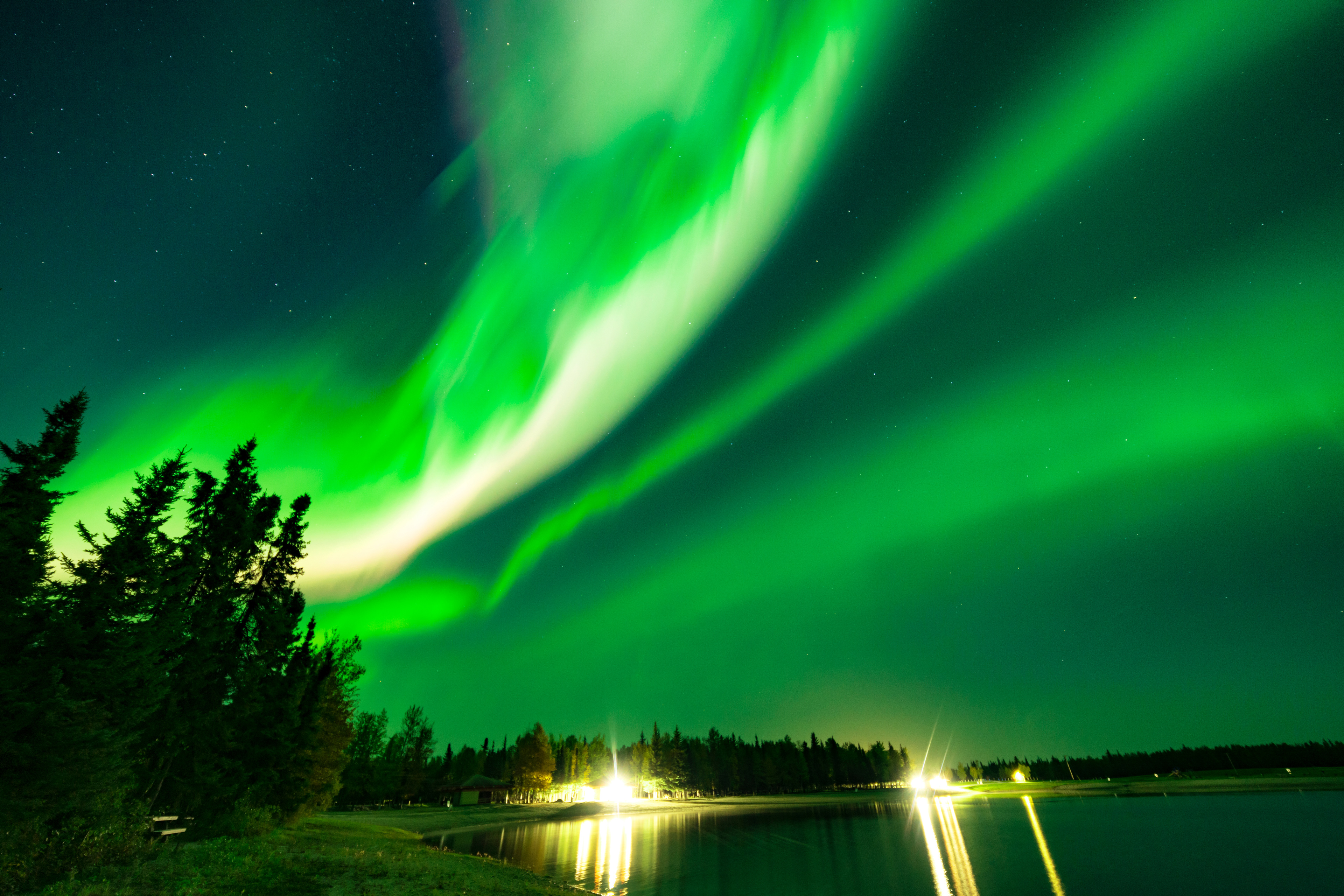
We saw the northern lights on our second night in Alaska, which felt almost unfairly good. We'd been lucky: a Kp-6 (level 6) geomagnetic storm hit during one of the few cloudless nights of our trip, coinciding almost exactly with a new moon.
A brief explanation of how aurora forecasting works, because it matters enormously if you're chasing them:
The aurora borealis is caused by solar wind, streams of charged particles ejected from the sun, interacting with Earth's magnetic field and atmosphere near the poles. The intensity is measured by the Kp index, which runs from 0 to 9. A Kp of 3–4 is visible to the naked eye under dark skies. A Kp of 5 or above is a true aurora storm, where the lights pulse, ripple, and fill large portions of the sky. A Kp-6 is exceptional.
The key forecasting resources:
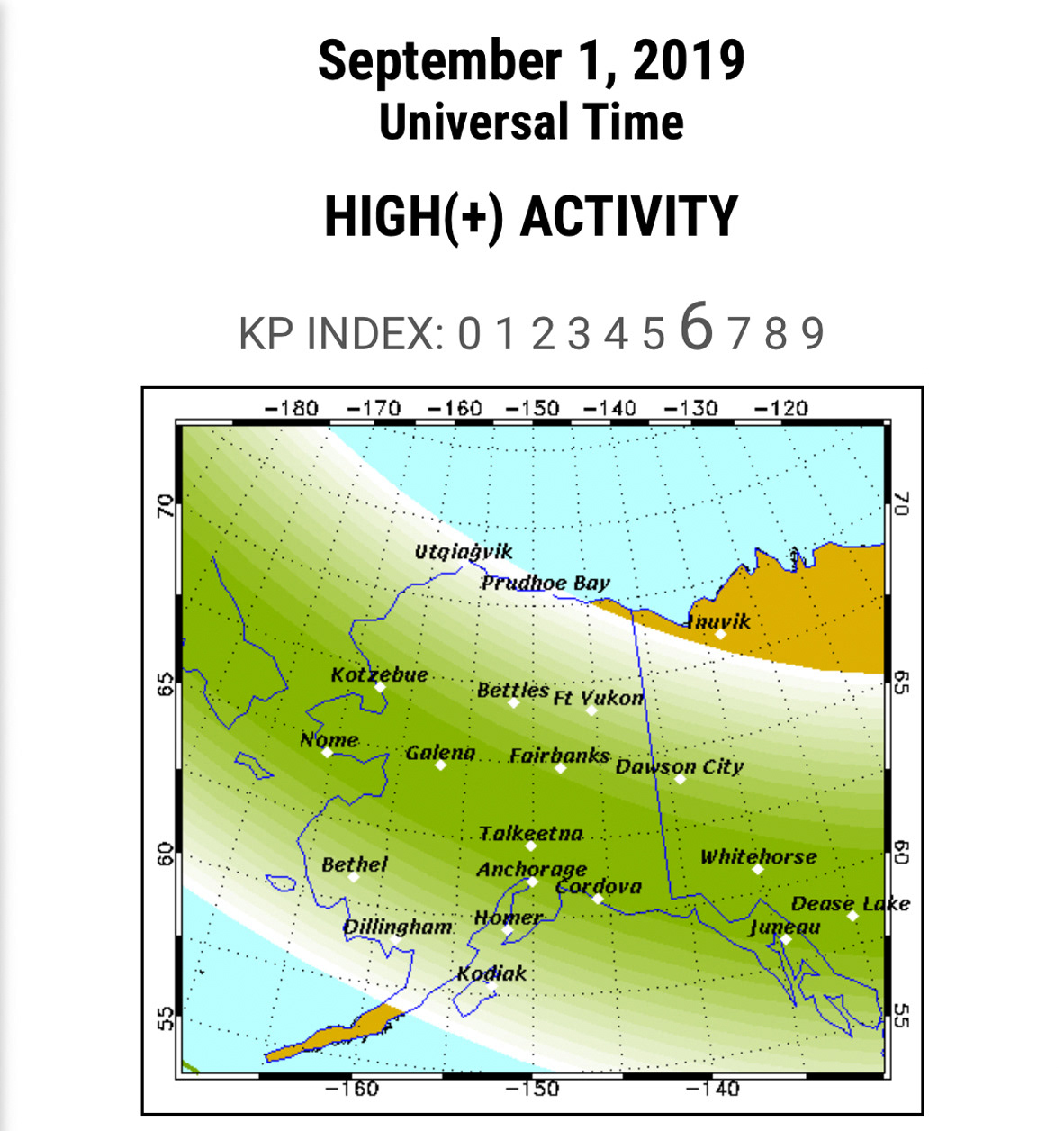
- Alaska Geophysical Institute: A map showing aurora coverage probability over Alaska; updates every 30 minutes
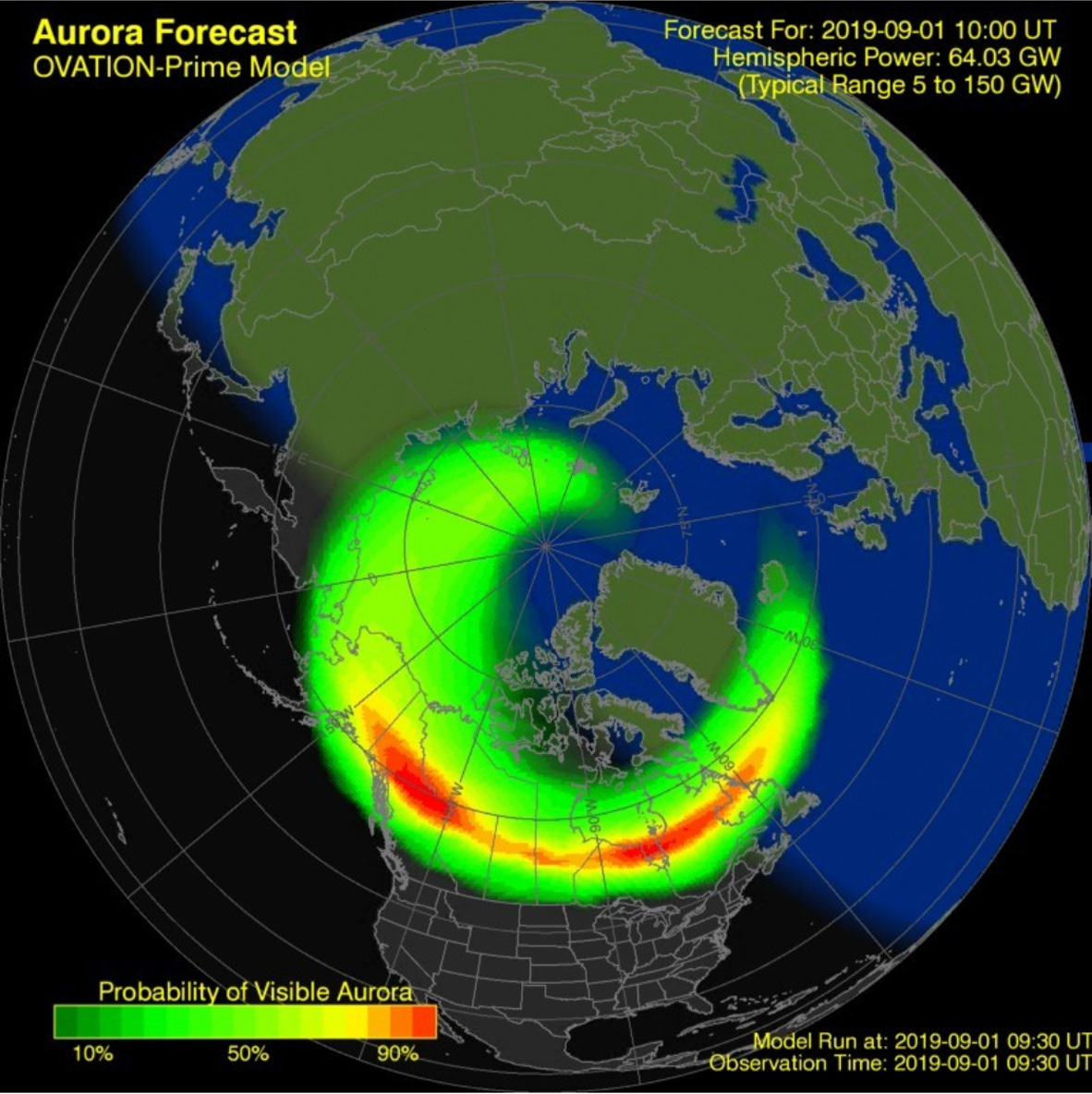
- NOAA Ovation Model: A global real-time image of aurora probability that loads even on weak cell service; you can refresh it every few minutes to track movement
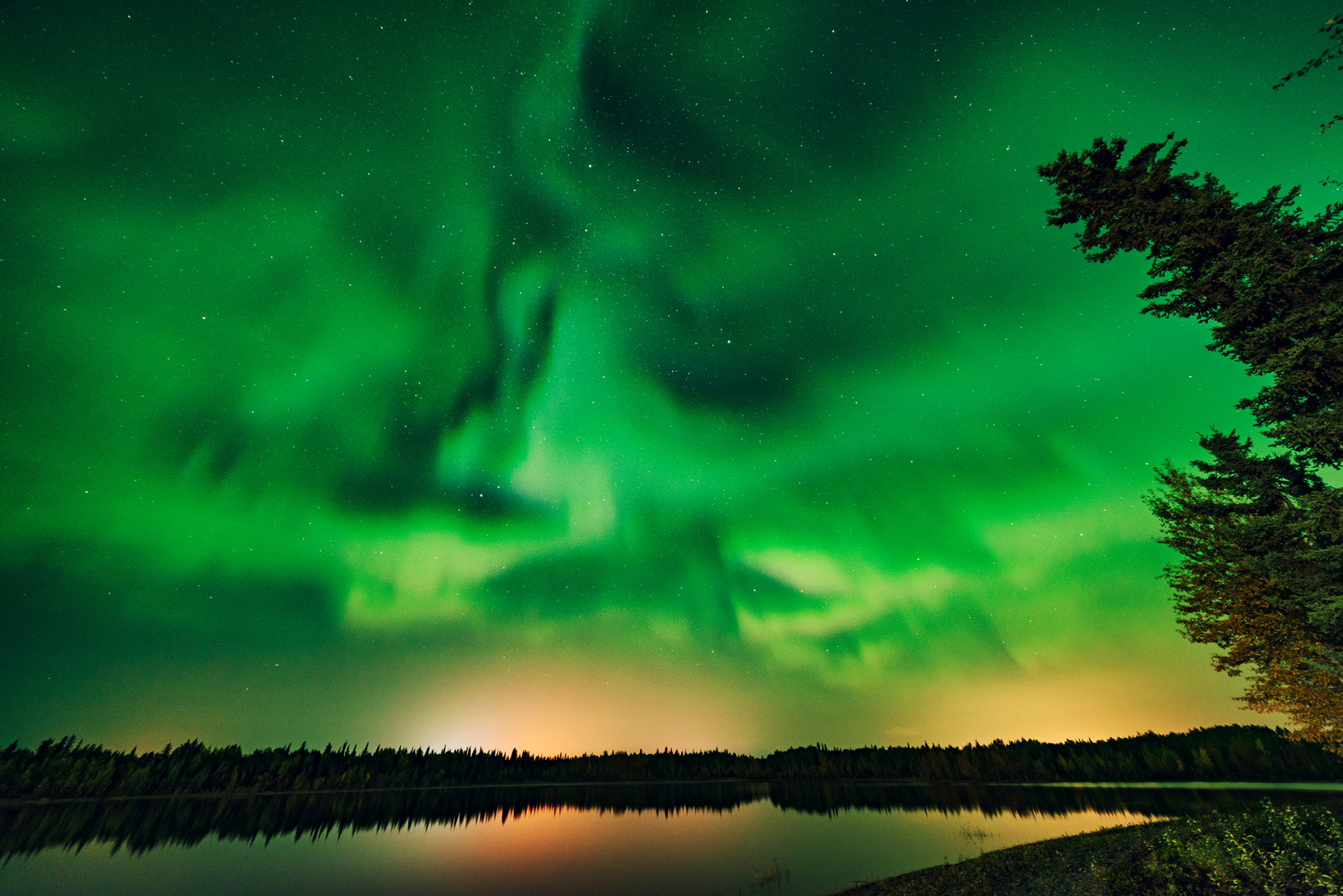
Three conditions must align for a good aurora night: high Kp value, clear skies, and darkness (near new moon). The aurora season in Fairbanks runs from mid-August through mid-April. Fairbanks sits near the auroral oval, the ring around the geomagnetic pole where aurora activity is concentrated, which is why it reliably has 200+ observable aurora nights per year. That night all three conditions were met. The state map showed the green band covering all of Alaska. The moon was a thin crescent that set early. The sky was clear. We checked into the hotel long enough to drop our bags and drove forty minutes southeast, past the town of North Pole, to Chena Lake, a recreation area with nothing around it but spruce and water.
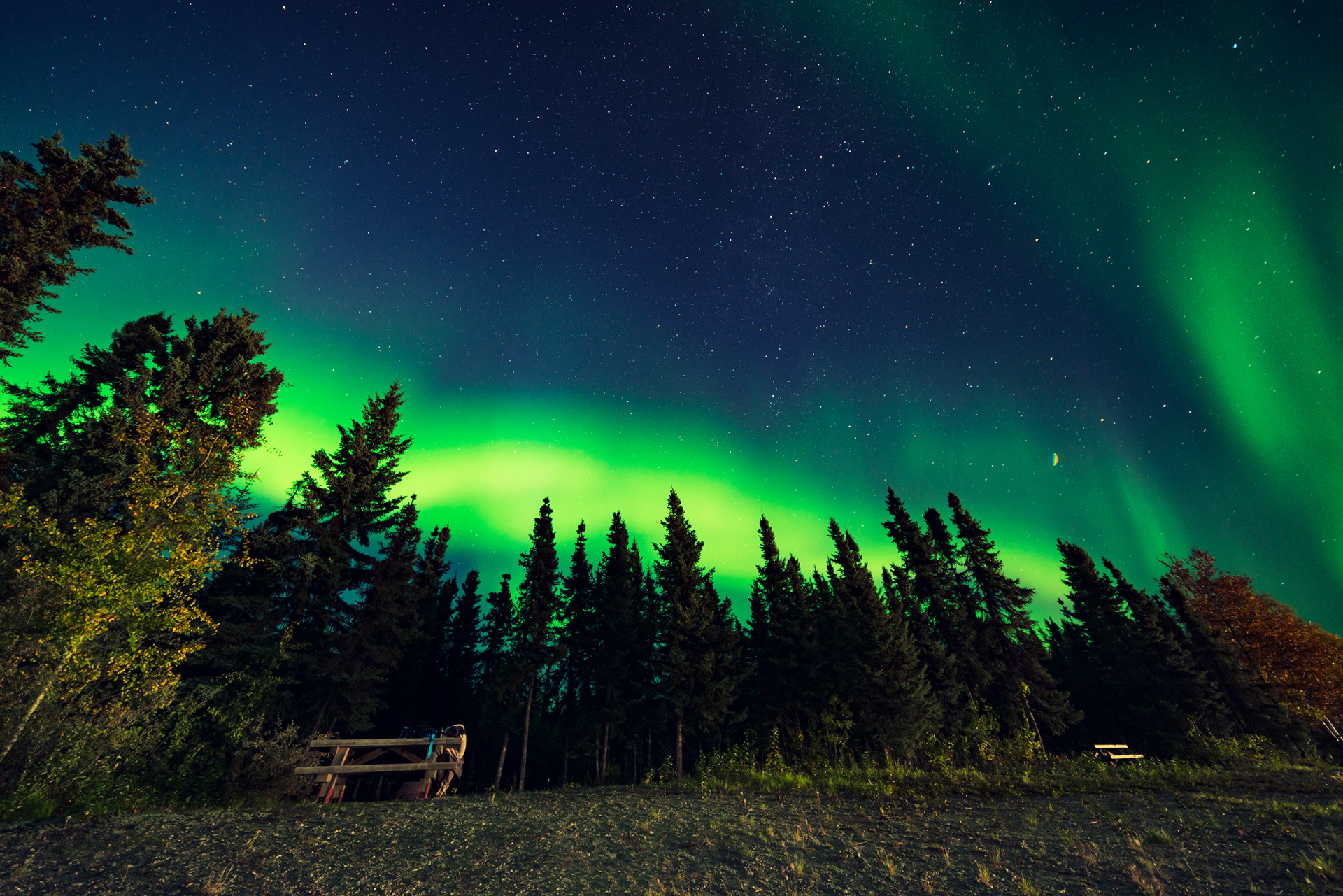
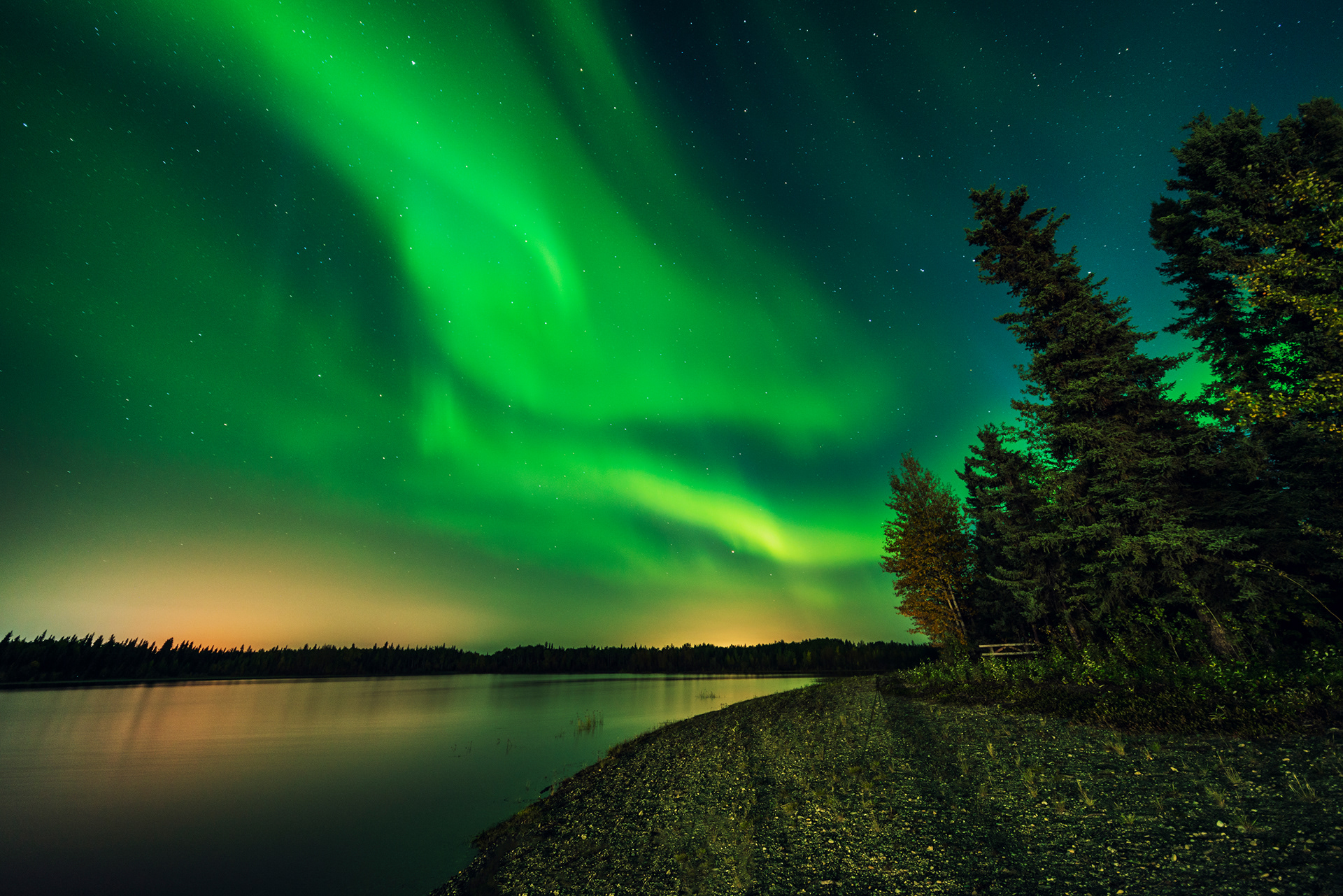
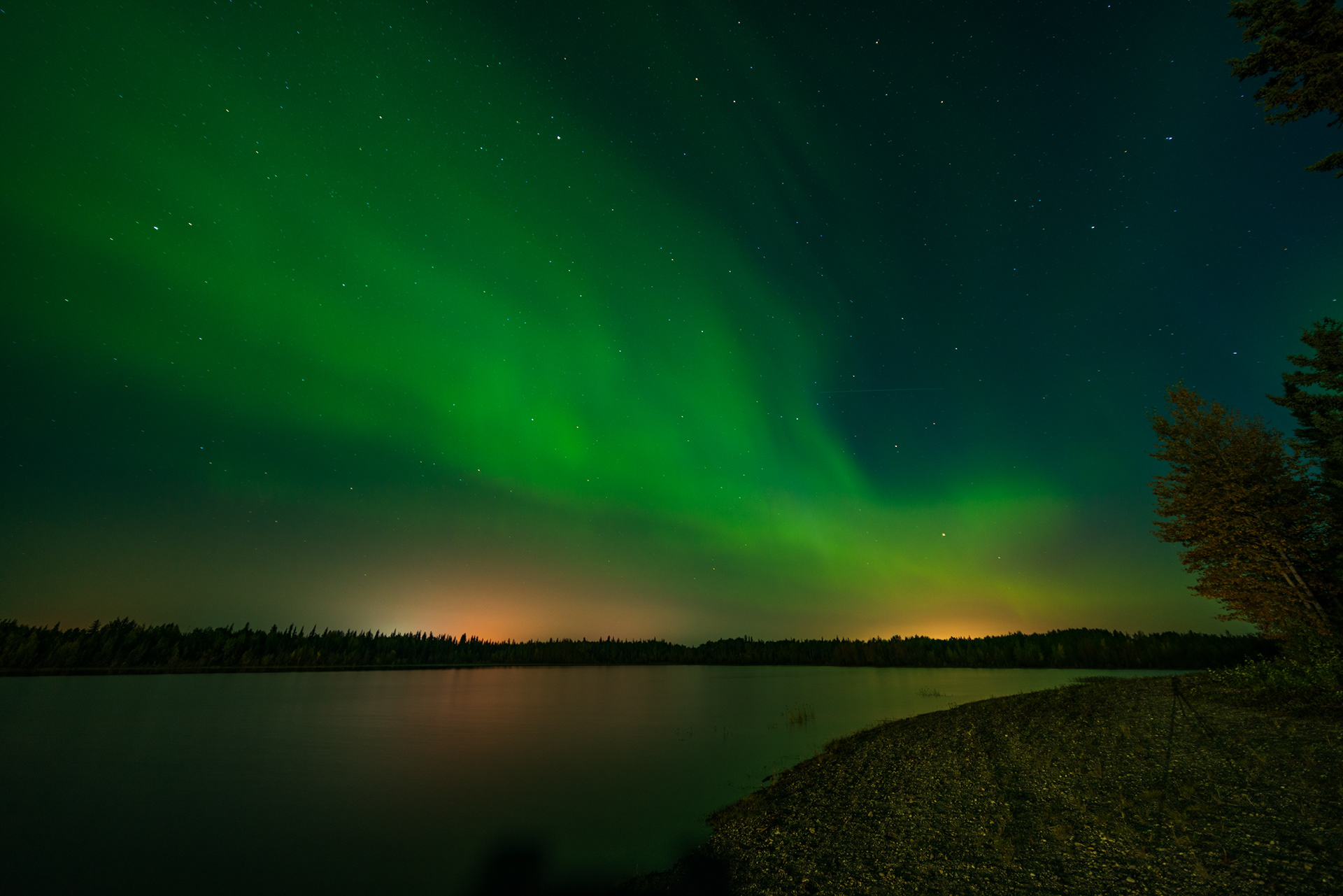
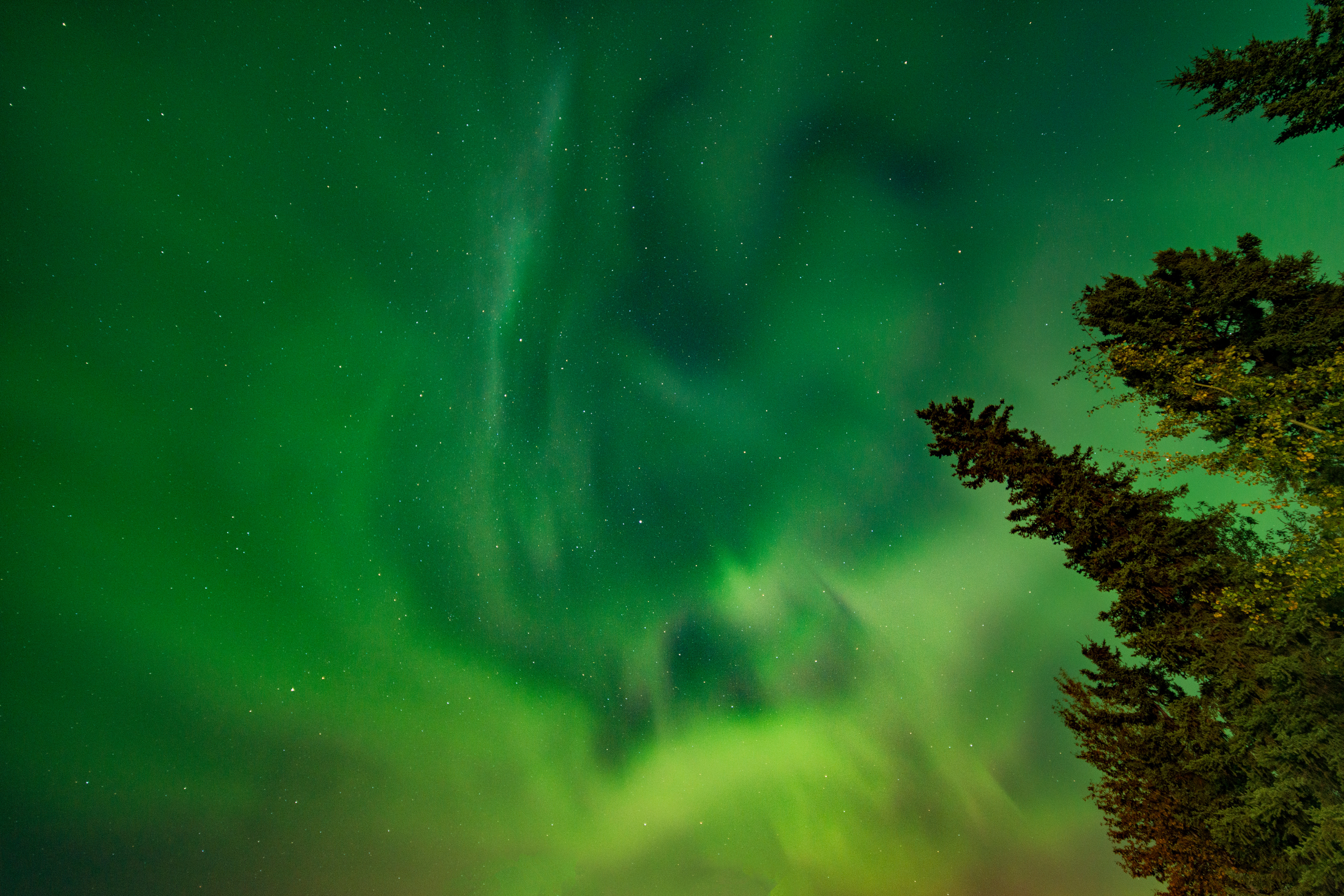
We did not have to wait. The aurora was already overhead when we parked. I remember getting out of the car and looking up and not immediately understanding what I was seeing, because I had expected a band on the northern horizon and instead the whole sky was moving. Green curtains hung down from a point almost directly above us and swept from horizon to horizon, periodically folding into bright bands and then erupting into a burst of movement that looked almost electric. The bottom edges were the brightest green I have seen outside a screen, and above them the color thinned to a pale violet that I could see with my eyes but never quite caught with the camera. It lasted for hours. At its peak, sometime after midnight, the light was bright enough to cast shadows and to read the dial on the camera without a headlamp, and a green band lay across the water like a bridge with the trees black against it.
For the camera, the settings are not complicated: a wide-angle lens at the widest aperture you have (f/2.8 or faster), ISO 1600, a 10-second exposure, focus set manually to infinity. Adjust ISO up or down based on test shots. My wife stood next to me and neither of us said anything for a long time.
The aurora is one of those experiences that can't be adequately described or photographed. You're standing outside at midnight under a sky that is actively dancing, and no image captures the sense of motion, of scale, of the sky doing something it has no business doing. It was the most disorienting natural phenomenon I've ever witnessed. Worth every mile of the drive north.
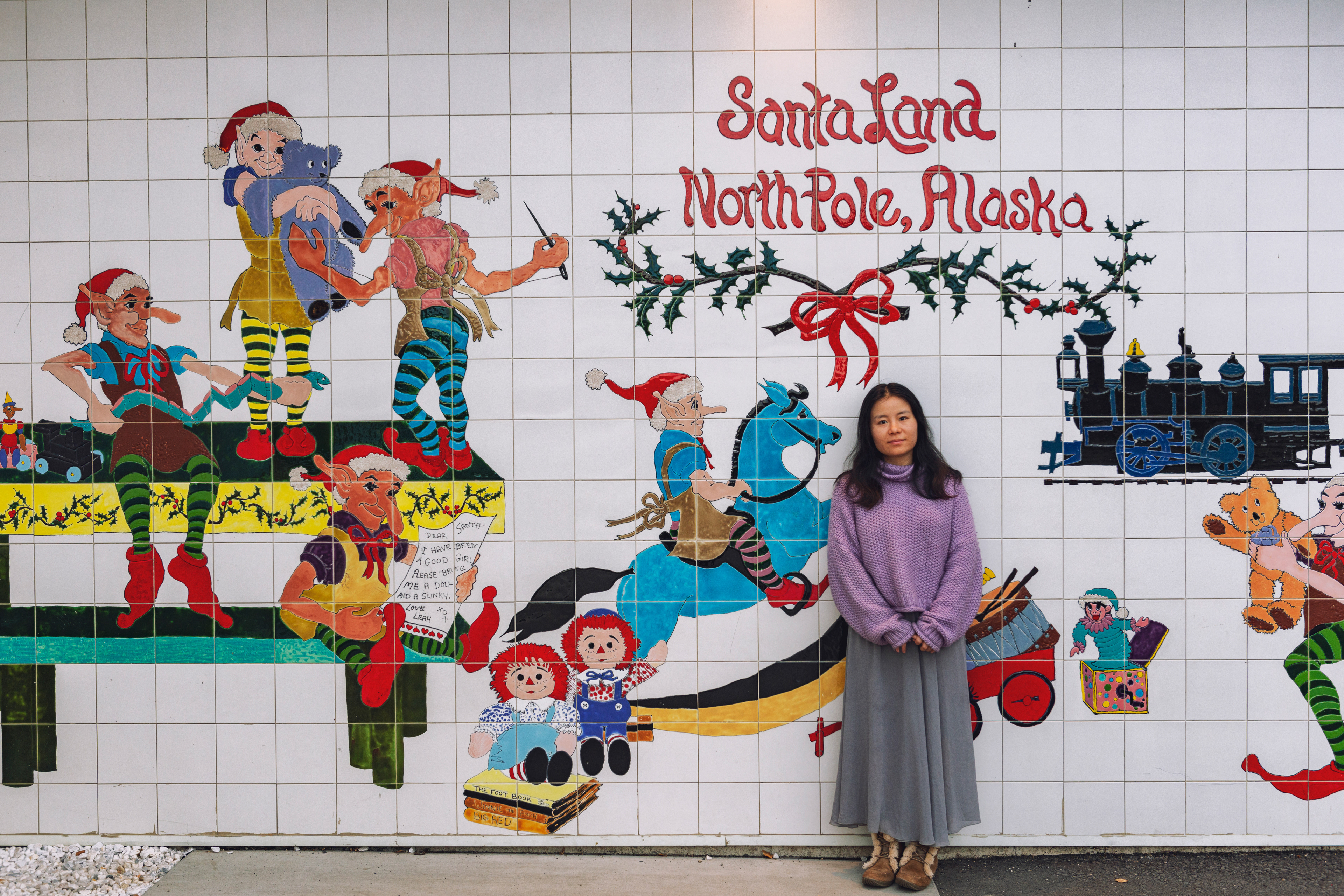
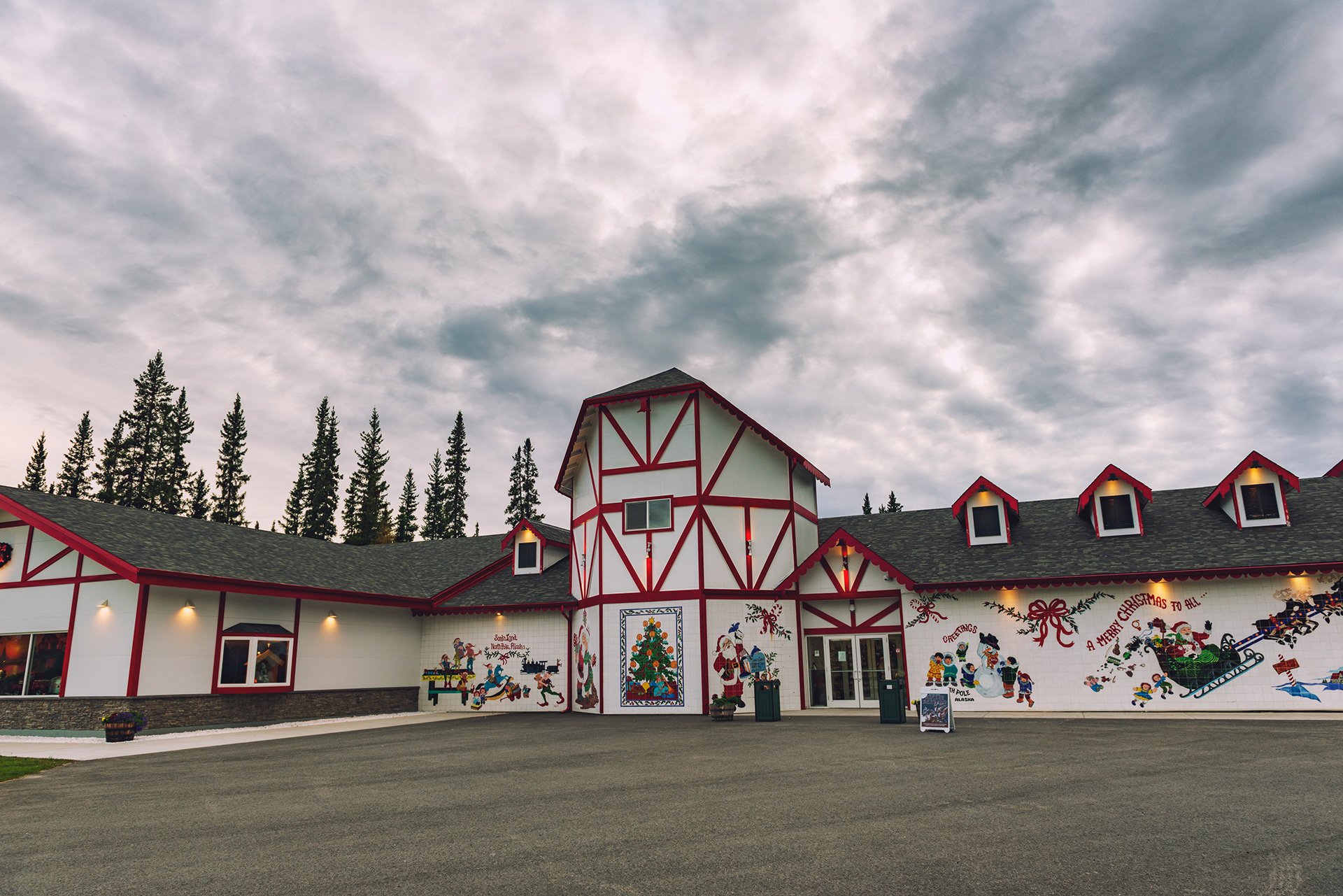
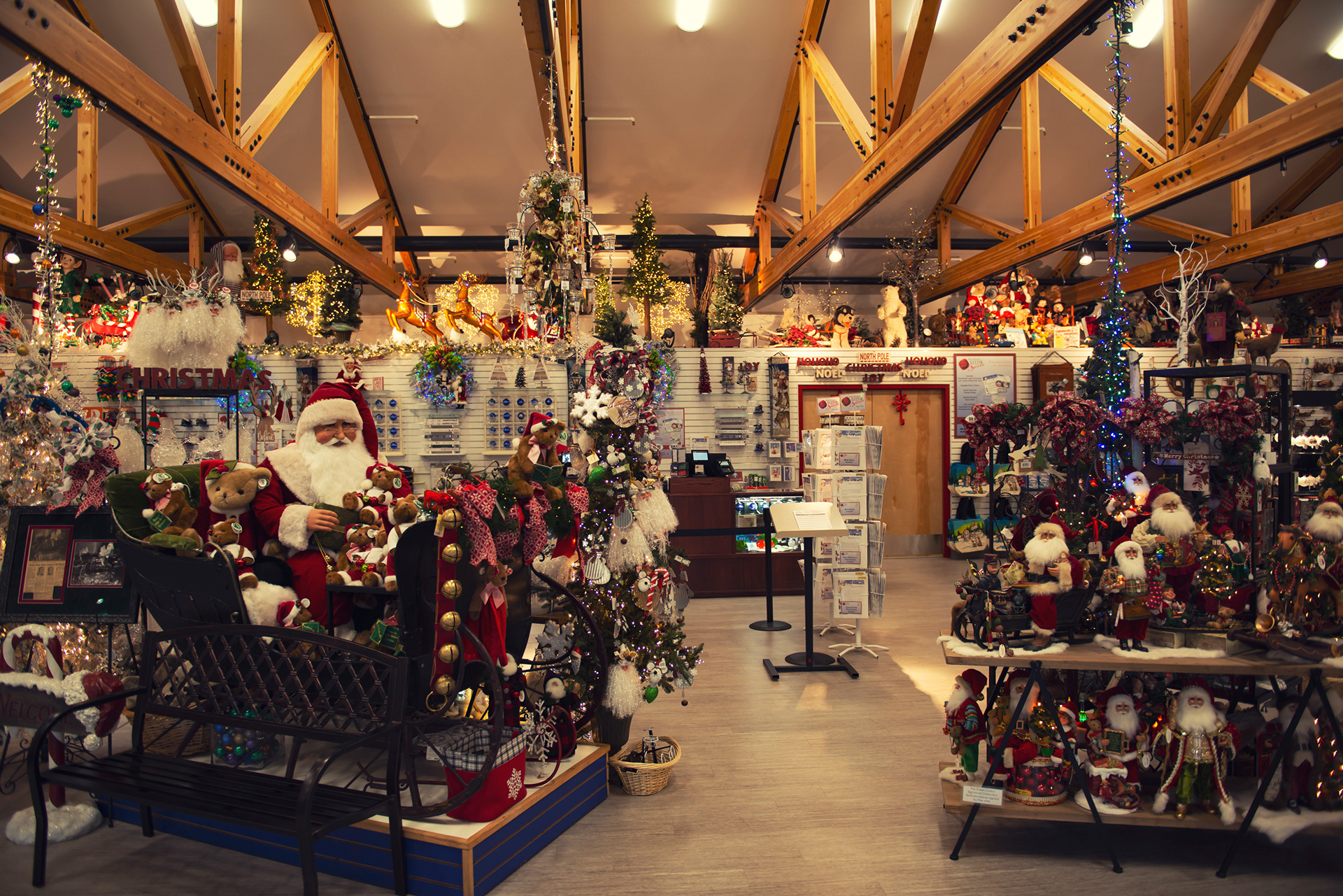
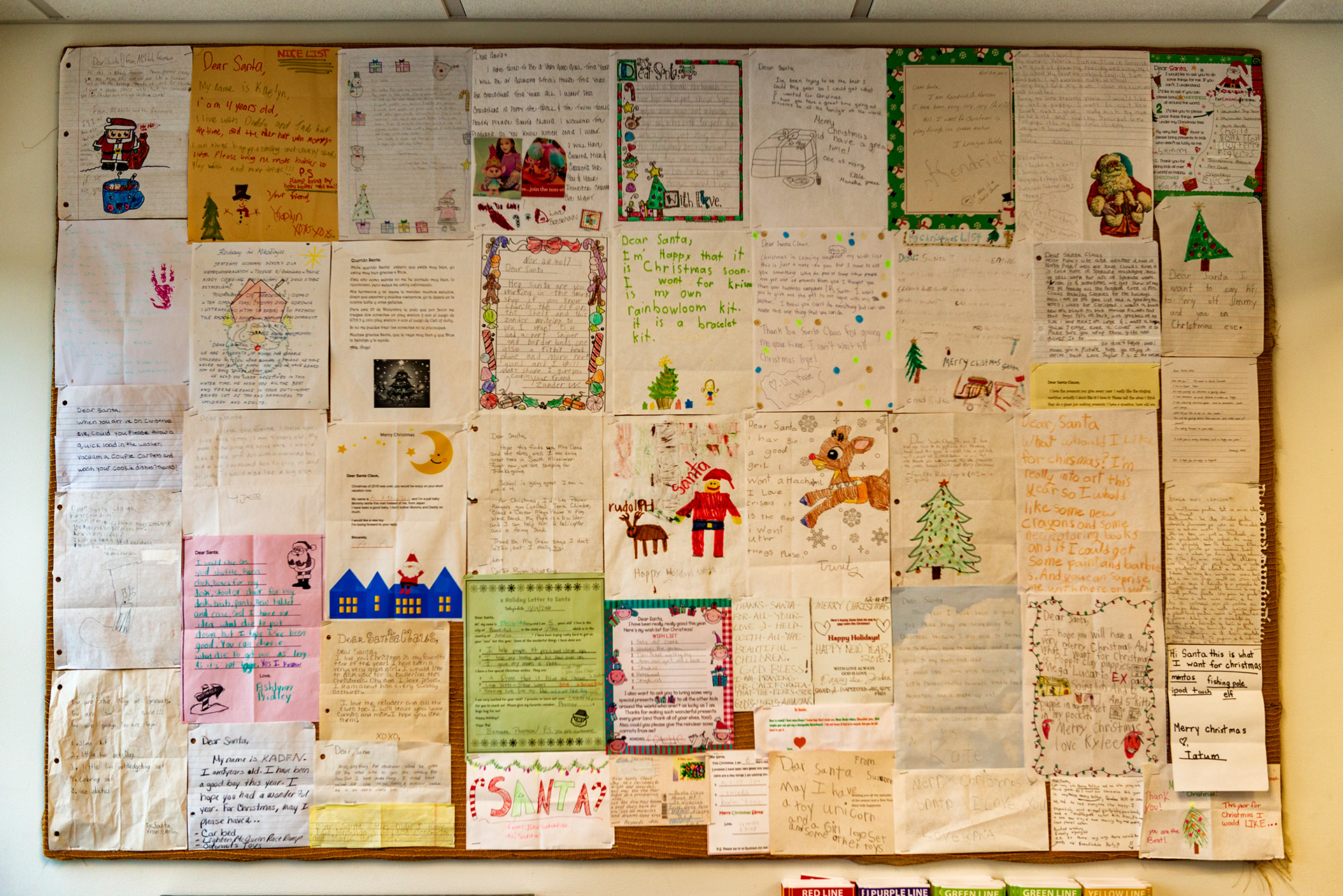
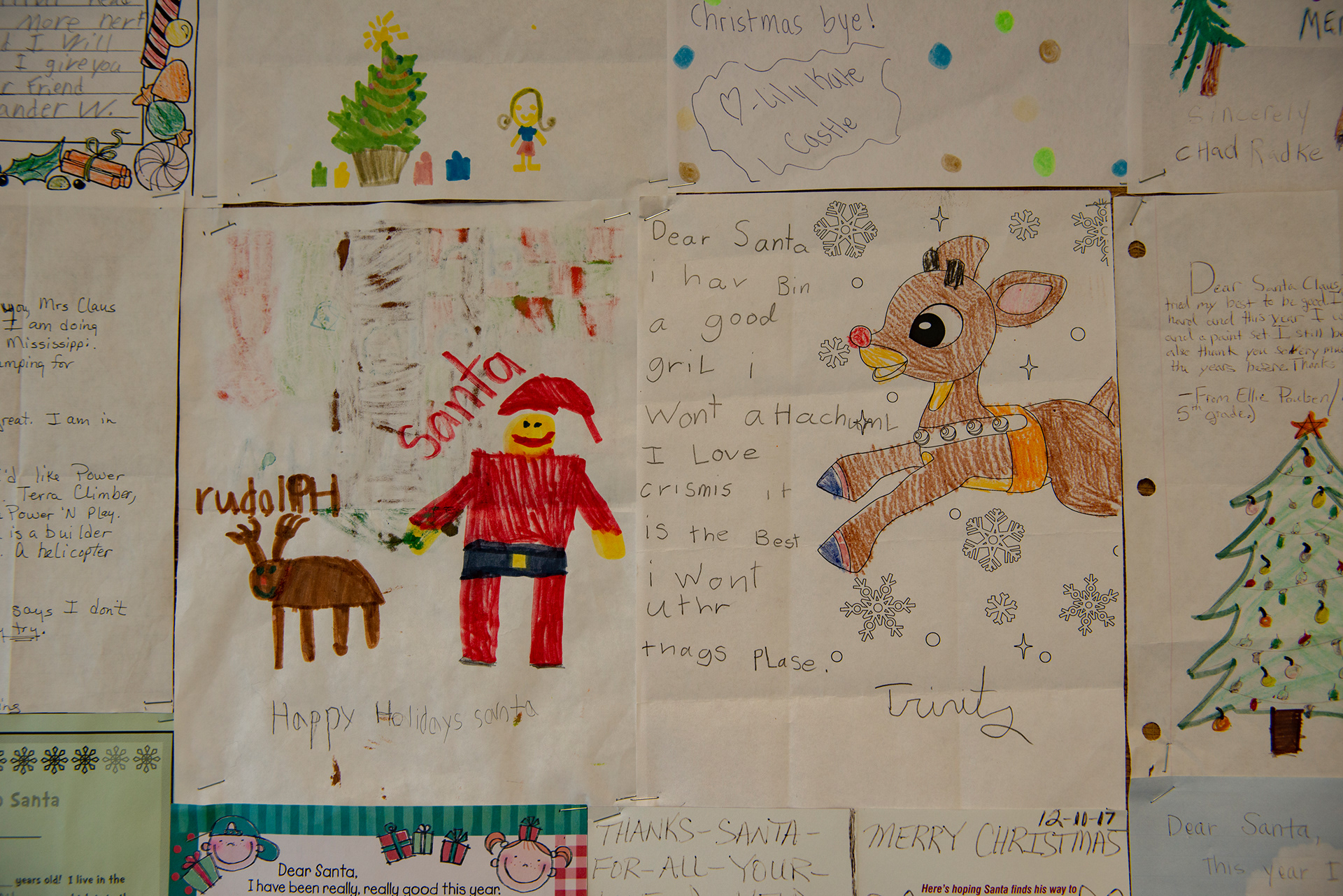
We passed North Pole again on the way back from the Dalton, and this time we stopped. Yes, it's a real town, a small one just southeast of Fairbanks, and the name is not a coincidence. In the 1950s a local developer reasoned that a toy manufacturer would jump at the chance to stamp "Made in North Pole, Alaska" on its products, and named the town accordingly to attract one. The toy company never came, but the name stuck, and the town leaned into it completely. The streets are Santa Claus Lane, Kris Kringle Drive, and St. Nicholas Drive. The streetlights are candy canes. The decorations stay up year-round, because taking them down would defeat the entire point. The centerpiece is the Santa Claus House, a gift shop with a 42-foot fiberglass Santa out front, live reindeer in a pen around back, and a year-round Christmas market inside. Inside, the walls are hung with letters children have mailed here addressed simply to "Santa Claus, North Pole," hundreds of thousands of them every December, and volunteers with Operation Santa answer as many as they can. It's pure kitsch. We had come from the Arctic Ocean that morning, and it felt appropriate. Worth twenty minutes if you're passing through, longer if you have kids with you.
The Parks Highway
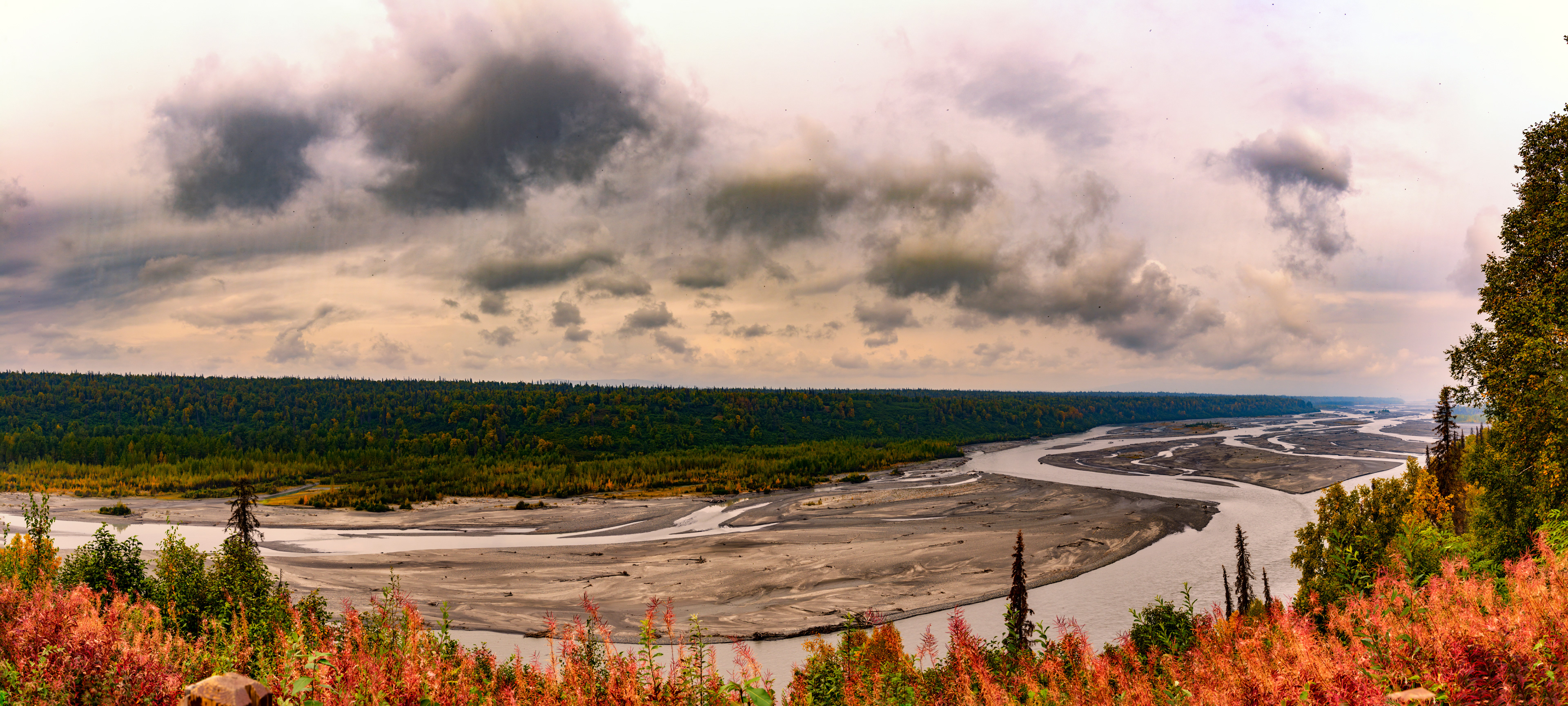
The Parks Highway (Route 3) is Alaska's spine, 362 miles connecting Anchorage to Fairbanks, running parallel to the Alaska Range. People assume it is named for the state park and the national park it passes on the way. It is not. It is named for George Alexander Parks, a territorial governor from the 1920s, and the coincidence has probably done more for his memory than anything he did in office. On its own, it's a beautiful drive. For us, it served as the backbone of the entire circuit, and we drove it twice.
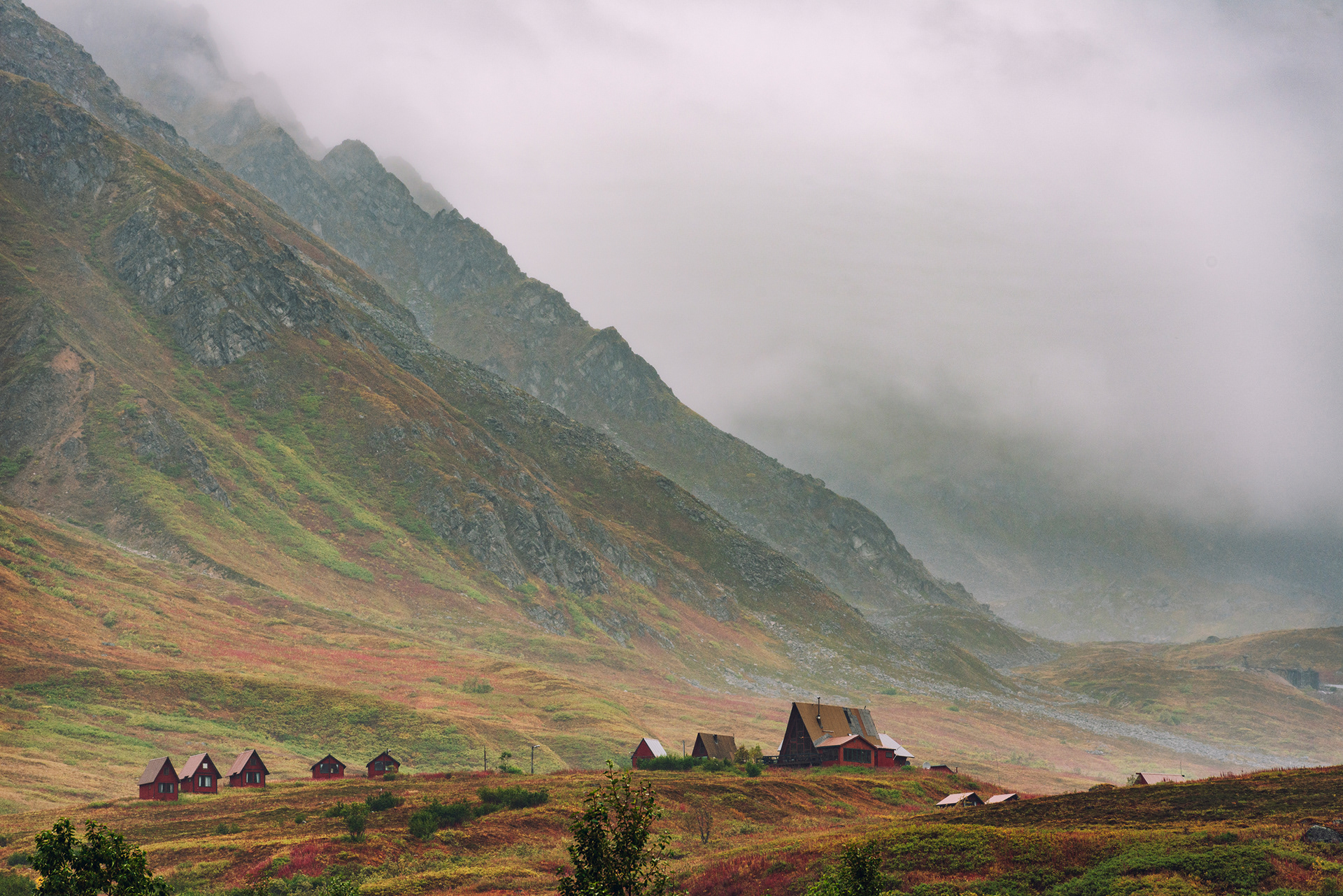
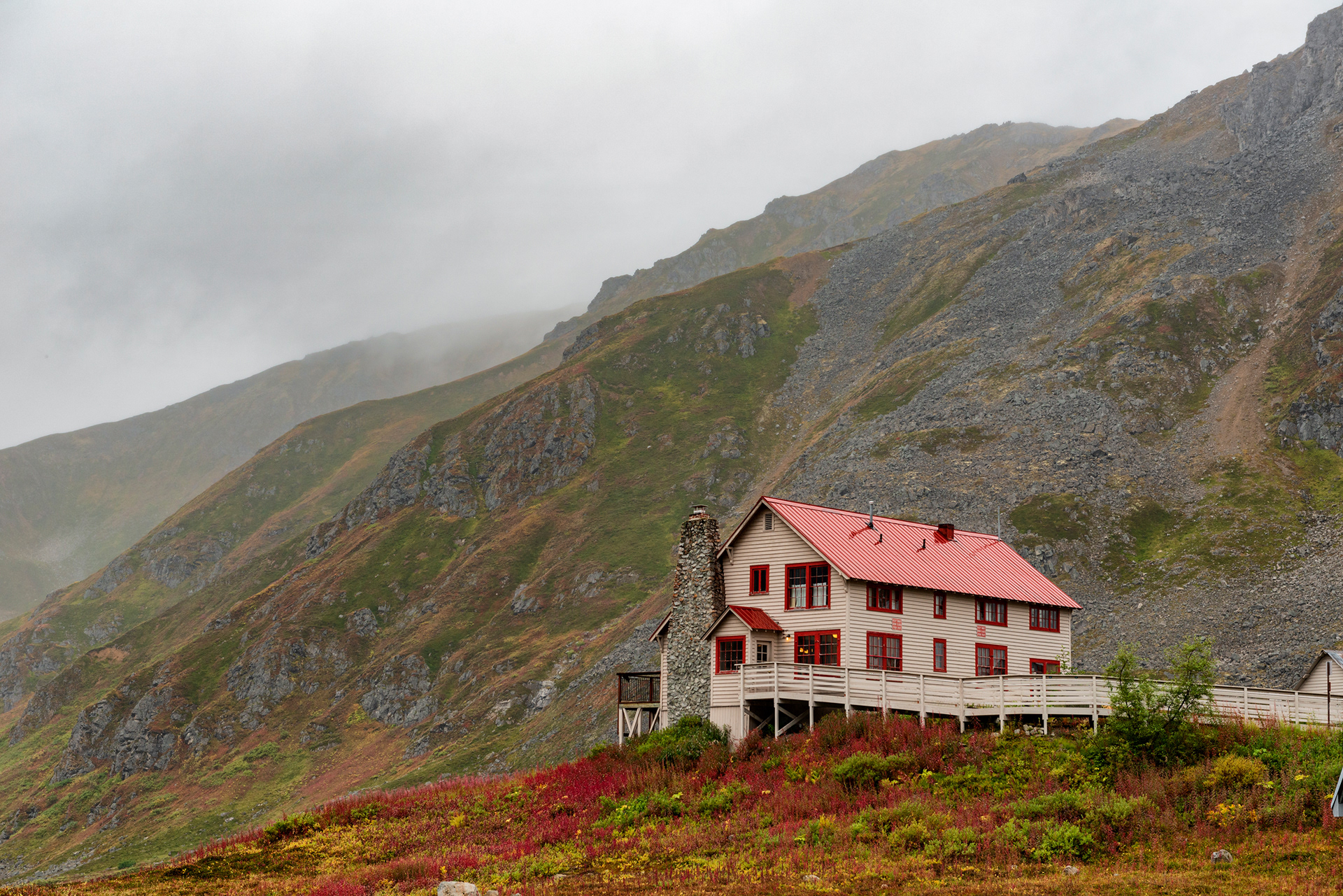
Instead of driving straight to the Denali viewpoints we turned off at Palmer and climbed. Hatcher Pass is a gravel road that winds up into the Talkeetna Mountains and over the top, and it wants a car with some clearance and a driver with some patience. Halfway up sits the Independence Mine, a gold operation from the 1930s and 40s that the state has preserved as a historical park. The buildings are still there: a bunkhouse, a mess hall, an assay office, a mill with its machinery rusting quietly under the roof. We walked among them for two hours in a light rain. A stream ran through the valley below the buildings and the clouds came down to sit on the ridgelines, and I kept thinking about the two hundred men who had lived up here through Alaskan winters to pull gold out of the rock, and how it had all stopped when the war made gold mining a non-essential industry in 1943. The mine reopened briefly afterward and then closed for good. Nobody lives here now. The buildings are extraordinarily photogenic in a way their builders never intended.
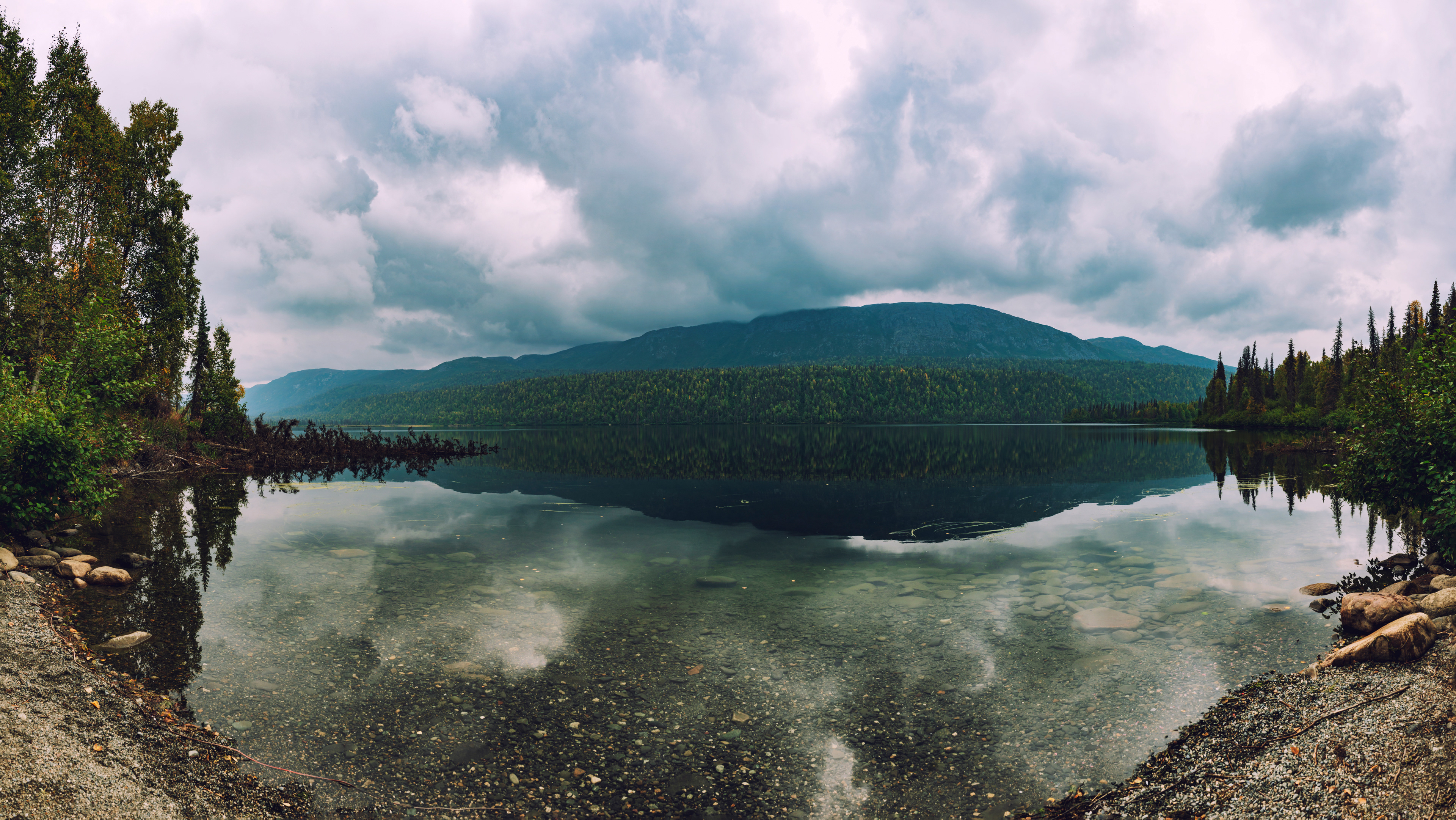
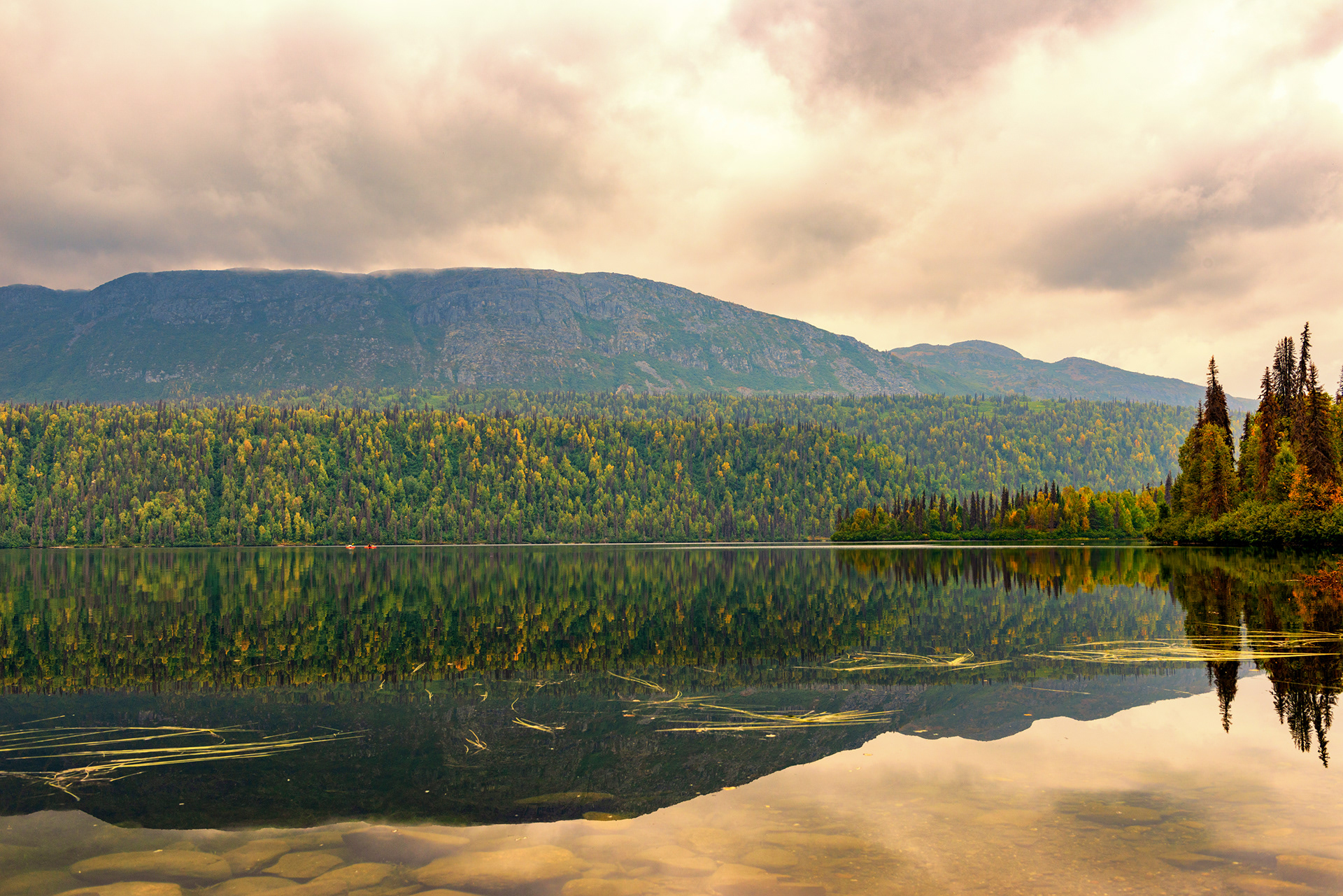
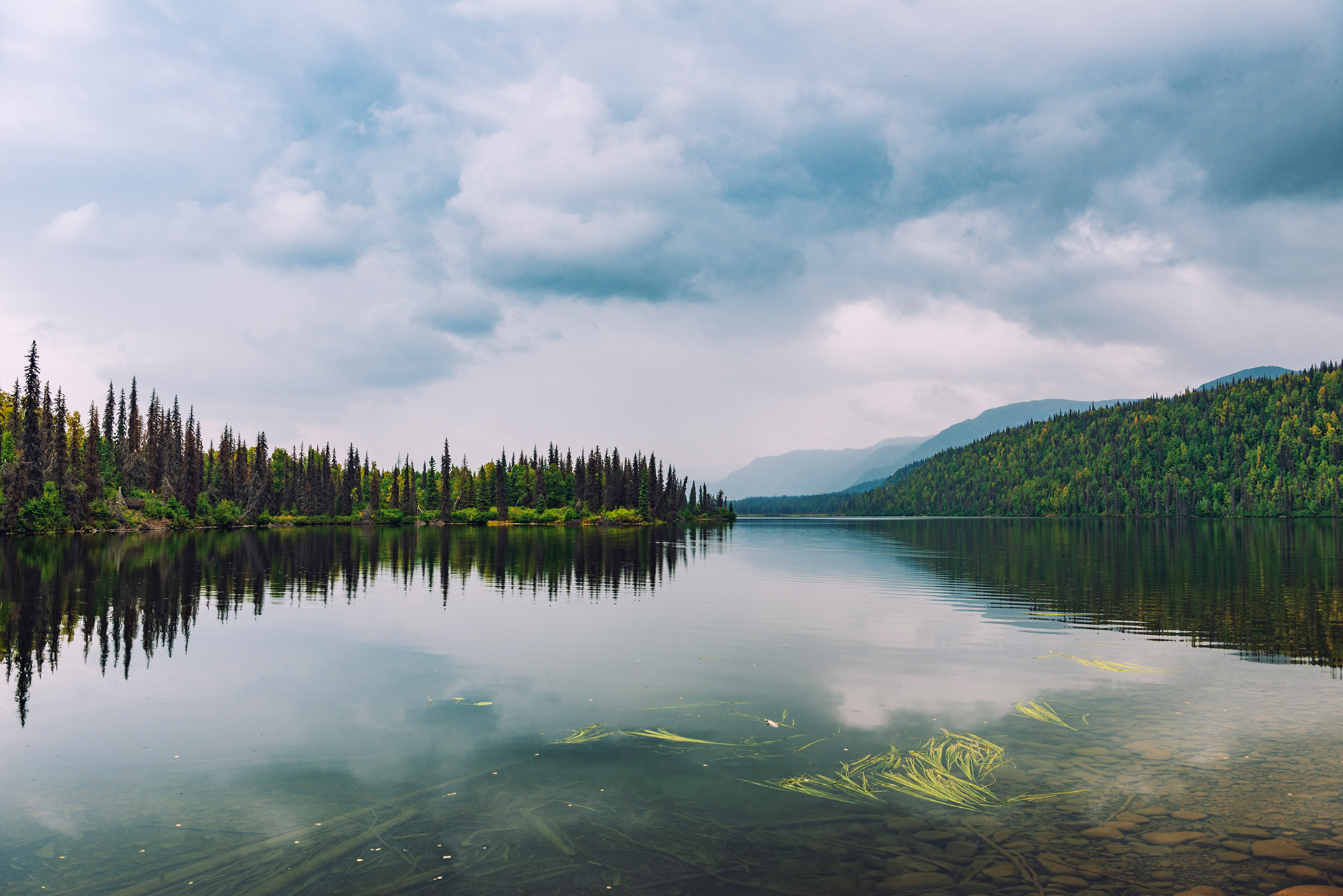
Back on the highway and into Denali State Park, we stopped at Byers Lake. A sign at the trailhead told us to walk to the far shore to see the mountains reflected, so we did. The lake was perfectly still, holding the spruce and the low clouds so exactly that the horizon was hard to find, and a few blades of grass stood up through the water in the foreground as if they had been placed there. On a clear day the Alaska Range stands behind all of it. We didn't get the clear day. We got the mirror, which was enough. There is a campground on the shore, and it went straight onto the list of things we would do differently next time, a list that was already getting long by the second day.
Denali itself stayed behind cloud at both highway viewpoints. This is normal. The mountain is tall enough to make its own weather, and fewer than a third of visitors ever see the summit. We would have other chances later in the trip.
Practical Notes
When to go. The last week of August and the first week of September gave us autumn color, aurora, open tours, and reasonable prices. Earlier means midnight sun and no aurora. Later means closed roads and closed lodges.
The car. Major rental companies (Avis, Hertz, National) forbid their vehicles on the Dalton, the Denali Highway, and Denali Park Road, and your insurance is void if you take one there anyway. A handful of local outfitters rent 4WD SUVs that are allowed on gravel; they cost more. Book early. The ones we found: alaska4x4rentals.com, arctic-outfitters.com, gonorth-alaska.com.
Fuel on the Dalton. Yukon Crossing at mile 56, Coldfoot at mile 175, Deadhorse at the end. Fill up at all three. Nothing in between.
Where to sleep on the Dalton. Wiseman (highly recommended), Coldfoot.
Aurora. Forecasts from the University of Alaska Geophysical Institute (state map) and NOAA's Ovation model (hemisphere image). You want clear sky, a dark moon, a Kp of four or higher, and at least thirty minutes of distance from any town. For the camera: wide lens, widest aperture, ISO 1600, ten seconds, manual focus at infinity, and more batteries than you think you need, because the cold eats them.
Tours. Alaska's tours are expensive and worth it, but buy the TourSaver coupon book (toursaver.com) first. It costs upfront however a single coupon (for example the Talkeetna flightseeing one saves $76 per person) pays for it.
Bears. We carried spray and never needed it. Do not hike with food that smells. If you meet a bear, back away slowly, talk in a normal voice, do not run, and do not make eye contact.
What's Next
The northern half of this trip was about scale and extremity — the furthest point north, the most challenging road, the most dramatic natural phenomenon. The southern half is something different: intimate glacier encounters, wildlife at close range, and a view of the continent's highest peak from a perspective most people never get. That's Episode 2.